

Global steel production down 4.3% on year in March: worldsteel
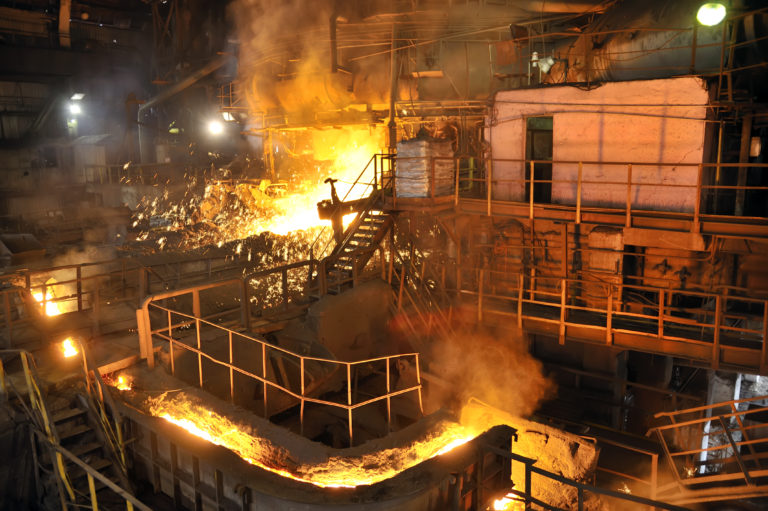
Global crude steel production totaled 161.2 million mt in March, down 4.3% year on year, according to World Steel Association data published April 23.
However, March global production was 7.9% higher than the previous month and at the highest monthly level since May 2023.
The March total brought output for the first quarter to 469.1 million mt, edging up 0.5% year on year, the data showed.
China, the largest steelmaker, produced 88.3 million mt in March, down 7.8% from a year ago but up 8.7% month on month, making up 55% of total global crude steel output.
China’s Q1 volume was also 1.9% lower year on year to 256.6 million mt.
Platts, part of S&P Global Commodity Insights, assessed the SS400 HRC 3 mm thick grade of coil at $525/mt FOB China April 23, down 7.6% since the start of 2024.
Production in India climbs
The world’s second-largest steel producer, India, saw steel output rise 7.8% on the year and up 6.9% on the month in March to 12.7 million mt. This brought Q1 volumes to 37.3 million mt, up 9.7% on the year.
Japan’s March production totaled 7.2 million mt, down 3.9% on the year, but up 2.9% from February, with Q1 output down 0.8% on the year to 21.5 million mt, the data showed.
May output from the US was steady year on year at 6.9 million mt but climbed 6.5% on the month. The US’ Q1 output was down 1.6% to 19.9 million mt.
Russia was estimated to have produced 6.6 million mt in March, up 0.8% year on year and 10.6% higher than February’s level. The estimated Q1 total was 18.7 million mt, down 0.2% on the year.
South Korea produced 5.3 million mt of crude steel in March, down 9.5% year on year, but up 0.8% month on month, with the Q1 volume down 2.5% on the year to 16.2 million mt.
EU production down 4.3% on year
The European Union produced 11.6 million mt of crude steel in March, down by 4.3% year on year but up 8.25% on the month.
Germany, Europe’s largest steel producer, saw its crude steel production jump 8.4% year on year in March to 3.5 million mt, which was also 12.3% higher on the month. This brought Q1 volumes to 9.7 million mt, up 6% from Q1 2023. Inventory cyclical effects may also have contributed to this positive development.
In Germany, steel production by blast furnace rose 5.1% on the year to 2.42 million mt, while steal made via electric arc furnaces increased 16.4% to 1.09 million mt, according to data from German steel federation WV Stahl.
During the month of March, N.EU HRC prices moved from Eur715/mt March 1 to Eur665/mt March 28, according to Platts’ assessment.
Europe’s second-largest steel producer, Italy, saw steel production fall 12.6% year on year to 1.91 million mt, although volume rose 5% on the month. The Q1 total was 5.4 million mt, down 4.4% on the year.
In March, flat steel products in Italy dropped 14.2% on the year to 794,000 mt, as the country’s second-largest flat steelmaker, Acciaierie d’Italia, was working at its lowest-ever historical level. Italian long steel production also fell 11% to 1.25 million mt year on year, according to Italian steel association Federacciai’s latest report.
Turkey produced 3.2 million mt in March, rising 18% on the year and 3.8% higher than February’s volume, according to worldsteel. Q1 production was also up 28.4% on the year to 9.5 million mt.
Brazil produced 2.8 million mt of steel in March, up 5.6% year on year and 0.3% higher on the month.
Iran’s output rose 2% on the year and 23.9% on the month to 2.8 million mt.
Overall pig iron production from 38 countries was 108.3 million mt in March, down 4.8% year on year but increasing 6.7% from February, the data showed.
Direct reduced iron produced worldwide in March amounted to 9.6 million mt, falling 4.8% year on year and up 9.5% from February, according to worldsteel.
Jacqueline Holman | Annalisa Villa


thyssenkrupp appoints Nadja Håkansson as CEO
thyssenkrupp appointed Nadja Håkansson as Chief Executive Officer of thyssenkrupp Uhde.
Nadja Håkansson has held various management positions at Siemens and Siemens Energy and brings more than 18 years of national and international experience in the areas of supply chain management, operations, sales and corporate management.
Most recently, as Senior Vice President Region Africa for Siemens Energy, she was responsible for the company’s overall portfolio development in the African market.
“thyssenkrupp Uhde has significant potential for shaping the green transformation in our industry, and I am honored to lead this prestigious company as we embark on this exciting journey together,”
“I am so excited to begin a new journey with thyssenkrupp Uhde on May 1, and lead the organization in achieving a significant impact in the green transformation and industrial decarbonization 🍀💫, wrote Håkansson.
I am looking forward to working with the thyssenkrupp Uhde team to shape a new chapter for the company, for our customers and for society!”

Bureaucratic delays threaten support for transition: Eurofer
European Resilience Fund money, meant to support investment by steelmakers into cleaner technology, could no longer be available when steelmakers need it, according to Eurofer.
The so-called RRF fund requires the project be implemented by 2026, which is too short notice for the timeline used in building big plants. “Equipment suppliers say they cannot deliver such plants before 2026,” Eurofer director general Axel Eggert said on the sidelines of “The Future of EU Industry” conference in Brussels attended by Kallanish earlier this month. “We are losing €1 billion [$1.1 billion] because of that.”
The system is caught between the RRF’s expiry date, technology suppliers’ delivery schedules and delays in implementation of relevant legislation at EU member level (see separate story). Eggert gave the example of a case in which a supplier cannot deliver the equipment earlier than 2027, meaning that one mill already granted €1 billion is now at risk of losing it. “We do not need more money, but we need better coordination,” Eggert maintained.
Another issue is that EU members seem to favour decarbonisation in principle but do not make it a prerequisite in their own public tenders. “In this sense, there is a huge contradiction,” Eggert said, adding that 40% of all spending in the EU is public. If EU public procurement legislation included references to green products, this would allow for the creation of lead markets for green steel/green products in the EU, he concluded.
Christian Koehl Germany

Europe needs integration, confidence amid de-industrialisation: Tata’s Adam
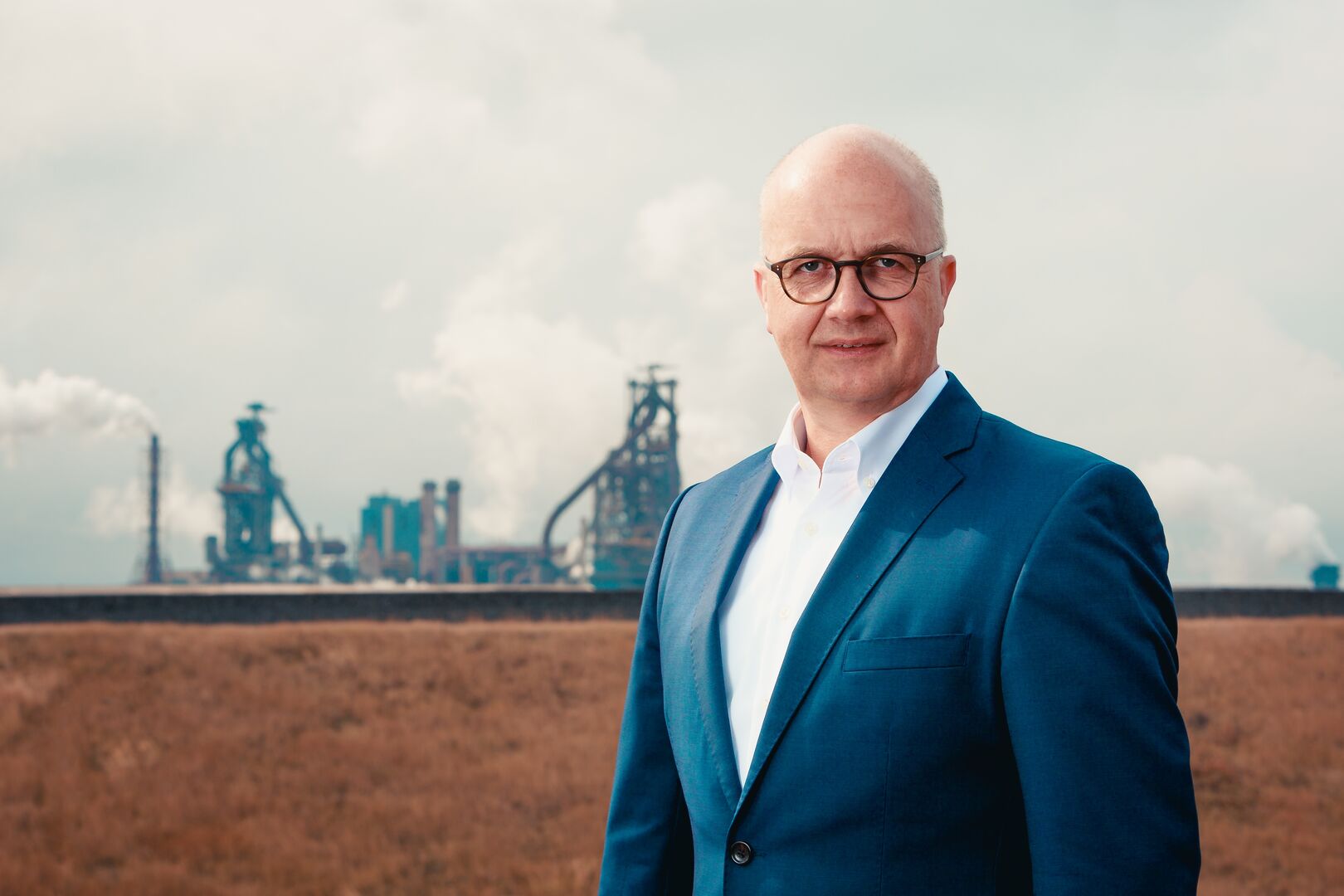
Europeans must look beyond their regional identities and unite both economically and administratively to ensure greater prosperity, says Tata Steel Netherlands and UK chairman Henrik Adam, who was appointed Eurofer president earlier this year.
“We Europeans see ourselves as Cologners, as Frenchmen, or Bavarians, rather than as Europeans,” he told Kallanish in an interview at last week’s wire+Tube trade fair in Düsseldorf. “The EU’s gross domestic product is bigger than that of the USA, but hardly anyone is aware of it,” he noted. “In Europe, we tend to downplay ourselves too much.”
This is not only an issue of mentality, but can mean complex hurdles in the process enabling the investments steelmakers need into cleaner technology as part of the transition to emission-free steel. “You need permissions and approvals on the national, the regional, even on the municipal levels, and this is very time-consuming,” Adam bemoaned. This could even lead to the loss of public EU money for some projects if the funding has a limited lifetime (see separate story).
In competition with overseas countries, Europe’s manufacturing industries are losing markets, but the loss must be mitigated. “A de-industrialisation of Europe cannot be avoided, but we need to keep it within limits,” he said. The industry therefore needs such trade fairs as wire+Tube, so that players remain informed and can exchange ideas, he added.
As a German, Adams pointed out some deficiencies Germany has in the energy transition in comparison with many countries with smaller populations. For wind parks, for instance, “the Baltic Sea coast does not have the wind, and our [Germany’s] North Sea coastline is small compared with the Netherlands,” he noted. Countries like Austria, Switzerland and Sweden have hydropower, while Spain and Portugal can draw strongly on solar power, he concluded.
Christian Koehl Germany

Ukraine: ArcelorMittal investiert in neues Werk für Bauprodukte
ArcelorMittal Construction plant ein neues Werk für Bauprodukte in der Ukraine zu errichten, um den Wiederaufbau des Landes während und nach dem Krieg zu unterstützen. Die Investition soll in der Region Kiew auch 100 neue Arbeitsplätze schaffen.
Das Unternehmen ArcelorMittal Construction hat in Kiew eine Absichtserklärung mit Ukraine Invest, dem Investitionsförderungsbüro des Landes, unterzeichnet. Die geplante Investition sieht die Errichtung einer hochmodernen Produktionsstätte vor, in der Stahltrapezprofile und Sandwichpanele für die Gebäudehülle hergestellt werden. Dafür will der Konzern seinen recycelten und erneuerbar erzeugten Xcarb-Stahl in Kombination mit energieeffizienten Isolierkernen verwenden. Die Konstruktionslösung erfülle alle Anforderungen an Fassaden und Dächer von Gebäuden, insbesondere im Industrie-, Handels-, Logistik-, Agrar- und Lebensmittelsegment. Erklärtes Ziel ist ist, die beschädigte wirtschaftliche und infrastrukturelle Landschaft der Ukraine wiederzubeleben.
ArcelorMittal: „Positive Rolle beim Wiederaufbau“
In den kommenden Jahren will ArcelorMittal 40 Millionen Euro in die neue Anlage investieren – und so auch mehr als 100 neue Arbeitsplätze in der Region Kiew schaffen. „ArcelorMittal Construction ist fest entschlossen, eine positive Rolle beim Wiederaufbau der Ukraine zu spielen. Wir hoffen, mit dieser Investition nicht nur Strukturen wieder aufzubauen, sondern auch Gemeinden und das soziale Leben zu erneuern und so eine bessere und widerstandsfähigere Zukunft für alle zu gewährleisten“, erklärt Jean-Christophe Kennel, CEO von ArcelorMittal Construction.
Das Team von Ukraine Invest werde ArcelorMittal bei seinen Geschäften in der Ukraine beraten, so der geschäftsführende Direktor Oleksandr Melnychenko (Bildmitte). Zudem wolle man die Kommunikation zwischen den Vertretern des Investors und den Regierungsbehörden auf allen Ebenen ermöglichen und Unterstützung bei der Lösung von Problemen bieten, mit denen der Investor bei seinen Geschäften in der Ukraine konfrontiert sein könnte. „Ich bin ArcelorMittal Construction für die Zusammenarbeit bei der Entwicklung der ukrainischen Wirtschaft dankbar“, betont Melnychenko.

Polish rebar prices continue to slide on weak demand, strong competition from imports
Some producers had tried to increase prices but were unsuccessful because buyers refused to accept the higher prices – ArcelorMittal, for instance, pushed up its offer price for long steel products across Europe by €20 ($21.33) per tonne, sources told Fastmarkets on the sidelines of Wire & Tube fair in Dusseldorf, Germany, on Tuesday.
Fastmarkets’ weekly price assessment for steel reinforcing bar (rebar), domestic, exw Poland was 2,600-2,630 zloty ($640-647) per tonne on Friday, down by 40-50 zloty per tonne from 2,650-2,670 zloty per tonne on April 5.
A distributor source based in Poland said it had not heard about any ArcelorMittal price increases, adding that some offers from the local mills had come in at 2,620 zloty per tonne CPT, which nets back to 2,600 zloty per tonne ex-works, and that some deals had been signed at that price.
A second distributor source reported slightly higher offers at around 2,650 zloty per tonne CPT, which nets back to about 2,630 zloty per tonne ex-works.
The first distributor source said the downtrend would continue in the coming weeks and prices could even drop below 2,600 zloty per tonne CPT – equivalent to about 2,580 zloty per tonne ex-works.
The source forecast that any rebound in prices will only be possible at the end of May.
It was even rumored among Polish market participants that one mill producing rebar might even stop operations to reduce the chance of any further price falls.
The second distributor source said the mill was more likely to continue operating with a reduced output.
Speaking on the sidelines of the Dusseldorf Wire & Tube fair in Dusseldorf, sources also told Fastmarkets that any positivity in the construction sector resulting from the release of blocked European funds would boost demand for rebar.
In February, European Commission president Ursula von der Leyen announced that Warsaw would be able to access €137 billion in funds.
But sources told Fastmarkets that it would take some time – maybe until the end of this year – before the projects start being executed.
Another factor supporting the downtrend in Polish rebar prices was the strength of the Polish zloty, which makes imports more competitive, the second distributor source told Fastmarkets.
On Friday April 19, €1 was traded for 4.33 Polish zloty, while on April 12, €1 was 4.26 zloty.
Published by: Darina Kahramanova


Steel HRC prices in Europe hit bottom, sources say
Restocking activity was subdued across the HRC markets, with mainly limited tonnages heard traded.
Distributors and steel service centers preferred to keep their inventories at medium to low levels, citing weaker sales downstream.
“The real demand is not there, so any pick-up [in trading] we see now is related to restocking and wouldn’t drive a sustainable rebound [in HRC prices],” a steel service center source said.
Northern European integrated mills were offering HRC with lead times of 4-5 weeks at €620-640 ($661-682) per tonne ex-works.
A Benelux-based re-roller was offering HRC at €600 per tonne ex-works in the region. Deals were reported at €620-630 per tonne ex-works in Germany in the week to Friday. And most buyers continued to estimate tradeable values within the same range.
As a result, Fastmarkets calculated its daily steel HRC index, domestic, exw Northern Europe, at €625.50 per tonne on April 19, down marginally by €1.58 per tonne from €627.08 per tonne the day before.
The index was down by €13.67 per tonne week on week and by €58.46 per tonne month on month.
Most market sources believed that prices in the region have already hit rock-bottom and that the market has reached a “turning point.” They saw a strong rebound as unlikely in the near term, due to a lack of support from steel-consuming sectors.
For example, Worldsteel’s short-range outlook published in April highlighted that the EU was still the region facing the biggest challenges.
“The region, and in particular its steel-using sectors, are challenged on a multitude of fronts – geopolitical shifts and uncertainty, high inflation, monetary tightening and partial withdrawal of fiscal support, and still high energy and commodity prices,” Worldsteel said.
“After only a technical rebound in 2024,” it added, “the region’s steel demand is expected to finally show a meaningful recovery with 5.3% growth in 2025. The forecast steel demand for the EU in 2024 is only 1.5 [million tonnes] higher than the pandemic trough in 2020.”
In Southern Europe, meanwhile, Fastmarkets calculated its daily steel HRC index, domestic, exw Italy, at €620.00 per tonne on Friday, down by €0.42 per tonne from €620.42 per tonne on the day before.
The Italian index was down by €5.00 per tonne week on week and by €48.75 per tonne month on month.
HRC with end-May lead times from one domestic supplier was heard offered at €640 per tonne delivered, equivalent to €630 per tonne ex-works.
Buyers estimated achievable prices at €610-620 per tonne ex-works, with transactions heard at €615-620 per tonne ex-works.
Asian suppliers have been trying to increase HRC prices to Europe, with most sellers targeting prices no lower than €600 per tonne cfr for HRC with June shipment.
Several market sources said that lower prices were available from Saudi Arabia earlier in the week, around €580 per tonne CFR to Southern Europe, but for low volumes.
Published by: Julia Bolotova

UK TRA recommends extension of steel safeguard measures
The UK Trade Remedies Authority (TRA) proposes a two-year extension to protect the country’s steel industry from import surges, Kallanish learns from an agency announcement on Friday.
The current measure, covering 15 steel categories, is set to expire on 30 June, but could be extended until 2026. However, another safeguard measure for these steel categories cannot be implemented for another eight years if extended. In this case, businesses could request new trade remedy measures from the TRA for specific categories of steel products if they believe that the UK industry was being harmed or was under threat from dumped or subsidised imports, in anticipation of the possible expiration of the safeguard measure.
The TRA’s extension review found that allowing the safeguard measure to expire could lead to increased imports and a recurrence of serious injury to UK producers across all 15 steel categories. Stakeholders had until 7 March to respond to the TRA’s initial findings. The secretary of state will review this recommendation before making a decision, as per WTO rules.
This extension review is separate from reviews on hot rolled flat and coil steel, initiated in response to market condition changes affecting category 1 steel supply.
The TRA initiated a suspension review and a tariff rate quota review in response to applications from Tata Steel UK (TSUK) and Kromat Trading on 9 February this year. The findings of these reviews will be published later.
Elina Virchenko UAE
Thyssenkrupp Materials buys carbon-reduced goods from tk Steel
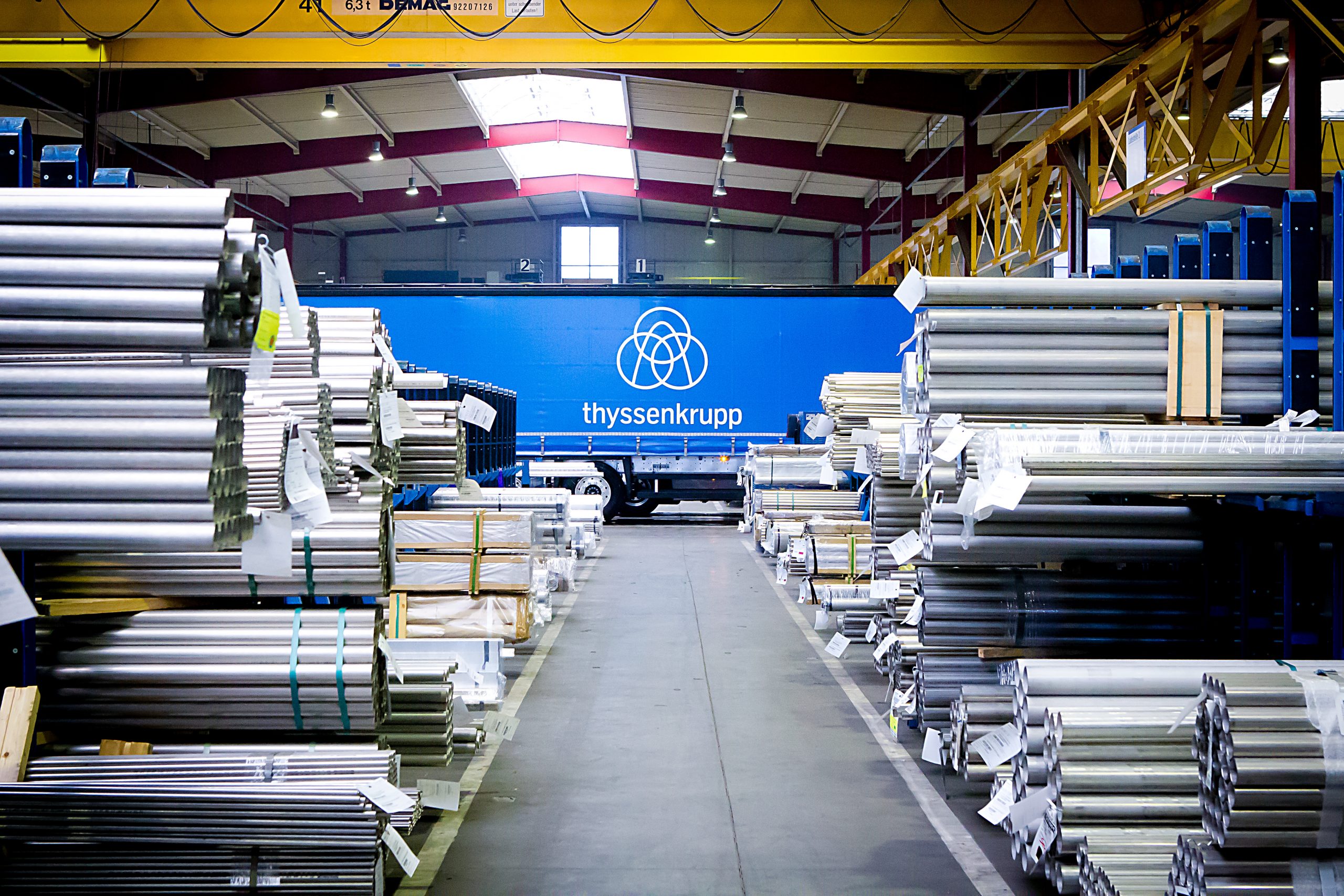
Thyssenkrupp (tk) Steel Europe has agreed to sell climate-friendly steel to its tk Materials Services, Kallanish learns from the affiliates, which have signed a memorandum of understanding to cement the arrangement.
Both companies are divisions of Germany’s thyssenkrupp AG, which is a conglomerate with several other non-steel-related activities. However, in contrast to many other steel groups, tk Materials, which claims to be Europe’s largest steel distributor, operates independently from the steelmaking division, with the freedom of purchasing from any supplier.
Thyssenkrupp Schulte, the German unit of tk Materials, commits to purchasing fixed quantities of C02-reduced “bluemint” steel with immediate effect. In future years, the quantities are to increase gradually and the purchase agreement is to run up to and including 2030, the companies says. Tk Schulte will supply the German domestic market as well as other stockholding units in Western and Eastern Europe.
According to Detlef Schotten, ceo of tk Schulte, there is growing demand from customers for CO2-reduced alternatives.
“This trend will continue to grow in the coming years,” he says, noting that the company sees itself as a partner for customers to support them in their endeavours to become more sustainable. “This includes a comprehensive portfolio of products and solutions that create ecological added value.”
As part of its Beyond sustainability strategy, tk Materials has set itself the goal of becoming carbon-neutral by 2030 (scope 1 and 2 emissions).
Christian Koehl Germany
Salzgitter secures ‘green loan’ for decarbonisation
Salzgitter AG has signed two export credit agency (ECA)-covered “Green Loan” financings to support the decarbonisation of its steel manufacturing operations.
The total amount of €500 million ($532m) ECA-backed senior unsecured financing package consists of two tranches which involve the main plantbuilders of the technical conversion, Kallanish understands. A €300 million export credit facility is covered by SACE, the Italian Export Credit Agency, with Simest CIRR support in connection to the direct reduction of iron ore plant supplied by Tenova/Danieli.
A €200 million export credit facility is covered by Oesterreichische Kontrollbank (OeKB), the Austrian Export Credit Agency, in connection to the electric arc furnace supplied by Primetals from Austria.
These facilities are among the first ECA-covered corporate Green Loans in the steel sector worldwide and the first in Germany, Salzgitter points out.
The finance parties, SACE and Simest were advised by Norton Rose Fulbright, while Salzgitter AG was advised by Linklaters. The financing process also involved BNP Paribas, Commerzbank and Deutsche Bank. The loans, structured under Loan Market Association’s Green Loan Principles, will fund a portion of the €2.3 billion phase 1 of the Salzgitter Low CO2 Steelmaking programme.
Christian Koehl Germany