


SSAB supplies fossil-free steel to Manitou, John Deere
SSAB has signed a letter of intent for deliveries of fossil-free steel to Manitou Group, a France-based major maker of industrial equipment for construction, agriculture, earth-moving and other fields.
Deliveries are set to start in 2026 and ramp up as SSAB’s fossil-free steel production capacity increases, Kallanish hears from the Swedish steelmaker. It already delivers specialised and high-strength steels to Manitou, and future deliveries will include SSAB Fossil-free and SSAB Zero in the mix
According SSAB, the fossil-free steel will allow Manitou to bring to market a new generation of sustainable products, including telehandlers, aerial work platforms or forklift ranges. Manitou aims to reduce its direct and indirect carbon emissions (scope 1 and 2) by 46.3% and its CO2 emissions for every hour of use of the machines by 33.7% (scope 3) by 2030.
In an agreement with another maker of heavy equipment, SSAB this month has signed up with John Deere Forestry Oy. The maker of forest machinery will replace some of the steel it uses with sustainably made steel from 2026 onwards. John Deere Forestry’s sustainability target for sustainably manufactured products is 65% by 2030.
Christian Koehl Germany


Italy to discuss CBAM changes with Brussels
The Italian parliament has approved a motion that will force the government to work with the European Commission (EC) to review certain elements of the Carbon Border Agreement Mechanism (CBAM), Kallanish notes.
“We hope that the Italian government will propose the necessary legislative changes,” the local steel trade association Assofermet says in a document.
Among the various concerns discussed in the Italian chamber of deputies, one of the crucial points is the difficulty in gathering the data to be provided to the EC.
“The first deadline of the end of January 2024, to communicate data relating to imports for the fourth quarter of 2023, has unfortunately confirmed all our predictions,” says Assofermet’s steel division director Paolo Sangoi. “It is extremely difficult to find the required information from suppliers and major complications occurred when entering the data into the system. There are many (third countries’) producers who declare themselves unavailable to provide certain data considered extremely confidential.”
Another point of concern is the inclusion of raw materials such as pig iron and semi-finished products within the CBAM mechanism. Finished products produced outside the EU using the same raw materials can be freely imported. This will result in a higher cost of raw materials for EU producers, unlike their foreign competitors who will be able to count on cheaper raw materials.
“This is a series of glaring regulatory mistakes: The consequences on the competitiveness of the local manufacturing sector were evidently not taken into account during the (CBAM) study phase,” Sangoi concludes.
Assofermet warns of a serious risk of delocalisation of the manufacturing sector as several producers will move their production sites to areas with less restrictive geographic areas.
Earlier this year, Assofermet said the normative framework of the mechanism and safeguards on steel imports is hindering the daily activity of Italian and European steel companies. The challenges in filling CBAM reports, the economic repercussions expected from the mechanism starting in 2026, as well the safeguard measures in force from 2018, are a deep concern for Assofermet’s members.
In August, the EC published the details to be considered in the implementation of CBAM regulation in practice. The document of 102 pages “was full with legal and technical terms which most companies will have never heard of,” writes Andreas Schneider of Stahlmarkt Consult. In his latest blog titled “The Introduction of CBAM: A Disastrous Start,” Schneider points out that the new duties are a burden especially for smaller enterprises with limited staff for legal matters.
According to Wood Mackenzie, the mechanism could add $275/tonne of cost for some key finished steel exporters to the EU, while the increased domestic production costs could lead to a political backlash. The CBAM fees could increase the cost of delivered steel to the EU by about 56% for India and about 49% for China in 2034, the consultancy notes. One initial response for exporters to the EU is likely to be a reorganisation of sales to direct lower-emissions steel to the European market, while higher-emissions production is diverted to markets without carbon fees. The EU plans to monitor and address these strategies, but it does not have a concrete action plan to prevent them, Wood Mackenzie says (see Kallanish passim).
Natalia Capra France
Belgium’s NLMK La Louviere restarts production after 10-day halt
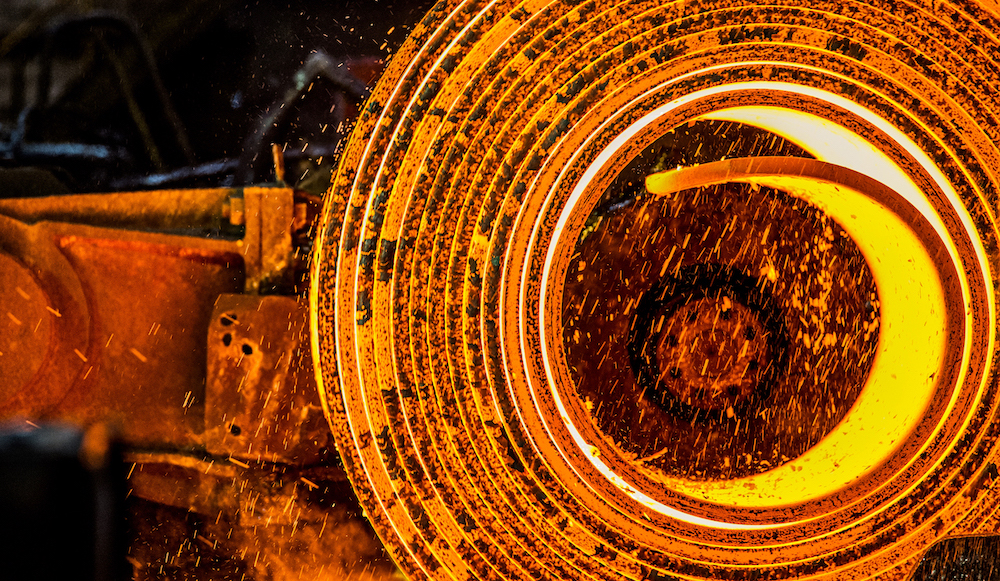
Belgian flat rolled steel producer NLMK La Louviere has fully restarted production after having had to halt operations following an accident 10 days ago, a company spokesperson told S&P Global Commodity Insights on April 17.
NLMK began restarting the plant on April 15, with production returning fully to normal on April 16.
The halt followed the detection of smoke in an electrical substation on April 5, which led to a black out and is still under investigation.
Located in Belgium, NLMK La Louviere focuses on the production of hot- and cold-rolled coil for automotive industry, general construction, and pressure vessels manufacturers.
The company has a production capacity of 1.7 million mt/year of hot-rolled steel and 1.3 million mt/year of pickled steel.
The Belgium mill, is part of NLMK Belgium Holdings, a joint venture between Belgian investment fund SOGEPA and Russian mining and steel company NLMK.
Apart from La Louviere, NBH owns strip mill NLMK Strasbourg (France), NLMK Manage Steel Center (Belgium), and plate producers NLMK Clabecq (Belgium), NLMK DanSteel (Denmark) and NLMK Verona (Italy).
NLMK La Louviere last year also underwent a halt in its hot strip mill for few months following an accident.
Overall, the European flat steel market has been weak recently, with some sources predicting that this will lead to production cuts.
Platts, part of S&P Global Commodity Insights, assessed HRC in northern Europe down Eur5/mt on the day at Eur630/mt ($669.564/mt) ex-works Ruhr April 16, marking a decline of 8.7% since the start of 2024.


Bowim foresees challenging sales, margins in 2024
The year ahead will be challenging for sales and margins, says Polish distributor Bowim, after 2023 saw weakening European demand and falling prices that prompted mills to limit production or shipments.
In 2023, high energy prices curbed industrial production and new investments in Europe, and therefore also steel demand, while the construction sector downturn also hit steel requirement. Persistent inflationary pressure and high interest rates exacerbated the situation, Bowim observes.
Bowim’s shipments were flat on-year in 2023 at 501,697 tonnes, with sheet accounting for 201,574t, slightly up on-year. Pipe and profiles were also up slightly to 94,694t, while rebar sales jumped 28% to 82,485t. However, deliveries of merchant bar and prefabricated steel reinforcement dropped, Kallanish notes.
Consolidated revenue in 2023 fell 25% on-year to PLN 2.07 billion ($506.3 million) and net profit plummeted 88% to PLN 13.3m.
Adam Smith Poland
Assofermet sees significantly lower on-year consumption for flats
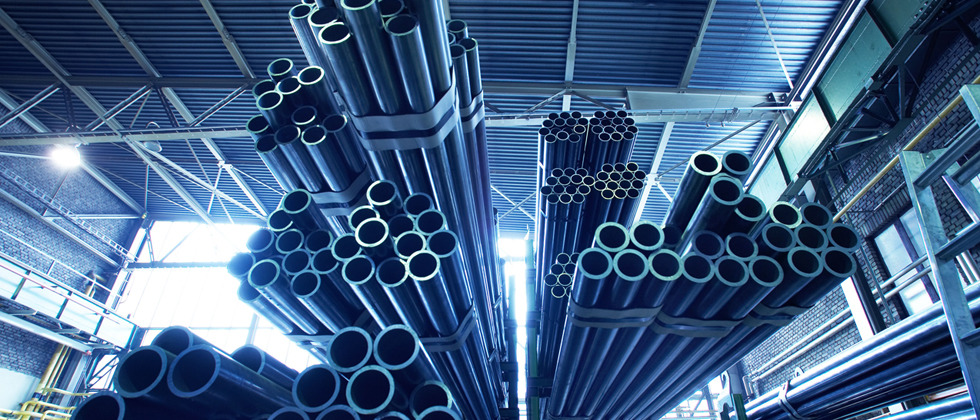
The attitude of buyers remains cautious in April, but the belief that the price floor has been reached is spreading throughout the Italian service centre sector, says Italian steel trade association Assofermet in its latest market note obtained by Kallanish.
However, despite orders from end-users remaining substantially lower compared to the same period last year, the association is registering growing interest from customers buying according to their programmes for the coming months.
“There are high expectations for the Tube & Wire trade fair … the outcome of which could generate a change in market direction,” the note states. There was a further weakening of coil demand from end-users and service centres in March, with a consequent price decline, it adds. “The general lack of propensity to purchase … has led [Italian] steel mills to review selling prices in an attempt to react to the offers from Asian steel mills,” the association notes.
Assofermet notes that the EU’s “other country” safeguard quota for hot rolled coil has been exhausted in the second quarter again within days. In 2023, imports of this product category increased substantially from Asia. The huge volumes not cleared through EU Customs are now added to the volumes that will be cleared during this quarter and remain stored in the port terminals. This entails “heavy economic repercussions on the importer and on the organisation of port logistics,” the association concludes.
Natalia Capra France
European industry bemoans bureaucracy, no incentives for transition
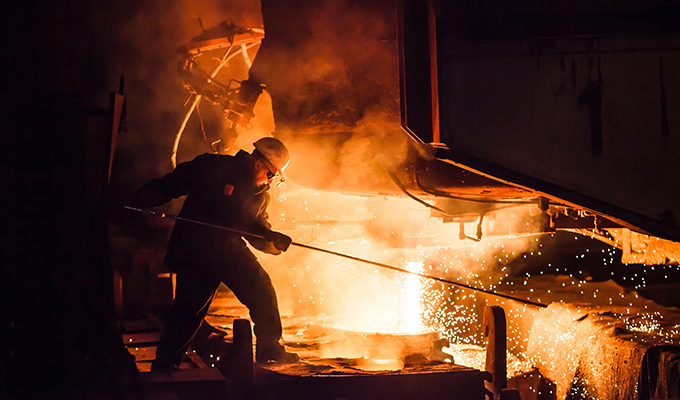
The EU needs to cut red tape and reward companies that meet emissions reduction targets in order to incentivise costly investments into decarbonisation, participants said at this week’s Industry in Transition conference in Katowice.
Stefan Moritz, secretary general of the European Entrepreneurs “CEA-PME” confederation, bemoaned the European Commission has failed to get rid of administrative hurdles that delay investment. The EU has a Net-Zero Industry Act, but Moritz asked: “Can we have a net zero administration act?” He added: “Can we reward virtuous consumers, those who use less energy?” Guaranteeing tax breaks or financial rewards would incentivise investment, he suggested.
The comments came despite European commissioner for the internal market Thierry Breton opening the conference with a video message assuring the Commission is reducing bureaucracy, which should benefit green steel projects.
As for the impact of the transition on industry, Moritz asked: “Is it a cost or a benefit? We only see the costs now, but we want to make it a benefit. In the long run, we want to make sure renewables and nuclear are cheaper than energy today. But this has massive infrastructure costs and raw materials supply challenges. These very high investment costs must be diluted for the next 26 years in order to prevent an economic shock now, to get step by step to where we need to go.”
ArcelorMittal Poland chief executive Wojciech Koszuta stressed the “steel industry wants to stay in Europe … But we need to have tailwinds, or at least no headwinds. If we have lots of regulations, we need to adapt to them, yes. But this regulation should not stop businesses from functioning. The technology is there – a portion of Polish steel is already produced in electric arc furnaces. But this technology costs money and we will need to spend lots of money.”
Koszuta cautioned against the EU giving up its steel market share to imports. In 2012, imports accounted for 12% of the bloc’s steel consumption. In 2023, this had risen to 26%. “Is this a direction we want to go in? I think not,” the ceo said at the event attended by Kallanish. Europe needs to have captive steel supply to produce the infrastructure required for its renewable energy rollout, he added.
“Steel in Europe is currently too expensive. That makes our wind mills more expensive, our cars and building houses more costly,” Moritz pointed out. “We are now starting to buy wind turbines from China. We already buy batteries from China, already buy solar from China. What else do we want to buy from there?”
He also said the Carbon Border Adjustment Mechanism must cover not only steel imports but also imports of the final steel-using product, such as wind turbines from China.
Adam Smith Poland
UK Steel proposes 2026 CBAM start
UK Steel has proposed the UK government bring forward the implementation of its prospective Carbon Border Agreement Mechanism (CBAM) by one year to 2026, to align with the EU’s schedule. This would minimise the risk of trade barriers and trade diversion, the UK trade association says.
The recommendation is one of 12 made by UK Steel in a new report on key design principles for CBAM.
“Over 90% of global steel production faces no carbon cost, so it is crucial that a new UK carbon border creates a level playing field on carbon pricing. This will ensure that imported steel faces similar levels of carbon costs as domestic steel producers,” UK Steel director general Gareth Stace says in a note sent to Kallanish.
“The UK CBAM must be designed to be robust and impenetrable. Otherwise, there is a substantial risk of significant damage to the UK steel industry at the time of once-in-a-lifetime investment in state-of-the-art, modern Net Zero steel production,” he adds.
An estimated 22.5 million tonnes of high-emission steel currently imported by the EU would be at higher risk of being diverted to other open markets once EU CBAM is implemented in 2026. If just 10% of this were to be diverted to the UK, that would result in a 45% increase in UK imports, corresponding to around 80% of the UK market, UK Steel says.
In 2026, EU free allowances will be reduced by 2.5%, and the UK government plans to implement its reforms to free allocation. This will result in importers of UK-made steel having to buy EU CBAM certificates, as the legal and cost compliance obligations are on importers, the trade association notes.
“Where the actual cost falls directly or indirectly will be a matter for commercial discussions and agreements with any EU-based customers and will be bespoke to each commercial agreement. However, an additional cost is placed on UK-made steel if imported to the EU market, which will constitute as a disadvantage to the UK steel industry’s biggest export market,” UK Steel says in the report.
UK Steel also recommends delaying the inclusion of scope 2 emissions, until there is a complete decarbonisation of the electricity grid. It says all UK Emissions Trading System (ETS) sectors should be covered to minimise the risk of material substitution, as should products where CBAM materials make up a substantial part, to avoid value chain circumvention. CBAM should also be linked to UK ETS and be based on weekly average ETS prices.
Moreover, UK CBAM should obtain mutual recognition with EU CBAM to enable frictionless trade with the UK’s largest trading partner. Non-EU exports should meanwhile be exempted from UK ETS costs to avoid disadvantaging trade to non-EU markets, and CBAM revenue should be earmarked for industrial decarbonisation.
Adam Smith Poland
Assofermet: piena condivisione della mozione CBAM approvata alla Camera
È stata approvata lo scorso 10 aprile una mozione parlamentare della Camera dei Deputati che impegna il Governo a confrontarsi con le istituzioni europee per rivedere alcuni aspetti del CBAM. Assofermet esprime piena soddisfazione in merito alla mozione e ne sottolinea l’importanza strategica per il futuro del Meccanismo. Da un lato, gli interventi dei Deputati in Aula e il testo finale della mozione sottolineano le stesse perplessità che la nostra associazione evidenzia da tempo: l’applicazione esclusiva del CBAM alle materie prime (come la ghisa) e ai semiprodotti e semilavorati di acciaio e alluminio, le difficoltà a reperire informazioni dai fornitori extra UE e molto altro. Dall’altro lato, i dubbi più evidenti sono stati sottolineati trasversalmente da gruppi parlamentari molto diversi fra loro, sia di maggioranza sia di opposizione. È un passaggio decisivo che evidenzia che le preoccupazioni sul futuro dell’economia e dell’industria europee non hanno colore politico.
“Visto il successo della mozione, ci auguriamo che proprio il Governo italiano proponga per primo le modifiche legislative necessarie”, ha dichiarato Luca Carbonoli, Direttore di Assofermet. “Assofermet è a completa disposizione per dialogare con le istituzioni governative in merito a quello che riteniamo fondamentale cambiare“.
Assofermet si è sempre schierata a favore della transizione ecologica, purché venga salvaguardato e non penalizzato il sistema economico del nostro territorio. Fra le varie preoccupazioni discusse alla Camera dei Deputati, uno dei punti cruciali è la difficoltà di reperimento dei dati da comunicare alla Commissione UE. Il Presidente di Assofermet Acciai, Paolo Sangoi, rivela che “la prima scadenza di fine di gennaio 2024, data entro la quale sono stati comunicati i dati relativi alle importazioni del quarto trimestre 2023, ha purtroppo confermato tutte le nostre previsioni. È estremamente complicato reperire le informazioni dai fornitori e si sono verificate importanti complicazioni nell’inserire i dati nel sistema. Ancora oggi sono molti i produttori che si dichiarano non disponibili a fornire una certa parte di dati in quanto ritenuti estremamente riservati”. Un altro tema centrale è l’applicazione esclusiva del CBAM alle materie prime e ai semiprodotti. Questo, continua Sangoi, lascia “piena libertà di import dei beni e componenti realizzati fuori dalla UE con la stessa materia prima che, se importata senza ulteriori lavorazioni o trasformazioni, è soggetta alla normativa. Si tratta di una serie di clamorosi errori normativi: nella fase di studio non si è evidentemente tenuto conto delle conseguenze sul sistema manifatturiero e sulla sua competitività”. Questo si tradurrà in un maggior costo delle materie prime che la manifattura UE sarà costretta a subire, a differenza dei suoi competitor stranieri che potranno contare su materie prime a prezzi più vantaggiosi. Un’altra conseguenza è rappresentata dal rischio concreto di esodo di aziende manifatturiere. È prevedibile che molte imprese trasferiranno i propri siti produttivi nei Paesi che permetteranno di operare nel rispetto dell’ambiente ma con minori restrizioni rispetto alla UE, evitando la tassa all’import in partenza a gennaio 2026.
La mozione approvata alla Camera dei Deputati lo scorso 10 aprile è il primo passo per poter affrontare questi temi in sede legislativa a livello UE. La speranza per il futuro della competitività europea è che si continui a perseguire la transizione ecologica senza però penalizzare il sistema economico nel suo complesso.

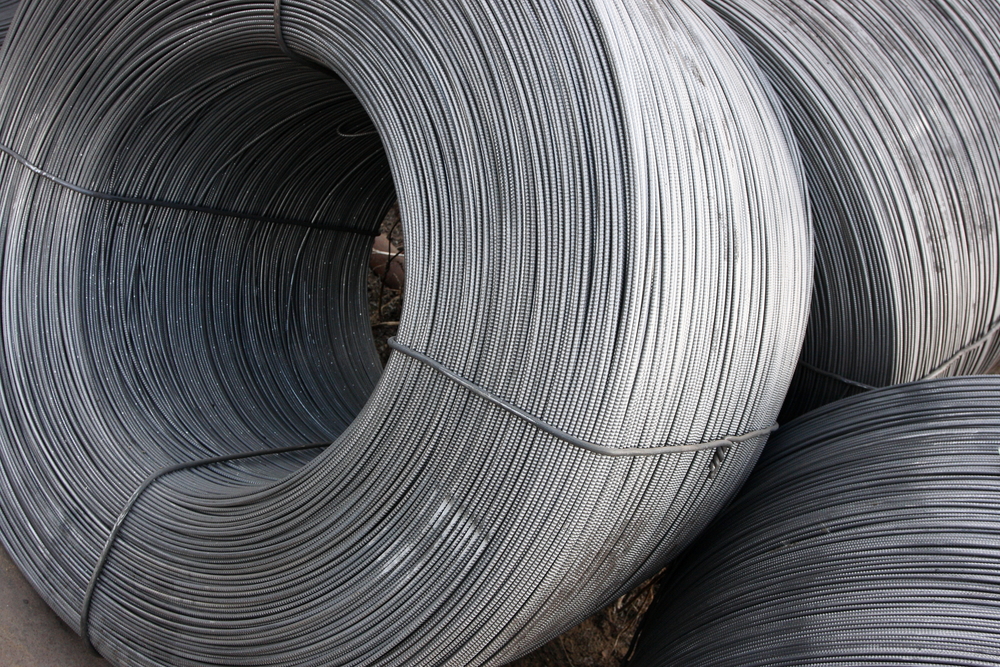
ArcelorMittal increases prices for long steel products across Europe
And wire rod was heard offered at 3,000 Polish zloty per tonne CPT.
Buyer sources told Fastmarkets that demand for long steel products remained slow and expressed skepticism that the new prices would be accepted in deals, citing that the construction sector — the main consumer of long steel products — was still not performing well.
“The new prices have not been sealed in deals yet — buyers are resisting,” a trading source told Fastmarkets.
Prices for long steel products in Europe have been declining recently, mainly due to slow demand from construction, the key end-user sector.
Fastmarkets’ weekly price assessment for steel reinforcing bar (rebar), domestic, exw Poland was 2,650-2,670 zloty per tonne on April 12, down by 5.96% from 2,787-2,870 zloty per tonne on February 23.
And Fastmarkets’ weekly assessment for steel reinforcing bar (rebar) domestic, delivered Northern Europe was €630-655 ($670-697) per tonne on April 10, compared with €655-665 per tonne on February 21.
Despite depressed buyer sentiment, one seller source said that the price for long steel products in Europe would not decrease further because of high production costs.
Besides, imports have become less attractive, with some suppliers having already depleted their second-quarter allocation for some products, the seller source added.
Notably, Turkey’s wire rod import allowance of 116,233 tonnes for April-June had already been fully utilized on Monday April 15, European Commission’s customs data showed.
As for the “other countries” quota for April-June, only slightly over 11,000 tonnes out of the 119,890-tonne allocation were available on Monday.


Slow demand pushes European HRC prices down further; outlook mixed
In Northern Europe, buyer estimates of the tradable level came in between €620 ($660) and €640 per tonne ex-works.
A German mill reportedly sold HRC at €620 per tonne ex-works on Tuesday, but only for a limited tonnage, sources said.
May deliveries were still available from European mills, which is another indication of weak order books.
Fastmarkets calculated its daily steel HRC index, domestic, exw Northern Europe, at €630.00 ($670) per tonne on April 16, down by €8.96 per tonne from €638.96 per tonne on Monday.
The index was also down by €15.83 per tonne week on week and by €62.50 per tonne month on month.
Near-term expectations for prices were largely pessimistic among buyers, mainly due to a lack of real demand.
“Orders from the automotive sector are around 20% down year on year and there are no signs of a rebound, maybe even until the end of 2024,” a distributor in Germany said.
“Producers need to fill order books for the second quarter, they are chosing volumes over prices,” a source at a steel-service center said.
Despite numerous talks about production cuts being the only way to stop the downtrend, European mills were not announcing any immediate equipment stoppages.
Several sources, however, said that one Central European supplier stopped one blast-furnace in the first half of April.
In Southern Europe, Fastmarkets’ daily steel HRC index, domestic, exw Italy, was calculated at €622.08 per tonne on Tuesday, down by €0.42 per tonne from €622.50 per tonne on Monday.
The Italian index was down by €9.17 per tonne week on week and by €49.59 per tonne month on month.
Activity in the Italian market has also been subdued, sources said, with slow demand continuing to put pressure on prices.
Official offers for May delivery HRC from a local supplier were reported at €640 per tonne delivered on Tuesday, which nets back to 630 per tonne ex-works.
Buyers, however, estimated achievable prices at no higher than €615-620 per tonne ex-works.
No fresh import offers were reported on a Tuesday, sources told Fastmarkets, with Asian mills maintaining their HRC offers at €580-590 per tonne cfr for July-August arrivals.