US Steel Kosice extends blast furnace stoppage on weak steel demand
The company confirmed the extended downtime to Fastmarkets.
“We have adjusted our production capacity to market demand. We decided to extend a March 2024 planned outage of Blast Furnace No2 into the second quarter of 2024,” the company said.
USSK has three blast furnaces with a combined capacity of 5 million tpy of pig iron. The steelmaker produces hot-rolled, cold-rolled and hot-dipped galvanized coil.
Prices for flat steel in Europe have been falling non-stop since early February 2024, following a short-term rebound in January that was driven by restocking.
In March 2024, Fastmarkets’ daily steel hot-rolled coil index, domestic, exw Northern Europe averaged €691.99 ($742.78) per tonne, down by €46.29 per tonne from €738.28 per tonne in February.
On April 15, the index was calculated at €638.96 per tonne, down by €0.21 per tonne from €639.17 per tonne on April 12.
Market participants told Fastmarkets they were not ruling out a further downward correction in April, given the weak demand and plentiful supplies.

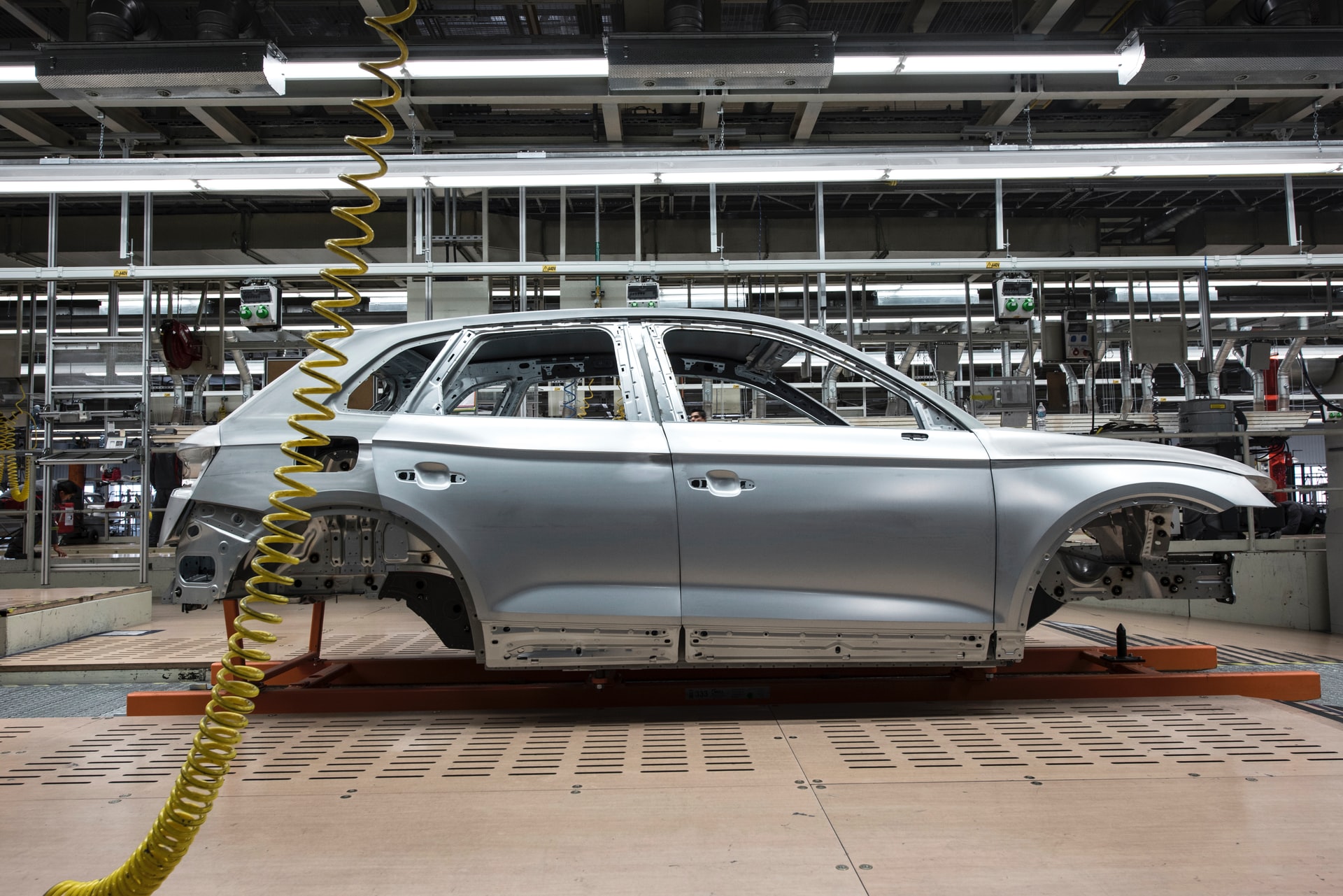
Italian car output declines, underperforming European neighbors
Italian passenger car production declined in February and in the first two months of the year, Kallanish notes from local carmakers association Associazione Nazionale Filiera Industria Automobilistica (Anfia) preliminary data.
Car output fell year-on-year by 5.1% in February to 41, 873 units and by 19.1% on-year in the January-February period to 69,249 units.
By comparison, German two-month output declined by 5% to 674.900 units, and by 2% to 374,800 cars in February. The UK recorded a rise in February of 14.6% to 79,907 cars and of 17.8% to 162,904 units in January-February. Spain’s February car production increased by 1.8% to 182,567 cars and in January-February by 9% to 359,375 cars, Anfia points out.
“The automotive production sector is in the context of industrial production still decreasing in February compared to the previous year’s levels. In February, the industrial production index as a whole closed down 3.1%, and is down 4.4% in the first two months of the year compared to the same period in 2023,” Anfia says in a report.
Italy has 23 car production plants. Spain has 17 plants, France 31 and Germany 42.
Last year, Italy produced 796,394 vehicles in total, including cars, vans and trucks. Anfia is collaborating with the government and Stellantis to define a roadmap for the automotive industry’s relaunch and energy transition. It aims at boosting Italy’s automotive production capacity beyond the level of 1 million vehicles/year through state support on decarbonisation, research and development and new production plant investments.
“We hope that in the coming weeks, consumers will be able to take advantage of the upcoming incentives of the new green bonus for the purchase of low-emission vehicles. Together with the actions to support demand for new technologies, it is important to create the conditions to increase national vehicle production volumes in the short-medium term, ensuring the levels of employment and competitiveness of the supply chain during and beyond the energy transition,” Anfia general director Gianmarco Giorda comments.
According to the World Steel Association’s Short Range Outlook (SRO) steel demand forecast for 2024 and 2025, while other steel-consuming sectors should show some recovery in 2024 and 2025, the automotive industry which showed a strong activity improvement in 2023 is expected to experience weak growth in 2024 (see Kallanish passim).
Natalia Capra France

SSAB ceo Lindqvist to step down
After 26 years with SSAB, and 13 years as its president and chief executive officer, Martin Lindqvist has decided to leave the company, it informs Kallanish.
He has six months’ notice, but has agreed to stay until a successor is in place. A recruitment process will start immediately, the Swedish steelmaker says.
Lindqvist has been employed at SSAB since 1998 and served as the company’s president and ceo since 2011. Under his leadership, SSAB completed the acquisition of Finnish company Rautaruukki. In 2016, work began to transform the steel industry to fossil-free production through Hybrit, a joint venture involving SSAB, LKAB and Vattenfall.
SSAB has since then taken a policy decision to transform the entire Nordic production system to fossil-free production.
”At some point, you have to step down, and for me that time has come. In the future, I will spend more time on board assignments and advisory roles,” Lindqvist says.
Christian Koehl Germany

Market slowdown hits Van Leeuwen performance, remains profitable
After highly favourable market conditions in the previous two years, Van Leeuwen Pipe and Tube Group’s performance stuttered in 2023 but remained positive.
Demand in various markets declined, causing price pressure which resulted in lower gross margins, Kallanish hears from the Dutch company. Revenue stayed virtually the same as in 2022 due to a higher volume of direct deliveries and projects, at €1.62 billion ($1.72 billion). Operating result amounted to €60 million, after €104m 2022, and net result came to €43m, down from €88m.
Sales from stock were lower in all markets than the previous year due to decreased market demand. This was, however, offset by a higher volume of direct deliveries and projects.
Van Leeuwen notes it maintained its share in the European industrial markets. Demand was lower in the construction and mechanical engineering markets, but was good in the hydraulics and automotive sectors. The group benefited from solid activity in the global energy markets, as it supplied energy projects in the Middle East, Asia and the US.
The company invested in logistics and storage systems, specialised processing systems, and in the modernisation and expansion of warehouses and offices. It also invested in sustainable solutions. It has the ambition to be the greenest pipe and tube distributor in the world by 2030. To date, Van Leeuwen has invested €6.5m in captive green electricity generation at sites in the Netherlands, Germany, Romania, Denmark and Australia.
Christian Koehl Germany
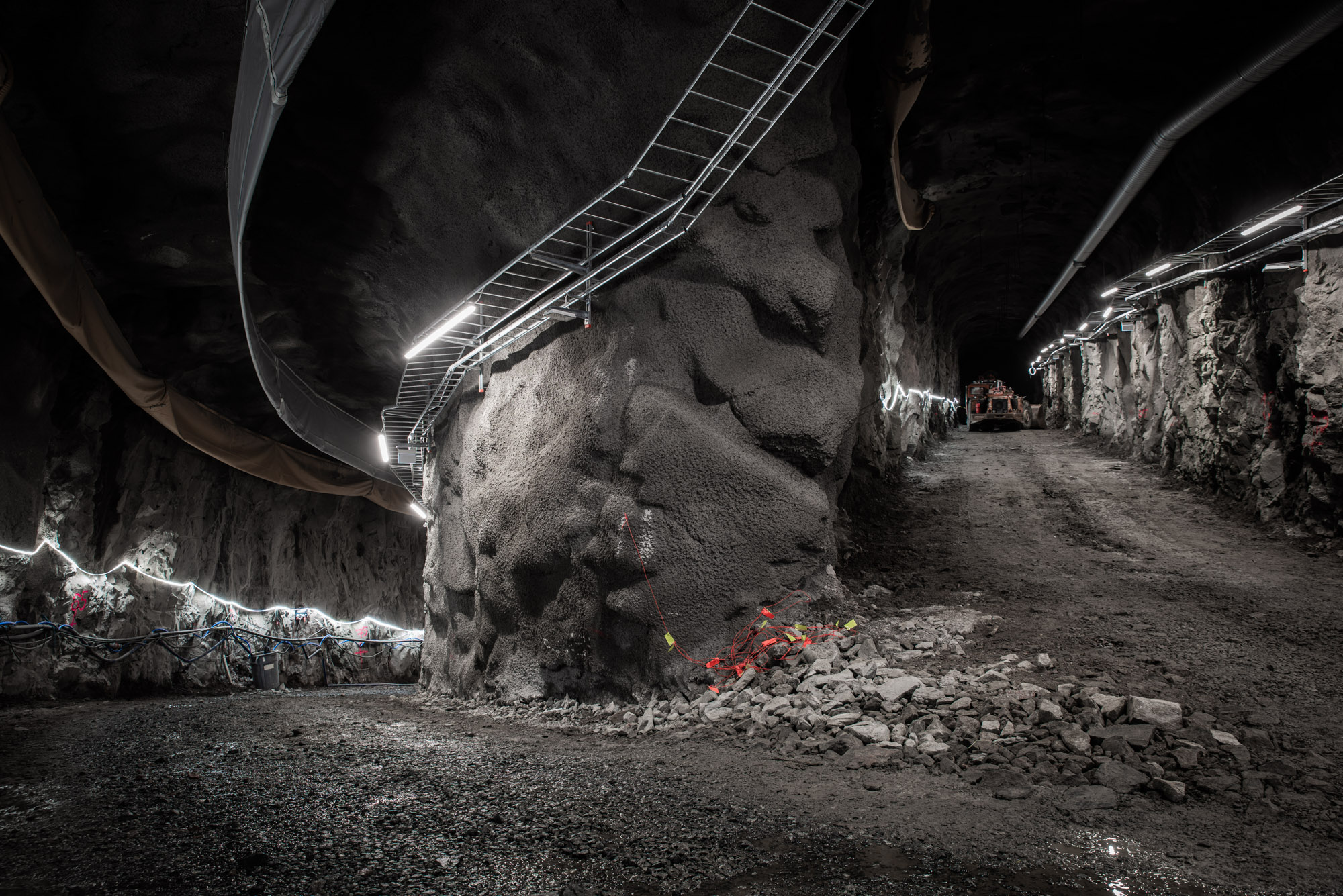
European steel lacks hydrogen, CCUS needs accelerating: panel
It will likely take 20-25 years for Europe to secure sufficient hydrogen supply to decarbonise its steel industry. In the meantime, Polish coking coal will continue to play a role, while carbon capture use and storage (CCUS) must be accelerated. This was the conclusion of a panel during Monday’s Industry in Transition conference held in Poland’s industrial capital, Katowice.
Europe’s steel industry requires 5 million tonnes/year of hydrogen supply to decarbonise its operations, Eurofer director general Axel Eggert pointed out at the event organised by the Katowice commerce and industry chamber, attended by Kallanish. Major steelmaking projects in the region will be ready to use hydrogen by 2026/27, but there is no hydrogen supply. Conventionally-produced hydrogen is available at €10-11/kg but it needs to be at €2-3 to be competitive, he added.
Coking coal will be required as long the alternative technology is not fully implemented, which will take a long time in the EU, opined Tomasz Slezak, who recently became chief executive of state-owned Polish coal exporter and steel processor Weglokoks. Poland has the coal mines, the skilled workforce and the knowhow, which gives it some breathing space. However, coking coal is negatively perceived despite being on the EU’s Critical Raw Materials list.
European Parliament Member and former Polish Prime Minister Jerzy Buzek, moderating the panel, pointed out that by utilising CCUS, industrial firms could use coal for the next 100 years if they wished.
Eggert added that CCUS is critical for the development of Europe’s steel industry. There will not be sufficient renewable energy supply to meet demand by 2034, when the EU’s free carbon emissions allowances are due to expire. That means CCUS will be necessary to continue coal-based steelmaking for a time.
The EU’s Net Zero Industry Act (NZIA) has set a target of 50 million tonnes of annual CO2 storage capacity by 2030. This would need to increase to 280mt by 2040 and 450mt in 2050 to achieve climate neutrality. “We need to speed up the process because ten years is not a lot,” warned Eggert, adding that CCUS locations still need to be chosen and the installations set up.
Adam Smith Poland

Costlier energy impacts Spain’s steel industry: Unesid
The forecast for 2024 is moderate optimism, delegates tell Kallanish on the sidelines of the EUROMETAL Steel Net Forum Iberia in Santiago de Compostela.
“The Spanish steel industry faced persistent challenges due to the high energy price,” Unesid general director, Andrés Barceló, explains. The average of the electricity pool was 87.1 KWh, almost double that in 2019, affecting the sector’s competitiveness. Likewise, Unesid assures that high CO2 costs and the slowdown in European steel demand continue to hamper activity.

“Despite the turbulence of the last two years, the initial data for 2024 invites optimism,” adds Barceló.
Barceló confirms that the industry is committed to decarbonisation but needs the support of the Spanish authorities to guarantee the competitiveness of steel companies.
In 2023 the country produced 11.4 million tonnes of steel, 1.2% less than the previous year. Ferrous scrap recycling was up 3.2% year-on-year to 9.3mt.
Domestic consumption reached 12.6mt, a growth of 1.2% compared with 2022. From these, imports by third countries represented more than 30% of total demand.
Spain remained a net importer in 2023. The country had a negative trade balance, with entries exceeding exports by 2.5mt. Imports rose by 3.3% y-o-y to 10.1mt, while shipments abroad totalled 7.6mt, or 5.8% less than 2022, Unesid data shows.
Todor Kirkov Bulgaria

Iberian steel distributors remain cautious about market recovery
Spanish and Portuguese steel distributor representatives foresee market conditions “without major changes” in the following months in a complex global scenario. Steel prices are seen stable with fluctuations not exceeding €5-10/tonne ($5.3-10.6/t), Kallanish hears during Friday’s EUROMETAL Iberia Steel Net Forum in Santiago de Compostela.
The new economic reality is seen requiring new solutions from both producers and the distribution chain. The sector says some old concerns remain, while it faces a challenging scenario.
“There is no big change in demand in the Iberian Peninsula since mid-2023,” comments Andrés Barceló, general director of the steelmakers association Unesid. “This is attributable to the EU economic crisis, and the conflicts in Ukraine and the Middle East. Inflation is also concerning.”
The executive confirms that the region has enough capacity to supply the market although steel production fell in 2023. The Spanish steel industry faced persistent challenges due to high energy prices and growing imports from non-EU countries, Barcelo observed.
According to the Spanish distributors association Unión de Almacenistas de Hierros de España (UAHE) president Roberto González, stocking in Iberia remains at a stable and healthy level, despite weak demand. He considers that by having undertaken an innovation process, companies in the sector are improving their services.
“Value is being added to the distribution chain because the market demands it. Digitalisation improves the sustainability and profitability of services,” he says. “Good management by companies in the face of the challenging economic panorama does not consist only of selling steel, but also of supplying better and innovative services to customers.”
Sustainability and a good image of the distribution chain must be an additional argument to grow the relationship with customers, points out Manuel Nobre, president of the Portuguese steel distributor association Açomefer.
“Our chain is an essential and fundamental link that completes the steel industry. We have problems with the image. Society should not take us as mercantilists or speculators, dismissing the efforts of our companies. We have to communicate and value customers. It may sound somewhat theoretical, but to clean up the image we need to better promote what we do within the industrial chain, with added value, so that the client understands it better,” Nobre comments.
A representative from a service centre expresses concern that if distributors do not uniformly maintain sales margins, investments and technology improvement will be in vain.
“Efforts in maintaining margins should be a priority for all distributors, as they are for steelmakers,” he comments. “The end user must understand that our service has a cost, which has been constantly increasing in recent years. The diversification of services together with a good pricing policy can guarantee our margins.”
The participants agree that attracting young specialists to the steel industry should be a priority since the sector does not seem as attractive to work in as others.
“We hope that technological innovations and the development of renewable energy sources for steel manufacturing will bring more and better-qualified workforce in next years, but to happen this the industrial chain must improve the business environment,” urges Arimany Ferro executive Josep Arimany.
Todor Kirkov Bulgaria
Iberian distributors gathered in Santiago de Compostela
EUROMETAL Steel Net Forum Iberia 2024 brought together 185 participants in Santiago de Compostela.
This event was organized in collaboration with Unión de Almacenistas de Hierros de España (UAHE) and the Associação Portuguesa dos Grossistas de Aços, Metais e Ferramentas (Açomefer).
The Steel Net Forum Iberia 2024 featured presentations by Luis Ángel Colunga (Ministry of Industry) the special commissioner for the Industrial Decarbonization PERTE, Colin Richardson from Argus Media, Charles Kirby from EY, Andrés Barceló from UNESID, Eva Fraguela from Megasa and Àngel Sánchez from SILO.
It also featured a panel discussion on “Steel Distribution in Iberia: are we prepared to also face the new challenges?” moderated by Juan Carlos Núñez and with the panelists: Manuel García Neira (Hierros Diego), Manuel Nobre (Açomefer / FAF Produtos Siderúrgicos), Roberto Gonzalez (UAHE / Tirso CSA) and Jose Arimany Palau (Arimany Ferros).
Here you will find some repercussions of the event in the press:
- Iberian steel distributors remain cautious about market recovery
- UNESID cautiously optimistic for Spanish steel sector in 2024
- Costlier energy impacts Spain’s steel industry: Unesid


Thyssenkrupp to cut steel output in Germany by around 20%
During a meeting of its executive board on Thursday April 11, the company decided to scale back steel output at its largest steelmaking hub in Duisburg, North Rhine-Westphalia, it said in a press release on the same day.
The Duisburg site has a production capacity of around 11.7 million tpy of pig iron at four blast furnaces (BFs) and around 11 million tpy of crude steel.
The company said steel output will be brought down in line with actual steel shipment levels over the past three years. The registered steel shipments from Thyssenkrupp’s steel assets were around 9-9.5 million tonnes, while actual production levels were noticeably higher at 11.5 million tonnes, the company said.
The company operates mainly in the flat steel products sector and is one of the largest global suppliers of high-grade flat steel.
Thyssenkrupp said it expects shipment volumes to remain at mentioned levels, that is around 20% below previous production levels.
Rising costs of production, increased import pressure from Asian countries and ongoing deterioration of steel balance were the key factors undermining the competitiveness of Europe-produced steel, the company said.
“Shipping volumes are expected to remain at the level registered over recent years in the future as well. In comparison, the total production capacity still installed today is far too high, meaning that the entire production network is structurally underutilized,” Thyssenkrupp said in the release.
The company said that planned measures would entail job cuts, but did not give details on the number of losses.
Fastmarkets asked Thyssenkrupp for further information on the exact steps and the timeline for scaling production down but the company did not comment.
“Most likely it will be one to two BFs down, but then rolling lines in Bochum also need to be adjusted. Hard to say exactly at this stage,” a source in Germany said.
Speculations about output and job cuts at Thyssenkrupp first emerged in February this year, but the company denied all allegations at the time.
European flat steel market brief
Prices for flat steel in Europe have been falling non-stop since early February 2024, following a short-term rebound in January driven by restocking.
In March 2024, Fastmarkets’ daily steel hot-rolled coil index, domestic, exw Northern Europe averaged €691.99 ($742.78) per tonne, down by €46.29 per tonne from €738.28 per tonne in February.
On April 11, the index was calculated at €640.35 per tonne, down by €2.90 per tonne from €643.25 per tonne the previous day.
And market sources were not ruling out further downward correction in April amid weak demand and oversupply.
“For months, we have been talking about the need to reduce steel production in Europe, but nothing has been done,” a buyer in Germany said. “[HRC] prices have decreased a lot since January and keep sliding, but nobody is booking because lead times remain short and the downtrend has not stopped.”
And sources say end-user demand for steel in Europe is unlikely to rebound strongly in 2024, but rather remain rather stable at low levels.
This view follows outlooks Worldsteel and Eurofer, the European steel industry association.
Notably, in its short-range outlook published in April 2024, Worldsteel pointed out that the EU remains the region currently facing the biggest challenges.
“The region and in particular its steel using sectors are challenged on a multitude of fronts – geopolitical shifts and uncertainty, high inflation, monetary tightening and partial withdrawal of fiscal support, and still high energy and commodity prices…After only a technical rebound in 2024, the region’s steel demand is expected to finally show a meaningful recovery with a 5.3% growth in 2025. The forecasted steel demand for the EU in 2024 is only 1.5 Mt higher than the pandemic trough in 2020,” Worldsteel said.
According to Eurofer, EU apparent demand is expected to recover by 5.6%, rising to 137 million tonnes in 2024. This was revised down its previous upbeat forecast of a 7.6% recovery for the year.
Will other European steelmakers follow?
In the past years, crude steel output in Europe has been declining.
In 2022, crude steel production across Europe amounted to 136.3 million tonnes, down from 152.6 million tonnes in the previous year. The decline was due to massive output cuts implemented by European mills in the third and fourth quarters of 2022, facing deteriorating demand and falling steel prices.
In 2023 steel output sank even deeper, even considering the low comparative base in the previous year. Crude steel production in 2023 was 126.3 million tonnes.
In the same year, steel production in Germany, which is the Europe’s largest steelmaker, hit the lowest market since 2009, reaching just about 35.4 million tonnes of steel. This was down 3.9% year on year amid challenging market fundamentals and high costs of production.
Some market sources believe this tendency will prevail in the upcoming years.
“We are heading toward a post-industrial society, with less steel needed in the upcoming years. [The steel] industry is clever enough not to create overcapacity,” a mill source in Europe said.
“Steel production in Europe would be no more than 120 million tonnes [per year] by 2030,” another producer source told Fastmarkets.
‘Green transformation unaffected’
Thyssenkrupp stressed that production realignment measures will not affect its green transformation plans.
“The construction of the first direct reduction plant at the Duisburg site will continue as planned, supported by the funding released by the federal and state governments for this purpose and essentially relating to the ambitious ramp-up of the plant’s hydrogen-based operation,” the company said.
Thyssenkrupp is building a 2.3 million tpy DRI module in Duisburg and by 2030, the plans be capable of producing around 5 million tpy of low-CO2 steel, Fastmarkets reported previously.
https://dashboard.fastmarkets.com/a/5108753/thyssenkrupp-sets-aside-funds-for-hydrogen-powered-dri-plant
Most European BF-based steelmakers have been investing in green steel projects in the past years, cutting emissions to comply with strict EU regulations.
But market sources did not expect new capacities to result in oversupply in the steel market because old furnaces will be gradually switched off.
“Interest for fossil-free steel will be bigger than supply, so in the short term there definitely will be room for new capacities,” a mill source said.
UNESID cautiously optimistic for Spanish steel sector in 2024
The Spanish steelmakers association UNESID has shared its 2023 data regarding the steel sector and its forecasts for this year.
Accordingly, the association stated that in 2023, due to high energy costs, local crude steel production decreased by 1.2 percent year on year to 11.4 million mt, which was the level recorded in 2020 and that the sector faced challenges because of the same reason. Despite the drop in production, scrap recycling activities in the country increased by 3.2 percent year on year to 9.3 million mt. Thus, Spain remained among the main recyclers in the EU. However, in the given year, domestic sales amounted to 6.4 million mt, down by 1.3 percent compared to the previous year, which was closer to the level recorded in 2020.
UNESID pointed out that demand in the local market rose by 1.2 percent year on year to 12.6 million mt in 2023. Specifically, demand for long products increased by 4.3 percent, which offset the 0.5 percent decrease in flats demand. Yet, imports from third countries represented more than 30 percent of total domestic consumption. Regarding foreign trade, the association highlighted that in 2023 steel imports went up by 3.3 percent year on year to 10.1 million mt and that imports from third countries, which showed a 1.3 percent decrease, were at the highest level of the last 15 years at 4.1 million mt. On the other hand, total exports from Spain dropped by 5.8 percent compared to 2022 to 7.6 million mt, while exports to third countries were down by 0.7 percent year on year to 2.1 million mt, which was one of the lowest export levels.
Andrés Barceló, general director of UNESID, stated that, despite the ups and downs of the last two years, the preliminary data for this year shows optimism, though it should be approached with caution. Mr. Barceló also pointed out that activity figures have shown some improvement since the end of last year. He also warned that carbon costs and a drop in European industrial demand will continue to affect the steel sector. “The industry is committed to decarbonization, but in order to achieve it, it needs the authorities to facilitate the conditions that guarantee the competitiveness of its companies,” Barceló added.