


Germany launches first climate CFD tender with Eur4 billion on offer
Companies are to bid in a required carbon price supplement for projects to proceed. Those with the lowest supplement to compliance carbon prices in the EU ETS will proceed.
The first tender focuses on mid-sized companies in the paper, glass, chemical, steel and metals sectors.
Support has been capped at Eur1 billion per project, with a typical 15-year support contract more likely to sum in the triple digit hundred million euros range, the ministry said.
“We want to keep industrial production and sustainable jobs in Germany,” said energy minister Robert Habeck.
Companies can use funds to switch to greener processes using renewable power or clean hydrogen, or to add carbon capture equipment to existing processes.
Pre-qualified companies can now submit bids with the first tender closing in June. A second tender focused on larger projects is to open in the summer and two tenders more are planned for 2025.
Industrial carbon target
In total, the instrument is estimated to support some 350 million mt of CO2 savings by 2045 amounting to around 20 million mt/year, which is a third of the 2030 emissions reduction target for German industry, the ministry said.
The German industry, which saw annual CO2 emissions plunge 12% on year in 2023 to around 144 million mt, needs to hit a 2030 sector target of 118 million mt under Germany’s climate law.
Platts, a unit of S&P Global Commodity Insights, assessed the Dec. 2024 EUA contract at Eur56.13/mt on March 11.
Analysts at S&P Global forecast EUAs to average around Eur54/mt in 2024, rising to a Eur82/mt average in 2025.
Basis for the contracts is a dynamic CO2 price adjusted to market trends for EUAs, clean hydrogen and electricity, the ministry said in supporting documents for the tender.
Author Andreas Franke, andreas.franke@

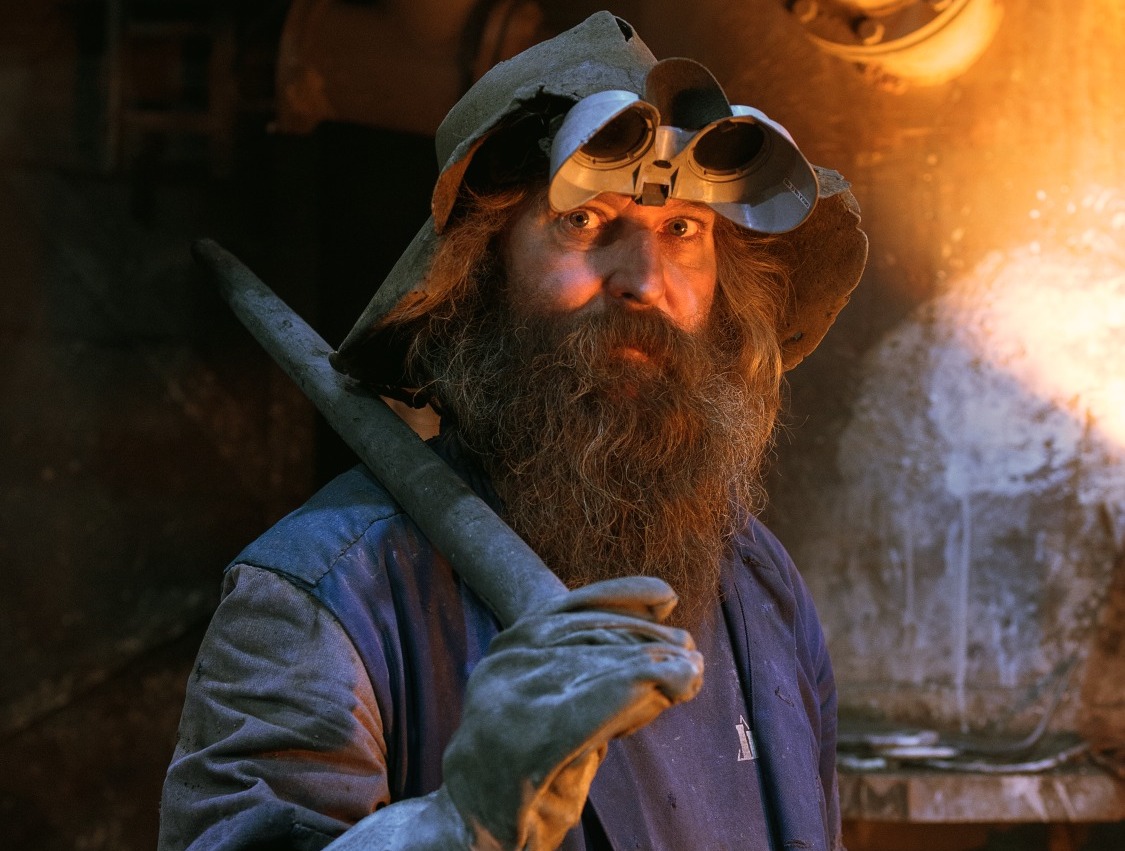
The Beauty of Steel: unveiling the enchantment of Steel with a visual archive
The steel industry, renowned for its strength and versatility, is about to be appreciated in a whole new light: its captivating beauty. Today marks the launch of a groundbreaking initiative, “The Beauty of Steel,” the first and largest visual database dedicated to celebrating the undeniable aesthetic appeal of steel.
“The Beauty of Steel” seeks to revolutionize how steel is perceived, showcasing its elegance and innovation. This one-of-a-kind platform invites the public on a virtual journey to explore the awe-inspiring world of steel production around the globe.
At the core of “The Beauty of Steel” lies a comprehensive online repository, accessible to enthusiasts, professionals, and the general public. The platform offers a treasure trove of captivating visuals, insightful articles, and compelling stories that unveil the aesthetic wonder of steel.
Beyond its vast collection, “The Beauty of Steel” prioritizes fostering a vibrant community. Interactive features like a geo map, user-generated content options, and authentic storytelling encourage global participation and a lively exchange of ideas. It extends its reach beyond the website with a strong social media presence, inviting users to connect using the hashtag #beautyofsteel.
“Steel is more than just a material; it’s a canvas for creativity and expression,” says Viktor Macha, Founder and CEO of “The Beauty of Steel.” “Our platform celebrates the inherent allure of steel while building a community of enthusiasts who share our passion for its aesthetic potential. Since 2008, we’ve documented over 355 factories across 5 continents and 33 countries. This is just the beginning.”
“The Beauty of Steel” welcomes everyone – engineers, managers, factory workers, artists, or anyone who appreciates beauty in everyday life – to explore, engage, and be inspired by the multifaceted beauty of steel.
Source: thebeautyofsteel.com
Acciaierie d’Italia attracts five interested companies: minister
Five multinational companies are interested in troubled steelmaker Acciaierie d’Italia (ADI), formerly known as Ilva, Italy’s Minister of Enterprises and Made in Italy Adolfo Urso said after a meeting with trade unions in Genova last week. Three of these five companies have projects that are “rather structured”.
“In Piombino, we managed to implement two different and complementary industrial projects. That of the Indian group [JSW] that has finally stated its intention to invest in the rail mill and that of the new investor, the largest Ukrainian multinational … the group Metinvest together with Danieli. I think this may be a model to apply in this case. We intend to build a national steel plan to present to the country before the summer, capable of showing the strategic objectives of the government,” Urso told local press.
The plan will include the relaunch of the former Ilva’s steelmaking sites, the relaunch of Piombino and Acciai Speciali Terni with Arvedi.
Last week, Urso and ADI commissioners Giancarlo Quaranta, Davide Tabarelli and Giovanni Fiori visited the plant in Genova. Union sources say the commissioners will implement a mapping of the equipment at the Taranto steelworks to understand the maintenance required.
ADI was declared insolvent by the Milan tribunal due to “an absence of liquidity”. This officially triggered the procedure of special administration initiated last month that took control of the firm from ArcelorMittal. It allows the state to inject into the company the necessary funds to guarantee production continuity (see Kallanish passim).
Authorities are seeking private investors for ADI after Prime Minister Giorgia Meloni said the government intends to avoid nationalisation. It is rumoured to be in talks with local steelmaker Arvedi, but also with Metinvest and Jindal Steel subsidiary Vulcan Green Steel.
Meanwhile, the commissioners have appointed Giuseppe Cavalli as director general of ADI.
Natalia Capra France

Abandoning ‘Power Pools’ hampers steel electrification: UK Steel
The UK government’s abandoning of the Green Power Pools policy proposal is a blow to the steel industry’s electrification aspirations. The move will likely hit steelmakers with higher wholesale electricity prices for many years before new generation is deployed in their locality, says UK Steel.
The Green Power Pool was one of the key proposals in the government’s Review of Electricity Market Arrangements (REMA) consultation process. Power Pools have been adopted in France, Italy and Greece and were proposed by government because of their ability to deliver a more efficient energy system and provide lower prices for industry.
The government has however confirmed that it will only proceed with a locational marginal pricing (Zonal LMP) model. Zonal LMP would separate the network into many individual zones, each zone with its own price, to encourage new generation near demand and encourage power users to locate near existing generation, UK Steel says. Steelmakers cannot however relocate to lower-price zones.
With a further switch to electric arc furnaces, it is expected that the sector’s electricity consumption will roughly double.
“Government is missing a golden opportunity to ensure electrified, green steelmaking can thrive in the UK,” UK Steel energy and climate change policy manager Frank Aaskov says in a note sent to Kallanish.
“As the steel industry switches to electric furnaces to reach vital Net Zero targets, we must not lose sight of how important electricity costs are in the move to green steel. We paid £117 million [$150m] more for our electricity in 2023 than our European competitors. Discarding the Green Power Pool proposal makes it unclear how the Government seeks to fix this,” Aaskov continues.
“The Government has worked hard to deliver its Industry Supercharger package to reduce industrial electricity costs, only for it to go forward with wholesale market reforms which could increase power prices. This is like giving with one hand, while taking with another,” Aaskov concludes.
Adam Smith Poland

ArcelorMittal agrees to buy 28% stake in Vallourec
ArcelorMittal has agreed to acquire 28.4% of French tubing producer Vallourec for approximately €955 million ($1.09 billion), Kallanish learns from a press release issued by the Luxembourg-based steelmaking giant late Tuesday.
ArcelorMittal will purchase 65.2 million Vallourec shares for €14.64/share from funds managed by Apollo Global Management. The parties expect to close the transaction in the second half of 2024, pending regulatory approvals.
ArcelorMittal ceo Aditya Mittal calls Vallourec “a quality, high added-value tubular business, with established positions of strength in the attractive Brazilian and US markets.”
Vallourec provides premium tubular goods for energy, automotive and construction. The statement says 85% of Vallourec’s 2.2 million tonnes of annual rolling capacity is focused around low-carbon, integrated production hubs.
“It has a critical role to play in the energy transition, producing vital products for hydrogen, [carbon capture] and geothermal applications, for which demand is expected to grow,” Mittal adds. “It also has a comparatively low carbon footprint with ambitious improvement targets.”
ArcelorMittal specifies that it will not pursue a tender offer for the remaining Vallourec shares over the next six months.
Dom Yanchunas USA
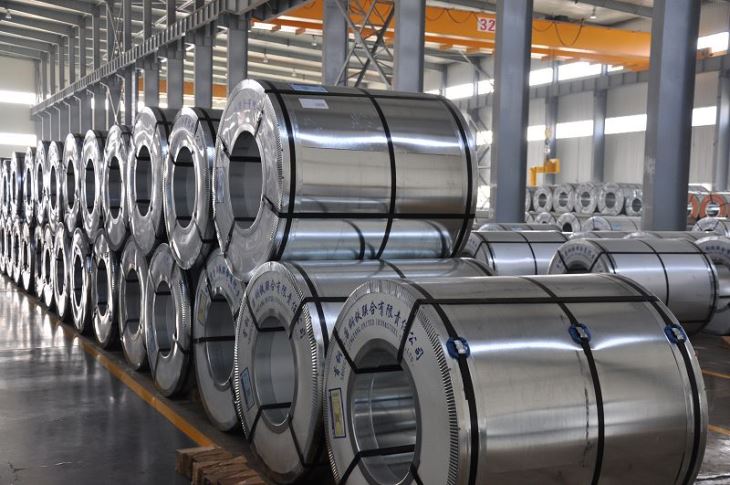
EU renews anti-dumping measures on Chinese HDG for another five years
An expiry review was started in February 2023, which concluded that injurious dumping would resume if measures were allowed to lapse, Fastmarkets understands.
The main export destinations for Chinese HDG were Thailand, South Korea, Vietnam, Brazil, Indonesia, Israel, Chile, Peru and Japan, according to data from the Global Trade Atlas (GTA).
The average export price for Chinese HDG was 15% lower than the price prevailing on the EU market during the review investigation period (February 2023-March 2024).
On top of that, shipping costs from China to Europe decreased significantly during the investigation period, the Commission said.
“If the measures were to expire and the prices at which the Chinese exporting producers would export the product concerned to the [European] Union were in line with the export price to third countries observed during the review, the level of dumping would be significant,” the Commission said.
The decision to maintain the AD duty in the range of 17.2-27.9% — depending on the supplier — for another five years was announced in the Official Journal of the EU on Monday and will come into effect on Tuesday March 12.
Renewing these measures on HDG imports from China was necessary to continue to ensure fair competition between imported and EU-produced HDG, Fastmarkets understands.
Market brief
European HDG prices have been falling since the beginning of February amid weak end-user demand.
“Lack of demand remains the key issue,” a buyer in Italy said. “Prices are sinking lower, but nobody’s buying because there is a perception that rock bottom has yet to be reached.”
“Most buyers have sufficient stocks and in fact are trying to lower their inventories,” a trading source in Europe said.
“My impression is that, due to low activity in the construction market and the threatening downturn in the automotive sector, nothing spectacular will happen,” the trading source added. “Besides, high interest rates don’t stimulate investments.”
Fastmarkets’ weekly price assessment for steel hot-dipped galvanized coil domestic, exw Northern Europe was €820-830 per tonne on March 6, down by €10-20 per tonne from €830-850 per tonne a week earlier.


EMW opens new dispatch hall in Saxony
EMW Stahl Service, a mill-independent steel service centre based in western Germany, has opened a new dispatch hall in eastern Germany.
The newly-built location in Treuen, Saxony state was commissioned in February and the firm has pledged further investment in the site, Kallanish hears. It has a storage area of over 1,200m² and an enclosed space of 10,200m³.
The interior work in the warehouse extension was completed in early December 2023. Asphalt work in the outdoor area will follow by the end of March. This will allow more trucks to be loaded in parallel and mean more loads can be handled per day, significantly reducing the dwell time of trucks, EMW underlines.
From April, a new crane system with a lifting capacity of 36 tonnes will go into operation, allowing the inventory to be increased from the current 7,700 tonnes to 16,000 tonnes.
The warehouse’s steel structure used only “green” steel from the X-Carb brand by ArcelorMittal. The “self-imposed goal is to become climate-neutral by 2030 in scope one,” says Michael Mockenhaupt, chairman of EMW’s executive board.
EMW is part of steel fabricator group Schaefer Werke, based in the Siegerland region of North Rhine Westphalia.
Christian Koehl Germany

Will CBAM protect the European steel industry?
In mid-February, the European Commission started the process of reviewing the protective tariff quotas on steel imports. This was prompted by an appeal from 14 member states to extend the tariff quotas until 2026. In their appeal, they pointed out that it was necessary to protect the market before the start of the CBAM.
If one expects that the CBAM will restrict imports, this is far from the case. CBAM was conceived as an instrument of protection. But it is a specific tool.
CBAM does not restrict imports directly. It levels the playing field for European steel companies and importers. With these parameters, it will not be able to produce a result similar to the protective measures.
Let’s look into the future for an example. Spring 2027. The global picture has not changed compared to today. Overcapacity in China has been joined by overcapacity in India, the MENA countries. Steel companies from Japan and South Korea, with similar CO2 emissions to European competitors, are increasing exports to Europe. MENA producers have an advantage over BF-BOF producers from Europe by offering low-carbon products. Imports are increasing uncontrollably.
Case is in point, that:
- Today, carbon payments are not a significant competitive factor in the European market. Local stilmakers do not bear a significant burden of carbon payments. If such a burden grows, it will proportionally grow for local producers and importers. That is, no one will get an advantage.
- The CO2 emissions of local producers are only slightly different from global ones. Again, Europeans do not get an advantage over importers.
Long steel capacity is dominated by electric arc furnace technology (EAF), where carbon intensity is no higher than 0.4 tons of CO2 per ton of steel (scope 1). And this is not only in the EU, but also in importers. The EU weighted average is 0.255 tons of CO2 per ton of steel. So the advantage of the Europeans is not so great.
The costs of European producers to buy emission quotas will increase in proportion to the growth of importers’ payments under the CBAM. In 2022, free allowances covered 84% of emissions of European EAF producers. That is, with the implementation of the CBAM, the costs for local and for importers will increase almost equally. Conventionally, margins will remain status quo.
In other words, CBAM payments will not give advantages to European producers of long products. This means that without protective quotas, imports can flood into the EU market. Some countries’ quotas, such as Türkiye’s for rebar in 2023, have been poorly utilized. But the quota of other countries for wire rod in Q1 2024 was chosen in a day. So were the quotas of other countries for bars. Without these restrictions, imports would definitely have been higher.
Part of imports of long products could have been produced by blast furnace – converter (BF-BOF) technology. Such products will be uncompetitive on the EU market after the introduction of CBAM. In the absence of protective quotas, it could be substituted by supplies from other countries, and European producers would not benefit from it.
The situation is similar in the flat steel market. For integrated steel producers (BF-BOF), the costs of carbon payments will increase in the same way as for imported products, since in 2022 free allowances covered up to 93% of emissions of integrated producers. This situation sets the stage for the amounts of CBAM and ETS payments to be shifted to the buyer. This will give both local producers and importers additional margins, which will only increase the attractiveness of imports.
The CBAM is intended to protect the EU market from gray steel, but it will not be able to limit imports of low-carbon products. Such projects are being actively developed in MENA with the aim of exporting to Europe.
Import pressure will be felt not so much in volumes but in prices. The European industry is stagnant and the situation will not change fundamentally. Having entered the market protection system, it is practically impossible to get out of it without negative consequences for the steel industry. Especially now, when a number of new steelmaking projects have been announced in many regions, which will most likely lead to an increase in the level of overcapacity around the world.
Therefore, we believe that even if the current tariff quota system is not extended beyond 2026, it should be replaced by another similar design, another legal mechanism that will restrict imports. For example, it could be a «special duty,» active anti-dumping investigations against any counterparty that increases exports, or other innovative ways.
Can CBAM be twisted to be a barrier to imports? We believe not anymore. Such concerns were there at the design stage of the mechanism. The risk was an uneven application of CBAM. For example, if free quotas for local producers would have been retained, but importers would have to pay payments for the entire volume of emissions.
The mechanism of export subsidies under CBAM is regularly discussed, although it is more a matter of the ETS mechanism. There is a high likelihood of this type of subsidy being applied here. It could work like a refund of export VAT. The company makes a VAT payment but then files a return and gets a refund. The more similar mechanism works for offsetting indirect carbon costs embedded in the price of electricity consumed.
The use of other types of EU subsidies to steel producers to improve their margins and competitiveness is also very likely. We have already seen active energy subsidies during the period of price increases. Or financing part of capital investments, which is blessed for green or energy saving projects.
The Ukrainian steel industry, being a part of the European one, will definitely lose from the inflow of imports to the European market. However, not being a member of the European Union, Ukraine has no possibility to apply such support measures for the steel industry.
When the system of protective quotas was introduced in 2019 on the basis of country quotas, Ukraine lost quite significantly in the supply of pipes, shapes, long products. Today, Ukraine is exempt from the protective quotas when supplying steel products to the EU. This gives advantages in a number of segments and an opportunity to trade more actively with Europe in the absence of other alternatives.
It is extremely important that the decision to exclude Ukraine from the protective quotas be extended. Otherwise, for such products as hot-rolled coil, Ukraine will fall into the quota of other countries together with Asian countries, which accounted for 53.6% of steel imports to the EU in 2023. It is extremely difficult to compete within the quota of other countries, and the volume of quarterly quotas is used up in one day. Not to mention the supply of other products.
Andrii Tarasenko (Chief Analyst – GMK Cente)
Source: gmk.center


EU HRC market remains bearish on poor end-user demand
“There is no demand in the market at present at all,” a German service center source said. “Prices can go further down in the near term.”
Some market participants said mills may have to trim their output if real demand does not recover in the short term.
Steelmakers, however, remained firm regarding current output levels, as poor demand for imports has forced buyers to purchase from domestic mills.
“We are not under pressure to cut output. Capacities are good for now,” a Benelux-based mill source said.
Tradable values for domestic HRC in Northwest Europe were estimated at Eur660-680/mt ex-works Ruhr March 11. Offers were heard at Eur700/mt ex-works Ruhr.
Platts assessed the price of domestic HRC in Northwest Europe down Eur10/mt on the day at Eur690/mt ex-works Ruhr March 11.
Uncertainties regarding safeguard quotas for Q2 deterred buyers’ interest in imported HRC, with a source saying that “No one knows how long the quotas for other countries will last in Q2.” “It might get exhausted within a day or two of being announced.”
Offers for imported HRC were heard at Eur610-650/mt CIF Antwerp, all for the third-quarter arrival. Meanwhile, a deal was reported at Eur625/mt CIF Antwerp for August delivery.
Platts assessed the price of imported HRC in Northwest Europe stable on the day at Eur614/mt CIF Antwerp March 11.
Author Rituparna Nath, rituparna.nath@spglobal.
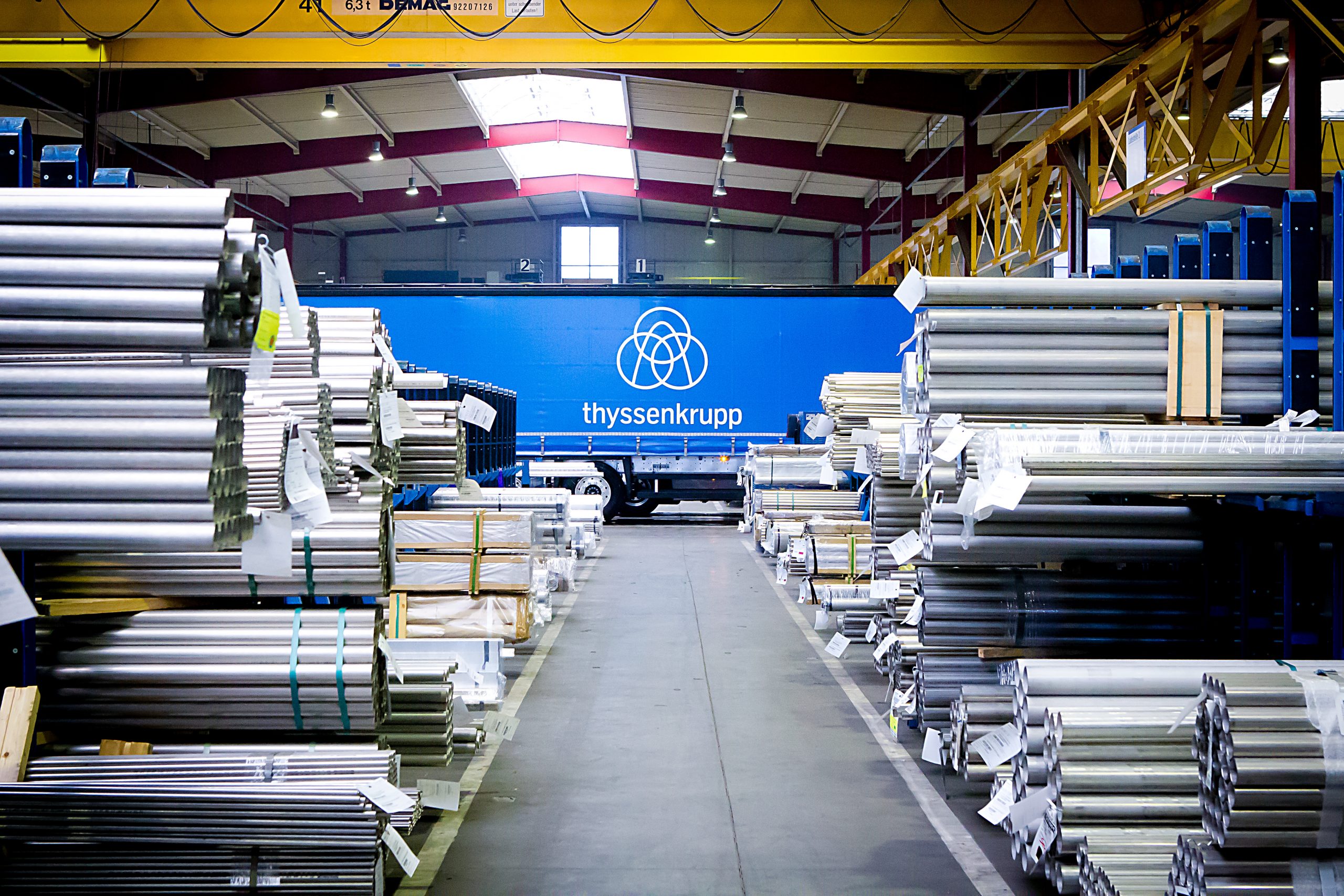
Thyssenkrupp seeks lower-emission tugboat fleet
Thyssenkrupp Veerhaven, the logistics subsidiary of thyssenkrupp Steel Europe based in Rotterdam, has commissioned designs for a climate-friendly pusher tug.
For thyssenkrupp Veerhaven, this is the next port of call on its voyage to the sustainable fleet of the future, the parent company says. Following the evaluation, its seven pusher boats are to be gradually superceded by environmentally friendly models at the end of their technical service life, Kallanish hears.
The seven tugs ply a route between Europoort Rotterdam and the Ruhr area throughout the year, transporting around 18 million tonnes of raw materials for the iron and steel plants. According to tk Steel, the use of methanol as a fuel could save around 80% of current CO2 emissions, compared with the fossil-fuel diesel. The planned ships will be optimised for lower water levels, as the River Rhine tends to dip below critical levels more and more frequently during the summer months.
Normally, thyssenkrupp Veerhaven directly commissions shipyards to build a new vessel.
“For the uncharted waters of sustainable fuels, however, we took an innovative approach and arranged for specialist design offices to prepare offers for three separate designs,” says the unit’s ceo, Frank Tazelaar.
Christian Koehl Germany