


Thyssenkrupp, BFI select DRI demonstration plant supplier
Düren, Germany-based technology supplier TS Elino will build a direct reduction test facility, including the associated auxiliary units, at thyssenkrupp Steel’s Duisburg-Nord site.
The project aims to advance research into the direct reduction of iron ore. The client is Germany’s VdEh Institute for Applied Research (BFI). The order value for the direct reduction plant on a demonstration scale is around €10 million ($11m), Kallanish is told by the steelmaker. It forms part of the “energy transition real-world laboratories” H2Stahl project funded by the German Federal Ministry for Economic Affairs and Climate Protection.
Consortium partners tk Steel and the BFI will trial the technological leap into hydrogen-based, carbon-neutral hot iron production, with the construction and operation of the direct reduction test facility.
The planned facility will be about 40 metres in height, and will be able to reproduce various direct reduction processes. Since it is not tied to a specific process, it will be possible to operate the facility in a technology-open manner with different feedstocks such as pellet, lump ore and recycled materials. It will have a capacity of 100 kg/hour of direct reduced iron, and will be connected to the nearby Carbon2Chem Technical Center infrastructure.
Christian Koehl Germany


European stainless flats prices increase
European prices for stainless cold rolled coil are increasing as all mills are pushing up values on high processing costs and the impact of raw materials, sources tell Kallanish.
Mills in Europe are now asking for €2,580-2,600/tonne ($2,809-2,831) delivered for stainless CRC for May delivery. These values, however, have not yet been paid. Italian contracts are hovering at €2,480-2,500/t on average, while European CRC is pegged at €2,500-2,530/t delivered, sources suggest.
Re-rollers and service centre sources in Italy say they are increasing sheet and tube prices, but they are operating in a two-tier market. Both Italian and northern EU sources note downstream consumption is very slow and large end-users are buying limited material. Stainless HRC prices in Italy remain weak due to the presence of imports from Asian countries. Domestic values stand at €2,250-2,300/t delivered, with Asian material being bought in Italy at €1,900/t cfr.
However, while coil demand and prices are ticking up, suppliers find it difficult to obtain increases on sheet and other coil derivatives. Two service centre sources doubt the latest coil increases for May delivery will be successful because of weak demand downstream and because steelmakers are refusing to implement production stoppages. Customers are being offered material with short lead times and are not pressed to buy.
Natalia Capra France

Turkish steel exporting body calls on EU to stop ‘double standards’ on trade rules
Ugur Dalbeler, the CEO of Turkish steel producer Colakoglu and deputy chairman of the Turkish Steel Exporter Association, has called on the EU to stop holding what he called “double standards” in terms of its trade rules, particularly regarding steel imports.
Speaking to S&P Global Commodity Insights on the sidelines of the EUROMETAL conference held in Istanbul this week, Dalbeler said: “On our exports to the EU… [importers need] a declaration from us that there is no input from Russia in our steel. But on the other hand, as you know, the EU have allowed their own users to import Russian slabs until 2028 and also Russian pig iron and Russian ferro-alloys.”
Colakoglu has an electric arc furnace mill in Dilovasi, western Turkey, which makes slab for a hot-rolling mill and billet for producing rebar. It currently has a rebar output capacity of 600,000 mt/year, and HRC production capacity of 3 million mt/year. In July, the company increased its hot-rolled coil production capacity to 4.5 million mt/year, although it did not use all of this.
“This year the company’s goal is to use our full capacity, but then we will need the slabs. We are not buying them from Russia but mainly from Brazil and southeast Asia,” he said, adding that for this year his company will focus also on higher-value products.
“We are aiming to produce niche value-added products rather than going for commercial grades, targeting oil and gas, manufacturing and automobile industry,” Dalbeler said.
With regard to the EU’s Carbon Border Adjustment Mechanism, Dalbeler said that if the European Commission were to impose the carbon tariff “in a fair way” Turkey would have an advantage in terms of its shipments to the bloc, as its steel producers all use EAFs.
According to Dalbeler, 50% of the energy produced in Turkey comes from renewable energy, with the country now also starting to build its first nuclear power plant.
“What I want is to have a friendly and mutual understanding on issues between the EU and Turkey,” he told S&P Global. “Total imports for example for HRC into the EU from all countries were up by 5% in 2023, but Turkish exports into the EU of HRC were down by 80% and Turkey is part of the ECSC [European Coal and Steel Community], while the other countries who replaced Turkey to date are not member of the ECSC, and their emissions are even five times more than those of Turkey.”
Author: Annalisa Villa, annalisa.villa@spglobal.com

Klöckner completes the sale of four European country organizations
Klöckner & Co has completed the sale of parts of its European commodity distribution business, which comprises the country organizations in France, the United Kingdom, the Netherlands and Belgium, to the Spanish company Hierros Añon S.A. today.
On December 22, 2023, Klöckner & Co announced the intention to sell parts of its European distribution business. At the same time, the company declared that, going forward, it intends to focus on higher value-added products and services (such as processing and fabrication services) within its customer value chain. These offerings, characterized by long-term contracts and strong customization, ensure steady demand and enhanced profitability. As a result, the closed sale significantly reduces the company’s exposure to volatile low-margin commodity markets.
Guido Kerkhoff, CEO of Klöckner & Co: “With the completion of this transaction, we have reached a major milestone in optimizing our portfolio. Going forward, we will set a clear focus on growing our attractive and profitable European businesses in Germany, Austria and Switzerland as well as in the North American market.”
The most recently sold European units accounted for around 20% of Klöckner & Co Group’s workforce and 10% of its sales. As a result, Klöckner & Co will from now on generate well over 50% of Group sales in North America.
Source: kloeckner.com
Swiss Steel orders emissions-tracking software
Swiss Steel has placed an order with SMS for Viridis Carbon Software for its Steeltec production plant in Emmenbrücke, Switzerland.
The Viridis Carbon Software, a module of SMS group’s Viridis Energy and Sustainability Suite, enables near real-time tracking of the emissions generated in a plant, SMS explains. It uses a methodology based on robust computational models, which can compute and report the amount of CO2 equivalent being generated in the company at any time.
The software calculates the product carbon footprint, i.e. the amount of CO2 equivalent emitted in the production of every unit of finished products that leaves the industrial plant, Kallanish learns from the technology supplier.
The software marks a significant step forward in enhancing Swiss Steel’s sustainability initiatives, it adds. In a first step, the melt shop, rolling mill, and bright bar plant will be equipped. In addition to the licence and software implementation, the agreement includes cloud services, and support and maintenance services, encompassing user support, fixing defects and bugs, and the rights to use new releases.
Christian Koehl Germany
Rhenus builds ‘Green Steel Logistics Hub’ in Dortmund
German logistics group Rhenus is setting up what it calls a “Green Steel Logistics Hub” at its business site in Dortmund, Kallanish learns from the company.
The warehouse is likely to start operating in autumn 2024, with the aim of transporting steel in a manner that is as eco-friendly as possible, Rhenus says. It will use the facility to appeal mainly to companies that produce, handle and further process steel.
The company is currently making changes to make its logistics processes more sustainable. For the transhipment hub, it is modernising one of its existing warehouses.
The measures include a new roof and the installation of a solar panel unit, which covers an area of about 4,000 square metres. The electricity that is generated will supply the energy for the crane equipment, the building itself as well as the charging infrastructure for electric trucks.
Rhenus says it will primarily cater for the rolled and flat steel market in the Dortmund region and the eastern Ruhr valley. The trimodal terminal at the Mathieshafen port facility in Dortmund provides good connections to motorways and waterways at important intersections in the heart of the Ruhr valley, it says.
Rhenus notes it is also seeking to introduce an inland waterway fleet that reduces emissions even further.
Christian Koehl Germany

Duferco to produce green hydrogen at Sicilian plant
Italian sections producer Duferco is investing in hydrogen to decarbonise the steelmaking process at its plant near Messina, Sicily.
Funded by the national post-Covid recovery plan, PNRR, through the Region of Sicily, Duferco, in partnership with Caronte and Nippon Gases Italia, will build a green hydrogen production facility with an annual output of 100 tonnes. The plant will be powered by a 4 megawatts photovoltaic plant and will have a 1MW electrolyser.
The overall investment will be €10 million ($10.8m), including €7.5m injected by the regional authority thanks to the PNRR. The hydrogen produced will feed not only the steel mill but also other companies in the area.
“The Hydrogen Valley in Sicily will contribute to achieving one of the main European objectives in the energy transition as envisaged by RePowerEU … The energy transition will only be a concrete challenge if it leads to employment and economic development. Otherwise, the risk is that it remains an overly ambitious mission,” Duferco chief executive Antonio Gozzi comments in a note sent to Kallanish.
Other steel producers are investing in hydrogen technology for clean energy. Steel equipment maker Tenova, in partnership with Italian energy companies De Nora, Snam and other European steelmakers, is working on the “hybrid technologies for sustainable steel reheating” (HyTecHeat) project. Funded by the European Commission for a budget of about €3.3m, HyTecHeat will test hybrid heating technologies based on natural gas, with a progressive increase of hydrogen up to 100%, for downstream processing (see Kallanish 4 March).
Natalia Capra France

Downtrend persists in European HRC market; production cuts said necessary to balance supply/demand
“When we talk about [HRC] trading these days, it is mainly 100 tons here and there. But basically, nobody is buying,” a buyer in Germany said.
Most buyers’ estimates of tradeable prices were reported at €700-720 ($760-781) per tonne ex-works on Wednesday, while offers were heard in the range of €720-730 per tonne ex-works from integrated mills and €690-700 per tonne ex-works from a re-roller in the Benelux area.
“Any price we mention is very theoretical because there is no trading. The main point is not the price; the main point is demand, which is nonexistent at the moment,” a second buyer in Germany said.
Most suppliers in the region were heard offering April-May delivery for HRC.
As a result, Fastmarkets calculated its daily steel HRC index, domestic, exw Northern Europe at €712.65 per tonne on Wednesday, down by €1.60 per tonne from €714.25 per tonne on Tuesday March 5.
The index was down by €3.39 per tonne week on week and by €46.93 per tonne month on month.
Market sources described reducing output as the only viable option for European mills to stop the price downtrend.
“Output cuts are inevitable. The sooner mills do it, the better, because the effect on markets and prices will be delayed anyway,” a steel service center source in the Benelux area said.
“Mills should accept the situation and reduce capacity,” a trading source in the region said.
Meanwhile, in Southern Europe, Fastmarkets’ steel HRC index, domestic, exw Italy was calculated at €689.38 per tonne on Wednesday, down by €3.59 per tonne day on day from €692.97 per tonne.
The index was down by €22.50 per tonne week on week and by €63.12 per tonne month on month.
HRC offers in Italy were mainly heard at €700 per tonne delivered (equivalent to €685-690 per tonne ex-works), while some industry sources said that €690 per tonne delivered (€675-680 per tonne ex-works) was also achievable on bigger volumes.
A domestic supplier was said to be offering April-delivery HRC.
Tradable prices for HRC in Italy were mainly reported in the range of €680-690 per tonne ex-works.
Trading remained thin despite significant price decreases in the domestic market over the past few weeks, and most buyers were still postponing restocking, sources said.
“We do not need to buy [HRC], we have enough stock to wait for a few more weeks,” a steel service center source said.
And there is still room for the price to decline in the domestic market, most industry sources said. Some buyers claimed they expect HRC to hit €650 per tonne ex-works, indicating they would consider restocking at this price.
In the secondary market, 4mm HR sheet was heard traded no higher than €760-780 per tonne CPT, compared with €780-800 per tonne CPT heard in late February.
Trading in the secondary market recovered slightly in early March because some buyers needed to restock, but it was not enough to support a price rebound, some industry sources said.
Import HRC offers from Asia were consolidating around €600-620 per tonne CFR, but buying interest has remained low, Fastmarkets understands.
Most overseas suppliers were heard offering May-shipment HRC, which would mean June-July arrival.

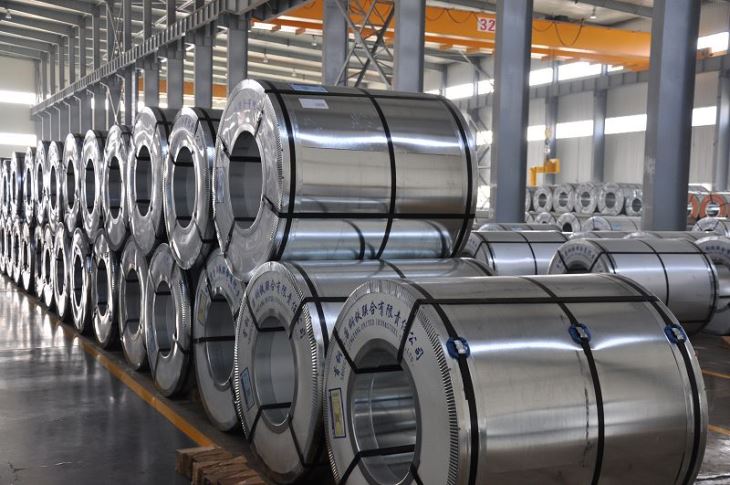
Weak demand, cheap imports push down European CRC, HDG prices
In the CRC market, offers from European producers were few, sources said.
“The gap between local and import CRC prices is over €100 ($109) per tonne; European mills cannot compete with overseas suppliers,” a buyer in Italy said.
European mills in the south were trying to “protect” the level of €800-810 per tonne delivered (€790-800 ex-works), claiming it was near the cost line for them, according to sources.
Buyers estimated tradable prices for CRC in Southern Europe at €780-790 per tonne ex-works.
As a result, Fastmarkets’ price assessment for steel cold-rolled coil domestic, ex-works Southern Europe was €790-800 per tonne on Wednesday, down by €10-20 per tonne from €800-820 per tonne on February 28.
Activity, however, was close to nil, sources said.
“The CRC market has been chronically depressed lately. Firstly, there is no demand [from end-users] and no rebound of demand in sight. Secondly, there are much cheaper import options with little [safeguard] quota risks,” a buyer in Spain said.
Sources agreed that competitive offers from overseas suppliers were also dragging European prices downward.
Offers for South Korea- and Taiwan-origin CRC with May shipment were reported at €720 per tonne CFR to Southern Europe during the assessment week. Three sources, however, reported that one Korean supplier had reduced its offers to €705 per tonne CFR in the week commencing March 4.
CRC offers from Japan and India were heard at €700-725 per tonne CFR to Southern Europe.
Fastmarkets’ weekly assessment for steel cold-rolled coil import, cfr main port Southern Europe was €705-725 per tonne on Wednesday, down by €10-15 per tonne from €720-735 per tonne seven days earlier.
HDG
Fastmarkets’ price assessment for steel hot-dipped galvanized coil domestic, ex-works Southern Europe was €810-820 per tonne on Wednesday, down by €10-20 per tonne from €820-840 per tonne seven days earlier.
Offers from suppliers in Southern Europe were reported at €820-825 per tonne ex-works during the week, while buyers’ estimations of achievable prices were heard at €800-810 per tonne ex-works.
Demand for HDG was also thin, however, the impact of cheaper imports was not as significant as that for CRC, Fastmarkets heard.
“Import HDG suppliers cannot supply the full range of grades and dimensions required by European buyers, so HDG is largely being procured in Europe,” a second buyer in Spain said.
“[A] lack of demand remains the key issue. Prices are sinking lower, but nobody’s buying because there is a perception that rock bottom has yet to be reached,” a buyer in Italy said.
“There are a lot of concerns regarding the end-user demand. Nobody wants to procure [HDG] now. On the contrary, there is destocking,” he added.
Offers from Vietnamese and Indian suppliers of 0.5mm HDG with Z100-120 coating were reported at around €800-805 per tonne CFR to Southern Europe during the assessment week.
Overseas suppliers were said to be offering May shipment.

Turkish Tatcelik to start new galvanized line in June
Turkish flat steel producer Tatcelik will increase its galvanized steel capacity with the commissioning of the a new 650,000 mt line from June, Ayhan Ucar said at the EUROMETAL conference in Istanbul.
Tatcelik has a galvanized line that can produce, annually, 800,000 mt galvanized steel coils, a 200,000 mt pre-painted line and a 200,000 mt cold rolled line. The company has in total a rolling capacity of 1.5 million mt/year.
Ucar said that in the short-term for the Turkish companies there were expectations for new and postponed projects to restart, in particular after local elections in March with green energy investment set to continue to increase strongly.
Together with the expectation of interest rate cuts and the summer seasonal effect, Ucar expected there to be a positive effect on demand for and the price of steel after the third quarter.
Longer term. Ucar said the green energy transition meant “scrap will be more valuable” as companies are shifting their productions routes by using electric arc furnaces. That meant that Turkish mills that produce steel via EAF could face a period of some supply issues.