

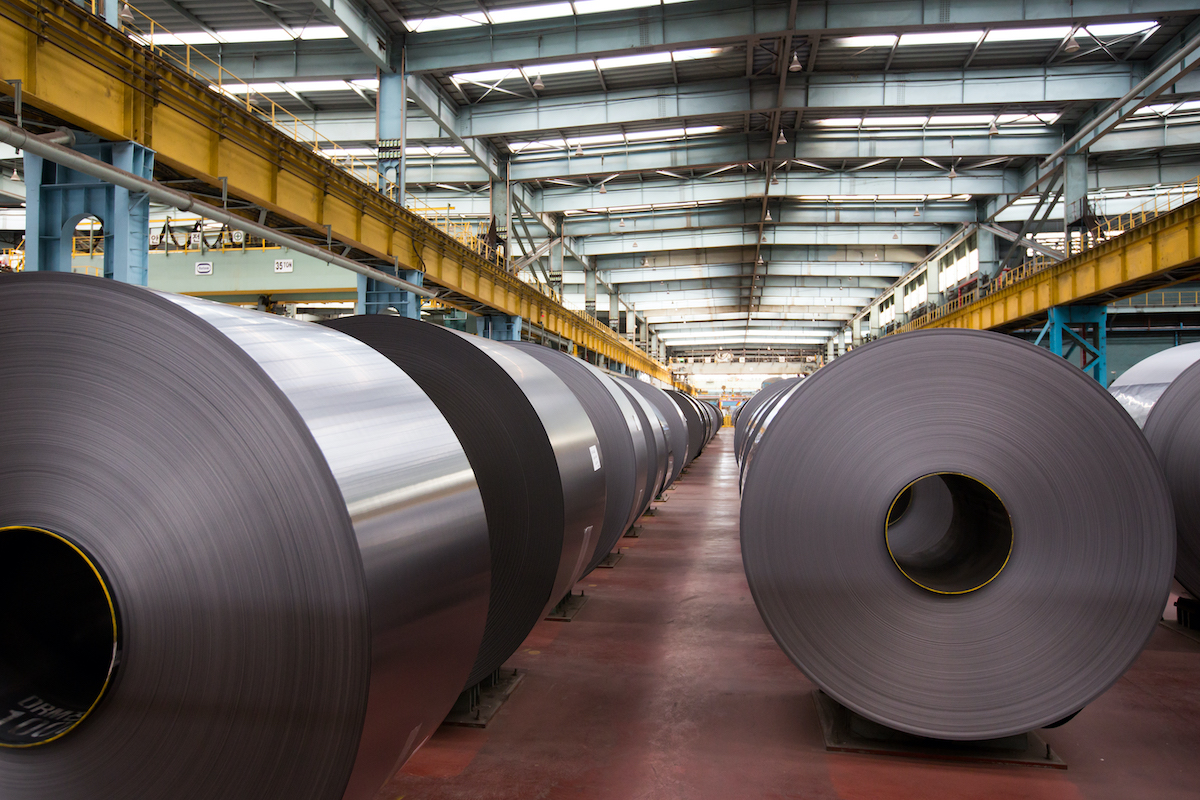
European HRC prices slide further; buyers waiting for ‘rock bottom’
Fastmarkets calculated its daily steel HRC index, domestic, exw Northern Europe, at €699.33 ($764.92) per tonne on Monday, down by €4.92 per tonne from €704.25 per tonne on March 8.
The index was down by €15.67 per tonne week on week and by €51.17 per tonne month on month.
In Northern Europe, offers of HRC were heard around €720-730 per tonne ex-works from integrated producers, but market participants estimated this level to be unworkable.
According to buyers, tradable market levels were in the range of €680-710 per tonne ex-works.
Demand remained weak, and no major deals were heard in the market.
“No matter what the price is now, there is no demand [and] there are no [HRC] volumes [being] traded,” a steel service center in Germany said.
Market participants were convinced that the “rock bottom” of HRC prices has yet to be reached. Due to this expectation, buyers continued to refrain from trading.
“No one intends to sign contracts in a falling market,” a buyer source told Fastmarkets, adding that buyers’ strategy to postpone bookings and bring prices down was being successful. Now customers were trying to bring prices below the €700 per tonne ex-works mark, but it was not clear where the bottom would be.
“The downtrend is not over yet, and prices are likely to keep sliding,” a second buyer source told Fastmarkets.
But there were differing expectations for the “rock bottom” of HRC prices in Northern Europe. A third buyer source expressed the opinion that it would be around €650 per tonne ex-works, while a seller source said that prices would stabilize around €680 per tonne ex-works.
“There is plenty of speculation about the rock bottom for the [HRC] price,” a second buyer source said. “One thing is clear – mills cannot keep reducing prices [because] the cost line is already close. Production cuts [at European mills] might help to stop the downtrend.”
In Southern Europe, Fastmarkets’ steel HRC index, domestic, exw Italy, was calculated at €675.00 per tonne on Monday, down by €3.75 per tonne from €678.75 per tonne on March 8.
The index was down by €19.00 per tonne week on week and by €73.75 per tonne month on month.
In Italy, offers of HRC were heard at €690 per tonne delivered, which would net back to €680 per tonne ex-works.
Market participants estimated the tradable market price in the range of €680-690 per tonne ex-works.
“Room [for further price decreases] is limited,” a fourth buyer source said, adding that a further price drop by €20-30 per tonne was still possible.
Import offers of HRC from Vietnam to Italy were heard at €595-600 per tonne CFR.
According to the first buyer source, the tradable price for imports was in the range of €580-600 per tonne CFR, pointing out that sizeable tonnages of HRC were already stored in EU ports waiting for customs clearance in the second quarter of the year.


Sales by German steel distributors decline in 2023
The average monthly sales volume of Germany’s stockholding steel distributors last year was 786,000 tonnes, roughly 5% below the monthly average of the preceding year 2022, which had achieved 826,000t.
Contrary to the preceding year, 2023 did not see a single month with sold tonnage above 1 million tonnes. That million-tonne level was attained in March 2022. March was the best-selling month of 2023, with 994,000t. December was the lowest-selling month with 465,000t, 13% below the figure of December 2022, Kallanish learns from statistics compiled by German steel stockholders federation BDS.
The total volume of finished steel products sold was 9.43mt in 2022, 5% less than in 2022. Flat products account for roughly 60% of the sales, long products were 30%, with some 10% taken by “miscellaneous products” such as wire rod.
The average monthly inventories in 2022 were 1.96mt, down appoximately 6% from 2022. The split was 1.22mt of flat products, 607,000t of long products and 41,700t of miscellaneous products. At the end of the year, the inventories stood at 1.85mt, compared with 1.95mt a year earlier.
Christian Koehl Germany


Assofermet: Low orders plague Italian flat distribution
In March, distributors and service centres’ orders and shipped volumes are seen declining compared to March 2023, Italian steel trade association Assofermet says in its market note sent to Kallanish. The association does not forecast further strong reductions in coil prices and says a rebound may be close.
Italian service centres and flats products distributors have been witnessing a strong demand contraction from end-users to which distributors reacted by granting price reductions. These were “judged in many cases to be excessive, as well as illogical,” the note says
The gap between European and imported prices of coils from the Far East has widened again. Asian coil producers are quoting prices that are close to those of October and November last year. However, due to the strong uncertainty driven by insufficient consumption, service centres are shunning offers coming from non-EU countries subject to safeguard quotas. Furthermore, the issue of attacks on Red Sea shipping is resolved in many cases by circumnavigating Africa, which adds costs and lengthens time of delivery.
Order books of European steel mills seem to have dwindled and many of them have been forced to revise prices downwards hoping to gain new orders despite high production costs. Apparent consumption has disappeared and customers’ orders continue to be for low quantities, Assofermet says and its highlights a shortage at some distributors’ warehouses caused by the slowdown in coil supply.
The association sees a deterioration of sales of coils derivatives including sheets and tubes. “The international political situation complicates the forecast of future prospects by generating a general wait-and-see attitude which, as has been reported several times, freezes investments… Uncertainty prevents strategic planning of inventories,” Assofermet concludes.
Natalia Capra France

Stagnation deepens in Italian longs market
Merchant bar sales are being concluded every week but only for very low volumes. Producers however prefer to lose orders rather than accept lower values. Italian domestic merchant bar prices are hovering at €300-330/tonne ($328-360) base delivered. Including size extras, prices are at €700-750/t, sources suggest. Sources say that a workable level that may move some volumes is about €280-290/t delivered.
Wire rod prices are declining to €640-650/t delivered (see separate article) and orders for downstream products are also weak, while some more demand is reported for sections. The beams market is however also stuck, with sales back-to-back and volumes low. Prices nevertheless remain mostly stable.
The first category of beams stands at €780-790/t ex-works but cheaper material offered from other EU countries is expected to drag down domestic prices. Both producers and distributors are dealing with tight margins and no improvement is seen this month in volumes or consumption.
The longs market outlook for March and the second quarter remains negative, with the looming possibility of a strong price decrease.
Natalia Capra France
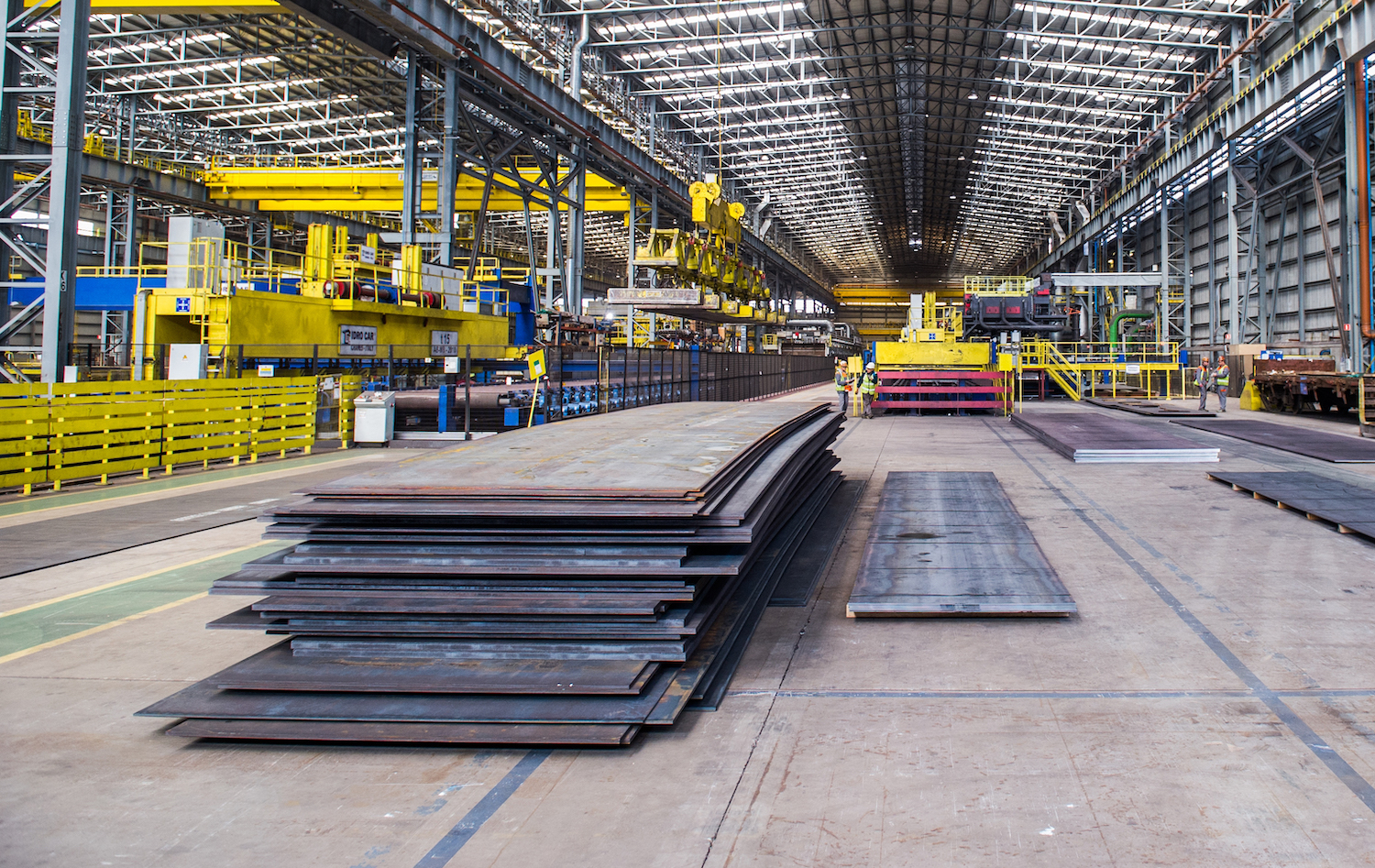
Italian plate prices decline amid slow demand, imports
Italian plate prices are declining in some contracts amid a sluggish market. Large buyers continue to be absent and sales are being implemented only for small tonnages, sources tell Kallanish.
Distributors say they are all waiting. There is low-priced imported material being offered and sold at Italian ports at the equivalent of €690-700/tonne ($765) cfr for the high S355 grade. Since mid-February, demand has become particularly quiet.
Italian mills are officially at €770-780/t for S275 grade base delivered this month. However, transactions are occurring at €730-740/t, while S355 is being transacted at €30-40/t higher, sources suggest. Some mills are keeping the €750-760/t level for S275. Margins are becoming tight, considering high processing costs and slab prices which remain at approximately $650/t cfr Italy.
Distribution sources agree “the phones are not ringing”. Those who are well stocked with different grades of plate are reporting to be selling small volumes.
Mills have however filled their order books until April and May, and can afford to sell less and try to hold on to higher prices in this quiet market.
Natalia Capra France

China to continue shipping steel via Red Sea despite attack on vessel
Chinese suppliers will continue to ship steel through the Red Sea Route even though a vessel carrying Chinese steel products to Saudi Arabia came under attack and was damaged on March 6, local traders told S&P Global Commodity Insights March 7.
The attack was the first one to target Chinese steel exports, and the ship — True Confidence — was carrying 42,082 mt of steel from Tianjin, China, to Jeddah, Saudi Arabia, according to S&P Global Commodities at Sea data and sources.
Chinese steel exports have been rising due to weak domestic demand amid a debt-ridden property sector.
China’s finished steel exports hit the highest level in six years at 90.264 million mt in 2023, up 36.2%, or 23.988 million mt, from 2022, the latest Chinese Customs data showed.
The Middle East has emerged as one of the key destinations for Chinese steel exports. The top 10 countries importing Chinese steel in the Middle East shipped in 10.9 million mt of steel from China in 2023, up 53% on the year, according to the research firm CEIC.
China exported about 3 million mt of steel to Saudi Arabia in 2023, up 30% on the year, according to the CEIC data.
After the attack, which was the first one to report fatalities in the Red Sea skirmish, Chinese traders expected freight and insurance costs for the route to rise.
“I locked down freight costs with the freight company the moment I heard about the attack as I expect freight costs to rise,” a trader said.
The Red Sea route, which is a key global shipping route, has remained a flashpoint for the Houthi militants, who have been targeting ships since the Hamas-Israel war broke out on Oct. 7, 2023.
True Confidence is a Barbados-flagged vessel, and was previously owned by US-based Oaktree Capital. It is currently operated by Greek firm Third January Maritime and managed by Hong Kong’s Fleet Management, according to S&P Global Market Intelligence data, but its current owner could not be identified.

UK HRC extends losses amid weak demand, uncertainty around safeguards
The UK market for steel hot rolled coil extended losses in the week ended March 7, as weak demand and ongoing uncertainty surrounding the review of the country’s steel safeguard measures by the Trade Remedies Authority continued to weigh on prices.
Sources reported subdued buying interest, with UK distributors adopting a cautious approach to purchasing owing to weak end-user demand and adequate inventory levels.
They suggested that UK distributors are generally overstocked and described the end-user demand as “poor” with little sign of near-term improvement.
“The market is currently treading water owing to the poor state of demand and the lack of clarity surrounding the TRA’s review of the trade safety measure,” one trader said.
Offers from European mills were heard within a range of GBP640-650/mt DDP West Midlands, while offers for non-EU origin HRC were heard at GBP600-610/mt DDP West Midlands.
Platts assessed UK HRC at GBP635/mt ($812/mt) basis DDP West Midlands March 7, down GBP15/mt from Feb. 29.
On Feb. 9 the TRA announced that it would review the suspension of the safeguard import quotas in response to Tata Steel UK’s plan to idle its two blast furnaces later in 2024 and replace them with electric arc furnaces.
A meeting between the TRA and ISTA, the international steel trade association held in London on Feb. 28 failed to provide any further details about the likely outcome of the review.
At the time of the announcement, the TRA stated that its preliminary view would be to suspend the measure for nine months because Tata Steel is the UK’s sole HRC producer.
A decision to suspend the measure is likely to increase orders for non-EU HRC, which is currently priced at approximately GBP40/mt lower than EU-sourced material.
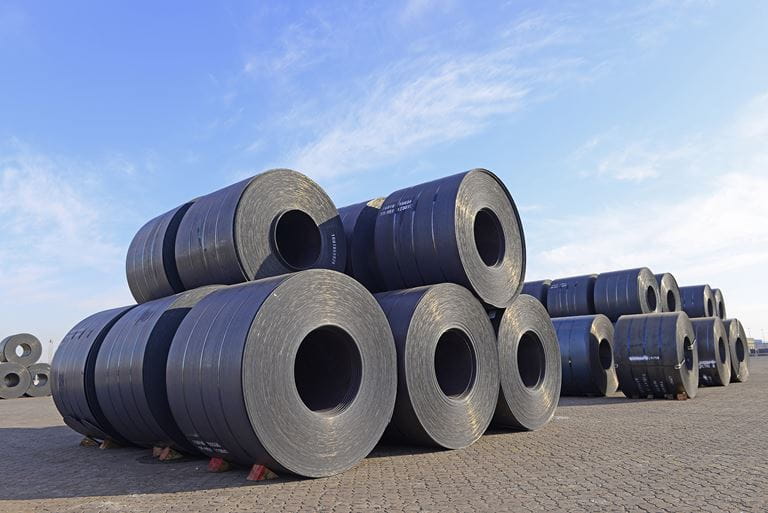
EU HRC buyers refrain from purchases amid price volatility, longer lead times
Bearish sentiment kept buyers away from making deals. “No buying, as anything booked now would get cheaper within couple of days,” a service center source said.
Producers may not soften offers further as imported materials are not preferred due to longer lead times, other sources said.
Domestic European mills “may not have to reduce offers to a great deal as no buyer will opt for imported material due to concerns about safeguard quotas,” a German service center source said. “When needed, buyers would have to get material from domestic mills.”
Offers were reported at Eur730-740/mt ex-works Northwest Europe and tradable values were estimated at Eur690-705/mt ex-works Ruhr.
Platts assessed the price of domestic HRC in Northwest Europe stable on the day at Eur700/mt ex-works Ruhr March 7.
In Southern Europe a deal was reported at Eur670/mt, while tradable values were reported at Eur670-680/mt ex-works Italy.
Platts assessed the domestic price of HRC in South Europe at Eur675/mt EXW Italy March 7, down by Eur5 on the day.
A deal for imported HRC was heard at Eur590/mt CIF Italy from Vietnam.
Platts assessed the price of imported HRC in South Europe at Eur590/mt CIF Italy March 7, down by Eur10 on the day.
Imported HRC was not preferred, despite being priced competitively, due to uncertainty regarding safeguard quotas.
“I don’t expect any deals,” a Spain-based trader said referring to imported HRC. “If someone books tonnages now, the arrival will be end of July in Spain, when summer break will start, so buyers will prefer closing deals for end of August arrival and ask for Eur20-30/mt lesser than current levels.”
Platts assessed the price of imported HRC stable on the day at Eur614/mt CIF Antwerp March 7.
Author Devbrat Saha, devbrat.saha@spglobal.


Outokumpu secures low-emission vessels for short-sea transport
The first multipurpose vessel, Lovisa, has started its liner service for Outokumpu between Finland and the Netherlands. Outokumpu aims to have six vessels in use from Langh Ship during the year, Kallanish learns from the stainless steelmaker. Its target is to reduce annual carbon emissions from short-sea shipping by at least 25% by the end of 2024.
The collaboration presents a positive outcome from the opportunity presented by tightening environmental regulations from both the EU and the International Maritime Organization (IMO), Outokumpu notes.
“At EU level, maritime transport represents 3-4% of the EU’s total CO2 emissions, so all solutions are heavily needed in this sector. The route between Tornio and Terneuzen is of utmost importance to us in transporting coils to the European market and in bringing recycled steel to our melt shop in Tornio,” says Jyrki Sandelin, category manager for transports at Outokumpu.
Christian Koehl Germany
Salzgitter chooses suppliers for solar power
Salzgitter is partnering with several regional companies for power supply from photovoltaic plants, Kallanish notes.
With IG Merbitz Solar, the project company for the PV power plant in Merbitz, it has concluded a green electricity supply agreement (PPA). Other companies involved are Energiesysteme Groß and Agrarbetrieb Gut Merbitz, with their PV project in Wettin-Löbejün.
The electricity will be generated by a ground-mounted photovoltaic system currently under construction at the Merbitz site in Saxony-Anhalt. In concluding this Power Purchase Agreement, strip-making unit Salzgitter Flachstahl has secured the supply of around 71 MWh/a of green electricity from Merbitz at a fixed price for ten years as from January 2025, in addition to the option of temporarily storing this electricity on site.
Christian Koehl Germany