


Lack of demand keeps Southern European long steel prices constrained
Rising electricity and scrap costs means that steel mills are reluctant to reduce their offer prices to encourage sales and market participants remain split over the likely price trend for the rest of the first quarter, Fastmarkets understands.
While some market participants expect to see an upward price trend heading into the warmer months due to the higher input costs, others said the lack of demand would inhibit any moves to increase prices, sources said.
Fastmarkets price assessment for steel reinforcing bar (rebar) domestic, exw Italy was €670-690 ($728-750) per tonne on Wednesday, widening down by €10 per tonne from €680-690 on January 10.
Consumption was subdued in the Italian rebar market.
“The market is quite confused because the producers are asking for €680-690 per tonne, but the buyers don’t want to pay more then €650-670 per tonne,” a buyer source in the region told Fastmarkets.
“A deal was reported at €670 per tonne, but producers will try to move prices up again. The [cost of] scrap has increased and energy costs are likely to increase in the future,” the source added.
Another buyer source said: “The rebar market is a little confused this week because scrap prices [are rising], but rebar demand is not so good. Producers would like to increase their prices, but customers are not buying and are waiting for a decrease.”
Fastmarkets’ price assessment for steel reinforcing bar (rebar), domestic, delivered, Spain was €665-670 per tonne on Wednesday, unchanged week on week.
Wire rod
Fastmarkets’ price assessment for steel wire rod (mesh quality), domestic, delivered Southern Europe, was €640-650 per tonne on Wednesday, narrowing down by €10 per tonne from €640-660 per tonne last week.
And like the rebar market, rising input costs and weak demand resulted in mixed sentiment regarding the future direction of prices.
“Mills are saying they will increase prices, but I am very skeptical that a further price increase will be accepted because [there is very little] demand,” a wire rod buyer source said.
Published by: India-Inés Levy


Prices widen up on slow trading in Europe’s steel hollow sections market
Fastmarkets’ weekly price assessment for steel sections (medium) domestic, delivered Northern Europe was €800-860 ($870- 935) per tonne on Wednesday, widening up by €10 per tonne from €800-850 per tonne a week earlier.
Similarly, Fastmarkets’ weekly price assessment for steel sections (medium) domestic, delivered Southern Europe was €800-860 per tonne on Wednesday, up by €10 per tonne at the top end of the range, from €800-850 per tonne on January 10.
Sources said there had been no fundamental changes to the market since the start of the year, with consumption from the construction sector still weak.
But one trader from Northern Europe said increased trading activity was expected in January, compared with the slower period of trade seen in December.
“The price increase should be workable,” the trader said.
Sections prices in Poland also increased by €10 per tonne, with offers heard at €780 per tonne CPT, on a theoretical-weight basis, a producer source in southeast Europe said.
In Romania, meanwhile, offer prices were stable over the past seven days, at €740 per tonne cpt levels, on a theoretical-weight basis, the producer source said.
“[Hollow sections] prices are rising due to hot-rolled coil price growth,” the source added. “And there is some demand for tubes.”
Fastmarkets’ daily calculation of its steel hot-rolled coil index domestic, exw Northern Europe was €735.63 per tonne on Wednesday, up by €6.88 per tonne from €728.75 per tonne a week earlier, and up by €42.50 per tonne month on month.
HRC feedstock price rises have been driven by limited supplies, but end-user demand remains weak.
Published by: Holly Chant

European HRC prices continue slow climb, increase said supply-driven
Despite the limited trading, prices for steel HRC were seen climbing steadily, gaining strength from reduced supply, sources said.
In Northern Europe, tradeable values for HRC were reported by buyers sources at €730-750 ($793-815) per tonne ex-works, while some sources estimated the market even higher – at €750-770 per tonne ex-works for April delivery HRC.
Transactions were reported at €740-750 per tonne ex-works in Germany and at €760-770 per tonne ex-works in Benelux area.
Producers in the region, meanwhile, were targeting €800-820 per tonne ex-works for HRC with second-quarter lead times.
Some sources, however, expressed doubts about mills’ order books, claiming that in reality shorter lead times were still available at the majority of sellers.
“Despite the wait-and-see [approach of buyers] and weak market, EU steel producers claim to have full orderbooks. But this is questionable because lead times are either normal or relatively fast,” a buyer in the region said.
“Buyers are taking a wait-and-see approach and buying only material what they need and cautiously following market developments,” a second buyer source said.
As a result, Fastmarkets calculated its daily steel hot-rolled coil index domestic, exw Northern Europe at €742.92 per tonne on January 18, up by €7.29 per tonne compared with €735.63 per tonne on January 17.
The index was up by €11.67 per tonne week on week and by €49.79 per tonne month on month.
Meanwhile, in Southern Europe, Fastmarkets calculated its corresponding daily steel hot-rolled coil index domestic, exw Italy at €734.61 per tonne on January 18, up by €4.61 per tonne from €730.00 per tonne on January 17.
The index was up by €14.61 per tonne week on week and by €48.78 per tonne month on month.
Trading in the Italian market was described by most sources as “dead” or “non-existent”, with buyers seen keeping on the sidelines, making only back-to-back bookings.
But most sources agreed that the price of €750 per tonne delivered (around €735 per tonne ex-works) was widely established in deals in the local market.
Offers still stood higher, at around €760-780 per tonne delivered for March-April lead times.
“There are not so many mills able to supply coil in Italy, if we are speaking of domestic market. And imports are quite limited and/or uncompetitive, given all trade restrictions in pace,” an Italian trader said.
Import HRC offers to Italy for late-March shipment from Taiwan, Japan and South Korea were reported at €655-670 per tonne CFR to Italy.
Published by: Julia Bolotova

Low-emission, dimension requirements pose wind plate supply challenge
Despite the abundance of global plate supply, the specific sourcing requirements of the wind power sector are giving rise to concern over supply chain bottlenecks and shortages, says the Global Wind Energy Council (GWEC).
Steel is about one-quarter of the total materials required per MW for onshore wind, but for offshore wind, steel represents 90% all of the materials consumed per MW.
Much steel in wind goes into monopile foundations; for this purpose, the most common grade used is S355 (European standard; equivalent to A572 in the USA). “This is not quite a basic commercial quality grade but it is not far off it, and most if not all plate mills would be able to make this,” GWEC says in its latest report seen by Kallanish.
Product dimension requirements are more demanding, however, tending towards the thicker end of mill product ranges. In extreme cases, plates of up to 150mm thick may be required. Most plate in general demand is 10-60mm thick.
“Achieving optimal physical properties of plate requires a certain degree of thickness reduction from the slab – ideally at least a three-fold reduction. Therefore, to make a 100mm plate you need to start from at least a 300mm slab. Not many mills can go thicker than this, meaning the pool of suppliers able to meet all of the wind industry’s product needs is small,” the report continues.
The origin of the plate is also under increasing scrutiny following Covid-19 supply chain issues and deteriorating geopolitical conditions. Following the war in Ukraine, Russia, previously a major, low-cost supplier, has been removed from many supply chains, while Ukraine’s export capability has been limited.
“But China is the true elephant in the room in this area. China produces more than 50% of the world’s reversing mill plate and is the world’s biggest exporter. Many of China’s plate mills are relatively modern, capable of producing high-quality, wide and thick products,” the report notes.
The US is leading efforts to diversify or ‘de-risk’ away from China. Several western regions have implemented trade defence measures, including high tariffs on Chinese plate. For its part, China has shown that it is prepared to act to restrict its exports of gallium and germanium, GWEC observes.
“Sourcing decisions made in such an environment are complex. It is possible that what looks like a wide range of potential suppliers is reduced, in practice, to a small number of acceptable origins,” the association says.
Low-emission steelmakers using electricity or green hydrogen are capable of producing plate with a Scope 1 CO2 footprint of below 0.4 tCO2/tonne. But they are limited in number. As the wind energy industry is growing rapidly, it may not be possible for all developers to access low-emission steel for several years to come, the report states.
There has been much coverage recently of wind power project cancellations in the US. “Since Covid-19, inflationary impacts on supply chains, shipping and logistics have pushed up capital costs of wind and other forms of electricity generation. Labour expenses have also increased, while the prices of key commodities like iron and steel remain well above pre-pandemic levels. Developers that secured offtake contracts between two and four years ago are experiencing a dramatic shift in total project costs, undermining future revenue certainty and their ability to reach final investment decisions,” the report concludes.
Adam Smith Poland


Kloeckner opens large new facility in Scotland
Kloeckner Metals UK has announced the official opening of its new state-of-the-art stockholding and processing facility in Newbridge, Edinburgh.
Kloeckner claims it is the largest metal stockholding and processing warehouse in Scotland, with an internal space of over 100,000 square feet. This “sets the stage for a transformative shift in the steel and metal processing landscape throughout the region,” Kallanish hears from the company.
Kloeckner Metals UK calls it a strategic move to serving customers in Scotland with greater efficiency, proximity and sustainable solutions. The facility has a stock capacity of 5,000 tonnes of carbon steel, stainless steel, and aluminium. The company highlights its processing expertise, which enables the delivery of a comprehensive range of sustainable solutions to a diverse array of industries, including energy, renewables, oil and gas, construction, fabrication and manufacturing.
“The opening of our new site in Newbridge is a testament to our unwavering commitment to meeting the needs of the Scottish market while actively contributing to a more sustainable future,” says Kloeckner Metals UK chief executive Peter Whiting.
Christian Koehl Germany

Tubos Reunidos reduces debt
Spanish special seamless tube supplier Tubos Reunidos (TR) is reducing debt in compliance with its strategic plan, Kallanish notes.
The company has held an auction among the financial institutions holding convertible debt in shares, buying this at a discount. This resulted in a debt reduction of €107 million ($116.4m). In addition, TR has allocated €7.5m for repaying all special financing provided as Covid-19 support by the Spanish Credit Institute (ICO) in 2020.
“These actions represent one step more to achieving the stability of the company and the execution of our strategic plan,” says TR chief executive Carlos López de las Heras.
The group’s new steelworks came into operation in October, significantly boosting TR’s competitiveness. “Our higher-added-value production is linked to the energy transition and decarbonisation processes and will allow us to address new markets and sectors of activity. With this investment we have practically completed our industrial reorganisation, guaranteeing solid growth,” the ceo adds.
In 2019, TR reached an agreement on the terms and conditions of the refinancing of its debt with its main creditor banks, in which tranches of convertible debt and convertible bonds were structured for an initial amount of €172m (see Kallanish passim).
Todor Kirkov Bulgaria
Northern European wire rod prices stable, increases expected
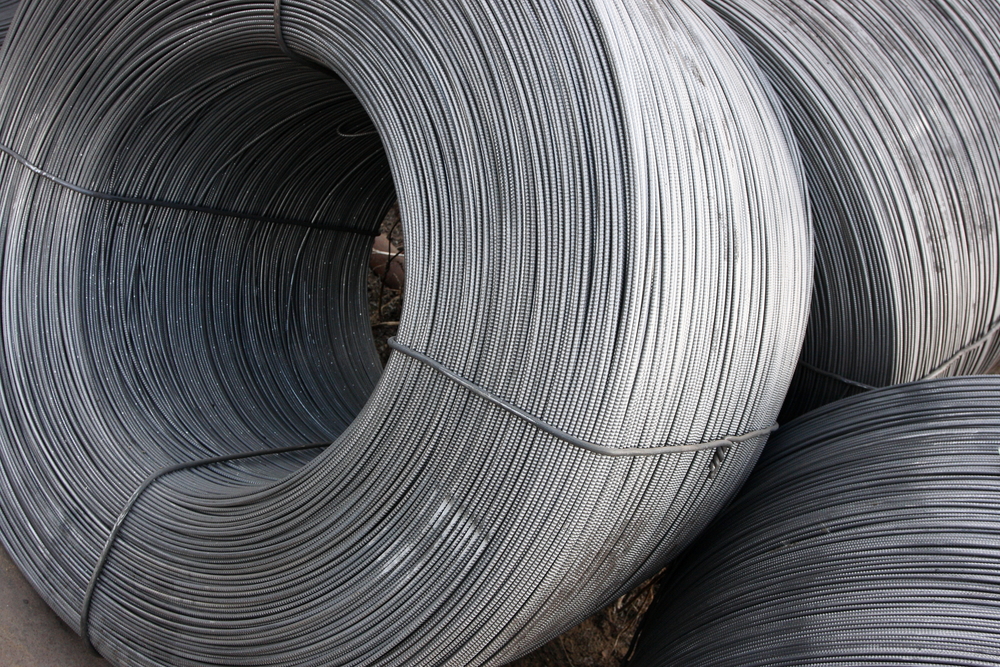
Northern European wire rod prices have remained stable this week amid a quiet market in Europe and subdued exports, sources say. Participants are however expecting increases in the next few weeks.
“Demand is still low, because the steel [drawing] mills have not started to restock for the moment,” one trader from the Netherlands tells Kallanish.
Domestic transaction prices for drawing-quality wire rod are at €640/tonne ($694/t) ex-works and mesh-grade wire rod is at €650/t.
Producers are asking for €660-670/t ex-works, on average, for mesh-quality rod.
“I hope that after scrap prices have started to increase in Europe, there will also be some movement in the wire rod market,” another buy-side participant notes. “We hope there will also be more rod imports from countries outside the EU, like Turkey and Algeria, which will influence the European trade.”
Offers are being heard from outside the EU at €600-610/t cfr Rotterdam, with very small tonnages being booked.
European scrap values have meanwhile increased so far this month due to new demand and export deals being concluded. German old thick scrap sort 3 is at €355/t, while new scrap sort 2/8 was at €345/t. E40 shredded scrap was at €370/t. In Austria, scrap prices have also increased by €15-20/t for most sorts. For new scrap, sort 2/8 is at €350/t, with old thick scrap sort 3 at €360/t.
Italian wire rod producers are expected to push up values by a further €20/t compared to mid-December due to high processing costs and increasing scrap prices (see Kallanish passim). Mills intend to increase prices to €700/t for February delivery, up from last month’s asking price of €670-680/t delivered for drawing-quality wire rod. Transactions are stable versus December at €670-680/t ex-works.
Svetoslav Abrossimov Bulgaria
Tata Steel in talks with unions to reach an agreement on green transition in the UK
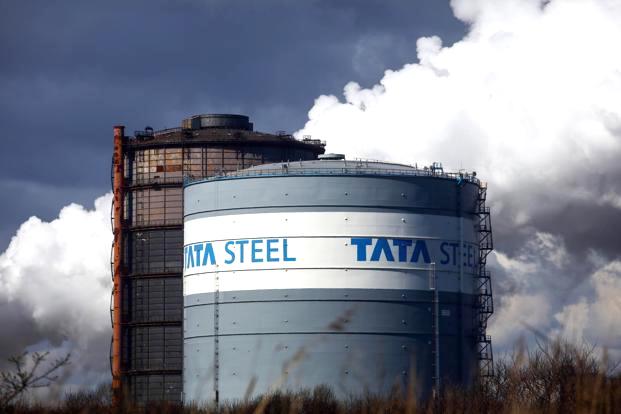
Executives of Tata Steel met with GMB and Unite unions at a London hotel to discuss the future of the largest UK steel company on Jan. 18.
Sources expect Tata Steel to formally announce that it will go ahead with its plan to replace the two blast furnaces at its Port Talbot works in south Wales with one electric arc furnace, a move that would put around 3,000 workers at risk of redundancy.
Tata’s blast furnaces in the United Kingdom have an installed capacity of 5 million mt per year, but in the last few years it produced 3.2 million mt only. The new electric arc furnace will have a capacity of 3 million mt per year with a carbon emission intensity of around 0.4 mtCO2 per metric tons of crude steel and it will use local scrap.
The EAF technology utilizes an electric current to melt scrap steel and produce steel, whereas traditional blast furnaces rely on coke, a carbon-intensive fuel made from coal, to produce steel, so it is more carbon intensive and needs more workers.
In order to achieve this transformation, Tata Steel asked GBP 500 million in support from the UK government and the company will put GBP 750 million more.
A Tata Steel spokesperson said: “We have been engaging regularly and constructively with our trade union colleagues and their advisors for some time about the best way forward to create a sustainable green steel future for Tata Steel in the UK. When we have any formal announcement to make about our proposals for the future, we will always share it with our employees first.”
The Platts UK hot-rolled coil assessment stood at GBP690/mt DDP West Midlands Jan. 18, up GBP40/mt on-month but far below the 2023 high of GBP795/mt recorded April 6, as market demand has been scarce in the second half of 2023.
Author Annalisa Villa, annalisa.villa@


HRC prices tick up in Europe, but still below target offers
European steelmakers kept their target offers prices for HRC at €800 ($871) per tonne ex-works for second-quarter delivery coil, but those levels have yet to be sealed in deals, Fastmarkets understands.
A mill source did report a transaction in the Benelux region at €760 per tonne ex-works, meanwhile, and buyers in Germany estimated the tradable value at €720-750 per tonne ex-works, with deals for small tonnages reported at €740 per tonne ex-works on Wednesday.
Despite slow end-user demand, which is considered by buyers to be a major obstacle to price hikes, European mills remained bullish because of their strong order books.
Buyers were cautious about bookings, however, buying mainly small volumes of coil to cover urgent needs.
“There is no booming activity in the market, but buyers do not have many options to choose from. Of course, €800 per tonne is elevated, but the move [to increase offer prices] is helping the mills achieve their previous goals,” a buyer in the Benelux area said.
As a result, Fastmarkets calculated its daily steel hot-rolled coil index domestic, exw Northern Europe at €735.63 ($801.37) per tonne on January 17, up by €5.00 per tonne compared with €730.63 per tonne on Tuesday.
The index was up by €6.88 per tonne week on week and by €44.75 per tonne month on month.
In Southern Europe, Fastmarkets calculated its corresponding daily steel hot-rolled coil index domestic, exw Italy at €730.00 per tonne on January 17, up by €8.33 per tonne from €721.67 per tonne on Tuesday January 16.
The index was up by €15.00 per tonne week on week and by €50.83 per tonne month on month.
One integrated mill in Italy was heard offering March delivery HRC at €760-770 per tonne delivered (€745-755 per tonne ex-works).
Transactions for limited tonnages of HRC were reported at €750 per tonne delivered (€735 per tonne ex-works) on Wednesday.
Buyers estimated the tradable level at €740-750 per tonne delivered (€725-735 per tonne ex-works), with the lower end of the range viable for larger volumes.
Sources, however, pointed out, that buyers were booking only “minimal tonnages – not a single tonne above their needs.”
“It is a question, how long a supply-driven increase will last. The demand is still not there, so buyers are not stockpiling,” a second buyer said. “On the contrary, everyone is focused on pushing down their stock levels.”
In the secondary market, 4 mm hot-rolled sheet was traded at around €820-830 per tonne CPT at its highest level, compared with €800 per tonne CPT last week.
Import offers to Italy were largely flat day on day, meanwhile, with HRC for late-March shipment from Taiwan, Japan and South Korea on offer at €655-670 per tonne CFR to Italy.
The lowest offers were from Taiwan, source said, but this origin was falling under the “other” safeguard quota category, which is deemed as facing “the highest risk of paying the anti-dumping duty,” sources said.
Several sources reported that Turkey-origin coil with March shipment was on offer to Italy at €730 per tonne CFR, including the anti-dumping duty, although a buyer told Fastmarkets this was “too close to the domestic price to be workable.”
Published by: Julia Bolotova
European CRC, HDG prices move up, but remain below target offers
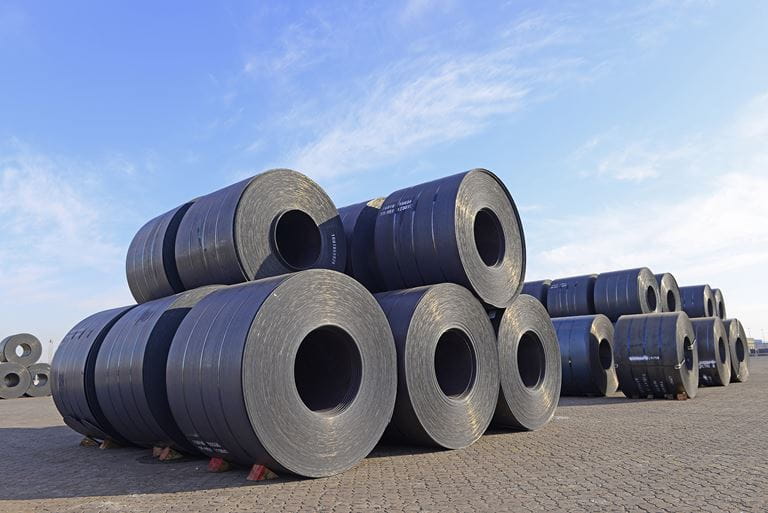
Slow demand from the key end-user sectors — automotive and construction — was a major concern for the market, sources said.
“We expect steel consumption by automotive in 2024 to be 20-30% lower year on year,” a steel service center source in Germany said.
But limited supply due to reduced production and rising input costs were prompting European mills to increase offer prices substantially in early January.
In Northern Europe, offers from integrated mills were heard at €900-920 ($980-1,002) per tonne ex-works for CRC and HDG. Lead times for both products were April-May at the earliest, sources said.
“New offers are out of touch, end-user demand is totally unsupportive of such a massive rise,” a buyer source said.
Buyers’ estimations of achievable prices were at €820-830 per tonne ex-works for CRC and €830-840 per tonne ex-works for HDG.
“After declaring higher offers, mills managed to slowly consolidate previous target levels [for both CRC and HDG],” a second buyer said.
Fastmarkets’ weekly price assessment for steel cold-rolled coil domestic, exw Northern Europe was €820-835 per tonne on Wednesday, up by €15-20 per tonne from €800-820 per tonne a week earlier.
And Fastmarkets’ weekly price assessment for steel hot-dipped galvanized coil domestic, exw Northern Europe was €830-840 per tonne on Wednesday, up by €10-30 per tonne from €800-830 per tonne a week earlier.
Meanwhile, the market situation in Southern Europe was quite similar, with trading being described as “dead” in the region.
Southern European producers were aiming for €870-880 per tonne delivered (€855-865 per tonne ex-works) for CRC and €900-920 per tonne delivered (€885-905 per tonne ex-works) for HDG.
Buyers estimated tradeable values at no higher than €840-850 per tonne delivered for CRC and €850-860 per tonne delivered for HDG.
“Most buyers have sufficient stock and in fact are trying to lower their inventories,” a trading source in Europe said. “My impression is that due to low activity in the construction market and threatening downturn in the automotive sector, nothing spectacular will happen. Besides, high interest rates don’t stimulate investments.
“Until very recently, import offers for CRC from Asia were very competitive, and quite a lot of bookings were made, so that is another obstacle for a domestic price rise,” a buyer in Italy said.
Fastmarkets’ weekly price assessment for steel cold-rolled coil domestic, exw Southern Europe was €825-835 per tonne on Wednesday, up by €15-25 per tonne from €800-820 per tonne the week before.
And Fastmarkets’ weekly price assessment for steel hod-dipped galvanized coil domestic, exw Southern Europe was €830-840 per tonne on Wednesday, up by €10-30 per tonne from €800-830 per tonne the week before.
Import offers for CRC and HDG were also trending higher during the assessment week.
Current CRC import offers were at €735-760 per tonne CFR for CRC, up from €725-740 per tonne CFR earlier in January.
Asian suppliers were offering material for shipment in mid-March to early April, which would mean arrival would be in May-June.
One mill from South Korea was offering CRC to Southern Europe at €760 per tonne CFR.
Another South Korean supplier was offering CRC to Italy at €735 per tonne CFR.
A Japanese mill was offering CRC to Italy at €735-745 per tonne CFR.
And finally, Vietnamese suppliers were said to be aiming for $900-930 per tonne CFR for 0.5mm HDG with Z100-120 coating.
Published by: Julia Bolotova