


Germany’s crude steel output in 2023 at lowest since 2009, WV Stahl says
The country produced 2.631 million tonnes of crude steel in December 2023, down by 2.3% compared with December 2022. Over the whole year of 2023, crude steel output in Germany dropped by 3.9% year-on-year to 35.438 million tonnes.
“This is the lowest production volume since the financial market crisis in 2009,” WV Stahl said. “At that time, however, things quickly picked up again after a sharp decline caused by the recession.”
According to the industry association, energy-intensive production from electric-arc furnaces (EAFs) in the country was particularly affected by the high electricity prices and the weak construction sector. German EAF-based mills produced 533,000 tonnes of crude steel in December, up by only 0.4% from December 2022.
In December 2022, the country’s crude steel output was severely affected by numerous cuts as a response to low demand, so in December 2023 a slight rebound was negligible due to the low base for comparison.
Over 2023, however, total production from EAFs dropped to 9.806 million tonnes, a decrease of 10.8% compared with the previous year. “The volume even fell below the low point [that was seen] during the financial market crisis,” WV Stahl said. “At that time, electrical steel production was 11.3 million tonnes.”
WV Stahl added that there had been steady declines in production since March 2022. According to the association, such a long negative cycle has never been seen before in Germany’s steel industry.
Steel produced via EAFs is mainly used in the manufacture of long products. According to Fastmarkets’ sources, demand for long steel in Germany remained subdued due to a slow construction sector.
Fastmarkets’ weekly price assessment for steel reinforcing bar (rebar), domestic, delivered Northern Europe, averaged €642.50 ($699.84) per tonne in December, down from an average of €753.75 per tonne a year earlier.
Meanwhile, steel output from Germany’s basic oxygen furnaces (BOFs), which is mainly used in the production of flat steel, decreased by 2.9% year-on-year to 2.099 million tonnes in December.
Flat steel prices increased across Europe in December due to attempts by mills to cover their higher production costs. But demand remained low. Fastmarkets’ sources explained that a price rise this month was driven by the limited availability of material in the market.
Fastmarkets’ daily calculation of its steel hot-rolled coil index, domestic, exw Northern Europe, averaged €688.20 per tonne in December, outstripping the average of €642.73 per tonne a year earlier.
But market sources remained sceptical that steel production rates in Germany would rebound in 2024.
Kerstin Maria Rippel, general manager of WV Stahl, called for political action to mitigate the effects of the rising production costs in the steel industry.
“This is particularly acute when it comes to the still-uncompetitive electricity costs,” Rippel said. “Transmission network fees have doubled since the beginning of the year, [and] are higher than ever before.”
She added that a clear political idea was needed concerning how to sustainably fund the transformation of the industry toward climate-change neutrality.
Published by: Julia Bolotova, Darina Kahramanova


European HRC prices seen largely flat amid subdued trading
Quiet trading continued in the European HRC market. Producers were said to have good order books for the first quarter of the year and therefore were keeping their offers high.
Notably, April-delivery HRC was offered by integrated mills in Northern Europe at €760-800 ($828-871) per tonne ex-works, with one supplier looking for €800-820 per tonne ex-works.
Some producers were reported to still be able to offer March-delivery HRC, however.
“Mills paint a slightly brighter picture when it comes to order books,” a buyer source said.
Tradable values were estimated by buyers at €730-760 per tonne ex-works, with deals reported within that range in Germany and the Benelux area.
As a result, Fastmarkets calculated its daily steel hot-rolled coil index, domestic, exw Northern Europe, at €746.88 ($813.54) per tonne on Tuesday, up by only €0.63 per tonne from €746.25 per tonne on January 22.
The index was up by €16.25 per tonne week on week and by €51.38 per tonne month on month.
Some sources suggested that reduced supply due to output cuts will keep prices flat in the near term, compensating for the lack of real demand, while further rises were unlikely.
“The price is not really the question; demand is the main question, and the outlook for end-user sectors for 2024 is quite depressing,” a steel service center in Germany told Fastmarkets. “I don’t see how we can pass on higher prices in the secondary market.”
Fastmarkets calculated its daily steel hot-rolled coil index, domestic, exw Italy, at €736.25 per tonne on Tuesday, up by €0.70 per tonne from €735.55 per tonne on January 22.
The index was up by €14.58 per tonne week on week and by €47.92 per tonne month on month.
One integrated mill in the country was said to be offering €760 per tonne ex-works for March-delivery coil. Another supplier was said to be hoping to get €780 per tonne delivered (€765 per tonne ex-works).
But buyers estimates of tradable prices were no higher than €750-760 per tonne delivered (€735-745 per tonne ex-works).
Some market sources, however, suggested that target offer prices could be achieved in February spot trading, given the lack of suppliers active in the market.
On buyer said that most competitive Asia-origin HRC supplies were “tricky to book due to insurance problems.”
“My insurance company refused to secure insurance for cargoes coming through the Red Sea,” another buyer in Southern Europe said.
He added that some Asian mills have started to reduce their offer prices due to weak domestic demand, but that problems with insurance were putting a limit on buying interest.
Notably, HRC from Vietnam was heard offered to Italy at €630-640 per tonne CFR for April shipment.
Taiwan, South Korea and Japan were heard to be offering HRC to Europe at €650-670 per tonne CFR, for March-April shipment.
Indian mills were heard offering coil to Italy at €670-690 per tonne CFR.
And a booking of Egypt-origin coil was heard to Italy at $710 per tonne CFR late last week.
Published by: Julia Bolotova
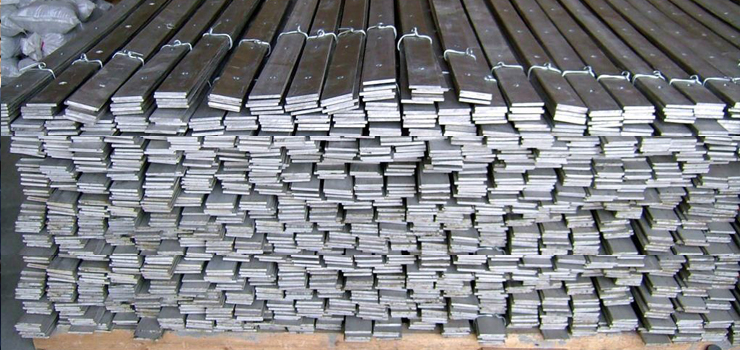
Ukraine decreases flats, longs exports in 2023
Ukraine decreased flat steel exports in December compared with the previous month, according to national customs data.
Total volume delivered amounted to 182,490 tonnes, up by 40% on-month and four-fold on December 2022, Kallanish notes. In monetary terms, flat product exports increased by 25.7% on-month and over three-fold on-year to $95.84 million.
In full-year 2023, exports were 1.2 million tonnes, down by 26.4% on-year. The value of flats exports amounted to $782.3m, down 42.2%.
12-month uncoated hot rolled coil exports reached 941,910t for $582.6m. In December alone, the country shipped 158,000t, up by 45.2% on-month, at a value of $81m, more by 34.8%.
It shipped 200,200t of cold rolled coil in January-December, up 42% on-month, with income at $132m, up 28%. In December alone it shipped 19,120t, up by 30% on-month.
The largest consumers of Ukrainian HRC in January-December were Poland with a 41.7% share, Bulgaria with 18.6% and Portugal with 7.3%. Those three countries also together consumed about 60% of CRC. The main buyers of Ukrainian coated flats were Poland (74.6%) and Romania (20%).
December longs exports meanwhile increased by 15.3% on-month and 59.4% on-year to 51,140t. Revenue from exports was higher by 18.7% on-month and 51.4% on-year at $36.5m. In January-December, Ukraine exported 523,840t, down 31.4% on-year. Revenue amounted to $395m, down 45%.
12-month exports of hot-rolled bars and bars in coil were up 19.7% on-month to 209,970t for $131.4m. In December alone, 21,970t were shipped, an increase of 54.4% on-month. Revenue was $12.87m, up 56.3% on-month.
The largest consumers of Ukrainian hot-rolled bars in January-December were Romania with a 37.5% share and Poland with 32.2%. Poland and Germany combined consumed about 60% of Ukrainian wire. Among the main buyers of other bars and bars were Moldova (24.1%) and Iraq (22.8%).
In 2023, Ukrainian steelmakers produced 6.23mt of steel, down 0.6% on-year. Pig iron output was also less by 6.1% to 6.23mt, but rolled products increased by 0.4% to 5.37mt (see Kallanish passim).
Svetoslav Abrossimov Bulgaria


Hilco to sell Vallourec’s German production lines
Hilco Industrial Acquisitions will handle the sale of the tube production assets of Vallourec Deutschland, following the closure of Vallourec’s German sites.
Amsterdam-based Hilco Industrial Acquisitions is a subsidiary of US-based group Hilco Global. In 2022, it acquired the assets of thyssenkrupp’s heavy plate rolling mill in Duisburg and later sold them to a new owner in Asia (see Kallanish passim).
Hilco has now announced a strategic partnership for the sale and project management relating to the disposal and removal of all assets located at two production sites in Düsseldorf-Rath and Mülheim an der Ruhr.
The assets are primarily related to seamless pipe production, Hilco notes. The sale will be conducted in partnership with National Machinery Exchange, Inc. Hilco has listed these assets for sale on its website, hilcobid.com. Production at Vallourec’s two sites ceased at the end of 2023.
According to Hilco Industrial Acquisitions chief executive Robert Bouland, the sale presents an exceptional opportunity for buyers who are looking for modern, high-quality machinery for various industrial applications. These applications include mechanical pipes, structurals, cylinder pipes for industrial usage, boiler heads, nuclear for power generation, and OCTG for oil and gas purposes.
From the Rath mill, the scope of facilities includes a Danieli-built cross-rolling mill, and a pilger mill rebuilt by SMS in 2012. The equipment from Mülheim an der Ruhr includes a rotary hearth furnace, mandrel furnace units, and ultrasonic testing equipment.
Christian Koehl Germany
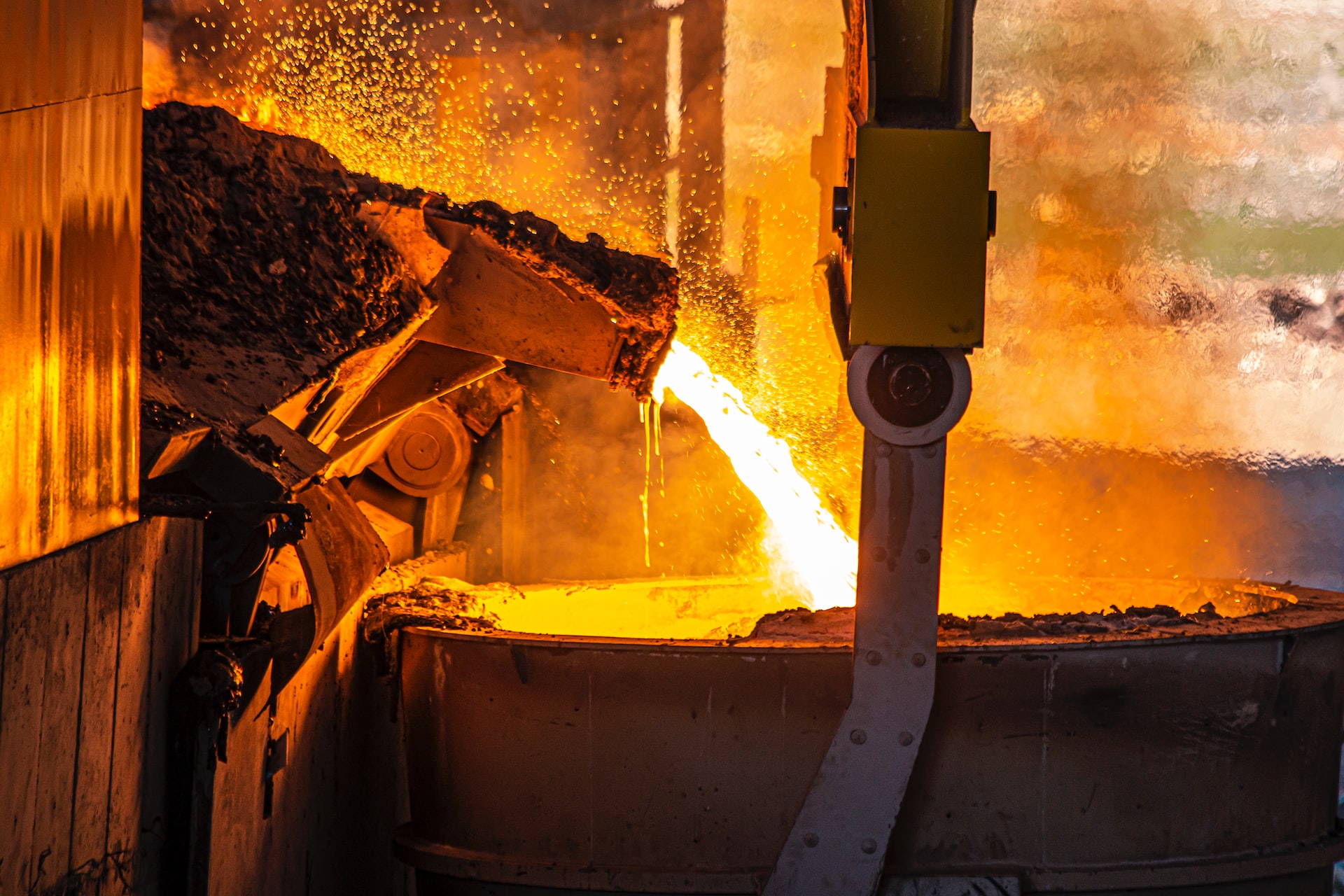
Swedish steel production decreases in 2023
Steel production at Swedish mills in 2023 was around 3% below that of 2022, Kallanish learns from national steel federation Jernkontoret.
According to data provided by the federation, crude steel output in Sweden in 2023 reached 4,258,000 tonnes, 3.3% down on 2022. “In light of the economic slowdown, it comes as no surprise that the year as a whole ends in the red,” Jernkontoret says in its note on the figures.
In December alone, production was down 6.3% year-on-year to 305,000t. Despite this larger deficit at year-end, Jernkontoret notes that the fourth quarter overall saw a slight increase in production. “This means that the decline in the second half of the year was not as clear as the decline we saw in the first half,” says Mathias Ternell, trade policy director at Jernkontoret.
Christian Koehl Germany
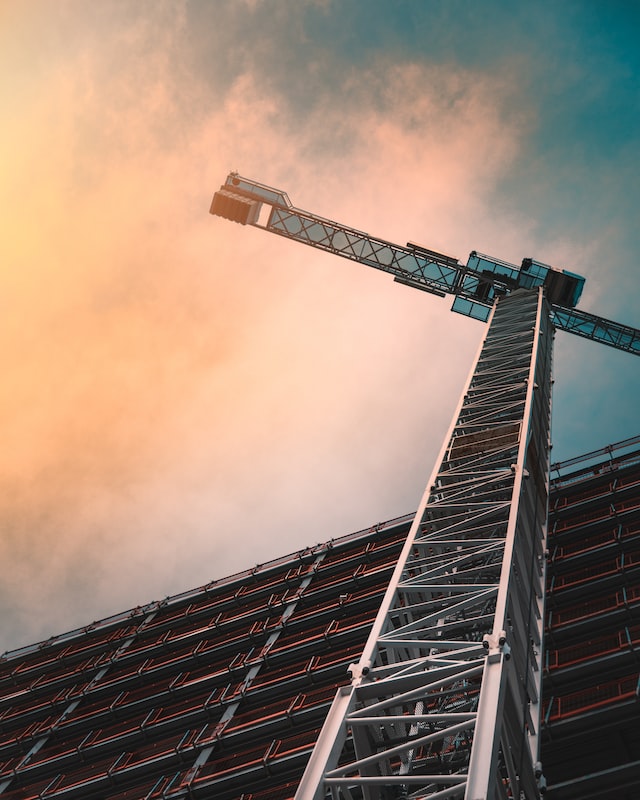
Polish housing construction rebound should accelerate: ING
The Polish housing construction rebound should accelerate in 2024, with new measures expected to stimulate an already solid rebound in the mortgage market, says ING Bank. The number of dwellings under construction has been gradually improving since the bottom in summer 2023.
In a reversal of the situation seen for most of last year, prospects for categories related to infrastructure investment, particularly for civil engineering construction, look less optimistic. Projects financed from the old EU budget have almost been completed. By contrast, investments co-financed from the National Recovery and Resilience Plan will start with a delay. Launching projects from the new EU budget is also set to take time, the bank points out.
In December, overall Polish construction activity rose 14% on-year, with civil engineering works rising 19%. ING attributes this to slightly warmer weather versus December 2022, and the finalisation of investments with EU funds before the end of the accounting period of the previous EU perspective. Also contributing were further residential construction improvements amid the government’s low-cost loan programme, and a low December 2022 base.
In full-year 2023, Polish construction output rose 5% on-year, driven by an 11% growth in civil engineering, while building construction dropped 1.3% and specialised works rose 3%, according to Statistics Poland (GUS) data.
Residential unit construction starts fell 6% last year to 189,093, while issued residential construction permits and applications received dropped 19% to 241,097 units.
CMC said earlier this month that supply-side adjustments and the impact of increasing levels of residential and infrastructure construction should drive sequential improvements in financial results beginning in the spring construction season (see Kallanish passim).
Adam Smith Poland
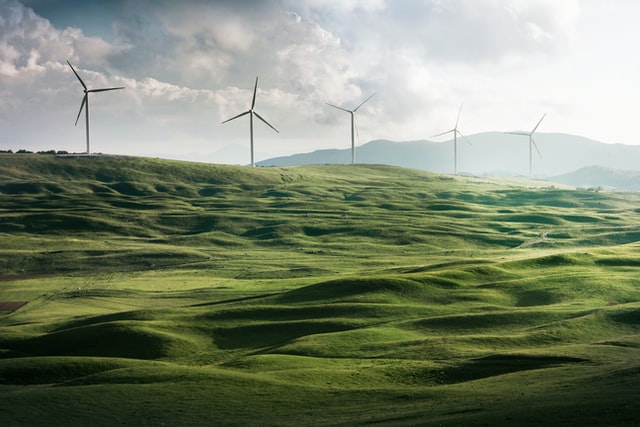
Curtailed wind generation could decarbonise UK steel: report
UK curtailed wind generation – wasted power due to transmission and distribution infrastructure not keeping pace with generation growth – could have produced over 118,000 tonnes of green hydrogen in 2022, rising to 455,000t by 2029. This would be enough to decarbonise the entirety of the UK’s 7 million tonnes/year steelmaking, points out UK think-tank Policy Exchange.
The growing instances of curtailment in the UK involve wind generators being instructed by the network operator to disconnect from the grid due to constraints on the power system – this is a costly problem, the organisation observes.
Since 2021, UK power system congestion has cost consumers over £2 billion ($2.5 billion), and in 2022 alone some £210 million of curtailment payments were made to renewable generators under contract. As the offshore wind fleet grows from 14GW today to the 50GW offshore wind target in 2030, the UK is on track for a fivefold increase in curtailment by 2030.
“By delivering regulatory reforms and introducing new commercial incentives, Westminster can leverage curtailed generation to accelerate development of a distributed electrolysis system,” Policy Exchange says in a report seen by Kallanish.
If the entire volume of curtailed wind generation was committed to hydrogen-fired DRI steel production, the UK’s 7m t/y of steelmaking could be decarbonised by 2026, the report states.
The 455,000t of annual green hydrogen production could also displace two-thirds of the 700,000 t/y of the UK’s current, carbon-intensive grey hydrogen consumption, and deliver two thirds of its electrolyser production capacity target for 2030.
To enable these opportunities, the government must first develop Constraint Management Plans (CMPs) and a tradeable credit market, creating roadmaps for market participants to enter into new arrangements to reduce their annual curtailment figures through partnerships with electrolysers, Policy Exchange says.
It should also reduce or waive system charges to improve the economics of driving investment into new constraint management assets. Other measures could be government backed off-take agreements for a period of 15 or more years, and a matchmaking initiative to pair hydrogen producers with prospective consumers, as is done in the US.
Adam Smith Poland

Insufficient government intervention could strand green projects: Sandbag
Government intervention is necessary to drive “lead markets” and de-risk low-emission technology investment, with the first step being to establish a standard for green steel that consolidates the vast existing steel initiatives. Without this, there may be no mass market for green steel and upcoming green steel projects could end up stranded, says Sandbag.
The Belgium-based climate think tank points out that measures are needed until the operating costs gap between green and conventional production routes is bridged. The green steel standard should not discriminate against scrap, as the sliding scale does.
“Once green steel has been defined, the material needs to be applied in downstream manufacturing sectors, ideally those that command high volumes … such as automotive, so that the premium is well diluted and has the least impact on the willingness of end-users to pay extra,” the organisation says in a report seen by Kallanish.
Thereafter, authorities can enact pull mechanisms as demand-side measures to guarantee the offtake of green steel by manufacturing sectors and the consequent purchase by end-users. These can include green public procurement, quota systems for material sourcing or financial incentives to offset the green premium, as well as trading systems for the exchange of green steel certificates.
Until operation costs equalise, these will need to be complemented by push mechanisms such as financial incentives to encourage steelmaking decarbonisation. “These … will need to be tailored to replace flat steel, which in the EU is mainly produced via the carbon-intensive BF-BOF route, and designed to absorb fluctuating green premiums that cast uncertainty on offtake agreements with downstream manufacturers,” Sandbag notes.
“At the heart of the green steel challenge is the price premium. While the conventional BF-BOF route has predictable operating costs that can be replicated across plants and locations, cleaner production processes are subject to greater fluctuations depending on technological and regional factors,” Sandbag says.
“A green premium that adequately compensates for the additional operating costs of one green steel plant may not be sufficient for another, making pull mechanisms a potential source of uncertainty in terms of inflation, increased public spending or undue profits. In essence, mitigating the risks associated with investment in clean steelmaking technologies requires either public authorities or the steel value chain to bear the burden of unclear costs,” the think-tank concludes.
Adam Smith Poland

Acciaierie d’Italia low output impacts EU steel availability: Assofermet
The prolonged ownership crisis at Acciaierie d’Italia (ADI) and its lower output may lead to a structural shortage of flat steel products, not only in Italy but also at a European level, Italian steel trade association Assofermet warns.
“The quality products available thanks to Taranto production are very often not available within the EU perimeter. Buyers are therefore forced to turn mainly to Asian steel mills, facing import restrictions which increase costs … The crisis at ADI is part of an already very complicated context for the steel sector,” Assofermet says in a document sent to Kallanish.
EU safeguard measures result in a decrease in the quantity of steel imported into the EU. The Carbon Border Adjustment Mechanism (CBAM) will meanwhile introduce a tax on goods coming from territories outside the EU from 2026. The result will be an inevitable increase in the cost of steel products available in the EU.
“The national [Italian] manufacturing sector’s growth needs a primary steel industry, upstream of the supply chain, that can support it with the necessary quantity of steel,” comments president of Assofermet’s flat steel division Paolo Sangoi.
ADI’s production crisis is happening at a time of low steel availability in Italy and Europe. “Steel output is decreasing: the production levels of 2012, the year of the seizure of the hot-end area of the Taranto plant, have not been reached over the past ten years … With declining steel production and the rising cost of steel, it is essential to preserve the industrial value of the plant,” Assofermet concludes.
ADI, the joint venture between state company Invitalia and ArcelorMittal, registered steel output below 3 million tonnes in 2023, according to preliminary data. This is below the shareholders’ initial objective of 4mt in 2023 and 5mt target in 2024.
ArcelorMittal says it is open to an amicable solution to the conflict with authorities, and prepared to give up its stake to partner Invitalia for a price that “is only a fraction” of the company’s investment into ADI since 2018. While Invitalia refused ArcelorMittal’s recent offer, the steelmaking group assures it is still on the table (see Kallanish passim).
Natalia Capra France

H2 Green Steel adds extra Eur4 bil funding for large-scale green steel plant
Swedish H2 Green Steel has secured an additional Eur4.2 billion ($4.5 billion) in new funds and has increased the previously announced equity by Eur300 million, while it has also been awarded Eur250 million grant from the Innovation Fund, to build one of the first large-scale green steel plant and Europe’s first giga-scale electrolyzer, according to a statement released Jan. 22.
Total equity funding to date amounts to Eur2.1 billion. H2 Green Steel has now secured funding close to Eur6.5 billion for the world’s first large-scale green steel plant in northern Sweden.
More than Eur3.5billion out of Eur4.2 billion is in senior debt from a group of more than 20 lenders, including the European Investment Bank, the company told S&P Global Commodity Insights.
In a separate press note, the European Investment Bank (EIB) and the Nordic Investment Bank (NIB) confirmed they will take part in the project finance, with the EIB that will contribute Eur314 million, of which Eur200 is backed by a guarantee from the European Commission under the InvestEU programme, and Eur114 million of intermediated financing to be provided through commercial banks participating in the project financing.
“The steel industry is a strategic sector, being at the heart of the EU economy,” Vice-President of the European Investment Bank, Thomas Östros, said.
“Our commitment to reach net zero by 2050 requires this sector to undergo transformative changes. It is important that the EIB, as the EU climate bank, is supporting H2 Green Steel in its pioneering development for a breakthrough clean technology to produce low-carbon primary flat steel products.”
“No one has scrutinized our project more thoroughly than those who back our financing. This massive commitment from lenders like the European Investment Bank [is] true recognition of the quality of our company,” Henrik Henriksson, CEO of H2 Green Steel said.
H2 Green Steel was founded in 2020 with the ambition to accelerate the decarbonization of the steel industry, using green hydrogen. Traditional primary steelmaking is very energy intensive and produces massive amounts of carbon emissions. The global steel sector is currently responsible for about 8% of global final energy demand and 7% of global CO2 emissions. The green steel from the plant will have a carbon footprint close to zero, with up to 95% less CO2 emissions compared to steel produced the traditional way.
The construction of the Boden plant has already begun, with the production expected at the beginning of 2027 and with half of the initial annual volumes of 2.5 million mt of low-carbon steel already being sold in offtake agreements to customers that range from carmakers to traders to furniture producers.
Platts, part of S&P Global, assessed Northwest European hot-rolled carbon-accounted coil stable on the day at Eur870/mt ($947.517/mt) ex-works Ruhr Jan. 22. The assessment was calculated in line with the sum of Platts daily carbon-accounted steel premium (CASP) assessment and Platts daily hot-rolled coil price assessment in Northwest Europe.
Author Annalisa Villa, annalisa.villa@spglobal.com
