


Klöckner, Danieli Germany move headquarters to Düsseldorf
Klöckner & Co as well as Danieli have each announced they will move their German headquarters from Duisburg to Airport Garden near Düsseldorf Airport.
Klöckner will relocate its group headquarters when the lease expires for the current location, the Silberpalais office building near Duisburg’s main train station, its home for many years.
With the lease in Duisburg set to expire, the distribution group looked at around 70 locations in Duisburg and neighbouring cities, it says. Its decision for Airport Garden was based on a range of criteria, such as the property location and accessibility, the quality of the premises, carbon footprint and cost-efficiency. Approximately 250 employees are scheduled to relocate at the latest by summer 2025.
Technology supplier Danieli will relocate its German headquarters from Duisburg to Airport Garden in the coming weeks. The move will take advantage of the international airport’s strategic location, with excellent connections by plane, train and road, the company tells Kallanish. It also values the proximity to the Ruhrgebiet area which is home to major mills, it says.
Both companies highlight that Airport Garden has been awarded the gold standard as part of the sustainability certification for real estate LEED (Leadership in Energy and Environmental Design). Both also note that the new premises are closely aligned with “new work” principles, taking into account the changes in working practices since the Covid pandemic.
Christian Koehl Germany

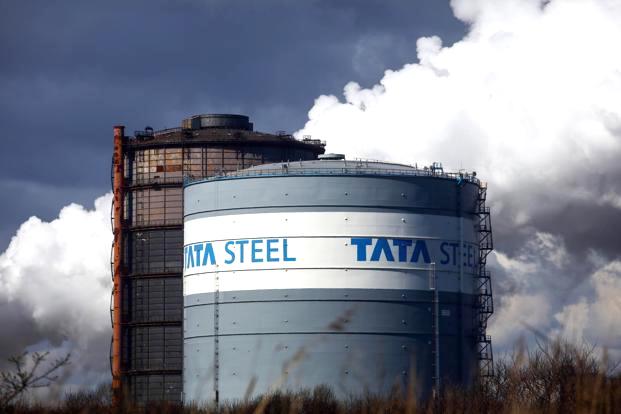
Tata Steel European output ends 2023 without recovery
Production and deliveries at Tata Steel’s UK and Netherlands units ended 2023 without a recovery, Kallanish notes.
In the Netherlands, liquid steel production in April-December 2023 was at 3.3 million tonnes, significantly below the 4.8mt registered during the same period of 2022. Nine-month deliveries meanwhile reached 3.9mt against 4.1mt a year earlier.
The contraction of operational results in the Netherlands was mainly due to the relining of one of the blast furnaces at the IJmuiden site. Production was down 23% on-year in the December quarter to 1.17mt, but was more or less stable on-quarter.
Tata Steel’s UK business posted a better performance as liquid steel production during April-December 2023 reached 2.3mt, stable compared with the same period of 2022. Deliveries were also in line y-o-y, at 2.1mt during the nine months.
Tata Steel UK liquid steel production in the December quarter stood at 0.73mt, marginally lower quarter-on-quarter due to operational issues, the firm says. Deliveries stood at 0.63mt, down on-quarter and on-year due to “subdued demand dynamics”, it adds.
Emanuele Norsa Italy

European HRC market slowly restarts after holidays, bullish sentiment prevails
Producers in Northern Europe kept offering steel HRC in the range of €720-750 ($788-821) per tonne ex-works. But demand was still slow, and no major deals were heard in the market.
“Most buyers just came back to work after a two-week break, we will need a few days to figure out the market situation,” a distributor in the EU said.
Two buyer sources estimated the tradable market level to be between €700 per tonne and €720 per tonne ex-works. A third buyer source expressed the opinion that even a bit lower could be achieved, in the range of €690-700 per tonne ex-works.
But several sources told Fastmarkets that European mills were unlikely to sell coil below €700 per tonne ex-works since supply was still limited due to output cuts.
“The mills will not go down below €700 per tonne in spot sales due to good order books”, a buyer source told Fastmarkets.
Most mills could only offer material for March delivery already, while one integrated steelmaker told Fastmarkets they were already offering early-April delivery.
Fastmarkets calculated its daily steel hot-rolled coil index domestic, exw Northern Europe at €705.63 per tonne on Monday January 8, increasing by €10.63 per tonne from €695 per tonne January 5.
The index was up by €10.13 per tonne week on week and up by €20.21 per tonne month on month.
No new import offers or bookings were heard in the market.
Last week, sources told Fastmarkets that a lack of competitive imports could support a domestic price rebound for HRC in Europe during January. The mills were offering higher prices for March-delivery HRC because they expected buyers to be short of options with flat steel output in Europe being reduced domestically due to the depleted safeguard quotas.
Fastmarkets calculated its daily steel hot-rolled coil index domestic, exw Italy at €691.25 per tonne on January 8, increasing by €1.67 per tonne from January 5.
The index was up by €2.92 per tonne week on week and up by €25.83 per tonne month on month.
Mills in Italy continued offering steel HRC in the range of €720-740 per tonne delivered for February-March delivery. Some sources, however, said, that February delivery was gradually sold out at integrated mills in the nation. But, similarly to the market situation in Northern Europe, demand for coil remained slow, and no major deals were heard in the market.
Two buyer sources estimated the tradeable values for steel HRC in the range of €680-690 per tonne ex-works. But another two buyer sources found these levels too low and estimated the workable market level at about €700 per tonne ex-works.
“It is unsustainable for the Italian mills to sell HRC below €700 per tonne ex-works due to the high production costs,” a second buyer source told Fastmarkets.
The second buyer source added that the limited availability from imports would also influence prices. The source said that buying the material from abroad would mean waiting for its clearance from customs by July.
The source said that prices in Italy would likely reach €740-750 per tonne delivered in the next few weeks and added that those were generally in line with the levels offered now in Northern Europe.
Published by: Julia Bolotova, Darina Kahramanova

Italian authorities, ArcelorMittal fail to agree Acciaierie d’Italia future
The future of Acciaierie d’Italia (ADI), formerly known as Ilva, remains uncertain as the Italian government and ArcelorMittal failed to reach an agreement on Monday over the future injection of much needed funds into the company.
During a meeting held on Monday, the local government asked ArcelorMittal – the current majority shareholder with 62% – to find an agreement for a €320 million ($351m) capital increase to satisfy the steelmaker’s immediate needs, Kallanish notes.
The proposal by Italian authorities envisages a change regarding the company’s control, raising the shares under public control – held by Invitalia – to 66% and therefore making ArcelorMittal a minority shareholder going forward. The proposal has been rejected by ArcelorMittal and the government states it is now instructing its lawyers to understand how to proceed.
The lease of Taranto’s equipment from the administrator is set to expire on 31 May, which is when the equipment should be purchased, a source explained. The original expiration date in May 2022 was already postponed to this year. Given all the legal issues and bureaucracy, ArcelorMittal is said not to be willing to pay to purchase the equipment at this stage, and the Italian authorities will eventually need to find an alternative solution for the assets.
“The government is realising ArcelorMittal will not invest and that a consensual divorce is the best way to separate. The €320 million is nothing compared to what the steelmaker needs,” a source told Kallanish previously. “On 10 January, Taranto’s latest gas bill will be due but there are also many suppliers and shipping companies in need of payment, as well as vessels at the port that cannot unload material.”
This week, another meeting will be held between the local government and trade unions to discuss further options.
Emanuele Norsa Italy

Celsa’s new service centres obtain Aenor’s sustainable certification
Spanish certification authority Asociación Española de Normalización y Certificación (Aenor) has awarded steelmaker Celsa’s three new service centres with the Sustainable N Mark, Kallanish notes. This includes the Illescas facility in the Castilla–La Manch region, Barcelona-based Castellbisbal and Seville’s Dos Hermanas.
“With this recognition, we continue to make progress in building a more sustainable future and we are convinced that the market will increasingly recognise the responsible commitment of companies like ours and choose products that contribute to reducing the carbon footprint, such as our circular steel,” says Celsa Steel Services product director Xavier de la Hoz. “The certification confirms that steel products are sustainable from an ESG standpoint, and it reinforces Celsa’s commitment to achieving net zero.”
Aenor’s N Mark distinguishes more than 100,000 products in 53 countries, recognising sustainability factors through the analysis of 60 product indicators from the industry and construction sectors.
Todor Kirkov Bulgaria

German fabricators bemoan doubling of grid fees
Germany’s steel and metals fabricators are alarmed about a doubling of power grid fees they face in 2024.
Grid operators have announced an increase of the fees from 3.12 to 6.43 euro cents (3.40-7.02 US cents) per kilowatt hour, as the federal government will be axing its subsidies. Fabricators federation WSM is calling on the economy ministry for an explanation for the measure, which will hit companies and consumers, it says in a statement received by Kallanish.
The subsidies used to amount to €5.5 billion, while the total of grid fees amounts to around €30 billion. “Why would this abandonment cause a doubling of fees for us? There is no explanation for it,” says WSM managing director Christian Vietmeyer.
WSM also questions an increase in the total fees, which will rise from €28 billion to €31 billion. “Why an increase of 10%, while regular energy actually drops in price due to lower costs for fuels?” asks WSM’s head of energy and industry policy, Holger Ade.
The federation has called on economy minister Robert Habeck to clarify the hikes. “The government must question these increases, and cannot put them on the shoulders of users and consumers alone. We need a cap and sharing of the pain, and that includes the energy industry,” WSM says.
Steelmakers federation WV Stahl, too, has addressed the topic. It issued a statement by the association of energy-intensive industries (EID), which includes construction materials, paper, chemicals, glass, and nonferrous metals. “In order to survive in international competition, and to achieve the transition to climate-friendly technologies, we need internationally competitive power costs. This includes a stabilisation of grid fees,” EID writes.
Christian Koehl Germany

Rapidly-filling safeguards quotas may support EU HRC price increase in early 2024
As of Friday January 5, around 1.18 million tonnes of HRC in the other countries and regions category were awaiting allocation to enter the EU in the first quarter of 2024, while the quota allowance was 923,594 tonnes, according to EU customs statistics.
Vietnam, Japan, Taiwan and Egypt were the major HRC suppliers to the EU under that category, with Asian suppliers offering the most competitive prices, according to EU market sources.
On the same day, indicative HRC awaiting allocation for South Korea was 60,304 tonnes, 33% of the total allowance of 184,008 tonnes for January-March 2024. Sources suggested that the South Korean quota was also likely to be exceeded.
Before the Christmas break, HRC offers from Asian and Indian mills were heard at €645-660 ($706-722) per tonne CFR to European ports, for February-shipment coil. Turkish mills were offering February-shipment HRC at €695 per tonne CFR, including the anti-dumping duty, which is broadly in line with EU mills.
New offers were to be made at even higher levels from Asian and Indian mills, partially due to freight rates spikes amid the acute Red Sea shipping crisis.
Other individual quotas for HRC for Turkey, India, Serbia and the United Kingdom were filled by less than 5% each as of January 5.
In general, Turkey, India, Serbia and the UK have been filling up their allocations at a slower pace, and prices offered from those countries were close to EU market levels, industry sources said.
Market sources suggested that a lack of competitive imports could support a domestic price rebound for HRC in Europe during January.
“The European mills are being very relaxed now,” a source in Germany said. “They are firmly offering higher prices for February-March delivery HRC because they expect buyers to be short of options with [flat steel] output [in Europe] being reduced domestically and key overseas suppliers are locked-out of the market because of depleted quotas.”
Fastmarkets calculated its daily steel HRC index domestic, exw Northern Europe at €695.00 ($760.43) per tonne on January 5, flat day on day but edging down by just €0.42 per tonne from €695.42 per tonne on Wednesday January 3.
The index was down by €0.50 per tonne week on week, but up by €17.50 per tonne month on month.
Targeted offer prices for January spot trading were reported at €730-750 per tonne ex-works from EU mills.
Meanwhile, the full quarterly quota allocated to hot-dipped galvanized coil grades used by the automotive industry from China for January 1, 2024, to March 31, 2024, was 126,603 tonnes. This quota was exceeded just a couple days after the new quota period started on January 1, with indicative amount awaiting allocation at 197,882 tonnes as of January 5.
The HDG grades traditionally used by European car-makers fall into product category 4B of the region’s safeguard measures.
Any material imported on top of the quota allowance will be a subject to 25% duty, according to EU safeguard measures.

EU import quotas for Chinese HDG, HRC and wire rod ‘other country’ quotas filled swiftly
Steel import quotas into the European Union for Chinese hot-dipped galvanized coil as well as quotas in the other country categories for wire rod and hot-rolled coil have filled up swiftly following the beginning of the new quota period Jan. 1.
According to data from the European Commission last updated Jan. 4, hot-dipped galvanized coil imports from China in the category 4B have exceeded the 126,603 mt balance by 52% with a staggering 1.9 million mt waiting to be allocated.
A 25% duty will apply on imported material once a quota has been filled. Category 4B is material used for the automotive sector. The quota for India in category A (industrial use) remains 78% open but 11,688 mt are awaiting allocation adding to the remaining balance of 34,909 mt. Platts, part of S&P Global Commodity Insights, assessed the weekly Northern European HDG assessment at Eur790/mt EXW Ruhr Jan. 3, up Eur/5 mt on month. Quotas for other countries, Korean or Indian material for both HDG categories have remaining balances of 83-100%.
The “other country” quota of 923,594 mt of imports of European HRC has also been filled swiftly with an already registered excess of 18.37% and 1.09 million mt awaiting allocation. Jan. 4
The country-specific quota for Korean HRC has 67.27% remaining out of a 184,008 mt balance and 60,280 mt awaiting allocation. Turkish and Serbian HRC quota levels remain at over 90% available.
“We also suspect the quota for Q2 might also be exhausted,” said a German distributor.
Market participants reported no interest for imported hot-rolled coil among European buyers with most of them concerned about quotas already getting exhausted.
“The materials are now being left at ports, but the high interest rates and high cost of storage are also concerning,” said another German distributor.
An Italian trader also said that storing material for clearance in the second quarter may be risky, which makes imports less attractive to buyers now.
Platts assessed HRC Northern Europe at Eur690/mt EXW Ruhr Jan. 3, stable on month, while the import assessment stood at Eur650/mt CIF Antwerp Jan. 3, which means there is only a Eur40/mt price difference between domestic and import prices which further leads to muted buying interest.

EU HRC mills target bullish offers due to healthy order books, buyers still on sidelines
European hot-rolled coil mills targeted bullish offers Jan. 4 due to healthy order books even though buyers remained on sidelines and were expected to return the coming week.
“The market is not active yet,” a German distributor said. “Business will get back to normal next week.”
Mills maintained an optimistic outlook after having closed some half-yearly contracts for HRC at target offer levels, while most have healthy order books up to February.
Market participants expected trading activity to pick up in the coming week as buyers return post holidays, although no tradable levels were heard during the day.
Mills offered domestic HRC at Eur745-750/mt ex-works Ruhr for March shipment.
Platts assessed the price of domestic hot-rolled coil stable on the day at Eur690/mt EXW Ruhr Jan. 4.
Interest for imported material remained lackluster as safeguard quotas for HRC in first quarter from other countries were exhausted. Buyers remained hesitant about storing material at the ports for the possibility of clearance in Q2 due to high costs.
According to data from the European Commission, HRC import volumes awaiting allocation from other countries have already exceeded the total quota at around 1.09 million mt, as of Jan. 3. Total EU safeguard quota for HRC imports from other countries stood at 923,594.27 mt for Q1.
“Smaller traders, stockists and service centers aim to buy less of imports this year to reduce risks,” a German distributor source said. “People are currently reluctant to conclude deals for imported material.”
No firm offers were heard for imported HRC during the day.
Platts assessed the price of imported HRC in Northwest Europe stable on the day at Eur650/mt CIF Antwerp Jan. 4.
Author Rituparna Nath
US steel import licenses jump 14% on month in December: Commerce
Total US steel imports are expected to rise on the month and on the year for December amid higher import licenses for oil country tubular goods and hot-rolled coil to close out 2023, according to the US Commerce Department data Jan. 4.
Licenses to import steel in December stood at 2.09 million mt, up 14% from November’s preliminary import count of 1.83 million mt. Compared with a year ago, licenses to import steel rose 9% from just under 2 million mt imported in December 2022.
The estimated finished steel import market share in December was 21% and is 21% for the full year of 2023, according to the American Iron and Steel Institute.
| December US steel import licenses by product (carbon and alloy mt) | |||
| Product | November preliminary | December licenses | Percent change (%) |
| Slab | 303,414 | 326,022 | 7 |
| HDG | 166,426 | 184,244 | 11 |
| Other semis | 164,817 | 182,354 | 11 |
| HRC | 132,001 | 178,554 | 35 |
| OCTG | 69,327 | 151,861 | 119 |
| Coiled plate | 91,790 | 105,653 | 15 |
| CRC | 85,515 | 94,600 | 11 |
| Wire rod | 69,199 | 68,981 | 0 |
| Coated sheet and strip | 93,184 | 54,229 | -42 |
| Rebar | 69,010 | 34,357 | -50 |
| Source: US Commerce Department | |||
Import licenses for OCTG surged 119% on the month to 151,861 mt, with South Korea accounting for the largest share at 46,710 mt.
Licenses to import sheet products rose from November across all major categories, with HRC seeing the biggest jump at 178,554 mt, up 35% from the prior month’s preliminary total. Platts, part of S&P Global Commodity Insights, last assessed US HRC imports at $850/st DDP Houston Jan. 3.
Import licenses for hot-dipped galvanized steel and cold-rolled coil each rose 11% on the month to 184,244 mt and 94,600 mt, respectively.
Among major product categories, rebar imports are expected to see the steepest drop in December, with licenses down 50% on the month at 34,357 mt amid a lack of licenses from Algeria and Egypt. Platts last assessed the weekly US rebar import price at $770/st on a DDP Houston basis Dec. 29.
Despite a 7% drop on the month, Canada is expected to remain the largest exporter of steel to the US in December, with 452,569 mt of steel from the country licensed for import in the final month of 2023.
| December US steel import licenses by country (carbon and alloy mt) | |||
| Country | November preliminary | December licenses | Percent change (%) |
| Canada | 484,510 | 452,569 | -7 |
| Brazil | 344,769 | 405,859 | 18 |
| Mexico | 224,636 | 259,710 | 16 |
| South Korea | 127,717 | 273,213 | 114 |
| Germany | 47,402 | 89,938 | 90 |
| Source: US Commerce Department | |||