

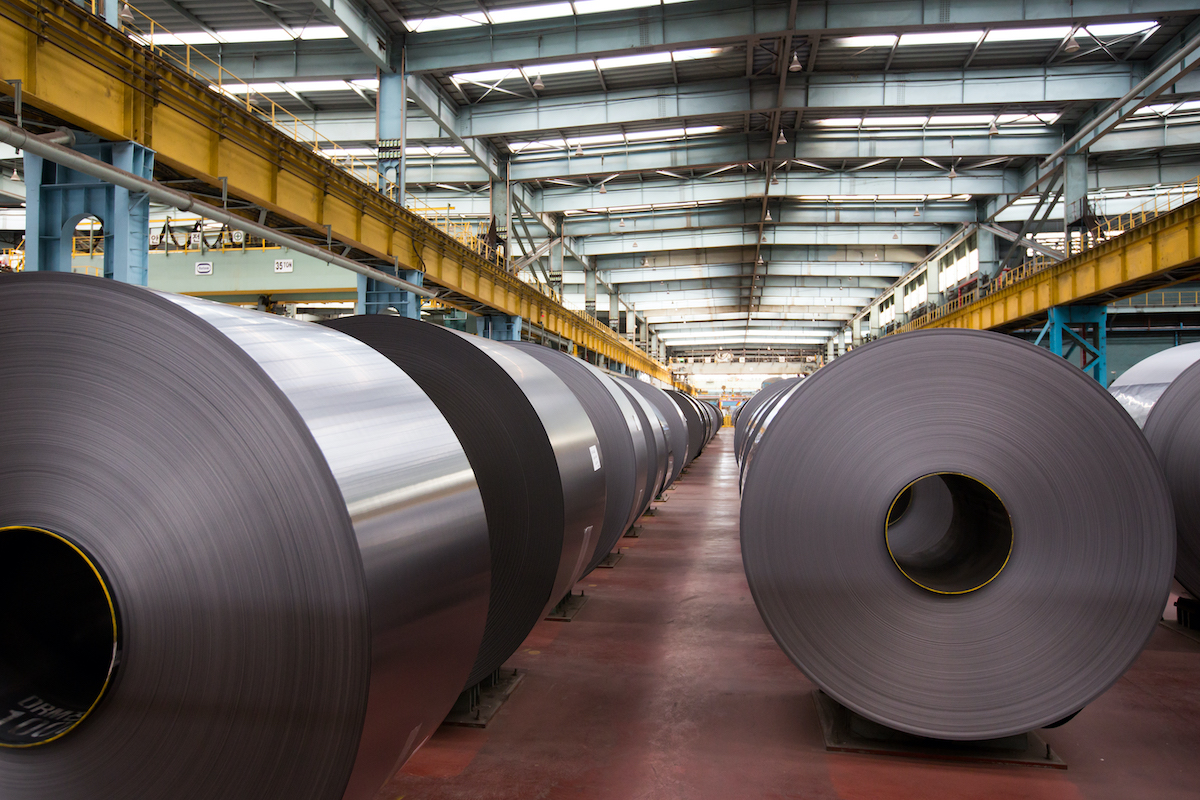
European HRC market largely inactive in continuing seasonal slowdown; mills to aim for higher prices later in month
Both buyers and sellers continued holding back from trading on Thursday due to the continuing holiday break.
Most buyer sources estimated the HRC price at €680-700 per tonne ex-works, while others said that spot prices could climb “just slightly above” €700 per tonne ex-works if supplies remain tight.
In northern Europe, offers from integrated mills for February and March delivery were reported at €720-750 per tonne ex-works before the holiday break.
One producer source told Fastmarkets that it was offering March delivery coil at €730 per tonne exw, stressing that this was “the minimum possible level due to high production costs.”
A distributor source said everyone was still on holiday.
“Trading is zero this week. Mills are keeping their offers high, citing strong order portfolio, but we [will soon] see if these offers are accepted in deals,” the source said.
Fastmarkets calculated its daily steel HRC index domestic, exw Northern Europe at €695.00 ($759.89) per tonne on Thursday, edging down by just €0.42 per tonne from €695.42 per tonne on January 3.
The index was down by €0.50 per tonne week on week, but up by €18.33 per tonne month on month.
In Southern Europe, Fastmarkets calculated its daily steel HRC index domestic, exw Italy at €689.58 per tonne on Thursday, stable day on day.
The index was up by €1.25 per tonne week on week and by €19.58 per tonne month on month.
The Italian market was also still in “holiday mode,” sources said, with trading activity not expected to resume until the second week of January.
Target offers from Italian steelmakers for February-March-delivery HRC stood at €720-730 per tonne delivered, while one European steelmaker was offering coil to the nation at €740 per tonne delivered.
Buyer sources estimated the market at €680-690 per tonne ex-works.
Published by: Julia Bolotova

Tosyali buys Spanish tubemaker STS
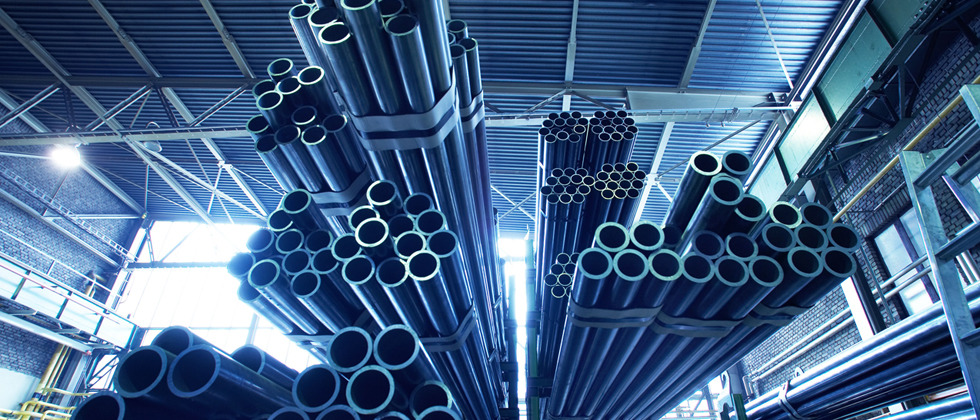
Turkish conglomerate Tosyali Holding says it has acquired Spain’s Baika Steel Tubular System (STS). The company manufactures helical welded steel (SAW) tube with different coatings and structural pipes, used mainly in the oil & gas sector, water transportation and for civil engineering applications.
“We have added a new milestone to our global growth,” Tosyali says in a note seen by Kallanish. “With this acquisition, the company has increased its global pipe production capacity to more than 3 million tonnes/year, reinforcing our position as the largest steel pipe producer in Europe.”
Although it does not reveal any details of the agreement, STS confirms that Tosyali will modernise its two plants in Alegría-Dulantzi, in the Basque Country. This will increase their annual production capacity from the current 150,000 tonnes/year to almost 240,000 t/y.
Todor Kirkov Bulgaria


French buyers intend to rebuff longs increases
Some French buyers say they will try to refuse the recent wave of steel price increases implemented by European producers before the end of last year, despite contract values for rebar rising in recent weeks.
The industry is still on holiday, with activity, like in most European countries, expected to resume on 8 January. Despite the hikes on all long products, demand remained uncertain in France until the end of the year. A purchasing group says its members intend to keep stocks low given the current economic climate and downturn in the French construction sector, which saw output decline greatly in 2023.
Distributors’ purchasing volumes were weak through year-end. Last month did not bring any significant restocking. However, some restocking is seen happening in January. Purchasing groups are resorting to buying abroad for more competitive deals.
“These increases will not last. Stocks are low and we are going to buy as little as possible. Prices for all longs will inevitably go backwards. There was ‘technical’ demand at the end of the year because stocks were low throughout the country, but if the construction sector does not resume ordering volumes, the high prices will not stick,” a source comments.
French rebar values are flat on month at €650/tonne ($561) delivered on average, Kallanish learns from market sources.
The construction industry in the country is showing no signs of recovery. The sector’s crisis is deepening, particularly in the private residential segment, and is now expanding to non-residential construction. In the third quarter, the fall in new building sites exceeded 20%, while permits for new construction collapsed by almost 30%. The outlook remains negative (see Kallanish passim).
Natalia Capra France

Italian rebar buyer uncertainty to impact January sales
Italian rebar buyers expect the current period of quiet to last until mid-January. Many of them are adopting a wait-and-see attitude and tell Kallanish they can hold out without purchasing for another couple of weeks.
The Italian rebar market remains inactive this week as activity will restart following winter holidays on 8 January. Contract values increased in December in line with higher asking prices.
Before shutting down for the Christmas break, local steelmakers were asking for between €380-400/tonne ($416-438) base ex-works. Relatively small rebar volumes were sold at €360-380/t base ex-works. Including extras, domestic rebar was fetching €620-640/t base ex-works.
Confidence in present and future activity increased in December in the Italian construction sector, according to a report by national statistics institute Istat.
General consumer confidence regarding the current and future economic landscape also increased last month. An improved sentiment has been registered in all sectors of the industry, except for manufacturing where the association points to a continued negative outlook and expectations of deteriorating production levels in 2024.
Istat says November prices in the construction sector remained flat for both residential and non-residential buildings.
Natalia Capra France

ArcelorMittal pairs up with India to develop hyperloop transportation
ArcelorMittal has partnered with Indian Institute of Technology Madras (IIT Madras) to develop cost-effective hyperloop technology for the high-speed transport of passengers and cargo.
Hyperloops are a proposed transport system made of steel tubes large enough — up to 3.5 meters in diameter — to carry passenger and freight pods at up to 1,200 km/hour speeds while using very little energy, hailed by some — including Elon Musk — as a potential sustainable high-speed mobility system for the future. So far, testing speeds have been limited to 200-500 km/hour.
ArcelorMittal said in a Jan. 3 statement that together with its integrated flat steel manufacturer ArcelorMittal Nippon Steel India it is providing steel, as well as engineering, design and project management expertise to support the creation of India’s and Asia’s first hyperloop test track at IIT Madras’ 163-acre Discovery Campus on the outskirts of Chennai, in the state of Tamil Nadu.
ArcelorMittal Nippon Steel India is supplying 400 mt of steel for the fabrication of a 400-meter vacuum tube, in which autonomous, levitating pods will be tested at speeds of up to 200 km/hour. The test facility is expected to be operational by the end of Q1 2024.
Following the completion of the proof-of-concept phase, next would come the development of an operational demonstration route to validate the techno-commercial prospects of the technology.
Hyperloop’s proponents believe it will use 10-times less energy than road transportation or aviation, yet the infrastructure it needs is very metal intensive: 1 km of this transportation system requires from 2,000 mt (at maximum achieved steel weight reduction without the loss of properties) to 5,000 mt of steel — a lot more than the 1,600 mt of steel than it takes to build a railtrack of the same length, and this means higher embedded emissions too.
Current world average direct and indirect emissions during the production of 1 mt of 600 mm or wider flat-rolled steel coil is estimated by the European Commission at 2.28-2.39 mt of CO2, which means that steel in 1 km of the hyperloop would carry anything between 5,000 mt and 11,000 mt of CO2, S&P Global Commodity Insights estimates.
Steel companies have been optimizing steel properties for the ultra-high-speed conditions of hyperloop systems since the late 2010s, aiming to develop strong, yet lightweight steels and pipe designs that could withstand internal low pressure with sufficient rigidity while ensuring high safety and energy efficiency at low construction and scalability costs.
For this purpose, ArcelorMittal has been in partnership with European hyperloop developer Zeleros since 2017.
Tata Steel and Posco unveiled a collaboration to develop steel grades and tube technologies for hyperloops in November 2020; by that time Posco had been conducting hyperloop-related research for more than 10 years already. Later Tata Steel said its low carbon steel product Zeremis Carbon Lite would be tested in the European Hyperloop Center in Groningen, the Netherlands.
Later, in October 2021, Russian steel company Severstal secured a contract with Los Angeles-based Hyperloop Transportation Technologies to supply steel for one of the first commercial hyperloop prototypes, but Russia’s invasion of Ukraine led to the removal of the company from the project.
Author: Katya Bouckley


EU HRC importers to pay first-quarter safeguard taxes
Importers of hot rolled coil into Europe are set to be requested to pay part of the 25% safeguard duties, as volumes currently being cleared at customs have exceeded the allocated first-quarter quota.
Similarly to what happened in Q4 2023, there are almost 1.1 million tonnes of HRC waiting to be cleared under the “other countries” sub-group. This figure exceeds the tariff-free available quota by some 170,000t, meaning that importers could be requested to pay an almost 5% duty on these imports, according to Kallanish calculations.
The “other countries” quotas include all import origins, excluding Serbia, Turkey, India, South Korea and the UK.
Importers of metallic coated coil from China are also set to face a similar problem. For Q1, the allocated quota amounts to slightly over 126,000t but, at the moment, over 190,000t of this product is awaiting to be cleared by EU Customs.
Emanuele Norsa Italy
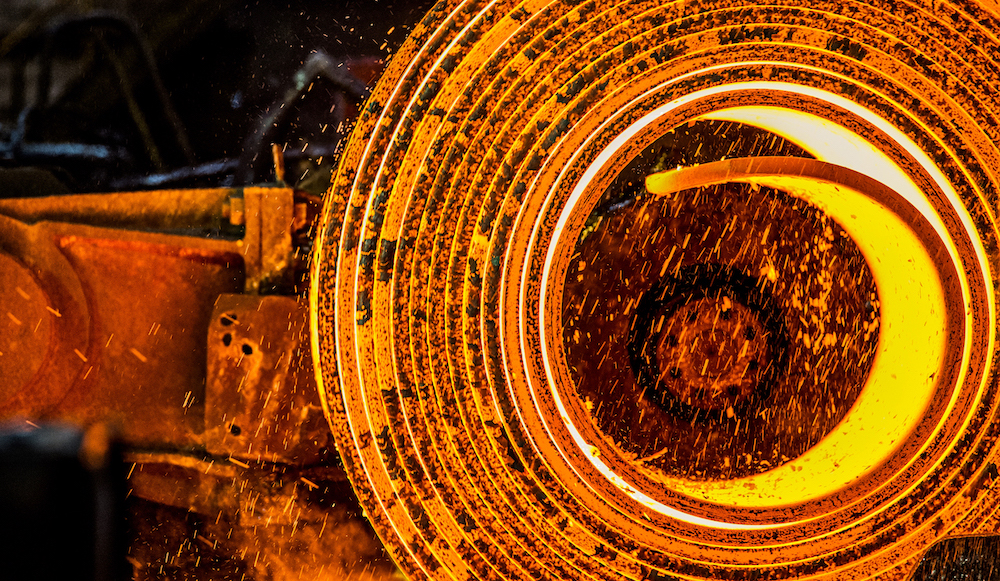
Quiet conditions prevail in European HRC market; prices stay flat
Fastmarkets calculated its daily steel HRC index domestic, exw Northern Europe at €695.42 ($764.02) per tonne on Wednesday, up marginally by €0.42 per tonne from €695.00 per tonne on January 2.
The index was down by €0.08 per tonne week on week but up by €24.54 per tonne month on month.
Both buyers and sellers in the region were largely inactive due to holiday break.
But producers remained bullish for Janaury spot sales on good order books and reduced supply resulting from output cuts in late 2023.
Offers for March- and February-delivery HRC from integrated mills in the region were heard at €720-750 per tonne ex-works, with “very little room for negotiation,” Fastmarkets heard.
Tradable values were estimated by buyers at €680-700 per tonne ex-works on Wednesday.
“We will see the real market level [in the week commencing January 8], when everybody returns to the market,” one trading source said.
In Southern Europe, Fastmarkets calculated its daily steel HRC index domestic, exw Italy at €689.58 per tonne on Wednesday, up by €1.25 from €688.33 on January 2.
The index was up by €1.25 per tonne week on week and up by €29.58 per tonne month on month.
The Italian market was also quiet on Wednesday with no trading reported.
New offers from Italian steelmakers for February-March-delivery HRC stood at €720-730 per tonne delivered, while one European steelmaker was offering coil to the nation at €740 per tonne delivered.
These offers compare with the most recent trades reported in late December at €700 per tonne delivered (€680-690 ex-works), sources said.
No new import offers were reported on Wednesday, with most suppliers expected to table new price in the second week of January, Fastmarkets heard.
Published by: Julia Bolotova

Steel, shipping need to collaborate on decarbonisation: Lloyds/UMAS
International shipping could save 776 million tonnes of cumulative CO2 emissions between 2024 and 2050 by progressively adopting hot rolled steel with lower embodied carbon, according to analysis from Lloyd’s Register Maritime Decarbonisation Hub and UMAS.
Shipping has a dual role to play in the steel sector’s low-emissions transition – as a buyer of green steel for shipbuilding, containers and infrastructure, and as a supplier of steel scrap from ship recycling, says UMAS. Additionally, the shipping sector transports a big proportion of steel produced globally, impacting the steel industry’s scope 3 emissions. “This further highlights the interconnectedness of the two sectors and the need for collaboration in strengthening their decarbonisation efforts,” the UK-based advisory service says in a note seen by Kallanish.
Currently, “green steel” is used as a catch-all term for steel with lower embodied emissions with various definitions suggested by different institutions. Going forward, it is preferred that the steel sector agrees on a definition based on clear GHG emissions reduction thresholds that also considers environmental, social, and socio-economic sustainability aspects, UMAS points out.
The analysis uses a forecast of the number and steel mass of newbuild ships likely to be built between 2024-2050, in line with expectations of growing demand, as well as achieving IMO GHG reduction ambitions. This is then used to estimate the potential CO2 emissions savings that could be achieved if the majority of the hot rolled steel used had lower embodied emissions, in line with the trajectory set by the Science Based Targets initiative (SBTi) steel sector guidance.
“Continuing with business as usual, where the aforementioned volume of hot rolled steel is produced based on current production methods, will result in the shipping sector indirectly contributing to the creation of 1.3GtCO2 in the period to 2050. In order to align with the SBTi steel sector guidance, the international shipping sector could demand that its newbuild ships are built using green steel based on clear GHG emissions reduction thresholds that also considers environmental, social, and socio-economic sustainability aspects,” UMAS observes.
“Increasing green steel production requires action from both the steel sector and from its demand sectors, including shipping. Incentivising the use of green steel in shipping is critical to driving up demand, which in turn will incentivise increased production of green steel from steel producers. Furthermore, there is an expectation that interest in green steel will increase in the sector as shipowners begin to understand and explore ways to reduce their Scope 3 GHG emissions,” it concludes.
Adam Smith Poland

French construction sentiment continues to deteriorate
Sentiment among French construction companies deteriorated again in December following a negative November. The firms surveyed by l’Institut National de la Statistique et des Études Économiques (Insee) reported a stable but negative business climate.
Construction companies in both structural works and finishings had a pessimistic attitude towards their past and future activity. More firms than in November considered the evolution of their company and the market to be unpredictable. “The balance of opinion on the economic uncertainty being felt has kept on growing,” an Insee report obtained by Kallanish states.
Last month, contractors were slightly fewer in number compared to November to consider the level of their order books to be higher than normal. Given their staff size, they reported 8.2 months of work. Production capacity was stable on-month, while slightly fewer firms than the previous month reported slowing output because of supply difficulties.
21% of construction companies considered themselves unable to increase their production in case of additional orders due to a lack of personnel and supply difficulties.
However, in December, slightly more business managers than in November announced they will increase their prices in the upcoming three months, the report concludes.
Natalia Capra France

Salzgitter restarts blast furnace after final revamp
Salzgitter says its blast furnace A has been fired up again following a complete modernisation that lasted over 100 days, Kallanishlearns from the German steelmaker.
With the relining, Salzgitter has taken a key step towards securing its pig iron supply within the context of the incremental transformation phase towards low-CO2 steel production by 2033, it adds.
The furnace’s complete overhaul included the renewal of the refractory lining with 3,000 tonnes of carbon bricks and other refractory materials, and a modernisation of the complex process and control technology. Over €100 million ($109m) was invested in the measure, with Pirson Montage AG involved as an essential engineering partner.
Blast furnace A was originally commissioned in 1977 and has been relined several times. The unit has an annual capacity of around 2 million tonnes of pig iron. Salzgitter stated earlier that this will be the last reline of a blast furnace as the company is converting to direct reduced iron (DRI) technology.
Christian Koehl Germany