


EU seeks US tariff-rate quota management improvement
The EU is pushing the US for a “noticeable improvement” in its management of tariff-rate quotas (TRQs), which the EU considers “rigid”, European Commission vice president Valdis Dombrovskis said on Monday of the progress made in Global Arrangement on Sustainable Steel and Aluminium (GASSA) negotiations.
The comments came following an EU Trade Council meeting, the outcome of which European steelmakers’ association Eurofer criticised for showing there is still a gulf between the EU and US positions.
The two sides failed to reach a deal on GASSA in time for the EU-US summit in Washington last month and subsequently extended the deadline for negotiations till year-end (see Kallanish passim).
The main stumbling block was the “unwillingness of the US side to provide a clear pathway towards definitely withdrawing the 232 tariff-rate quotas which the US is currently imposing on EU exports,” Dombrovskis commented during Monday’s press conference.
While negotiations continue, the sides “need to manage the situation” approaching on 1 January, which would see US Section 232 tariffs and EU retaliatory measures come back into force if no agreement is reached.
“We are in an asymmetric situation where we [EU] have completely suspended our measures but the US still continues to impose if not tariffs, then tariff-rate quotas; but also the management of TRQs is quite rigid and certainly can be improved,” Dombrovskis noted.
The main discussion now is on improving the TRQ management before the EU side decides on the next steps, he concluded.
Eurofer called the meeting a missed opportunity to settle the trade dispute before the COP28 summit in Abu Dhabi beginning on Thursday.
“Without a carbon-neutral industry at global scale, it will be impossible to achieve the 1.5 nor the 2 degrees Celsius objective in 2050. An ambitious international binding agreement tackling the existential challenges the steel industry is facing worldwide should not become the collateral damage of different views across the Atlantic on the approach to solve the US Section 232 issue while we share the same values,” says Eurofer director general Axel Eggert.
The absence of a GASSA deal “risks jeopardising the European steel industry’s decarbonisation efforts and shows the limits of EU global climate and trade diplomacy”, he adds.
“We urge the EU and the US to find a common path forward, positively conclude the negotiations, and avoid postponing solutions for global challenges,” Eggert concludes.
Adam Smith Poland


Revista InfoAcero Noviembre 2023
En el siguiente enlace pueden acceder a la edición de Noviembre de nuestra revista INFOACERO
Destacamos a continuación algunos de sus contenidos:
- Opinión – D. Josep Arimany – Junta Directiva UAHE.
- Evolución del Índice de Precios de Productos Siderúrgicos – UAHE
- Conferencias Noviembre: “Perspectivas en el sector Siderúrgico” y “El despertar geopolítico de la Unión Europea” – celebradas por videoconferencia el 9 y el 16 de noviembre
- Sector Siderúrgico: Perspectivas Siderurgia en Europa- Informe Eurofer 2º trimestre 2023


EU and U.S. to miss unique opportunity for settling trade dispute and advancing climate protection before COP28, warns EUROFER
The outcome of yesterday’s EU Trade Council meeting shows that the EU and the U.S are still far from reaching an agreement to advance climate protection, fight trade distortions in the global industry and solve the EU-U.S. trade dispute by the end of 2023, as originally agreed upon by Commission President Ursula von der Leyen and U.S. President Joe Biden in 2021. The absence of a Global Arrangement on Sustainable Steel and Aluminium is a missed opportunity for both ensuring fair trade and advancing on climate protection just before the start of COP28, warns the European Steel Association.
“With COP28 starting in a few days, an EU-U.S. agreement for an effective Global Arrangement to tackle the twin challenge of overcapacity and carbon intensity in the steel industry would have set the right scene for advanced efforts to decarbonise the industry globally by 2050. The Global Arrangement is a unique opportunity to protect the climate and solve the EU–U.S. trade dispute. Without a carbon-neutral industry at global scale, it will be impossible to achieve the 1.5 nor the 2 degrees Celsius objective in 2050. An ambitious international binding agreement tackling the existential challenges the steel industry is facing worldwide should not become the collateral damage of different views across the Atlantic on the approach to solve the US Section 232 issue while we share the same values. On the contrary, an ambitious Global Arrangement will naturally include a long-lasting and solid solution to unilateral, distortive U.S. tariffs on EU steel under Section 232”, said Axel Eggert, Director General of the European Steel Association (EUROFER).
According to the OECD, current non-market excess capacity in global steel industry has reached 600 million tonnes, and further 150 million are underway in the next three years. In addition to China, new sources of excess capacity are growing in ASEAN countries, South Asia, the Middle East, and North Africa.
“This new conventional, carbon-intensive capacity will lock-in CO2 emissions for decades to come, resulting in more CO2 emissions than the entire EU steel industry combined and wiping out all EU steel industry emission reduction efforts up to 2050 in just three years. The absence of a Global Arrangement on Sustainable Steel risks jeopardising the European steel industry’s decarbonisation efforts and shows the limits of EU global climate and trade diplomacy”, stressed Mr. Eggert.
If green steel and other clean technologies are to be “made in Europe”, as Commission President von del Leyen said, the Global Arrangement should coordinate market access conditions using the policy space available under WTO rules to effectively address sustainability challenges. These challenges are not unique to the steel sector but increasingly impact other industries. Agreeing on the initial outlines for a Global Arrangement would be an important milestone that could serve as a basis for further developing a comprehensive agreement. Intensive work should be carried out on new instruments and approaches to tackle global overcapacity and emissions. At the same time, the EU steel safeguards need to be continued, and the EU’s traditional trade defence instruments must be applied consistently.
“We urge the EU and the U.S. to find a common path forward, positively conclude the negotiations, and avoid postponing solutions for global challenges”, concluded Mr. Eggert.
Source: Eurofer


Spanish year-to-date automotive production exceeds 2 million vehicles
Spanish automotive sector performance improved year-on-year in October, Kallanish notes.
According to the national automotive association, Asociación Nacional de Fabricantes de Automóviles y Camiones (Anfac), output in the month was 222,841 units, up 8.7% versus the same period in 2022. Ten-month production amounted to 2.04 million vehicles, which was 13.4% higher over January-October last year.
Meanwhile, the country exported 196,863 units in October. This was 11.8% more compared to a year earlier. European markets had an 88.7% share in Spanish deliveries that month, down 2.6 percentage point on-year, with France, Germany, Turkey, the UK and Italy the main destinations. January-October exports rose 17.4% over the same period in 2022 to 1.84 million vehicles, Anfac data show.
“Vehicle production continues its upward trend and, for the first time since the impact of Covid-19, we exceeded 2 million units manufactured with two months left until the end of the year,” comments Anfac president José López-Tafall. “This advance should be a stimulus to strengthen our country’s industrial policy, key to guaranteeing the competitiveness of the sector in the transformation towards sustainable mobility.”
Todor Kirkov Bulgaria
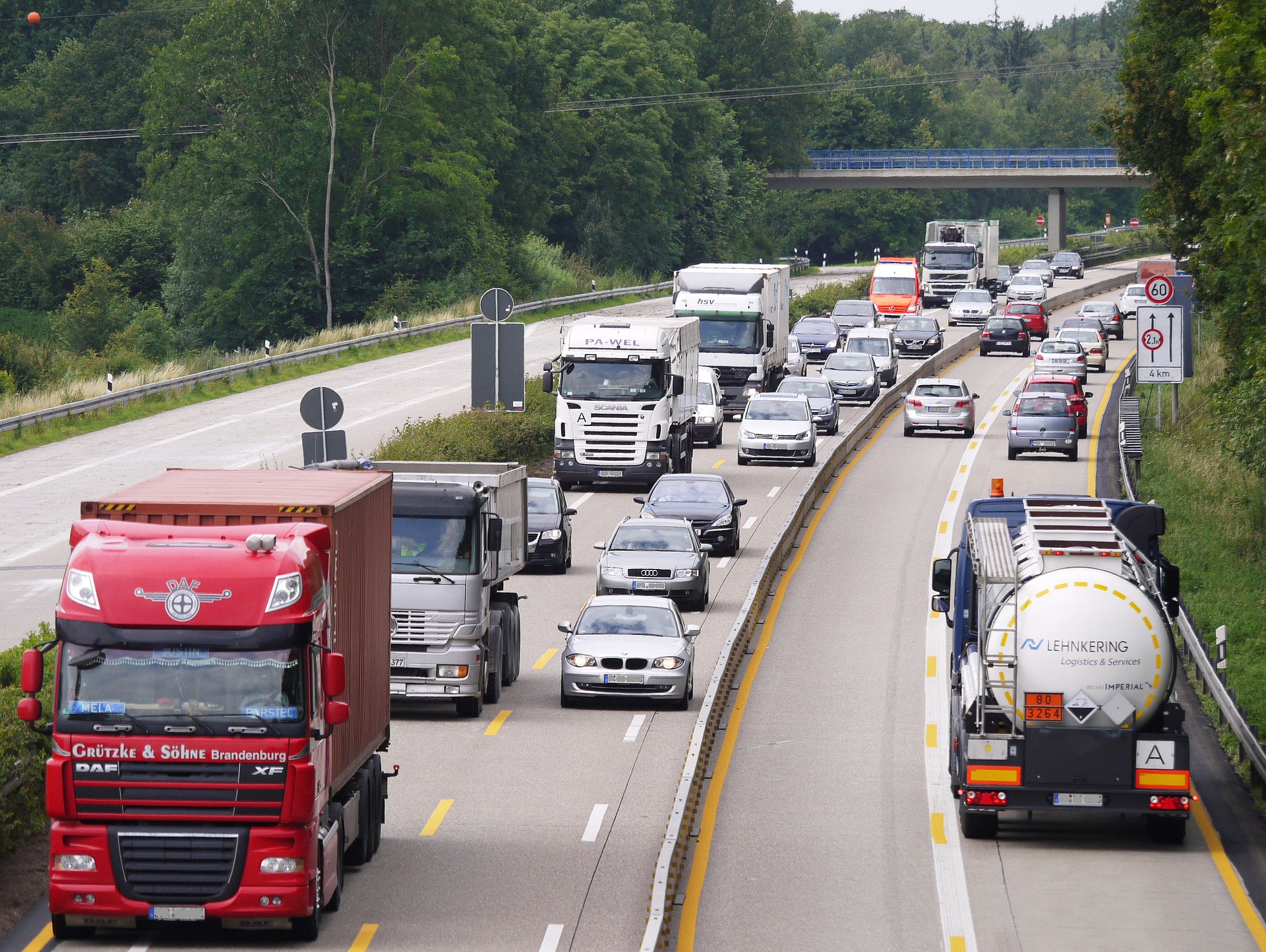
Polish trucker strike threatens Ukrainian pipe supply
Ukraine’s pipemakers increased production in January-September amid the ongoing Russian invasion, says national pipemaker association Ukrtruboprom.
Total volume amounted to 376,100 tonnes, up by 5.1% on-year, Kallanish notes. However, in September alone, output reached 36,900t, down 11.7% compared to the previous month and 10.2% less on-year.
According to the association, pipe companies saw mixed results in the first nine months of the year. In particular, Interpipe Niko Tube saw production surge 8.8% on-year, Uktrubozol increased output by 26.2% and Centravis by 312.9%. However, Trubostal reduced output 54.5%, Interpipe NMTZ decreased the production of electric welded pipe by 62.9% and Oscar pipe production fell 25%.
“Based on the results, the pipe industry of Ukraine demonstrated positive dynamics, despite the constant shelling of production sites located in front-line zones, in particular in Nikopol,” says Ukrtrubprom general director Georgy Polsky. “A real stab in the back for Ukrainian exporters, in particular steel pipes, was the blockade of the Ukrainian-Polish border, which began in early November. The European direction is the only one that remains for our business after the start of the large-scale war.”
Many trucks carrying pipe are stuck in traffic jams, while all delivery deadlines to European clients have been missed, he added.
“Since there is a possibility of the strike expanding to other Eastern European countries, almost all pipe factories located in the front-line regions are facing a shutdown of production capacity as early as mid-December,” Polsky observes.
Ukraine’s pipemakers decreased production last year amid the ongoing Russian invasion to 608,000t, down by 38% on-year (see Kallanish passim).
They decreased exports in October compared with the previous month to 27,600t, down by 13.1% month-on-month and 37.5% less year-on-year. In January-October, Ukraine thus exported 305,410t of pipe, down by 12.3% on-year.
The main consumers of Ukrainian pipe were Germany, the USA, Romania and Poland.
In 2022, Ukraine’s pipemakers decreased exports to 400,400t, a reduction of 33.6% on-year.
Svetoslav Abrossimov Bulgaria

CISA: steel industry development focuses on managing capacity
China’s steel industry needs to use capacity management as the main means to solve the imbalance between supply and demand, said He Wenbo, executive chairman of the China Iron & Steel Industry Association (CISA) at the 19th China Steel Industry Chain Market Summit. At the same time, steel mills need to transition to low-carbon production to ensure long-term vitality.
Kallanish learned from his speech that the current contradiction in China’s steel industry has changed to how to use sufficient steel production capacity to meet limited steel demand. This means that China’s steel production capacity needs to be reduced in the transition to meet low-carbon emission targets, and steel mills can promote mergers and reorganizations to increase production capacity concentration.
He pointed out that the conditions are not favourable to maintain a high proportion of exports, but the government will encourage the export of high value-added products. He said that product exports are driven by the market, supply chain or industrial investment, and high value-added steel exports are supply chain-driven exports. Intense competition in the international market and trade barriers have hindered the export of ordinary steel products from China, he adds.
As of 2023, around 380 million tonnes of steel capacity has been constructed within 100 kilometres from the coastline in China. This will be finally boosted to 400m t/y in recent years, which almost meets the government’s requirement for coastal steel industry layout. This also means that the inland steel industry will be reassessed.
The essence of the transformation of the steel industry is green transformation, he said. The five tasks being promoted by China’s steel industry include ultra-low emissions, improving energy efficiency, formulating a carbon neutral route, improving the steel industry EPD, and accelerating research on low-carbon emission steel standards.
CISA is planning to launch a new “Cornerstone Plan”, with the main purpose of studying and deploying future resources (mainly iron ore resources) for the low-carbon transformation of steel processes in terms of type and grade. This is still about sourcing steel raw materials, but the focus has shifted from total quantity to variety to be closer to the raw material requirements for green steel.
According to CISA’s information, the current “Cornerstone Plan” has pushed the development of around 50 million tonnes/year of additional iron ore concentrate production in China. It is also looking to boost scrap supply by revising policies.

German rebar prices seen sitting still till year-end
German buyers of rebar do not expect much movement in prices before the end of the year. They are bowing somewhat to mills’ demands for higher prices but transactions are rare and small.
By mid-October, base prices had sunk to some €320/tonne ($349), translating to €585/t delivered, or even less. Then distributors went on a buying spree, filling their stocks, and mills were encouraged to raise offers. Their target of €370/t base – or €635/t delivered – has not been confirmed by anyone contacted by Kallanish, although one source admits to having paid €350/t for a small fill-in volume of rebar on short notice. Wire mesh was correspondingly sold for €450/t, he adds.
Nevertheless, the same buyer suggests that price levels could drop again, possibly to under October levels, in the next restocking wave in early 2024. “The mills are facing a massive shortcoming of demand next year,” he says, with reference to this year’s decline in orders for construction projects, especially for residential buildings. “Buyers will hold back their orders, in expectation of price concessions,” he predicts.
A manager at a large distribution group confirms this impression: “Demand is just too weak overall, and each side hopes the other will give in,” he says. “The few transactions occurring these days do not change the picture much. The price has not moved substantially since summer began.”
Christian Koehl Germany

Italian HRC seen increasing further
Italian coil prices are seen increasing again as European producers are mulling a second step of hikes, Kallanish learns from market participants.
Over the past weeks, strong demand has returned to the market, as have good sales volumes for both coil and its derivatives. Italian hot rolled coil has gradually increased in contracts, reaching €650/tonne ($708) base ex-works, with producers asking for €670-680/t delivered and quickly filling January order books.
With limited import alternatives available, service centres and re-rollers are purchasing mostly in Europe. All EU safeguard quotas for Asian countries will be exhausted a few days after renewal on 1 January and the same situation is expected after 1 April.
For the first quarter, European re-rollers have been purchasing volumes in some Asian countries, which will cause available quotas for these origins to shrink. In January, buyers will find themselves obliged to pay duty for the material imported above quota levels.
Vietnamese, Korean and Japanese exporters are giving limited allocations to European buyers, prioritising domestic and neighbouring markets. Turkish material is always considered too expensive, and India will not be able to cover the needs of all of Europe. Offers of HRC from Asia are currently at €630-650/t cfr Europe.
European steelmakers, being the only sources of procurement for buyers, will increase prices to €700/t delivered in the coming days. At least another round of hikes is expected in the market in Q1, considering the low availability.
Despite this month seeing strong demand and increasing prices, the market remains fragile. Service centres’ clients report persistent weakness in consumption.
Natalia Capra France

Bullishness prevails in European steel HRC market; more price rises expected
The index was up by €8.75 per tonne week on week and by €55.67 per tonne month on month.
Restocking activity was improving in the region, sources said.
“Buyers realize that if they don’t buy today, tomorrow the price will be higher,” a mill source told Fastmarkets. “And there are talks about new increases before Christmas, so we got more inquiries this week [starting November 20].”
Transactions in the region were reported at €660-670 per tonne ex-works on Friday.
A small-tonnage HRC sale was heard in Germany at €680 per tonne ex-works, but this was not confirmed by sources.
Some mills in the region were said to selling the “last tonnages” of December-rolling coil at €640-650 per tonne ex-works, or even lower, but those offers were not widely available in the spot market.
For January deliveries, offer from integrated mills were heard at €680-700 per tonne ex-works, and because the lower end of that range was already sealed in deals, sources expected a new round of price rises to be imposed soon.
“We expect another €30-40 per tonne increase before the year’s end,” a stockholder in Germany said.
Some buyers expressed concerns about the acute uptrend not being supported by any upturn in real steel demand.
“I’m not sure [the uptrend] is a long-term story. It’s hard to increase prices for processed coil downstream. End users [will] resist any rise,” a trader in Germany said.
In Southern Europe, Fastmarkets calculated its daily steel hot-rolled coil index, domestic, exw Italy, at €658.88 per tonne on November 24, down by €0.50 per tonne from €659.38 per tonne the previous day.
The index was up by €15.96 per tonne week on week and by €58.88 per tonne month on month.
In Italy, offers from local producers were heard at €670-680 per tonne delivered, which would net back to about €655-665 per tonne ex-works, for HRC to be delivered in late January or early February.
Several sources confirmed that, in the week to Friday, several deals had already been agreed at new prices.
“There are not many buying options in the market,” a trader in Italy said. “Imports are not [feasible] because of long lead times and the high risks [of having] to pay the [EU’s import] safeguard duty. And domestically [in Europe], supplies are also reduced.”
Import offers from Vietnam, South Korea and Japan came in at around €620-650 per tonne CFR for January-February shipments, sources told Fastmarkets.
Although €620 per tonne CFR was considered a workable price, buyers were holding back from booking Asian steel, due to possible complications with customs clearance arising from the EU’s import safeguards.
Sources indicated that European ports still have quite significant tonnages of imported coil that did not fit the allocation to be customs-cleared in the first quarter of 2023, so they expected the “other countries” allocation for the first quarter of 2024 to be quickly filled with this material.
Offers of December-shipment HRC from Turkey were heard at €660 per tonne CFR, including anti-dumping duty.
Offers of India-origin HRC to Italy were heard at €640-650 per tonne CFR, for January shipment. Sources said, however, that starting in the week beginning November 27, Indian suppliers will raise their offer prices by at least €20 per tonne.

Thyssenkrupp to close Galmed plant in Spain
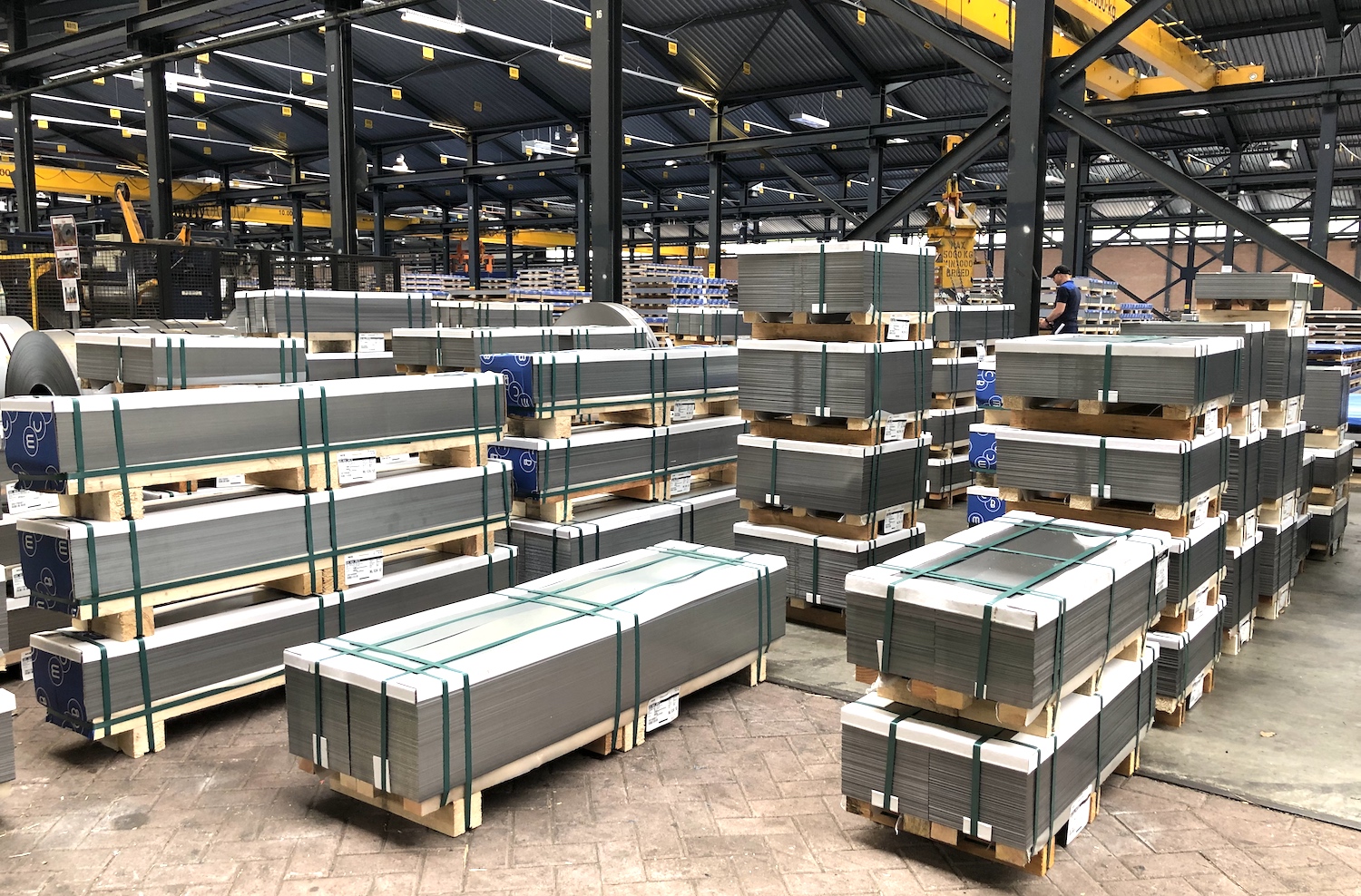
Germany’s Thyssenkrupp is closing its Spanish Galmed (FBA9) plant, located near Valencia, the company confirmed when approached by Kallanish. The Sagunto plant can produce 450,000 tonnes/year of hot-dip galvanized coil. The material is mainly supplied to the automotive sector.
The German steelmaker states it is taking the measure due to the “significant worsening of the European automobile market and the consequent reduction in demand for galvanized steel products in Spain and southern Europe”. Thyssenkrupp confirms having carried out a detailed analysis of the profitability of its ten lines. The result showed the closure of FBA9 is inevitable from an economic standpoint.
“The capacity of the Sagunto production line is already greatly underutilised and the trend will intensify in the short term; in the near future, it will no longer be possible to exploit the line economically,” the company admits.
Thyssenkrupp confirms the closure of Galmed operations will be completed within 12 months and the companies will offer “viable solutions” to its 120 workers. This includes discussions with Volkswagen Group’s battery unit, PowerCo, to identify employment possibilities.
Thyssenkrupp previously closed its FBA9 facility and laid off 165 workers in 2013 due to low market demand. The company reopened the plant three years later after massive protests and political pressure.
Todor Kirkov Bulgaria