

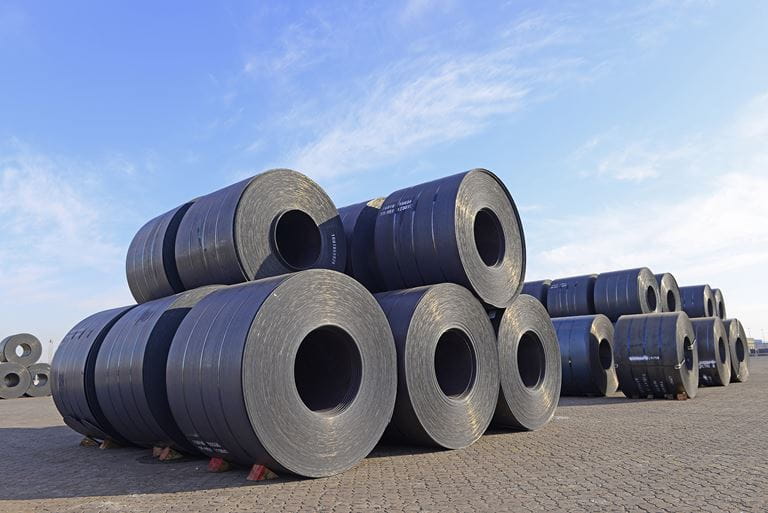
Indian HRC mills hike offers, eye EU business
Indian hot rolled coil suppliers are back in the EU market, aiming to capitalise on firming prices there amid idled capacities. After selling a consignment to the EU in late November, mills have hiked their quotes in anticipation of further business. The domestic market is likely to remain sluggish till at least January.
One Indian major concluded an S235 grade HRC deal towards the end last month to the EU at $630-635/tonne fob India for December shipment, with freight at $45-50/t. Mills have since hiked prices to $640-650/t fob.
These values could grow further as “right now, exports [to Europe] look bullish”, an Indian trader tells Kallanish. Domestic business is “flat”, says another trader, after failing to take off so far after Diwali, so mills “will look to boost exports to let some steam off from the domestic market”.
The consensus is that domestic demand should pick up in January or February, which will see mills turn their attention back to local sales.
There has been much talk in recent weeks about considerable HRC import tonnages arriving now in India and how they will impact the market. Opinion is split. One trader says mills are keeping domestic prices subdued in order to limit the competitiveness of imported material. However, another points out the expected tonnage arriving represents only a small share of overall consumption.
“Prices are going down against released figures by mills, while raw material is on the higher side,” the latter trader observes. “Mill are trying to leverage their losses by generating sales in dollars. The same is being diverted for raw materials purchases.”
Business in the Gulf Cooperation Council meanwhile remains unattainable, with Chinese HRC suppliers dominating there (see separate story). China-origin offers in the GCC are at cost levels for Indian mills, one trader points out.
Indian DC01 grade cold rolled coil export quotes are meanwhile at $715-720/t fob India.
Adam Smith Poland


Benteler, ArcelorMittal test XCarb in car components
The Automotive Division of Benteler group says it aims to further expand its CO2-reduced product portfolio after signing a memorandum of understanding for steel supply from ArcelorMittal.
The two companies, which already have a longstanding partnership, will work together on several sustainability projects using ArcelorMittal’s XCarb recycled and renewably produced steel, Kallanish learns from Benteler. The steels will be used for chassis and structural components.
Benteler says it has set itself ambitious sustainability targets with the aim of decarbonising the company and achieving net zero by 2050. The group aims to halve production-related Scope 1 and 2 emissions compared with 2019 as soon as 2030. In addition, upstream and downstream – Scope 3 – emissions along the supply chain are also to be reduced by 30%.
The Steel/Tube Division is aiming to achieve CO2 neutrality by 2045 through increased energy efficiency, green electricity and CO2-reduced starting material, the company says.
In addition, Benteler Steel/Tube itself produces “green steel” for customers in an electric arc furnace at its Lingen steel works. However, the production volume there is not sufficient to cover the needs of Benteler within the group, it notes.
Christian Koehl Germany

European flat stainless steel prices narrow on lull in demand
Fastmarkets’ monthly price assessment for stainless steel cold-rolled sheet, 2mm, grade 304, transaction domestic, delivered North Europe, was €2,600-2,650 ($2,822-2,876) per tonne on Friday, narrowing downward from €2,600-2,680 per tonne on November 3.
Stainless steel service centers have kept to a wait-and-see approach into December, a distributor told Fastmarkets.
“We are just waiting to see the mills’ behavior. [Steel mills] will either reduce production to maintain prices or they will reduce the prices in order to book more orders. Currently, [steel mills] do not have many orders,” the distributor said.
Distributors were not looking to buy new material and, as a result, stock levels were currently low, Fastmarkets understands.
“Demand is still weak,” a second distributor said last week, “but this is no surprise. [Last month’s] prices were never backed up by better demand from the end-user side. Prices reached their peak a month ago, and my expectation is that prices will go down in January.”
The market for finished stainless steel products has been weakened throughout 2023 by poor downstream demand and a grim macroeconomic backdrop. Lower nickel costs have also been a significant factor.
The alloy surcharge for grade-304 material, which is primarily based on nickel costs, also fell on Friday. Fastmarkets’ monthly assessment of the stainless steel cold-rolled sheet, 2mm, grade 304 alloy surcharge, domestic, Europe, was €2,055-2,069 per tonne on December 1, down from €2,135-2,152 per tonne one month earlier.
Surcharges for December will typically be based on alloy component costs between October 20 and November 21, when the average three-month daily official nickel price on the London Metal Exchange was $17,774 per tonne, down by $997 per tonne from $18,771 per tonne one month earlier.
Published by: Zdravko Cherkezov


Prices stable in European steel HRC markets; bullish sentiment continues
Fastmarkets calculated its daily steel HRC index, domestic, exw Northern Europe, at €677.50 ($735.26) per tonne on Tuesday, up by €0.83 per tonne from €676.67 per tonne the previous day.
The index was up by €7.50 per tonne week on week and by €47.08 per tonne month on month.
Early in the week, Northern European mills were reported to be seeking a price of €720-730 per tonne ex-works for February-delivery HRC, Fastmarkets heard.
Meanwhile, buyers’ estimates of tradeable values were heard at €670-680 per tonne ex-works in the region.
Buyers were relatively bullish regarding possible price rises, but they did not consider prices higher than €700 per tonne exw to be workable given the current weak demand levels.
Meanwhile, Fastmarkets calculated its daily steel HRC index, domestic, exw Italy, at €665.00 per tonne on Tuesday, down by €5.00 per tonne from the calculation at €670.00 per tonne on Monday.
The Italy index was up, however, by €5.50 per tonne week on week and by €40.00 per tonne month on month.
Italian mills were reported to be offering February-delivery material at €700-705 per tonne ex-works, while buyers’ estimates of achievable prices were reported at €660-670 per tonne ex-works.
Participants in the Italian HRC market were optimistic regarding future price rises, supported by increased demand and constrained supply.
No new import offers were reported.
Published by: India-Inés Levy
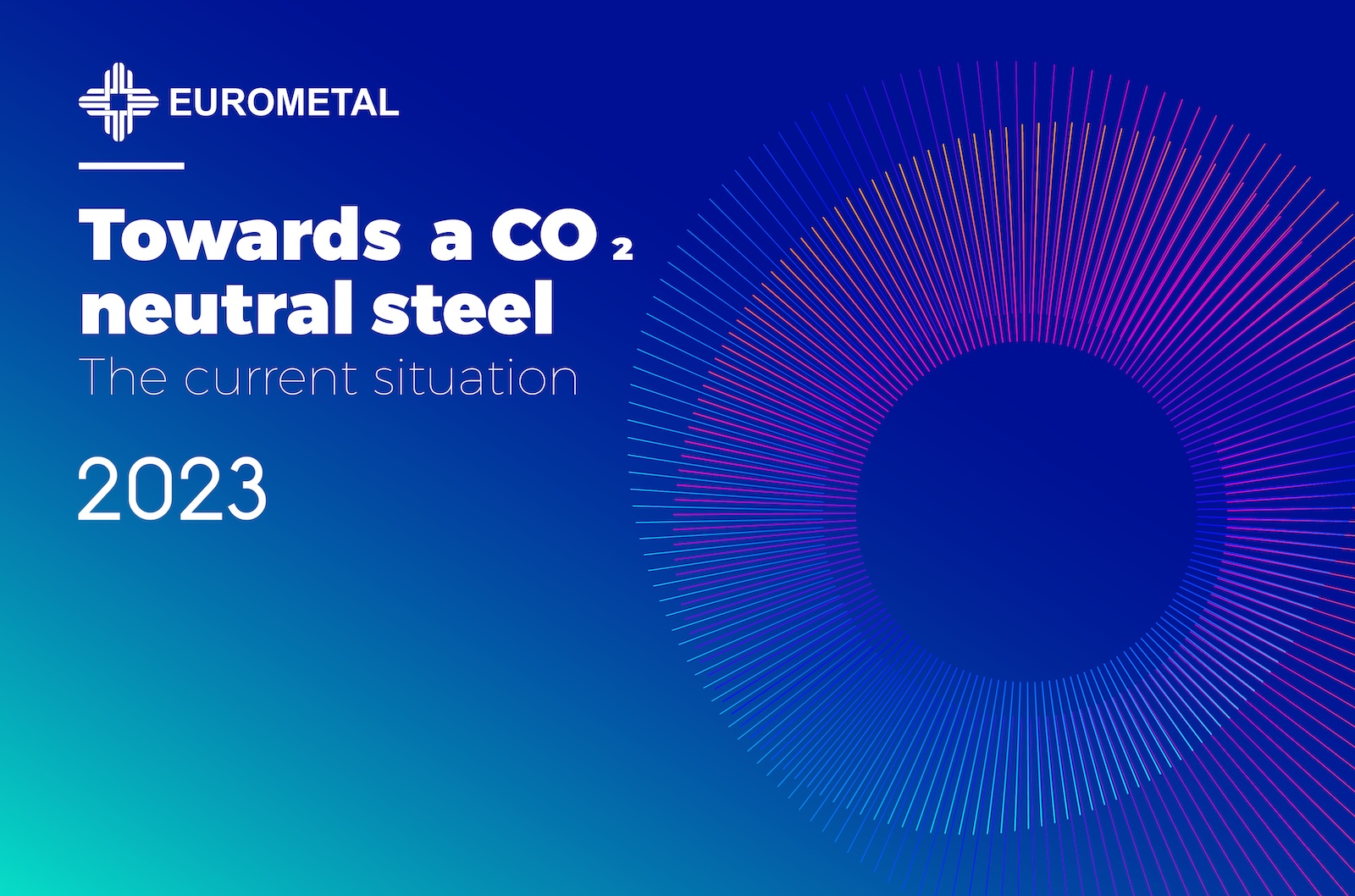
EUROMETAL whitepaper: Towards a CO2 neutral steel – The current situation
EUROMETAL have been publishing a whitepaper annually on topics relevant to steel distributors but also to the entire supply chain.
This year we have made it our mission to address the sustainability and decarbonization of our industry.
We are pleased to announce our Whitepaper “Towards a CO2 neutral steel – The current situation”.
This document is divided into chapters:
- Initial considerations on green steel
- Alternative production technologies
- The EU emissions trading system
- Marketing the low emission steels
- Checking CO2 on imports with CBAM
EUROMETAL aims, with this document, to shed light on the challenges encountered by the European steel industry, both exploring some technological options and explaining the current legal framework for CO2 emissions.

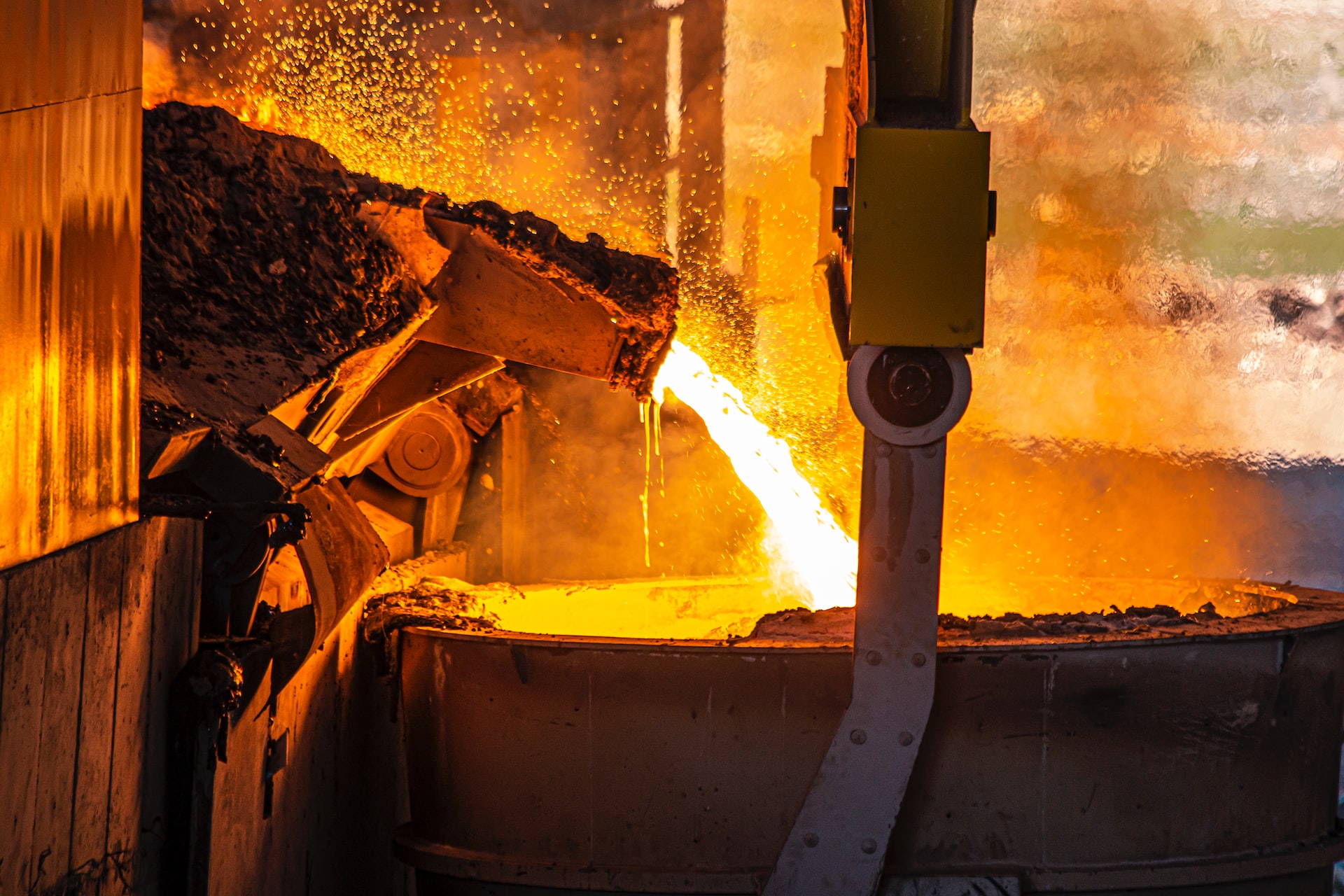
Acciaierie d’Italia idles blast furnace
Italian steelmaker Acciaierie d’Italia (ADI), a joint venture between state-owned Invitalia and ArcelorMittal, is idling blast furnace no.2 from 4-11 December for maintenance works, Kallanish learns from a company source.
The company has launched a programme of maintenance works at several departments, including the melt shop, the coke plant and the rolling mill, which will be carried out simultaneously to minimise the impact on Taranto’s production. Pig iron production at BF no.2 is suspended for seven days and the plant is now only running BF no.4.
According to sources close to the dossier, the government and ArcelorMittal are in advanced talks to relaunch the troubled steelmaker. It would take about €1 billion ($1.09 billion) to buy the steelworks’ facilities, which are the object of seizure due to legal conundrums, from the extraordinary administrator of the former Ilva plant. An additional €320 million are needed to sort out the company’s immediate needs.
The funds should be injected jointly by the private and the public partner. Another meeting has been scheduled for 6 December. According to rumours, ArcelorMittal is willing to find a solution and is considering a pool of bank financing for the funds. The company refused to comment.
Multiple sources believe the Taranto steelworks will register in 2023 about 3 million tonnes of crude steel production. The company previously confirmed its forecast of producing at least 4mt this year, with the aim of reaching 5mt in 2024. Acciaierie d’Italia employs over 10,000 workers.
Natalia Capra France

US Russel to acquire plate service centres from Samuel
Samuel, Son & Co. has agreed to sell carbon steel plate service centres in North America to Russel Metals for $225 million, Kallanish reports.
The transaction involves seven service-centre locations in the northeastern United States and western Canada. The arrangement is still pending regulatory approval and customary closing conditions, according to the statement from Oakville, Ontario-based Samuel.
Samuel intends to continue operating its remaining automotive and manufacturing divisions along with its network of US and Canadian service centres.
“Samuel has a longstanding reputation as one of North America’s leading metals distribution companies. We will continue to build on this legacy with a service centre business that will now focus on growing customer relationships in central and eastern Canada and the US, while simultaneously accelerating our investment in additional growth opportunities across the business,” Colin Osborne, Samuel’s ceo, says in a press release.
The transaction includes US carbon steel plate branches in Neville Island, Pennsylvania, and Buffalo, New York. Canadian service centre sites in the sale include Winnipeg, Manitoba; Nisku and Calgary, Alberta; and Surrey and Langley, British Columbia.
Kristen DiLandro USA

Low-emission steelmaking investors prefer greenfield over conversion
Green steelmaking projects by start-up companies could be more attractive for investors than established mills converting to direct reduced iron, finds Benedikt Zeumer of McKinsey. At EUROMETAL’s Steel Trade Day in Düsseldorf last week, Zeumer talked about “potential discontinuities” in global steel supply chains.
He was asked by a representative of Tata Steel Europe what investors think when investing into green steel. “It is a tricky question, but I think that new starters are in a better position … because they do not have the legacy of existing mills,” Zeumer replied.
Another argument is that “investors like to take their money where the energy is available”, Kallanish heard him say at the conference. “Building newly in Sweden is an option, and so is Spain,” he said, referring to ventures announced in those countries. “But it will not be sufficient, and there will be a run on North Africa and Turkey for this,” he added.
He was aware that this sounds like “doomsday news” for Europe, where players need to invest to survive, too. “It is not”, he stated, but cautioned that in sectors outside of green steel, products like “rebar, for example, will be harder to maintain in Europe than sophisticated products”. For this, he gave figures for the working time effort required for long products, which is only 0.8 hours for rebar against more than 2 hours for special bar qualities.
“Europe may become the place more for re-rolling and finishing of steel products, maybe more for trading,” Zeumer concluded.
Christian Koehl Germany

Niedax und Thyssenkrupp Steel erweitern Partnerschaft
Die Niedax Group weitet den Anteil an klimafreundlicherem Stahl innerhalb der eigenen Produktion aus. Ab sofort bezieht das Familienunternehmen CO2-reduzierte Stahlcoils auch von Thyssenkrupp Steel, die Emissionseinsparungen von bis zu 64 Prozent ermöglichen.
In dieser Woche wurden die ersten CO2-reduzierten Stahlcoils von Thyssenkrupp Steel an die Niedax-Tochtergesellschaft Bandstahl-Service-Hagen – eins von zwei hauseigenen Stahlzentren – geliefert. Mit der Lieferung vergrößert Niedax den eigenen Anteil an CO2-reduziertem Stahl innerhalb der Gruppe auf nun rund 1.000 Tonnen. Im Sommer schloss das Unternehmen zudem einen Vertrag mit Tata Steel UK ab. „Mit der Erweiterung des Bestands an CO2-reduziertem Stahl möchten wir auch abseits unseres Kerngeschäfts Kunden beim Einsatz von innovativen und umweltfreundlicheren Lösungen in ihren Projekten unterstützen“, so Bruno Reufels, CEO der Niedax Group.
Niedax nimmt Scope-3-Emissionen ins Visier
Der CO2-reduzierte Stahl der Marke „Bluemint“ ermöglicht es der Niedax Group, Kabelmanagementsysteme für große Infrastrukturprojekte in den eigenen Stahl-Service-Centern mit einer günstigeren Klimabilanz herzustellen. Die Einsparungen aus diesen Projekten können über den von Thyssenkrupp Steel gelieferten Stahl an Kunden weitergegeben werden. Die unmittelbaren Einsparungen können innerhalb ihrer Wertschöpfungskette gemäß GHG-Protocol auf die Scope-3-Emissionen der Niedax-Group angerechnet werden.
Die im Produktionsprozess von Thyssenkrupp Steel erreichte Einsparung der CO2-Emissionen von bis zu 64 Prozent wurde vom TÜV Süd unabhängig verifiziert. Für ein 25 Tonnen schweres, feuerverzinktes Coil erreicht der Stahlhersteller eine CO2-Einsparung von etwa 34 Tonnen – vergleichbar mit den jährlichen Emissionen von 25 PKW.
Die Produktion von emissionsreduziertem Stahl ist ein zentraler Bestandteil der grünen Transformation von Thyssenkrupp Steel. Das Unternehmen startete eines der weltweit größten industriellen Dekarbonisierungsprojekte, mit dem zukünftig bereits bis zu 3,5 Millionen Tonnen CO2 pro Jahr vermieden werden können. Die Stahlproduktion soll bis spätestens 2045 vollständig klimaneutral sein. „Wir möchten auf den grünen Stahlmärkten der Zukunft eine führende Rolle einnehmen und weltweit Kunden bei der Erreichung ihrer Dekarbonisierungsziele unterstützen“, betont Dr. Heike Denecke-Arnold, COO von Thyssenkrupp Steel.
Source: stahleisen.de
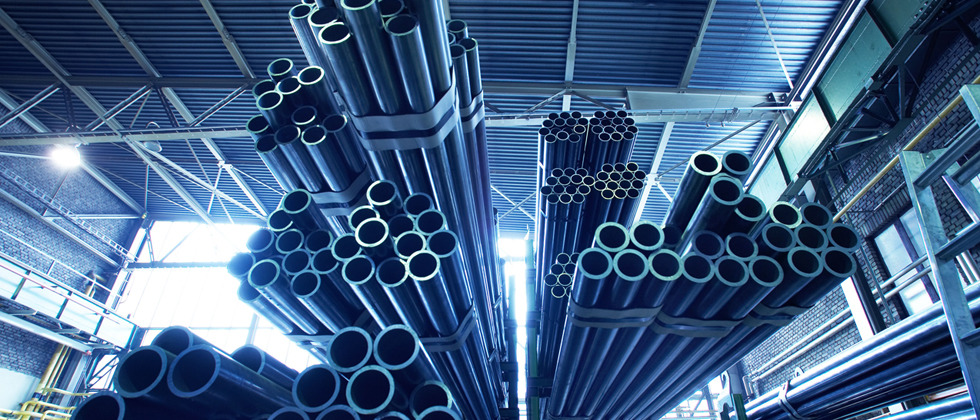
Stahlhändler Buhlmann erwirbt Lisega
Die Gesellschaft Buhlmann Rohr-Fittings-Stahlhandel setzt auf die Diversifikation ihres Produktportfolios. Jüngste Maßnahme ist der Kauf sämticher Anteile an Lisega, einem international agierenden Anbieter für industrielle Rohrhalterungssysteme.
Das inhabergeführte Familienunternehmen aus Zeven wird, vorbehaltlich der kartellrechtlichen Zustimmung, zum 1. Januar 2024 Teil der ebenfalls inhabergeführten Buhlmann Gruppe mit Hauptsitz in Bremen. Über den Kaufpreis vereinbarten beide Parteien Stillschweigen. Durch die Akquisition erweitert das Buhlmann sein Produktportfolio um die Bereiche Rohrhalterungssysteme und Schwingungstechnik. Darüber hinaus steigt das Unternehmen als Spezialist für Lagerhaltung mit der Übernahme der sieben Lisega-Produktionsstandorte in das Geschäftsfeld der Eigenfertigung ein. Lisega, erklärt Buhlmann, bleibe in seiner Aufstellung lokal wie global bestehen wie bisher.
Für Buhlmann ist der Kauf „ein wegweisender Schritt“
„Wir verfolgen bereits seit vielen Jahren die Strategie des anorganischen Wachstums und setzen auf eine Diversifizierung unseres Portfolios. Für uns ist der Kauf von Lisega ein wegweisender Schritt, auch weil wir damit erstmals ein produzierendes Unternehmen integrieren“, so Jan-Oliver Buhlmann, Geschäftsführer von Buhlmann. Hans-Herlof Hardtke, Inhaber und Aufsichtsratsvorsitzender von Lisega: „Nach 60 Jahren habe ich nun meine Nachfolge geregelt. Mir ging es stets darum für Lisega die Zukunft zu sichern und gleichzeitig den Mitarbeitern eine fürsorgliche Heimat nach meinem Ausscheiden zu bieten.“ Mit Bulmann habe man den „idealen Erwerber“ gefunden, der diese Kriterien „in bester Weise“ erfülle.
Die Buhlmann Gruppe ist ein international tätiges Handelsunternehmen für Stahlrohre, Rohrzubehör Fittings und Armaturen, das sich seit seiner Gründung 1945 in Familienbesitz befindet. Das auf 65.000 Tonnen gelagerte Sortiment umfasst geschweißte und nahtlose Stahlrohre, Fittings, Flansche und Armaturen für den Einsatz in anspruchsvollen Umgebungen wie Chemie- und Anlagenbau, Öl- und Gasindustrie sowie Offshore-Anwendungen. Buhlmann beschäftigt heute über 750 Mitarbeitende in 16 Ländern und erzielte im vergangenen Geschäftsjahr einen Umsatz von 456,7 Millionen Euro.
Die Lisega Gruppe, gegründet 1964 als Familienunternehmen, ist ein führender Anbieter im Bereich industrieller Rohrhalterungssysteme. Das Unternehmen bietet eigenen Angaben zufolge das weltweit umfangreichste, modular aufgebaute Rohrhalterungsprogramm und liefert technische Lösungen für alle gängigen industriellen Anwendungen. Die Gruppe unterhält sieben Fertigungsstandorte weltweit und 13 eigene Vertriebstöchter. Das Produktprogramm umfasst mehrere zehntausend standardisierte Artikel, wobei der Fokus neben Rohrhalterungssystemen auch auf der Schwingungstechnik liegt. Lisega erzielte im Geschäftsjahr 2022 einen Jahresumsatz von 144,6 Millionen Euro.
Souce: stahleisen.de