

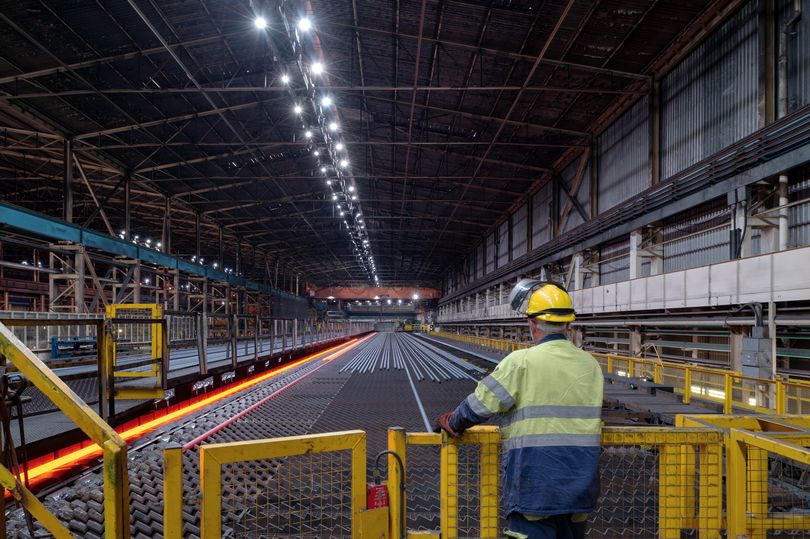
Some European steelmakers seek rebar increases amid costs
Some European steelmakers are pushing up rebar prices by around €60/tonne ($63) on average compared to the beginning of the month, with immediate effect, Kallanish learns from market participants.
Mills are pushing up values in France, Spain and Germany due to the current unsustainable price levels that allow for practically no margin. Steelmakers in Europe are facing high energy and raw material costs, as well as lower consumption of rebar, which is particularly hitting Germany (see separate story). Rebar producers who have not yet implemented increases are also seen following in the coming days. In Spain, some suppliers are said to be pushing up prices but the market is responding sluggishly.
“If raw materials and scrap remain at the current price levels, rebar will have to increase or mills will be forced to stop production,” a source comments. Steelmakers throughout Europe are beginning to produce at a loss and cutting output to balance demand and supply. However, idling plants entails increasing costs that will impact this year’s financial results.
The Spanish rebar market has not shown an improvement in activity this month. Prices remain unchanged after the summer holiday period, while demand remains practically non-existent. In France and Germany, there is similar market stagnation.
French distributors tell Kallanish they welcome the hike move and will support it.
Natalia Capra France


States continue to encourage steel overcapacity: OECD panellists
Trade barriers are leaky, subsidies difficult to counter, and excess steelmaking capacity is growing again, according to a session of the Global Forum on Steel Excess Capacity (GFSEC) held by the OECD this week and moderated by Kallanish.
Panellists at the Paris event also noted there remain incentives to locate steel capacity in the wrong areas and with the wrong technologies, and that new capacity would be difficult to replace.
Subsidies are continuing to distort steelmaking capacity, warned Alan Price, partner at Wiley Rein. There is a risk that subsidies are justified for being “green” and distort markets further. He noted that in China, support for steelmakers often has an environmental angle, even if it results in an expansion of polluting capacity. In order to be justified, subsidies should only be used for pre-commercial technologies such as hydrogen, and not for established technologies such as scrap-EAF or even DRI plants, he argued.
Martin Theuringer, managing director of German steel association WV Stahl, said that both subsidies and trade protection were often misaligned and not enough to carry out the steel industry’s transition to a greener model.
Trade measures such as the Carbon Border Adjustment Mechanism (CBAM) could only make the cost of producing steel through polluting methods equal, and could risk incentivising less green capacity to remain in production.
The German steel industry is meanwhile is pressing ahead with the transition away from traditional blast furnace-basic oxygen furnace steelmaking despite the blow of high energy prices and a lack of sufficient policy support, Theuringer added.
Meanwhile, in Southeast Asia, the steel industry is transitioning to a more carbon-intensive model, warned Yeoh Wee Jin, secretary general of the South East Asian Iron and Steel Institute (Seaisi). The region is seeing surging BF-BoF steelmaking capacity, driven largely by Chinese firms which have been rewarded for closing capacity in mainland China.
This is going to result in both overcapacity and in a surge in carbon emissions from the industry, he noted. The only way to overcome this is for local governments to become stricter in assessing investments, and insisting on new and greener technologies being used.
The efficacy of trade measures in ensuring a level playing field was meanwhile questioned by James Campbell, principal analyst at CRU. “Trade will find a way,” he noted. Whatever barriers are in place, trading companies are very creative in getting around. Sometimes this could be pushing the boundaries of trading norms, but sometimes this could be as simple as redirecting trade from new suppliers.
All panellists agreed that the problem of overcapacity is likely to remain for some time.
Tomas Gutierrez UK

Full books encourage rebar price hikes in Germany
Germany’s rebar mills are trying to bring prices up, following last week’s buying spree, which apparently signals a temporary increase in production, which mills have kept at low levels for a month.
For nearly two months, prices were hovering slightly south of €600/tonne ($633) delivered, a threshold that would easily be surpassed now with a €50/t hike, or possibly more, according to some sources.
The base price for most of July and August was at €320-330/t, which plus the size extra of €265 translates to €585-595/t. Mills had targeted €350/t in July, but had no chance of fetching it. In fact, one larger distributor was able to secure deals at closer to €300/t, its manager suggests.
Last week, numerous customers restocked their shelves, apparently prompted by the mills. “The spree was induced by the announcement of lifting prices by €25. We then bought a larger tonnage for the old base price, €320, but it had to happen within one hour,” a buyer tells Kallanish. “That’s a way to collect volumes.”
And once the order books are full, the next normal step is another price hike announcement, for those who came late, but observers believe there will be little uptake. “Mills lifted prices, and not just by a bit, but a hefty €40 on average,” another manager says.
He sees base prices now at €370-380/t, which would translate to €635-645/t delivered. He believes this will be hard to assert in the foreseeable future, given the dismal state of the construction industry. “The [rebar] benders do not have the demand they once had, and it is the same with any construction material dealer,” he notes.
It will therefore take a while before the next purchasing wave comes, and by then the recent hikes may have all but deflated.
Christian Koehl Germany

European steel hollow sections prices widen upward despite slow trading
Fastmarkets heard deals of small tonnages being purchased, with one trader in Northern Europe saying mills had become more rigid with their higher offers.
The trader added that they believe prices have reached a bottom.
“With the price increase, the mills clearly state the lowest price was reached,” the trader told Fastmarkets.
But other market participants in the region said prices for beams remained level with trading slow and demand weak.
Fastmarkets’ weekly price assessment for steel sections (medium) domestic, delivered Northern Europe, was €750-830 ($790-874) per tonne on Wednesday, widening upward by €30 per tonne from €750-800 per tonne on September 20.
Similarly, Fastmarkets’ weekly price assessment for steel sections (medium) domestic, delivered Southern Europe, was €750-830 per tonne on Wednesday, also widening upward by €30 per tonne week on week from €750-800 per tonne.
Fastmarkets heard that sections prices in Poland and Romania were relatively stable over the past week, with market levels ranging from €705-715 per tonne CPT, on a theoretical weight basis.
Meanwhile, hot-rolled coil feedstock prices fell in the past seven days amid slow trading and weak end-user demand.
Steelmakers in the region have cut back on production, sources said, with HRC traders believing the move could help balance supply and demand in the first quarter of 2024.
Fastmarkets’ daily calculation of its steel hot-rolled coil index domestic, exw Northern Europe, was €625.63 per tonne on Wednesday, down by €9.25 per tonne from €634.88 per tonne on September 20.
Published by: Holly Chant

Germany’s Wagon Automotive signs deal with Salzgitter Flachstahl for low carbon steel supply
Automotive industry supplier Wagon Automotive Nagold signed a memorandum of understanding with German steel producer Salzgitter Flachstahl to use the latter’s CO2-reduced steel to manufacture its complex body shell modules, the companies said Sept. 28.
The two companies did not disclose the volume of the supply agreement, but said that “the bulk of supplies in Germany will go to the Wagon Automotive plant in Nagold and will comprise mainly surface-treated flat steel products.”
“We are delighted to have been able to convince Wagon Automotive Nagold GmbH of the merits of our SALCOS project,” Phillip Meiser, Sales Director of Salzgitter Flachstahl said. “We think that by working together, we all can successfully make the ‘green’ transformation.”
Wagon Automotive is already a partner of Salzgitter Flachstahl. The SALCOS project is a Salzgitter Low CO2 Steelmaking program in which the company will be converting its steel production step by step to hydrogen-based processes with the target to achieve neutral carbon production from 2033. Currently, Salzgitter is already able to supply its customers with CO2-reduced steel made by the so-called Peiner route in which the slabs are produced from scrap using the plant’s electric arc furnace, or EAF.
Platts, part of S&P Global Commodity Insights, assessed Northwest European hot-rolled carbon-accounted coil up Eur5/mt on the day Sept. 27 at Eur830/mt ($873.08/mt) ex-works Ruhr. The assessment was calculated in line with the sum of Platts Daily Carbon-Accounted Steel Premium assessment and Platts Daily Hot-Rolled Coil price assessment in Northwest Europe. Offers for material with CO2 content close to 0/mt under scopes 1-2 were heard at Eur200-300/mt.
Annalisa Villa


Joe Biden and EU leaders to discuss steel tariffs
US President Joe Biden will host European Union leaders Charles Michel and Ursula von der Leyen at the White House on 20 October for the second US-EU summit session since Biden’s administration took office in January 2021. Kallanish understands that steel tariffs are among the agenda items.
Michel serves as president of the European Council, and von der Leyen is president of the European Commission. The Biden administration had previously temporarily suspended Section 232 tariffs and had imposed a tariff-rate quota agreement with EU nations in hopes of establishing a new trade agreement in 2021.
“The leaders will review the strong cooperation between the United States and the European Union, including our shared commitment to support Ukraine as it defends its sovereignty and to impose costs on Russia for its aggression. … They will advance US-EU efforts to accelerate the global clean energy economy based on secure, resilient supply chains, and will continue cooperation in critical and emerging technologies, including digital infrastructure and artificial intelligence,” comments US White House press secretary Karine Jean-Pierre.
In the last US-EU summit held in June 2021, President Biden’s administration and representatives from the European Union agreed to discuss the implementation of Section 232 tariffs regarding steel imports against constituent countries of the EU in order to reduce tensions between the trading partners. The US agreed to end Section 232 tariffs imposed against the United Kingdom in 2022.
Zach Johnson, USA
Steel group SSAB markets ultra-low emissions steel to Alfa Laval, Peab
Steel group SSAB said Sept. 27 that its SSAB Zero brand of steel with ultra low emissions is being used by industrial equipment manufacturer Alfa Laval.
Alfa Laval is using the steel brand in heat exchangers, with 100 units planned this year and “significantly more” units in future, SSAB said. Alfa Laval aims to reduce emissions from its raw materials, with plans to produce the world’s first carbon neutral heat exchanger and be carbon neutral by 2030, SSAB said on its website. Epiroc is also using SSAB Zero, with Peab expected to take delivery of the grade next year, SSAB said.
SSAB Zero is made from recycled steel scrap and renewable power and biogas, with less than 50 kg of CO2 emissions per metric ton of steel in Scope 1 and 2 emissions, including those associated with purchased energy and transportation, it said.
SSAB operates electric arc furnaces in the US, which produce slab for further processing into products.
SSAB has trademarked fossil-free steel as a brand covering steel produced using direct reduced iron from green hydrogen, with availability through its HYBRIT joint venture with Swedish iron ore miner LKAB and Vattenfall. SSAB plans to deploy EAFs in Sweden and Finland, to match higher production volumes of green DRI. This will allow SSAB to produce steel commercially without using blast furnaces and iron ore with met coke, coal and oil and gas-based fuels.

EC approves acquisition of Germany’s Kloeckner & Co SE by private investment firm
The European Commission has approved the acquisition of Germany-based independent steel and metals distributor Klockner & Co SE by private investment firm SWOCTEM GmbH, it said in a statement released Sept. 27.
EC scrutiny of the acquisition occurred in response to concerns about fair competition within the distribution market for flat carbon steel products and enclosures.
The EC subsequently concluded that the acquisition would not raise competition concerns in light of the companies’ “limited combined market position” that would result from the proposed transaction.
Kloeckner & Co’s distribution and service network numbers 160 sites in 13 countries. Last year it shipped almost 4.7 million mt of products to its 90,000 strong customer base, and is particularly known for its advances in digital transformation of distribution, aiming to digitalize and largely automate its supply and service chain.
In August, the company announced that it had completed the acquisition of National Material of Mexico (NMM), an independent service center and materials supplier catering to automotive and industrial end markets in North America.
Swoctem, a company owned by German businessman Friedhelm Loh, is Kloeckner’s biggest shareholder and announced the intent of a takeover bid on March 13, as it aimed to raise its shares to more than 30% in the distributor to obtain more flexibility for future share purchases.
Under German finance law, a voluntary takeover offer has to be issued to all shareholders when shares cross the 30% threshold.
Loh, who has ties in various German steel enterprises, namely steel service center Stahlo, started investing in Kloeckner in 2016 and gained two seats on Kloeckner’s supervisory board when he increased his shares to 25.25% that year.
Platts, part of S&P Global Commodity Insights, assessed domestic hot-rolled coil prices in Northern Europe at Eur625/mt ex-works Ruhr Sept. 26, down 27.3% since March 30.
US incentives support steel decarbonisation: worldsteel forum
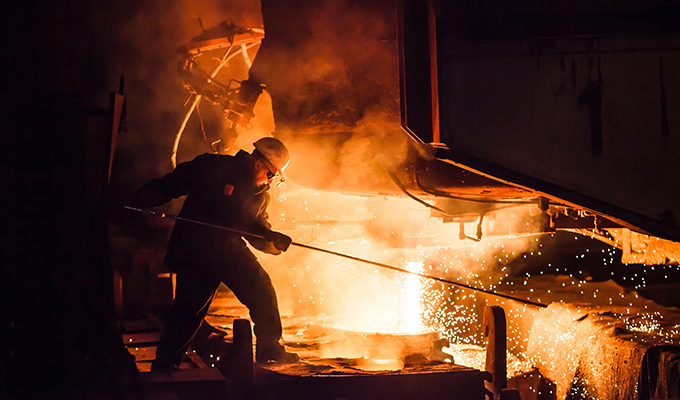
The Inflation Reduction Act (IRA) introduced by the US government to spur the economy, although not steel-specific, provides a good basis to support cleaner steelmaking, several global experts find.
The IRA was a key theme at worldsteel’s Open Forum – Climate Action in Antwerp earlier this month, during a session titled “Heterogeneity of steel decarbonisation pathways”, featuring the heads of international steel associations. IRA was brought up by Philip Bell, president of the Steel Manufacturers Association (SMA), who said: “I wish more governments would use that incentive-based approach.”
His wish was echoed from the EU side by Axel Eggert of Eurofer. “The EU’s steel industry is jealous of that programme; overall, it is a positive move to incentivise decarbonisation in the USA,” Kallanish heard Eggert say at the conference. He was more sceptical on the EU’s Carbon Border Adjustment Mechanism (CBAM), which he said is “going in the right direction, but is a drop in the ocean”.
The effect of IRA was put into figures by Kwasi Ampofo of BloombergNEF, who found that efforts to make green steels “get a bit cheaper with the US’s IRA subsidies”. Concretely, he assessed that using carbon capture and storage would cost on average $613/tonne, and using hydrogen on average $653/t with IRA credits. Without the credits, both methods would cost around $50 more.
One participant in the discussion highlighted the complexity of steel pricing if too many political tools are involved. “The steel markets will be confused,” said Hiroyuki Tezuka of the Japan Iron and Steel Federation (JISF). Mechanisms like subsidies already create trade disputes and dilute basic steel pricing. “And soon we are facing CBAM, too, which will be adding confusion,” he noted.
The discussion panel also included Kevin Dempsey of the American Iron and Steel Institute (AISI), Huang Dao of the China Iron & Steel Association (CISA), and Alok Sahay of the Indian Steel Association (ISA).
Christian Koehl Germany
Green steel acceptance needs work: worldsteel forum
Most steel end-users are still relatively oblivious to the challenges their businesses face from the transition to low-emission steel usage, found participants at worldsteel’s Open Forum-Climate Action earlier this month.
Speakers largely agreed that small and medium-sized users (SMEs) are still a long shot from the green steel issues discussed at the level of steelmakers. In the case of thyssenkrupp, when talking to its customers’ customers, Marcel Hilgers of the group’s Technical Customer Service found that SMEs plan to follow the big users, once they advance their transitions. But the ultimate decision would still be made at chief executive level. “It is a strategic decision,” Hilgers pointed out.
He noted that SMEs can be overwhelmed when serving big buyers that want to go green. “I have seen tenders requesting sustainable steels in the small print with so many exceptions and complex conditions,” he said at the event attended by Kallanish. This left companies insecure about how to deal with green steel, he added.
The particular challenges of the construction industry were addressed by Olivier Vassart, ceo of ArcelorMittal’s Steligence division. He noted that a premium of €200/tonne ($220) for green steel would be minimal, and would mean only GBP 1 in extra building costs per square metre in London newbuilds. But such rationales stand against an industry where most players “do not have pricing power and every penny counts”, he explained.
He noted that, to favour structural steel over concrete, the architect must be intercepted at an early sketching phase. “You cannot build a building in steel once it is designed in concrete,” Vassart said. Along the same lines, Hilgers added that policymakers, too, must be made more aware of steel as an option. “For them, concrete is simply bad, while wood is good. And with steel, they would not know if it is good or not,” he maintained.
In a general remark on consumers’ mentality, Hilgers stated: “It will take a while before people start choosing the sustainable toothbrush from the store shelf.”
Christian Koehl Germany