


Turkey searches for alternatives for steel imports amid geopolitical strains
Historically, Russia and Ukraine have been major suppliers for Turkey’s semi-finished steel products needs. But the Russia-Ukraine war, and subsequent international sanctions on Russia, have disrupted this trade route.
According to the Turkish Statistical Institute (TUIK), in the first eight months of 2023, Turkey imported 4.3 million tonnes of semi-finished steel, representing a significant jump from the 3.04 million tonnes in the same period of 2022.
Russia managed to maintain its share, exporting 2.27 million tonnes to Turkey in the reported period versus 2.25 million tonnes in January-August 2022, partially due to low prices compared with other suppliers, according to sources.
Meanwhile, imports of semi-finished steel from Ukraine totaled just 51,201 tonnes in January-August 2023, versus 131,431 tonnes in 2022 and 688,905 tonnes in 2021.
The decline in imports from the Black Sea region did not lead to an import deficit. Instead, the share was filled by a surge in imports from alternative markets in Asia and the Mena region.
Notably, Algeria supplied 422,807 tonnes of billet in the reported period in 2023 versus 59,118 tonnes in the same period in 2022.
Malaysia was another country that significantly increased supplies to Turkey. In January-August 2023, the country supplied 364,320 tonnes of semi-finished steel to Turkey versus just 1 tonne in 2022.
Other nations including India, Indonesia, Kuwait, Oman, Vietnam and Iran also had significant growth in export volumes to Turkey, according to TUIK data.
The higher volumes of foreign semi-finished steel in the country was attributed to attractive import prices compared with local prices.
“Turkish billet imports rose significantly. It’s due to the cost of production. When you produce semis from scratch using scrap, it becomes more expensive. Hence, most mills prefer direct semis imports,” a Turkish mill source said.
Fastmarkets assessment for steel billet domestic, exw Turkey averaged $597.71 per tonne in the first nine months of 2023.
The corresponding steel billet index export, fob Black Sea, CIS averaged $523.56 per tonne in the same period, while the assessment for steel billet export, fob ports Iran averaged $504.68 per tonne.
A local trading source said that the import billet price would need to be at least $30-35 per tonne cheaper than domestic material for the purchase to be profitable.
In the meantime, Turkish mills will face even higher production costs starting Sunday October 1, due to a 20% hike in electricity and natural gas prices.
Market participants have estimated that steel production costs will rise by $15 per tonne for electric-arc furnaces following this increase.
Market sources, therefore, believe interest in imported semi-finished steel will remain high in the country.
The share of Russian supply, however, is expected to decrease in the near term, with Western countries blocking imports of steel produced from Russia-origin semi-finished steel. This measure is expected to come into force in October in the European Union in particular.
“[Regardless of] whether Russian material comes from a sanctioned supplier or not, Turkish buyers will try to buy less from them and explore other origins,” a Turkish trader said.
Malaysian steelmakers are also considering expanding their presence in Turkey, with Eastern Steel Sdn Bhd (ESSB) greatly increasing its annual steelmaking capacity from 700,000 tonnes of semi-finished steel up to 2.7 million tonnes.
The two countries are part of a free-trade agreement, which allows Turkish buyers to import Malaysian material duty-free, while for other origins, including Russia, they have to pay a 22.4% duty unless they export the final product made from foreign steel.
“It is going to be a game between Malaysia and Russia for Turkey [market share],” an international trading source said.
A Russian trading source, however, expects Russian suppliers’ position to remain strong.
“I believe that Russia will remain amid the top three semis suppliers to Turkey in the nearest time,” the source told Fastmarkets.
Published by: Vlada Novokreshchenova, Cem Turken

Turkey searches for alternatives for steel imports amid geopolitical strains
Historically, Russia and Ukraine have been major suppliers for Turkey’s semi-finished steel products needs. But the Russia-Ukraine war, and subsequent international sanctions on Russia, have disrupted this trade route.
According to the Turkish Statistical Institute (TUIK), in the first eight months of 2023, Turkey imported 4.3 million tonnes of semi-finished steel, representing a significant jump from the 3.04 million tonnes in the same period of 2022.
Russia managed to maintain its share, exporting 2.27 million tonnes to Turkey in the reported period versus 2.25 million tonnes in January-August 2022, partially due to low prices compared with other suppliers, according to sources.
Meanwhile, imports of semi-finished steel from Ukraine totaled just 51,201 tonnes in January-August 2023, versus 131,431 tonnes in 2022 and 688,905 tonnes in 2021.
The decline in imports from the Black Sea region did not lead to an import deficit. Instead, the share was filled by a surge in imports from alternative markets in Asia and the Mena region.
Notably, Algeria supplied 422,807 tonnes of billet in the reported period in 2023 versus 59,118 tonnes in the same period in 2022.
Malaysia was another country that significantly increased supplies to Turkey. In January-August 2023, the country supplied 364,320 tonnes of semi-finished steel to Turkey versus just 1 tonne in 2022.
Other nations including India, Indonesia, Kuwait, Oman, Vietnam and Iran also had significant growth in export volumes to Turkey, according to TUIK data.
The higher volumes of foreign semi-finished steel in the country was attributed to attractive import prices compared with local prices.
“Turkish billet imports rose significantly. It’s due to the cost of production. When you produce semis from scratch using scrap, it becomes more expensive. Hence, most mills prefer direct semis imports,” a Turkish mill source said.
Fastmarkets assessment for steel billet domestic, exw Turkey averaged $597.71 per tonne in the first nine months of 2023.
The corresponding steel billet index export, fob Black Sea, CIS averaged $523.56 per tonne in the same period, while the assessment for steel billet export, fob ports Iran averaged $504.68 per tonne.
A local trading source said that the import billet price would need to be at least $30-35 per tonne cheaper than domestic material for the purchase to be profitable.
In the meantime, Turkish mills will face even higher production costs starting Sunday October 1, due to a 20% hike in electricity and natural gas prices.
Market participants have estimated that steel production costs will rise by $15 per tonne for electric-arc furnaces following this increase.
Market sources, therefore, believe interest in imported semi-finished steel will remain high in the country.
The share of Russian supply, however, is expected to decrease in the near term, with Western countries blocking imports of steel produced from Russia-origin semi-finished steel. This measure is expected to come into force in October in the European Union in particular.
“[Regardless of] whether Russian material comes from a sanctioned supplier or not, Turkish buyers will try to buy less from them and explore other origins,” a Turkish trader said.
Malaysian steelmakers are also considering expanding their presence in Turkey, with Eastern Steel Sdn Bhd (ESSB) greatly increasing its annual steelmaking capacity from 700,000 tonnes of semi-finished steel up to 2.7 million tonnes.
The two countries are part of a free-trade agreement, which allows Turkish buyers to import Malaysian material duty-free, while for other origins, including Russia, they have to pay a 22.4% duty unless they export the final product made from foreign steel.
“It is going to be a game between Malaysia and Russia for Turkey [market share],” an international trading source said.
A Russian trading source, however, expects Russian suppliers’ position to remain strong.
“I believe that Russia will remain amid the top three semis suppliers to Turkey in the nearest time,” the source told Fastmarkets.
Published by: Vlada Novokreshchenova, Cem Turken

Europe HRC spread narrows to a three-year low with margins in focus
The spread between European hot-rolled coil steel and raw material prices in September narrowed to the lowest in three years, as rebounding iron ore, coking coal and ferrous scrap costs hit a weak regional steel market and cut into operating margins.
HRC prices declined further in September, falling for a fifth consecutive month, according to an Oct. 2 analysis by S&P Global Commodity Insights.
The Northwest Europe HRC steel-to-raw material spot spread narrowed to average Eur305/mt ($326/mt) in September, from Eur350/mt in August, according to S&P Global estimates. A regional steel mill break-even level may be considered at spreads of around Eur250-Eur300/mt, depending on specific individual sites and cost structures.
In September, the euro weakened to average $1.07 from $1.09 in August, boosting costs for dollar-denominated raw material imports.
The Platts estimated Northwest Europe HRC spread averaged Eur345/mt in Q3, down from Eur470/mt in the second quarter and Eur421/mt in the first quarter.
Spreads have moved lower after a recovery in the first half due to weak steel demand and spot pricing.
Northwest Europe HRC spreads this year have been narrower than the Eur520/mt average in 2022 and Eur636/mt in 2021, during which several strong periods of steel pricing and demand coincided with tighter availability against orders and restocking.
The Northwest European HRC spread remained well below a peak of Eur858/mt seen in April 2022.
The EU steel industry’s pig iron production in August was 12.2% lower year on year, with output affected by stoppages at blast furnaces, according to analysis using World Steel Association data.
Austria, France, Poland, the Czech Republic and the Netherlands contributed to weaker year on year output in August, while Germany and Spain increased output.
S&P Global tracked inputs using major steel feedstock cost references, including a basket of iron ores with high-grade fines, lump and pellets typically consumed by regional blast furnaces in Germany, France and other regional EU markets.
HRC prices
Platts, part of S&P Global Commodity Insights, assessed HRC prices at an average of Eur638.33/mt ex-works Ruhr in September, down 0.75% from August, and at Eur625/mt ex-works Ruhr on Sept. 29.
Iron ore import prices in China — used in global contracts — in September strengthened on the month, averaging $120.79/dry mt CFR China for benchmark Platts IODEX 62% Fe fines.
Spreads between 62% Fe and 65% Fe fines narrowed over September to average $7.85/dmt, from $11.57/dmt in August.
Spot lump ore premiums in China rose in September to 17.81 cents/dmtu on average. The lump premium was equivalent to about $11.13/dmt for the 62.5% Fe grade, up 21% from August.
Platts assessed the Atlantic blast furnace contract pellet premium in September at $50/dmt, up $0.50/dmt from August, based on premiums applied to 62% Fe fines index terms. The assessed premium tracked further settlements for Q3 and pricing terms with spreads, according to S&P Global.
Coking coal prices on a delivered net forward basis into Rotterdam in September increased 19% to $319.24/mt CFR NW Europe, based on transactions at higher prices in Asia and tighter spot availability for October loading cargoes.
The majority of HRC produced in Europe is from integrated mills using iron ore and blast furnace production, rather than typically lower emissions-intensive electric arc furnaces. Italy’s Arvedi and ArcelorMittal’s Sestao plant in Spain produce flat steel via EAFs.
Regional northern European shredded scrap prices rebounded to Eur347.50/mt on a delivered basis in September.
S&P Global’s Europe HRC-to-raw-material price spreads are indicative operating margins that do not account for inland logistical costs, power, natural gas or other blast furnace and steelmaking inputs, such as ferroalloys, anodes and refractories. Costs to operate sintering and coke plants are not included.
Typical operating breakeven levels at regional blast furnace mills may see further pressure from higher energy, carbon permit and logistics costs.


Sweden’s H2 Green Steel, signs Eur150 million supply deal with Roba Metals
Sweden’s H2 Green Steel said Oct. 2 it has signed a Eur150 million ($157.5 million) steel sales agreement with steel and aluminum service center group Roba Metals in the Netherlands.
The deal covers seven years from the start of production and entails the delivery of “near zero emissions steel” from Boden, in northern Sweden.
H2 Green Steel plans to bring to market steel produced with ferrous scrap and hot-briquetted iron using renewable energy and green hydrogen, and it is working on an electric arc furnace and direct-reduced iron steel rolling complex.
Roba Metals is active in the metals value chain, in areas including steel, aluminum, stainless steel, cradle-to-cradle recycling and nonferrous metals, H2 Green Steel said.
“As part of this agreement, Roba Metals will work to develop the regional market for green steel whilst also processing and distributing the steel product from H2 Green Steel to customers via its service center in Genk in Belgium,” it said.
Roba plans to offer customers the option of near zero emissions steel from H2 Green Steel as part of its product range in the near future, Florin Negulescu, director at Roba Metals, said in a statement.
Roba’s activities include purchasing raw materials to smelting, and from sales to logistics with delivery services, it said.

EU confirms Ukrainian seamless pipe anti-dumping duty expiry
The European Commission has confirmed the expiry of anti-dumping measures on seamless steel pipe and tube from Ukraine, effective 3 October, according to a Commission notice seen by Kallanish.
“This was the last anti-dumping measure in the EU against Ukraine (although suspended and not collected since June 2022) and as of [3 October], EU trade with Ukraine will be free of country-specific trade defence measures,” writes Yuriy Rudyuk, partner at law firm Van Bael & Bellis.
The law firm has been supporting Interpipe, Ukrainian manufacturer of seamless pipes, “in numerous investigations and reviews of these measures”, it says.
In the second quarter, Interpipe’s sales to Europe, including Poland, Germany and Spain, increased by 44% on-quarter to around 46,000 tonnes. In the first half-year, Intepipe supplied around 78,000t to Europe, up by 11% compared to the same period a year ago.
The company recently increased supply of seamless pipe to Europe, the Middle East, and Ukraine to counterbalance the impact of decreasing demand and falling prices in the US, it said in Q2 results announcement.
The company supplies seamless pipe to the EU via land routes.
Elina Virchenko UAE

Voestalpine closes wire plant in Fürstenfeld
Voestalpine will shut down its production of special wire products in Fürstenberg, Austria, at the end of the year, Kallanish learns from a company statement sent upon request.
The site is part of voestalpine Wire Rod Austria GmbH, a subsidiary of the Metal Engineering Division of voestalpine AG with production plants in Donawitz, Bruck an der Mur and Fürstenfeld. Since 2012, the latter site has specialised in saw wire for the photovoltaics industry, besides other special wire products such as dry reed contacts.
The production of saw wire has been uneconomic for some years already, despite restructuring efforts and investment in research & development, the company says. As reasons it cites the migration of the European photovoltaics industry to China, and the massive increase of power prices since the Russian invasion of Ukraine.
The subsidiary will therefore relocate the production of dry reed contacts to the plant in Bruck an der Mur. For the 53 employees at Fürstenberg, it has offered alternative positions in Bruck, Leoben, Kindberg and Kapfenberg. According to press reports, Fürstenberg already laid off 30 employees back in 2018.
Christian Koehl Germany

German mechanical engineering activity sinks in second half
Due to a lack of new orders, production in the machinery and plant engineering sector will shrink in the second half of 2023, Kallanish hears from German engineering federation VDMA. It expects production to decline by 2% in real terms for the year as a whole.
To date, companies in the export-oriented mechanical engineering industry are still benefiting from order backlogs that enabled production to grow by 1.7% in real terms in the first seven months of 2023. “But this buffer is melting and the current year’s order intake including July is 14% below the previous year,” says VDMA chief economist Ralph Wiechers.
A look ahead does not promise any improvement in the short term, either, VDMA notes, although it does not exclude that a rebound could occur from a lower base in 2024. At the moment, though, the global economy is going through a phase of weakness, the duration and intensity of which cannot yet be assessed.
“A tenacious inflation resulting in tight monetary policy by the major central banks, and the Ukraine war with all its political and economic consequences are strong burdens,” Wiechers says. “So are the ongoing geopolitical tensions between the USA and China and, last but not least, the heated discussion about competitive conditions to ensure companies stay in Germany.”
Wiechers nevertheless points to the strengths of the industry. Capacity utilisation in July, for example, remained almost unchanged at a high 88.8%, well above the long-term average. Employment in the core workforce also rose again slightly in June by 1.5% to 1.02 million people. Exports grew by 3% in real terms year-on-year in the first half of 2023. “All this shows that the machinery and plant engineering sector is not in crisis mode, but is extremely robust,” he concludes.
Christian Koehl Germany

HRC buyers in Europe continue to postpone bookings
Slow end-user demand and a poor macro-economic outlook for the fourth quarter of 2023 were limiting buying interest for HRC across Europe, sources said.
“Massive restocking is very unlikely during October. Firstly, our level of inventories is enough, given that demand from end users is deteriorating and we see fewer orders,” a steel service center source in Northern Europe said.
Mills have short order books, with lead times still reported at around six weeks, or even quicker.
Nevertheless, mills were reluctant to cut HRC prices further due to increasing costs of production.
Therefore, market sources expected more European steelmakers to limit production during the fourth quarter of 2023 in attempt to balance the market and prevent a further downtrend.
“All the mills [in Europe] have low order books, but at the same time raw materials prices are moving higher. Electricity, labor costs are also trending up, so it is very likely that we see more furnaces get closed in the coming weeks,” a distributor in Northern Europe said.
Some European steelmakers have already announced maintenance-related blast-furnace stoppages for the fourth quarter.
Offers for November-delivery HRC from one integrated mill in Northern Europe were reported at €630 per tonne ex-works on Monday, stable from a week earlier.
Buyers’ estimations of tradeable values were head at around €600-630 per tonne ex-works, but trading remained very slow.
“Most buyers are still able to wait for a couple more weeks; there is a feeling that prices [for HRC] could decline more,” a steel-service center source in the Benelux area said.
On top of that, buyers were holding back from trading, awaiting more clarity on the import HRC volumes expected to be cleared by customs under safeguards quotas as of October 1.
The European Union’s customs statistics were not updated by the time of publication, but sources expected the quota under the “other countries” category to be filled in “less than a week.”
Vietnam, Japan, Taiwan and Egypt were the major HRC suppliers to the EU under the “other countries” category, with Asian suppliers offering the most competitive prices, according to EU market sources.
Fastmarkets calculated its daily steel hot-rolled coil index domestic, exw Northern Europe at €620.00 ($655.44) per tonne on October 2, down by €0.42 per tonne from €620.42 per tonne on September 29.
The index was down by €11.88 per tonne week on week and by €36.25 per tonne month on month.
Meanwhile, Fastmarkets’ calculated its daily steel hot-rolled coil index domestic, exw Italy at €605.63 per tonne on October 2, down by €3.12 per tonne from the previous calculation of €608.75 per tonne on September 29.
The Italian index was down by €16.04 per tonne week on week and by €31.87 per tonne month on month.
Italian steel market participants described trading in the local HRC market as “frozen” amid subdued end-user demand and downbeat expectations among buyers.
Tradeable values were reported at €630-640 per tonne delivered (€615-625 per tonne ex-works) by producer sources and at no higher than €600-610 per tonne ex-works by buyers.
At the same time, some buyer sources reported bids at €590 per tonne ex-works, and even below that level, for commodity-grade coils. But mills were reluctant to accept such prices yet due to costs.
Meanwhile, HRC import offers to Europe were quite limited and largely uncompetitive, given small gaps with European domestic prices and high safeguards-related risks.
A Japanese supplier was offering January-arrival coil to Italy at €610 per tonne CFR.
A Vietnamese mill was offering HRC with the same lead time below that level — at €590 per tonne CFR.
Turkey-origin HRC was offered to Italy at around €630 per tonne CFR, including the anti-dumping duty.
European buyers had a price idea for overseas coils of no more than €540-550 per tonne CFR.
Published by: Julia Bolotova
Thyssenkrupp invests in Rotterdam terminal operations
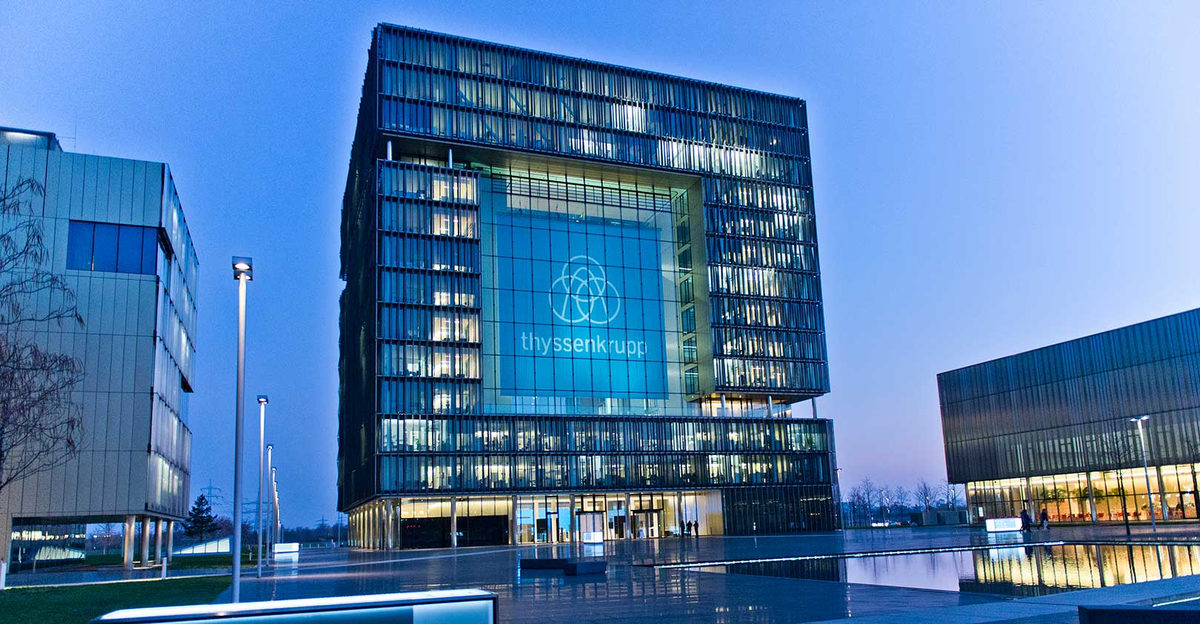
Thyssenkrupp Steel says it has lined up a mid-double-digit million euro sum to be invested in modernising terminal operations at Ertsoverslagbedrijf Europoort C.V. (EECV) at the Port of Rotterdam.
An old ship unloader will be replaced by a new state-of-the-art unit, strengthening the future of EECV and thyssenkrupp Veerhaven, Kallanish learns. The new unloader is expected to be operational by the end of 2025.
Tk Steel says the investment is underlining its commitment to a modern infrastructure in the Port of Rotterdam, and sustainable supplies to tk Steel’s mills and Hüttenwerke Krupp Mannesmann (HKM) in Duisburg.
“The project sends a strong signal for the future of EECV and thyssenkrupp Veerhaven, the two Dutch logistics subsidiaries of thyssenkrupp Steel,” the company states. The two companies will ensure the unloading of seagoing vessels and the interim storage and transport of around 24 million tonnes of iron ore and coal for steelmaking in Duisburg.
Like its predecessor, the new ship unloader weighs around 2,000 tonnes, stands a good 60 metres high, 30m wide and has a crane boom length of around 100m. With these crane dimensions, EECV will be able to unload the largest bulk freighters in the world at a highly productive rate of up to 2,600t of iron ore per hour.
Christian Koehl Germany

Polish steel wire rod prices slightly down amid lack of activity; rebar slightly up on restocking
Wire rod
Polish mills continued pushing for higher prices in the assessment week. Thus, the offers for domestic steel wire rod (drawing quality) varied between 2,900 and 3,000 zloty ($659-682) per tonne CPT. According to market sources, those levels were not workable, and no major trading at such levels was heard.
“Consumption remained comparatively weak, and market activity was low,” a trading source told Fastmarkets. According to that source, deals were concluded at about 2,850 zloty per tonne CPT, but only for small tonnages.
A producer source estimated achievable prices for wire rod in Poland at 2,800-2,850 zloty per tonne CPT. The source confirmed that sales were comparatively slow this week after the more active restocking in mid-September.
“New restocking can be expected in October, and then slowdown in November again. This, combined with [a Polish local producer’s] decision to stop for maintenance in October, will stabilize prices [for wire rod],” the mill source said.
As a result, Fastmarkets’ weekly price assessment for steel wire rod (drawing quality), domestic, delivered Poland was 2,800-2,900 zloty per tonne on Friday, widening downward by 50 zloty per tonne from 2,850-2,900 zloty per tonne in the previous week.
The assessment was based on deals, the lower end of offers and market participants’ estimations of achievable values.
Drawing-quality wire rod offers from Germany to Poland were heard at about €610 ($643) per tonne CPT.
One Ukrainian mill was offering mesh-quality wire rod to Poland at about €590 per tonne CPT.
Rebar
Polish domestic rebar was offered by local mills at about 2,850 zloty per tonne CPT, which equates to about 2,830 zloty per tonne ex-works, in the week to Friday September 29.
However, according to a distributor source, the bids for at least few hundred tonnes of rebar were seen between 2,750 and 2,770 zloty per tonne CPT, which nets back to about 2,730-2,750 zloty per tonne ex-works.
“After [mid-September] there was a spur of buying — now it can be seen it was mainly restocking. Demand from construction is better than a month ago, but it’s not enough to hold the current [rebar] prices on the market for long,” a trading source said.
A consumer source said during the assessment week that deals for rebar in Poland were concluded at about 2,780 zloty per tonne CPT, or about 2,760 zloty per tonne ex-works.
As a result, Fastmarkets’ weekly price assessment for steel reinforcing bar (rebar) domestic, exw Poland was 2,730-2,830 zloty per tonne on Friday, up by 10-20 zloty per tonne from 2,710-2,820 zloty per tonne the week before.
Despite improved buying, the availability of rebar in the domestic market was expected to be reduced in October due to a one-month maintenance stoppage at one of the key producers in Poland.
Therefore, sources expected rebar prices in Poland to flatten in October, although the downtrend could resume in November, with end-user demand unlikely to rebound due to seasonality.
Import offers for rebar to Poland were reported at about €610 per tonne from Moldova and Italy.
According to market sources, the high euro exchange rate versus the Polish zloty was making rebar imports uncompetitive for Polish buyers. Notably, €1 was traded at 4.63 zloty on September 29, according to the online currency converter Oanda.com. The Polish zloty was traded at 4.62 zloty to €1 on September 22, compared with 4.48 zloty to €1 on September 1.
Published by: Julia Bolotova, Darina Kahramanova