

Klöckner pushes ‘transformation’ towards processing in Europe
Klöckner & Co is accelerating its expansion into higher value-added services in Europe, a campaign which it calls a “transformation” of its distribution business.
On the occasion of the announcement of its half-year-results, chief executive Guido Kerkhoff told of several investments into processing, mainly at the company’s German sites.
He emphasised Klöckner’s ambition to “transform commodity warehouses into HVAB [higher value-added business] powerhouses.” The transformation is to a large extent linked with the expansion of laser capabilities. At the company’s headquarters in Duisburg, it will establish a second laser centre with three tube lasers that will complement’s Klöckner’s laser centre in nearby Velten.
Elsewhere, in Kassel, it will invest into a flat-bed laser that will facilitate its entry into the market segment for plate with specific thicknesses. In Bremen, northern Germany, it is about to put into operation an automated vision-guided deburring robot for post plasma-cutting processing. Klöckner claims this facility is unique in Europe and gives it a leadership role for such services.
The company is also pushing investment into downstream services in its other main market, North America (see Kallanish 3 August). In its European market, such ambitions are even more essential, as the company sees little perspective for acquisitions or greenfield sites, unlike in North America.
Christian Koehl Germany


French rebar buyers remain on fence
French rebar activity continues to be sluggish, with no market visibility. Prices are however stable, with sources indicating a slight, €10/tonne ($11) hike compared to mid-July.
The market is now on holiday, and very little is forecast to happen until the end of August. However, stocks at distributors and their clients are low, with distributors reporting empty order books. Sales are taking place from day to day, with no longer-term prospects. Customers and construction companies will adopt a wait-and-see attitude in September and will continue to buy only to cover immediate needs each day.
One seller says he has no orders for September and revenue in July was accumulated from day-to-day sales. Despite the difficulty of working without plans and visibility, and there being limited restocking, the month of July was considered “acceptable”, Kallanish notes.
Some orders for infrastructure projects improved producers’ sales in July but the remaining orders were for small volumes. Domestic rebar prices are hovering at €590-620/t delivered including size extras, depending on tonnage, sources suggest.
Natalia Capra France

Trading ‘dead’ in Southern European long steel market amid summer closures
Closures, typical at this time of year, will last from August to early-mid September.
Fastmarkets price assessment for steel reinforcing bar (rebar) domestic, exw Italy was €660-675 ($724-740) per tonne on Wednesday, stable week on week.
Trading in Italy was expected to remain subdued till mills reopen in September, sources said.
As a result, prices were expected to remain flat across long steel markets in Southern Europe, and demand expected to remain subdued.
“The situation is unchanged from last week as mills are absent from the market because of summer holidays,” a producer source said.
“Demand is low as everyone is away for summer holidays,” a trader source said.
“The market is flat. Some of the producers have already stopped the production and the others don’t put pressure on sales,” a buyer source said.
Meanwhile, prices in the Spanish rebar market remained stable.
Fastmarkets’ price assessment for steel reinforcing bar (rebar) domestic, delivered Spain was €640-650 per tonne, unchanged week on week.
Demand and trading remained slow in the Spanish market as a result of seasonal closures.
Southern European wire rod
Fastmarkets’ price assessment for steel wire rod (mesh quality) domestic, delivered Southern Europe was €580-600 per tonne on Wednesday, stable week on week.
The Southern European wire rod market remained flat.
“Mills targeted price increases at the beginning of July, but these have not really had any effect or been accepted by the market,” a buyer source said.
“In September, mills may increase prices, but we will wait and see,” he added.


SeAH, Navantia Seanergies Form Offshore Wind Ties
Spanish state-owned Navantia Seanergies and SeAH have signed a collaboration agreement for the development of offshore wind in countries on the Asian continent.
The collaboration between the two companies focuses on the manufacture of complete floats, components or materials manufactured in Korea or in countries where SeAH has facilities, or could be installed, such as the United States and Australia.
The signed agreement, which includes the principles for future collaboration in the supply of materials in this sector, will provide Navantia with guarantees to meet future project commitments, according to the press release.
“The agreement with SeAH is very important for Navantia Seanergies and is deployed in two areas that are essential in the company’s strategic plan: internationalization as a global supplier, and the certainty of supplying materials under preferential conditions for projects in the coming years, where market saturation is foreseeable. Therefore, it is a support for Navantia to meet the capacity reserve commitments acquired and other projects”, said Javier Herrador, Navantia Seanergies Vice President.
SeAH, in partnership with Taiichio and Wolf Projects, is the supplier of a large part of the materials for the construction of jackets for the offshore wind projects built in Fene, such as the East Anglia One, Saint-Brieuc, and Le Tréport projects, as well as the substation jackets built in Puerto Real, Le Tréport, Noirmoutier, and Dogger Bank C.
Talking about Korea, the country has set a target of 12 GW of offshore wind power by 2030.
In 2021, the country’s former president Moon Jae-in revealed the government would invest KRW 1.4 trillion (around EUR 1 billion) in the first phase of a project developing a 6 GW floating wind farm offshore Ulsan.
In the Ulsan Bay area alone, in the southeast of the country, 9 GW of floating wind capacity is proposed, which would make this area the cluster with the highest concentration of floating units in the world, said Navantia.
Source: offshorewind.biz
Steel distributor Klöckner boosts North America network with acquisition of NMM
German steel and metals processor and distributor Klöckner & Co said Aug. 1 it has completed the acquisition of National Material of Mexico (NMM), an independent service center and materials supplier catering to automotive and industrial end markets in North America.
The transaction agreement was signed in December 2022 and was made through Klöckner’s US subsidiary, Kloeckner Metals Corporation.
The acquisition of NMM, with its 10 facilities throughout Mexico, enables Klöckner to expand its exposure to that region and its key automotive and industrial customers.
The move is in line with Klöckner’s Strategy 2025, which among other things targets growing the company’s product and service portfolio in North America.
Kloeckner & Co will incorporate NMM under its Kloeckner Metals brand and the combined company will have a broad presence in all relevant regions in the US and Mexico, with 56 sites and 2,600 employees. In addition, its customers will have better access to electrical steel for their investments in renewables and to meet rising demand for e-mobility in North America.
Kloeckner & Co’s distribution and service network numbers 160 sites in 13 countries. Last year it shipped almost 4.7 million mt of products to its 90,000 strong customer base, and is particularly known for its advances in digital transformation of distribution, aiming to digitalize and largely automate its supply and service chain.


EU HRC prices stable, number of offers limited
The number of domestic and overseas offers has been limited as European mills have been largely inactive because of scheduled maintenance or full order books. And safeguard quotas for other countries and South Korean origin have been almost filled, making the cheapest material unattractive for EU buyers because of risks related to safeguard duty.
“There are not [many] offers around due to the holiday period in Europe and full quotas and long lead times for import,” an Italian trader said. “Buyers are more focused on managing their stocks as they have enough HRC and there is more import material either on the way or in ports awaiting custom clearance.”
Low demand has been the main buyer concern and they believed that domestic prices might fall in September when both buyers and sellers would return to the market after a slow period.
Some market participants, however, have a positive outlook on the market because of sufficient demand from the automotive industry, the absence of competitive import offers, and positive signs in the Asian market.
Platts assessed domestic prices for HRC in Northwest Europe unchanged on the day at Eur640/mt ex-works Ruhr Aug. 2.
Market participants estimated tradable values at Eur630-650/mt EXW Ruhr and at Eur650/mt delivered Germany.
A steelmaker has been offering the material at Eur640/mt EXW Northwest Europe.
Platts assessed domestic prices for HRC in South Europe also were stable at Eur635/mt EXW Italy Aug. 2, reflecting tradable values reported at Eur630-640/mt EXW Italy.
Platts is part of S&P Global Commodity Insights.
Author Maria Tanatar

Spain’s May steel production, scrap consumption increase
The Spanish steel sector saw scrap melting and production increase on-month in May, Kallanish notes. Both activities, however, remained weaker than the same month a year ago.
Spain’s ferrous scrap consumption rose by 1.3% or 11,000 tonnes on-month in May to 873,000t. According to the Spanish steelmakers’ association Unesid, this was a drop of 10% on-year.
Five-month scrap usage was 4.19 million tonnes, representing 84.8% of total crude steel production in January-May 2023. This volume was just 1% higher than the 4.15mt consumed in the same period a year earlier.
The local steel industry produced around 1mt of crude steel in May, 2.6% higher than April’s output of 980,000t but down by 19% year-on-year.
Spanish five-month output totalled 4.94mt, a fall of 7.8% or 418,000t in comparison with the January-May 2022 volume of 5.36mt, Unesid confirms.
Todor Kirkov Bulgaria
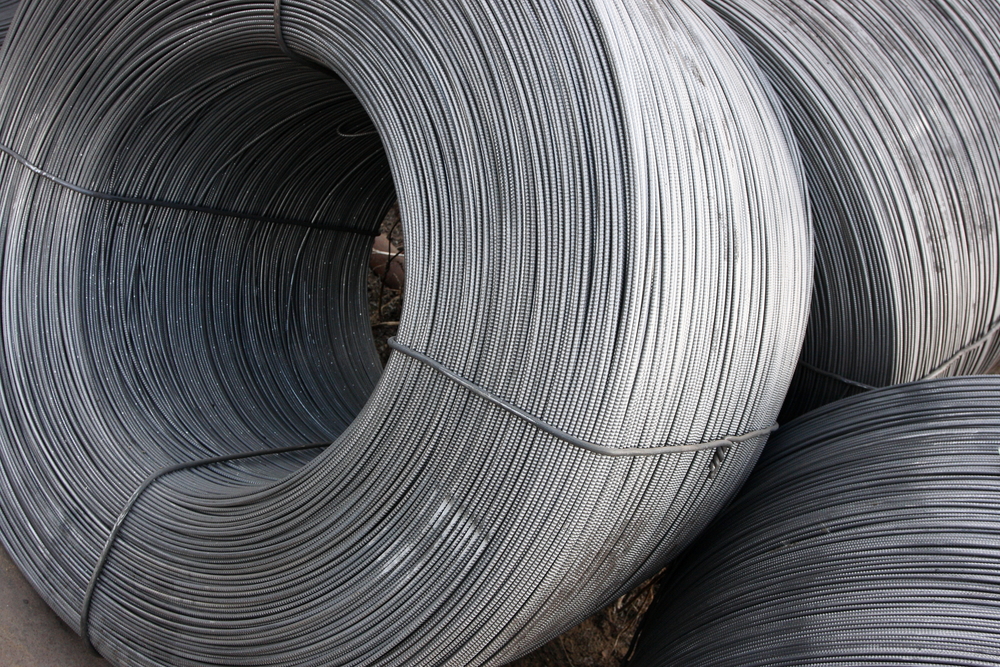
Bekaert expects challenging times ahead
Belgian wire rod specialist Bekaert forecasts a competitive and challenging market across most of its divisions in the second half of 2023.
In its first half-year earnings report monitored by Kallanish, the company says it is facing a demanding business environment but will continue to focus and strengthen its core business.
For the remainder of the year, Bekaert sees further volume pressures, also considering the unfavourable seasonality. However, there are opportunities in North America for the steel wire division thanks to restocking and the release of federal funds in the utilities sector. Activity in Europe, Latin America and Asia will remain subdued.
In H1, the wire segment reported an on-year 13.4% decrease in sales due to lower volumes, wire rod price decreases and unfavourable currency movements. The firm recorded sales volume declines across most markets, particularly in the commodity segments.
While demand from the energy and utility sectors was strong in H1, especially in North America, market activity in EMEA was weak, apart from in the energy industry. Bekaert is giving “intense focus” to plant efficiency and cost control, it says.
The disposal of the company’s “Steel Wire Solutions” businesses in Chile and Peru will be completed by the end of 2023.
Group H1 sales were down 8.2% on-year to €2.3 billion ($2.5 billion) due to unfavourable currency movements, lower volumes and pricing, partly offset by a positive price-mix contribution. Ebitda also fell on-year, by 6.8% to €317 million.
The Steel Wire Solutions joint venture in Brazil also reported a revenue decline of 9.4% against H1 2022, caused by flat volumes coupled with price-mix effect.
Bekaert’s specialty division also reported a decrease in sales of 12.6% in H1 due to project postponements and volume declines, in line with broader construction market weakness, particularly in Europe.
Natalia Capra France
Klöckner sees falling revenue despite recovery of volumes
Klöckner & Co expects steel demand to recover sequentially as the year progresses and is now forecasting a slight increase in shipments for 2023.
The German distribution group suffered from a significant steel price correction during the second quarter, chief executive Guido Kerkhoff said during a conference call monitored by Kallanish. Due to the resulting lower average sales price compared with the same period of the prior-year, the company forecasts a significant decline in revenue for 2023.
Klöckner generated sales of €4 billion ($4.4 billion) in the first half of 2023, down from €5 billion in H1 2022. Operating income (Ebitda) before material special effects in the reporting period amounted to €131 million, down from €423m last year. The net result was a modest profit of €4m versus €323m a year earlier.
At the conference, Kerkhoff forecasted a “considerable increase” in shipments and revenue to already occur in Q3 versus Q2. He therefore sports more optimism than many other observers from the distributors sector, who do not believe in a post-summer recovery this year.
One of Klöckner’s advantages is its strong business in the USA and Mexico, where the economy is more promising than in Europe (see separate story).
Last year, its total volume of shipments dropped by 4% on-year to 4.7 million tonnes, owing to a disciplined margin-over-volume strategy. Revenue came to €9.4 billion, up 26% on 2021, and is now expected to fall this year due to weakening prices.
Christian Koehl Germany

Turkey’s first-half production, exports slump, imports soar
Turkish steel producers have again reiterated their calls for protectionist measures similar to those implemented by many countries, specifically the USA and EU. This would be in order to prevent increasing imports of dumped and poor-quality products to Turkey, and to restore Turkish steel exports to their former levels.
“This is vital both for our steel foreign trade and for the economy of our country,” says Turkish Steel Producers Association (TCUD) general secretary Veysel Yayan.
“Asian countries, such as China, India, South Korea and Indonesia, whose competitiveness has increased thanks to their falling energy costs, have gradually increased their shares in Turkey’s traditional markets, especially in the EU, reducing our steel exports and at the same time increasing our steel imports at dumped prices, posing a threat to our steel foreign trade,” Yayan continues.
Turkey’s June crude steel production decreased 1.5% on-year to 2.9 million tonnes, notes Kallanish.
Production in the first half of 2023 fell 16.3% on-year to 15.9mt, meaning Turkey, which was eighth-largest steel producer with 19mt in H1 2022, fell to tenth place this year.
June finished steel consumption soared 27.4% on-year to 3.3mt, while January-June consumption increased by 15.8% to 19.9mt.
Exports of steel products, however, slumped 40.8% in June to 875,900t, while falling 52% in value to $740 million. First-half exports fell 46.5% to 4.5mt and 52.5% to $3.9 billion.
June imports rose 12.1% to 1.5mt while falling 9.6% in value to $1.3 billion. January-June imports thus rose 23% to 9.5mt, while declining by 4.3% in value to $8.1 billion.
In particular, import growth for wire rod reached 82.5%, causing long steel imports to grow by 43.4% in the first half.
“The extraordinary increase in imports of long products, of which Turkey is a net exporter, widened the foreign trade deficit of the sector,” says Yayan.
Consequently, the ratio of six-month exports to imports slumped to 47.9:100 from 96.7:100 in January-June 2022.
Emphasising that the February earthquakes were also effective in decreasing production, Yayan comments: “Despite the 16.3% decline in Turkey’s crude steel production, there was an increase in the domestic demand due to the reconstruction of earthquake-hit cities. Despite the 15.8% increase in [first-half] consumption, the 23% increase in imports shows that the consumption is being met through imports.”
Burcak Alpman Turkey