


EU steel section prices stable amid slow demand
European domestic steel sections prices were stable week on week to July 12, as demand remained slow ahead of the upcoming summer holidays.
The Platts assessment of European medium sections (category 1, S235 JR) was flat at Eur820/mt delivered on July 12.
One distributor source in the Benelux region put a tradable level for category 1 medium sections around Eur820-Eur825/mt delivered Benelux. The source reported that mills were hoping to reduce production capacity, as demand remained weak and producers were hoping that reducing capacities might stabilize prices. The distributor also reported that there was no pressure from the import market, as domestic prices for long steel products in Europe were already significantly low. However, the distributor expected demand to remain weak, as customers usually held back on placing orders during the summer holidays and were returning to the market in September.
One Europe-based mill source said that mills were aiming for higher prices, however amid limited demand it was only successful to a certain extent. The source put a tradable level for beams around Eur820-Eur825/mt delivered.
Meanwhile, Platts assessed Northwest Europe rebar stable at Eur580/mt ex-works week on week on July 12.
One Europe-based mill source cited mill offers for rebar in Northwest Europe around Eur600/mt delivered.
One Europe-based trader indicated workable levels for rebar in Germany around Eur590/mt delivered, with tradable levels for rebar in the Benelux region around Eur600/mt delivered.
Author Rabia Arif


ArcelorMittal Hamburg uses waste granulate instead of coal
ArcelorMittal’s Hamburg steelworks has recently started using a granulate made from municipal waste instead of coal to produce crude steel from sponge iron and recycled scrap in an electric arc furnace.
The company invested two years of development in the new process, and now around half of the coal previously used in the EAF is being replaced by an alternative that conserves resources. The process saves 3,500 tonnes/year of direct CO2 emissions, Kallanish hears from the company.
At the beginning of the project, ArcelorMittal engineers tested various substitutes for their suitability together with technology supplier Stein Injection Technology. “Among other things, we examined sewage sludge and paper fibre residues, processed orange peel and non-recyclable waste,” says project manager Michel Wurlitzer.
The most convincing results were delivered by a residual material granulate from waste from private households and similar institutions. The CO2 reduction is made possible by the biogenic carbons contained, which are present in paper or cotton fibres, for example, and by the hydrogen contained. Another advantage is that the high temperatures in the steel bath, which exceed 1,600 degrees Celsius, lead to the complete decomposition of the granulate.
Christian Koehl Germany


Italian car output continues to hike
Italian passenger car output confirmed its upward trend in May, like many other European countries, Kallanish notes from local carmakers’ association Associazione Nazionale Filiera Industria Automobilistica (Anfia) preliminary data.
Italian car production increased year-on-year by 8.7% on-year in May to 53,907 units, and by 12.9% on-year to 237,801 cars in the first five months of the year. By comparison, Spanish car output increased in May by 23.5% to 197,422 cars and by 13.2% to 843,361 units in January-May. German output skyrocketed by 25% to 380,100 units and by 32% to 1.8 million cars in the first five months. The UK also recorded increases, of 26.9% to 79,046 cars in May and 10.7% to 365,401 units in January-May, Anfia reveals.
Italian passenger car output hiked 6.6% y-o-y in full-year 2022 to 473,149 units. In 2021, Anfia registered 442,432 units produced in the country, and 451,718 units in 2020.
Italy has 23 car production plants. Spain has 17 plants, France 31 and Germany 42.
“The automotive production sector is placed in the context of an overall Italian industrial production decline compared to last year’s levels: in May 2023, in fact, the industrial production index as a whole closed down 3.7% compared to May 2022 and decreased by 3.1% in the first five months of the current year compared to the same period in 2022,” Anfia says quoting data from national statistics institute ISTAT.
Local service centres, re-rollers and coil producers continue to report improved demand from the automotive sector, particularly in Germany, but a continued order contraction from other sectors.
Natalia Capra France

German service centre sources Greentec steel from voestalpine
German steel service centre EMW Stahl Service says it is joining voestalpine in efforts to expand the availability of CO2-reduced steel for the steel processing industry.
Starting this year, voestalpine Stahl will supply independent steel service centre EMW with its Greentec steel edition with a reduced carbon footprint, EMW tells Kallanish. “As one of Europe’s largest independent steel service centres, one of our ambitious goals is to achieve complete climate neutrality in Scope 1 and 2 by as soon as 2030,” says the German company’s managing director, Michael Mockenhaupt.
Voestalpine has already been offering all flat steel products from its Steel Division with a reduced carbon footprint. These include electrical steel strip, such as that used in wind turbines, and high-strength steels for lightweight automotive construction.
EMW, headquartered in Neunkirchen in North Rhine Westphalia’s Siegerland region, is a business unit of the globally active Schäfer Werke group and supplies coils, slit strips, blanks and circular blanks to the steel processing industry.
Christian Koehl Germany

Renewables bottleneck necessitates alternative-to-hydrogen decarbonisation paths: Bellona
“Exorbitantly high” renewable electricity demand is the number one bottleneck to drastically reducing emissions and reaching climate neutrality in the steel industry. Decarbonisation pathways relying on carbon, capture and storage (CCS) for primary steel production need to be considered as a complementary decarbonisation route. So concludes non-profit organisation Bellona in a report.
Although hydrogen has been touted as a promising solution for decarbonising the steel sector, due to its vast resource requirements, it cannot be considered a silver bullet, Bellona emphasises. It needs to be coupled with other solutions.
One would be reducing the total demand for steel through efficiency and sufficiency measures. For example, moving from private to public mobility with massive deployment of public transport and shared mobility solutions, thereby slashing new passenger car production.
Increasing recycling rates is another option. This could, for instance, be achieved by enhancing urban mining efforts or reducing exports of scrap to countries, such as Turkey, and instead recirculating them to steel mills within the EU. “Such an approach might, however, carry the risk of increasing emissions from enhanced steel production in those countries currently importing European steel scrap, as they might be forced to increase their primary steel production to satisfy demand,” Bellona says in the report seen by Kallanish.
Scrap supply is also infinite, meaning that despite high recycling rates, high steel demand is unlikely to be satisfied solely through recycled resources, necessitating the continued production of primary steel. Moreover, impurities in the recycling process accumulate with every recycling iteration, meaning primary steel production is required for higher-grade demands.
CCS is another alternative. However, the separate CO2 point sources within the current blast and basic oxygen furnace route limit the effectiveness and economics of CCS, further aggravated by low concentrations of CO2 in the flue gases. The effective application of CCS with a blast furnace steel production route requires the rebuilding of the plant into a Hisarna plant or a top-gas recycling plant, Bellona explains.
Steel is a crucial material for the energy transition – the construction of wind turbines being a prime example, Bellona says. A windfarm with 1MW capacity requires roughly 120 tonnes of steel. To produce this amount of steel through DRI one would need around 384 MWh of renewable electricity.
If enough windmills were to be built to produce the hydrogen needed to supply the 12 EU steel plants that have pledged to switch to hydrogen-based DRI-making in the coming years, one would need around 85GW of new installed wind capacity. This is equivalent to 31% of what RePowerEU seeks to deploy between now and 2030.
Adam Smith Poland
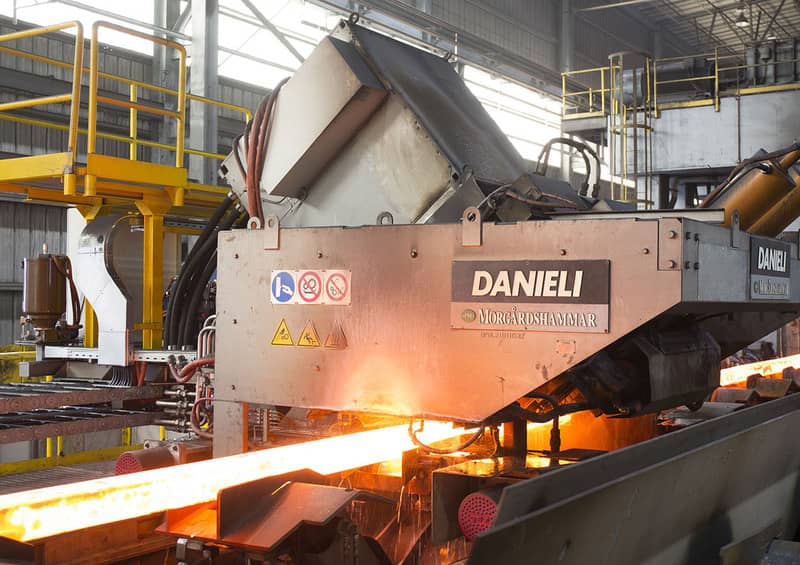
Danieli upgrades NLMK Clabecq plate mill
Danieli has upgraded the plate mill at NLMK in Clabecq, Belgium, the technology supplier tells Kallanish.
The investment is aimed at increasing the quality of thin-gauge steel, to improve plate profiles and mill-flatness performance.
Danieli installed new “hydraulic actuators for gap control (HAGC) for stands 3 and 4, a brand new hydraulic bending system, as well as new loopers for stands 1 to 4 connected to a new hydraulic power unit,” the Italian firm says. It also upgraded the technological control system.
Emanuele Norsa Italy

European construction investment to contract in 2023: FIEC
European construction industry federation FIEC confirms in its latest outlook for investments that 2023 will be a year of contraction, after two consecutive years of growth.
According to the federation, in 2023 overall investments in construction in Europe will decline 2.5% year-on-year, following a recovery of 2.1% y-o-y in 2022 and a jump of 4.8% y-o-y in 2021. Since 2014, construction investments have dropped on-year only once, in 2020, due to the impact of Covid. They fell 3% on-year in 2020.
Sweden will be the market with the largest contraction (-13.7% y-o-y), but all major economies will see investments decelerate compared with 2022. Portugal (+3.4% y-o-y) and Ireland (+2.5% y-o-y) are the only countries expected to see investments increase this year, Kallanish notes.
Overall civil engineering investments in Europe this year should grow 2.2% y-o-y, but both residential and non-residential buildings will contract.
In its latest report, FIEC explains that uncertainties already hit the sector last year, but the full negative impact will only be seen during 2023. “Rising prices and supply shortages for energy and certain construction materials have negatively impacted several contractors in Europe, with many at risk of not being able to fulfil contractual obligations or refraining from participating in public tenders. Overall, the construction sector registered slightly weaker growth than forecasted last year. In 2023, investment in construction is expected to decline at a rate of 2.5%,” the association explains.
FIEC’s outlook is in line with the latest Eurofer view on the construction sector. Output in the construction sector steadily increased in 2022 – by 4.8%, after a buoyant 6.7% growth in 2021 – thanks to EU and national supporting schemes, Eurofer explained referring to construction output, rather than investment.
However, increasing shortages combined with higher prices of construction materials, together with lower residential construction demand due to monetary tightening and higher mortgage rates, are expected to see a 1.6% drop in 2023. A moderate recovery of 1.3% is foreseen in 2024, Eurofer concluded.
Emanuele Norsa Italy

US-EU steel agreement ‘mission impossible’, says trade expert
Significant differences between EU and US climate and trade-policy toolkits and objectives, and the overall prohibitive costs of aligning around a lower US denominator render the proposed transatlantic Global Steel and Aluminium Arrangement (GSA) a “mission impossible and highly undesirable”. So says David Kleimann, visiting Fellow at Bruegel, in a new working paper.
In his “Section 232 reloaded: the false promise of the transatlantic ‘climate club’ for steel and aluminium” working paper, Kleimann says the US proposals would mean the EU would have to shelve its Carbon Border Adjustment (CBAM) regulation, unlink its carbon border adjustment (CBA) policies from its mature and tested Emissions Trading System (ETS), and give way to evidently less-efficient, less-effective, less-legitimate and WTO-inconsistent policy solutions.
The US proposals are “exclusive and coercive club setting, devoid of defined obligations for domestic restrictions”, Kleimann observes in the paper read by Kallanish. “The European Commission proposal, in contrast, notionally and practically reflects the German G7 Presidency’s proposal for open and inclusive climate cooperation, providing for joint ambition of long-term decarbonisation targets, while allowing for climate policy diversity, subject to the constraints of participants’ international legal obligations.”
65% of US steel production is already among the cleanest in the world. This means US proposals for embedded emission benchmarks restricting market access for imports would be expected to accommodate EAF performance standards and blast furnace transition from the outset. This would make for de-facto discrimination, for international trade legal purposes, against imports from non-member countries, Kleimann notes.
Such accommodation of US domestic producer interest would be achieved by using average domestic industry emissions as a benchmark, which is precisely what the United States Trade Representative (USTR) has proposed in GSA negotiations, instead of production-route-specific emission standards, as proposed by the EU.
“The Tucker-Meyer plan (TMP) and the USTR proposal hence appear to cherry-pick an industrial sector for transatlantic climate club cooperation where the US is already comparatively carbon-efficient without having to impose domestic regulatory restrictions at the outset. Viewed in this context, it appears that the plan has one overarching aim and effect: to protect the US national steel and aluminium sectors – and the unionized integrated blast furnace steel mills in midwestern swing states in particular – to a maximum extent and for as long as possible, from the financial and socio-economic burdens associated with industrial decarbonisation,” Kleimann explains.
The US proposals would also effectively grant US exporters an exemption from EU CBAM charges, he adds.
The EU and the US should instead focus their joint efforts on more flexible, pragmatic and fruitful cooperation objectives. “Transatlantic climate and trade diplomacy should be viewed akin to a technical-cooperation opportunity that knows only ‘winners’ (i.e. beneficiaries) as long as it is not loaded with secondary (e.g. protectionist) or tertiary (e.g. global power competition) objectives, which distract from the only two legitimate ends of climate and trade nexus cooperation: emissions abatement and the prevention of carbon leakage,” Kleimann notes.
The least disruptive result for the October 2023 GSA negotiation deadline may well therefore be to prolong the status quo and settle for a more informed, pragmatic and inclusive climate and trade cooperation roadmap for the years to come, Kleimann concludes.
Adam Smith Poland

Northwest European rebar remains soft
The northwestern European rebar market remains sluggish in July and is seen continuing in this fashion into August. The price downtrend has slowed down, and values could bottom, but a recovery is very unlikely for a while.
Late in June, base prices from German mills were largely seen at around €350/tonne ($385), with some lower quotes reported from minor players. This has now seeped through to the major players. “We are easily €20 below that now,” one big buyer tells Kallanish. “Including the size extra, you will get one tonne for €590.”
He is not astonished that particularly low prices are being offered to smaller players as well, in some cases before they land on the tables of the bigger ones. “Big or small does not matter these days. The market is a small cake and mills are vying to obtain a slice for themselves,” the buyer says.
A manager at another big distribution company explains that mills’ sales staff are facing a paralysed market, while purchasing staff are being troubled by relatively stable scrap prices. “In the past weeks, international scrap prices did not fall as much as prices for the finished product,” he observes. In fact, while demolition scrap sort E3 has fallen by some €70/t since April, the drop in rebar values has been twice that, thus painfully crimping mills’ margins.
Christian Koehl Germany
Liberty Steel wins tender to buy Hungary’s Dunaferr steelworks
Liberty Steel has won a tender to purchase Hungary-based flat steel producer Dunaferr, the UK-based company told Fastmarkets on Tuesday July 11.Liberty Steel and Vulcan Steel, a private company registered in Mauritius, were the two main bidders for Dunaferr, industry sources told Fastmarkets.
Liberty won with a bid of €55 million ($60.35 million), submitted through its subsidiary Liberty Steel Central Europe Kft, Fastmarkets heard.
“We are delighted that our offer for the Dunaferr steelworks has been accepted as the approved bid,” a spokesperson for Liberty Steel told Fastmarkets.
“We will now work at pace with the liquidator to sign the sale and purchase agreement so that we can start to provide some certainty about the future of the business to its employees and the local community,” he added.
“The addition of Dunaferr into the Liberty Group, subject to the closing of the transaction and regulatory approval, will create significant positive operational and commercial synergies – by linking Liberty’s high-quality upstream businesses in Romania, Poland and the Czech Republic more closely with Dunaferr’s high-quality downstream business – for the benefit of customers across Hungary and Europe,” he said.
The Dunaferr steelworks was subject to a liquidation order from Budapest’s municipal court in December 2022, but the Hungarian government subsequently secured 16 billion forints ($45.85 million) in funding to cover the salaries of Dunaferr workers for six months.
In February 2023, Liberty signed an operational and commercial agreement to help stabilize the Hungarian company’s operations, and steelmaking at Dunaferr resumed in mid-February, under Liberty’s supervision.
Dunaferr has two blast furnaces with combined capacity for 1.4 million tonnes per year of pig iron, which is used to produce hot-rolled, cold-rolled and hot-dipped galvanized coil steel products.
The design capacity of Dunaferr’s HRC mill is around 2 million tpy, according to Fastmarkets’ company database. Market participants said that Dunaferr’s rolling mills have been idle since mid-June.
Published by: Julia Bolotova
