


EU HRC prices unchanged, some mills give discounts to sell volumes
Some steelmakers in Northwest Europe continued to hold back offers, claiming to have good order books and due to effects from planned maintenances at furnaces. Others, however, have been offering competitive prices as they either still have August rolling coil and need to generate sales, or they have lower production costs.
“Some mills understand that they cannot buy demand that does not exist with cheap material and others just ruin the market due to empty order books and equipment restart,” a German service center said.
“The mills are not active, but they try to communicate to the buyers that they will increase prices,” a Northwest European service center said. “But I am not sure that they would achieve much, even if we see the traditional price rise in September.”
European flat steel prices traditionally pick up in late August-September after both buyers and sellers return to the market after summer lull.
Platts assessed domestic prices for hot-rolled coil in Northwest Europe at Eur660/mt ex-works Ruhr on July 18, unchanged on the day.
The assessment was based at tradable values heard at Eur650-670/mt ex-works Ruhr and at Eur640-650/mt ex-works Benelux.
Platts assessed domestic prices for hot-rolled coil in South Europe also stable on the day at Eur655/mt ex-works Italy on July 18.
Offers have been reported at Eur680-700/mt ex-works Italy, tradable values have been reported at Eur670-690/mt delivered Italy and an unconfirmed deal has been heard at Eur610-620/mt ex-works Italy.


ArcelorMittal launches lower-emissions steel plate products for civil engineering
ArcelorMittal said it offers a range of plate under its XCarb range of up to 18 mt in weight for civil engineering use, achieving about 60% lower CO2 emissions compared with plate made through the blast furnace route, in a company statement.
ArcelorMittal said the range is based on recycled and renewably produced heavy plates manufactured in Spain using slabs from ArcelorMittal Industeel’s electric arc furnace-based steel operations. The EAFs involved are charged with close to 100% ferrous scrap and use 100% renewable electricity.
The slabs are transformed in ArcelorMittal’s heavy plate mill in Asturias, Spain, it added.
Industeel operates three plate mills, each with EAFs, in Charleroi, Belgium, and in Chateauneuf as well as in Le Creusot, both in France.
“Using XCarb recycled and renewably produced steel plate in civil engineering projects allows ArcelorMittal’s customers to demonstrably reduce their scope-3 emissions (supply-chain emissions) and contribute to a lower carbon footprint for infrastructure projects,” it said.
ArcelorMittal said it is the first European producer able to manufacture low-emissions steel plate in these dimensions.
The steelmaker said it will make an Environmental Product Declaration, verified by a third party and based on the EN 15804 European Standard, available for this product range by the end of 2023.
Author: Hector Forster

Assofermet asks authorities to drop scrap export regulations
The measure implemented in March 2022 by Italy’s economic development ministry (Mise) requiring scrap companies to notify authorities of every export sale was recently extended until 31 December 2026. Earlier this month, the government published a document obtained by Kallanish stating that with each deal, exporters are required to provide their company details, country of shipment destination, customer’s company details, customs code (TARIC), total weight and value of the cargo, and the export start date.
Prior to the update, sellers were required to wait 20 days from the date of declaration before being permitted to ship their cargo. This has now been extended to 60 days. Companies will have to notify the Ministero delle imprese e del made in Italy (MIMIT) and the foreign ministry, Ministero degli affari esteri e cooperazione internazionale (MAECI) (see Kallanish passim).
Assofermet says it opposes the extension of the notification period from 20 to 60 days. It is urging the government to drop the entire regulation, or at least the 60-day extension, returning to the expiry date of 31 December 2023 with a 20-day notification period. The 60 days delay “obliges exporters to plan operations far in advance compared to the past. It is almost impossible to be able to predict the date of export due to the numerous variables (logistics, contracts, etc) that necessarily intervene in these complex operations … International trade does not allow to agree on a price 60 days in advance, but 20 days at most,” Assofermet says in a note.
Italy exports a moderate amount of scrap, between 2% and 2.5% of domestic consumption, and the exported material often does not respond to domestic mills’ requirements. The Italian regulation also sets a limit for scrap stocks at recyclers’ yards. At certain times of year, namely when Italian steelmakers slow or suspend receiving scrap as happened in May and June due to holidays and production stoppages, recyclers have to find alternative ways to dispose of surplus material, the association argues.
The Italian steel industry’s scrap needs are abundantly covered, “not only by EU scrap collection being in surplus (compared to the needs of EU producers) but also by scrap coming from third countries that Italian mills sometimes buy in favourable market conditions to improve their competitiveness,” the note concludes.
Natalia Capra France

EU importers continue HRC quota use at pace
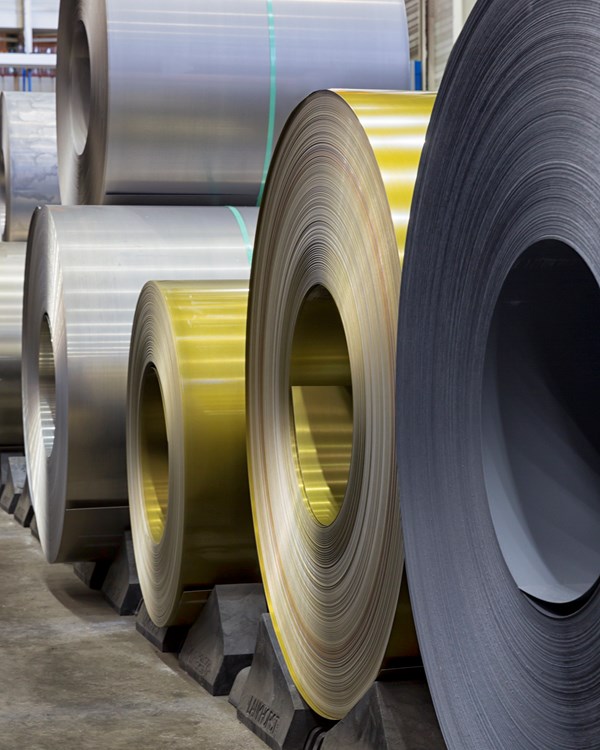
According to the latest data put together by MCI for Eurometal, some 40% of the overall quotas allocated for HRC imports this quarter have already been used.
In detail, two thirds of quotas for the import of HRC under the “other countries” sub-category have been exhausted. Similarly, three quarters of the quota specifically assigned to South Korea have been used.
Overall, almost 900,000 tonnes of HRC have been imported into the EU since the beginning of July; in the entire second quarter, almost 2.3 million tonnes of HRC were imported.
Despite the latest recovery, final data for the January-May 2023 period confirm that overall imports of HRC into Europe fell in comparison with 2022. During the first five months of this year, some 8mt of HRC were imported into the EU, down 25% year-on-year. Italy was the biggest importer with 2.6mt, followed by Spain and Belgium with 1.3mt each.
Emanuele Norsa Italy

Italian HRC price hike attempts fail
The euro appreciation versus the dollar has seen euro-denominated quotes fall since the beginning of the month to €590-610/tonne ($663-685) cfr from Asian suppliers. One of these suppliers tried €620/t cfr but did not conclude a deal. HRC import purchases at very large buyers are at around €40/t below this level. Service centres and re-rollers do not expect any price increases in July and August, while producers are quoting relatively short, August and September lead times.
Procurement difficulties and long lead times are a thing of the past. Both service centres and end-users are now obliged to keep their stocks low due to high financial costs, uncertain pricing and low visibility, as well as relative ease of domestic procurement.
Some higher-priced HRC purchases were reported in the second half of June but volumes have again become limited. From the beginning of July, service centres have been reporting low sales and low purchases also for sheet, with prices mostly stable on-month.
Some restocking is forecast in September when Italian buyers will have to purchase to adjust their year-end financials. Before September, no significant change is forecast. Domestic HRC prices are stable on-week at €650-660/t base ex-works or €680/t base delivered, but only small volumes are being bought. Sources in the market do not think consumption will recover by the end of the year.
Natalia Capra France

Probable new sanctions against Russia to swing global steel trade flows again
South America and European countries – including Italy and Turkey – which are still importing Russia steel products, especially semi-finished and substrate steel products such as billets and hot-rolled coils, may be forced to stop buying from Russian and look for new alternatives, a senior official at a leading Chinese steelmaker said.
“On the one hand, the [European] buyers don’t want to give up the cheap Russian supply. Yet, on the other hand, they are eyeing on new alternatives. They are hesitating and waiting for the sanctions,” the same source told Fastmarkets.
Italy has already stopped buying Russian steel, and China and Vietnam are now the major steel suppliers to Italy. Turkey is a buyer of Russian steel, although China also is a top steel supplier for the country.
Will Russian steel flood Asia?
Asia will be the most likely market for Russia if its steel comes under more sanctions from Western countries, market participants said.
Still, the chances are slim that volumes to Asia will greatly increase, especially as many Southeast Asian countries do not take Russian steel. This leaves China as the sole major potential market. While there are countries in east Asia and southeast Asia that still import Russian steel, the volumes are scattered and minimal.
“Poor demand in China and the wide Asia region is limiting China’s demand for steel imports,” a trader source in northern China said. This is especially as other Asian countries such as Vietnam, Indonesia and the Philippines ramp up domestic steel production and has plans for more blast furnaces and hot strip mills in the future.
The latest customs data shows that China imported 3.74 million tonnes of steel products in the first half of 2023, down by 35.2% from the same period of last year.
Despite the poor demand, risks from the sanctions will reduce the appeal of Russian steel to Chinese importers, a trader source in eastern China said.
“There are still fears that they can’t re-export if they use Russian semi-finished or substrate and there might be financial penalties from the sanctions,” the eastern China-based trader source added.
“Of course, someone will still import Russian steel to China only if the prices are attractive enough,” the eastern China-based trader source said.
The same source also doubted how severe the measures could be to constrain Russian steel exports on top of the existing measures.
“People reacted calmly to the speculation [of a potential escalation of EU’s sanctions on Russia in October], likely because people don’t expect more substantial impact on trades from the sanctions,” the eastern China-based trader source added.
Steelmaking raw materials also affected
Steelmakers based in Germany have been actively seeking alternative supplies of iron ore pellets from regional markets ahead of anticipated sanctions, according to a source familiar with the EU iron ore market.
The same source added that implementing stricter measures against Russia-based iron ore could lead to additional supplies being diverted towards natural import markets such as China.
This may exert downward price pressure on the seaborne and domestic markets.
“Russian iron ore has been finding inroads into the Chinese market with deals getting concluded in terms of the Chinese yuan,” a Shanghai-based trader source said.
This could be further exacerbated by an uptick in iron ore shipments from major exporters in Australia and Brazil in the second half of 2023.
India is a major importer of Russian pulverized coal injection (PCI), with major Russian miners enjoying good sales volumes to steelmakers there.
“It may affect India to an extent but not majorly, especially as Indian steelmakers cater to domestic markets and only exports when overseas margins are better,” a coal producer source in Southeast Asia told Fastmarkets.
Even if the sanctions really do happen and India abstains from importing Russian PCI, “Australia has an ample supply of PCI and will have no problems fulfilling India’s demand,” a trader source in India told Fastmarkets.

European HRC market enters quiet period, slow demand weighs on post-summer expectations
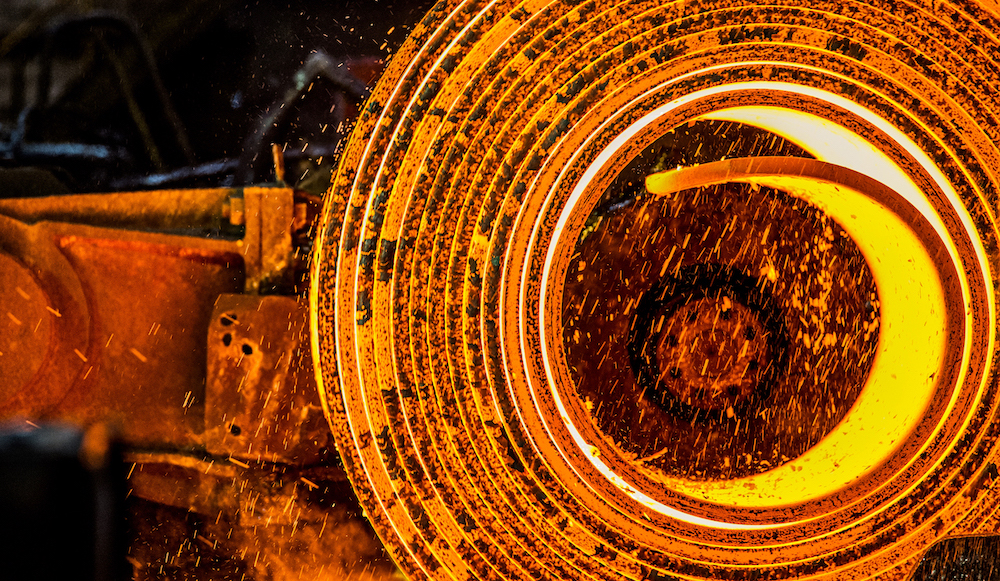
The European hot-rolled coil market continued to slow down ahead of the seasonal summer holiday period, with weak demand depressing buyer expectations for autumn, sources told Fastmarkets on Tuesday July 18.
Sources said that apparent demand has recently been falling behind real demand for steel in Europe and hampering attempts by steel mills to push for higher prices earlier this month.
End-user demand from the automotive industry, the key consumer of flat steel, was described as “stable at low levels,” sources said, while apparent steel demand from the car makers has been persistently weak.
Distributors and steel service centers have preferred to keep their stocks at medium to low levels and have mostly been engaging in back-to-back purchases.
“Buyers remain largely inactive, even though levels of stock are running [down],” a mill source said.
Offer prices for September-October delivery of HRC in northern Europe were reported at €680-700 ($764-786) per tonne ex-works.
But one producer in Germany was reported to have no more spot market allocations for October delivery, sources said.
A re-roller in the region has some tonnages for September delivery at €650-660 per tonne ex-works, Fastmarkets understands, and a mill in Italy was offering September-delivery HRC to Germany at €700-720 per tonne delivered.
Most sources estimated the tradable value for HRC as no higher than €660-670 per tonne ex-works, pointing out that mills were ready to offer discounts for bigger tonnages.
Fastmarkets’ daily steel hot-rolled coil index, domestic, exw Northern Europe, was calculated at €670.83 ($753.49) per tonne on July 18, up by just €0.83 per tonne from €670.00 per tonne on Monday.
The latest calculation of the Northern European index was down by €10.00 per tonne week on week and by €18.96 per tonne month on month.
Fastmarkets calculated its corresponding daily steel hot-rolled coil index, domestic, exw Italy, at €648.75 per tonne on Tuesday, down by €7.50 per tonne from €656.25 per tonne on July 17.
The Italian index was down by €12.50 per tonne week on week and by €12.08 per tonne month on month.
Even though Italian mills attempted to raise their prices to around €700 per tonne ex-works in early July, that level was not agreed in any deals, sources said.
But transactions for September-delivery HRC in the country were heard at €640-650 per tonne delivered, which would net back to €625-635 per tonne ex-works, they added.
One trading source estimated the tradable value for small tonnages at €640-650 per tonne ex-works.
And some bids for larger tonnages were heard at as low as €610-620 per tonne ex-works, although no sales were reported at that price.
Distributor sources, meanwhile, said they were hoping to negotiate October-delivery HRC at €670-680 per tonne delivered, which would net back to €655-665 per tonne ex-works.
There have been few import offers recently, because both buyers and suppliers were worried about the speed at which the “other countries” quota for imports into the EU was being filled for third-quarter allocations.
As of July 17, 66.11% of the total third-quarter allocation of 933,743 tonnes for “other countries” had been taken up, according to EU customs statistics. The remaining 316,409 tonnes will be available until September 30, but sources said that more than 100,000 tonnes of that amount had already been allocated.
Some HRC for shipment in September-October from Asia was said to be available at €590-610 per tonne CFR, mainly from Vietnam and one mill in South Korea.

EU confirms duties on Chinese seamless pipe
The decision was taken following an expiry review requested by the European Steel Tube Association in 2022.
Following the review, the Commission decided to maintain the existing AD measures at the rate of 29.2-54.9%, depending on the specific mill supplying the material from China.
Emanuele Norsa Italy
Polish car output continues rebound, demand fears loom
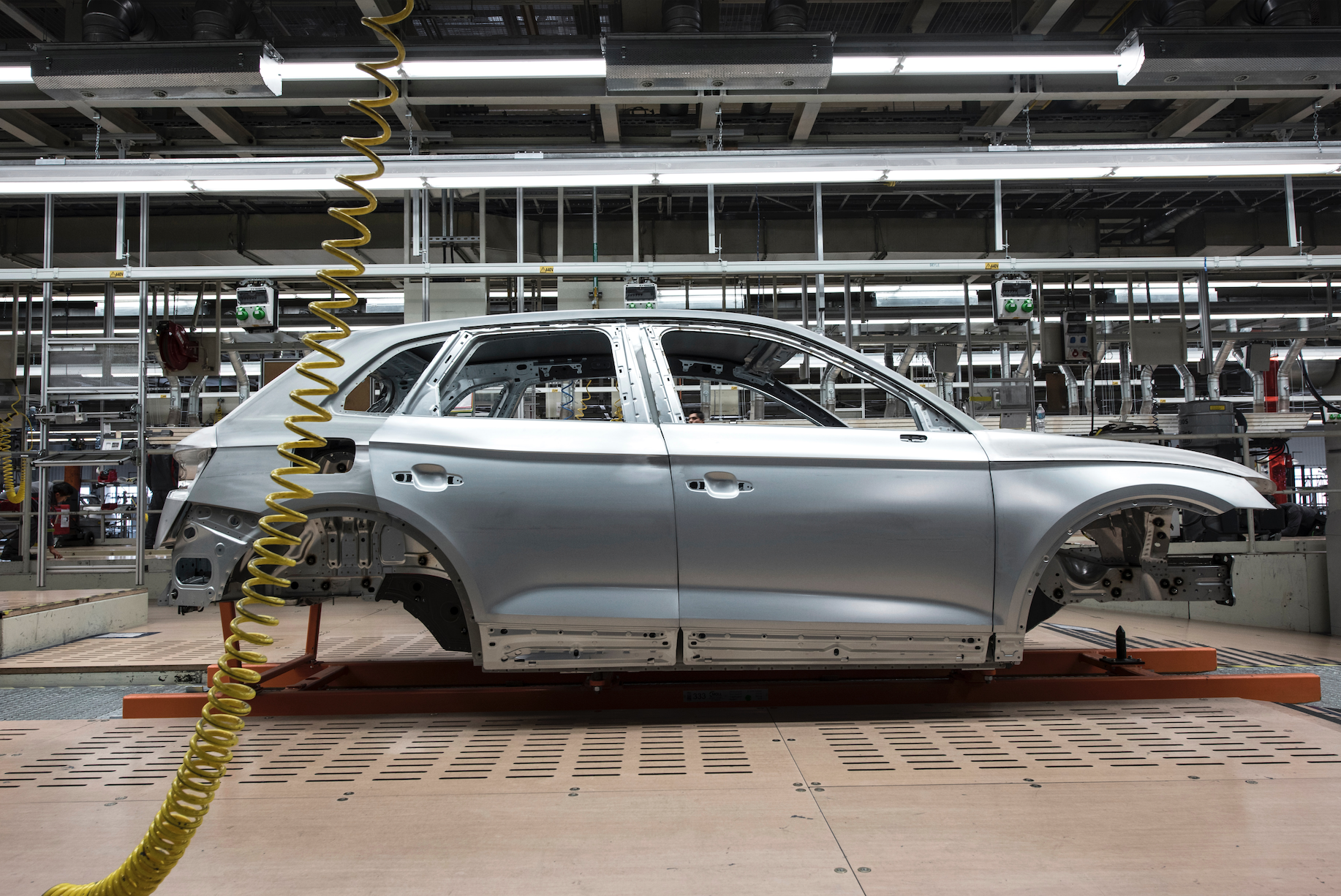
However, production remained below 2021 levels and far below pre-Covid levels, Kallanish notes.
Production of commercial vehicles above 3.5 tonnes nevertheless soared 30.4% in June to 24,698 units, taking five-month production up 68% to 122,920 units. Output in 2023 is on course to exceed 2022 production, which was an annual record.
Public transport vehicle output, meanwhile, grew 22.3% in May to 433 units, taking five-month production up 12.2% to 2,166 units.
In full-year 2022, Polish automotive sector domestic sales rose 25% on-year to a record PLN 207 billion ($52.1 billion). This was also up 29% versus 2019, Santander Bank Polska says in a new report. Production was 484,000 units, up 11% on-year but down 26% on 2019. The first quarter this year saw a 65% on-year production surge.
Higher European automotive production has been driven by a strong backlog of orders, but new orders have been weak. At German carmakers, reduced orders resulted in a decrease in the order portfolio in March to 150% of the 2019 level.
“If these trends continue, there may be a complete contraction of the portfolio over the coming months, followed by a reduction in production due to low demand. Among the factors choking demand have been rising car prices. Producer price indices alone do not fully reflect price developments for final buyers,” says Santander Bank Polska automotive analyst Radosław Pelc.
“Due to the prevailing demand, dealer prices have usually been non-negotiable. In addition, manufacturers offered greater availability of more expensive models, albeit those equipped with alternative drive systems,” he adds.
Adam Smith Poland

Marcegaglia invests in digitisation
MasterModel is a high-level mathematical software system capable of integrating the metallurgical details of HRC, such as chemical and mechanical properties, and microstructure, with the target quality of the final product. “It adjusts the parameters of the production phases … and optimises the transitions of the thermal cycles in a fully automatic way, providing a customised annealing cycle, coil per coil, ensuring a better homogenisation of the product properties and lower energy consumption,” the spokesperson explains.
French equipment maker Fives has started up its so-called “SmartLine” at Margegalia’s plant in Ravenna. This is a digital strip processing line based on predictive models and process knowledge that optimises the operations of sections of the strip processing line in automatic mode. SmartLine processes incoming coil data, predicts setpoints for targeted properties and adjusts process parameters for each coil. It enables each coil to be produced as first choice from head to tail.
SmartLine has allowed Margegalia to reduce operating expenditure, in particular gas consumption by 10%, while productivity has risen 5% and the firm has obtained a very high stability of the process, says Marcegaglia Ravenna manager and Carbon Steel Flat chief operating officer Aldo Fiorini. SmartLine is the result of a joint development and a tool to produce better, faster and at higher quality, he adds.
Natalia Capra France