

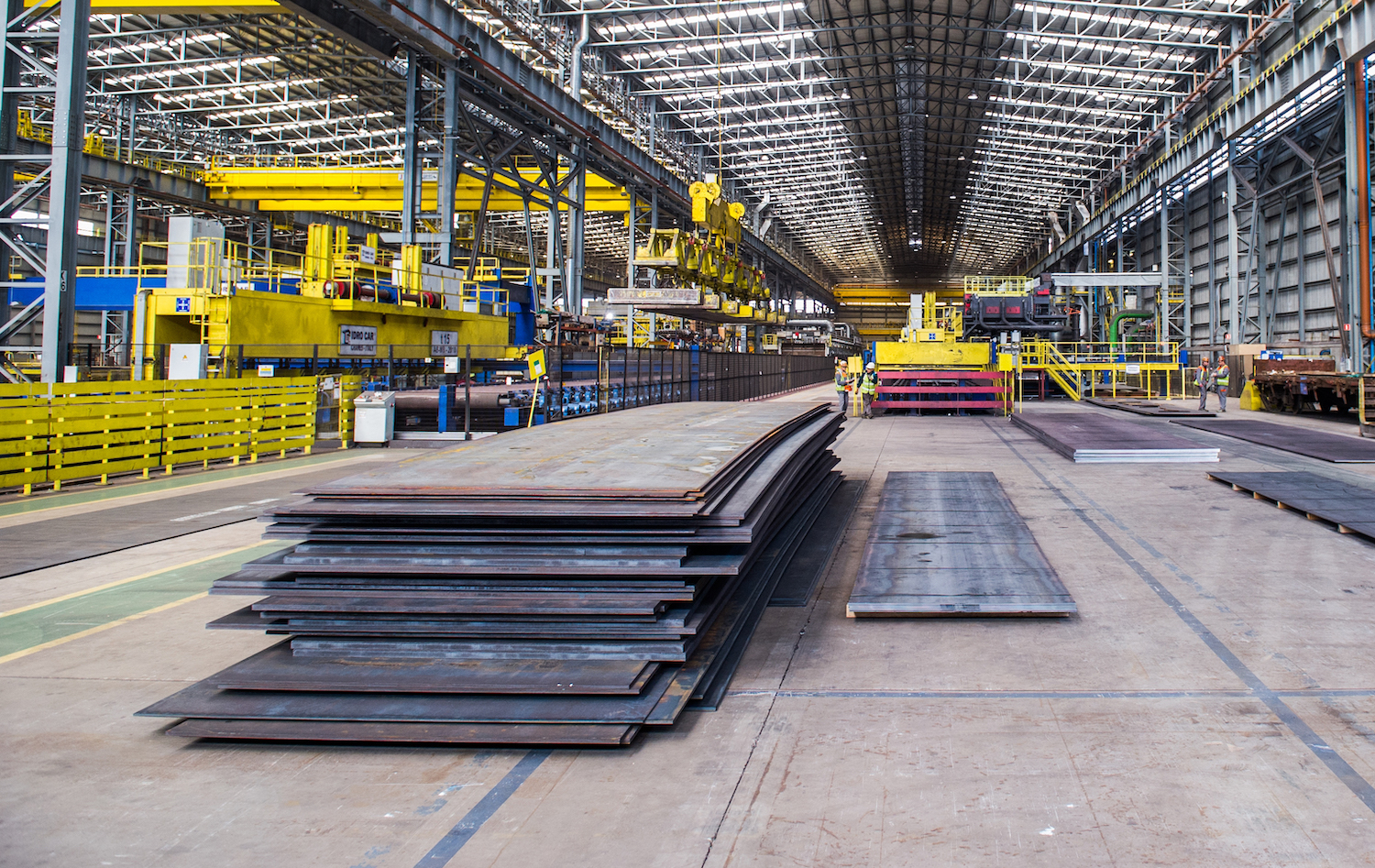
EU heavy plate prices soften on weak demand
EU heavy plate prices soften on weak demand Domestic prices for heavy plate in Europe decline in the week to Nov. 18 as demand remained reduced.
Platts assessed Italian heavy plate down Eur30/mt week on week at Eur820/mt ex-works Italy.
Deals with stockholders have been reported at Eur800-820/mt ex-works Italy. Both buyers and distributors estimated tradable value at Eur800-850/mt ex-works Italy.
Demand for heavy plate has been reduced due to seasonal slowdown as buyers have been more focused on restocking by the year end and they have only just started to plan bookings for the first quarter of 2023.
“Demand still pretty weak, this year can be considered closed in terms of required timing delivery,” an Italian re-roller said. “January is open and is very slowly increasing but all in all we cannot say that demand picked up. I think we should wait a couple more weeks.”
Domestic heavy plate price are unlikely to decline further, some sources believe, taking into the account current slab and production costs.
“The lowest import slab prices we hear are $550/mt CIF, but majority are still at $600/mt CIF and higher,” a Southern European source said. “Given the slabs price offered into EU and the current cost of production there is almost no space at all to lower plates price more.”
Platts assessed import slab into the benchmark Italian market at $575/mt CIF Nov. 18, unchanged week on week.
Offers of the semi-finished products from Asia have been reported at $580-$600/mt CIF Italy. But bids and tradable values have been heard at $540-$550/mt CIF Italy.
Slabs from European integrated mills have been available in Italy at Eur600-610/mt delivered.
Platts assessed heavy plate in Northern Europe down Eur70/mt week on week at Eur930/mt ex-works Ruhr.
Offers from a German mill have been heard at Eur900-930/mt ex-works Ruhr. And tradable values have been reported at Eur920-950/mt ex-works Ruhr.
Platts is part of S&P Global Commodity Insights.
— Maria Tanatar, Benjamin Steven

European HRC market quiet, price floor said close
The European hot-rolled coil market was quiet on Friday November 18, with prices said to be close to the cost line, sources told Fastmarkets.
Fastmarkets assessed its daily steel hot-rolled coil index domestic, ex-works Northern Europe at €625.83 ($648.42) per tonne on Friday, down by €1.67 per tonne from €627.50 per tonne the previous day.
The latest calculation of the index was down by €19.17 per tonne week on week, and down by €57.92 per tonne month on month.
Buyers and producers indicated tradeable price levels for HRC in Northern Europe at €620-630 per tonne EXW. Most mills in the region still had December rolling coil to sell.
One mill source reported more inquiries for January-delivery coil from buyers recently and said they expected some volumes to come back to the market. But buyers remained cautious, waiting for the HRC price to bottom before making purchases.
Inventory levels at large stockholders and steel service centers remains quite high, so they could maintain a wait-and-see attitude.
Meanwhile, mill sources believe that HRC prices have already reached the bottom, with no room for further price drops given the high cost of production.
Some producer sources expect some limited restocking in December, but agreed that a price rebound was unlikely this year due to weak end-user demand.
Fastmarkets’ assessment of the daily steel hot-rolled coil index domestic, exw Italy was €600 per tonne on Friday, down by €5 per tonne from €605 per tonne the previous day. The index was down by €25 per tonne week on week, and down by €87.50 per tonne month on month.
Sources reported HRC offers from Italy’s integrated mills and rerollers at €620-640 per tonne delivered, which corresponds to €600-620 per tonne EXW.
But several sources reported transactions done by one Italian integrated mill at a lower level of €570-580 per tonne EXW.
Some market sources in Italy agreed the HRC price in the country was already at rock bottom and expect trading activity to recover in December.
“Rock bottom has been reached and no more decreases are possible. Even though no big rebound is possible before Christmas, some recovery is likely,” one trading source in Italy said.
“It seems that all the [HRC] volumes that were hidden are coming back. The import suppliers cannot compete with the EU mills, so we might see some recovery soon,” another source said.
Several sources told Fastmarkets that overseas HRC suppliers had stepped back from the Italian market by the end of this week, unable to match domestic prices.
Notably, end-of-first-quarter-delivery HRC from Southeast Asia was on offer to Italy at €560-585 per tonne CFR earlier this week.
Published by: Julia Bolotova


Polish rebar prices slide again on limited trading, overstocking
Steel rebar prices in Poland continued to slide during the week to Friday November 18 amid subdued trading, overstocking at buyers and bearish sentiment, Fastmarkets heard.
Official offers from three mills in the country were reported at 3,450-3,500 zloty ($760-771) per tonne CPT (3,400-3,450 zloty per tonne ex-works), compared with 3,600-3,700 zloty per tonne CPT in the first half of November.
Sources told Fastmarkets that producers were chasing volumes and were ready to cut the price on a firm bid.
But trading has remained limited in Poland, with mainly back-to-back sales reported.
Notably, transactions for tonnages of 500-1,000 tonnes were reported at 3,300-3,450 per tonne EXW during the assessment week.
Large stockholders and distributors still have quite high inventories and were focused on destocking ahead of the year-end, following the traditional cycle.
“Stockists still have enough to last them till the end of the year. Everyone is selling just to get rid of all old material,” the trading source said.
As a result, Fastmarkets’ price assessment for steel reinforcing bar (rebar), domestic, exw Poland was 3,300-3,450 zloty per tonne on Friday, down by 150 zloty per tonne from 3,450-3,600 zloty per tonne a week earlier.
In the secondary market, rebar was offered and traded around 3,500 zloty per tonne CPT during the week and even below that level in some cases.
Import rebar offers were scarce in the Polish market.
Notably, the latest offers from Moldova to Poland were reported at €750 ($777) per tonne CPT earlier this month, but the price idea among buyers was no higher than €714 per tonne CPT, given the downtrend in the domestic market.
Italian suppliers were out of the market. The most recent offers were heard at €750 per tonne CPT in early November.
Published by: Julia Bolotova
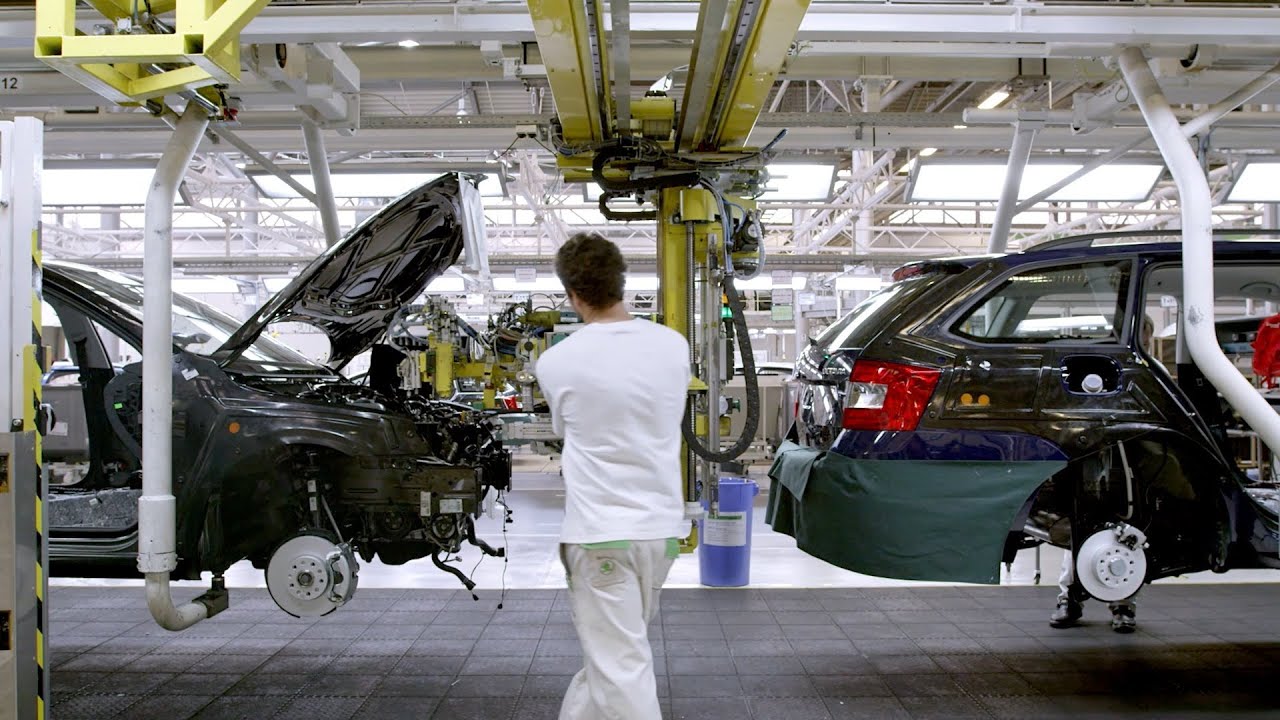
Semiconductor supply eases amid rising automotive production: ACEA
Supply of semiconductors could begin to ease in the final quarter of 2022 allowing production volumes to slowly recover, says the European Automobile Manufacturers’ Association (ACEA). This comes after the EU raised passenger car output 5.8% on-year in January-September to 7.97 million vehicles despite continued constrained semiconductor supply.
This was still however well below pre-Covid output of 10.74m units in January-September 2019, Kallanish notes.
Russian and Ukrainian output plummeted 66% and 85% respectively in the nine months through September 2022.
US nine-month output was up 12% to 5.29m units, driven by robust demand for new vehicles. Chinese output rose 15% to 16.36m vehicles thanks to incentives designed to stimulate private auto consumption. Japanese output fell 2% 4.83m units as the impact of the Covid Omicron variant significantly disrupted manufacturing activities, further aggravating ongoing semiconductor shortages, ACEA says.
Globally, nine-month passenger car output grew 9% to 49.8m units.
New passenger car registrations however dropped 3%, despite an 8% growth in China, with EU and US numbers down 10% and 14% respectively.
As for commercial vehicle output, this is expected to rise 10.5% on-year in full-year 2022 to 4.6m units in North America. However, in China and the EU it will be down by 29% and 1.2% respectively to 3.9m units and 3.1m units.
Adam Smith Poland


Schmidt + Clemens chooses Metalshub supply chain tool
Schmidt + Clemens (S+C), a German-based maker of pipe systems for the petrochemical industry, is further digitising its raw material procurement processes with supply chain technology from Metalshub.
S+C operates locations and facilities on three continents, including three sales companies in the USA, India, and Brazil, as well as 30 further commercial agencies. It therefore faces major challenges with managing and synchronising the procurement of the various locations, Kallanish hears from Metalshub.
The software provider’s automated database speeds up processes by making all essential data needed available with a few clicks. The documentation and storage of the data are audit-proof in order to accelerate procurement processes and reduce manual tasks, it says.
For S+C, Metalshub’s supply chain solution offers cross-location purchasing at group level. This, in turn, increases transparency and efficiency through enhanced visibility into raw material sourcing, Metalshub says. It notes that S+C will have access to a global network of verified suppliers with related information and documents from one system, ultimately increasing the resilience of their supply chain.
Metalshub was founded in 2016 in Düsseldorf and claims that more than 300 steel mills and foundries have digitised their purchasing processes using its technology.
Christian Koehl Germany

Lower scrap availability to support prices: Assofermet
After a good start to November amid increasing domestic scrap prices and demand, the Italian market is seeing deliveries slowing, with steelmakers thinking about reducing prices for the weeks to come.
Considering that scrap availability is about 50% lower compared to previous years, a significant price reduction is unlikely, even in the case of demand contraction, says Italian steel trade association Assofermet in its market note monitored by Kallanish.
This month, falling gas prices for energy-intensive sectors have enabled steelmakers to resume production. The association, however, emphasises that weakness and uncertainty in the Italian economy is impacting steelmakers’ order books, which remain underperforming for the medium term. Except for rebar makers increasing prices, the downturn in all steel products in Italy continues to deepen.
Steelmakers’ demand for pig iron remains weak, while foundries continue to support sales. Large availability is reported in Italy.
Meanwhile, stainless scrap demand has increased in European countries in November. Assofermet reports lower exports to Asian buyers, particularly India which remains a large consumer of European 304 and 316. In Italy this month, 304 and 316 grade sales have resumed to large buyers at increased values, the association concludes.
Natalia Capra France
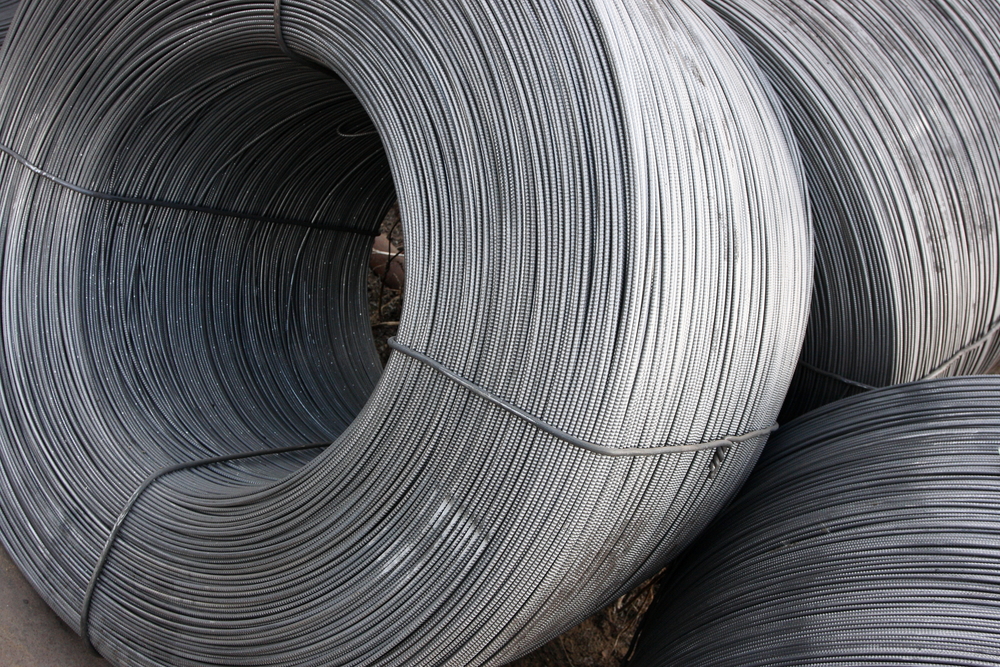
Italian wire rod downturn continues
The downturn in the Italian wire rod market continues, with prices weakening by some €50/tonne ($51) week-on-week in a buyer-seller standoff, market participants tell Kallanish.
Some customers, such as drawing mills, are implementing production stoppages and temporary layoffs. They point to a serious demand slowdown and depressed consumer confidence. However, in 2022 all players throughout the value chain have posted record financial results, supported by strong demand in the first half of the year. Companies are well-stocked for the current low demand and will continue to purchase small tonnages until the end of the year when longer stoppages are envisaged for the Christmas holiday.
In Italy and some other European countries, wire rod producers have mothballed their plants since October, and some in northern Europe idled production for as long as three to four weeks.
Italian contract prices are now hovering at €690-710/t ex-works for drawing-quality wire rod. At present, imported material from the Middle East and North Africa is offered at $650-660/t cfr Italy, sources suggest.
Meanwhile, northern European wire rod prices also continued to fall last week, with sales low and only small volumes being purchased. Most sources expect this trend to continue until the end of the year. Domestic transaction prices for drawing-quality material are hovering at €740/t ex-works and mesh-grade wire rod is down to €750-760/t (see Kallanish 18 November newsletter).
Natalia Capra France

EC slaps definitive AD duties up to 77.9% on chromium-coated steel from China, Brazil
The European Commission has imposed definitive anti-dumping duties of 30.7%-77.9% on imports of electrolytic chromium coated steel originating in China and Brazil, effective Nov. 16, according to a statement of the same date.
An investigation found that Chinese and Brazilian imports were being dumped on the EU market and were injurious to the EU industry, the EC said. The EU market share of the countries concerned for this product increased from 13.1% in 2018 to 15.4% in the investigation period, the EC said in a document.
Definitive dumping margins are expressed as a percentage of the cost, insurance and freight Union frontier price, duty unpaid.
The Commission will now impose duties ranging from Eur239 per mt to Eur607 per mt of ECCS imported, to defend the EU industry, which employs almost 1,000 people across France, Germany, Spain and Italy, from further injury from dumped imports, it said.
The products concerned are flat-rolled products of iron or non-alloy steel, plated or coated with chromium oxides or with chromium and chromium oxides originating in the China and Brazil, currently falling under CN codes 7210 50 00 and 7212 50 20, the EC said.
Imposition of the definitive duties had been widely expected after the EC announced in late May it was imposing provisional AD duty rates of 25% on the ECCS imported from China and Brazil after an investigation found that imports from the two countries undercut the EU industry’s prices.
Definitive anti-dumping duties of 30.7% will now be imposed on ECCS made by China’s Baoshan Iron & Steel Co.; of 53.9% on the product made by Handan Jintai Packing Material Co.; of 34.6% on product supplied by cooperating Chinese companies including GDH Zhongyue (Zhongshan) Tinplate Industry Co.; and Shougang Jingtang United Iron & Steel Co.; and of 77.9% on product supplied by all other Chinese companies.
Product from Brazil’s Companhia Siderurgica Nacional (CSN) will gain a definitive anti-dumping duty of 53.2%, the same as all other Brazilian companies.
The EC started its AD investigation into the imports on Sept. 24, 2021, following a complaint lodged by European Steel Association Eurofer, on behalf of ArcelorMittal Atlantique et Lorraine (France), ArcelorMittal Etxebarri (Spain); ThyssenKrupp Rasselstein (Germany) and Acciaierie d’Italia, representing some 85-95% of the production and sales of this product in the EU steel industry.
ECCS is used in a wide range of applications, typically for consumer and industrial packaging. It is most frequently used for food packaging but also as protective material for optical fiber protection or other electrical and electronic parts. The value of the EU ECCS market is almost Eur500 million.
The EC said the measures “underline the EU’s determination to use trade defence instruments fully to protect the EU ECCS industry from unfair trade practices which jeopardize its competitiveness.”
China, users, point to market changes
The EC further said that it had disagreed with statements received during the investigation from China and the China Iron and Steel Association CISA. These had argued that the EC’s report on the subject was “factually and legally flawed….misrepresentative, one-sided and out of touch with reality”, as well as “outdated”.
“Moreover, the fact that the Commission has issued country reports for a few selected countries raises concerns about most favoured nation (‘MFN’) treatment,” the Chinese government said in one statement.
S&P Global Commodity Insights has recently reported that overall exports of Brazilian steel products to Europe jumped 710% in the first half of 2022 to 909,828 mt, compared to 112,221 mt in H1 2021, filling the void left by regional suppliers Russia and Ukraine, according to data from national steel association Aço Brasil.
The EC document also noted that after final disclosure, CISA reiterated its claim that the Commission should assess the alleged high profitability achieved by ArcelorMittal and Thyssenkrupp after the investigation period. Furthermore, CISA as well as CANPACK, an EU-based user of the imported product, argued that the import prices from China and Brazil increased significantly after the investigation period and that this should be taken into account by the Commission.
However, the EC countered that “The market outlooks, price developments of imports as well as the alleged profitability of the Union producers achieved after the end of the investigation period referred to by CISA and CANPACK are irrelevant for the assessment of the injury suffered by the Union industry during the investigation period.”
The EC noted that following final disclosure of the case, Brazil’s CSN offered a price undertaking on September 13. Since that offer was received well after the deadline set by Article 8 of the basic Regulation, the Commission rejected it, it said.
— Diana Kinch

EU passenger car registrations rise 12% on year in October: ACEA

New passenger car registrations in the EU rose 12% year on year in October to 745,855 units, the third consecutive annual increase, according to European Automobile Manufacturers Association (ACEA) data released Nov. 17.
However, the volume was 5.3% lower than the previous month and nearly 290,000 units below the October 2019 pre-pandemic levels, ACEA said.
Total sales for the first 10 months of 2022 were 7.5 million units, down 8.1% year on year, the data showed.
The auto market has been facing supply issues due to the ongoing semiconductor shortage, which in turn has impacted production.
This has also somewhat impacted steel demand, with Platts, part of S&P Global Commodity Insights, assessing domestic HRC prices in Northern Europe at Eur625/mt ex-works Ruhr Nov. 16, 32% lower than it was at the start of 2022.
All three top European markets — Germany, France and Italy — saw year-in-year increases in October.
Largest EU car market Germany saw new car registrations increase almost 17% year on year to 208,642 units, although this was down 7.2% on the month.
German car registrations for the January-October period totaled 2.08 million units, down 5.5% on the year.
In second-largest market France, sales for the month rose 5.5% on the year, but fell 11% on the month to 124,981 units.
Car sales in Italy also climbed 15% on the year to 115,827 units, which was also up 4.4% from September to a four-month high.
January-October car sales in France totaled 1.24 million units, down 10% on the year, while sales in Italy dropped 14% to 1.09 million units.
In Spain, 65,966 units were sold in October, rising 12% on the year, but down 1.9% on the month, bringing the total for the January-October period to 666,247 units, down 5.8% year on year.
— Jacqueline Holman

China’s top 5 steelmakers on track to supply 34% of total output as industry consolidation continues
China’s steel industry consolidation has resulted in four deals to date in 2022, putting the five biggest producers on track to account for 34% of the country’s production, and the acquisition of smaller steelmakers by larger ones will continue to gain momentum in the coming years, steel mill sources said Nov. 14-17.
Industry consolidation will likely enable the sector to have a bigger influence on price settlements with raw material suppliers and downstream steel users, as well as to work in synergy to manage rising environmental protection costs stemming from China’s decarbonization ambitions, the sources said.
China’s largest steelmaker Baowu Group in early November gained approval from the State-owned Assets Supervision and Administration Commission to take a 51% stake in Xinyu Iron & Steel Group in Jiangxi province.
The move will boost Baowu’s crude steel output to over 130 million mt/year, taking it one step closer to its target of producing 200 million mt/year of crude steel by 2025. Baowu has also been working to take over Shandong Iron & Steel, which has a crude steel output of more than 28 million mt/year.
Jingye Group in northern Hebei province with crude steel production of almost 13 million mt/year signed an agreement in late October to take over Yuebei Iron & Steel, which has a capacity of around 2 million mt/year.
Taking over Yuebei Iron & Steel in southern Guangdong province will elevate Jingye from China’s 15th largest steelmaker to the 13th and expand its presence in the South China steel market.
Also in October, China’s third largest steelmaker Shagang Group reached an agreement with Fosun Group to purchase a majority stake in Shanghai-listed Nanjing Iron & Steel, which will take Shagang’s production capacity to more than 55 million mt/year, on par with the country’s second largest steelmaker Anshan Iron & Steel, or Ansteel.
However, Ansteel is likely to remain the larger producer as it has been working to acquire Lingyuan Iron & Steel Group since June, an acquisition that will raise its crude steel output to over 61 million mt/year from 55.65 million mt/year in 2021.
After the acquisitions by Baowu, Jingye, Ansteel and Shagang are completed, China’s five largest steelmakers will account for 34% of the country’s production, and its top 15 steelmakers 54%, up from 29% and 49% respectively in 2021.
Some mill sources believe that the top five steel producers would eventually contribute more than 40% of national production.