


Italian HRC seen rebounding as destocking ends
A wind of change is blowing through the Italian hot rolled coil market, with prices and volumes expected to rebound this week.
After a long period of destocking, service centres and re-rollers are now in need to buy for the first quarter. Service centres’ customers are also beginning to order for Q1 and are reporting improving order intake.
Since Thursday last week, some Chinese, Korean and Japanese exporters of HRC, particularly to southern Europe, have decided to withdraw from offering into Europe. In their hunger for volumes, Far Eastern steelmakers have been exporting material at cheaper-than-domestic prices.
Until last week, HRC imported from Taiwan, Vietnam, Korea and Japan went well below the level of $600/tonne cfr Italy, as buyers reported offers from these regions at $555-580/t cfr. “The level of $515-520/t fob [East Asian origin] is not sustainable. These steelmakers are losing money and giving ground to the European Union to accuse them of dumping material. On their domestic markets, they are at least at $700/t base ex-works, so it was only a matter of time until they stopped selling in Europe at below $600/t cfr,” a large buyer tells Kallanish.
While some large service centres are lamenting a stagnating market in Italy, others see some customers being ready to place new orders and say they will buy this week.
Following the withdrawal of Asian offers, Italian producers are expected to increase their prices.
“This is a breeze of change rather than a wind. We expect some increases but not skyrocketing prices,” another large buyer says, tempering any optimism.
Import prices are seen increasing by at least $100/t, but in an uneven way, making imported material far less competitive.
Some Italian producers are officially quoting at €650-660/t ($665-676) base ex-works, while others are undercutting at €600/t. So far, domestic contract prices are hovering at €580-650/t base ex-works, Kallanish notes.
Natalia Capra France

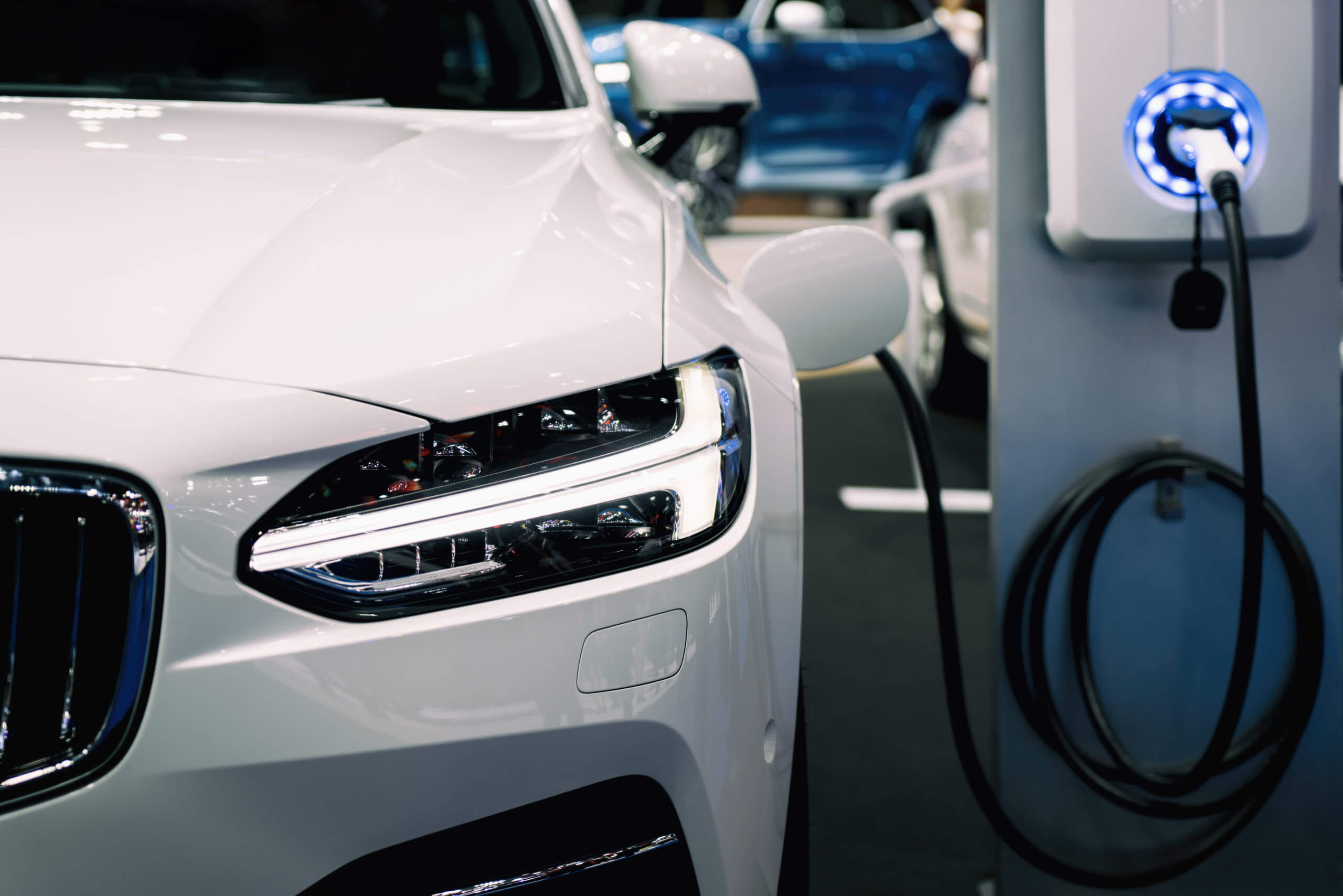
UK plug-in vehicle registration slowdown set to continue into 2023: Pod Point
This year’s slowdown in the UK plug-in electric vehicle market is expected to continue into 2023, EV charging infrastructure company Pod Point Group said in a market update Nov. 21.
UK plug-in vehicle registrations grew by 76% between 2020 to 2021, fell to 26% in the first half of 2022 and slowed to 7% in the four months to Oct. 31, according to SMMT data.
The trend indicated a total market for of plug-in vehicles of 350,000 in 2022 and 375,000 in 2023, Pod Point said.
“Whilst it is today difficult to predict the outcome for 2023, we are prudently assuming that these supply chain and macroeconomic issues extend into 2023,” it said.
Domestic charging equipment orders had benefited from a rush to install ahead of the suspension of government-funded grants on March 31. This change remained a factor in the market, it said.
Longer term, the company expects UK plug-in vehicle registrations to return to rapid growth as supply chain restrictions ease and the general economy recovers.
“We fully expect the UK to achieve its goal of banning new internal combustion engine cars by 2030, and hence foresee strong growth in demand for charging infrastructure over the next decade and beyond,” it said.
Year to end-October data from SMMT show total UK vehicle sales of 1.343 million, of which 43% were gasoline, 5% diesel, 19% “mild hybrid EV” (gasoline and diesel) and 15% battery electric vehicles.
S&P Global Commodity Insights’ monthly EV Essentials report showed EU electric vehicle sales rebounding in September from two months of decline, growing from 145,000 vehicles sold to nearly 225,000, an all-time high.
“This near-term sales strength has pushed the market share of plug-in vehicles in Europe to slightly above 20%. Key markets that continue to see extremely high EV penetration rates in terms of share of new car sales include Norway (89.0%), Germany (32.0%), and France (28.3%),” it said.
— Henry Edwardes-Evans

ITALY DATA: October crude steel output falls 9.3% on year
Italian crude steel production in October fell 9.3% year on year to 2.014 million mt, the sixth consecutive month of year-on-year falls, according to data from Italian steel federation Federacciai released Nov. 21.
However, the volume was up 7.5% month on month and at a five-month high, the data showed.
Of the October volume, 1.103 million mt was long products, down 14.2% year on year and slipping 5.2% from September.
Flat production for the month also dropped 22% year on year to 821,000 mt, although this was up 14.3% from September to a five-month high.
For the January-October period, Italy, which is Europe’s second-largest steel producer after Germany, produced 18.48 million mt of crude steel, dropping 10.9% year on year, due to summer closures caused by maintenance works, low demand and high energy prices.
Long product output for the 10-month period was also down 11.7% year on year at 10.24 million mt, while flat product output slipped 11.8% to 8.16 million mt.
A number of European steelmakers are still not working at full capacity, as energy prices remain high, combined with high stocks and low demand.
Domestic prices for HRC have been declining in Europe since the second half of March due to weak demand.
Platts, part of S&P Global Commodity Insights, assessed daily HRC in Italy at Eur580/mt ($593.94/mt) ex-works Nov. 18, down 30.6% since the start of 2022.
— Jacqueline Holman
GERMAN DATA: Oct crude steel production falls 14.4% on year: WV Stahl
German crude steel production fell 14.4% year on year to 3.14 million mt in October, the eighth straight year-on-year decline, according to data published Nov. 21 by German steel federation WV Stahl.
However, the volume was 10.6% higher on the month and at a four-month high, according to the data.
January-October crude steel production from German mills totaled 31.39 million mt, down 6.9% year on year.
Of the total October volume, 2.12 million was produced from blast furnaces, falling 16.3% year on year, but up 7.4% from September.
This brought the total for the 10-month period to 21.73 million mt, falling 6.5% on the year.
According to WV Stahl, German crude steel production from electric arc furnaces dropped 10.1% on the year to 1.02 million mt but rose 17.7% from the previous month to the highest monthly level since June.
Output from EAFs for the January-October period also decreased 7.8% year on year to 9.66 million mt.
October pig iron production fell 20.4% on the year and 3.5% on the month to 1.83 million mt, bringing the 10-month volume to 19.89 million mt, down 6.2% year on year.
Meanwhile, output of hot-rolled steel products in October dropped 13.2% year on year, but was stable on the month at 2.65 million mt, with the January-October volume down 6.5% to 27.65 million mt.
High energy costs and low demand have been impacting European steel output.
Platts, part of S&P Global Commodity Insights, assessed domestic HRC prices in Northern Europe at Eur625/mt ex-works Ruhr Nov. 18, down 32.2% since the start of 2022.
— Jacqueline Holman

European HRC outlook bearish as market digests import developments
Developments in the import market caused concern for European hot-rolled coil market participants Nov. 21, as they expressing wariness of further price declines.
Platts assessed hot-rolled coil in Northwest Europe down Eur10 on the day at Eur615/mt ex-works Ruhr.
Tradable value indications were largely cited between Eur600-Eur625/mt ex-works Ruhr and Northern Europe, although some perceived opportunity to settle deals as low as Eur575/mt ex-works with North European mills.
Overall, however, transactional activity remained thin, with most distributors focusing on hand-to-hand deals between mills and end-users, restocking specific dimensions, or refraining from buying entirely due to expectations of further downtrend.
“Our customers aren’t willing to pay higher prices, and everyone is expecting further reduction which is slowing the market down,” a service center source said. “Mills are really under pressure but there seems to be a psychological barrier to prices below Eur600/mt – if this breaks, I think we’ll see a Eur550/mt soon after.”
Indeed, buyers – often holding their own volumes of expensive stock – reported concern on the day that prices could be additionally pressured by new duty-free Indian import offers. While third country offers to Europe were signaled to increase during week ended Nov 18, speculated as relating to potential new European duties on Far East-origin imports, sentiment was that any uptrend in the import market would be undermined by the re-entry of competitive Indian exports.
However, an Italy-based trader said Japanese and South Korean producers were wary of “pushing too much,” rejecting high volume bids so not to “highlight their material.”
Despite allegations of over-competitiveness, the trader said imports would have to move to Eur500-520/mt CIF to compete with declining domestic prices. Platts assessed import prices stable at Eur580/mt ex-works Italy Nov. 21.
One Italy-based producer was taking what volumes were advertised, settling deals below other producers at Eur600/mt delivered, or the equivalent of Eur580/mt ex-works Italy.
Import HRC into South Europe was assessed at parity with the domestic market at Eur580/mt CIF.
Platts is part of S&P Global Commodity Insights.
— Benjamin Steven

Plan, control and implement orders digitally with the Order Manager
Kaltenbach.SolutionsGmbH has developed a comprehensive browser-based industry solution for the manufacturing industry. The “Order Manager” module is part of the “Steelsuite” platform, which enables companies from the steel processing, steel trade and mechanical engineering sectors to successfully enter the digital transformation. The hardware, including the software modules, can be easily implemented on new plants as well as on existing machines from all manufacturers. The “Order Manager” then displays the current processing status of all orders in real time and thus facilitates transparent and efficient order control.
The heart of the “Steelsuite” industry platform from Kaltenbach.Solutions is the central order overview with the “Order Manager” module. Here you have an overview of all order information. The user interface has been designed so simply and clearly that it can be operated intuitively, regardless of the language of the workers. All customer orders are imported via an ERP interface and automatically adjusted in the event of changes. If an order is already being processed, a warning message appears and it is automatically deactivated. The processing itself takes place in three steps: Planning, releasing and converting.
Operators of the machine see jobs that have been released on their handhelds. Only when a step is completed does the job appear at the next workstation. This reduces complexity and promotes concentration on the current work step. On the shop floor level, only one click on the screen is required to trigger a function. This means that the system can be fully operated after only a brief introduction on the shop floor. The sales department can also see where the current orders are at the touch of a button. Since a digital image of real processes is made available online, time-consuming queries and research are no longer necessary.
About us
KALTENBACH.SOLUTIONS GmbH strives for long-term cooperation with both the processing industry and machine manufacturers and has set itself the goal of becoming a preferred partner. As a full-service provider with decades of experience in the steel industry, it develops innovative web- and AI-based industry solutions to improve performance in the area of operations. Thanks to its in-depth expertise, KALTENBACH.SOLUTIONS has succeeded in linking the world of machines and plants with the digital world. This unique link guarantees measurable success for customers worldwide and creates sustainable added value.
Press contact
Nicola ChlenchT
+800 454 0 2345
marketing@kaltenbach-solutions.com
www.kaltenbach-solutions.com
Breisach, 21 November2022
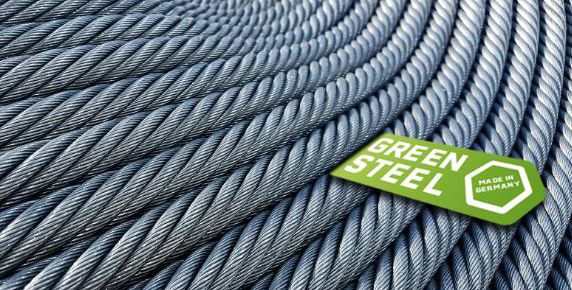
Definition of Green Steel: A Label System for Green Lead Markets
Green lead markets for basic materials such as green steel are a central policy building block on the way to a climate-neutral industry. Their basic idea is to provide targeted incentives for the use of green steel on the demand side as well, in order to enable the gradual conversion to climate-friendly processes, which are associated with high investment and initially even higher operating costs. This will relieve the burden of the necessary state start-up financing and replace it in the long term.
To this end, definitional questions must first be clarified: When is steel to be classified as green or climate-neutral? To what extent can investments be made creditable that only lead to climate-neutral steel when, in particular, sufficient green energy (electricity, hydrogen) is also available? And finally: What standards can ensure that all actors calculate and balance according to the same rules, so that different transformation paths can be compared and thus also evaluated? Clarifying these questions is urgent and important in order to be able to set the political course and give companies planning security for their investment decisions.
The German Steel Federation (Wirtschaftsvereinigung Stahl) already formulated the first key points for a definition of green steel in May 2022. On this basis, the steel companies in Germany are now presenting a proposal for a label system for climate-friendly steel that goes beyond the carbon footprint of a specific product and also takes into account transformative steps taken by companies towards emission reductions and makes them assessable in a classification system. In this way, the necessary investments for climate neutrality and the ramp-up of green steel could be stimulated and flanked in a targeted manner.
With its proposal, the steel industry in Germany wants to support the politically desired development of (lead) markets for climate-friendly products in Germany and the European Union. In addition, the industry also wants to contribute to the international discussion on the decarbonisation of basic industries. After all, climate clubs and climate alliances can only develop green markets worldwide if they are based on clear definitions. The steel industry’s proposal takes this into account by following on from and further developing a concept of the International Energy Agency that has been recognised by the G-7. Moreover, the label system is the first concept worldwide that was developed by an industry with the participation of all manufacturers.
Hans Jürgen Kerkhoff, President of the German Steel Federation, comments:
“With its proposal for a label system for green steel, the steel industry in Germany is sending a strong signal for industrial transformation. With this, we are presenting a concept that can be used as a basis for concrete discussions on how to create green lead markets, which were already envisaged in the steel action plan from 2020 and also in the coalition agreement. We hope that the German government will now quickly take up this impetus, discuss it with all relevant stakeholders and also introduce it into the ongoing international discussions at the G-7 and within the framework of climate clubs.”
by Hubert Hunscheidt
Recyclers urge early phase-out of free EU ETS allocations for steel, metals producers
European Recycling Industries’ Confederation EuRIC, a strong proponent of the circular economy, has urged ahead of a European “trilogue” (three-way) meeting Nov. 22 that free allocation of emission allowances under the European Union’s Emissions Trading Scheme should be phased out as soon as possible so as not to “subsidize” pollution.
“The allocation system of emission allowances, based on benchmarks, grants more permits to polluting production processes than to less polluting ones, thereby subsidising pollution,” EuRic said in a Nov. 18 open letter addressed to European Commission executive vice-president Frans Timmermans, Commissioner Paolo Gentiloni, members of the European Parliament and ambassadors.
Steps should be taken to incentivize the use of scrap or recycled steel and metals instead of extracted ores in steel and metals production, it said.
A proposed extension of free allocations for some industry sectors, including steel, “was thought to be protective of industry generally…. [but] it only protects some industry players”, EuRic argued in the letter, co-signed by non-profit climate change think tank Sandbag.
EuRic groups together more than 5,500 recycling companies – generating an aggregated annual turnover of about Eur95 billion ($98 billion) – which treat household or industrial and commercial waste including ferrous and non-ferrous metals, end-of-life vehicles (ELVs), electronic waste (WEEE), packaging (paper and plastics), end-of-life tyres or textiles. Ferrous scrap is a principal input in electric arc furnace (EAF) steelmaking, which emits substantially less carbon than steel production by the integrated route.
Sandbag focuses on EU policies, including in the area of climate governance.
European steelmakers, particularly integrated companies which use iron ore and coking coal to make steel in blast furnaces, have pressed for an extension of the free ETS allowance system because this should free up more financial resources for them to invest in costly decarbonization schemes in coming years.
Plans to revise the ETS benchmarks from 2026 are set to be discussed at the Nov. 22 meeting between representatives of the European Commission, European Parliament and European Council. Arrangements for the Commission’s introduction of a Carbon Border Adjustment Mechanism (CBAM), which will tax carbon contained in products entering the EU, will also be discussed.
European industry associations, including steel producers’ association Eurofer and non-ferrous metals producers’ associations European Aluminium and Eurometaux, have recently lobbied for a “smooth phase out” of free allowances under the ETS and compensation of related indirect costs until such time as the CBAM becomes fully effective.
Currently, CBAM is expected to be implemented between 2027 and 2032.
EuRic claims that any extension of the free ETS allowances beyond 2026 could create distortions between sectors of industry that are interlinked, and deter the use of recycled materials including steel and metals scrap, which do not benefit from free allowances under the ETS scheme.
“The Commission, Council, and Parliament have proposed to extend the regime of free allocation until well into the next phase of the EU ETS, in the 2030s,” EuRic said in its letter. “We believe that the proposals perpetuate competitive distortions which are damaging to the EU’s competitiveness, its self-sufficiency, its resilience to inflation and its ability to adapt to a lower-carbon world.”
An amendment proposed by the European Council “even exempts the ‘hot metal’ steel benchmark until 2030 from any change in annual reduction rate [in free allocations] despite the forthcoming benchmark reform,” EuRic noted.
Only large industrial plants can realistically join the ETS system and have access to free allocations due to bureaucracy costs, EuRic said. Many recycling plants are unable to benefit from the system as they tend to be small-scale operations, the confederation indicated.
The proposed EU ETS reforms – expected to be completed by the end of the year – are a key part of the EU’s “Fit-for-55” legislative package, which aims to align all parts of the EU economy with an upgraded target to cut emissions by at least 55% below 1990 levels by 2030.
Primary raw materials ‘favored’
The 4th phase of the EU ETS planned for 2021-2030 has gaps that puts recycled materials usage at a disadvantage compared to primary raw materials such as ores and coals, the EuRic letter said.
“The disadvantage arises because ecological burdens from steel production from ores are not fully taken into account, as hard coal, iron ore and other non-ferrous metal ore mining are not subject to the EU ETS as they are not listed under Annex I of the Directive,” it said. These products, along with production of pellets including direct reduced iron pellets should now be included in the ETS scheme due to their levels of greenhouse gas emissions, it argued.
The recyclers’ association claims that inputs for and production by the blast furnace and electric arc furnace steelmaking routes risk not being treated equally under CBAM rules.
“While the emissions from upstream products of the blast furnace route (coking coal and sintered ore) will likely be exempted of CBAM charges, this is not the case for a key upstream product of the EAF route: direct reduced iron will be covered by the CBAM under all proposals,” the letter said.
— Diana Kinch

Tata Steel installs digital scanning technology at Port Talbot blast furnaces to cut coke usage
Tata Steel, the largest steelmaker in the UK, is installing digital scanning technology at its no. 5 blast furnace at Port Talbot in South Wales to reduce the amount of coke used in the furnace, assisting decarbonization. Similar technology was installed at the works’ no. 4 blast furnace in 2021.
The 3D scan technology, which monitors the blast furnace charging process, has the potential to save “millions of pounds every year” due to lower coke intake and will reduce CO2 emissions by at least 50,000 mt annually, the steelmaker said Nov. 17. The technology is also designed to improve the furnaces’ stability and efficiency, it said. The installation is expected to be completed by the end of November.
The CO2 savings are achieved via the more efficient use of coke and hot blast gas to reduce the iron ore input to iron, it said.
Tata Steel UK, with an annual crude steel capacity of 5 million mt/year, aims to reduce its total CO2 emissions by 30% by 2030 and be a CO2 neutral steelmaker by 2045, in support of the UK’s ambition to be net-zero by 2050.
The GBP1 million ($1.19 million) investment in ‘Topscan’ technology on the site’s blast furnace 5 complements a similar investment in 2021 on blast furnace 4, where considerable cost savings and lower emissions have already been registered, Tata Steel said.
The No. 5 blast furnace, with 10.8 meter hearth diameter and which produces some 6,000 mt of pure iron daily, underwent a life-extension project in 2018, which demonstrated Tata’s commitment to continued blast-furnace-based steelmaking and to its Port Talbot works, amid a period of speculation on the works’ future and talks with the UK and Welsh governments on potential financial support.
The India-based Tata Group has capacity for 34 million mt/year crude steel.
Topscan, manufactured by a company called Tapping Measuring Technology (TMT) uses a set of radars which take a full surface scan of the iron ore and metallurgical coke being laid into each furnace, every 10 seconds. Approximately 1,000 data points are measured every 10 seconds, said Tata Steel UK’s Blast Furnace Technical Manager Aaron Parsons.
Computer modeling gives a clear, finite view of the raw materials at the start of their journey through the furnace, Parsons said.
“The specific way in which we lay materials in the furnace is our main method of controlling gas flow up from the hot air blast through the raw materials,” Parsons said. ““Over time, we can make tweaks to the distribution allowing us to make the most efficient use of the hot gases and yield really big savings, both in terms of coke usage and CO2.”
The new system replaces seven static radars, which previously gave more approximate readings on the blast furnace charge. Changes to the blast furnace burden that previously would have taken weeks to analyze and implement can now be done in a matter of hours, according to the blast furnace manager.
Tata Steel UK announced in October that it had begun sales of certified low-CO2 steel to customers due to market demand for this type of steel.
The lower CO2 certified steel, named “Optemis Carbon Lite,” is based on CO2 savings achieved by Tata Steel in the UK and is verified by independent assurance experts DNV, a company spokesperson said in an email.
— Diana Kinch
TURKEY DATA: September HDG exports down 45% on year
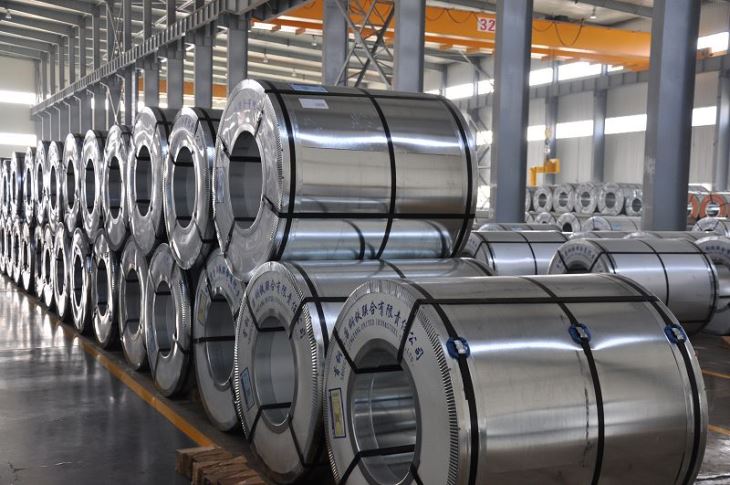
Turkey’s coated steel coil exports, mostly hot-dip galvanized coil, fell 45% year on year in September to 139,500 mt, according to Turkish Statistical Institute data, hit by antidumping duties imposed by the European Commission and low demand in most export markets.
The EC Aug. 12 announced antidumping duties on hot-dip galvanized steel coil and sheet imports from Russia and Turkey for five years.
Turkey’s January-September exports fell 5% on the year to 1.25 million mt, hit by lower exports in August and September, as the EU is traditionally a main HDG export destination.
Exports to Spain fell 67% on the year to 140,000 mt over January-September, while shipments to Romania were relatively stable at 97,000 mt.
Exports to Greece dropped 8% to 79,000 mt, while shipments to Italy declined 46% to 67,500 mt.
Exports to Portugal decreased by 66% to 44,300 mt, while exports to Belgium dropped 75% to 41,500 mt.
However, shipments to the US rose 36% on the year at 123,000 mt, while other export destinations in the period were Canada at 52,500 mt and Egypt at 44,000 mt.
The total revenue generated from the January-September exports dropped 17% on the year to $1.56 billion, the data showed.
Platts, part of S&P Global Commodity Insights, assessed the weekly Turkish domestic HDG price at $830/mt ex-works Nov. 11, down from the 2022 high of $1,400/mt reached in mid-March.
— Cenk Can