


French Luxembourg scrap prices flatten
French and Luxembourg domestic scrap prices are flattening in November in an on-month comparison. This is mostly due to the poor availability of old scrap while new arisings E8 is available. Merchants in the country report a lower intake, particularly of sheared and shredded scrap E40.
The European price landscape however looks patchy, with some countries increasing scrap prices this month. Italian and Spanish scrap prices are decidedly increasing between €10-20/tonne ($9.9-19.8/t) depending on each mill and grade as both Italian and Spanish mills are looking for material both on the domestic and other European markets.
In Austria, contracts for old scrap are also flattening, prices for new scrap are decreasing €15/t. Germany is going through a similar situation with mills and merchants negotiating flat on-month prices for old scrap and some €10-15/t decrease for new scrap, which is largely available, sources tell Kallanish. So far, French and Luxembourg domestic shredded E40 grade is pegged at €355-360/t delivered on average. The mixed E8 grade remains flat at €360/t on average. Demolition E1C and E3 are on average at €310-315/t and €340-345/t delivered respectively this month, sources suggest.
The French market however continues to stagnate this month. Sellers report lower sales volumes due to mills’ production stoppages to balance demand and supply. A large supplier talks about a general slower activity.
Meanwhile, scrap prices in the Benelux have declined slightly compared to last week, despite ongoing supply issues. Exporters’ dock prices were mostly at around €290/t delivered in Belgium and €300/t in the Netherlands on Monday, down €5-10/t from last week. Weak flow of material, however, continues to be an issue, as exporters are struggling to source scrap even at €300/t (see Kallanish 7 November).
Natalia Capra France

COP27: Countries representing over half of world GDP back new decarbonization measures
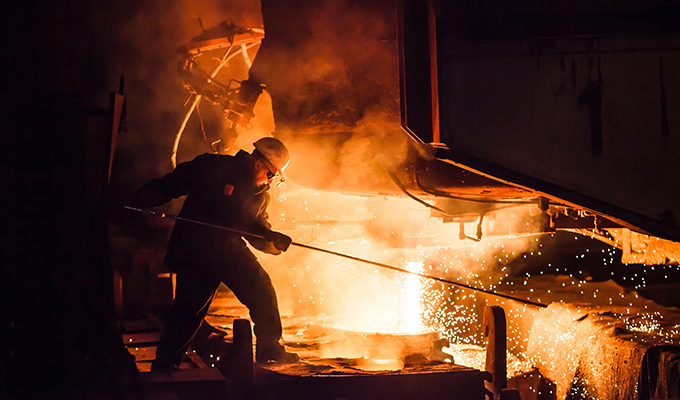
Countries representing over half of global GDP have launched a package of measures at the UN Climate Change Conference in Egypt to speed up decarbonization in power, road transport and steel, scale up low-carbon hydrogen and accelerate a shift to sustainable agriculture.
The actions agreed under the “Breakthrough Agenda” established at COP27 in Glasgow in 2021 build on measures agreed at the summit.
“Since we launched the Breakthrough Agenda at COP26, the world has changed and we are facing a perilous geopolitical and economic situation,” the UK’s COP26 President Alok Sharma said in a statement Nov. 11. “That only makes international collaboration more urgent.
“Now, it is vital for all to deliver and demonstrate real progress as we move forward. This is integral to achieving the 2030 goal of making clean technology affordable, available and accessible to all.”
The actions are supported by the G7, European Commission, India, Egypt and Morocco, amongst others.
A series of multilateral agreements include actions on:
— Common definitions for low-carbon steel, hydrogen and sustainable batteries.
— Phasing out polluting road vehicles, consistent with the Paris agreement, with “significant” backing for 2040 globally and 2035 in leading markets.
— Ramping up large-scale net-zero emissions industrial plants and hydrogen valleys and cross-border power grids.
— Strengthening financial and technological assistance to developing countries to support energy transitions.
Platts, part of S&P Global Commodity Insights, assessed the cost of producing renewable hydrogen via alkaline electrolysis in Europe at Eur15.18/kg ($15.60/kg) Nov. 10 (Netherlands, including capex), based on month-ahead power prices, down from a peak of over Eur30/kg at the end of August.
Global passenger electric vehicle sales in September of 915,000 units accounted for 14% of total light duty vehicle sales, according to S&P Global Commodity Insights’ monthly EV Essentials report.
With data available through nine months, China was on track for year-end EV sales of over 6.7 million vehicles, an annualized global market share of 27.8%.
S&P Global projects that by the end of 2022, EV sales in the US alone could approach 750,000 vehicles, with 2023 seeing sales eclipse one million vehicles for the first time ever.
Further actions in the cement and buildings sectors are expected to be added to the Breakthrough Agenda in 2023.
Coalition of the committed
The model seeks to drive climate change mitigation through “coalitions of committed countries,” rather than relying on global consensus.
“The Breakthrough Agenda provides a practical platform for partnerships between countries and across industries that will be essential to rapidly scale commercially viable solutions for climate progress,” UAE Minister of Industry and Advanced Technology and Special Envoy for Climate Change Sultan Ahmed Al Jaber said in the statement.
The Breakthrough Agenda was established at COP26 in Glasgow in 2021, by 45 world leaders representing over 70% of global GDP, providing a framework for governments, businesses and civil society to join up and strengthen actions each year in key emitting sectors.
The leaders agreed to review progress annually, with the first such review published in September 2022 warning that an “international collaboration gap” threatened to delay net-zero by decades.
The COP27 announcement Nov. 11 comes in response to the report’s recommendations.
— James Burgess

Sweden’s Ovako gets permit for hydrogen unit to lower steel emissions
Swedish steel producer Ovako said Nov. 11 that it has secured an environmental permit for a hydrogen electrolyzer to lower carbon emissions from steel production as early as mid-2023.
The electrolyzer, Sweden’s largest, is due to start production of green hydrogen using renewable power “before the summer of 2023,” a company statement said.
The Land and Environmental Court in Ostersund Nov. 7. approved the environmental permit related to the investment at Ovako’s Hofors electric arc furnace-based works, it said.
Ovako, which has offered net-zero steel products since 2022, will use the hydrogen for heating steel bar products at its rolling mill. This will enable lower-emissions steel supplies, and progressively help reduce the volume of voluntary carbon permits the company is procuring in the market to offset Scope 1 and 2 emissions.
“The new hydrogen plant in Hofors will make Ovako the first in the world to heat steel with hydrogen prior to rolling, and is the next major step towards carbon neutral steel production by replacing LPG with fossil-free hydrogen,” Ovako said.
Ovako expects the volumes will also support hydrogen supply for trucking, and is investing on a 17 MW electrolyzer in conjunction with truckmaker AB Volvo Group, Hitachi Energy, H2 Green Steel and Nel Hydrogen, it said.
Stockholm-based new entrant H2 Green Steel plans to use green hydrogen to produce steel from raw materials at sites in Sweden and in Spain. Trials are ongoing to test hydrogen as a replacement for natural gas at direct reduction iron plants, which can produce a metallic iron for steelmaking from iron ore.
Ovako, which is owned by Japan’s Nippon Steel Corp., uses ferrous scrap as its main feedstocks, and already purchases renewable power for its EAF-based operations.
“The conversion to hydrogen will enable Ovako to reduce its CO2 emissions for steel production in Hofors by 50% from already low levels,” it said.
“The plan is for local hydrogen production to be used in all of Ovako’s units where steel is rolled by 2030, provided that there is a good supply of fossil-free electricity.”
— Hector Forster

Domestic, import HRC prices slide in Italy
Both domestic and import prices for hot-rolled coil declined in Italy on Nov. 11 as producers gave discounts to stimulate deals.
Platts assessed domestic southern European HRC down Eur15/mt on day at Eur635/mt ex-works Italy.
Although official offers remained at Eur640-650/mt ex-works, a big Italian steelmaker was reported to make deals for bigger volumes of coil at Eur600-630/mt ex-works.
Tradable value has been heard at Eur620-630/mt ex-works and bids at Eur610-620/mt ex-works.
“It seems that some mill decided to reduce prices to sell bigger volumes before they would stop production in December,” an Italian distributor said. “I do not think you can get such low prices for small volumes, but if a pipemaker decides to buy a bigger lot, I think the price of Eur600/mt delivered is achievable.”
Two sources also reported transactions at Eur600/mt delivered Italy, but both said that they were uncertain about the information.
Import offers from Asia have also moved down from offers heard earlier this week at Eur600/mt CIF Italy to Eur570-585/mt CIF Italy. The new offers, however, have been made through international traders, according to market sources, and the new offers directly from Asian mills are likely to become available next week.
Strengthening of the euro against the US dollar combined with weak Far East flat steel markets supported the decline, sources said.
Platts assessed import southern European HRC down Eur10/mt on day at Eur590/mt CIF Italy on Nov. 11.
Demand remained limited due to sufficient inventories of distributors, seasonal destocking by the year end and weaker steel consumption by end-users continued to add downward pressure on HRC prices.
Several market sources, however, said that more distributors have been active in the market at the end of the week as distributors need to secure some volumes for January.
Although the demand revival is likely to be short-lived, domestic HRC prices in Europe are unlikely to drop further down, according to market sources. The positive effect from production cuts and high production costs are expected to contribute to the price stability, market participants said.
Platts assessed hot-rolled coil in Northwest Europe stable on the day at Eur640/mt ex-works Ruhr on Nov. 11.
Two producer sources reported tradable value at Eur640-650/mt ex-works Ruhr each.
Two traders estimated achievable prices at Eur640/mt ex-works Ruhr and at Eur640-650/mt ex-works Ruhr, respectively.
A service-center source reported tradable value at Eur650/mt ex-works Ruhr and offers at Eur700/mt ex-works Ruhr and at Eur720/mt ex-works Northern Europe.
Platts is part of S&P Global Commodity Insights.
— Maria Tanatar, Benjamin Steven

European HRC producers struggle to fill order books; buyers focus on destocking
European hot-rolled coil producers are struggling to fill their order books, while buyers are delaying purchases due to full stocks and downbeat sentiment, sources told Fastmarkets on Friday November 11.
Fastmarkets calculated its daily steel HRC index, domestic, ex-works Northern Europe at €645 ($649.75) per tonne on Friday, down by €3.33 per tonne from €648.33 per tonne on Thursday.
The latest calculation of the index was down by €2.50 per tonne week on week and down by €73.75 per tonne month on month.
Several transactions for small volumes of HRC were reported in the region at €630-650 per tonne EXW by buyer sources.
Meanwhile, producer sources in Germany indicated the workable level at €650 per tonne EXW minimum, claiming that this price is already very close to the cost line.
Most producers in the region were still offering December-rolling coil to the market.
Mills were reluctant to give firm offers for first-quarter production HRC in light of the weak market fundamentals.
“Producers’ idea is to increase prices for January-February production, but it is unrealistic for the moment because there is lack of demand,” a distributor in the region said.
Meanwhile, buyers still believe there is room for a price decline owing to extremely poor demand and oversupply in the market.
Notably, steel-service centers and distributors across Europe are still struggling to reduce the level of inventories ahead of the year-end.
Fastmarkets’ calculation of its daily steel HRC index, domestic, exw Italy was €625 per tonne on Friday, up by €5 per tonne from €620 per tonne on Thursday.
The latest calculation of the Italian index was down by €40 per tonne week on week and down by €90 per tonne month on month.
One buyer source reported a transaction by a local mill at €620 per tonne CPT, which nets back to €600 per tonne EXW.
Producers in the nation, meanwhile, reported the minimum offer level at €650 per tonne EXW.
Distributors in the nation estimated the achievable price level between €620 and €650 per tonne EXW, depending on volume.
Import HRC offers also inched lower at the end of the week.
Notably, HRC offers from Japan and South Korea to Italy were heard at €570-585 per tonne CFR, compared with €600-620 per tonne CFR earlier this week. Producers from Southeast Asia were able to offer coil with January shipment to Europe.
– Julia Bolotova


EU to ban processed products from Russia
The European Commission is currently working on a scheme to block finished steel products rolled from Russian slab in non-EU countries, says Yuriy Rudyuk of law firm Bael and Bellis.
A regular speaker at the events of steel distributors/traders association EUROMETAL, Ruduk at the International Steel Trade Day in Antwerp last week gave an update on some significant moves planned at the EU level.
As of 30 September next year, the import and purchase ban will be expanded to non-Russian steel products “processed in a third country incorporating iron and steel products originating in Russia,” an EC text reads.
“That will mean a major change,” Rudyuk emphasised, noting that many re-roller companies outside the EU are already worried, and starting to look for sources elsewhere. An opposite effect could occur as well in “a pendulum-like rush for available quotas” before the ban takes effect, he cautioned.
This is a new angle of looking at imports in Europe, but has been increasingly prevalent in the US already, Kallanish heard Rudyuk say at the conference. The perspective has been successfully enforced already in fields like parts for bicycles which are restricted for import but then assembled by third parties in countries not covered by restrictions.
It is not only regarding Russian or Belorussian slab. The EU is currently also investigating processing operations in Turkey of imported hot-rolled stainless steel slabs from Indonesia for possible antidumping duty circumvention practices.
Participants at the conference noted that such detours via re-rolling constitute a business model of its own. In the above example, “slab from Indonesia to the EU might decline, but at the same time stainless coil from Turkey might increase,” one said.
Christian Koehl Germany

Key takeaways from EUROMETAL’s International Steel Trade Day
Key talking points at European steel distributors association EUROMETAL’s International Steel Trade Day held in Antwerp, Belgium, on Thursday November 10.
Decarbonization drive is reshaping steel industry
The green transformation has become the core element of the European mill strategy. Most European blast furnace-based steelmakers have been investing in green steel projects in the past years in order to cut emissions to comply with strict EU regulations.
Under the European Green Deal, the European Commission proposed a new EU target to reduce greenhouse gas emissions by at least 55% by 2030, compared with the levels emitted in 1990.
European steel distributors said that they have already seen interest for green steel purchases from their customers, especially in the automotive industry.
Tayfun Iseri, president of Turkish flat steel association Yisad, confirmed that European buyers are asking about carbon footprints before booking cargoes of Turkish hot-rolled coil.
“It is going to transform the way we do business in the next 10 years,” Iseri added.
“People are ready to pay more for a green steel,” Laurent Taylor, commercial director of Steelforce, said during the panel.
However, Russia’s attack on Ukraine has impacted the process of green transformation, but it is still on the agenda.
European circular economy targets are expected to have more impact on the market in 2023 and the market needs to prepare for it.
“There is a general will to do [green transformation]. The problem is that it is highly inflationary. With the current [state of economy] the question is how we are going to pay for it? It is a real issue,” Julian Verden of Stemcor said during the panel discussion.
Market participants, however, said that the very concept of green steel lacks clarity. The term is vague: what steel can be considered green and what premiums should the market pay for it.
“It [green steel concept] is so vague right now, I’m not sure it can be implemented in 2026,” one of the distributors said.
Another problem is a lack of hydrogen to feed green steel production. Green hydrogen can be used as a reductant substitute in direct-reduced iron production, and is often cited as an effective, low-carbon alternative. A number of the European mills have started green steel initiatives with an aim to develop hydrogen-based steelmaking across Europe.
Hydrogen can potentially be produced using wind energy or solar panels, or be imported from outside Europe. However, launching hydrogen production on an industrial scale will be challenging in terms of sustainability because of the large amount of water needed to produce hydrogen. In addition, there are risks involved in the safe transport and storage of hydrogen, as well as in the extent of land use involved.
Other sources said that lack of clarity around green steel was typical for all new products and the market needs “to start somewhere with green steel introduction.”

“We are already seeing a priority for a steel [produced] with lower emissions and we believe that the demand [for green steel] will grow in the upcoming years,” Fernando Espada, president of EUROMETAL, said.
“We cannot stop [the green transition] and we should not stop it because we have a responsibility to this planet,” a distributor said.

CBAM is a new climate instrument, but implementation lacks clarity
The Carbon Border Adjustment Mechanism (CBAM) for imported products was proposed by the European Union to prevent carbon leakage within the EU Emissions Trading System (ETS), but market participants are still awaiting important details on how the mechanism will be administered.
CBAM seeks to mitigate the risk of carbon leakage – carbon emissions generated while producing goods in countries not covered by the ETS – by imposing a carbon duty on imports of some high-carbon goods from outside the EU, including iron, steel and aluminium.
The mechanism was designed to create a common and uniform framework to ensure a fair equivalence between the carbon-pricing policy applied in the EU’s internal market and the carbon-pricing policy applied to imports.
CBAM’s implementation will also involve phasing out the free ETS emissions allowances given to Europe’s industrial sectors, which can be offset against any carbon produced and has led to the current carbon trading system that determines carbon prices.
“CBAM is no silver bullet. It should be part of a policy mix and combined with other instruments as well as with intensified sector and governmental discussions on the harmonization of decarbonization strategies,” Pierre Leturcq, director of studies at Brussels-based think tank Europe Jacques Delors, said at the conference.
One steel importer spoke about the current vagueness of the mechanism, noting that a lack of clarity from the European Commission gives little room for market participants to prepare for CBAM implementation.
“Is the European Commission considering how CBAM can practically be administrated so that customs and the ports, the operations and the logistics companies, and the importers, can practically also manage this?” the source said.
Leturcq said there are currently “deep divergences” in views on how CBAM will be administered, with negations currently underway that will likely result in a “clearer picture on how the system will work.” He added that discussion are scheduled to end on December 12.
According to Leturcq, opinions are divided on whether CBAM revenue will be collected at the level of EU member states via a customs duties-type process or by a centralized CBAM agency.
The discussions will also decide how carbon emissions values for imported goods will be calculated and verified, and how the certification process will be implemented.
Leturcq said the need for a blueprint on the administration of CBAM was a “real issue.”
“But I think it will come very shortly, once the political process is over,” he added.
Import is an opportunity, not a threat for the market
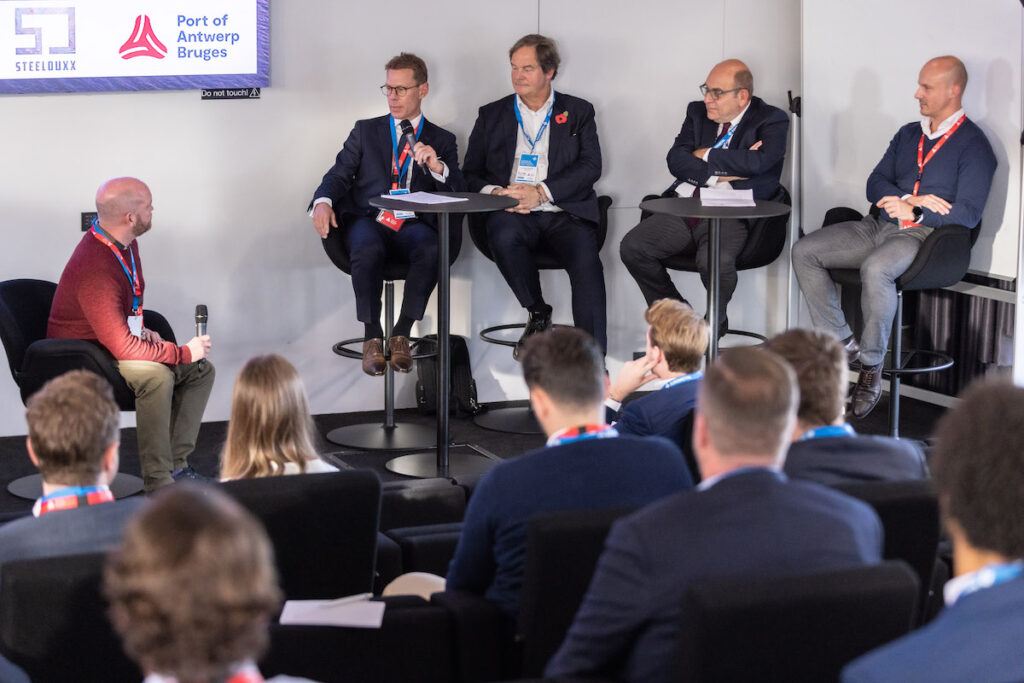
Panelists said that European distributors need to rely on imports to diversify supply sources in order to secure an uninterrupted supply of steel products for their customers.
“Nobody should buy 100% [of steel] from imports and nobody should buy 100% domestic material,” Taylor said.
“We all remember what happened last year when nobody could get material from the European mills,” Verden said.
According to market source estimations, European steel buyers get 20-40% of their supply from imports.
Total volume of carbon steel imports to Europe totaled 28.9 million tonnes in 2021, up from 21.3 million tonnes in 2020. In the first eight month of 2022, steel imports to Europe totaled 20.8 million tonnes, with Southeast Asian supplier increasing their market share.
Trade protectionism, however, is only expected to grow in the upcoming years, source said.

Notably, more European trade cases are likely in 2023 due to shifting trade flows.
Yuriy Rudyuk, a partner at the law firm Van Bael & Bellis, has said that a new wave of anti-dumping trade cases against hot-rolled flat steel products was highly likely, considering the persistently high import penetration into the EU market.
Published by: Julia Bolotova, Holly Chant

International Steel Trade Day brought together 100 steel stakeholders in Antwerp


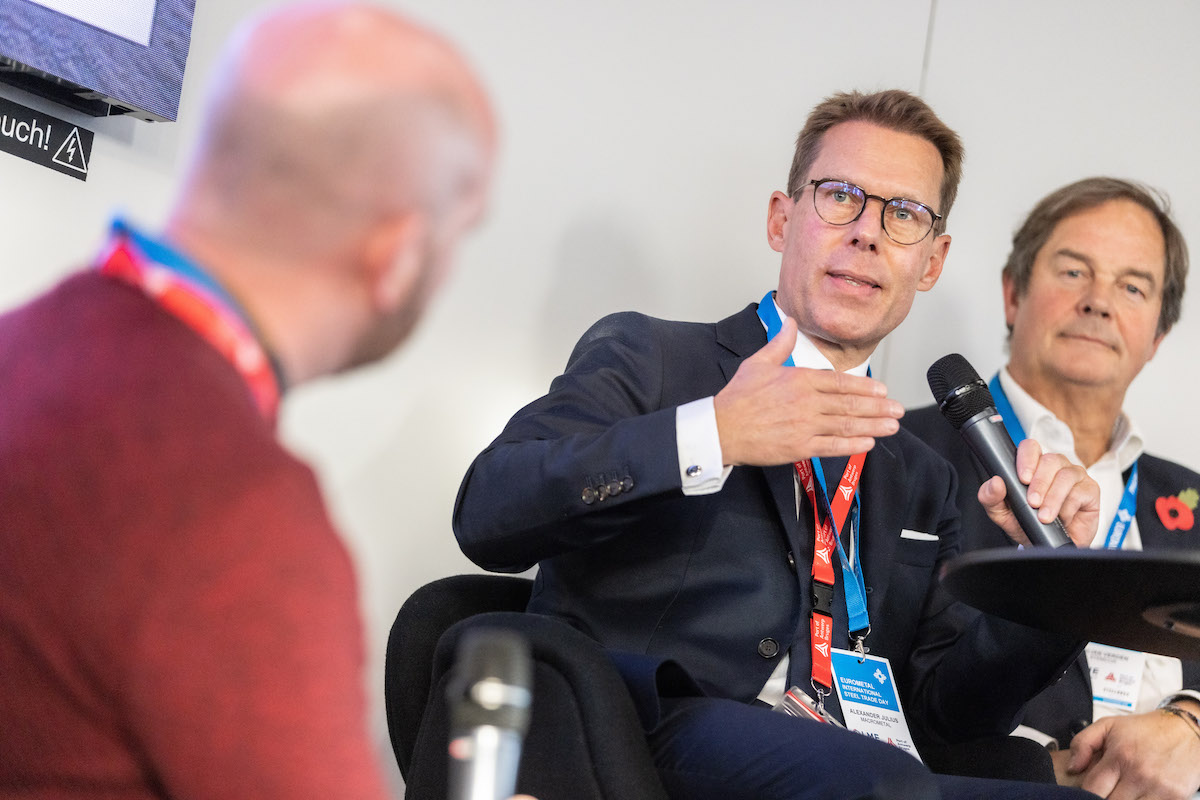

EUROMETAL organized its usual International Steel Trade Day this Thursday in Belgium. This edition was hosted by the Port of Antwerp-Bruges in his neo-futuristic Havenhuis (Port House) building in the heart of the Port of Antwerp.
This event brought together a hundred participants from the entire steel distribution chain.
Here you can find 5 press articles that resulted from this event:
Further HRC dumping duties likely for EU
Europe might see more anti-dumping cases as trade flows shift
EU needs traders to balance mill supply
EU to ban processed products from Russia
Key takeaways from EUROMETAL’s International Steel Trade Day
Further HRC dumping duties likely for EU
A “fourth wave” of anti-dumping measures on hot-rolled coil (HRC) is possible, according to law firm Van Bael & Bellis partner Yuriy Rudyuk.
The latest round of sanctions and import bans on Russian steel products has resulted in significant increases in imports of HRC from other countries, Rudyuk told the EUROMETAL International Steel Trade Day in Antwerp.
HRC imports from Japan have exploded of late, reaching 739,255t over January-August, up from 591,355t over the whole of 2021, and just 83,292t in 2020. Japan is traditionally not a large seller of HRC into the EU. In August, South Korea, Taiwan and Japan together accounted for 40pc of EU HRC imports.
Imports from traditional suppliers, such as India and Korea, have also increased, Rudyuk noted. On the sidelines of the conference, he told Argus Brazil will be under scrutiny given its increase in volumes. Despite existing duties, EU imports of Brazilian HRC hit 357,368t over January-August, compared with 121,882t in 2021, and 174,089 in 2020. Its volumes this year look set to surpass the 366,679t reached in 2017, when the European Commission imposed anti-dumping duties of €53.40-63.00/t.
European steelmakers association Eurofer has been lobbying for emergency measures on imports in light of the cost disadvantages faced by its members; EU mills have much higher energy costs than their overseas competitors, and also pay carbon levies not faced by others.
“The war in Ukraine and the subsequent necessary EU sanctions against Russia have thrown the EU into an exceptional crisis which requires exceptional and immediate measures by EU policymakers to prevent the destruction of Europe’s industrial base, going beyond the EU’s usual ‘rule book’, including swift trade emergency measures,” Eurofer director-general Axel Eggert said.
Rudyuk expects further dumping measures to be more likely than emergency measures, given there is already a safeguard in place.
By Colin Richardson and Lizzy Lancaster

Trading activity remains limited in European HRC market, prices mainly flat
European hot-rolled coil buyers continued to delay purchases amid a lack of clarity in the market and downbeat expectations for the rest of the year, sources told Fastmarkets on Wednesday November 9.
Fastmarkets calculated its daily steel HRC index domestic, exw Northern Europe at €647.98 ($649.85) per tonne on November 9, down by €2.02 per tonne from €650 per tonne the previous day.
The latest calculation of the index was down by €1.06 per tonne week on week and down by €87.02 per tonne month on month.
Official offers from mills were rare since mills preferred to take a case-by-case approach.
Some integrated mills, however, indicated offer prices at €670-680 per tonne EXW for HRC with fourth-quarter delivery and a minimum of €700 per tonne EXW for first-quarter delivery coil.
Buyers, meanwhile, gave lower estimates – between €620 and €650 per tonne EXW.
Trading activity remained quiet in the region, with only small lots reportedly being traded.
No demand recovery is expected this year, given that buyers still had high inventories and were focused on reducing stock levels ahead of the year-end, market participants said.
“There won’t be any restocking activity until mid-first-quarter 2023 in the best-case scenario,” a distributor told Fastmarkets.
Fastmarkets’ calculation of its daily steel HRC index domestic, exw Italy was €655.63 per tonne on Wednesday, down by €5.75 per tonne from €661.38 per tonne on Tuesday.
The latest calculation of the Italian index was up by €0.63 per tonne week on week, but down by €74.37 per tonne month on month.
Official offer prices from integrated mills and rerollers in the nation were reported in quite a wide range: between €650 and €700 per tonne EXW.
But mills were reportedly prepared to cut prices on deals given that they were short of orders and needed to fill gaps in order books.
Bids from steel-service centers, tube makers and distributors were lower, at €620-640 per tonne EXW.
Import HRC offers to Italy from Southeast Asia with January shipment were reported at €600-620 per tonne CFR.
Italy’s buyers, however, estimated the tradeable level for overseas coil to be below €600 per tonne CFR, considering long lead times, safeguard-related risks and the persistent downtrend in the domestic markets