


Northern Europe steel rebar prices hit market bottom, sources say
A pessimistic outlook and slow consumption among end-users resulted in prices falling in the Northern European rebar market in the week ending Wednesday November 2.Fastmarkets’ weekly price assessment for steel reinforcing bar (rebar), domestic, delivered Northern Europe, was €800-860 ($790-849) per tonne on Wednesday, down by €50-60 per tonne from €850-920 per tonne last week.
Weak consumption and a continued wait-and-see attitude among buyers kept the rebar market static in Northern Europe.
Discounted prices have failed to boost trading activity so far, market sources said.
“Customers are not in the market to buy,” one producer source said. “Instead, they just want to wait. Everyone is chasing volume, but no one wants to buy.”
While some market participants forecast further price drops, others believed that the price floor has been reached.
“I don’t forecast price increases,” one buyer source said. “However, I think the floor price has been reached.”
The low consumption has been largely a consequence of postponed or cancelled construction projects, especially in the private sector. No recovery was expected before the end of the year, sources said.
With so few transactions taking place, it has become more difficult to gauge the true market price, Fastmarkets heard.
“Demand remains very low and there is little buying activity,” one buyer source said. “This makes it very difficult to work out price levels. If no one is buying, working out tradeable values becomes impossible.”
If demand does not pick up but energy costs surge again, mills may cut output further, Fastmarkets heard.
International scrap prices affect the price of all long steel products. Scrap prices stabilized in mid-October.
Fastmarkets’ daily calculation of the index for steel scrap, HMS 1&2 (80:20 mix), North Europe origin, cfr Turkey, was $354.41 per tonne on November 2, up from $351.83 per tonne a week earlier.
Published by: India-Inés Levy


Slow demand inhibits trading activity in Northern Europe steel HRC market
Sluggish demand and an uncertain outlook continued to limit market activity in the European hot-rolled coil markets on Thursday November 3.Customers, forecasting further price drops, remained in wait-and-see mode, and no rebound in demand was expected in the remainder of this year, sources said.
Fastmarkets calculated its daily steel HRC index, domestic, ex-works Northern Europe, at €646.25 ($638.18) per tonne on Thursday, down by €3.33 from €649.58 per tonne on Wednesday.
The latest calculation of the index was down by €11.58 per tonne week on week and down by €103.75 per tonne month on month.
Few deals were reported, and market conditions remained depressed in the HRC market in Northern Europe. Negotiations between automotive companies and mills regarding contracts were continuing, with no finalized deals reported.
Buyers’ estimates of workable prices were reported at €630-660 per tonne exw. One deal was heard by a buyer at €650 per tonne exw.
“There is hardly any buying activity,” one buyer source said. “I do not expect any recovery until the end of the first quarter of 2023.”
Production cuts have not yet affected prices or demand, and further output cuts may be required to boost price levels, sources said.
Fastmarkets’ calculation of its daily steel HRC index, domestic, exw Italy, was €660.00 per tonne on Thursday, up by €5 per tonne from €655.00 per tonne on Wednesday.
The latest calculation of the Italian index was down by €18.13 per tonne week on week and down by €95 per tonne month on month.
Depressed customer sentiment, persistent overstocking and sluggish demand have resulted in a static market. Current buyers’ estimates of tradeable prices were reported at €650-700 per tonne exw.
Published by: India-Inés Levy

HRC prices stable in North Europe, down in Italy
Domestic prices for hot-rolled coil have been fairly stable in Northern Europe on Nov. 2, but they inched down in Italy as the country’s mills started to give discounts.
Platts assessed domestic HRC in Italy at Eur650/mt ex-works, down Eur5/mt day on day.
A big service center source indicated that buyers’ price idea for domestic HRC as been Eur650/mt ex-works Italy. A smaller trader estimated achievable prices at Eur660-680/mt ex-works Italy.
A pipemaker reported deals at Eur640-650/mt ex-works Italy.
Offer from a smaller Italian mill has been heard at Eur680/mt ex-works. But offers of HRC from France have been available at Eur660/mt delivered Italy and from Northern European mills – at Eur650/mt delivered Italy.
Platts assessed hot-rolled coil in Northwest Europe stable day on day at Eur650/mt ex-works Ruhr Nov. 2.
Two distributor sources reported tradable values at Eur640-650/mt ex-works Ruhr and at Eur650/mt ex-works Ruhr.
A German service-center source saw tradable value for bigger lots at Eur650/mt ex-works Ruhr, but also mentioned official offers Eur700-750/mt ex-works Ruhr and that deals for small tonnages have been settled within the offer range.
A trader estimated achievable prices at Eur600-650/mt ex-works Ruhr.
Neither Italian nor Northern European steelmakers have announced HRC prices for the first quarter next year yet. The mills continued to sell the material with delivery this year at discounted prices.
“I think the mills had a really good start of the year and they figured out that even with current low prices and weak demand it would be better to fill production lines even if they cut prices further,” an Italian source said. “With the strong first half of the year, they most likely would still have good full 2022 results.”
Demand from distributors remained limited as they have been focused on material destocking, which has been taking longer due to limited end-consumer demand.
The lack of clarity on the first quarter of 2023 offers also supported the cautious approach of the buyers to new deals. The mills are expected to make an attempt to increase prices, but the majority of market sources have been skeptical if such a rise would be reflected in transactions.
Platts is part of S&P Global Commodity Insights.
— Maria Tanatar, Anqi Liu

European HDG prices decline on weak demand
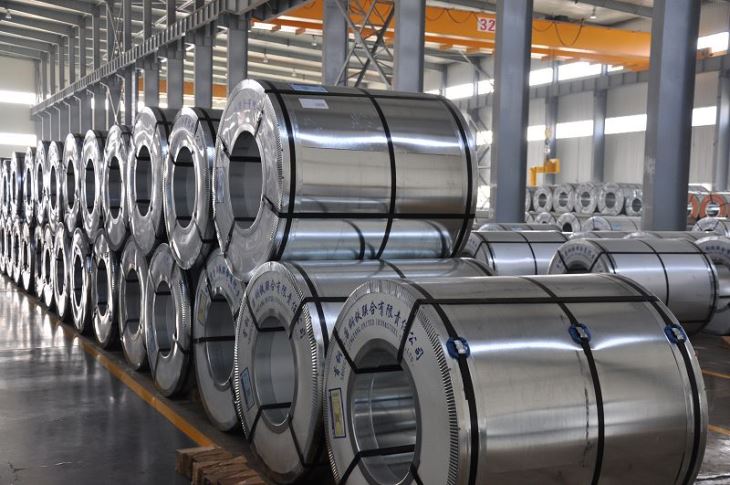
Domestic prices for hot-dipped galvanized coil were down Eur10/mt in Northern Europe and down Eur25/mt in Italy on the week to Nov. 2 due to low demand.
Platts assessed domestic hot-dipped galvanized coil at Eur810/mt ex-works Ruhr based on tradable values reported at Eur790-830/mt ex-works Northern Europe.
In Italy, tradable value for HDG has been reported at Eur760-770/mt ex-works. Taking into account the lack of transactions in the market, Platts assessed Southern European domestic HDG prices at Eur795/mt ex-works Italy, the midpoint of last week’s assessment and achievable prices reported.
Negative sentiment continued to plague the market toward the year’s end. Distributors struggled to reduce inventories as end-consumers were also unwilling to settle large tonnage deals on low demand.
“Not a lot of mills offering for first quarter coil,” an Italian trader said. “They are trying to follow the market as the price evolves, and they focus on filling their order book right now for the fourth quarter. Next round they will try to go up with the price.”
Mills refrained from offering clear prices for first-quarter delivery next year. In the meantime, buyers have been expecting mills to push up first-quarter delivery prices amid lower energy costs.
Platts assessed North European CRC unchanged on the week at Eur780/mt ex-works Ruhr.
A distributor reported tradable values at Eur770-800/mt ex-works Ruhr. A service center source reported tradable values at Eur770-800/mt ex-works Northern Europe.
Platts assessed Southern European CRC down Eur25/mt week on week to Eur775/mt ex-works Italy, reflecting achievable prices reported at Eur750-800/mt ex-works Italy.
Platts is part of S&P Global Commodity Insights.
— Anqi LiuMaria Tanatar

Northwest EU domestic rebar prices drop amid lack of demand
Northwest European domestic rebar prices continued to soften week on week on Nov. 2 amid a lack of activity.
Platts assessed TSI Northwest Europe rebar down Eur10 to Eur850/mt ex-works week on week.
One seller source highlighted slow demand and noted that there was no current tradable level for rebar amid a lack of activity in the market.
One distributor source in the Benelux region also cited weak demand, adding that prices were changing on a weekly basis for long steel products in the domestic market, so buyers were holding back to gauge a better idea of the market. In addition, transportation costs were stable at elevated levels, and customers were hoping for prices to come down before placing any orders.
The source indicated a workable level for rebar in the domestic market at Eur865/mt delivered Benelux.
One Europe-based trader indicated a tradable value for rebar in the domestic Northwest European market around Eur870/mt delivered, but only for small volumes, as customers still had high stock levels.
One Italian mill source noted that some local mills in Germany were lowering prices for rebar in the domestic market amid weak demand, while some local mills were maintaining relatively higher prices. However, he indicated that Eur860/mt delivered levels might be workable for rebars from local suppliers in Germany.
Elsewhere, European domestic steel sections prices were stable week on week to Nov. 2, as sources reported slow demand. The Platts assessment of European medium sections (category 1, S235 JR) remained flat at Eur1,125/mt delivered on Nov. 2.
One European mill source cited that transactions were being booked around Eur1,150/mt delivered, even if the volumes or number of transactions were lower.
One Benelux-based distributor source cited a tradable value for category-1 medium sections stable week on week at around Eur1,100-Eur1,150/mt delivered Benelux. The source noted that demand was better for their market, however he expected energy prices to increase as winter season approached, indicating that it might lead to mills increasing prices for long steel products in the near term.
Another distributor source in the Benelux region indicated a workable level for beams at Eur1,130/mt delivered.
Platts is part of S&P Global Commodity Insights.
— Rabia Arif, Staff
UK sanctions Evraz founding directors
The UK foreign, commonwealth and development office announced the sanctioning on 2 November of four more Russian individuals. Two of them are former executives and proprietors of steelmaker and miner Evraz, Kallanish learns from the office.
The government statement says the sanctions apply to “four oligarchs who have enabled Putin to mobilise Russian industries to support his military effort”.
Two of the four individuals are Alexander Abramov, a former non-executive director of Evraz, and Alexander Frolov, a former director and chief executive. The two are Evraz founding directors, as well as major shareholders, alongside Roman Abramovich, who was sanctioned in March, shortly after Russia’s military incursion into Ukraine.
According to the UK foreign office’s statement, “the pair, known to be business associates of Roman Abramovich, previously owned major stakes in Russian steel manufacturer Evraz plc, are thought to have an estimated global net worth of £4.1 billion and £1.7 billion respectively, and are reported to have UK property investments worth an estimated £100 million.”
Both, the statement says, “had been involved in obtaining a benefit from or supporting the Government of Russia by working as a Director at Evraz PLC, an entity carrying on business in sectors of strategic significance to the Russian government, namely, the extractive sector, the transport sector, and the construction sector.”
Evraz is a vertically integrated steel producer with iron ore and coking coal mining assets in Russia, long and flat steel production in Russia, the US, Canada and Kazakhstan, and ferroalloys in Czech Republic. On 10 August, the company announced its intention to start negotiations to sell its 3.5 million tonnes/year capacity North American assets.
Evraz’s London Stock Exchange listing and all appropriate programmes were cancelled in March, shortly after the sanctioning of Abramovich.
Katya Ourakova UK


European Commission confirms China, Russia CRC anti-dumping duties
The European Commission has confirmed the extension of EU antidumping duties on Chinese and Russian cold rolled coil imports for a further five years.
The decision was the result of the expiry review on existing duties initiated in August last year, following the formal request by Eurofer, Kallanish notes.
The Commission concluded its investigation by noting that existing duties needed to be retained in order to continue to protect the European industry from unfair competition.
As a result, Chinese suppliers are subject to a duty of 19.7-22.1%, while Russian CRC will face a duty of 18.7-36.1%.
Emanuele Norsa Italy

Northwest European plate prices differ widely
Prices for commodity plate on the northwest European market, even from domestic mills, are currently heard diverging by as much as €250/tonne ($247).
Sources from both distributors and mills agree that peak offers of €1,300/t for S355 do occur, although the mainstream price is seen easily at around €1,100/t ($1,087). One big player especially is fairly saturated with project business that demands high-grade plate, and hence will offer commodity grade only at high prices.
“They [aforementioned mill] sit on a high horse, and can cherry-pick orders, so they ask for prices only few will pay,” a German distributor’s manager says. Asked who would buy, an observer from another mill adds: “Maybe distributors in which it [the mill] owns stakes and which need to buy a certain share of material from the parent.”
He sees the low end at “closer to €1,000 than €1,050”, but notes that this is not the mainstream either. “It’s not the cheapest supplier that makes the market price. Not everyone would buy there. Buyers are pretty much diversifying their sources, after all,” he tells Kallanish.
Notably, high-grade plate products have an effect on commodity pricing, while maintaining a price logic of their own. “They are pretty much detached from the development of commodities,” the mill source says. “After all, not everyone can make boiler plate, let alone different qualities for one boiler in one order.” They also face less competition from imports, which for commodities are undercutting the €1,000/t cfr mark, “but you’d have to wait until March/April [for delivery],” the German buyer says.
Pricing on the higher-end is not only more stable but also more homogeneous. According to an Austrian buyer, they are based on logical parameters like need for orders and capacity. “Up there, mills are pretty unanimous with assessing the market,” he says.
Christian Koehl Germany
Italian stainless flats demand stalls
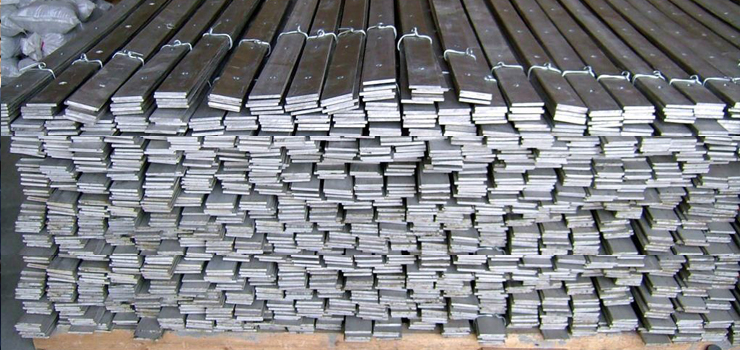
Sales activity for Italian stainless steel coils, sheet and tube is slowing substantially after resuming in September and sustaining in the first days of October, sources in the sector tell Kallanish.
Despite weak demand for flat products from service centres, end-users and re-rollers, stainless tube prices are being pushed up by some €200/tonne ($197) on average this month on higher processing costs.
In October, hot and cold rolled coil mills, re-rollers and service centres implemented production stoppages to balance demand and supply. This month, however, Acciai Speciali Terni (AST) is restarting all equipment and will produce at normal levels, sources close to the company confirm.
Coil buyers say that since around 10 October, demand for flats has faded, particularly in southern Europe, while northern European buyers are still reporting a good level of demand. In Italy, main producer AST is said to be focusing on commodity rather than less requested grades. Given squeezed margins and lower demand, many producers in Europe are now “standardising” their coil production due to the higher costs of producing certain less common grades.
According to a large coil buyer, the weaker demand of the moment is mostly due to prices remaining too high, considering the substantial slowdown in activity downstream. However, another source argues that, with inventories of nickel being low on the London Metal Exchange and prices fluctuating, coil and other flats prices will not weaken.
Italian stainless HRC remains at €2,500-2,550/t ex-works, with CRC at around €3,000-3,050/t. Most European producers are now quoting for December. However, in other European countries such as Spain and France, mills are beginning to ask for over €200/t increases for January delivery. At current coil sales values and amid skyrocketing costs, steelmakers are said to be selling nearly at a loss.
Natalia Capra France
Higher-for-longer energy prices threaten EU industrial base: Moody’s
Prolonged geopolitical uncertainty, coupled with the need to change Europe’s energy mix will keep energy prices higher for longer, posing a major terms-of-trade shock to European economies, says Moody’s.
This holds especially relative to low-energy-cost competitors like the US. “This disadvantage could weaken the region’s long-term price competitiveness and lead to a structural decline in the European Union’s industrial bases over the medium term in the absence of effective government support,” the credit rating agency says in a report sent to Kallanish.
Energy prices have pushed inflation to double-digit levels not seen since the 1980s, which resulted in central banks increasing their policy rates and ending the lengthy period of low interest rates. They also led to a collapse in consumer and business confidence that is choking the post-pandemic recovery. “Higher prices will likely push the industrial sector and the EU economy into a recession over the winter half of 2022-23. These conditions also materially increase the risk of a stagflation scenario taking hold,” Moody’s observes.
Because the EU is a net importer of energy, the surge in prices also presents a longer-term, negative terms-of-trade shock for the region. The EU’s average terms of trade – defined as the ratio between the index of export prices and that of import prices – worsened 4.5% in the first half of 2022, and increased the region’s energy import bill by around 1.5% of GDP, Moody’s says. US terms of trade actually improved 3% because of significant price and volume rise of LNG exports to Europe.
In case of a longer-lasting, continued deterioration of the terms of trade, there is also a high risk of investment in energy-intensive manufacturing sectors shifting away from the EU countries to other countries with lower energy costs like the US, the agency explains.
“Sufficient energy storage and falls in consumption should allow most [EU] sovereigns to avoid government-imposed rationing of energy this winter. However, risks will remain elevated until governments are able to source reliable, long-term alternatives to Russian supplies, which we expect will take years,” Moody’s concludes.
Adam Smith Poland