

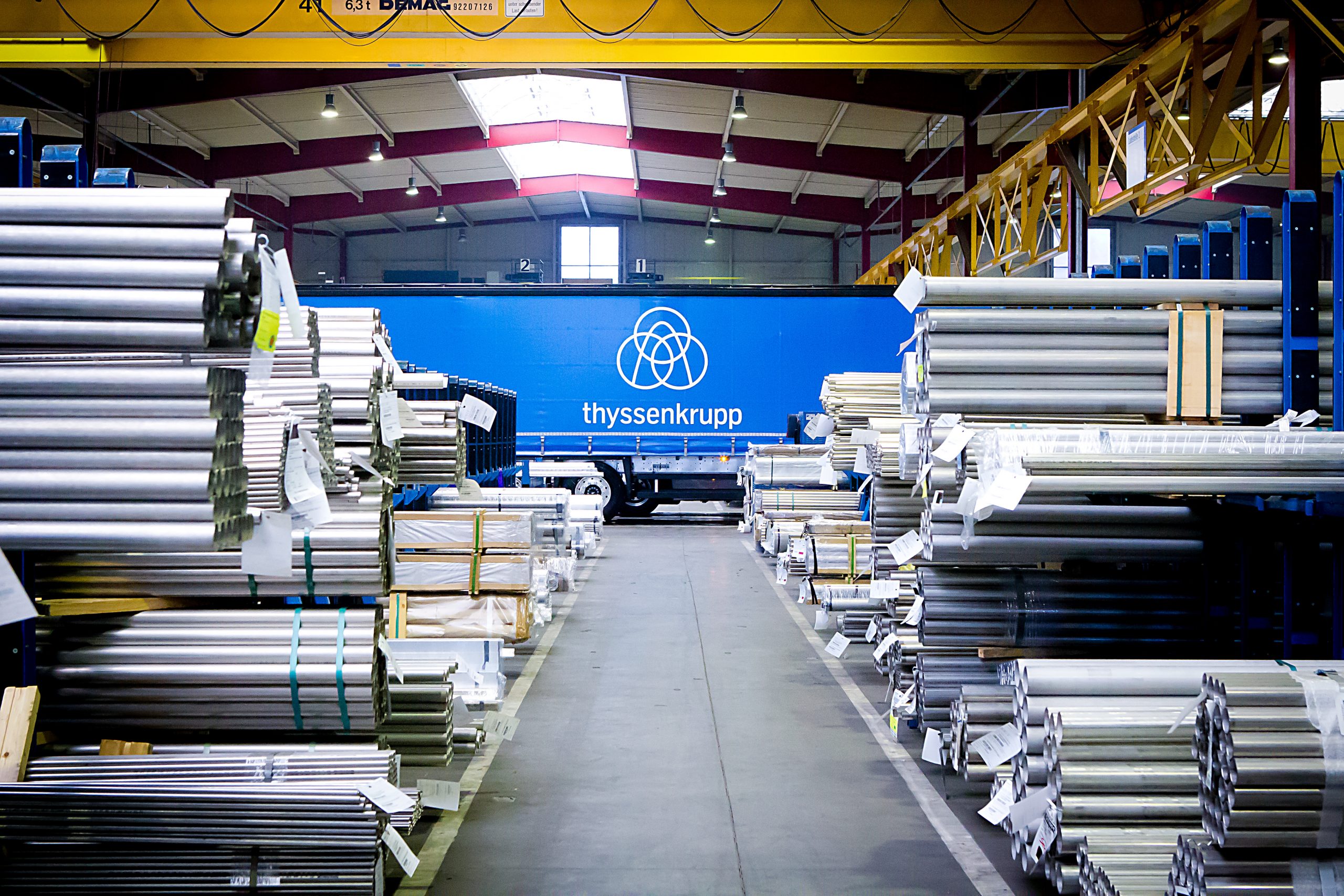
Thyssenkrupp’s El Puig site in Spain to be climate-neutral by 2023
Thyssenkrupp’s Materials Processing Europe steel service center in El Puig near Valencia, Spain is to be climate-neutral by 2023, with 525 solar panels already installed, the company said July 21.
The company said the electricity generated by seven inverters, a device that converts electricity that is generated by solar panels from DC to AC, already cover 35% of the site’s energy requirements.
The installation of a further 1,300 solar panels will be completed in 2023, it said.
Thyssenkrupp said it will then produce solar power equivalent to the full amount of its own needs at the site, as well as additional energy from solar power that will benefit other consumers in the regional supply system.
Around 260 of its warehouse sites will be climate-neutral by 2030, the company said.
S&P Global Commodity Insights assessed hot-rolled coil in Northern Europe as stable July 20 at Eur855/mt ex-works Ruhr.
Market participants expect prices to increase in the near term, with mills looking to establish higher pricing before full demand revival in September.
In February, Thyssenkrupp Steel Europe, Germany’s biggest steelmaker with plans for a major energy transition project at its Duisburg works, and Thyssenkrupp Materials Processing Europe both joined ResponsibleSteel as new members.
Aside the El Puig site, Thyssenkrupp Materials Processing has 11 service center locations throughout Europe.
The network of sites supplies processed steel and non-ferrous metals to customers in diverse sectors including renewable energy, automotive auxiliary, construction and metal furniture.
— Filip Warwick

Steel prices close to bottom, rebound expected: Italy’s Marcegaglia
Italian reroller Marcegaglia believes steel prices are close to the bottom and expects a technical rebound triggered by slowly returning demand.
“I think that in few weeks, or after the summer break, prices will go up again by around 8%-10% from today’s level as little-by-little demand comes back … but also because steelmakers need to offset the higher raw materials costs,” Chairman Antonio Marcegaglia told S&P Global Commodity Insights in an interview.
He added that the exchange rate factor was also relevant, with the dollar/euro exchange rate losing 10-12 points, making raw materials more expensive foe European players.
The spread between European hot-rolled coil steel and raw material prices narrowed 23% in June from May, as spreads unraveled from a record high in April on continued weakness in steel prices, according to S&P Global Commodity Insights data.
HRC prices in North Europe rose from Eur665/mt ex-works Ruhr at the beginning of January to a record high of Eur1,460/mt EXW Ruhr March 21, but they have fallen since to be assessed at Eur855/mt EXW Ruhr on July 20.
“The demand for steel products is back after a period of de-stocking, we see this from our end-users,” Marcegaglia said, adding that he expected overall steel consumption in Europe for 2022 to be 3%-5% lower year on year.
However, he added that 2021 was a “very good year,” as well as the first half of 2022, while it remained to be seen how 2022 would end.
2022 steel volumes
The company’s 2022 steel production volume is likely be in line with the overall decrease in demand, with volumes down by 3%-5% compared to 2021, when the company produced 5.8 million mt.
The steel market at the beginning of 2022 had a bullish start with strong restocking amid rising prices. Since mid-April, market sentiment has changed, driving a strong correction, which will presumably finish by Q3, Marcegaglia said.
2022 was marked by a growing climate of uncertainty and reduced confidence on the part of households and businesses, mainly due to the Russian invasion of Ukraine, but also due to high energy costs, Marcegaglia said, adding that Chinese lockdowns and restrictions also had an impact.
These factors, in addition to 2021’s pandemic shutdowns, high logistic costs and safeguards, have made steel markets increasingly regional and more vulnerable to volatility. Companies, in order to cope, have to be flexible and diversify, he added.
— Annalisa Villa

Mertex UK saves troubled German pipemaker Rohrwerk Maxhütte
Rohrwerk Maxhütte, which late last year filed for insolvency, has found a white knight in Mertex UK, a distributor of pipe and other steel and metals related products, Kallanish notes.
Rohrwerk Maxhütte, located in the Franconia region of northern Bavaria, has been threatened with closure several times over the last 20 years, after the shutdown of its blast furnace in the 1990s. In December last year, it filed for insolvency again. The mill makes seamless pipe mainly for the automotive, shipbuilding, and offshore industries. Its annual revenue is reportedly around €100 million ($102m), achieved with a staff of 460.
Mertex UK Limited is a privately-owned company, registered in England and Wales. It describes itself as a leading, diversified, natural resources group with renowned specialised activity in trading, manufacturing and processing of line pipe, and OCTG such as casing, tubing and drill pipe.
On its website, it briefly announces the asset purchase agreement with Rohrwerk Maxhütte. It says the lines it is acquiring produce hot-finished tube with 21.3-139.7mm outside diameter and 2.3-13mm wall thickness, as well as cold-finished tube with 4-120mm outside diameter and 1-11mm wall thickness.
According to local radio reports, the new owners will bring fresh order volumes, and are planning further investment in the mill.
Christian Koehl Germany


Thyssenkrupp eyes renewable energy self-sufficiency for Spanish site
Thyssenkrupp Materials Services has made progress in ensuring its Spanish service centre in El Puig is fit for climate-neutral energy operation on the basis of an extensive photovoltaic system.
The first 525 solar panels have been installed to make the most of the around 300 powerful days per year of sunshine in the region, Kallanish learns. The electricity generated by seven inverters already covers 35% of the site’s energy requirements. The installation of a further 1,300 solar panels will be completed next year. The company will then be producing solar power equivalent to the full amount of its own needs, and also will supply other consumers in the region.
El Puig will be the first operating site of tk Materials Services to operate on a climate-neutral basis. The firm intends to make all 260 warehouse sites in various countries climate-neutral by 2030.
Tk Materials Services has also agreed to extend the existing strategic cooperation with Spanish company Industria de Turbo Propulsores (ITP) until the end of 2024. ITP is an operator and manufacturer of aircraft engine turbines, components and associated services for the aerospace sector. Tk Materials units tk Aerospace and tk Materials UK will extend the supply of stainless steel and nickel products to ITP locations in the UK, Poland, Spain, India and Mexico. The extended agreement was signed at this week’s Farnborough Airshow.
The German-based group announced another deal in the aerospace sector with Deutsche Aircraft. Tk Aerospace has signed up for a strategic partnership to develop a material supply chain solution for the D328eco aircraft. Tk Aerospace will be responsible for the design of the material planning and procurement processes between multiple material and sub-tier suppliers.
Christian Koehl Germany
ArcelorMittal, Gestamp develop low-carbon steel parts
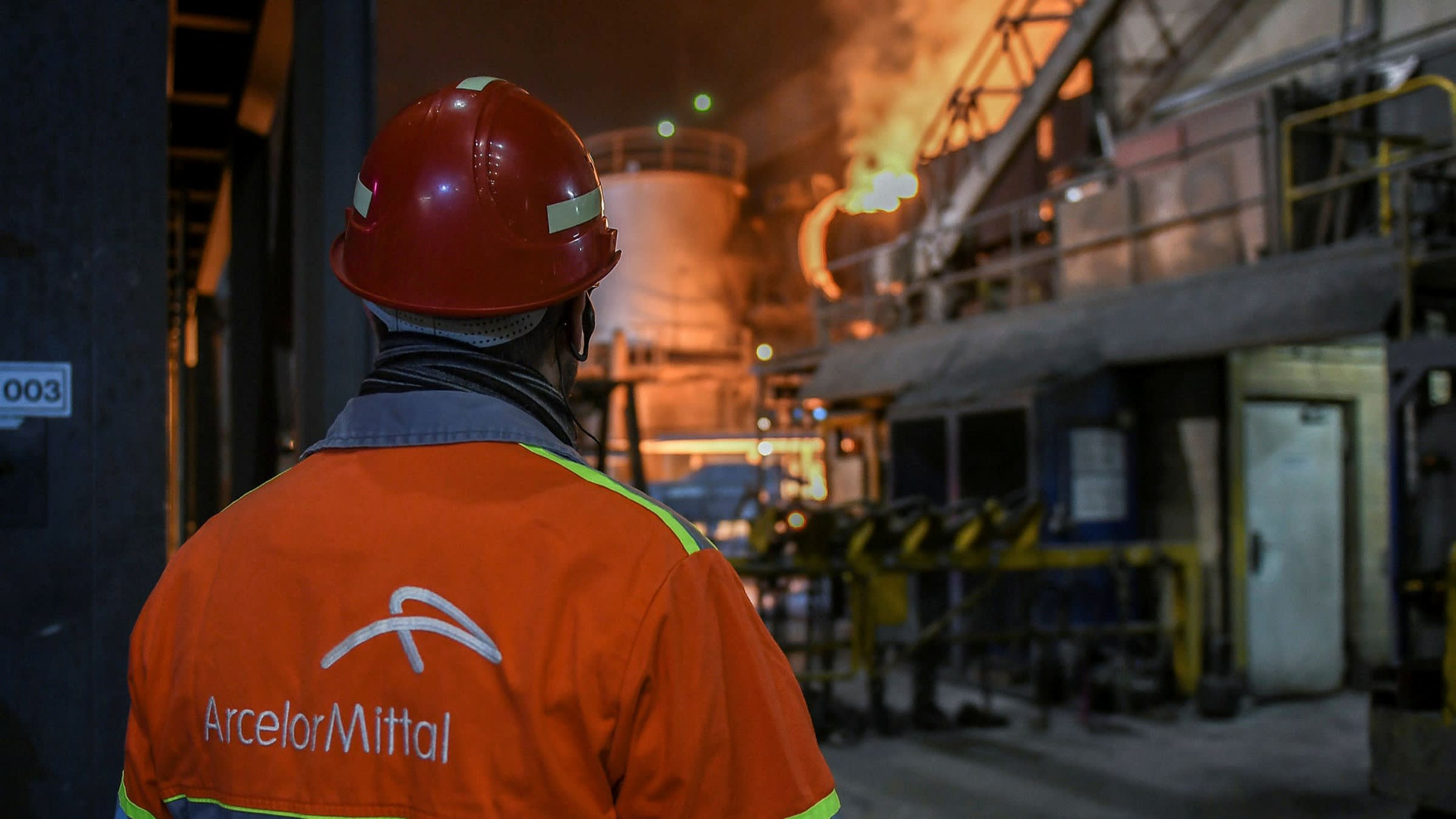
ArcelorMittal says it has agreed to partner with Spanish automotive component producer Gestamp to develop production of low-carbon-emission steel parts for the automotive sector in Spain and throughout Europe.
Both companies will cooperate on sustainability and work closely to ensure the steelmaker’s products meet all of Gestamp’s technical requirements, ArcelorMittal tells Kallanish.
“In this process, Gestamp has a very important role in validating the low-carbon emissions steel produced by ArcelorMittal in order to meet the standards of excellence its automotive clients need,” the steelmaker observes. Using Usibor 1500 made with “XCarb” recycled and renewably produced substrate, Gestamp has successfully trialled the first parts in press-hardening steel. This material is ultra-high-strength and therefore enables car manufacturers to achieve excellent weight reductions across the vehicle.
“Our work with our valued customer Gestamp to use our XCarb recycled and renewably produced to manufacture ultra-high strength steel to help carmakers decarbonise their supply chain is a beacon for our industry,” ArcelorMittal Europe chief executive Geert Van Poelvoorde explains. “A few years ago, we did not think it would be technically possible to do this, but today we are on the brink of supplying low-carbon emissions steel for large-scale automotive production.”
Todor Kirkov Bulgaria

ArcelorMittal Warszawa suspends output on lower orders
ArcelorMittal Warszawa has temporarily suspended production on account of a decline in orders, especially in the rebar segment. This does not however indicate the start of a longer downtrend, says the firm’s general director Artur Gierwatowski, adding that he expects demand to return to normal soon.
The firm had anticipated the increase in electricity and raw material prices, which was exacerbated in the second quarter by the outbreak of war in Ukraine, he adds.
ArcelorMittal Warszawa received CARES certification in April for its 50mm diameter B500B grade rebar, thanks to which it will be able to sell this product in the UK market. The firm initially announced its plan to offer this product in the UK last year (see Kallanish passim). The electric arc furnace-based mill also shipped its first rebar with ArcelorMittal’s “X-Carb” certificate in June, Gierwatowski observes in the latest edition of the company’s newsletter.
After being appointed general director earlier this year, Gierwatowski reaffirmed the mini-mill’s strategy to ramp up SBQ production and increase market share, supported by the installation of a new saw for cutting bars, as well as a fourth finishing line.
SBQ production in 2021 was 166,400 tonnes, the highest-ever annual output.
According to ArcelorMittal Group results, ArcelorMittal Warszawa produced 600,000t of crude steel in 2021, up from 500,000t in 2020.
Adam Smith Poland
Buyers willing to pay higher prices for rebar in Italy and Spain amid surging energy costs
Rebar prices rose in Spain and narrowed upward in Italy in the week ended Wednesday July 20; energy cost increases combined with continuing uncertainty around potential energy shortages in the fourth quarter have compelled mills to raise prices, sources said.
Solid demand has made buyers more accepting of higher prices, thus reversing the price downtrend for rebar in Southern Europe.
Italy
Demand remained good in Italy, with some buyers stocking up before summer holidays begin in August. However, a wait-and-see attitude continued to prevail, Fastmarkets heard.
Fastmarkets price assessment for steel reinforcing bar (rebar) domestic, exw Italy was €860-880 ($878-898) per tonne on Wednesday, narrowing up by €30 per tonne from €830-880 per tonne the previous week.
Despite demand remaining solid, significant uncertainty remains, Fastmarkets heard.
“Demand is still good these days, but it seems to decrease a little day by day. It is possible that customers are waiting to understand what the price will be at the end of July or the beginning of August before deciding to buy,” a source said.
The same source said mills are holding off taking large volume orders, fearing that energy costs will begin to rise in August.
“We think that the price could increase again before the holidays, and maybe it will remain high till the first half of September,” the source said.
However, with so many extenuating factors – including extreme weather situations and energy cost surges – the rebar market in Italy may not follow a conventional pattern, Fastmarkets heard.
Energy rationing, proposed by the European Commission on July 20, would add further upward pressure to energy prices, forcing mills to increase prices and potentially cut production, sources told Fastmarkets.
Emergency legislation, designed to protect countries from the possibility of Russia weaponizing gas supplies over the coming months, would enable the EU Commission to impose 15% binding gas consumption restrictions on EU countries over the next two years.
If passed, each country would have to decide how these cuts would be imposed.
Despite the fact that domestic scrap prices declined significantly in Italy month on month in July due to lower demand from mills, these decreases were not nearly enough to offset energy costs, a second source told Fastmarkets.
Spain
Buyers have become more accepting of price rises amid surging input costs, sources told Fastmarkets.
Fastmarkets’ price assessment for steel reinforcing bar (rebar), domestic, delivered, Spain was €780-800 per tonne on Wednesday, up by €20 per tonne from €760-780 per tonne the previous week.
Spanish mills have begun to raise prices to compensate for increasing energy costs, sources told Fastmarkets.
Offers from mills were heard at €820-850 per tonne, indicating mills plan to continue raise prices, although buyers are not currently accepting this price level, sources said.
Decreasing international scrap prices since mid-April have been a major factor in the falling rebar market. Despite prices surging in early July, they have recently fallen again.
Fastmarkets’ daily calculation of the index for steel scrap, HMS 1&2 (80:20 mix), North Europe origin, cfr Turkey was $382.50 per tonne on Tuesday July 19, down from $398.49 per tonne the week before.
Published by: India-Inés Levy


Stalprofil boosts performance despite price correction-related write-downs
Stalprofil expects first-half-of-2022 steel shipments to have risen 12% on-year and revenue to have soared 69% amid volatile steel prices and demand, Kallanish notes.
Prices and demand began to correct downwards from mid-April after skyrocketing in March as buyers make “precautionary” purchases en masse amid supply disruptions caused by the outbreak of war in Ukraine, the Polish distributor says.
Distributors’ prices for many steel products returned to pre-Ukraine-war levels at the turn of the second and third quarters, it adds. When calculating Q2 earnings, the firm took into account the ongoing price correction in the steel market. Asset write-downs in Q2, mainly concerning the revaluation of steel inventories to their current market value, slashed PLN 22.7 million ($4.9m) from the company’s forecasted H1 net profit.
Stalprofil’s consolidated revenue, including its pipeline infrastructure segment, rose 47% in H1 to PLN 645.6m ($138.1m), while net profit was up 11% to PLN 61.4m.
The firm will release its full H1 report at the beginning of September.
In 2021, Stalprofil’s steel product sales rose 12% on-year to 207,721 tonnes, with steel structures sales up 9% to 2,216t.
Adam Smith Poland

Northwest European coil nears crossroads, automotive outlook improves
An increasing number of northwest European coil market players believe prices are close to bottoming and will soon rebound. However, this belief is not without doubts.
According to a manager at a Benelux service centre, “more and more customers have come to realise that steel prices seem to have bottomed out.” He is convinced that “northern EU steelmakers seem determined not to accept further price cuts.”
The assumptions are that distributors cannot wait too much longer before replenishing stock, and that the automotive industry will have its comeback in the second half-year, now that semiconductor chip shortages are seemingly easing.
“In the second half-year, the OEMs mean to catch up on the dry spell of the first half, and then we could see shortages of coil and sheet,” a buyer at a German automotive supplier tells Kallanish. “That’s what we hear from the tier-1 suppliers with direct contact to the OEMs. And service centres confirm what we see in rebounding call-offs.”
By means of anecdote, he tells how he saw 5,000-6,000 Mercedes Sprinter units parked on a lot by a Düsseldorf sports stadium for months and months, waiting for missing parts to be completed. “When I came there last week, they had nearly all disappeared, apparently now completed for the market,” he observes.
A mill source essentially shares the optimism for recovering carmaking activity. But he warns that looming energy shortages suggest activity will go the opposite way, and could halt business at OEMs and their suppliers, as they have done to mills already.
While buyers refrain from making predictions on price developments, the mill source gives some rough values, with hot rolled coil pointing over €850/tonne ($867) ex-works, cold rolled coil over €900, and galv over €1,000. Market observers anticipate hikes in offer prices by €50 soon (see Kallanish 19 July).
Christian Koehl Germany

Hitachi Energy to work with Swedish H2 Green Steel
Sustainable energy company Hitachi Energy is to collaborate with Swedish company H2 Green Steel on technology to be used in low carbon steel production and green hydrogen projects, the companies said July 20.
Hitachi Energi will make an undisclosed equity investment in H2GS, which is developing a low-carbon steel plant in Boden, northern Sweden, which includes a green hydrogen plant as an integrated part of the steel production facility with initial production volumes of 2.5 million mt/year from 2025, increasing to 5 million mt/year by 2030.
Hitachi will provide the products and services needed to construct, operate, maintain and improve the power infrastructure required for steel production and giga-scale electrolyzer plants, the companies said.
Under their deal, Hitachi will also offtake low-carbon steel from H2GS once it starts production.
Platts assessed domestic HRC prices in Northern Europe at Eur855/mt ex-works Ruhr July 19, down 11.2% since the start of 2022, according to S&P Global Commodity Insights data.
“Achieving carbon-neutrality globally requires efforts from all industries to speed up the energy transition through collaboration,” Hitachi Energy Head of Europe, Middle East and Africa Johan Soderstrom said.
“We are supporting H2 Green Steel’s electrification project and at the same, we are able to secure green steel for our products which is in line with our purpose of advancing a sustainable energy future for all,” he said.
In July, H2GS received environmental approval for the planned low-carbon steel plant in Boden, northern Sweden and in June it signed a 14-TWh power purchase agreement with Norway’s Statkraft for the plant.
— Annalisa Villa