

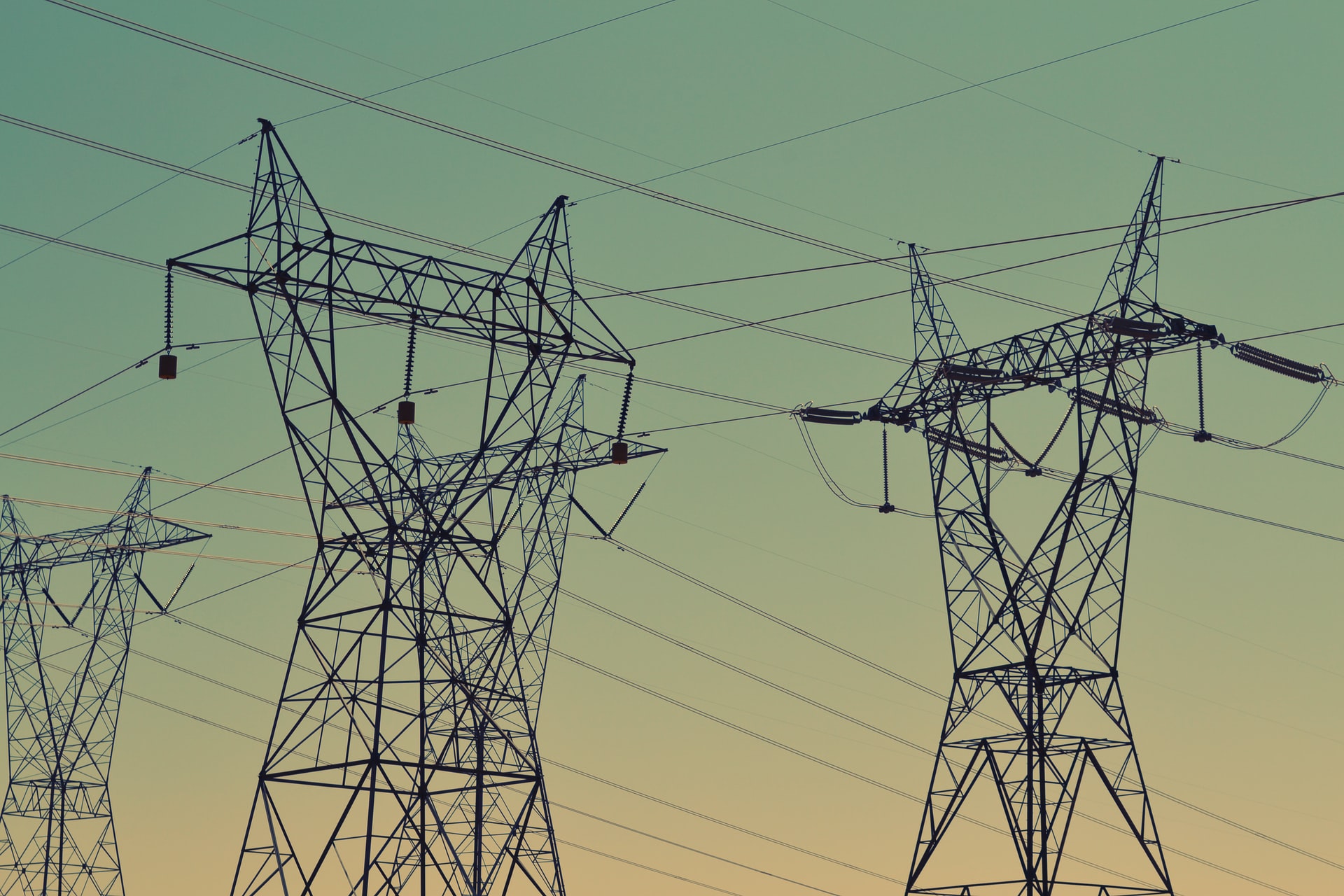
Fabricators question German gas-based power pricing system
Germany’s fabricators of steel and metal products are urgently calling for an amendment of the prevailing electricity pricing system, and for an upper cap on electricity prices, Kallanish notes.
Under the so-called “Order-Merit-Principle”, power prices are defined by the price of natural gas, which has undergone an enormous surge and will likely increase further in view of Russian gas supply cuts.
Most German electricity is generated by coal and renewables, at much lower costs than natural gas. Still, gas power plants remain a part of the national energy mix, and the principle states that the highest price on the market can be charged by all suppliers.
This is an outdated pricing model, which creates enormous windfall profits for non-gas power plants – and the price must be paid by consumers, says steel and metal fabricators association WSM.
The association has issued a statement on the matter on the eve of negotiations over existing supply contracts. According to WSM, the highest price from gas power plants in 2021 was €226 ($229) per megawatt hour, compared with €145 as the highest price of other energies.
WSM notes the European Commission favours an upper cap on prices, but the German government has not yet moved to implement this proposal. “It is in the hands of the government to decouple the power price from the gas price. What is it waiting for?” the association wonders. It calls on the government to make a move before the extension of the supply contracts is due.
Christian Koehl Germany


UK bans Russian coal imports
The UK government has banned coal imports from Russia, effective 10 August. A ban on Russian oil imports will come into effect from 31 December, Kallanish notes.
UK coking coal – HS code 27011210 – imports in 2021 were 1.998 million tonnes, of which 557,418t came from Russia. The US was top supplier with 796,151t, according to UK Trade Info data.
In January-April 2022, overall coking coal imports were 808,705t, with only 80,642t coming from Russia – all in January. The US was again the top supplier with 434,343t, but Sweden came second with 157,638t – Sweden did not figure at all in 2021 imports.
The ban will have little effect on the market as Tata Steel anyway cut business ties with Russia in April, while British Steel said in March it is not reliant on coking coal supply from Russia.
Adam Smith Poland
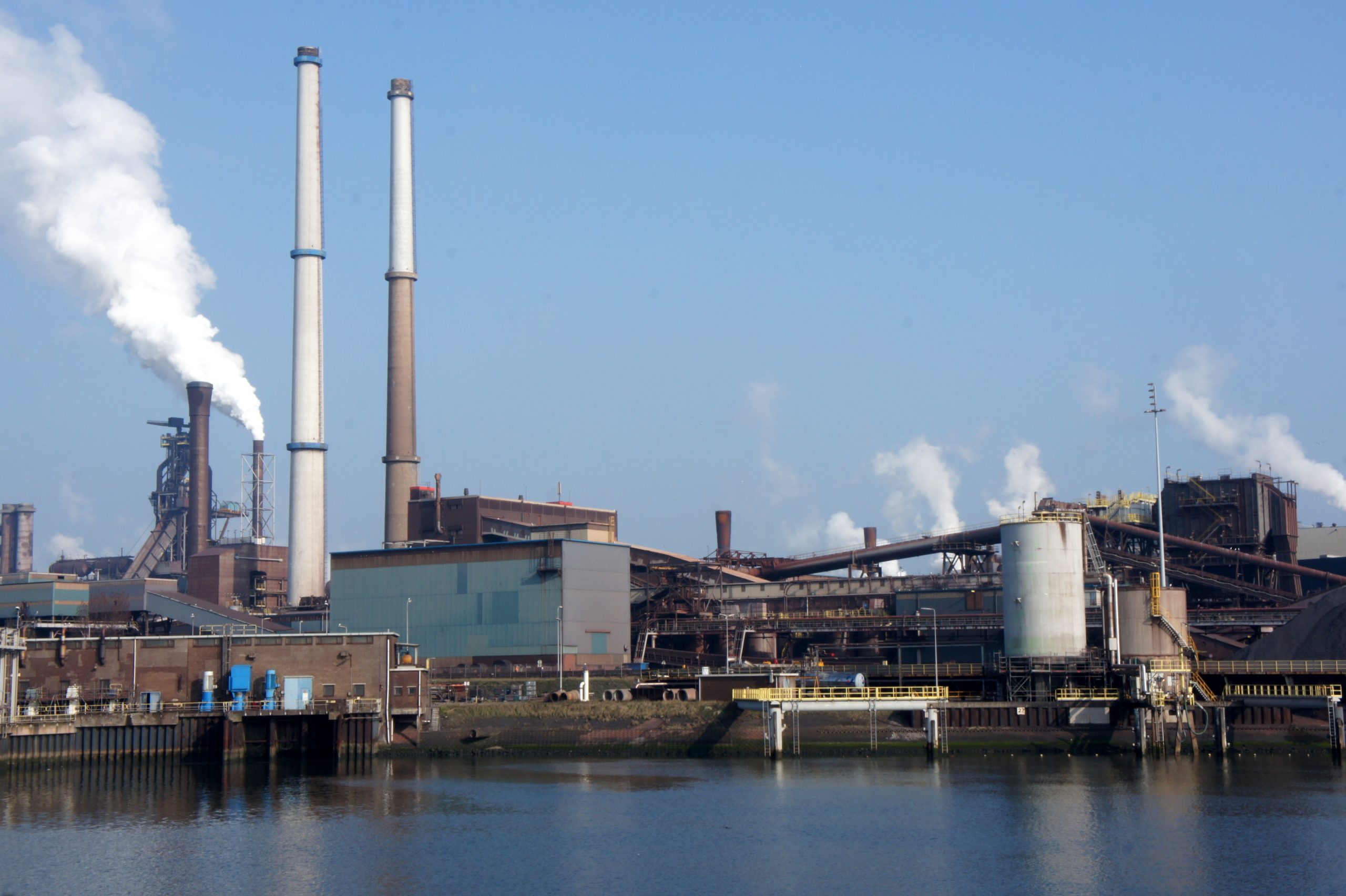
Tata’s Maastricht service centre gets new processing line
Tata Steel’s Maastricht service centre will receive a high-performance levelling and cut-to-length line, with an automated packaging system designed for high-strength strip steels.
The subsidiary of Tata Steel Nederland has begun installing the line, which has been supplied by equipment maker FIMI. Its start-up is scheduled for mid-2024.
Tata Steel says it is preparing for increasing future demand for abrasion-resistant and high-strength premium steels, particularly in the markets for equipment in construction, mining and agriculture. The finished products will be delivered to customers in Germany, Eastern Europe, the Benelux, UK and to the Nordic region, Kallanish understands.
The line will be capable of processing coils weighing up to 40 tonnes and having a yield strength of up to 1600 N/mm².
Service Centre Maastricht consists of two sites: Multisteel and Feijen. Multisteel specialises in steel coils in the thinner-gauge segment, such as cold-rolled and galvanised steels: The new line will be installed at Feijen, which processes hot rolled coil.
Christian Koehl Germany
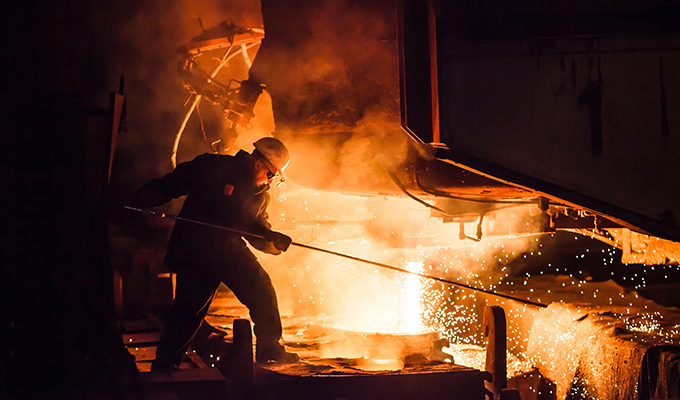
Europe energy transition requires $10 trillion investment: Goldman Sachs
An estimated €10 trillion ($10.24 trillion) of investment will be needed by 2050 for Europe’s energy transformation, which can then be entirely recouped from the savings of net energy imports, says Goldman Sachs.
Investments will accelerate and peak by 2035, driven largely by the initial infrastructure expansion required for power networks, charging networks, the massive expansion of renewable power, buildings upgrades and heating pipeline infrastructure to accelerate the penetration of electrification and clean hydrogen, Goldman says.
Inter-regional hydrocarbon flows between Europe and the rest of the world can be substituted for a more inter-connected European system of power networks and hydrogen pipelines.
This is likely to result in significant demand for steel, Kallanish notes.
The recouping of costs will occur with a decade of time lag, meaning efficient financing and a reliable regulatory environment are key to bridge this time gap.
Natural gas nevertheless remains key to Europe’s energy supply for the next two decades and Goldman says it is in the interest of Europe to sign new long-term LNG contracts to improve security of supply.
While many industrial sub-segments could potentially be electrified, over 50% of Europe’s industrial natural gas consumption stems from heavy industries, typically requiring high operating temperatures making direct electrification unfeasible, Goldman points out. This includes steelmaking.
“While green hydrogen’s move towards cost parity with grey hydrogen is accelerating, and we expect this to be reached before 2030 across regions of low renewable power costs, we note that the current macro environment of higher commodity prices, in particular for European natural gas, combined with carbon prices is creating a unique green hydrogen cost parity dynamic in Europe,” Goldman observes.
“With most currently produced hydrogen being sourced from natural gas in the region, the notably higher natural gas price to which the region is currently exposed is tilting the scale in favour of green hydrogen from an economic standpoint,” it adds. The bank estimates the carbon price implied by the current higher natural gas price environment in the region is equivalent to over $200/tonne of CO2 equivalent.
This is even without considering European ETS carbon prices, which are currently well above $50/tCO2e despite their correction from the peak. This is more than sufficient to bridge the cost of grey hydrogen with green across regions of Europe where green hydrogen is produced with dedicated RES and a renewable power LCOE lower than $70/MWh, Goldman concludes.
Adam Smith, Poland
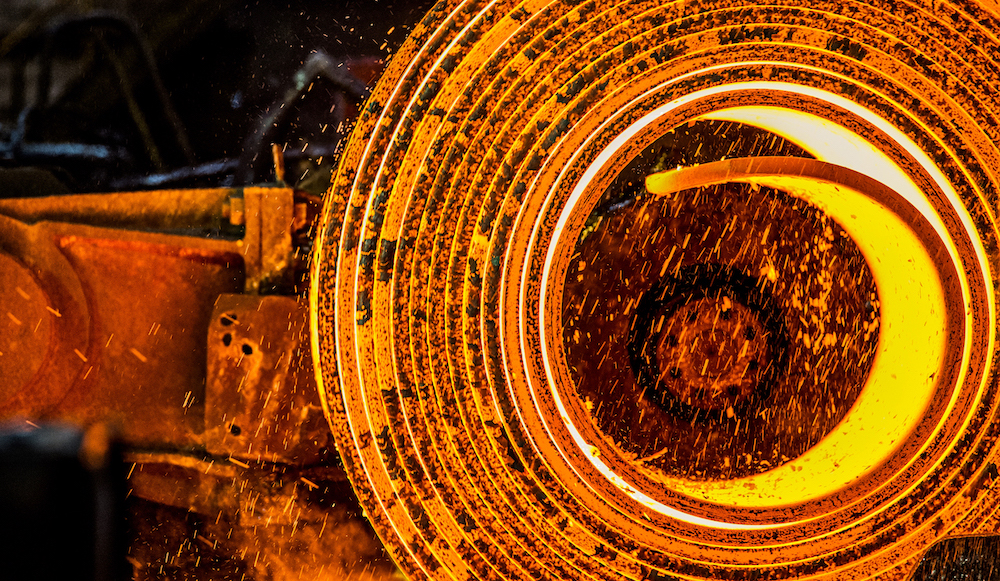
European HRC prices flatten in the week to July 22
European hot-rolled coil prices were broadly stable in the week to Friday July 22, with buyers and producers holding different expectations about the future price trend, sources told Fastmarkets.
Buying activity in the European coil market remained subdued with only limited volumes being traded.
Sentiment was mixed, with producers agreeing that HRC prices had touched a floor and were poised to increase amid surging production costs and output cuts. Buyers, meanwhile, believed there was still room for a further price drop, because of oversupply and persistently weak end-user demand.
Fastmarkets calculated its daily steel HRC index, domestic, ex-works Northern Europe at €855.00 ($873.22) per tonne on Friday, stable day on day.
The index was up by €3.33 per tonne week on week, but down by €13.00 per tonne month on month.
Some transactions were reported at €860 per tonne exw on Friday, while buyers’ estimations of achievable prices were at €850-860 per tonne exw.
But producers in Northern Europe maintained official offers closer to €900 per tonne exw, source said.
Offer prices from mills in Central Europe were heard closer to €800 per tonne exw, but trading was reported at €760-780 per tonne exw.
One more integrated mill announced production cuts last week.
Liberty Steel will stop one blast furnace (BF) at its Ostrava site this week for a planned maintenance. Market sources said the BF might remain offline for at least four months.
Fastmarkets’ calculation of the daily steel HRC index, domestic, exw Italy remained at €775 per tonne on Friday, stable day on day.
The calculation of the Italian index was up by €5.00 per tonne week on week but down by €36 per tonne month on month.
HRC offers from mills in the nation were reported at €800-820 per tonne exw.
A transaction from a local reroller was reported at €760-770 per tonne exw.
But some large buyers estimated the achievable price level even lower – at €750-760 per tonne exw.
Some lower HRC offers were heard from the Far East this week, which also affected the market’s mood.
Notably, HRC with September shipment was offered to Italy at €680 per tonne cfr. Egypt-origin HRC was offered to Italy at €730 per tonne cfr.
Boron-alloyed HRC from India was offered to Italy at €700-710 per tonne cfr.
Published by: Julia Bolotova

Spain: May steel production falls 8% on year
Spanish crude steel production in May fell 8% year on year to 1.24 million mt, data from Spanish steel association Unesid showed July 25.
May was the seventh consecutive month with an annualized decline in production, leading trailing 12-month steel production to a nine-month low of 14.8 million mt as energy costs and related factors have stalled a recovery from the COVID-19 pandemic lows of 2020.
Production in May was nonetheless Spain’s highest monthly output in seven months, buoyed by seasonal factors, while a new mechanism designed to cap wholesale energy prices could ease constraints on June’s production figures.
Since the mechanism was applied in mid-June, wholesale energy costs, which are usually used as indexes for large buyers such as steel plants, have fallen 26%, according to data from market operator OMIE.
Spain has the capacity to produce 17 million mt/year from electric arc furnaces and 6.6 million mt/year from blast furnaces and basic oxygen furnaces. Usually around 85% of annual production is non-alloy steel.
Spain’s May steel recycling volume followed a similar pattern to crude steel production, reaching its highest monthly total since October 2021 at 976,000 mt, although down 9% year on year.
Shredded scrap for South Europe domestic delivery was assessed at $356.44/mt on July 22 compared with $537.18/mt at the end of May.
— Gianluca Baratti


Italian demand recovery sustains coil prices
Italian coil prices are mostly stable compared to last week, fluctuating at around €750/tonne ($766) base ex-works depending on client and volume. This is happening despite some Italian coil producers pushing up their values by €40/t, mainly because of higher production costs.
Italian coil prices are mostly stable compared to last week, fluctuating at around €750/tonne ($766) base ex-works depending on client and volume. This is happening despite some Italian coil producers pushing up their values by €40/t, mainly because of higher production costs.Service centres interviewed by Kallanish have registered a significant increase in demand for certain products and stable prices of coil derivatives throughout the country. While the automotive sector remains stuck and is showing little improvement, encouraging signs of demand recovery are reported from several industrial sectors.
Some restocking and apparent demand is also reported, and local service centres will shut down for the August holiday break next week with decidedly improved order books. End-users, however, are refusing any price increases, and sources believe demand will continue to be sustained only if prices remain below €800/t.
Hot rolled coil import values from Asia remain competitive at about €700-730/t cfr, but the long lead times, sometimes stretching into November, are discouraging Italian buyers from committing.
Italian HRC makers are now asking for €780-800/t base ex-works for new orders and quoting for August delivery. Domestic contracts hover at €720-750/t base ex-works. Sources forecast values to stabilise at the level of €750/t until the end of the month.
Meanwhile, cold rolled and hot-dipped galvanised coil are also stable at €880/t base ex-works for the former and €900/t base ex-works the latter. There are no competitive import offers for CRC, which is sustaining Italian price stability and demand for the product. Some import offers at €820-840/t cfr are reported for HDG from Asia.
Natalia Capra France

EU HRC stable at northern price floor, Italy attracts competitive imports
S&P Global Commodity Insights assessed hot-rolled coil in Northwest Europe stable July 25 at Eur860/mt ex-works Ruhr.
Distribution sources reported achievable prices as stable at Eur850-860/mt ex-works Ruhr, with most activity concentrated at the top end of the range.
A mill source said one large German mill had been trading below the Eur800/mt mark, even as low as Eur770/mt in some cases, both ex-works Ruhr. However, a German distributor source clarified that these deals would only be seen between affiliated companies – not representative of general spot market activity.
The Eur850-860/mt level was agreed by another mill source, seeing current prices as the floor.
“It looks like the HRC market price has definitely reached its bottom and intends to resume on a slight positive curve,” said the source. “We’re seeing Q4 RFQs circulating now from general industry, alongside strong signs of recovery from the automotive sector.”
Despite positive indications, the source questioned to what extent requests for quotes were speculative rather than representative of real needs.
In the southern market, sources gave tradable value indications at Eur760-800/mt ex-works Italy, with one trader reporting deals in the same range. Offers were heard stable at Eur800-820/mt ex-works Italy.
A service center source saw decreased potential for price recovery in southern Europe due to competitive import offers from a bearish Asian market.
An offer was heard at Eur680/mt CIF Italy ex-Taiwan from one service center, with other offers reported by a trader source at Eur700/mt and below, CFR Italy.
HRC in Italy was assessed at Eur785/mt ex-works on the day, according to S&P Global data.
— Benjamin Steven, Maria Tanatar
Benteler intensiviert Nachhaltigkeitsstrategie
18.07.2022 von Hubert Hunscheidt

Zentrales Vorhaben ist die Dekarbonisierung des Unternehmens: Die produktionsbedingten CO2-Emissionen (Scope 1 und 2) sollen bis 2030 halbiert werden. Die Scope 3-Emissionen bei eingekauften Waren und Dienstleistungen sowie brennstoff- und energiebezogenen Emissionen sollen im ersten Schritt um 30 % reduziert werden (Basisjahr 2019). Bis 2050 will BENTELER Netto-Null-Emissionen für Scope 1, 2 und 3 (vorgelagert) erreichen. Die Division BENTELER Steel/Tube strebt das Ziel CO2-Neutralität bis 2045 an. Dafür liegt der Fokus auf gesteigerter Energieeffizienz sowie dem Einsatz von Grünstrom und klimaneutralem Vormaterial.
Weitere Maßnahmen betreffen unter anderem die Bereiche saubere Energie, Kreislaufwirtschaft und Wasser. So wird BENTELER seine Produktionswerke kontinuierlich auf grünen Strom umstellen und seinen globalen Energieverbrauch jährlich um zwei Prozent senken. Die Schonung von Ressourcen bekommt einen noch höheren Stellenwert in der Fertigung: Abfälle sollen bis 2025 um sechs Prozent reduziert werden. Parallel soll der Recyclinganteil – derzeit bei rund 80 Prozent in der Division Automotive – weiter steigen. Speziell an Standorten mit hohem Wasserstress wird die Wasserentnahme bis 2030 um zehn Prozent reduziert (Basisjahr 2019). Basis der gesamten Nachhaltigkeitsstrategie von BENTELER sind dabei die „Sustainable Development Goals“ (SDGs) der Vereinten Nationen.
Ralf Göttel, CEO der BENTELER Gruppe: „BENTELER ist ein energieintensives Unternehmen. Umso mehr sind wir uns unserer gesellschaftlichen Verantwortung bewusst. Bei unseren Nachhaltigkeitsaktivitäten verfolgen wir einen ganzheitlichen Ansatz: Wir setzen uns selbst konkrete, messbare Ziele, die wir als Team gemeinsam erreichen – und gern auch übererfüllen – werden. Darüber hinaus tragen wir auch mit unseren Produkten dazu bei, die Mobilität von morgen noch nachhaltiger zu machen.“
Grundlegend überarbeiteter Nachhaltigkeitsbericht veröffentlicht
Welche Fortschritte BENTELER im vergangenen Jahr bereits gelungen sind, verdeutlicht der umfangreiche Nachhaltigkeitsbericht 2021, den das Unternehmen heute veröffentlichte. Die Publikation zeigt Innovationen im Bereich der Produktnachhaltigkeit sowie diverse Maßnahmen aus den Bereichen Lieferkette, Produktion und Umwelt. So wurden beispielsweise die spanischen Automobilwerke des Konzerns bereits vergangenes Jahr auf grünen Strom umgestellt. Die Division Steel/Tube wurde kürzlich von EcoVadis, einem der weltweit größten Anbieter von Nachhaltigkeitsratings, mit der Silbermedaille ausgezeichnet und gehört damit nun zu den besten 25% der Unternehmen in der Branchenkategorie „Herstellung von Roheisen und Stahl“.
Ein Highlight im Bereich Produktion ist die „Grüne Rohre“-Strategie der Division Steel/Tube. Auch im Produktportfolio setzt die Division Steel/Tube auf nachhaltige Lösungen: Mit HYRESIST – nahtlosen, warmgewalzten Leitungsrohren – ermöglicht BENTELER die sichere Verteilung von Wasserstoff. Darüber hinaus bietet BENTELER mit seinem Hochdruck-Wärmetauscher eine innovative Lösung für E-Fahrzeuge. Das Produkt trägt zur besonders effektiven Kühlung der Batterie bei – und verkürzt damit ihre Ladezeit. In Partnerschaft mit Maruyasu Industries bündelt das Unternehmen seine Kompetenzen bei Abgasrückführungs-Kühlern. Damit sorgt BENTELER nicht nur für eine nachhaltigere Mobilität, sondern unterstützt seine Kunden konkret bei der Erfüllung geplanter Verordnungen wie der EU-7-Norm.
Quelle und Foto: BENTELER International Aktiengesellschaft
China continues AD duties on electrical steel imports
The Ministry of Commerce of China has announced that it will continue to impose anti-dumping duties on imports of grain-oriented electrical steel originating in Japan, South Korea and the European Union for five years since 23 July 2022, Kallanish notes.
The products involved are under HS codes 7225.11.00 and 7226.11.00. According to the official document, these products specifically refer to grain-oriented electrical steel containing at least 0.6% silicon by weight, not more than 0.08% carbon, and may contain not more than 1% aluminum. Its thickness should not exceed 0.56mm, and width should be at least 10 times the thickness.
China has imported 110,449 tonnes of these products in 2021, including 11% from South Korea and 1% from Japan. In the first half of 2022, imports of grain-oriented electrical steel declined by 29% on-year to 45,355t, including 7% and 1% contribued by South Korea and Japan. EU countries shipped almost none of these products to China in the reporting period.
China’s AD duties on grain-oriented electrical steel-July 2022
Country Company Duty
Japan JFE Steel Corporation 39%
Nippon Steel Corporation 45.7%
All Others 45.7%
South Korea Posco(with price promise) 0%
All others 37.3%
EU All 46.3%
Source: China Trade Remedies Information website
Kallanish Asia