


Trump’s latest Section 232 adjustments spark mixed reactions in steel industry
US President Donald Trump’s latest amendment to Section 232 tariffs on Monday June 1 sparked mixed responses from the steel industry, Fastmarkets learned.
The president signed the proclamation on Monday, adjusting the country’s Section 232 tariffs on steel, copper and aluminium by temporarily reducing the duty rate to 15% for certain agricultural equipment, such as combines and harvesters, and residential-use heating, ventilation and air-conditioning (HVAC) systems from 25%.
The tariff changes are temporary, according to the White House, lasting until December 31, 2027. The adjustments will become effective for goods imported or withdrawn from bonded warehouses after 12:01am US Eastern time on Monday June 8.
“These temporary reductions show that the administration continues to refine the [Section] 232 derivatives list to ensure the tariffs effectively strengthen domestic steel production while minimizing unintended consequences,” Brandon Farris, executive vice president of the Steel Manufacturers Association (SMA), told Fastmarkets on Tuesday June 2, characterizing the tariffs as Trump’s “signature trade achievement.”
The US steel industry is committed to “maintaining the Section 232 steel tariff program,” the American Iron and Steel Institute (AISI) said; according to AISI, the program has resulted in spurring domestic investment and been crucial in curbing the negative impacts of global steel excess capacity due to foreign subsidies and other trade-distorting practices.
“We look forward to continuing to work with the administration to maintain strong demand for American-made steel throughout the economy,” Kevin Dempsey, AISI president and chief executive officer, told Fastmarkets on Tuesday.
“The real significance here is that Washington is reducing investment risk for domestic steel producers,” Samir Kapadia, managing principal of the Vogel Group, told Fastmarkets on Tuesday.
Kapadia added: “When a company evaluates a billion-dollar expansion, it now has greater confidence that US policy will support domestic production for years, not months.”
But Trump’s latest tariff actions sparked some skepticism from other members in the industry.
“With several Section 232 decisions on the horizon, we remain concerned with the effects that broad, and potentially stacking, tariffs that could be prescribed through these national security investigations would have on domestic manufacturing,” Jeannette Chu, vice president of national security policy at the National Foreign Trade Council (NFTC), said in a statement on Monday.
The NFTC executive added: “Tariffs on industrial equipment, parts and components for robotics, medical devices and derivative semiconductor products would threaten the competitiveness of America’s most dynamic industries at a time when many companies are building factories and investing in capital equipment.”
The tariff adjustment is “going to be complicated for importers of products containing steel or copper,” a trader told Fastmarkets. “The end result will be a reduction of indirect steel imports such as appliances and agricultural products and increased steel consumption in the US.”
Section 232 tariffs on steel imports
Section 232 tariffs on steel were raised to 50% from 25% on June 4, 2025, shrinking the volume of steel shipped to the US.
The US imported 1.70 million tonnes of steel in April, down by 184,236 tonnes, or 9.77%, from 1.89 million tonnes imported in April 2025, preliminary data from the International Trade Administration showed.
The volume of steel that entered the US in April was also lower by 841,843 tonnes, or 33.10%, imported in April 2024, at 2.54 million tonnes, the data showed.

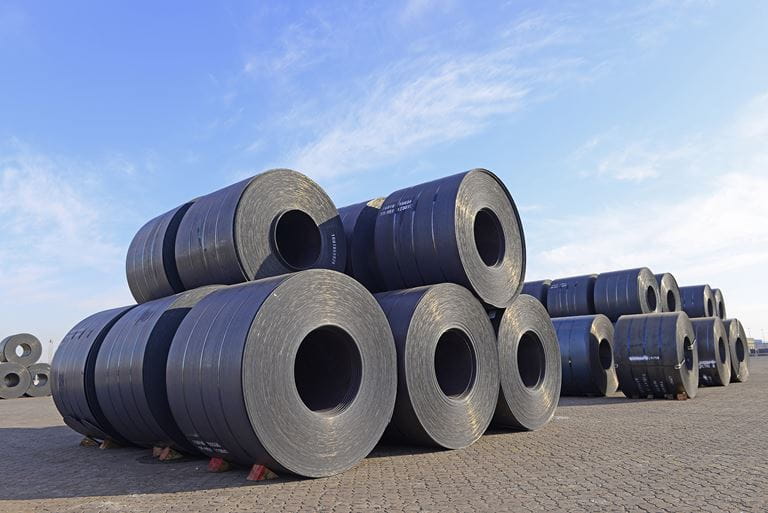
European domestic HRC markets quiet; buyers resist higher levels amid ample inventories
Domestic hot-rolled coil prices in Northern Europe increased slightly on Wednesday June 3, supported by higher offers from suppliers, while Italian prices declined, weighed by slow trading activity and weak demand, sources told Fastmarkets.
In Northern Europe, two buyers reported an offer at €695 per tonne ex-works on June 3 and a third buyer indicated workable levels at €680 per tonne ex-works in Northwest Europe.
No significant trading activity was heard during the day. One buyer said the market was very quiet due to the gap between mill offers and the levels buyers were willing to pay. “Nobody is ready to compromise in the middle,” the source added.
The buyer said customers remained reluctant to accept higher offers from suppliers because they held sufficient stock or could buy from ports at lower prices, around €700 per tonne delivered (€685 per tonne ex-works), adding that “everybody is in wait-and-see mode.”
The buyer source said mills had initiated price increases of €50-80 per tonne for third-quarter material, targeting €740-780 per tonne ex-works, but no firm offers at these levels had been announced yet.
Meanwhile, a second buyer said steel demand, particularly from the automotive sector, could weaken due to geopolitical tensions in the Middle East and slowing global car sales.
Fastmarkets’ daily steel hot-rolled coil index domestic, exw Northern Europe was calculated at €690.00 ($802.89) per tonne on June 3, up by €2.50 per tonne from €687.50 per tonne on June 2.
The index was up by €3.50 per tonne week on week but down by €22.25 per tonne month on month.
In Central Europe, HRC offers varied within the range of €710-730 per tonne delivered (€695-715 per tonne ex-works), depending on the supplier. Workable levels were said to be closer to €705 per tonne delivered, or €690 per tonne ex-works, with market sources noting that mills were unwilling to go below this threshold.
As a result, Fastmarkets weekly price assessment for steel hot-rolled coil domestic, exw Central Europe was €690-705 per tonne on June 3, up from €685-695 per tonne on May 27.
In Italy, the domestic HRC market remained quiet following Tuesday’s Republic Day holiday. Sources reported limited trading activity, linking this to weak demand and uncertainty over country-specific allocations for EU steel import quotas.
“It’s important for large buyers to have the final import quotas and understand what can be booked for the same period from imports and at which prices. So, even more reasons to wait and not to book today,” a mill source said on Wednesday.
Two mill sources reported indications at €670-690 per tonne ex-works on June 3. One producer said they were offering HRC at €680-700 per tonne ex-works and noted that steel service centers were unlikely to pay above €660-670 per tonne delivered, or €645-655 per tonne ex-works.
The same source added that, given the current market conditions, “realistically, nothing higher than €660-670 per tonne ex-works is possible” for July-August bookings.
Fastmarkets’ daily steel hot-rolled coil index domestic, exw Italy was calculated at €672.75 per tonne on Wednesday, down by €4.75 per tonne from €677.50 per tonne on Tuesday June 2.
The index was up by €1.25 per tonne week on week but down by €17.50 per tonne month on month.[HC1]
Turkish HRC offers were reported around €600 per tonne CIF Italy, excluding anti-dumping duty, unchanged from June 2, but buying interest remained limited, a buyer source said on June 3, adding that “Turkish exporters had already secured significant sales into the EU, increasing the risk of exceeding import quotas.”
Meanwhile, HRC from Asia and Algeria was offered at €720-750 per tonne DDP Southern European ports.

European flat steel imports market subdued, eyes on safeguard outcome
Trading activity in the European import flat steel market remained subdued in early June because buyers were awaiting details on country-specific quota distribution in the new safeguard, which will come into force on July 1.
In such conditions, most buyers preferred to take a wait-and-see stance to minimize risks.
There was information circulating in the market about 40,000 tonnes of Indonesian hot-rolled coil sold to Spain in late May, but this could not be widely confirmed by the time of publication, nor could the price of the deal be confirmed.
Sources reported offers from the country varying within the range of €550-575 ($638-667) per tonne CFR in Southern Europe, with some indicating levels as low as €540 per tonne CFR.
Indian material was also heard offered within a wide range. Several sources said HRC from this origin was available at $550 per tonne FOB, with freight costs estimated at $80-90 per tonne to key European ports such as Antwerp or Marghera. This results in $630-640 per tonne CFR or €542-550 per tonne CFR.
Turkish offers were heard at €600 per tonne CFR, excluding anti-dumping duty.
As a result, Fastmarkets’ weekly price assessment for steel hot-rolled coil import, cfr main port Southern Europe was calculated at €550-600 per tonne on June 3, down from €590-605 per tonne on May 27.
Northern European import hot-rolled coil was extremely quiet during the reported week.
As a result, the corresponding Fastmarkets assessment was moved in line with Southern Europe.
Offers of Algerian HRC on a DDP basis were heard in Northern Europe within the range of €700-720 per tonne in late May. Customers considered these levels high, saying that Asian material from traders could still be purchased at €660-690 per tonne DDP.
Fastmarkets’ assessment for steel hot-rolled coil import, ddp Northern Europe was €660-680 per tonne on June 3, versus €640-690 per tonne on May 27.
In early June, DDP-basis offers of Algerian and Asian material were heard at €720-750 per tonne in Southern Europe, whereas customers were willing to pay no more than €680 per tonne DDP.
Fastmarkets thus put its assessment for steel hot-rolled coil import, ddp Southern Europe at €660-680 per tonne on June 3, versus €650-680 per tonne on May 27.

Salzgitter opens training centre for plate
Salzgitter has announced the opening of a new training and communication centre at Ilsenburger Grobblech, the group’s maker of quarto plate.
The modern training workshop will not only be used to train young professionals, but also for the long-term qualifications for employees at Ilsenburger Grobblech. In particular, the centre will be available to industrial mechanics, for whom the company offers up to twelve trainee positions each year, in addition to other apprenticeships.
With the investment amounting to several million euros, Salzgitter and Ilsenburger Grobblech are jointly underlining the importance of sustainable training with career perspectives in the group, Kallanish understands.
The construction of the centre was funded by the federal and state governments, which Salzgitter highlights as a joint signal from politics and business for the future viability of the Ilsenburg as an industrial location.
The official inauguration of the new building was held last Friday in the presence of the premier of Saxony-Anhalt, Sven Schulze.
“Particularly in view of the demographic change in Germany, investing in the training of future skilled personnel is of outstanding importance for the business location,” Schulze stated.


Italian government backs Metinvest-Danieli Piombino coil mill
The Italian government is contributing to the funding of the Metinvest and Danieli’s planned green steel coil mill in Piombino, Tuscany, through state financial entity Invitalia. The approved support amounts to €285 million ($331.5m), earmarked for the construction of electric furnaces and related production infrastructure.
“This is a decisive step towards the relaunch of the Piombino steel hub and the creation of a modern, competitive and sustainable steel supply chain,” minister of Enterprises and Made in Italy (MIMT) Adolfo Urso says in a note obtained by Kallanish. “We are talking about one of the most important industrial investments in Europe, capable of combining innovation, environmental sustainability and skilled employment. The government is firmly supporting this strategic path, accompanying the development of the necessary infrastructure and accelerating the measures essential for the full reindustrialisation of the territory.”
The total investment for new project, overseen by Metinvest Adria, the joint venture between Metinvest and Danieli, will stand at about €3.2 billion. According to MIMT the project is in line with European decarbonisation targets and the ecological transition objectives for heavy industry, and it will be responsible for the significant relaunch of the Piombino area.
“The project has been further strengthened by a declaration of pre-eminent national strategic interest approved by the Council of Ministers, which also provides for the appointment of a special commissioner to accelerate its implementation.” Mimt continues.
Sources close to the matter say progress on the project was slowed by strong and public opposition from Italian steelmakers’ association Federacciai. One source, however, notes that all stakeholders, including central and local government, have been pushing for the project to happen. Together with Trasteel’s acquisition of service centre Magona in Piombino, the investment is seen as marking a revival of the area.
An additional €92m from MIMT has been allocated for the completion of the northern quay at Piombino port, a strategic infrastructure for the realisation of the Metinvest investment.
The new coil mill, known as the Adria project, has been ranked among the five foreign direct investments (FDI) with the highest impact potential in Europe, according to a project tracking database. This follows its recognition as a project of national strategic interest by the Italian government last year. It will have a production capacity of 2.7 million tonnes/year of hot-rolled steel with significantly reduced CO2 emissions (see Kallanish passim).
Metinvest was not available to comment before press deadline.

Kloeckner Kassel starts leveller for precision sheet parts
Kloeckner Metals Germany has started operating a new roller levelling machine at its service centre in Kassel-Kaufungen, Kallanish hears from the distribution group.
The new facility enables high-precision correction of flatness of sheets in thicknesses from 2 millimetres to 45mm, a width of 2,000mm, and a length of 6,000mm. The roller-leveller is complemented with a flatness measuring system, to allow for repeatable results at minimum tolerances, the company says.
Along with the new facility, the company announces a TL certification for cold-forming by the German Federal Armed Forces (Bundeswehr).
The Kassel-Kaufungen location specialises in high-strength, wear-resistant and ballistic steels, and is one of the most modern-equipped sites of the group. Together with the houses in Bremen, Velten, Landsberg, Cologne and Duisburg, it forms a network of production systems for processing, the company notes.

Serbian president supports green steel development at HBIS
Serbian President Aleksandar Vucic met with HBIS Group chairman Liu Jian in Beijing last week, with Vucic reaffirming his support for joint projects in green energy and low-carbon production, Kallanish learns from media reports.
Vucic noted that the modernisation of the Smederevo steel plant, acquired by HBIS in 2016, has benefited the Serbian economy and strengthened cooperation between the two countries. He pledged further support for environmental initiatives at the plant, according to China Daily.
Liu Jian, in turn, thanked the Serbian side for its continued support and stated that the HBIS Serbia project will continue to develop with a focus on green technologies and production modernisation.
The two sides acknowledged the progress of the Chinese-Serbian joint laboratory on green steel, established as part of the Belt and Road Initiative and operating jointly with the University of Belgrade. It has already achieved results in hydrogen metallurgy, including processing ore into direct-reduced iron (DRI) with 99.74% efficiency, as well as developing high-strength steels for the automotive industry, the media report noted.
In January, Serbia introduced a six-month quota scheme for imports of certain steel products. The country has passed new laws on greenhouse gas emissions and carbon-intensive import taxes, which came into force from 1 January. Both levies will be at a rate of €4/tonne ($4.66/t) of CO2 equivalent.
This is the country’s answer to and equivalent of the European Union’s recently implemented Carbon Border Adjustment Mechanism (CBAM). The proposal of the commission to increase tariffs on imported steel will directly impact the Chinese-owned steel plant in the country – HBIS Group Serbia Iron & Steel.
HBIS can produce about 2.2 million t/year of steel with its two furnaces, while No.1 alone has a capacity of about 900,000t/y. Its product range comprises hot and cold rolled coil, pickled coil and electrolytic tinplate.
Serbia’s production of crude steel was down 23.7% year-on-year at 388,200t in January-April, according to wordlsteel data.
German fabricators see slight recovery, but concern prevails
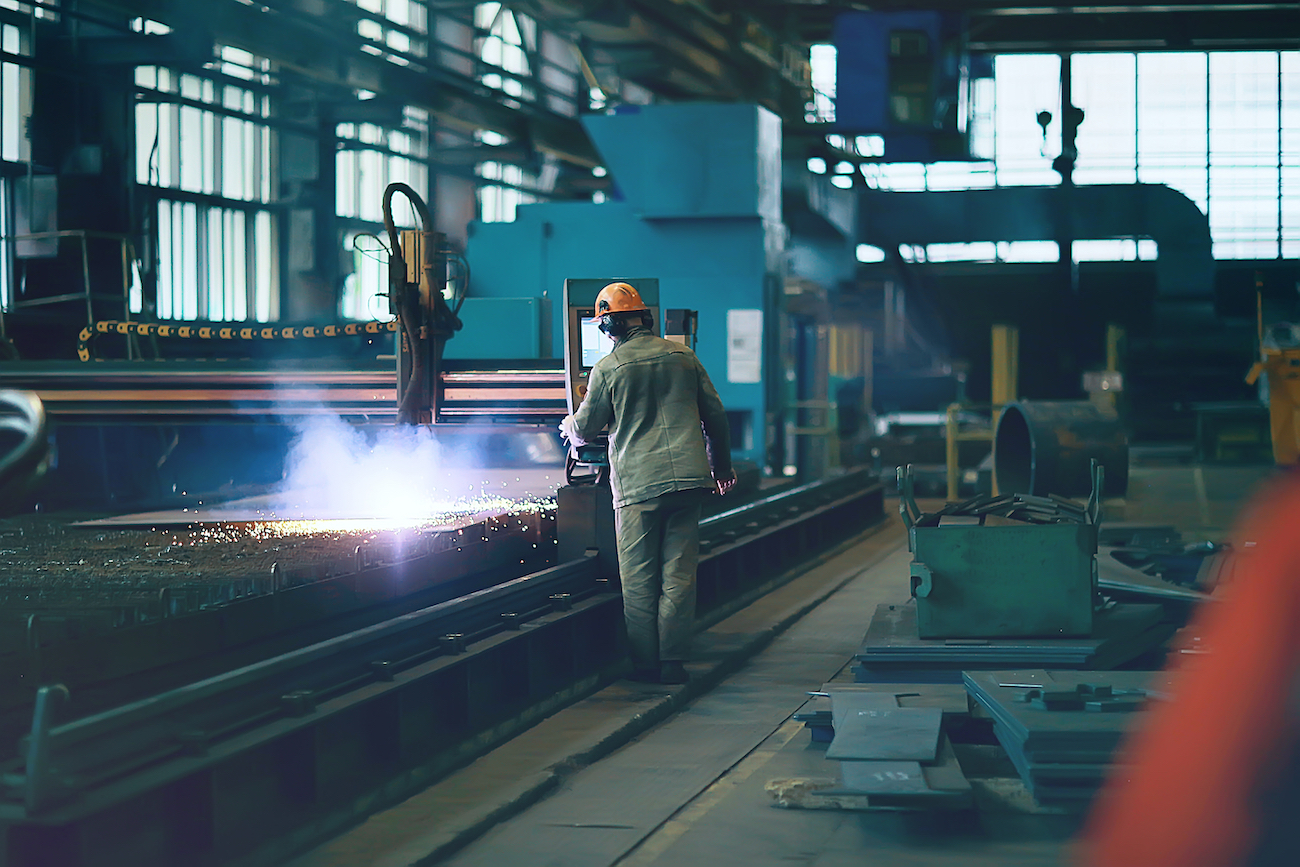
Production activity at Germany’s steel and metals fabricators has not nudged upward this year so far, although January and February was on par with the corresponding 2025 months, says their association WSM.
The initially flat activity year-on-year was a bit of a relief, given that the industry saw four years of recession. But then March was down 5.6% on last year’s corresponding month. The first quarter in total saw an on-year dip of 2.3%. That downward twist should at least be partly attributed to the conflict in the Middle East, the association explains.
Figures were more promising for the order intake, which in Q1 rose by 1.6%, and most recently in March was up a noteworthy 6.7%. While this contradicts the explanation for the drop of production, the Middle East conflict so far has caused mainly supply bottlenecks for production, and not necessarily discouraged orders, chief economist Holger Ade tells Kallanish.
The increase of orders is not necessarily a signal for sustained optimism, he notes. According to a sentiment survey, April did see some more positive sentiment for businesses than the preceding month, and was the first month-on-month return of optimism since September. This is backed by a better utilisation of capacities, up by 3 percentage points to 75%.
But then, the outlook for the coming six months has become slightly bleaker than in the previous survey. Ade attributes that apparent contradiction to a concern about profitability. Although businesses enjoy some recovery in orders and utilisation, they are worried about rising production costs, he says.

Polish steel rebar price range widens in slow market; wire rod prices stable
Polish domestic wire rod prices remained steady in the week to Friday May 29, while rebar prices widened, with slow market activity due to weak demand.
Market participants reported reduced activity, with fewer offers and indications heard during the week due to the holiday season in Europe.
“Demand is rather average; worse than last week,” one distributor source told Fastmarkets.
The tradable price for wire rod was said to be around 3,000-3,050 zloty ($828-841) per tonne delivered.
Fastmarkets’ weekly price assessment for steel wire rod (drawing quality), domestic, delivered Poland, was 3,000-3,100 zloty per tonne on Friday, unchanged week on week.
In contrast, rebar prices widened over the same period.
Tradable prices were reported within the range of 2,830-2,950 zloty per tonne CPT, compared with 2,850-2,900 zloty per tonne CPT on May 22.
Market participants said that higher offers of 2,950 zloty per tonne had been heard, although trading at those prices was limited.
“There is low demand and high inventories,” a seller source told Fastmarkets.
Fastmarkets’ weekly price assessment for steel reinforcing bar (rebar), domestic, cpt Poland, widened to 2,830-2,950 zloty per tonne on Friday, from 2,850-2,900 zloty per tonne the previous week.

European coil and green steel round-up: EU coil prices hold stable as mills target higher contract prices
Domestic spot prices for steel hot-rolled coil (HRC) in Europe remained stable in the week to 29 May due to a slow market, but EU steelmakers have increased their target prices for the second half of the year for long-term contracts.
A major steel producer has been aiming for a EUR80/t rise in long-term contracts. Market sources reported an increase in offers by EUR50-120/t for July-December agreements with end consumers, depending on the buyer, seller, and previous contract prices. The long-term prices are likely to increase, though they may not reach mills’ targeted prices. Some market participants expressed concerns that steel consumption by end users, particularly carmakers, could decrease due to the geopolitical situation in the Middle East and lower car sales in the region and globally.
The offer rise was not reflected in the spot market, where steelmakers kept prices stable to fill their production lines for summer, a period traditionally characterized by low market activity. Some steelmakers made attempts to offer third-quarter HRC at EUR730-750/t delivered, but they were quick to adjust the offers down to below EUR700/t ex-works in an attempt to attract buyers.
In Northwest Europe, domestic HRC prices were around EUR680/t ex-works.
In Italy, domestic prices have settled at EUR680/t delivered, equivalent to EUR665-675/t ex-works.
Activity remained muted due to a combination of high distributor stocks, declining prices for processed steel coil, and a lack of clarity regarding the new import quotas.
“The European flat steel market is in a temporary deadlock. Spot activity is quiet due to slowing automotive and industrial demand. While domestic mills are using upcoming import restrictions to aggressively push for higher prices on paper, buyers are successfully resisting by drawing down existing warehouse stocks,” a Northwest European distributor said.
The sentiment was echoed by an Italian trader: “It is impossible to buy new rolling coil with the current prices for cut material. Everyone has no choice but to consume material from stock and wait for a price recovery across the supply chain.”
This gives some hope to market sources that trading activity is likely to pick up when stocks decline.
New, tightened steel import quotas are due to take effect from 1 July and, while the general framework is clear — promising an overall quota reduction of 47% and a doubling of duties to 50% — no decision has been announced regarding allocations to country-specific quotas.
Market participants have mixed expectations regarding the impact of the import restrictions. The number of import offers has remained limited in May as exporters are uncertain about which volumes they could sell to the EU risk-free. An announcement on quota volumes is expected to support a revival in trading activity, with buyers booking what they can from overseas and sourcing the remaining volumes from domestic suppliers. Sources have different views on the scale of the impact the new quotas might have, with some suggesting that imports would return from countries able to offer competitive prices, while others believe that the regulations would force more purchases from EU mills and drive prices up.
Offers of HRC from Turkey have been reported at EUR600/t CIF Italy, but interest in the material has been low as exporters had already sold substantial volumes to the EU and the risks of exceeding the quotas were high.
Material from Asia and Algeria has been available at EUR720-750/t DDP South European ports.
Domestic coil prices are expected to remain stable in the short term, and mills will attempt to push offers up for the third quarter using the new regulations as leverage. Buyers largely agree that a price decline is unlikely, but the prospect of a rise was questioned by some sources due to the unlikely recovery of real demand this year.
Green steel
Spot demand for green steel remains muted as distributors prefer to avoid risks related to putting premium material in stock without having a particular customer in mind. End users, particularly the automotive and construction segments, remain the driving force behind low-CO2 steel consumption.
The end users, however, were reportedly showing less interest in mass-balanced material in favour of steel with lower embedded emissions.
Official offered premiums from trial plants remained close to EUR300/t, and some end users accepted them earlier as they were able to dilute the additional costs in the total cost of a product. Steelmakers, however, were more open to reviewing those premiums down to around EUR200/t to secure contracts.
Buyers estimated workable premiums at EUR80-150/t.
| Weekly European steel coil | |||||
| EUR/t | Term | 29-May-26 | Change | ||
| Weekly Northwest Europe steel coil | |||||
| Northwest Europe ex-works HRC | EX-WORKS | 680.00 | 0.00 | ||
| Northwest Europe ex-works CRC | EX-WORKS | 790.00 | -5.00 | ||
| Northwest Europe ex-works HDG | EX-WORKS | 800.00 | -10.00 | ||
| Northwest Europe CIF HRC | CIF | 620.00 | 0.00 | ||
| Northwest Europe DDP port HRC | DDP Port | 695.00 | -25.00 | ||
| Show more… | |||||
| Source: McCloskey by OPIS. | © 2026 Dow Jones Energy Limited. | ||||
| Weekly green steel | |||
| EUR/t | Term | 29-May-26 | Change |
| Green Northwest Europe HRC premium (scopes 1-3 CO2 under 0.8t) | 90.00 | 0.00 | |
| Green Northwest Europe ex-works HRC (scopes 1-3) | EX-WORKS | 770.00 | 0.00 |
| Green HRC premium (scopes 1-2 CO2 under 0.5t) | 90.00 | 0.00 | |
| Green Northwest Europe ex-works HRC (scopes 1-2) | EX-WORKS | 770.00 | 0.00 |
| Green HRC reduced carbon price (scopes 1-3) | 69.99 | 5.67 | |
Author: Benjamin Steven and Maria Tanatar
