


Sidenor buys scrap supplier Aguilar Metal Recycling
Spanish special steelmaker Sidenor has acquired Aguilar Metal Recycling (AMR), a Valencian company specialising in industrial scrap, Kallanish understands.
The deal will ensure Sidenor`s supply of quality raw materials and boost its technological and industrial capacity in metal waste treatment.
“This acquisition contributes to the consolidation of the sector, in which the supply security of a key product such as industrial scrap will increase,” Sidenor says.
AMR is located in Sagunto, a significant area in terms of scrap collecting due to the presence of large car production plants, as well as an excellent port and railway logistic location, the steelmaker observes.
The acquisition now awaits approval from Spanish authorities and other closing conditions. The transaction should be completed during the second quarter.
Todor Kirkov Bulgaria

Uncertainty continues at Liberty’s Luxembourg unit
Luxembourg authorities stressed last week that they hope to see a new owner for Liberty Steel’s Dudelange assets, mirroring the concerns expressed by trade unions over recent months.
Liberty Steel controls the hot-dip galvanizing lines of Luxembourg-based Dudelange, which is strongly connected to the group’s Liege units in Belgium. Earlier this month, a Belgian court ordered the Liberty Steel Liege assets to be put into administration. The company said it is appealing this ruling (see Kallanish passim).
In an official release, Liberty Steel confirmed that the issues affecting the Liege plants should not impact the Dudelange unit. In a meeting with trade unions in Luxembourg last week, the management of the company added that they are working to find alternative solutions for the supply of raw materials for the Dudelange lines. This could include Liberty’s plants in Piombino and Skopje, trade unions explain.
Luxembourg economy and labour minister Georges Engel nevertheless confirmed on national television that authorities share the concerns of the trade unions over the future of the Luxembourg plants. He added they are actively working to identify a potential new owner for Liberty Steel Dudelange.
Liberty Steel Dudelange has two electro-galvanising lines and two hot-dipped galvanising lines.
Emanuele Norsa Italy
Swedish steelmaker SSAB sees Q2 demand normalizing after strong Q1
Specialist steel producer SSAB sees demand normalizing in the second quarter, saying it would continue to be a “decent” quarter, after a strong start to the year, Martin Lindqvist President & CEO of the company said during an analyst call April 26.
The Swedish group said the outlook for demand and shipments in Q2 was still characterized by some uncertainty, including further issues with component supplies in the vehicle industry as well as bottlenecks continuing to affect logistics chains. Global demand for high-strength steel is believed to remain at a good level in most markets.
“SSAB’s first quarter was characterized by high steel prices and earnings rose to a record level. All divisions posted strong results more than offsetting the impact of an unplanned stop in a blast furnace in Raahe, Finland, certain production disruptions in SSAB Americas, as well as higher raw material costs,” Lindqvist said.
The blast furnace was temporary halted due to a problem at the so-called chilled heart and had to be stopped for around five weeks.
“The tragic situation with the war in Ukraine is affecting the steel markets and SSAB. We have minor operations in Ukraine through Ruukki Construction and our highest priority is to help our employees and their families,” he said.
SSAB directly ceased sales to Russia and Belarus and discontinued new purchases of ore and coal from Russia, with the company introducing several measures to ensure access to raw materials, “but there is a risk of disruptions related to sanctions and other fallout from the war in Ukraine.”
SSAB’s overall crude steel production during the first quarter of 2022 was down 17% compared with the first quarter of 2021 to 1.75 million mt and up 15% compared with the fourth quarter of 2021. Shipments during the first quarter of 2022 were 1.66 million mt, down 9% on Q1 2021, but up 4% on Q4.
The company, which reported good margins, said EBITDA in Q1 was a record SEK 9.2 billion, compared with SEK 2.9 billion in the same quarter last year and SEK 7.8 billion in Q4 2021.
— Annalisa Villa


Metinvest eyes exports via Poland, Romania
Metinvest is working on new export routes to ship steel products to Europe after the Russian invasion of Ukraine disrupted logistics, the company tells Kallanish.
“There have already been the first attempts to build logistics through the ports of the Baltic and Romania,” the steelmaker’s general director, Yury Ryzhenkov, said during a working trip to the group’s enterprises. “Already in April we are loading a ship in Constanta and Swinoujscie and we will try to develop this further. I hope we will be able to resolve these logistical issues; then the company will be able to utilise the Kryvyi Rih enterprises at 100% versus the current 40%.”
“We are also developing new products and are providing employment for the evacuated Metinvest specialists in order to keep the team together,” he adds.
Metinvest subsidiary Kametstal is currently operating. Two blast furnaces have meanwhile been launched in Zaporizhstal, which are currently operating at 50%, and the company is deciding on how to launch another one in the near future.
Earlier this month, fellow Ukrainian steelmaker ArcelorMittal Kryvyi Rih started negotiations with the Polish government over using Poland’s Baltic Sea ports to export steel produced in Ukraine (see Kallanish passim).
Metinvest representatives said earlier the group’s two main Mariupol plants – Azovstal and Ilyich Steelworks – have been badly damaged due to fighting between Ukrainian and Russian forces. Those assets accounted for about 30-40% of steel capacity in Ukraine. The group also stated that its Mariupol plants would never operate under Russian occupation.
Svetoslav Abrossimov Bulgaria
Acciaierie d’Italia suspends deliveries, draws condemnation
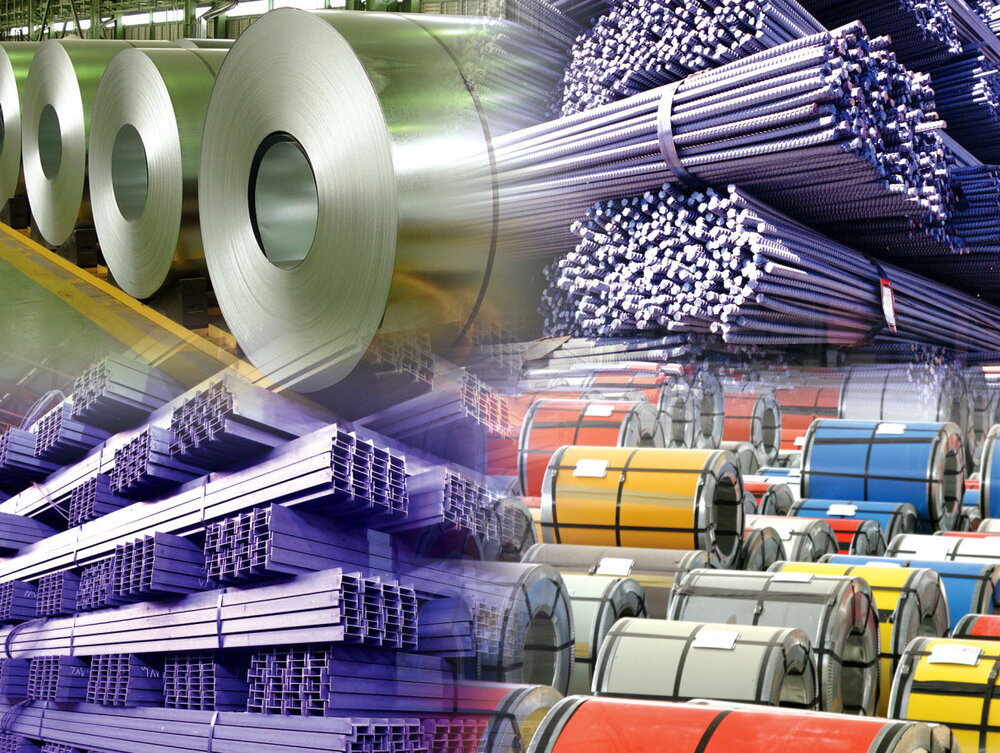
Italian steelmaker Acciaierie d’Italia has suspended some deliveries of already confirmed orders. Italian steel trade association Assofermet has condemned the decision, saying the motivation for it remains unclear and the steelmaker has not communicated how long this suspension will last.
“There is the strong and historical bond that unites the Taranto steelworks to the distribution and national re-rolling sector, which has always placed this supplier at the top position in terms of importance for large-volume procurement … The consequences of the producer’s decision are dramatic as many players will not be able to absorb the price increases on contracts already concluded and will not be able to use, due to the blocking of deliveries, the volumes that were regularly purchased, with heavy repercussions on the downstream market,” Assofermet steel division president Paolo Sangoi says in a note sent to Kallanish.
Orders were suspended without a warning to customers. The move however seems to be unrelated to the energy surcharge implemented by the steelmaker last month on all contracts agreed before 10 March, Sangoi says.
The suspended deliveries are exacerbating the steel shortage caused by the Ukraine war and EU import restrictions. Furthermore, Italian steel production has been reduced drastically due to skyrocketing energy costs, the association points out, adding it has requested an urgent meeting with the management of Acciaierie d’Italia to clarify the situation.
The steelmaker is implementing an energy surcharge on contracts already agreed. The surcharge will be calculated based on the average between the gas price at the time of the order and the gas price at the time of production and shipping. Considering the move unfair, Assofermet asked the producer last month to immediately withdraw the plan. Many service centres decided not to pay the surcharge and have involved lawyers (see Kallanish passim).
Acciaierie d’Italia declined to comment.
Natalia Capra France
EU HRC in waiting game, price softens on muted demand
The EU HRC market softened slightly April 26 as buyers remained in wait-and-see mode, and sources denied expectations of a market correction, seeing prices as largely stable in the near-term.
HRC in Northern Europe was assessed down Eur5 on the day at Eur1,305/mt ex-works Ruhr. HRC in Italy was down Eur10 at Eur1,240/mt ex-works Italy.
Sources reported muted demand, describing the market as waiting for prices to stabilize before restocking.
One distributor source said the situation was a “waiting game,” with mills and buyers standing off on mutually high inventories.
“Everyone has the power to wait just now but it can’t last much longer – stock levels won’t last forever,” the source said. “Some end-users have already waited too long and are having to pay sky-high prices from stock for their project needs. Stockholders are going to see high profits.”
Mill sources reported low demand but expected buyers to return in the coming weeks for third-quarter orders.
“Demand is still much reduced — we’ve seen some cancellations from the automotive sector, so we aren’t struggling with capacity. We aren’t pushing to sell but can answer requests for quotations in comparison to a few weeks ago,” said one mill source.
Another mill source agreed: “Demand is expected to be stronger in the coming weeks when EU customers need to restock.”
A trader source predicted buyers as relenting first due to depleting stock levels.
“Buyers and mills are waiting but distributors have been dealing from stock – I think we’ll see buyers return to the market to restock before mills face the need to drastically reduce prices to bring up demand,” the source said
— Benjamin Steven
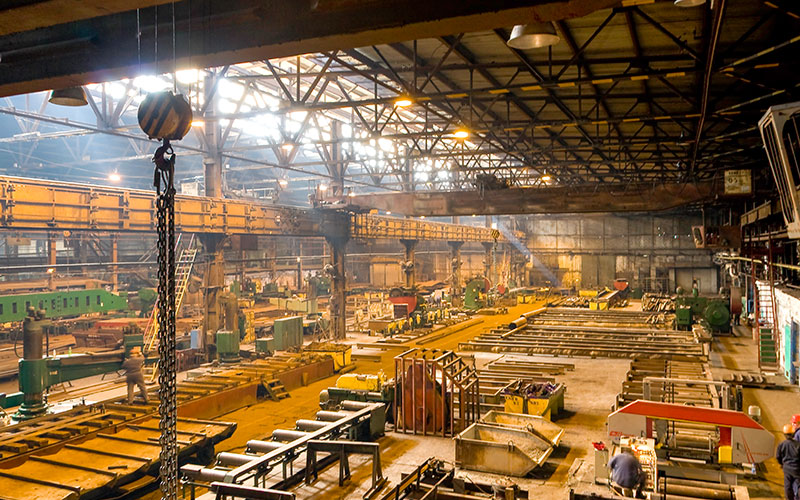
Restarted Ukrainian Zaporizhstal steelworks runs at half of capacity
Zaporizhstal iron and steel works, 49.99% owned by Ukrainian mining and steelmaking company Metinvest, has reached 40%-50% of its full capacity since its restart in early April and aims to produce 66,000 mt of steel over the month, a Metinvest spokesperson said April 26.
Located in the southern Ukrainian city of Zaporizhia, the coil producer remained in a standby mode for 33 days from the beginning of March, when it was idled shortly after Russia’s invasion of Ukraine.
After the front line moved away from Zaporizhia, the mill resumed operations, starting with coke and sinter plants and blast furnaces, solving at once logistic problems to supply raw materials and ship finished products.
Currently, Zaporizhstal is operating two of its four blast furnaces – Nos. 3 and 4 – and one of its two steelmaking furnaces, all now running flat out.
It also has restarted some of the rolling facilities, with roughly 5,000 employees involved in production processes.
Zaporizhstal in 2021 produced 4.4 million mt of hot metal, of which 3.9 million mt of steel was made and then converted into 3.3 million mt of rolled products.
The bulk of its saleable products normally comprise hot- and cold-rolled coil and sheet, but in addition to trip and coil rolling mills, the plant also has roll-forming shop.
According to Metinvest, three Ukrainian steel companies are currently operating: Zaporizhstal, Metinvest-owned long rolled steel producer Kamet Steel in Kamianske in Ukraine’s Dnipropetrovsk region; and ArcelorMittal Kryvyi Rih in Kryviy Rih, central Ukraine.
Azovstal and Ilyich iron and steel works, both parts of Metinvest, remain idle.
— Ekaterina Bouckley

German rebar price peak seen sustaining
The latest heights to which rebar prices have climbed in Germany could stay with the market for quite a while, many observers believe.
Base prices for straight bar from domestic mills in the course of April have risen to around €1,200/tonne ($1,279), if not more. The range of impressions is wide: while a big Benelux buyer still sees the lower end at €1,100, one German bender claims he paid way above €1,300 last week. The higher price could be an exception involving prompt delivery, but at least one mill source confirms the mark of €1,200 as realistic.
The source intimates to Kallanish that the mill took an unplanned break over Easter. In addition to the continued pressure from energy costs, April was also temporarily marked by a lack of scrap, which has now been overcome, he says.
Another mill has reportedly idled one of two furnaces for four weeks, and such stoppages and consequential cutback in volumes naturally add to the uptick in prices.
However, rebar supply on the whole seems to be sufficient, according to the manager of a large distribution group. “Demand on the market is good, and the mills can serve it. There may be occasional restrictions, but no reason to worry about that,” he says. In his opinion, the price level is stable and will remain so for months. “If anything, it may go up further,” he adds.
The mill source does not go quite as far with his forecast, but sees no grounds for a downward correction either. “That [downward correction] would surprise me, because the high costs of energy are here to stay with us for a long time,” he says.
Christian Koehl Germany

Polish government seeks EU-wide scrap monitoring
Polish economic development and technology minister Waldemar Buda has written to the European Commission to appeal for a discussion at EU level about the problems facing the steel industry, namely the availability of scrap feedstock.
The industry has been hit in recent years by the Covid-19 pandemic impact and rising energy costs. Steel shortages have meanwhile hampered sectors such as construction, machine-building, automotive and white goods.
Polish authorities have already begun discussions with their Italian counterparts over stabilising the steel market, and plan to hold meetings with representatives of other EU nations. Italy carries out very close monitoring of its scrap exports.
“I think that the worst of the market instability is behind us – there’s no problem with the availability of this raw material [scrap], but its prices are not satisfactory,” Buda said last week. The comments came after he met with Polish steel industry representatives, Kallanish notes.
Polish scrap export restrictions could be ineffective if material is trans-shipped through neighbouring EU countries. “EU-wide action is needed in order to secure the raw material that is scrap. It should be treated as a strategic raw material over the medium term,” Buda said.
As for energy-intensive industries compensation, Poland has submitted its programme to the Commission. “The compensation system should stabilise the costs on the part of producers and provide an opportunity for production at reasonable prices,” Buda commented.
“We must maintain good economic performance and projected GDP growth. This requires access to raw materials at a predictable level in particular industries. We cannot allow for a halt in the construction market or in the steel production sector,” he added.
The minister said authorities want Polish steel users to switch to domestic procurement, while scrap sales should be carried out to EU partners. This will increase self-sufficiency and security in the event of interrupted supply chains, as the bloc is now dealing with due to the war in Ukraine.
In 2021 Poland exported 2.8 million tonnes of scrap, with Germany taking 0.91mt, Turkey 0.53mt and Czech Republic 0.36mt.
Adam Smith Germany

Global output falls versus 2021, rises on February
Global crude steel production dropped 5.8% on-year in March to 161.05 million tonnes, due to reduced EU, Asian and CIS output, the latter a direct consequence of the Ukraine war. Output however grew 13% versus February, according to worldsteel data.
Chinese output fell 6.4% on-year in March to 88.3mt, but Indian production grew 4.4% to 10.94mt. Japanese and South Korean production declined 4.3% and 6.1% respectively to 7.96mt and 5.69mt. Output in all four countries grew versus February, Kallanish notes.
EU27 production meanwhile fell 8.5% to 12.79mt, with German and Italian output down 11.8% and 8.6% respectively to 3.33mt and 2.11mt. These tonnages were however up versus February. French and Spanish output are also estimated to have declined on-year.
Turkish output was down for a fourth consecutive month, by 3% to 3.32mt, but rose versus February. Serbia reported the largest confirmed on-year output increase in Europe, by 11.8% to 153,000t.
US production saw its first drop in multiple months, by 1.7% to 6.98mt, but this was up on February, while Brazilian output is estimated to have rebounded 5.4% on-year in March to 2.96mt.
CIS output fell an estimated 19% to 7.43mt, with Russian output estimated down 1.8% to 6.59mt and Ukrainian output estimated at only 200,000t versus 1.78mt a year earlier. This is the result of Ukrainian steelmaking coming to an almost complete standstill in March following Russia’s invasion of Ukraine on 24 February.
Global crude steel output in the first quarter thus fell 6.8% on-year to 456.63mt.
Earlier this month, worldsteel revised down its 2022 global steel demand growth forecast to 0.4% on-year, giving 1.84 billion tonnes.
Adam Smith Germany