

Iron ore awaits Covid easing
Seaborne iron ore prices remained in a holding pattern on Friday. Stocks are falling, but some volumes are trapped on transport, and the short term outlook remains clouded by Covid control measures.
The Kallanish KORE 62% Fe index inched $0.15/tonne higher to $151.35/dry metric tonne cfr Qingdao. The Kallanish KORE 65% Fe index gained $0.20/t to $175.20/dmt cfr, and the KORE 58% Fe index increased $0.32/t to $133.99/dmt cfr.
On the Dalian Commodity Exchange, September iron ore settled down CNY 132/t at CNY 890/t ($137.48/t), while on the Singapore Exchange May 62% Fe futures settled down 0.37/t at $150.77/t. The same contract for 65% Fe and 58% Fe futures settled down 0.59/t at $173.55/t, and up $1.64/t at $135.37/t respectively. In Tangshan, billet prices dropped CNY 40/t to CNY 4,830/t.
Chinese port inventories continue to decline, but renewed closures in Tangshan and elsewhere to control the spread of Covid continue to confuse the picture by disrupting the flow of material around the market. Iron ore stocks across 35 ports dropped 930,000t last week to 142.69 million tonnes, according to SMM. It notes the possibility of mill restocking pushing up prices ahead of the May Day public holiday.
While the outlook for the highly disruptive lockdown in Shanghai is improving, residents are unlikely to see a widespread lifting of restrictions until at least mid-May. Northern China is moving in and out of restrictions, including market-sensitive cities such as Tangshan. Logistics restrictions remain in place across a wide range of administrative boundaries.
Traders expect steel and raw materials markets to remain disrupted for some time, but are still keenly awaiting the impact of stimulus. Whether it makes economic sense, China appears to still be intent on coming close to its 5.5% GDP growth target. This target can only be achieved at the cost of inefficient stimulus and the retreat of economic reforms, but could set off a stronger cycle in steel and iron ore prices in the coming months.


EU coil buyers question crisis price hikes
Many coil buyers in northwest Europe have been wondering if the recent international crises really have an immediate effect on the availability and the prices of steel products.
What started off with the coronavirus two years ago last year led to an enormous surge of energy prices and to bottlenecks of transportation capacities. On top of this, the war in Ukraine plus embargoes against products from Russia have added to shortages, and consequently, produced higher prices, Kallanish notes.
Still, Germany’s federation of steel fabricators, WSM, in a recent call to member companies and customers to stand together, expressed doubts.
“The enormous price leaps can not generally be explained with the crises and conflicts,” it stated. More concretely, it said that “often, there is no relation between price increases and the Ukraine war as the reason that is given.”
Some consider the recent price dip for coil, on the heels of an unprecedented sudden price rally in March, as symptomatic for a try that’s gone too far. An Austrian manager points at the energy costs cited often by mills, and notes that the skyrocketing spot prices make up only a minor part of the mills’ demand, while most supplies are in fact based on long-term contracts that are left untouched.
A Dutch manager points at an unconventional way one mill has chosen to face the extra burden in alliance with its customers.
“The sky-high energy costs have prompted a European mill to write to its customers, asking them to voluntarily pay an extra per tonne to compensate for these increased costs,“ he tells Kallanish.
Christian Koehl Germany
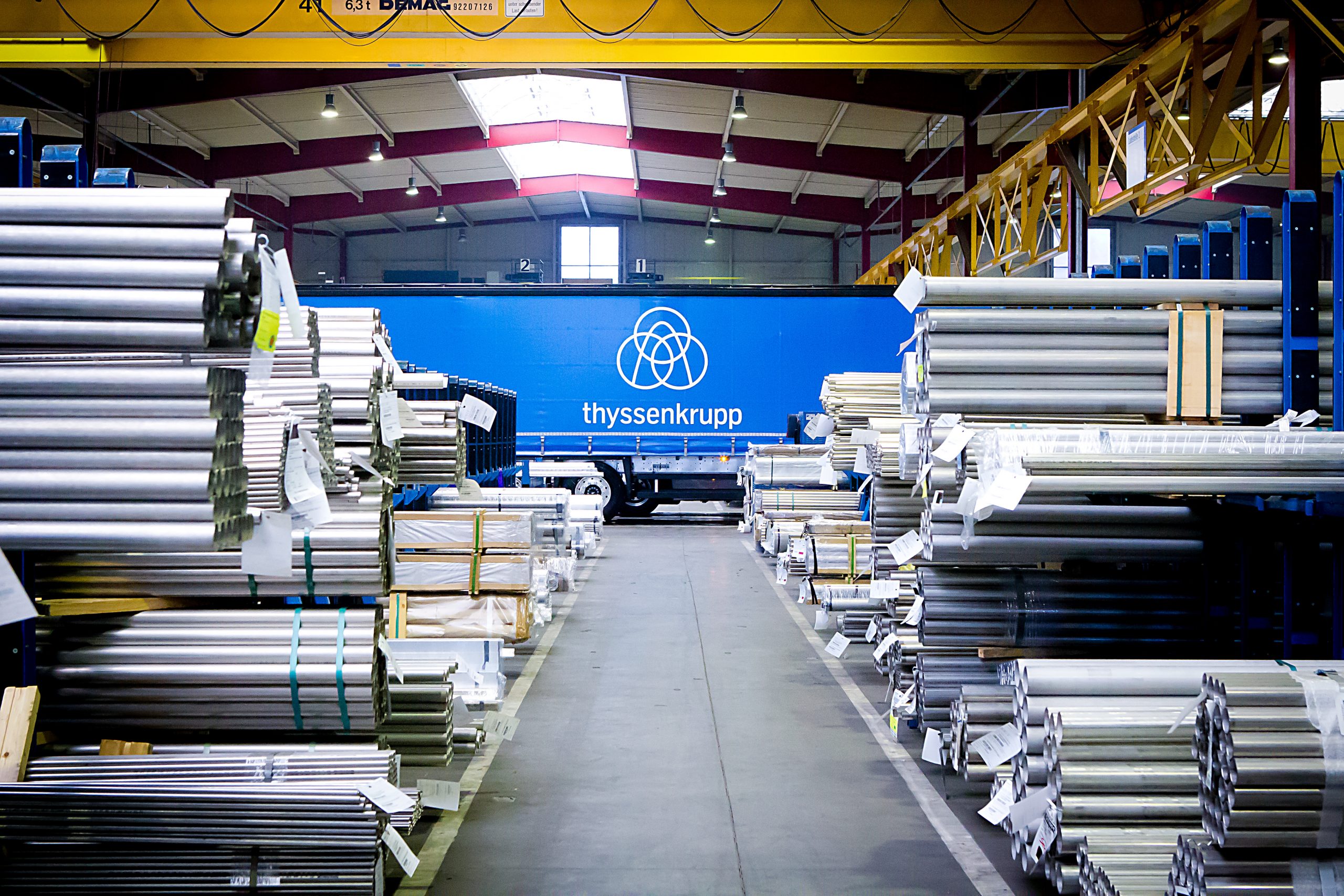
Steel scrap processing plant at Duisberg, Germany, to supply thyssenkrupp furnaces
The construction of a steel scrap processing plant by TSR Recycling GmbH at Duisburg, Germany, broke ground April 21, with the facility set to produce high-quality recycled raw material to be used in thyssenkruup’s local blast furnaces, the steelmaker said.
The use of recycled products in the blast furnace would lead to a reduction of CO2 intensity and support the production of thyssenkrupp’s bluemint steel range of CO2-reduced and certified steel, the company said. Once the plant is completed, up to 260,000 mt of bluemint recycled steel could be produced per year, it added.
“This project enables us to make rapid progress in the reduction of CO2 emissions,” thyssenkrupp Steel’s chief technology officer Arnd Köfler said in a statement following a ground breaking ceremony at the Schrottinsel, or Scrap Island, site at the inland port of Duisberg, which stands at the junction of the Rhine and Ruhr rivers. “Aside from the long-term transformation of our plant and equipment to hydrogen-based direct reduction, we are already doing everything possible to avoid CO2 in the conventional blast furnace process as well. The use of scrap-based recyled material in the blast furnace is an important step in this direction which also benefits our customers.“
The new processing plant meets the special material properties of the high-quality recycled product (TSR40) required for thyssenkrupp’s Duisburg furnaces through the use of special shredder and separation technology.
“Apart from the positive effects for environmental protection and resource conservation, the construction of the new plant and the novel product are also representative of sustainable and reliable raw material supply in Germany and Europe,” Bernd Fleschenberg, TSR’s Managing Director, said. “TSR40 enables us to cover a large part of future raw material requirements of the industry. Particularly in view of interrupted supply chains, our plant at the Duisburg location is a lighthouse project that can serve as a model for other material flows.”
The processing plant is part of the REDERS project (reduced CO2-emissions through increased recycling quota in the steelmaking process) funded by the state of North Rhine-Westphalia to the tune of Eur6.4 million ($7 million). The project partners in the initiative are TSR, thyssenkrupp Steel, Hüttenwerke Krupp Mannesmann GmbH and VDEh Betriebsforschungsinstitut.
In Northern Europe, S&P Global Commodity Insights’ April assessment for domestic shredded scrap was at a record high of Eur570/mt delivered April 11, up sharply from Eur525/mt in March. Shredded scrap prices have risen sharply since 2022, as steel demand recovered following the initial stage of the coronavirus pandemic, with increasing interest in low-carbon steel prompting stronger interest in scrap-based steel production.
— Annalisa Villa, Viral Shah


Hi-end coil material pulls standard products down
A lack of demand from carmakers for coil products typically used for automotive purposes is tracing through to standard products, pulling down prices in that segment as well, market players tell Kallanish.
Just after recovering from the coronavirus shock, carmakers reduced their production last year due to the lack of semiconductor chips. This has been badly aggravated by the Ukraine war and the many supply shortages it has caused. According to an Austrian manager, demand for hot-dip galvanized coil is weak, and he doubts that prices of more than €1,500/t ex-works ($1,634/t) as called by mills earlier have lived long. High availability is one indicator here, with delivery times “that feel like it is only a couple of days until you get it.”
Another Austrian notes that especially high-end galv typically used in cars is low in demand.
“When carmakers need a lot of, for example, organic coated strip, less material is left for standard galv and cold-rolled coil, which keps prices up in that segment, too,“ he says. “We felt a shortage temporarily last year, but not any more now.”
Prices for cold-rolled seem to be more stable than for galv, and in Benelux is seen around or above €1,450/t. In Austria, buyers are more doubtful. They believe that mills have to sell hot-rolled coil definitely for less than the €1,350/t lately called by the market leader, and cold-rolled coil will be hardly €100/t above that.
According to all observers, inventories are relatively full, and buyers confine themselves to the most necessary, especially after being deterred by the former peak values.
On top of this, a German trader dares people to look at the international price levels, to see why German prices can only go down from where they are: “German prices just don’t fit in the global picture.”
Christian Koehl Germany
EU wire rod buyers worry over tight supply due to limitations on imports
The import market for long steel products brought into the EU was already under strain because of the safeguard measures the bloc has imposed, but the sanctions against Russia and Belarus for their war against Ukraine have aggravated the situation, sources told Fastmarkets on Wednesday April 20. One result was that steel wire rod buyers have become increasingly concerned about the availability of supplies.
Missing volumes
Russia and Belarus were given no new safeguard import quota volumes for the second quarter of 2022 due to the EU sanctions on those two countries in response to the war being waged against Ukraine.
“In each product category where Belarus and Russia had country-specific tariff rate quotas, the [European] Commission proportionally redistributed those volumes among other exporting countries, subject to the safeguard measure based on the most recent data available, namely their share of overall imports in 2021,” the Commission said.
To establish the level of overall imports, the Commission did not take into account the volumes from Belarus and Russia, or the import volumes from countries currently excluded from the measure. Including them would have had the effect of reducing the proportion attributable to all other countries, rendering the exercise ineffective.
Ukrainian mills were also out of the export market because Russia was blocking all the country’s key ports on the Black and Azov Seas. ArcelorMittal Kryvyi Rih, however, was preparing to restart production gradually and was looking for opportunities to resume exports by overland routes, as Fastmarkets has reported.
For now, however, the producer was still not able to deliver old orders, several sources said.
In 2021, Belarus exported to the EU 225,658 tonnes of wire rod, Russia 330,974 tonnes, and Ukraine 194,785 tonnes, according to data from regional industry association Eurofer. Altogether, these three countries supplied 751,417 tonnes to the EU last year.
“Europe is missing [wire rod] volumes. Ukraine is gone [from the market], Russia is gone, Belarus is gone. The Turkish wire rod quota [for imports into the EU] was filled in a couple of days [after it was renewed at the start of this month]. This is a disaster,” another buyer said.
European buyers were seeking alternative suppliers, booking cargoes from countres that did not have individual quotas, such as India, Egypt and Algeria.
The latest import wire rod offers from these three countries to the region, for delivery in July, were reported at €980-1,050 ($1,057-1,133) per tonne cfr, sources said.
Even though those prices were considered competitive, sources said that the long lead times were limiting buying interest.
“The ‘other countries’ quota [for wire rod imports in the second quarter] is full less than a month after the new quota period began [on April 1]. The Turkish quota was full in two days. Booking [wire rod] for July delivery is [risky],” a buyer in Germany said.
Meanwhile, the 111,148 tonnes of the ‘other countries’ quota for wire rod was fully used up by April 19, European Commission data showed.
Domestic supply, prices
Domestic wire rod prices in Northern Europe have been stable at high levels since early April, gaining strength from good demand and limited supply.
Fastmarkets’ weekly price assessment for steel wire rod (mesh quality), domestic, delivered Northern Europe, was unchanged at €1,300-1,350 per tonne on April 20. This was an all-time high in Fastmarkets’ data, beating the previous record of €900-930 per tonne set on August 18, 2021.
Producers in the region were also limiting their sales, offering quick delivery amid high levels of volatility in the market and high costs of production.
“All producers in Europe are controlling their sales. Raw material prices are enormous and it is in short supply, so we should be careful with stocks,” a mill source in Northern Europe said.
Producers in the region were running at 50-60% capacity “in a best-case scenario,” market sources told Fastmarkets.
Other sources expected that the price uptrend in the region could resume late in May due to high mill costs and short supply of material. Some sources suggested that wire rod prices in the region could go as high as €1,400-1,500 per tonne delivered.
Published by: Julia Bolotova


EU passenger car sales down more than 20% in March on supply chain disruptions, Acea says
Supply chain disruptions, exacerbated by Russia’s invasion of Ukraine, have led to a significant 20.55% decline in new car sales in Europe, the European Automotive Manufacturers Association (Acea) said on Thursday March 20. A total of with 844,187 units were sold in March, with the largest markets posting double-digit declines.
First-quarter 2022 sales fell by 12.3% year on year to 2,245,976 units, compared with 2,560,271 in the same period in 2021.
European buyers held back from making any new deals for cold-rolled coil and hot-dipped galvanized coil (HDG) during the last week of March, early April, mainly due to high prices amid sufficient stocks.
Fastmarkets’ weekly price assessment for steel hot-dipped galvanized coil, domestic, exw Northern Europe – a key material for carmaking – averaged €1,419 per tonne in March, compared to €913 a year ago.
The reduction of EU car sales have started in July 2021.
On average, about 900kg of steel is used in the manufacture of every car, according to the World Steel Association.
Published by: Elina Virchenko

Russia’s coal exports fell amid sanctions
Russia has reduced coal exports in January-April, says the head of the coal industry department of the Russian Ministry of Energy, Petr Bobylev.
“Especially in March and April we see a decrease in export volumes by more than 20% on-year,” he noted at a round table in the State Duma, the lower house of Russia’s parliament. Since the beginning of the year, coal shipments abroad fell almost by 9%.”
At the same time, according to the Russian Ministry of Energy, the consumption of coal in the domestic market has increased, mostly in Siberia.
The Russian authorities planned the possibility of redirecting exports through seaports to the countries of the Asia-Pacific region. First Deputy Prime Minister Andrey Belousov said last week that the volume of coal exports from Russia sank slightly.
The total export of coal from Russia in 2021 amounted to 227 million tonnes, up by 7% on-year, the Russian Ministry of Energy said earlier.
In early April, the European union banned the import of coal from Russia as part of another package of sanctions due to the ongoing Russian invasion of Ukraine. The ban will come into force in August. At the same time, Great Britain and Poland have already banned the import of coal from Russia.
Until 10 August, the parties will be allowed to fulfil contracts concluded before 9 April 2022. The annual volume of coal imports to the EU has recently amounted to €8 billion ($8.7 billion).
Earlier this week, Russian miner and steelmaker Mechel’s Southern Kuzbass coking coal company has commissioned the new 0-16-12 longwall with estimated coal reserves of 201,000 tonnes (see Kallanish passim).
Mechel’s Yakutugol coking coal company meanwhile increased production in March to 520,000t, up by 18% on-year. Yakutugol’s plans are to ensure further growth in production indicators, it says.
In 2021, Mechel’s coking coal sales fell 31% on-year to 2.7mt. The main reason was that Southern Kuzbass coal company reduced production.
Svetoslav Abrossimov Bulgaria
Tata Steel closes Russian business ties
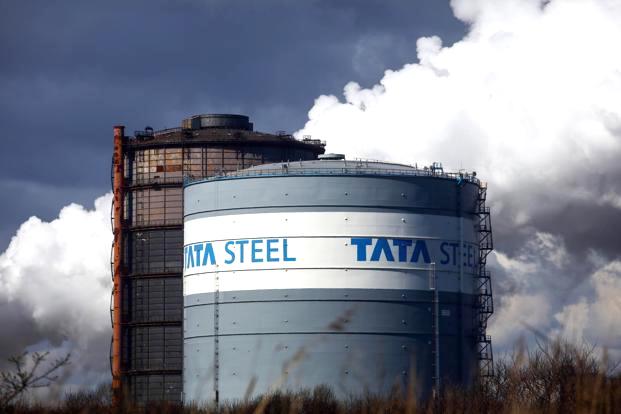
Tata Steel has decided to stop doing business with Russia amid the Russian military invasion of Ukraine, making it the first global steel company to cut ties with Russia for invading Ukraine, Kallanish notes.
“Tata Steel does not have any operations or employees in Russia,” Tata Steel informs in a press release. “We have taken a conscious decision to stop doing business with Russia…To ensure business continuity, all our steel manufacturing sites in India, the UK and the Netherlands have sourced alternative supplies of raw materials to end its dependence on Russia,” it adds.
The Indian steel ministry has recently announced it is working on a process mechanism to import coking coal from Russia at a cheaper price amid skyrocketing coking coal prices (see Kallanish passim). India imported 43.35 million tonnes of coking coal in 2021. Australia was the largest exporter to India, supplying 31.4mt. Other exporters were Singapore (2.81mt), the US (2.43mt), Canada (1.81mt), Mozambique (1.26mt) and Russia (1mt).
Sayed Aameer India
German fabricators call for cooperation in price wave
Fabricators and processors on various levels of steel and metals products need to go shoulder-to-shoulder with their business partners through times of erratic price leaps, says their German federation WSM.
The next wave of steel prices and drastic energy price increases is rolling in on suppliers, WSM notes with reference to developments since March. While this is not necessarily in line with short-range expectations of price developments by many market observers, WSM still addresses the overall unprecedented unpredictability of prices.
“Manufacturers who do not cooperate with their partners now, may soon have no partners left,“ WSM says, pointing to the shrinking liquidity reserves of its member firms.
“Only with joined forces, suppliers and customers can avoid the third wave that is building up,” warns WSM’s managing director Christian Vietmeyer, who speaks on behalf of about 5,000 companies.
He refers especially to what he calls the “German model“ of dividing value-adding steps along the chain in global business, and that is under particular threat if firms dispute over costs.
Already in before the third wave was brought by the attack on Ukraine, mill prices were 50% above the already very high level of the previous year, “and for alloyed material we are seeing increases of 80%. And this is just getting worse,“ Kallanish hears from Vietmeyer. Steel and aluminium processors have material cost shares of 40-60%.
WSM notes that the enormous price jumps cannot always be explained by the crises and conflicts, and it expresses doubt over the direct influence of the Ukraine war on steel pricing in Western Europe.
Christian Koehl Germany
EU passenger car registrations fall 12% in Q1: ACEA
New passenger car registrations in the EU fell almost 21% year on year in March to 844,187 units, bringing the total sales for the first quarter to 2.2 million units, down 12% year on year, according to European Automobile Manufacturers Association (ACEA) data released April 20.
The March volume was, however, up 17% from February to a nine-month high, the data showed.
“The ongoing supply chain disruptions, further exacerbated by Russia’s invasion of Ukraine, negatively affected car production,” the ACEA said, adding that this had resulted in most countries in the region recording double-digit drops in sales.
The largest EU car market, Germany, saw new car registrations drop almost 18% year on year in March to 241,330 units, which was 20% higher than the previous month, also at a nine-month high.
The second-largest market, France, saw sales for the month fall 20% on the year, but rise 28% on the month to 147,078 units, a three-month high.
Similarly, car sales in Italy dropped 30% on the year to 119,497 units, but climbed 7.8% from February to the highest level since June 2021.
In Spain, 59,920 units were sold in March, down 30% on the year and down 3.5% on the month.
Q1 volumes for the top four countries were 625,954 vehicles sold in Germany, down 4.6% on the year, 365,360 units in France, down 17%, 338,180 registrations in Italy, down 24% on the year and 59,920 sales in Spain, down 12%.
— Jacqueline Holman