


Russian steel demand may slump 30% in 2022: steelmakers association
Russia’s steel demand may slump 30%, or 13 million mt, year on year in 2022, Russian steelmakers association Russkaya Stal wrote in a letter addressed to the First Deputy Prime Minister Andrey Belousov.“
Ferrous metals producers in Russia are facing a significant decrease in domestic demand for their products, which, among other things, is owed to production stoppages within the automotive industry — eight of 14 Russian car plants have been idled, and the cumulative decline in car production may reach 50% this year,” the letter, dated March 28 and seen by S&P Global Commodity Insights, said.
Russkaya Stal spokesperson declined to comment on the association’s correspondence with the government.
Major Russian major steelmakers had forecast 2022 domestic steel demand to rise 2%-3% prior to Russia’s military invasion of Ukraine, driven by a higher uptake in the oil and gas and machinery industries.
The letter sought to prevent mooted hikes in railway freight tariffs over the coming months. State-owned Russian railway network operator Russian Railways was considering a 11.7% increase in tariffs in the second quarter, 18% in the third, and 20% in the fourth, according to the letter.
“There has been no such announcement [of the tariff hikes],” a spokesperson for Russian Railways said. “It is our working correspondence, which we do not comment on.”
Seaborne transportation costs have already surged for Russian consignors because of container shortages, fewer vessels transporting Russian goods on board, restrictions on handling Russian cargo at European ports, and ruble’s sharp devaluation due to sanctions on Russian banks and corporations, Moscow investment company Aton said in a note March 29.
The foreseen loss in domestic steel demand would come on top of the 10 million mt of steel volumes that Russia can no longer export to traditional markets because of the sanctions and bans on its exports of certain materials, such as finished steel products, according to Aton.
Europe’s refusal to buy Russian rolled steel is forcing Russian steel mills to reroute supplies to China and Asia, but the move is unlikely to provide material economic benefits.
The potential for Russian steel companies to displace some of the Chinese imports was possibly limited, as Russia’s 10 million mt/year steel exports to “unfriendly countries” equated to 70% of Chinese steel imports by gross volume, Aton said.
“China is a commodity giant accounting for 50% of the global consumption of steels and other metals, bulks, and coal, but it is also a huge producer, which makes its net imports look relatively small,” said Aton.
Hot-rolled coil spot prices in China were already 50% lower than in Europe and over 20% lower than FOB Black Sea, suggesting that Russian steel companies may have to offer discounts to obtain access to the Chinese market, according to Aton.
A distance of 5,360 km between Moscow and a destination in China, compared with 1,860 km to Germany would result in higher transportation costs associated with shifting volumes from Europe to Asia. Rerouting volumes would also further strain a chronically overburdened Russian Railways’ eastern network, made up of the Baikal-Amur and Trans-Siberian main lines.
The alternative Northern Sea route from St. Petersburg to Vladivostok, considered one of the gateways to Asia, was relatively shorter at 14,000 km than the widely used 23,000 km route via the Suez Canal. The Northern Sea route was, however, mostly used to transport specific goods from Nornickel and Yamal LNG and extending it to include other commodities would require construction of onshore infrastructure and expansion of ice-breaking shipping fleet, said Aton.
— Ekaterina Bouckley


RHI Magnesita, Horn & Co to create European metals recycling platform
RHI Magnesita and Horn & Co. Group said March 29 that they are to combine their metals recycling activities in Europe in a bid to increase the production, use and offers of secondary raw material for the regional refractory industry, targeting a substantial reduction of CO2 emissions.
The new joint venture will operate as Horn & Co. RHIM Minerals Recovery GmbH and it aims to be at the forefront of the circular economy for customers in the majority in the steel industry, as well as in other process industries.
RHI Magnesita operates in high-value refractory products, systems and services for high-temperature industrial processes at 28 production plants. Horn & Co. Group operates in the fields of processing, disposal, control, analysis and sales.
At the onset, Horn & Co. RHIM Minerals Recovery aims to process more than 150,000 mt of material per year.
“By increasing our focus in this key area, we will make a significant contribution to the global climate protection,” said RHI Magnesita CEO Stefan Borgas. “We will conserve natural resources while at the same time expanding our business.”
The new venture will have locations in and around Siegen in North Rhine-Westphalia, Germany, and Mitterdorf in Styria, Austria.
The agreement is subject to approval by the competition authorities and regulators.
— Annalisa Villa
EU HRC market in wait-and-see mode, resisting increases
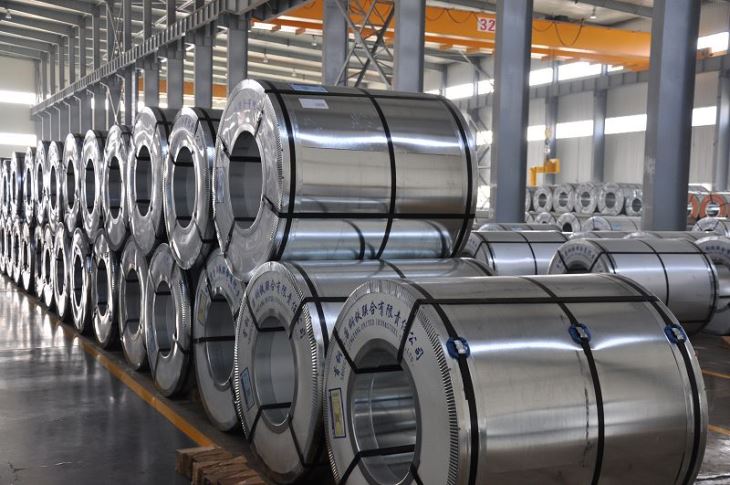
EU hot-rolled coil market was in a wait-and-see mode March 29, as buyers stepped back from the market, anticipating price reductions.
In Northern Europe, a service center source reported mill offers at Eur1,450-1,500/mt ex-works — describing a quiet market.
“Nothing’s moving, the German market has stopped acting with prices at these levels.”
A second service center source reported tradable value at Eur1,400/mt ex-works, though confirmed attempts from mills to move offers higher.
“There is very little activity on the market. Some mills are trying to achieve a bit more, but it seems difficult at the moment.”
In the South, a distributor source reported similar sentiment from buyers, with resistance to further price increases.
“There’s no real change in price yet. I think mills are at the point where there is no room to increase prices further, but they also are not ready to lower offers yet.”
The source considered the import market an increasingly viable alternative due to competitive prices and lead times.
“Import offers are much more readily available now, people are unlikely to pay around Eur200 more just to buy domestically.”
Offers for hot-rolled coil from China were heard at Eur1,200/mt, DDP Italian ports. Import offers reported for cold-rolled coil were also competitive at Eur1,250-1,300/mt, CIF Italian ports ex-Korea.
The HRC to CRC spread was heard as reduced on the day, with CRC offers heard from one buyer source at only a Eur50 premium to HRC.
“HRC is under a lot more pressure due to missing slab and hot-rolled material from the CIS area — CRC prices are much closer to HRC than usual,” said a northern buyer source.
Platts assessed North European HRC stable at Eur1,412.5/mt ex-works Ruhr March 29, and South European HRC at Eur1,375/mt ex-works Italy, down Eur5.
— Benjamin Steven
Federacciai appoints new president
Italian steelmakers’ association Federacciai has appointed Duferco Italia Holding chief executive Antonio Gozzi as president for the period 2022-2024, Kallanish learns from Federacciai.
Gozzi, who holds the role of vice president, will replace current president Alessandro Banzato.
“President of Interconnector Energy Italia and representative of the hard to abate sectors of (industrial association) Confindustria, Gozzi has been working for months on the energy transition dossier and the impact it has on the Italian industry strategic sectors. He was already president of Federacciai from 2012 to 2018,” the association says in a note.
Natalia Capra France


Benteler lifts tube sales by 50%
Benteler lifted 2021 tube revenue by around 50% year-on-year to €1.1 billion ($1.2 billion), Kallanish learns from the Austrian-German company.
Its Steel/Tube Division accounts for some 15% of consolidated revenue, which rose from €6.4 billion to €7.3 billion last year. Operating profit more than doubled, from €160 million to €332m. The larger Automotive division lifted its revenue by some 10% to €6.2 billion.
The Automotive division had a good start into the year, but from mid-year on was hit by the semiconductor shortage – mainly in the form of call-off cancellations at short notice.
For the Steel/Tube division, the market was above expectations, especially demand in the oil and gas sector, Benteler notes. Despite sharply increased raw material prices, which can only be passed on this year, the division performed profitably in 2021.
Christian Koehl Germany

ArcelorMittal Spain delays Gijón plant restart
ArcelorMittal Spain has postponed the resumption of activities at its Gijón steelworks until at least the end of this week. Production at the site was initially scheduled to resume on Tuesday, Kallanish notes.
The current situation of high energy prices and the continuing transport strike in the country is impacting almost 30% of ArcelorMittal’s production and some 1,600 of its more than 5,000 workers.
In Asturias, the steelmaker stopped wire rod production at the Gijón mill, while the tinplate and part of the cold rolling line at the Avilés plant remain halted.
In the Basque Country, the Bergara light sections mill is stopped, and ArcelorMittal confirms having difficulties in continuing activities at the Olaberría structural profiles line and Etxebarri sheet plant.
Amid this complicated scenario, ArcelorMittal has confirmed it will present its hybrid electric arc furnace project at the Gijón mill in May.
Todor Kirkov Bulgaria
Russia mulls €260 scrap duty, de-indexing coking coal
Russia’s government continues to develop initiatives designed to support the country’s steelmakers and regulate domestic steel prices.
The measures are deemed necessary due to the force majeure situation enforced by international sanctions, which are hampering exports of steel and raw materials and imports of materials and technical equipment. The measures are also designed to regulate domestic steel product prices amid increasing economic fallout from Russia’s ongoing military incursion into Ukraine, Kallanish notes.
A Russian Customs sub-committee is understood to be working on a proposal, subject to government approval, to almost triple the existing 5% minimal scrap export duty in order to keep the essential feedstock in the country. The duty would increase from the current €100/tonne, implemented on 1 January, to €260/t. The order initially came from Russia’s industry and trade ministry, Minpromtorg.
This would be in contradiction to national scrap association Ruslom’s recommendation to liberalise scrap exports amid an expected reduction in demand for scrap from Russian steelmakers.
Indeed, scrap purchasing in Russia’s domestic market is down considerably, several scrap traders say, while exports are also almost down to zero. In January, Russia exported just 3,000 tonnes of ferrous scrap, as compared to 691,000t a year earlier, while February saw 36,000t exported, down from 254,000t a year earlier.
A combination of the complete blockade of Black Sea export routes, limited Baltic Sea export routes and second-largest export market South Korea’s refusal to buy Russian material has already made scrap exports almost impossible. Should revenue plunge, the scrap industry will follow into jeopardy, scrap market participants say.
Another initiative is to regulate coking coal prices in Russia’s domestic market outside of international benchmark mechanisms. This is in order to support steelmakers to establish and maintain a transparent pricing methodology, discussed with Russian steel mills’ representatives in mid-March. It is understood the ministry is expecting steelmakers to come up with numbers by the end of March, while it is developing the supporting measures (see Kallanish passim).
The statement issued by Russia’s economy ministry points out that the previous methodology encompassing coal export prices is inappropriate under current market conditions, and calls for the indexation of feedstock prices against global levels to be abandoned.

LME US HRC steady as futures look to spot market for guidance
US hot-rolled coil futures on the London Metal Exchange pulled back slightly from recent highs in the week ended March 21 but traded steady, as rising input costs have triggered price increases from steelmakers, supporting futures further down the curve.
The structure of the forward curve tightened but still held at wide contango as futures retreated from recent highs. Spot prices were stronger with rising mill offers and service centers were committed to only buying what they needed to fill demand gaps in inventories, as buying activity remained slow during the week with the higher mill offer levels.
The March contract settled at $1,200/st March 28, up $35/st on the week.
The April contract settled at $1,472.50/st, down $5/st from the March 21 close but still up $57.50 from the start of the first quarter. Spot prices have recovered some of their recent losses, but were still down $200 during the same period as buyer inquiries have yet to translate at purchases at these higher mill offer levels.
The spreads tightened during the week as trading volumes were steady week-on-week, and spot prices were firmer during the March scrap buy week, settling at $1,380/st March 25, up $80 on the week.
The spot-to-three month spread narrowed but remained in contango, last settling at $175/st. Second-quarter contracts continued to see support, and bids for spot volumes continued around the $1,300/st-$1,400/st level with offers rising to the $1,450-$1,500/st range as mills scrambled to secure raw materials amid concerns of a possible disruption after Russia’s invasion of Ukraine.
The contract’s volumes saw 500 st trading. More than 632,000 st have traded since the contract’s launch in 2019.
Spot prices in the physical market have recovered as inventories, which have been the main driver of a price correction, remained at elevated levels, and some physical traders and importers have stopped quoting future tonnage due to uncertainties around input costs.
The average mill lead time for HRC ticked up to 5.3 weeks as April production has sold out amid availability from several mills, according to S&P Global Commodity Insights data.
— Nick Ruggiero
Megasa resumes Portugal production
Portuguese long steel producer SN Seixal, part of Grupo Megasa, resumed activity last weekend after the forced stoppage of production on high energy costs, Kallanish learns.
Megasa suspended production at the SN Seixal and SN Maia plants on 5 March after it became economically unviable. The two facilities are the largest consumers of electricity and gas in Portugal.
The production shutdown is understood not to have affected the rolling lines, which continued to run normally using billet from stock.
The Seixal and Maia operations produce wire rod, rebar and welded mesh.
The worsening of the energy crisis caused by the war in Ukraine and the consequent strong impact on prices of electricity and natural gas have also led Megasa to suspend production in Spain. According to a media report, the steelmaker will resume activity at its Narón and Zaragoza plants by the end of this week.
Todor Kirkov Bulgaria
Turkish automaker Oyak Renault pauses output for 10 days on microchip shortage
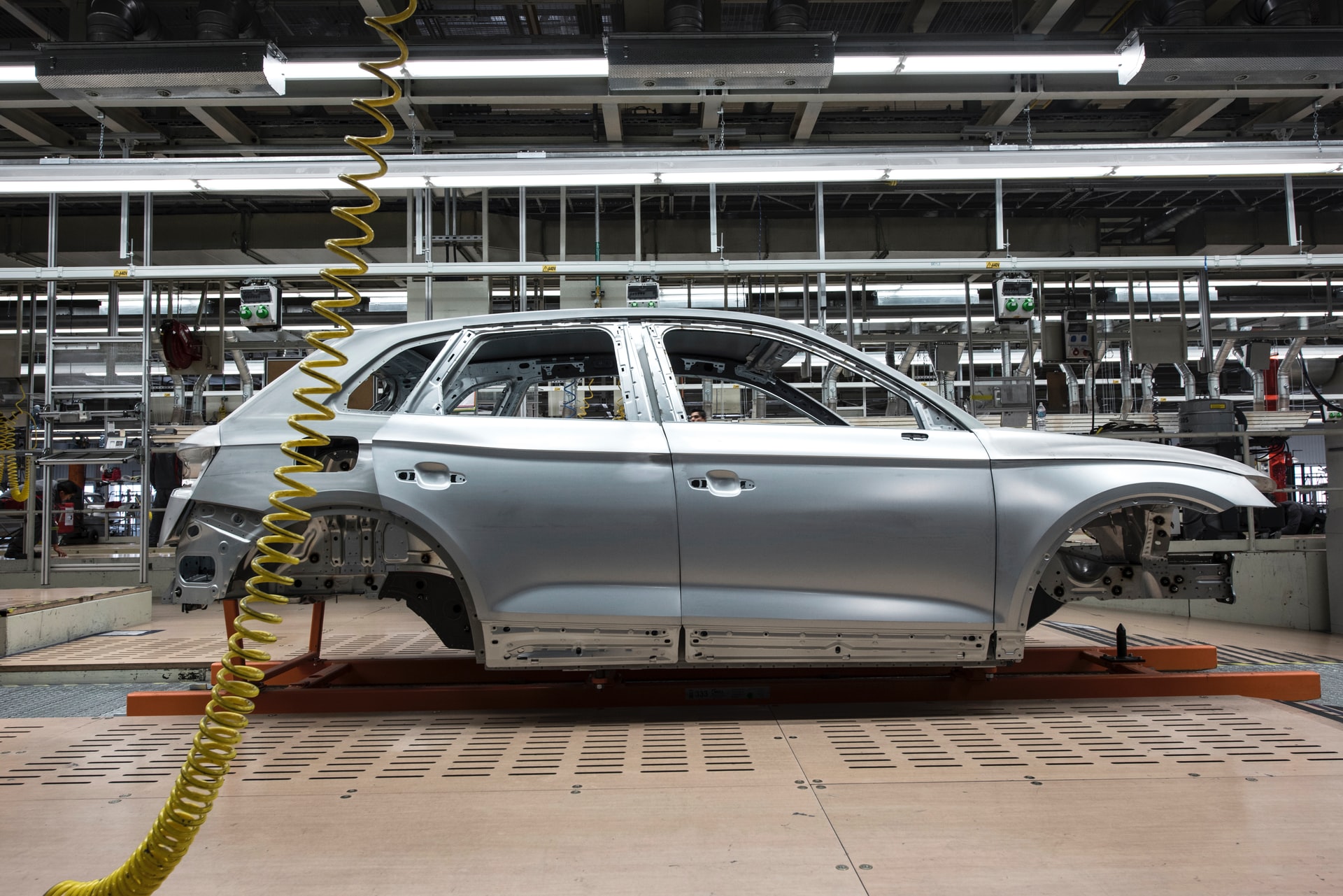
Turkish automobile manufacturer Oyak Renault has paused output for 10 days at most of its production departments as of March 25, due to the ongoing microchip shortage, according to a company notice seen by S&P Global Commodity Insights.
“We have obliged to make changes to our production plans on electronic components supply problems which have been continuing to affect the global automotive industry,” the company said.
Oyak Renault paused output for 15 days as of Jan. 24 for the same reason, while Turkey’s other major auto producer, Toyota, also suspended production at its Turkish plant for five days as of March 7, as previously reported by S&P Global.
These decisions follow output cuts by major producers throughout 2021.
Bursa-based Oyak Renault is a joint venture between France’s Renault Group and Turkey’s Oyak — parent company of Turkey’s largest integrated steel producer Erdemir.
These stoppages have also been affecting the sector’s steel demand, sources said.
Oyak Renault has 378,000 units/year of automobile production capacity and 920,000 units/year of motor production capacity.
Ongoing microchip shortages could continue to affect automotive output in Turkey in the coming months, as the global shortage is expected to continue albeit at a diminishing pace throughout 2022, according to industry reports.
According to the latest Turkish Automotive Manufacturers’ Association (OSD) data, total vehicle production in Turkey fell 12% on the year to 196,164 units in the first two months of 2022, while automobile output fell more sharply 20% to 109,322 units, amid ongoing microchip shortage.
— Cenk Can