


Isdemir’s new blast furnace nears completion, to be Turkey’s largest
The new blast furnace at Turkey’s largest integrated steelmaker, Isdemir in southern Turkey, which will have the largest output capacity in the country (7,900 mt/day), has neared completion, with the successful assembly of the BF shell on March 23.
“We are pleased to have achieved an important milestone today in the construction of a new blast furnace for Isdemir by completion of the blast furnace shell assembly,” said Ekon Industry Construction, which is running the project.
This is set to be Turkey’s largest BF with a capacity of 2.8 million mt/year, it added.
The new Isdemir furnace has 3,587 cubic meters of inner volume and is expected to be blown in within this year.
The total liquid steel output capacity of Isdemir will reach 6.3 million mt/year upon the completion of the project.
“This will contribute to the Turkish economy by reducing foreign dependency in the steel product market,” parent company Oyak Maden Metalurji Group said.
The group is also renovating one of the BFs at its Eregli works (Erdemir), northern Turkey, which will also raise the capacity of Erdemir.
Erdemir produces hot-rolled, cold-rolled and galvanized coils, plate and tinplate, while Isdemir produces billet, wire rod and hot-rolled coils. The current combined crude steel production capacity is 9.1 million mt/year.
— Cenk Can


Laurent Noirclerc is the new President of the FFDM
Laurent Noirclerc, Managing Director of Bamesa in France is the new President of the French Federation for the Distribution of Metals (FFDM).
He will succeed Michel Julien-Vauzelle and will represent the federation within EUROMETAL as a member of the presidency.
EUROMETAL takes this opportunity to thank Michel Julien-Vauzelle for all these active years within our federation.

EU market find consensus on HRC offer levels
The EU Northern hot-rolled coil market remained unchanged March 24 as mills and service centers alike noticed little change in prices throughout the week.
Offer levels remained firmly at EUR1,400/mt ex-works Ruhr, while buying interest was evident at a subdued rate.
Two service center sources confirmed their highest HRC workable level at Eur1,400/mt EXW Ruhr, while acknowledging existing higher offers in the market; for project-orientated uses, these were considered unprofitable, however.
A mill source said their offers were beginning at Eur1,400/mt EXW Ruhr, and that they would not accept any bids below it. According to the mill source, agreements for HRC were reaching as high as Eur1,500/mt EXW Ruhr on more urgent requirements, yet the highest he had offered was Eur1,470/mt EXW Ruhr for oiled material.
Customers were looking to fulfil contracts, but a second mill source said he was unsure whether they still could fulfill contracts beyond their minimums. He also did not think customers were looking to build inventory, given current price levels, so spot buying was less favorable.
A third mill source said he was allocating a limited volume of coils per week to spot buyers for May or early June delivery, and that longer lead times were off the table as he expected cost pressures to worsen throughout the rest of the year.
The daily Platts TSI for HRC for North Europe was stable at Eur1,425/mt ex-works Ruhr, while HRC in Italy was assessed up Eur20 at Eur1,400/mt ex-works Italy, according to data from S&P Global Commodity Insights.
Overseas buyers offering HRC to Europe an estimated Eur100-Eur200 lower than domestic prices drew little customer interest. A second service center source believed oversea offers to be largely unreliable, with delivery time and final costs considered.
— Catherine Brown
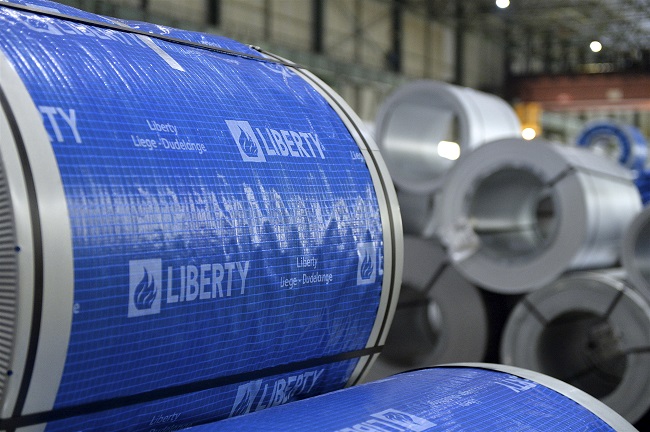
Trade unions paint bleak future for Liberty Dudelange
Trade unions in Luxembourg have this week issued a statement to express their concern over the future of the Liberty Dudelange coil galvanising mill.
Earlier this month, Luxembourg authorities decided against extending state support for the temporary layoff scheme at the plant. From April, therefore, all salaries of the workforce will need to be covered by Liberty Steel even if temporary layoffs are applied, Kallanish notes.
Trade unions add that production levels at the mill in March were very low and visibility for April production remains uncertain.
As a consequence of the uncertainty, unions have reiterated their request to the local government to closely follow developments and plan for a new industrial owner to be found for the mill if need be.
Liberty Dudelange operates in close relation with the group’s coil rolling mills in Liege, Belgium.
Liberty Steel did not respond to request for comment before press deadline.
Emanuele Norsa Italy


Italian steelmakers, merchants clash over scrap exports
Italian steel trade association Assofermet says there is no scrap shortage caused by exports that may impact Italian steelmaking.
Italian scrap exports to countries outside Europe decreased by 12.6% on-year in 2021 to 393,000 tonnes, from 450,000t the previous year, while Italian scrap purchases from European countries reached 5.6 million tonnes, up 15.5%.
“The figures show how irrelevant the export share of scrap from national borders to non-EU countries is, even in a context like the current one with the Russian-Ukrainian conflict, which in a few days has changed the world scenario of raw materials,” Assofermet wrote in a letter to authorities seen by Kallanish.
The letter comes in response to the measure implemented by the economic development ministry (Mise) from 21 March that requires scrap companies to notify authorities of every export sale.
This is seen as yet another attempt, encouraged by the steelmakers’ lobby, to intimidate exporters and keep material available for the domestic steelmaking facilities. In case of failure to declare an export deal, an administrative sanction of 30% will be levied of the value of the transaction, not less than €30,000 ($32,936), for each individual transaction.
Sources close to the subject say the notification has no value in legal terms as an export ban, although scrap is considered a critical material in Italy. Talk of the EU not imposing a scrap export ban seems to have disappointed certain steelmakers, sources say.
Some recycling companies and traders tell Kallanish they responded to the ministry initiative with a lawyer’s letter. They believe the provision is an exercise to keep a record of tonnages sold on the export market and those companies involved in the export business. Italian steelmakers have always been against exporting scrap and have in the past solicited environmental controls on cargoes at ports to slow down trade.
Natalia Capra France

Slab price rise continues, even as Russia re-enters
Global merchant slab supply tightness spurred by the absence of CIS material in the first half of March has eased somewhat amid new sources making themselves available.
As was expected, China obliged, but at prices exceeding those of hot rolled coil, amid buyers’ desperation and still relatively limited availability, Kallanish learns from market participants.
Around two weeks ago, Indonesian and Chinese slab was available at $900/tonne cfr southern Europe, but prices have since gained around $200/t, with latest Chinese offers at a firm $1,000/t fob, according to traders. Some suggest bookings were made at slightly lower levels, at around $1,080/t cfr into Europe, with freight calculated at around $110/t for large, 50,000-tonne lots, but these have not been confirmed. European domestic mills were heard offering at €1,000-1,010/t ($1,100-1,111) ex-works, but no sales were reported at these levels.
It is understood however that some Russian merchant slab suppliers were also able to negotiate sales into Europe. Considering semi-finished steel products have not fallen under sanctions, and some Russian producers are also not under sanctions, sales have been heard in the past ten days. These were made at much-lower-than-Chinese-and-Brazilian-material levels, just below $800/t fob Black Sea, according to sources. They still involve high risk, at least from a lack of certainty. Lead times are also short, due to high risks and the constantly changing environment, sources note.
The same level of interest and pricing is seen in Turkey, with at least one lot heard sold from Russia around a week ago at $900-910/t cfr, but a confirmation could also not be obtained at press time. Chinese slab was booked mid-March at $965/t cfr Turkey for end-May arrival. The overwhelming market majority believes that should Russian sales continue, there is a chance of prices cooling, but forecasts are understandably uncertain.
Meanwhile, in the western hemisphere, prices have been heating up, with Brazilian slab reaching $1,150/t fob for concluded deals and offers at $1,200/t fob to regional producers. These offers are out of reach to Mediterranean buyers, not only due to their value, but also because of much longer lead times, and Brazil’s ongoing concentration on regional and North American sales, sources note.
There were no Russian sales or offers in Southeast Asia. Overall offers of slab appear to have dried up to regional buyers, and this shortage is likely to underpin price increases down the production chain, traders say. Many buyers hope Russian mills will focus on higher slab supply as finished product sales are more restricted, and domestic HRC demand is also expected to soften, at least in the next quarter.
Katya Ourakova UK

Volvo reduces 2022 sales expectations amid ongoing semiconductor shortage
Automaker Volvo Cars reduced its sales expectations for 2022, due to a temporary worsened production situation in the second quarter caused by the ongoing semiconductor shortage.
“Over the past year, the auto industry has been impacted by the shortage of semi-conductors and Volvo Cars has previously communicated that it sees a gradual improvement in the supply of semi-conductors and production output month over month,” it said, although it added that, due to a lack of a specific type of semi-conductor, it expected “a temporary deviation from that trend.”
It didn’t specify any number for 2022 growth projection. Volvo sold 698,693 vehicles in 2021, up 5.6% year on year.
It said the shortage was not related to the war in Ukraine, as it had “very limited direct relationships” with suppliers in the country.
However, the war had resulted in increasing costs for raw material, energy and freights in the auto industry and it was continuing to work with pricing to mitigate the effects, Volvo said.
“The supply chain constraints, including the ongoing impacts from COVID, are expected to remain a problem for the industry throughout 2022,” it said, adding that it would work with suppliers and partners to resolve any impact on production and to deliver vehicles to customers as soon as possible.
The ongoing semiconductor shortage has continued to impact some automakers, despite others expecting the situation to improve in 2022.
Fellow automaker BMW said previously that it expected supply chain issues, particularly the shortage of semiconductors, not to ease before the second half of 2022.
Earlier in March, Japan’s Toyota Motor Corp. said it expected to start its fiscal year 2022-23 (April-March), with a vehicle shortfall of 150,000 units globally in April, due to the semiconductor chip shortage and the effects of the coronavirus pandemic.
New passenger car registrations in Europe fell 6.7% year on year in February to 719,465 units, due to supply chain disruptions faced by automakers, according to data released by European automobile manufacturers’ association ACEA.
In addition, the chip shortage also contributed to Turkey’s vehicle output dropping 9% year on year in February to 105,644 units.
— Jacqueline Holman

Transport strike affects Spanish steel operators: Unesid
All of Spain’s steel companies are seeing their operations affected by an ongoing transport workers’ strike leading to “serious interruptions,” Spain’s steel industry group Unesid said March 22.
“At the moment, not one manufacturer in the sector is operating normally, as plants have been obliged to either reduce or halt production due to the lack of raw materials or the ability to deliver products to clients,” the group said in a statement, without providing figures.
The latest impact was announced by Spain’s largest stainless steel maker Acerinox, which said March 22 it agreed for a temporary lay-off plan with workers at its 1.1 million mt/yr Campo de Gibraltar, Spain plant with a potential duration of one year, having already wound down production since March 9 due to the impact of high energy prices.
Spain’s steel sector is Europe’s fourth-largest behind Germany, Italy and France with production of 13.1 million mt in 2021.
A strike by transport workers that started March 14 in reaction to rising energy prices has seen its impact increase as it goes on.
“The halt in (steel) production is not only harmful to the companies, but also the workers and affects the whole supply chain … seriously damaging the whole industrial production sector,” Unesid said, as it called on the strikers to “reconsider their action.”
Besides Acerinox, ArcelorMittal in Spain said March 17 it had halted several units at its Gijon, Spain site with 4.5 milllion mt/yr capacity as the result of the transport workers’ strike, while Unesid has reported reduced rates or halts for other producers Megasa (3 million mt/yr capacity), Grupo Celsa (2.5 million mt/yr capacity), and Siderurgica Balbao (1.3 million mt/yr) among others, with the strike impact compounding the negative impact of record high energy prices during the first quarter.
Spain’s government said it will announce a raft of measures March 29 to tackle the record energy prices with the measures likely to come into force in April.
— Gianluca Baratti
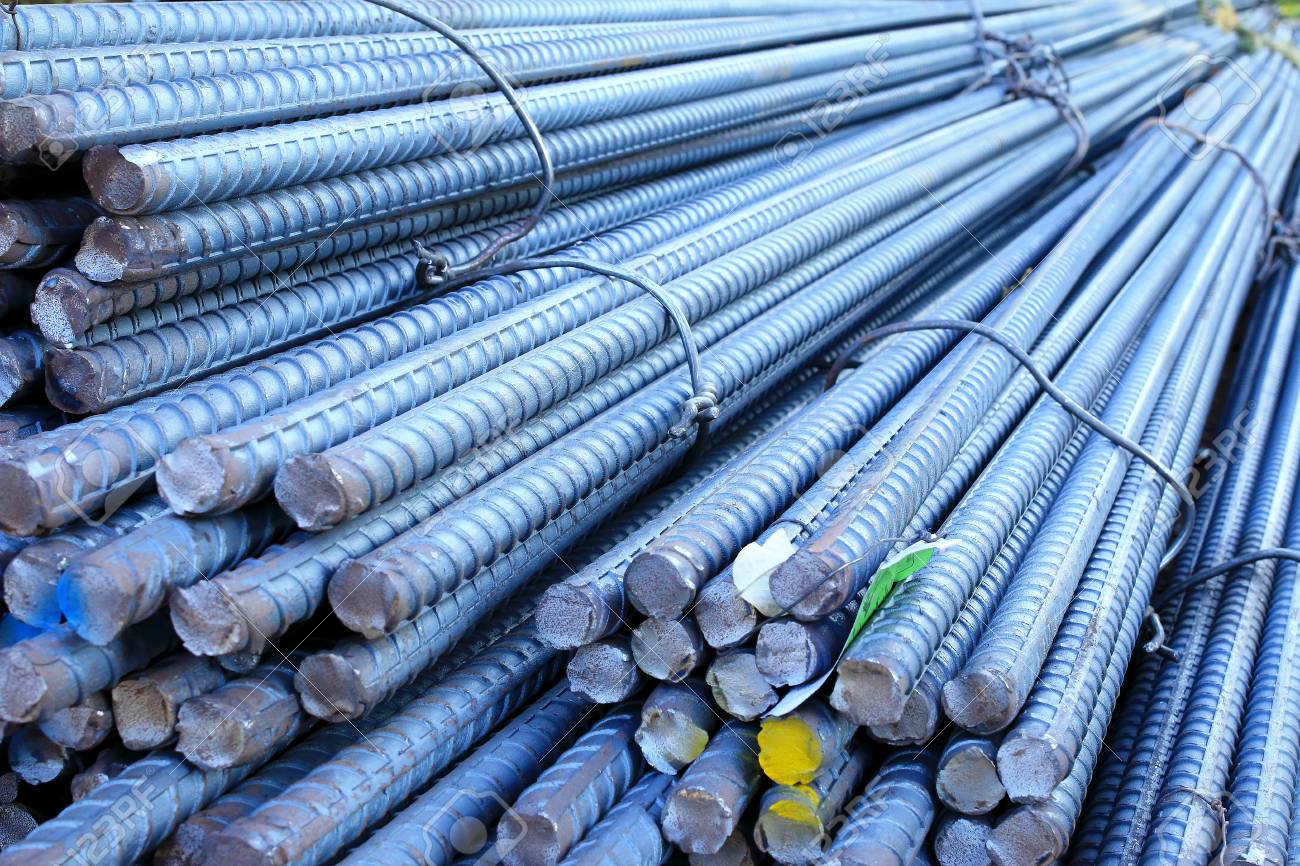
Northwest EU rebar prices reach record high
Northwest European domestic rebar prices continued to strengthen on week to March 23, amid supply constraints and high costs.
S&P Global Commodity Insights assessed Platts TSI Northwest Europe Rebar at Eur1,230/mt ex-works March 23 up Eur55 week on week, surging to a record since the index began January 1998.
As the Russia-Ukraine crisis greatly disrupted the supply chain in the market, pushing prices up to record highs, mills were offering long steel products at elevated levels while customers resisted buying at the record-high prices.
“The reference [mill offers] in Germany today are around Eur1,285/mt delivered from local German suppliers and this is the highest level,” one Italian mill source told S&P Global. The source added that the mill was offering rebars to Germany at Eur1,200/mt delivered and was booking orders around that level.
“Almost all producers were out of the market when price levels reached Eur1,300/mt base price for rebars,” one seller source said. The source put current offers for rebars at Eur1,360-Eur1,435/mt delivered, adding that demand should become active soon at these levels.
One European trader put a workable level for rebars at Eur1,100/mt delivered in France and Belgium and indicated that prices higher than that might be workable for Germany, while one EU market source indicated a tradable value for domestic rebars in Northwest Europe at Eur1,220-Eur1,260/mt delivered.
Meanwhile, European domestic steel sections prices also continued to strengthen significantly during the week ending March 23, as mills held back offers amid high costs and supply constraints.
S&P Global’s assessed the Platts European medium sections price (category 1, S235 JR) at Eur1,425/mt delivered March 23, up Eur50 week on week, reaching a record since the index began January 1998.
One Benelux-based distributor source cited a tradable value for category-1 medium sections at Eur1,350-Eur1,450/mt delivered. The source noted that there is around Eur150-Eur300/mt difference in domestic and import prices for long steel products, depending on the product. “Buying activity has calmed down a bit, but demand is still good,” he said, adding that current weather conditions are also favorable for construction projects.
One European mill source put tradable value for medium sections category-1 at Eur1,425/mt delivered.
— Rabia Arif, Staff

German scrap prices reach €600, uncertainty clouds market
German scrap prices skyrocketed in March due to the Russian invasion of Ukraine and short supply, according to German scrap market participants. Most sources expect uncertainty to cloud the market going forward.
Prices in southern Germany and in most other parts of the country surged by €80-110/tonne ($87-120/t) this month, a Bavarian buyer tells Kallanish.
Nationwide average prices for old thick scrap sort 3 are up from €450/t to €550/t. The price for new scrap sort 2/8, meanwhile, has reached €600/t.
The price for E40 shredded scrap has reached €590/t.
In Austria, scrap prices have also increased significantly, for old thick scrap sort 3 to €515/t and new scrap sort 2/8 to €540/t.
“New exports to Turkey and some European countries had an impact on the German scrap market in the first two weeks of the month due to the Russian invasion of Ukraine,” another German market participants notes. “However, in the last ten days, exports to Turkish steel mills have decreased because of high prices.”
“Despite the onset of spring, collection rates for scrap in Europe are declining due to high transport costs and other logistical problems,” a merchant observes. “Meanwhile, the limited output of automobiles and at manufacturing companies is limiting the production of basic scrap. In addition, the lack of pig iron from the CIS has increased demand for new grades of other raw materials.”
Increasing the amount of base scrap used in furnaces can compensate for the reduced availability of pig iron, the merchant adds. “However, the availability of quantities is still very low.”
Market participants describe the situation as very turbulent and even chaotic, making longer-term or even medium-term forecasts impossible.
Svetoslav Abrossimov Bulgaria