

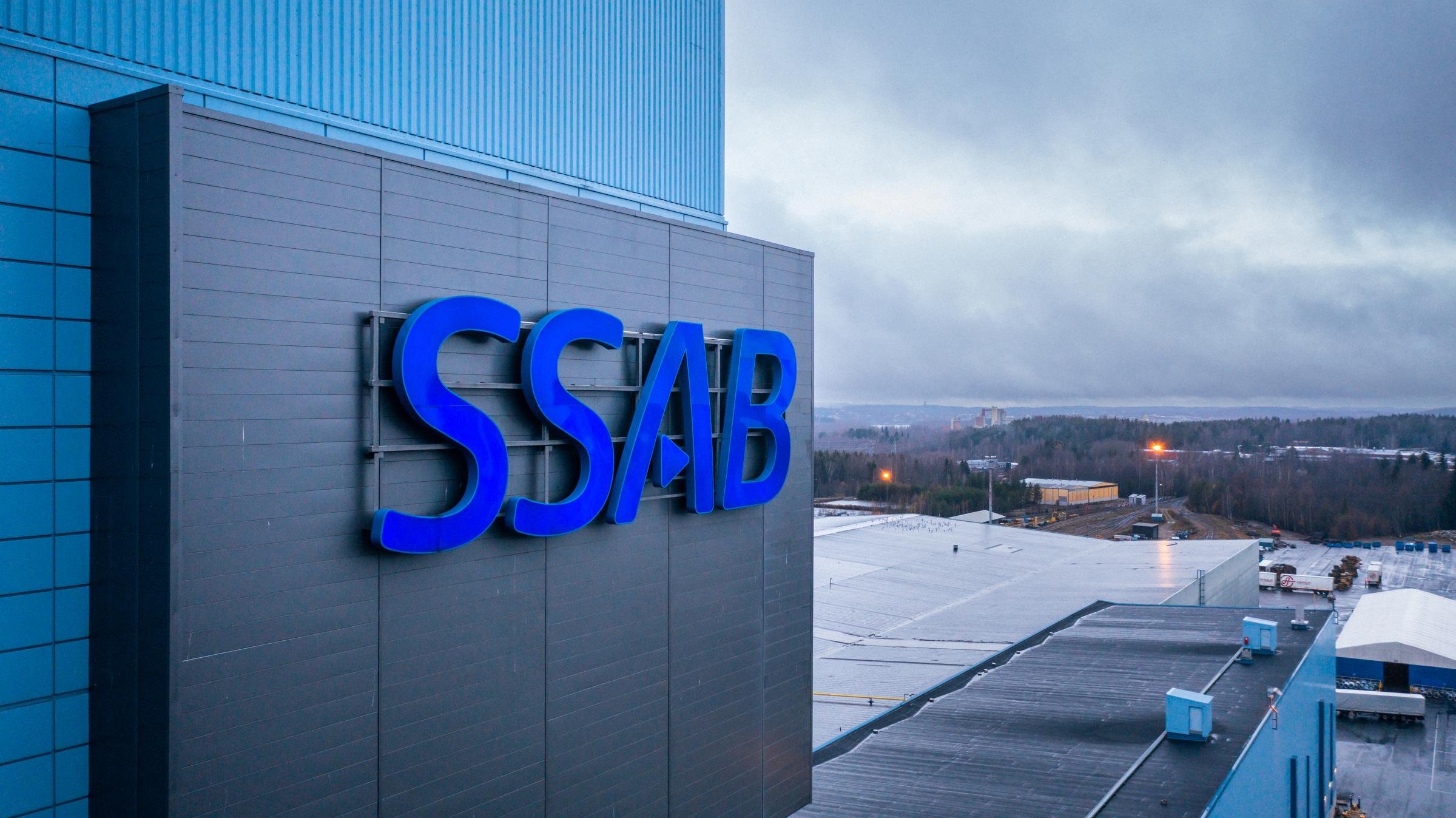
SSAB supplies high-strength steel for Helsinki’s Kruunuvuori Bridge
Swedish specialty steelmaker SSAB has announced that it has supplied more than 3,000 mt of high-strength structural steel for the Kruunuvuori Bridge in Helsinki, one of the largest bridge projects ever undertaken in Finland.
The bridge structures are primarily built using SSAB Domex® high-strength steel, particularly the Domex 460ML grade, enabling lightweight yet highly durable construction designed to withstand harsh environmental conditions such as ice, snow, moisture and strong winds.
In total, around 6,300 mt of steel structures were used in the project, with SSAB accounting for over half of the supply.
The Kruunuvuori Bridge is approximately 1,200 meters long, with a central pylon rising 135 meters, making it the longest and tallest bridge in Finland. The bridge is designed primarily for pedestrians, cyclists and public transport, supporting Helsinki’s goals to reduce emissions and improve sustainable urban mobility.
Piles and foundation components also supplied
In addition to structural steel, SSAB supplied driven and drilled piles for the bridge foundations, totaling approximately 1,050 mt. The piles include diameters of 1,220 mm and 1,016 mm, with the longest drilled piles exceeding 40 meters in length and equipped with specially designed rock shoes.
Steel supports sustainability targets
According to the company, the use of high-strength steel contributed to material efficiency and reduced environmental impact through lighter structures and long service life.
SSAB stated that its steel has carbon emissions around 6% lower than the European average and up to 17 percent lower than the Chinese average, supporting the project’s climate objectives.
Author: SteelOrbis Editorial Team


European Parliament approves new GSP scheme for developing countries


Duferco Thionville to cease flat products trading operations at its Yutz site

EU’s 20th sanctions package further tightens restrictions on Russian steel-linked trade
The European Union has adopted its 20th sanctions package against Russia, introducing new trade, energy, finance and anti-circumvention measures aimed at weakening Russia’s war economy. For the steel sector, the most relevant measures include new restrictions on imports of certain metals, minerals and steel scrap, as well as expanded export bans covering articles made of steel and tools used in metal production.
According to the Council of the EU, the package restricts imports of goods that generate significant revenues for Russia, including certain raw materials, certain metals and minerals, scrap of steel and other metals, chemicals, vulcanized rubber articles and tanned fur skins. The total value of the new import restrictions exceeds €570 million.
The new measures build on earlier EU sanctions targeting Russian-origin iron and steel products, including products processed in third countries using Russian-origin iron or steel inputs. The package also strengthens anti-circumvention controls. For the first time, the EU activated its anti-circumvention tool, restricting exports of certain high-risk goods to Kyrgyzstan due to the risk of re-export to Russia. Although this measure mainly covers CNC machines and radio equipment, it is relevant to steel and machinery markets because CNC machines are widely used in metalworking and industrial production.
For steel market participants, the new package is expected to increase due diligence requirements, especially for scrap, semi-finished and processed metal products, metalworking tools and trade involving third countries. Importers and exporters will likely face closer checks on origin, routing, end-use and counterparties.
Overall, the package does not introduce a full new ban on all Russian steel products, as many restrictions were already in place. However, it expands the sanctions perimeter around Russia’s metals trade by targeting steel scrap, steel articles, metal production tools and possible circumvention routes.
From the steel sector’s perspective, the key CN codes in the package include 7204, covering iron and steel scrap; 7318, covering fasteners made of iron or steel; 7325, covering other cast articles of iron or steel; and 8209 and 8311, covering certain tools and materials used in metal production. In addition, CNC machines for metalworking, which the EU included in the scope of restrictions aimed at preventing the circumvention of sanctions, fall under code 8457 10.
Author: SteelOrbis Editorial Team
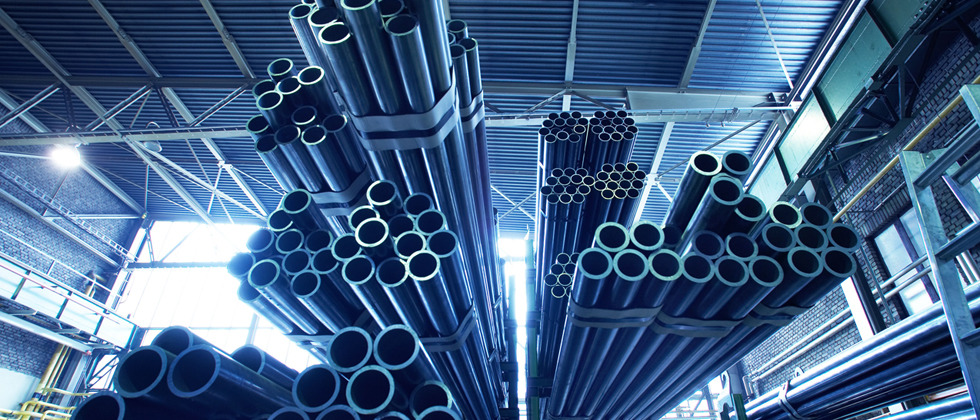
Saarstahl Ascoval signs long-term supply agreement with Mannesmann Precision Tubes
France-based Saarstahl Ascoval, part of the Saarstahl Group, has announced that it has signed a long-term supply agreement with Germany-based Mannesmann Precision Tubes. The partnership includes the supply of steel semifinished products for pipe applications in the automotive and industrial sectors.
The companies will also cooperate closely across the entire supply chain and develop tailored logistics solutions to ensure efficient delivery to end customers.
Focus on low-carbon steel production
Saarstahl Ascoval highlighted its positioning as a supplier of carbon-reduced steel, produced via electric arc furnace technology using scrap. According to the company, this production route enables a carbon footprint reduction of up to 70 percent compared to conventional blast furnace-based steelmaking.
The company stated that contracts such as this provide planning security for its operations and support further development of its production facilities. The agreement also reflects growing demand for low-carbon steel beyond traditional segments, expanding into automotive and industrial applications.
Investments in EAF capacity underpin strategy
In recent years, the Saarstahl Group has invested in modernizing its electric steelmaking infrastructure, enabling large-scale production of environmentally friendly steel.
The cooperation with Mannesmann Precision Tubes is expected to strengthen its position in the European market for sustainable steel solutions.
Author: SteelOrbis Editorial Team

UNESID: Spanish consumption seen growing, imports to cool
Spain saw apparent steel consumption (ASC) decrease 1.2% year-on-year in 2025, but a rebound is forecast this year, says Alfonso Hidalgo de Calcerrada, head of the economic studies department of Spanish steelmakers’ association Unesid.
During the last quarter of last year, demand climbed ahead of the implementation of CBAM. “The consumption growth is reflected in the latest transactions in Q4 2025, where importers increased their purchases before this complex mechanism came into force,” Hidalgo observed during the EUROMETAL Steel Net Forum Iberia in Santander last week attended by Kallansh. “At the beginning of this year [January-February] volumes declined.”
Spain’s 2025 ASC reached 3.31 million tonnes, making it one of the few leading EU countries to record a decline versus 2024. By comparison, ASC in Italy was 4.6% higher y-o-y, Germany’s grew by 0.4%, whilst France saw an increase of 0.2%.
Spanish steel consumption in Q4 alone accounted for 1.72mt. This volume was 16.4% higher than 1mt in Q3 2025 and up 9% y-o-y.
“The increase was most pronounced in the consumption of flat steel, which reached 736,000 tonnes in Q4 2025, whilst that of long products stood at 413,000t. Both volumes declined with the entry of the CBAM, with data for the first two months of 2026 showing a sequential fall of 6% and 4%, respectively, for flats and longs,” the economist revealed.
Imports from third countries remained a major cause for concern throughout 2025. However, the implementation of CBAM and the forthcoming introduction of the EU’s new trade defence measure will provide some relief for European industry and bring greater certainty for demand from this year onwards, concluded Hidalgo.


Iberian distributors express optimism over market recovery
Spanish and Portuguese steel distributor representatives see demand improving in the short term amid the complex global scenario, with the market undergoing a transformation. Steel prices should stay elevated with fluctuations of €5-10/tonne ($5.85-11.71/t), delegates told Kallanish during the EUROMETAL Steel Net Forum Iberia in Santander this week.
According to Spanish distributors association Unión de Almacenistas de Hierros de España (UAHE) president Roberto González, stocks in Iberia remain at a higher, healthy level, while companies in the sector have improved their services through innovation.
“Value is being added to the distribution chain because the market demands it. Good management by companies in the face of the challenging economic panorama does not consist only of selling steel, but also of supplying better and innovative services to customers,” González said.
The new economic reality is seen requiring new solutions from both producers and the distribution chain. The sector says that some long-standing concerns remain, but the market is showing positive signs of recovery and an improvement in the outlook.

“There is an increase in stocking in the Iberian Peninsula since mid-2025,” commented Arimany Ferro executive Josep Arimany. “Most of the distribution companies are already in good financial health and are moving more material. Producers are making profits thanks to rising prices, and the steel industry is reporting higher margins.” According to him, after restocking large quantities of steel, distribution centres seem to have transformed “from stockists to collectors”.
Arimany believes that, given the new market reality, the Spanish sector has reached a turning point regarding its future. “We must prioritise quality over sales volume. We are currently undergoing a period of transformation in Europe, in which regionalisation will become more entrenched alongside new protective measures. Our sales prices will be considerably higher than those of imported material. Entries will gradually decline as a result of the new trade regulations, and this will lead to fair competition within the continent, with a focus on value-added offers,” he noted.
Megasa’s representative at the event, Víctor Martínez, assured distributors that producers do not face any dilemma over whether to “produce to sell or sell to produce”.
“We are seeking a sustainable model for our operations. Our investments have brought us a new range of products, meeting very high standards, and this comes at a price. Demand for these products is constantly growing, which presents major challenges for the supply chain. The outlook is positive but very challenging,” said Martínez.
For Gerardo Garcia, an executive at León Tubos, the future of companies in the sector hinges on planning and sustainability. “We must cover our costs and ensure a return on investment amidst a climate of rationalisation and regionalisation,” he observed. “We must focus on local customers and nearby export markets.”
Distribution is an integral part of the production process because it reaches places that manufacturers cannot. This makes it an indispensable part of the value chain, according to Nicolás Rivas, chief executive of steel processor Susider.
“The value of the distribution sector lies in its responsiveness, its proximity to the customer, and its ability to provide innovative and rapid solutions to the market. Its future is linked to sustainability, the restructuring of the value chain with processes not offered by producers, and constructive dialogue aimed at developing complementary relationships with steelworks,” Rivas asserted.
Most participants at the event agreed steel prices will soon stabilise and participants should manage costs and improve customer service.
Some producer representatives, meanwhile, did not rule out the possibility that, in the not too distant future, a phase of corporate consolidation may begin within the distribution chain, which in Spain is one of the largest in Europe. This would be the result of rising inflation and oversupply.

Extend CBAM to more products, steel industry says
EUROMETAL’s chair, Alexander Julius, said manufacturing is decreasing “slowly but surely” in the EU, adding: ”For some manufacturers, it is existential“. But sectors further downstream have other ideas.
The German association VDMA, which represents 3,500 mechanical construction and plant engineering companies, wants CBAM to be abolished, or its shortcomings addressed. In a 20 April op-ed, it said the Commission’s planned expansion risked increasing costs for downstream operators, which needed inputs not available from EU suppliers.
Author: Mariette Thom

EU raises electricity cost support to 70% for energy-intensive industries under crisis framework
The European Commission has announced that it has adopted a new temporary state aid framework aimed at supporting sectors affected by the economic impact of the Middle East crisis.
The Middle East crisis Temporary State aid Framework (METSAF) will remain in force until December 31, 2026, providing targeted and time-limited support.
Increased electricity cost compensation
A key element of the framework is the increase in electricity price compensation for energy-intensive industries.
METSAF allows member states to raise support levels for electricity price compensation schemes approved under the Clean Industrial Deal State aid framework from 50 percent to up to 70 percent of eligible electricity consumption costs, without requiring additional decarbonization commitments.
The framework also introduces a simplified mechanism allowing companies to receive support of up to €50,000 based on estimated fuel consumption, using sector benchmarks.
METSAF allows partial cumulation with aid granted under EU Emissions Trading System (ETS) state aid guidelines. Companies will be able to combine different support mechanisms for up to half of the total aid, improving overall effectiveness.
Steel sector welcomes flexibility
The German Steel Federation (WV Stahl) has welcomed the framework, noting that it introduces important flexibility for energy-intensive sectors. CEO Kerstin Maria Rippel highlighted that the ability to combine electricity price compensation with industrial electricity pricing schemes marks a significant improvement.
WV Stahl stressed that rapid implementation at national level is essential to deliver tangible cost relief. It also noted that under previous rules, limited flexibility reduced the effectiveness of existing support schemes, particularly in Germany.
Structural energy cost challenge remains
Despite the new measures, the steel sector emphasized that high electricity prices are a structural issue rather than a temporary crisis. Short-term aid alone is insufficient to restore competitiveness or support long-term investment.
The federation is calling for permanent policy measures, including full combinability of support instruments and broader eligibility across total electricity consumption. It reiterated the need for a competitive industrial electricity price of €50/MWh, covering all taxes, levies, and network charges, as a key condition for maintaining industrial competitiveness and enabling the transition to low-emission steel production.
Author: SteelOrbis Editorial Team

EU Industrial Accelerator Act risks falling short without clearer rules and stronger industry alignment
A cross-sector debate hosted by the European Economic and Social Committee Employers’ Group has raised concerns that the EU’s proposed Industrial Accelerator Act (IAA) may fall short of its objectives without significant revisions.
Participants included the European Steel Association (EUROFER), Cement Europe, European Automobile Manufacturers’ Association, and European Aluminum.
Lack of clarity creates uncertainty
A key concern is the absence of clear definitions for critical concepts such as “low-carbon materials” and “Made in Europe.” Industry representatives warned that without harmonized definitions, companies face uncertainty in compliance and investment decisions, particularly in capital-intensive sectors like steel and cement.
Stakeholders highlighted the risk of excessive administrative burden, noting that complex reporting, certification, and compliance requirements could turn the IAA into a bureaucratic framework rather than a practical demand-driving tool. This could delay investment decisions and slow the pace of industrial decarbonization.
One-size-fits-all approach questioned
Participants also criticized the IAA’s horizontal design, arguing that it fails to reflect sector-specific realities. Industries differ significantly in cost structures, exposure to global competition, and reliance on public procurement, raising doubts about the effectiveness of a uniform policy approach.
A major weakness identified is the lack of focus on underlying structural issues, particularly high energy costs. Industry representatives stressed that demand-side measures alone are insufficient to restore competitiveness without addressing core cost drivers.
Global competition intensifies pressure
The EU’s approach was contrasted with more coordinated industrial strategies in competing regions, which combine subsidies, local content rules, and streamlined regulation. In comparison, the EU framework was described as fragmented, potentially weakening its global competitiveness.
Concerns were also raised over governance, including the complexity of implementation, limited coordination among member states, and heavy reliance on delegated acts. These factors reduce predictability and create additional legal uncertainty.
Risk of limited real-world impact
Overall, stakeholders warned that the IAA may fail to create clear market signals or guarantee demand for low-carbon products produced within the EU. Without stronger alignment with energy and industrial policy, the framework risks remaining symbolic rather than transformative.
Industry participants concluded that the IAA requires significant adjustments, including clearer definitions, simplified procedures, and a more integrated policy approach. Such changes are seen as essential to ensure the act can effectively support both industrial competitiveness and the transition to a low-carbon economy.
Author: SteelOrbis Editorial Team