


SSAB expects stable prices through summer
SSAB’s ceo Johnny Sjöström believes that prices for the company’s products will remain stable through summer before picking up at the end of the third quarter.
After realising higher shipments in the first quarter of 2026 compared to the corresponding 2025 period (see Kallanish 29 April), it expects volumes to remain stable in the second quarter, and for prices to be “somewhat higher”, according to its Q1 earnings release.
The Swedish group with mills in the USA sells a large share of its output on long-term contracts, and is less exposed to the spot market, therefore follows general market trends with a delay. Sjöström, during an online press conference, monitored by Kallanish, pointed at the company’s high share of long-term contracts, and noted that price increases will become obvious at the end of the third quarter.
By then, distributors will be destocking volumes built up in preparation of the new safeguard measures in the European Union.
Sjöström dismissed suggestions that high inventories could cause a price fall towards June when asked. “I don’t think so; they will maybe stabilise, that’s my speculation.”
Group cfo Leena Craelius explained the structure of long-term contracts are typical for the group with its special products. Of the SSAB Europe division, 15% of the volumes are on annual contracts, 25% are on half-year contract, which she notes is “quite high”, while 40% are on annual contracts, with only 20% on a spot basis.
In the Special Steels division, spot business makes up only 5%. The overall mix of contracts has not changed, she said.
On price increases, Sjöström noted that “all increases we have announced were accepted,” adding that there seems to be a consensus on the market. Right now, the company is just about to open up books for June orders. “What we do is we lift prices before we open the books,” and the company tries to avoid adjustment by mid-month, but is still open to negotiations, he said.
He added that the group’s sales of special steels in the USA are benefiting from the fact that Canada’s Algoma has withdrawn from the US market.
For the group’s steel products that are used for defence, he noted that “we have extremely good margins,” for this sector, and that demand will go up.
However, he noted that the development procedures are slow, and can take two years for a tank, for example.
Author: Christian Koehl


Wire mesh shortages continue in Germany
Some rebar sources in Germany and Austria are reporting an apparent shortage and longer lead times for wire mesh. However, the issue could be temporary.
Initially heard in Austria, several buyers in Germany concur that they are facing lead times of more than four weeks, compared with less than a week in 2025. The sources assure that orders are not declined, but will take longer to be served, and that, consequently, prices are inching up by more than those for rebar.
For wire mesh, base prices are normally €100/tonne ($117) above straight rebar, but currently fetch a premium of €110-120, with deals at €560-570, Kallanish hears from market players. With size extras of €210, this results in €770-780 delivered.
One observer at a large distributor attributor believes that wire mesh production stalled in the winter months “when it was pretty cold for construction to continue as usual,” and has not quite caught up yet.
A manager at another big distributor agrees, he says that deliveries that were delayed from winter months have lately taken freight capacity away from new orders. He believes production activity is currently reduced by as much as 30%.
Against that, a manager of a producer cannot confirm such suggestions. He says that production runs as usual, and that orders have not surged noticeably.
But this situation may vary among producers, especially as the input material wire mesh is subject to shortage and high prices. Hence, makers who depend on buying wire rod from third parties for the production of wire mesh will be more impacted on their operation.
Meanwhile, another cause cited is a shortage of open trucks needed for wire mesh transport. Truck capacity has become scarce and expensive due to the overall diesel price surge. Plus, many transport companies in western Europe are based in Poland where operations and drivers took an extended break over the Easter holidays.
Author: Christian Koehl

ArcelorMittal: Pricing improves, policy ‘structurally resets’ Europe outlook
CBAM and the EU’s incoming trade regime have “structurally reset” the European steel industry outlook, with lower imports expected to result in higher capacity utilisation and profitability, says ArcelorMittal. The firm expects the materially improved global pricing environment observed over recent months to be reflected from second-quarter performance onwards.
Policies are reinforcing the shift towards regionalised steel markets, as a result of stronger trade protection in response to excess capacity in China. This favours ArcelorMittal’s business model which is built around local production to serve local customer demand, the firm notes.
With the start of the phasing in of CBAM and phaseout of free ETS allowances, increased carbon costs are being reflected in European steel prices. With CBAM in place, the additional CO2 cost is expected to be recovered via steel prices from Q2 onwards, the group says.
The new trade regime is seen reducing imports by 13 million tonnes versus 2025, with the “melt & pour” requirement to improve traceability, limit circumvention and strengthen supply-chain transparency, it adds.
Consolidated steel shipments fell 6% on-year in Q1 to 12.8 million tonnes, with crude steel production down 10% to 13.3mt. Sales nevertheless rose 4% to $15.5 billion but adjusted net income fell 29% to $575 million. Ebitda rose 6% to $1.68 billion.
“Performance in the first quarter was resilient despite the unsettled backdrop in the Middle East with profitability of $131/t Ebitda reflecting the benefits of our global diversified asset portfolio and the consistent application of our strategy,” ArcelorMittal chief executive Aditya Mittal says in the group’s latest earnings report seen by Kallanish.
On the policy-driven upside in Europe, “ArcelorMittal is well positioned to capture this upside through existing capacity and by re-starting idled capacity. In Europe, this will result in higher domestic capacity utilisation and restore profitability and ROCE to healthy, sustainable levels,” he adds.
The firm restarted its Dabrowa Gornicza blast furnace no.3 in Poland earlier this week.
Author: Adam Smith

Soft demand weighs on European steel heavy plate prices; some Italian re-rollers pause production
Italy
Deals for domestic steel S235-grade plate in Italy were heard in the range of €740-770 ($868-903) per tonne ex-works. Sales at €740-750 per tonne were reported for deliveries to large stockholders for May-June, while the upper end of the range, at €760-770 per tonne, was linked to offers and transactions with smaller customers.
One trader said deals below €770 per tonne EXW must be “exceptional,” but this was not supported by information from other market sources.
The reported levels were down from deals heard a week earlier at €750-790 per tonne EXW, amid subdued demand for plate in the country.
June production was “still largely open”, according to a distributor, who said that “overall buying activity remained slow.”
One of the largest steel plate re-rollers in northern Italy was reported to have paused production in May, with plans to restart in early June, market sources said.
Fastmarkets contacted the producer but had not received a response by the time of publication.
“There is a lack of orders for Italian plate. They [re-rollers] want the cheap stock of slab to last longer and are not forcing sales,” a trader said.
A second re-roller in northern Italy was also reported to have paused production following an unplanned stoppage in late March, a source at the producer said.
“We can’t comment on the exact restart date, it should be in late May or the beginning of June,” the source told Fastmarkets on Thursday, citing an unplanned technical issue that led to extended extraordinary maintenance.
“Quarto producers and re-rollers face more difficult times as there is, for the time being, no real demand. Stockholders and end-users only purchase missing dimensions and grades,” a second trader said regarding the market situation.
Fastmarkets’ weekly price assessment for steel domestic plate, 8-40mm, exw Southern Europe, was €740-770 per tonne on Thursday, down from €750-790 per tonne a week earlier.
No fresh offers or transactions were reported for imported plate during the week.
Fastmarkets’ weekly price assessment for steel plate (8-40mm), import, cfr main port Southern Europe, was €700-750 per tonne on Thursday, unchanged week on week.
Northern Europe
Steel heavy plate prices in Germany declined slightly during the week, with a wider range of deals reported.
Transactions were heard at €810-850 per tonne EXW. Most deals were linked to €810-840 per tonne, while some orders at €850 per tonne were also achievable, market sources said.
This was down from deals heard a week earlier at €840-860 per tonne EXW. One trader said workable prices should not fall below €840 per tonne, but other sources reported lower indications.
“Workable prices continue to vary significantly between producers,” a distributor said.
Sources told Fastmarkets that prices had risen too quickly in recent weeks, leaving fabricators, service centers and end users with limited time to adjust to the situation.
“The second quarter is supposed to be well booked. Generally, customers, end users and fabricators are still uncertain [about] which trend the market might take. Therefore, they now purchase majorly commodity grades [in the] 12-40 mm [range],” a fourth trader said on Thursday.
The same trader added that demand was “simply not there yet”, with the recent price increase driven more by geopolitical tensions involving the US, Israel and Iran than by the level of demand.
“End users are still adjusting to the mid-March price increase, which pushed S235/S275 offers to around or slightly above €800 per tonne EXW. Since then, high distributor inventories and weak demand have kept prices largely stable,” the fourth trader told Fastmarkets.
Italian domestic plate prices remained below German levels in March and April. Market sources attributed the price gap to freight costs from northern Italy to the Ruhr region, which were estimated at €80-90 per tonne, driven largely by higher fuel prices and trucking rates in Europe.
“So even the minimum level from Italy, €750 base per tonne EXW means delivered in Germany at €830 base,” an Italian producer source said.
A fifth trader said German mills can maintain higher EXW prices because their domestic freight costs are significantly lower than those faced by Italian re- rollers.
“Secondly, their product is more sophisticated, generally cut edges, suppliers’ declaration, and on top, they fill their production with non-commodity volumes, which re-rollers cannot produce,” the trader added.
A sixth trader said the quality of German plates was, on average, higher than that of Italian plate, citing steel cleanness and technical factors such as residual surface defects and flatness.
Fastmarkets’ weekly price assessment for steel domestic plate 8-40mm, exw Northern Europe, was €810-850 per tonne on Thursday, down from €840-860 a week earlier.
Import offers for S355 grade plate were heard from Indonesia at €820 per tonne FCA Antwerp, while Indian suppliers were offering S355 material at €890 per tonne CFR Antwerp, attracting “little interest,” market sources said.
Fastmarkets did not include these offers in its assessment because they did not meet the specifications outlined in the methodology.
Fastmarkets’ weekly price assessment for steel plate (8-40mm), import, cfr main port Northern Europe, was €700-750 per tonne on Thursday, unchanged week on week.
Author: Ivelina Nikolova


ArcelorMittal confirms steel supply for White House ballroom project
Genuino Christino, group chief financial officer at ArcelorMittal, said on Thursday April 30 that the company was “contributing steel to the White House Ballroom… Approximately 600 tonnes have been delivered to date.”
“We have a track record of both supplying strong, high-quality steels to US customers and donating steel to iconic buildings and projects around the world that showcase its strength and flexibility,” Christino said during the company’s first-quarter earnings conference call, citing steel used in the Freedom Tower (at One World Trade Center in New York City), which was also supplied by ArcelorMittal.
Media reports on April 9 said that steel for the White House ballroom was produced outside the US and donated by ArcelorMittal, at an estimated cost of $37 million.
When contacted by Fastmarkets, a White House spokesperson said on April 9: “Due to the top-secret and sensitive nature of various elements of the East Wing Modernization and Ballroom project, we do not discuss specific materials or where or how they are applied.”
Fastmarkets contacted ArcelorMittal’s headquarters in Europe at the time, but the company declined to comment.
Trump’s second term has been marked by measures to support the domestic steel industry.
The most significant came in March 2025, when a 25% tariff on all steel and aluminium imports went into effect under the umbrella of Section 232 of the 1962 Trade Expansion Act. On June 4, the Trump administration doubled general US tariffs on steel, aluminium and their derivative products from 25% to 50%.
On August 15 last year, the US Department of Commerce expanded the list of goods subject to these 50% tariffs, adding 407 product categories of steel and aluminium derivative products, striking a second blow to imports of metals products.
Luxembourg-based ArcelorMittal has a footprint across North America, including an electric-arc furnace plant in Calvert, Alabama, that produces 5.3 million short tons of flat steel annually, and flat-rolled producer ArcelorMittal Dofasco in Canada, which produces 4.5 million tons of steel every year, according to the company’s website.
ArcelorMittal posted first-quarter net earnings of $1.68 billion, up by 5.4% from $1.59 billion in the fourth quarter of 2025, primarily driven by improved performance in the North America sector, which includes the flat, long and tubular operations in the US, Canada and Mexico, as well as all Mexico mines.
The company’s North America sector saw crude steel production increase by 18.3% to 2.1 million tonnes in the first quarter, compared with 1.8 million tonnes in the preceding quarter, “primarily driven by the successful restart of the Mexico long products blast furnace following preventive maintenance.”
Sales increased by 8.3% to $3.3 billion in the North America sector, compared with $3.0 billion in the fourth quarter of 2025, reflecting higher steel shipments and higher average steel selling prices.
Margie Palmer in Sarasota, Florida and Julia Bolotova in Brussels contributed to this report.
Author: Rijuta Dey

Key takeaways from IREPAS spring conference in Amsterdam
Discussing the main themes of the three-day event, the panel pointed to fragile demand conditions in Europe, where subdued growth, excess capacity and shifting public spending priorities will continue to limit any meaningful recovery in steel consumption.
Rising costs – notably for energy, raw materials and logistics – were also cited as a structural challenge, with limited scope for suppliers to fully pass on these increases to customers, keeping margins under pressure.
Another common theme was the growing impact of trade policies and regulation, especially in Europe. The EU’s Carbon Border Adjustment Mechanism (CBAM), together with tighter safeguard measures and quota systems, was widely seen as increasing uncertainty, complicating pricing and contract decisions, and reshaping trade flows. In parallel, geopolitical tensions, particularly in relation to the Middle East conflict, were highlighted as key sources of volatility, disrupting logistics, pushing up freight and energy costs, and undermining predictability across supply chains.
Producers committee: margins squeezed by rising costs, regulation, logistics shocks
According to Alex Gordienko, export director at European long steel producer CELSA Group and chairman of the IPEPAS producers committee, steelmakers face sustained margin pressures because sharply higher raw materials and energy costs are colliding with weak demand and limited pricing power.
Finished steel prices have failed to fully reflect higher input costs, leaving producers exposed, Gordienko said.
The volatile energy markets, driven largely by Middle East tensions, were cited as a major risk factor, with the producers committee warning that any prolonged escalation could significantly worsen market conditions.
Logistical disruptions were also becoming more acute, particularly in the Middle East, with port congestion, truck shortages and rising bunker fuel costs adding to delivery costs.
On trade policy, Gordienko highlighted the growing importance of CBAM, which is expected to create medium-term disruption rather than immediate price shifts.
Gordienko said that, by 2027, mills able to provide verified emissions data were likely to gain a competitive edge, because buyers will prioritize suppliers able to provide reliable carbon data.
He also flagged expectations that a stricter UK quota regime will add another layer of uncertainty for exporters.
Raw materials suppliers committee: tight scrap supplies, shifting global flows
Jens Björkman from Stena Metal International, chairman of the IREPAS raw material suppliers committee, focused on tightening supply conditions and changing global trade dynamics in the scrap and raw materials markets.
Björkman said there was no global scrap surplus and that material was being steadily consumed, while the rising electric-arc furnace (EAF) capacity and regulatory constraints were expected to further tighten availability, over time.
The committee highlighted China’s slowdown in steel output, as a key development supporting sentiment elsewhere, even as iron ore prices remained relatively firm due to supply side constraints.
India was identified as a standout growth market, supported by strong domestic sponge iron production, which has been reducing the country’s reliance on scrap imports.
Regionally, Europe’s safeguard measures and regulatory framework were seen as reinforcing protectionist dynamics, supporting regional scrap demand, although high energy costs and stagflation risks remain a concern.
In the US, stronger domestic steel production has increased internal scrap demand, reducing the attraction of exports, particularly for higher-quality grades.
The bellwether Turkish markets was highlighted as the major driver of global scrap demand and prices, supported by improved steel production and reduced semi-finished steel availability from Iran.
While Asia – especially China and India – is expected to gradually reshape trade flows through rising scrap generation and processing capacity, Björkman warned that the outlook remained uncertain, with tighter credit conditions, reduced trade finance and regulatory changes adding to the complexity.
Traders committee: weaker demand, protectionism disrupt trade flows
Wilhelm Alff, director of Duferco and chairman of the IREPAS traders committee, highlighted the impact of weakening demand and excess capacity, particularly in Europe.
For traders, CBAM remains a major operational risk and Alff said that many market participants have been resorting to default emissions values to avoid compliance risks, despite the higher cost exposure, while uncertainty around CBAM calculation and verification continues to complicate contracts.
At the same time, sharply reduced EU safeguard quotas and high out-of-quota duties have been further restricting access to the European market, forcing exporters to seek alternative destinations.
Alff underlined that there were also heavy complaints about the fact the European Commission is not taking any action on country specific quotas for those countries that have not delivered over the past 24 months.
“Bosnia and Moldova represent 250,000 tonnes of rebar per year,” he said, “and this is vanishing on top of the reduced quota.
“And it is even worse in wire rod, where Switzerland and Moldova represent 300,000 tonnes,” he added.
Geopolitical tensions, especially in the Middle East, were described as increasingly disruptive to trade, by tightening supply chains, pushing up logistics costs and slowing activity. Mills are having to become more reliant on short term and opportunistic sourcing, while port congestion and overland transportation costs are adding further friction.
Looking ahead, the traders committee warned that access to traditional export markets is becoming more difficult, as protectionism spreads globally. Africa was identified as a medium-term growth market, although rising local production and potential new trade barriers could limit any upside.
Author: Vlada Novokreshchenova

Highlights from the EUROMETAL & ASSOFERMET Southern Europe Meeting in Milano
Following the successful EUROMETAL & ASSOFERMET Southern Europe Meeting in Milan, we are pleased to share a series of interview videos produced by Siderweb featuring key voices from across the European steel value chain.
The conference brought together distributors, service centres, traders, manufacturers, and industry experts to discuss one of the most pressing challenges facing Europe today: “Europe: Last Call – Deindustrialisation and the Green Deal: an increasingly irreversible scenario?”
The discussions focused on:
▪ European industrial competitiveness
▪ CBAM and safeguard measures
▪ Rising energy and regulatory costs
▪ Global trade flows and industrial resilience
▪ The future of downstream steel industries in Europe
Watch the interviews by Siderweb:

Alarm bells ringing across Europe: industry comes to a standstill
On 28 April 2026, the heart of European manufacturing stopped beating for an hour. ESN organised a coordinated walkout at 19 plants: a wake-up call from those who build Europe with steel and hard work.
From France to Slovakia, via Germany, Spain and Italy, they switched off the machines:
R.Bourgeois
ESTAMODE
Gebr. Waasner Elektrotechnische Fabrik Gmbh.
LAGOR Srl
Malvestiti Group
Oiki Acciai Inossidabili Spa
ORANGE1 HOLDING
STEMA TECH SRL
thyssenkrupp
TRANCERIE EMILIANE S.p.A.
VALTARO MOTORI SRL
VMF
Many other companies joined in symbolically. The message to politicians is clear: competitiveness is at risk. We need concrete strategies, support for the transition and protection of production.
The machines stopped for an hour so that they would not have to stop forever. Industry needs answers. Now.
Read more: esnnetwork.eu
EU carmakers struggle for solutions amid challenges: conference
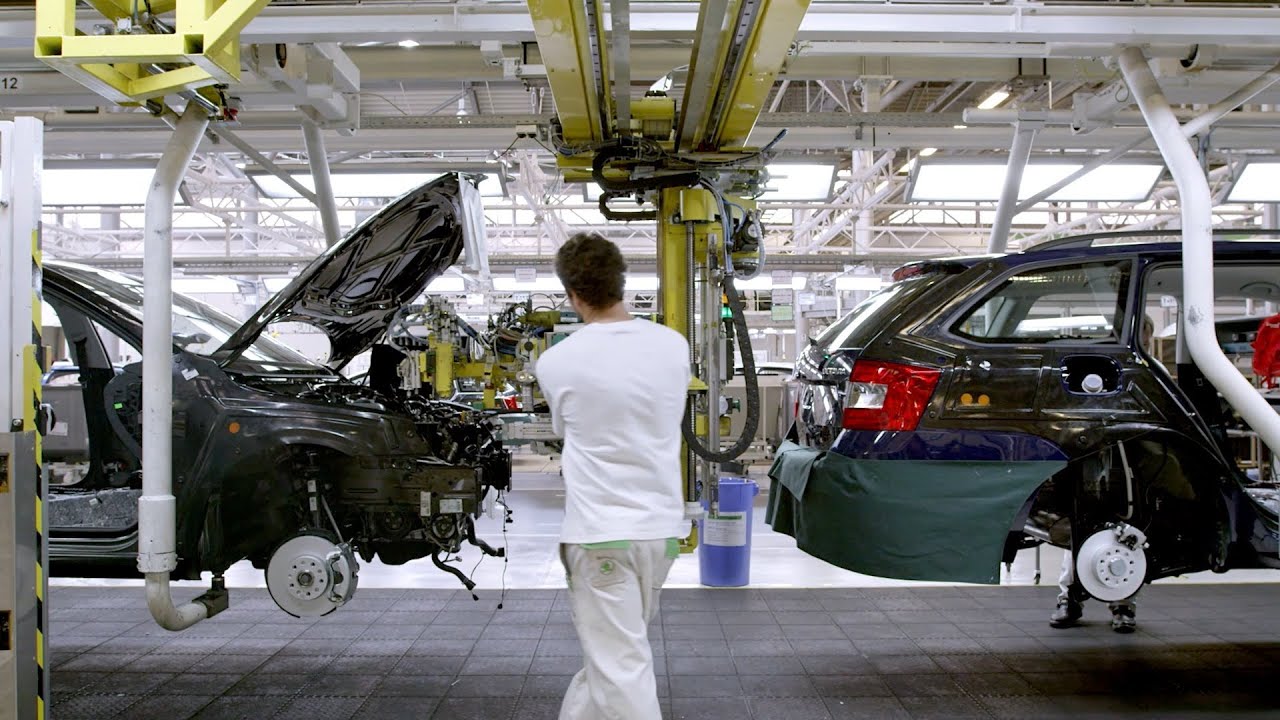
EU carmakers are in a challenging squeeze between reduced consumer demand for new cars and increased competition from technologically advanced Chinese suppliers, with little prospect for improvement. While large carmakers have financial cushions, smaller car parts manufacturers are feeling the brunt of this trend.
So said automotive session panellists during last week’s European Economic Congress in Katowice attended by Kallanish.
Compared to the pre-pandemic high in 2019, the EU has seen annual new car registrations fall by some 2 million tonnes. “I don’t see anything on the horizon that indicates we can recover those 2 million registrations,” said Polish Automotive Industry Association president Jakub Farys. Poland is however an outlier, posting an all-time record combined passenger and light commercial vehicle registrations in 2025.
Chinese carmakers have meanwhile grown their EU market share from 2% in 2024 to 8% in 2025, and to 11% in the first quarter of 2026. “Competition is a normal part of our market, but it’s going very fast,” he noted. Chinese carmakers’ chief executives have said they are aiming for 15% in the short term. “This means that 1.5m cars … will not be produced in Europe.”
“The condition of the overall automotive industry in Europe is facing many questions, dilemmas and points for which it does not have an answer,” said Janusz Puzon, plant director at Stellantis Tychy vehicle plant. The automotive industry has expanded rapidly since the 1950s/60s, led largely by European technological solutions, but this is changing, necessitating a fight to maintain market share.
Customer attitudes are also changing. Owning a car used to be “like a dream,” he continued. “For many of us, many years ago, it was the only form of communication, it was something very fundamental; but today, I have the impression, it has become an extension of the mobile phone or laptop.”
From the perspective of car parts suppliers, who have seen over 100,000 job losses in recent years, “there is no special idea [solution] at the moment,” said Tomasz Beben, president of Poland’s Association of Automotive Parts Distributors and Producers. The industry is in dialogue with the automotive industry and the European Commission, resulting in the “first signs of change”.
He added: “We’re talking about some form of local content in order to support the core of the automotive industry in Europe.” Otherwise, there will be further car parts market share loss because “these parts factories will simply be relocated to cheap labour countries”.
The industry is under pressure amid Chinese competition and restricted US market access, as well as unfulfilled expectations for European vehicle electrification after carmakers had invested considerable sums into electric vehicle production, said Mateusz Starczyk, chief executive of automotive leasing firm mLeasing.
Carmakers have nevertheless accumulated capital over the years to provide a cushion for restructuring. “What awaits the European automotive industry is most certainly a large restructuring,” he noted. The toughest component will be the cost of labour, which is much higher than among Asian competitors.
Ford Polska ceo Attila Szabo pointed out that 2025 saw a reduction in EU20 commercial vehicle sales volume, which is usually a bad sign for the economy. Overall automotive sales surged in March, with various foreign suppliers pushing for higher numbers to close the quarter. “I don’t think we’ll have the same numbers in April,” he noted.
Competition with China is difficult. “The EU must do more. The Made in EU agenda is a fantastic thing; it’s the right approach to save ourselves from the full Asian attack,” he continued. But due to the highly integrated nature of the European industry, it would be wrong to exclude Turkey and the UK from the measure as this would raise production costs.
Jacek Puzuk, ceo of diesel engine parts manufacturer Wuzutem, suggested EU carmakers should focus on what they have done well the last 70 years. “Striving for zero emissions, I think, it not necessary for us. Striving for minimising emissions, yes,” he noted. Unlike the polluting engines of 20-30 years ago, petrol and diesel engines built today in Europe can compete with Chinese engines. “The Chinese are not able to produce low-emission petrol or diesel engines,” he added.
Challenged by the moderator about whether consumers want to remain dependent on costly imported fuel, he suggested biofuels could be used to reduce costs. Farys added the cost of petrol is one thing, but the cost of electricity can also be prohibitive in the case of electric cars. The infrastructure in Europe is not ready yet for full electrification, which is something carmakers have no control over, he added.
Shifting to producing electric vehicles just shifts the dependence to imported batteries, which creates potential problems with China, Beben warned.
Panellists also touched on the growing trend of carmakers looking to diversify into production for agriculture or for defence purposes, otherwise known as dual use. “We’re looking at sectors where diesel engines will still be needed for many years, such as heavy industry, diggers, heavy trucks, locomotives, especially in the US market,” said Puzuk. “The talk of diesel heading for its death, maybe one day, yes, but that will not happen for a very long time.”
NW European rebar prices seen picking up
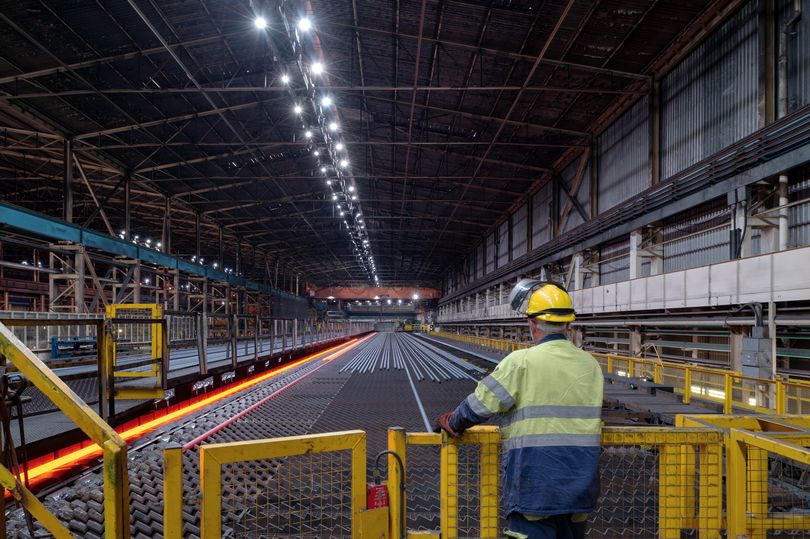
An increasing number of benders in northwestern Europe are preparing for higher rebar prices going forward. These expectations vary within a base price range of €450-€480/tonne ($526-$562).
The upper end value was reportedly heard at the Wire trade fair by one producer, Kallanish hears from a manager of a German purchasing group. “They were pretty pronounced about it, and I was pretty baffled by the sheer degree of it,” he says.
Another manager of a larger distribution group is sceptical and finds that “€480 might be wishful thinking.” Both managers see the base price currently moving from €440 towards €450.
Others say that €450/t has been reached already and buyers should be prepared for paying more going forward. “You won’t get any [material] for €440 anymore,” says one buyer. “€450 to €480” is the word now.”
His view is echoed by others, including a manager of another large distributor, with the expectations of higher prices not limited to buyers of small volumes.
One factor that matters is the distance to the mills, which could account for €10-20 in the base prices, which include transport costs.
In May, one mill is reportedly taking a three-week production break at its steelwork for the installation of new transformers. The interruption will not affect market supply, because inventories at the mill have already been filled for that period.
The revamp and the stoppage have been communicated only informally, in conversation, according to one observer. “Mills do not like to announce such things too openly because of concerns that some customers will get nervous and go elsewhere with their orders,” he says.