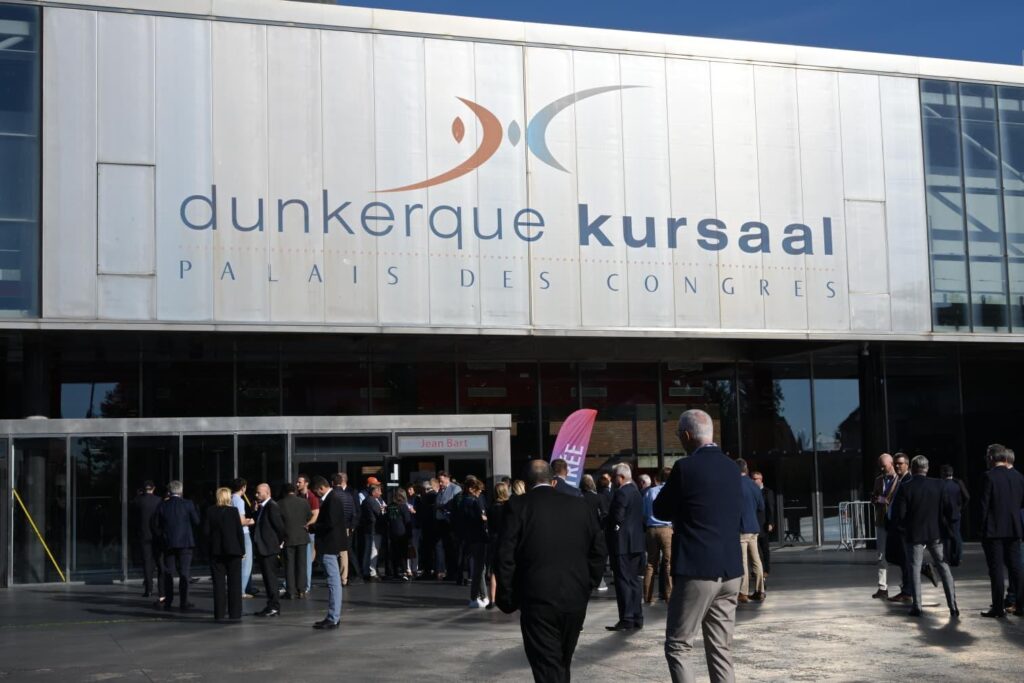
EUROMETAL participated in the 19th Convention of the French Federation for Metal Distribution and Processing (FFDM), held in Dunkirk on 24–25 September 2026.
Organised under the theme “Produire demain dans un océan de tensions” — “Producing tomorrow in an ocean of tensions” — the convention examined the economic, geopolitical, industrial and social forces reshaping the sector.
The programme began on 24 September with visits to ArcelorMittal’s Dunkirk steelworks and its Mardyck processing site.
The visits gave delegates a close look at two strategically important links in the European steel value chain. Located on the North Sea, the integrated Dunkirk plant benefits from direct access to maritime raw-material supplies and major road, rail and inland-waterway connections. Mardyck processes flat steel for automotive and industrial applications through pickling, cold rolling and galvanising operations.
Dunkirk places industry at the centre of regional development
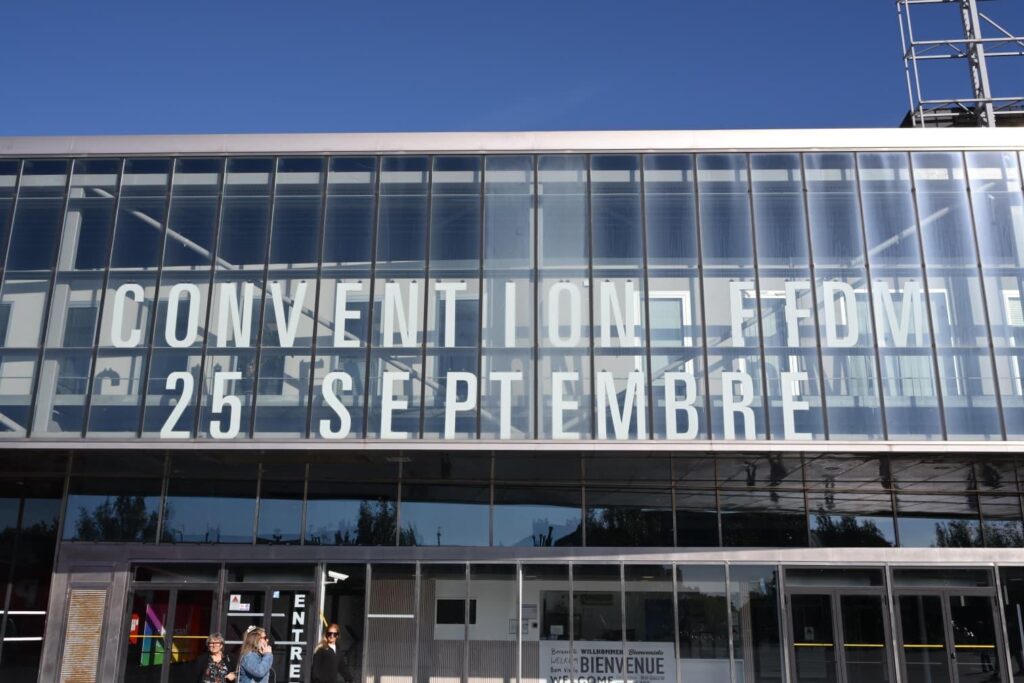
The convention continued on 25 September at the Kursaal Congress Centre in Dunkirk.
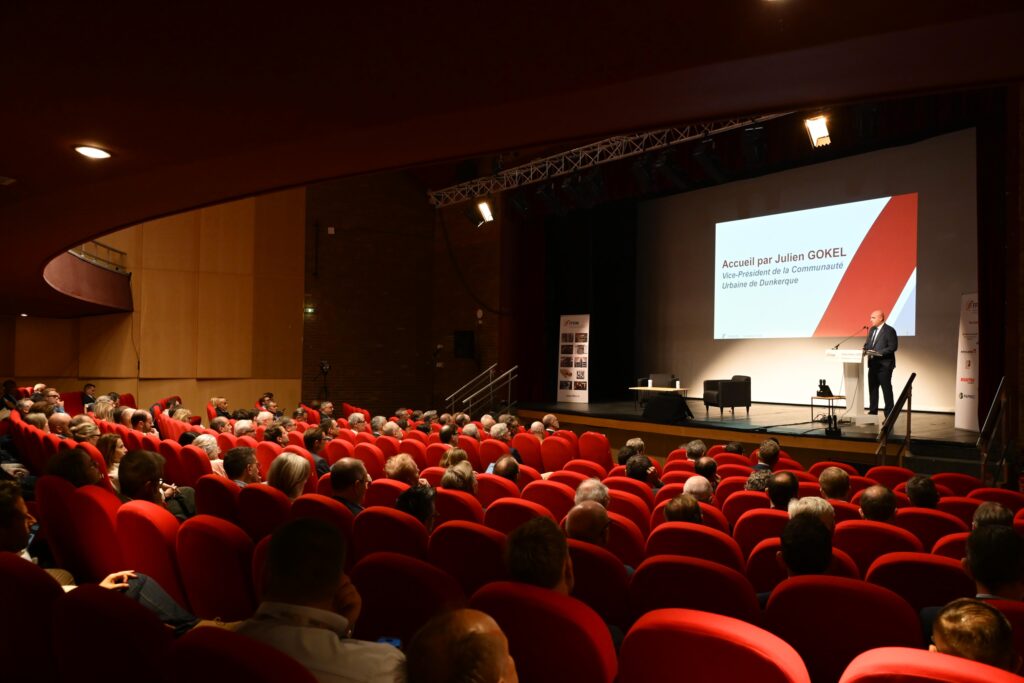
Julien Gokel, Vice-President of the Dunkirk Urban Community, welcomed participants and presented the region’s efforts to support industrial development. He emphasised Dunkirk’s maritime position, its access to imported raw materials and its growing role in new energy infrastructure, including offshore wind.
His address illustrated how ports, energy systems, transport infrastructure and industrial investment must work together if European regions are to attract new projects and retain existing production.
FFDM highlights unprecedented pressure on the value chain
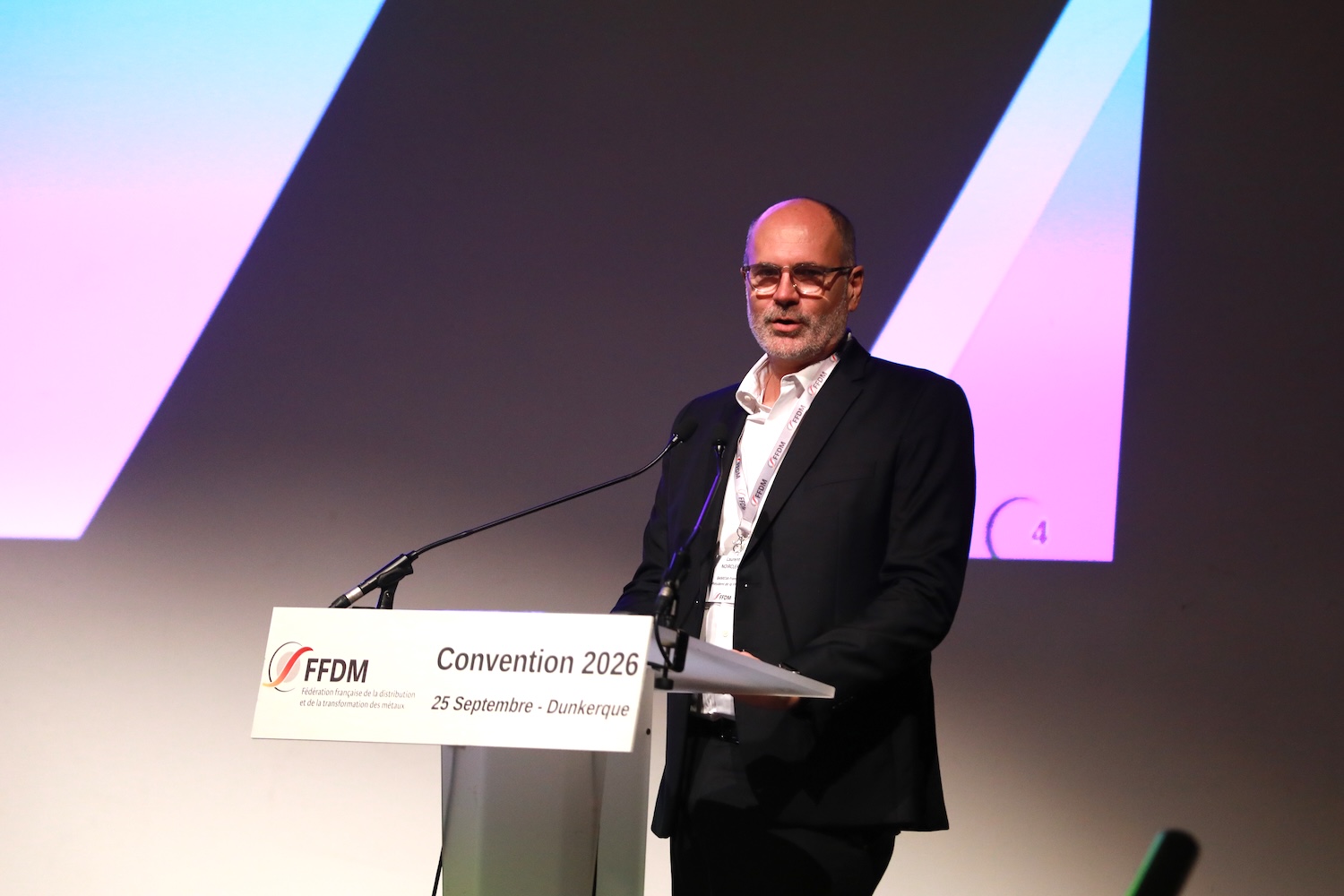
Opening the convention, FFDM President Laurent Noirclerc described the severe pressures facing steel distribution and transformation companies. In what he noted would be his final convention opening after several years chairing the federation, he reviewed FFDM’s work to represent and support the sector during a period of exceptional uncertainty.
Noirclerc highlighted FFDM’s strong involvement in EUROMETAL’s 2026 initiatives. French companies provided significant support for the EUROMETAL Call to Action, which calls for urgent measures to preserve the entire European steel and metals value chain, including the manufacturing customers served by distributors and processors.
He also recalled the participation of FFDM and several of its members in the European Convoy for Industrial Competitiveness, held in Brussels on 7 September. The initiative brought more than 200 industry representatives, 15 trucks and ten symbolic industrial coffins to the European Quarter under the message: “Keep manufacturing in Europe.”
The French federation’s mobilisation has reinforced the industry’s shared demand for fair competition across the full value chain, stronger protection against downstream carbon leakage and policies that keep investment, production and skilled employment in Europe.
No rapid recovery for French construction
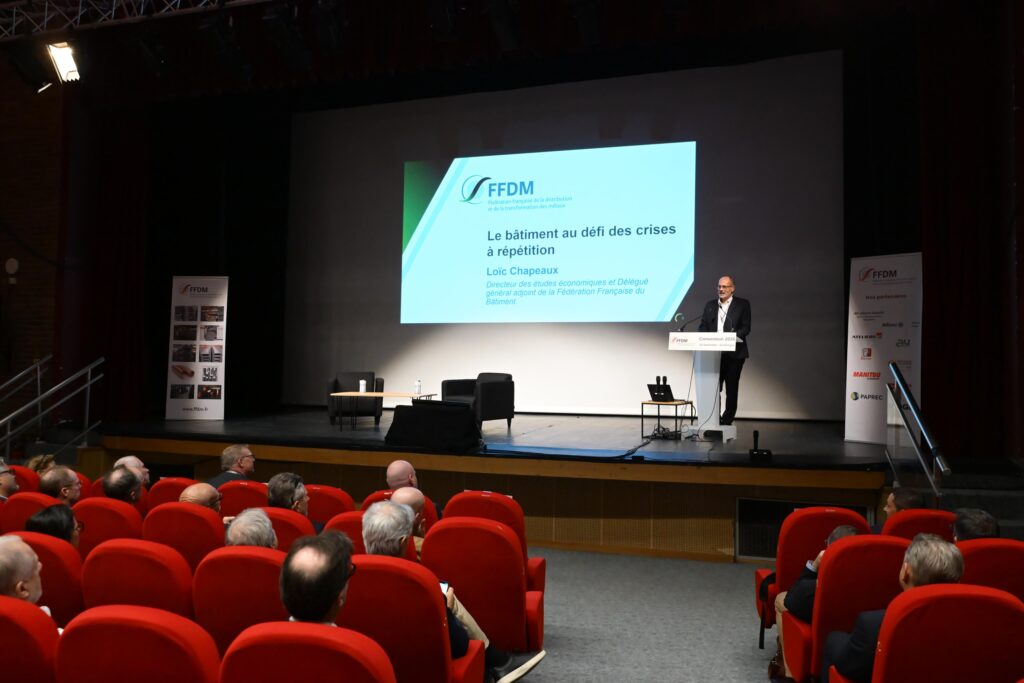
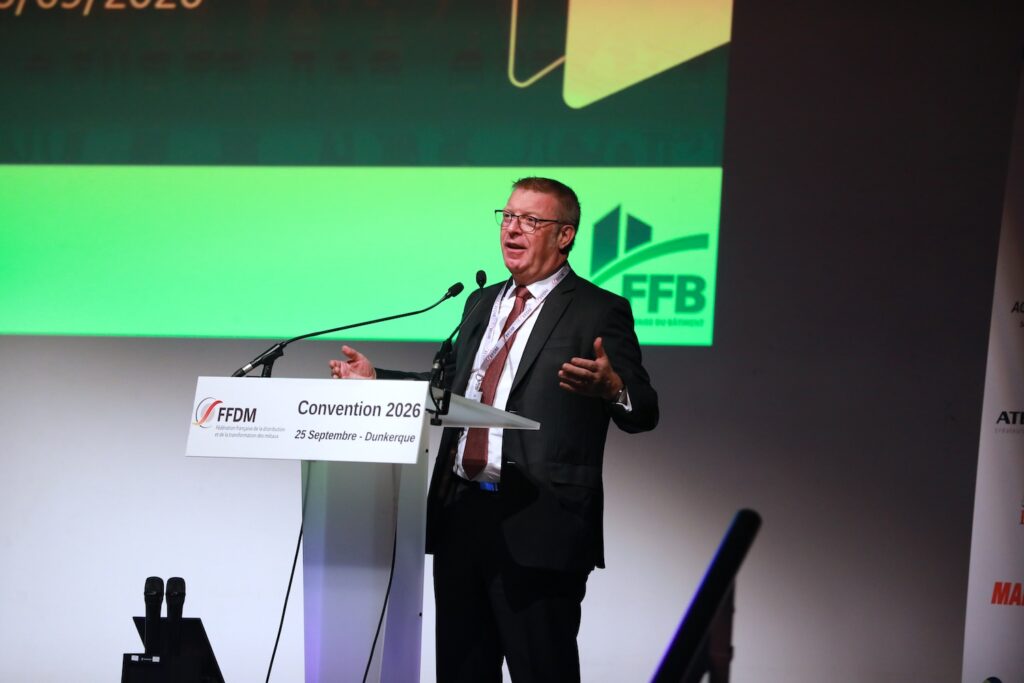
Loïc Chapeaux, Director of Economic Studies and Deputy Director General of the French Building Federation, presented a sobering assessment of France’s construction market.
A regular contributor to FFDM conventions, Chapeaux said the sector remained in a critical situation, with no meaningful recovery expected in the short term. He estimated that construction could lose around 20,000 jobs in 2026, following approximately 17,000 job losses in 2025.
The slowdown in public-sector construction, which has left projects delayed or suspended for several months, was identified as one of the causes. For steel distributors and processors, the weakness of construction continues to have direct consequences for demand, volumes and business confidence.
Global trade enters an era of permanent uncertainty
Fabien Lecomte, Director for Major Groups and Institutions at Allianz Trade, examined the geopolitical forces affecting international commerce.
He described a global trading environment increasingly shaped by strategic rivalry, protectionism, shifting alliances and unpredictable policy decisions. For companies operating across international supply chains, the lack of visibility has become a central business risk.
The presentation underlined the need for companies to remain agile in the short term while developing longer-term strategies for sourcing, investment and market diversification.
Can Europe meet China’s automotive challenge?
Tommaso Pardi, sociologist, CNRS researcher and director of Gerpisa, addressed whether the European Union is capable of responding effectively to China’s growing strength in the automotive sector.
His presentation explored the future of “Made in Europe”, the implications of Europe’s green industrial policies and the difficulties of reaching a coherent approach among all 27 EU Member States.
The automotive transition is not simply a technological contest. It also raises fundamental questions about industrial capacity, supply-chain sovereignty, energy costs, investment and Europe’s ability to translate common ambitions into coordinated action.
The future of work and industry’s skills challenge
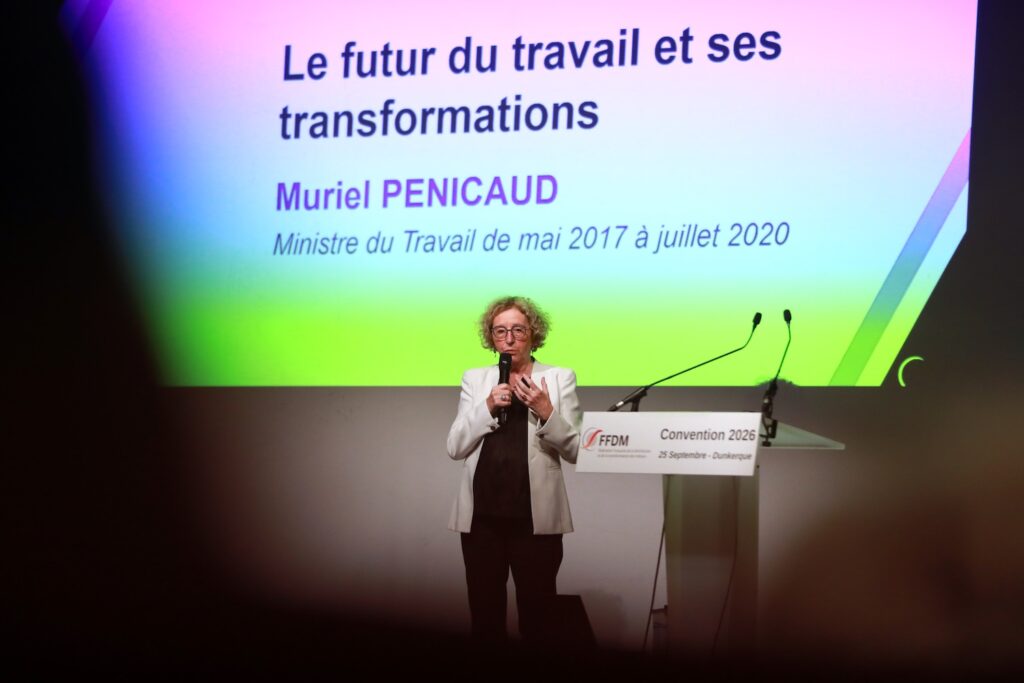
Former French Labour Minister Muriel Pénicaud focused on the transformation of work. She discussed changing expectations among younger generations, the growth of remote and hybrid working, and a preference for shorter-term, project-based professional experiences.
Demographic decline and an ageing population will add further pressure. French industry already faces a shortage estimated at around 200,000 workers, despite an improvement in the public perception of industrial careers.
Pénicaud argued that companies must rethink recruitment, training, workplace organisation and career development. These themes also feature in Travailler demain, the graphic documentary-fiction project led by Pénicaud and journalist Mathieu Charrier, which examines artificial intelligence, equality, ecological transition, productivity and the changing expectations of employees.
A new industrial frontier at sea
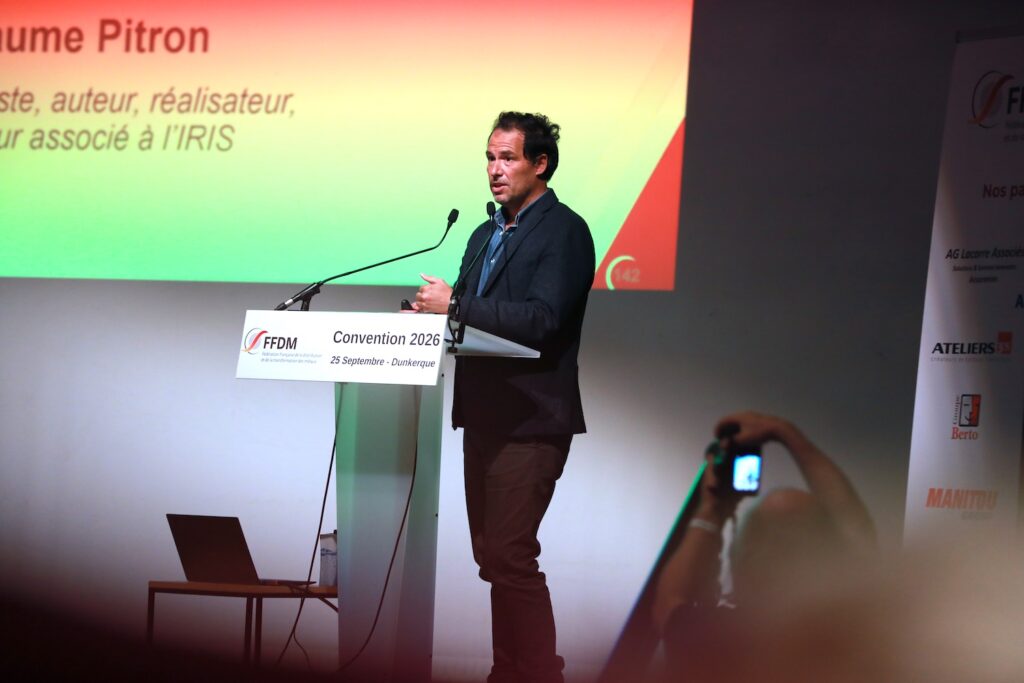
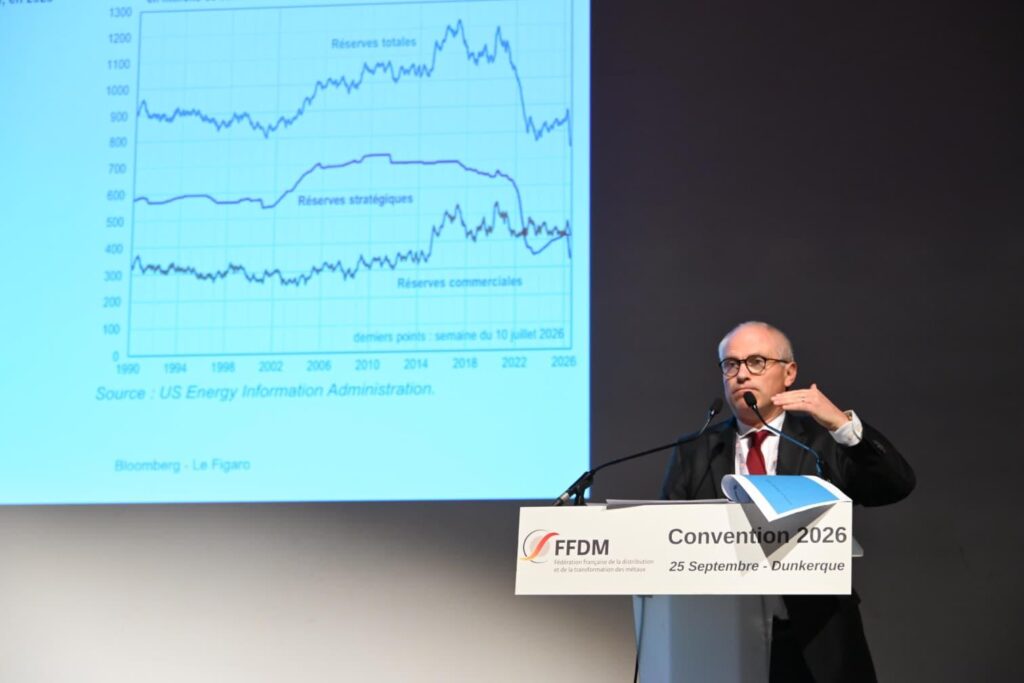
The convention concluded with journalist, author and filmmaker Guillaume Pitron, who examined the accelerating industrialisation of the world’s oceans.
Drawing on his new book, Océans – Le nouveau partage du monde, Pitron explored how energy production, digital infrastructure, transport, natural resources and geopolitical rivalry are transforming maritime spaces.
His contribution brought the convention back to its central theme. The ocean is both an essential source of resources and connectivity and an increasingly contested industrial and strategic domain.
The Dunkirk convention demonstrated that Europe retains major strengths: an advanced industrial base, strategic infrastructure, skilled companies and strong cooperation between national and European associations.
EUROMETAL Managing Director Ricardo Silva represented the federation at the event, which brought together members of France’s steel distribution, processing and manufacturing community.