

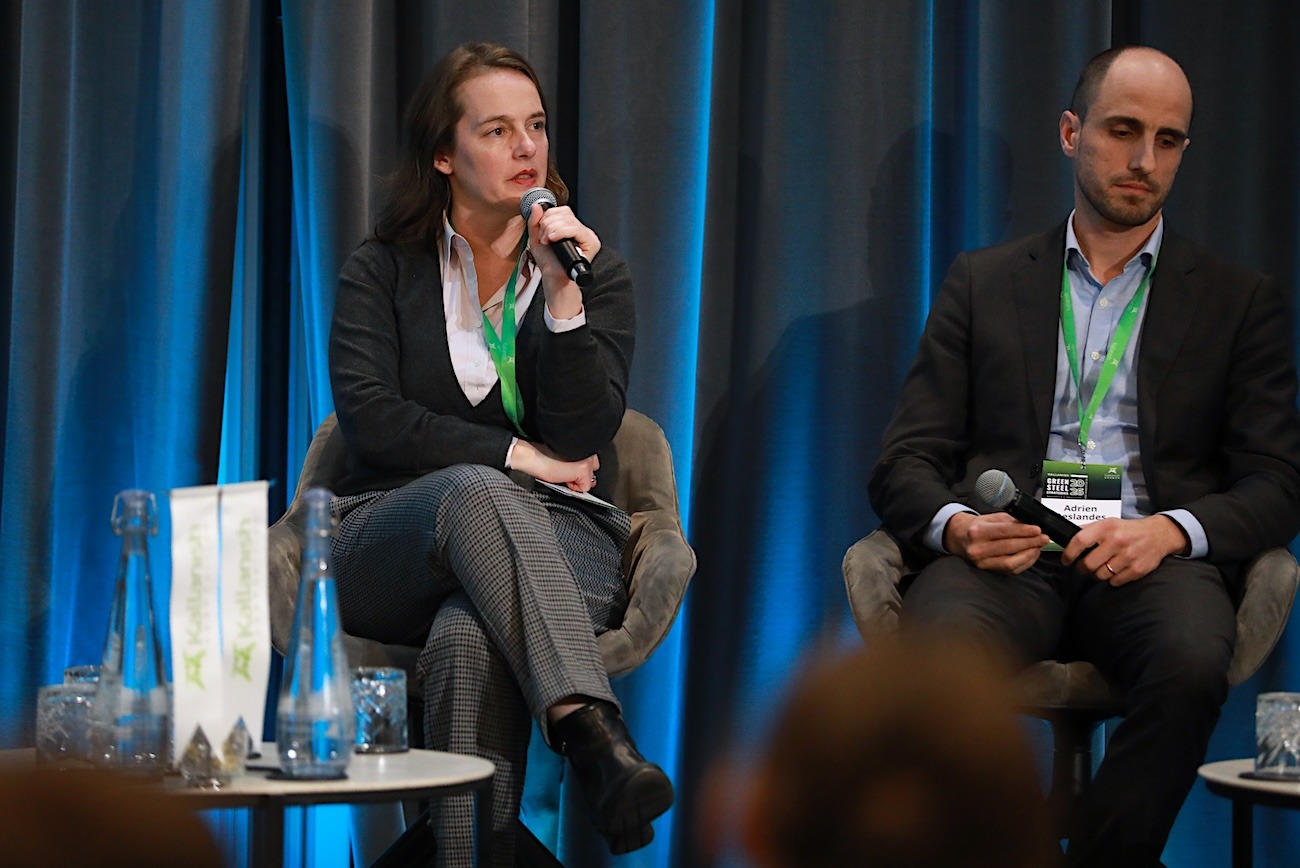
The use of hydrogen for ironmaking still makes economic sense in some specific locations in Europe, panellists said at the Kallanish Green Steel Strategies event held in Brussels this week.
Anne Cécile Marie, commercial director, GravitHy, highlighted the initial “gold rush” to utilise hydrogen across various industries and applications in Europe.
“We’re starting to realise that hydrogen makes economic sense in very focussed and specific applications, and at GravitHy, we are convinced that iron making and iron producing is clearly one of them,” she told delegates.
“That being said, you need to look at the proper success conditions to develop and locate the project. And of course, the electricity price is the key driver to that. But we still believe that in specific locations and specific conditions, when you’re able to secure competitively electricity supply, hydrogen actually still makes sense in Europe.”
She added that she believes the merchant metallics supply model her firm has adopted provides flexibility for steelmakers for the raw materials sourcing they will need for decarbonising. This combined with competitive electricity prices enables the success of hydrogen projects for iron making.
“We are in a favourable situation in France where we have access to base load nuclear electricity from the grid and we are also in a position where electro-intensive industries are able to negotiate long-term electricity supply contracts with the national provider. I’m aware that this favourable configuration is not what we find elsewhere in Europe,” she noted.
She highlighted how France benefits from very low electricity prices and that even prior to the Middle East crisis, GravitHy was not considering using natural gas. This is because any operating expenses savings would be lost in carbon footprint increases and the loss of ETS support.
“We’ve made the choice to start with H2 and to keep on the H2 track,” she added.
On energy costs, Michiel Nivard, engagement manager, McKinsey, said that consumers have moved from sourcing the lowest cost energy to managing supply security as a result of the war.
“Reducing the electricity price as a country, region is really hard,” he noted.
However, Nivard highlighted the use of hydropower in Scandinavia and nuclear in France. He proposed the diversification of supply, as well as long term PPAs, long-term offtake contracts and on-site generation.
“Less demand is the first thing you can do to reduce your energy bill, which is not saying produce less, but produce more efficiently,” he concluded.
Author: Carrie Bone UK



