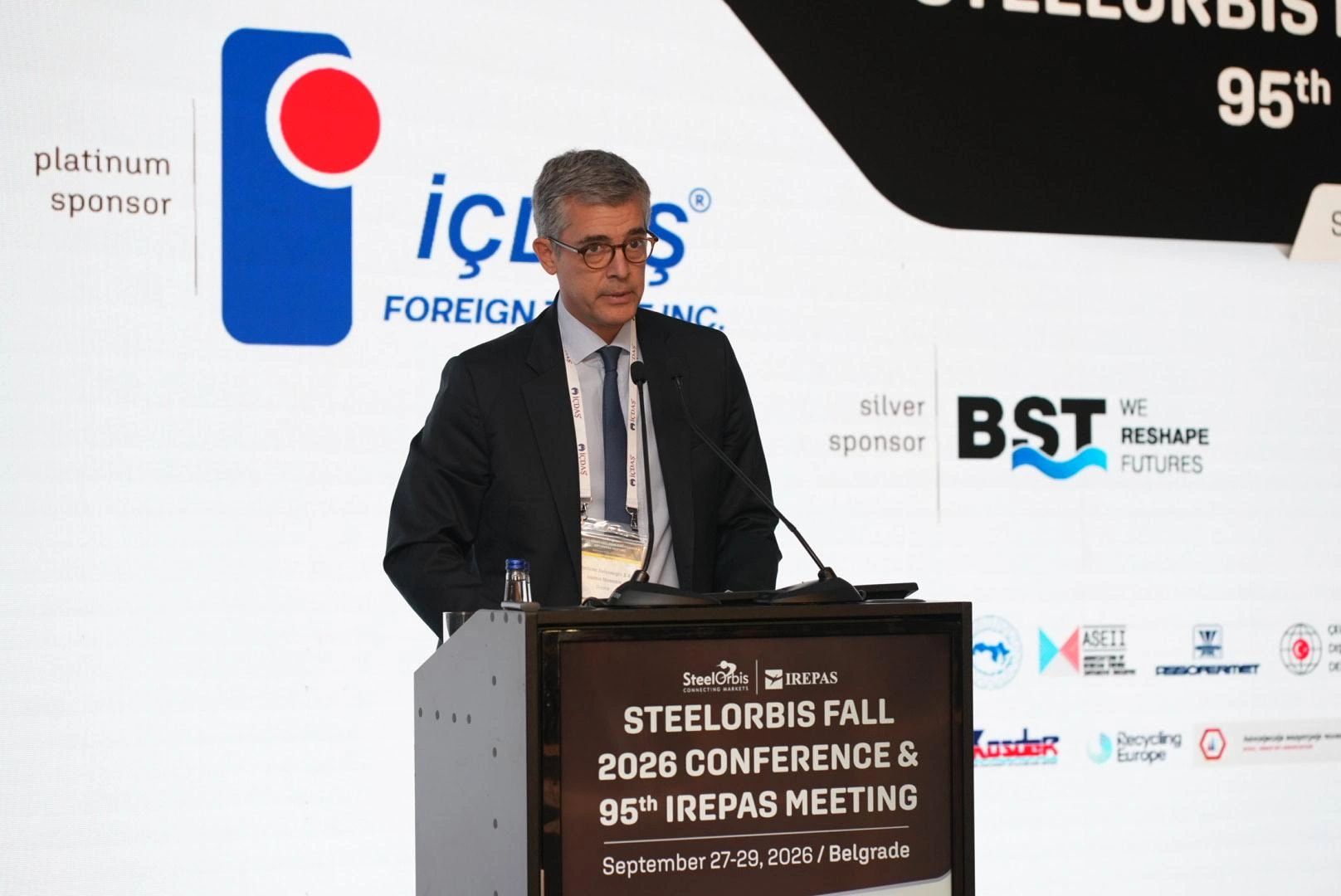
Ioannis Manessis, chairman of IREPAS, the global association for longs producers and exporters, has delivered the welcome speech at the SteelOrbis Fall 2026 Conference & 95th IREPAS Meeting, being held in Belgrade, Serbia, on September 27-29.
Mr. Manessis stated that the global steel industry is operating in an increasingly challenging environment characterized by geopolitical conflicts, shifting trade flows, higher costs and relatively weak demand. According to the IREPAS chairman, the deteriorating situations in the Black Sea and Iran are having a significant impact on steel markets and international trade. Damage to ports and vessels’ reluctance to sail have made trade in the Black Sea extremely difficult, while attacks on bulk carriers and oil tankers have also created significant challenges for trade in the Middle East.
Higher energy prices increase costs across steel value chain
Against this backdrop, energy prices, including oil, natural gas and coal prices, have increased, in some cases significantly. Manessis noted that these increases are raising costs for steel producers, scrap suppliers and shipping companies, affecting the entire steel value chain.
At the same time, the industry is facing an increasingly restrictive global trade environment. The IREPAS chairman highlighted the EU’s Carbon Border Adjustment Mechanism (CBAM) and its safeguard measures implemented after July 1, US tariffs, scrap trade restrictions in around 40 countries worldwide and other trade measures affecting steel markets. He also pointed to China’s recent efforts to prevent its steel industry from offering products at excessively low or loss-making prices, stating that these measures already appear to be having an impact on the market.
Rising costs drive steel prices despite weak demand
Meanwhile, higher interest rates are putting additional pressure on consumers as authorities seek to contain inflation. Manessis stated that, apart from demand related to the expansion of artificial intelligence data centers, global demand for steel products remains relatively weak.
According to the IREPAS chairman, demand is therefore not currently determining the direction of the market, with rising costs instead becoming the key factor. As a result, steel prices are increasing in almost all markets despite weak demand. Manessis added that, although the current environment remains difficult to navigate, higher prices are allowing trade to continue and creating opportunities for market participants.
Author: SteelOrbis Editorial Team