


Poland declares Huta Czestochowa a strategic asset
The Polish cabinet has approved the classification of Huta Czestochowa as a strategic company, which means its acquisition will not be possible without the approval of the Polish government.
Bankrupt plate producer Huta Czestochowa, formerly owned by Liberty Steel, is being leased by state-owned Weglokoks. The tender for its sale will take place on 17 February, with the starting price set at PLN 226.95 million ($54.7m). Right of first refusal will go to Weglokoks. According to media reports, Metinvest and a Middle Eastern firm will also take part in the tender.
The mill is of great importance to Polish national security as it is the only unit in the country capable of producing hardened plate for the defence sector, the government points out. It also has one of the largest production halls in the EU, which allows for the renovation of military equipment, it adds. Following the cabinet decision, the mill will come under the control of Poland’s defence ministry.
The firm’s EAF has a 700,000 tonnes/year crude steel capacity, while the plate mill is 1.2 million t/y design capacity. However, after a year of being idle and with current staff numbers, plate production capability is currently at around 40,000 t/month. Besides defence, the mill is expected to supply plate to the growing wind power industry.
Adam Smith Poland
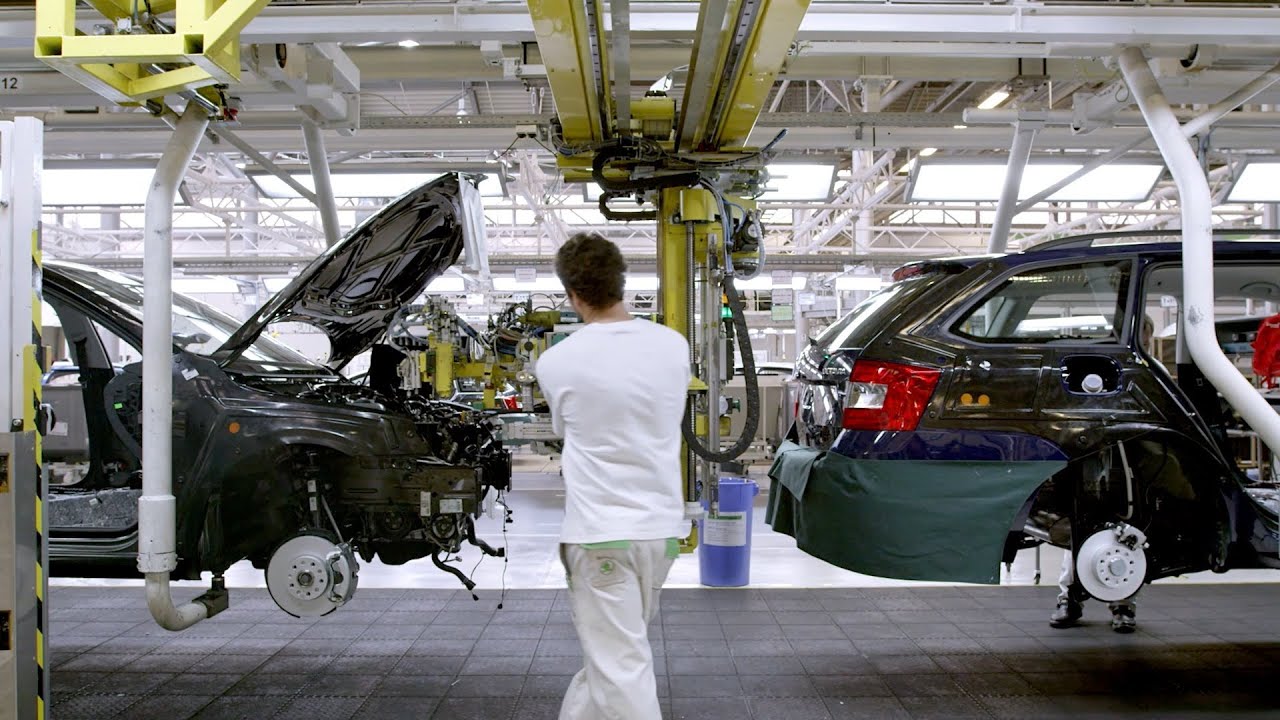
Czech car production hits all-time high, Poland mixed
A slump in December could not prevent Czech passenger car production from rising 3.9% on-year in 2024 to 1.45 million vehicles, driven by 4.5% growth in exports, according to Czech Automotive Industry Association data seen by Kallanish. This was an all-time high.
Largest producer Skoda saw output rise 3.7% in 2024 to 896,933 units, while Toyota production surged 17% to 225,058 units. However, Hyundai saw production fall 2.8% to 330,890 vehicles.
The Czech Republic is Central and Eastern Europe’s largest car manufacturer, sourcing automotive steel from US Steel Kosice (USSK) and ArcelorMittal among other suppliers, and producing most cars for export.
Its 2024 performance flies in the face of the doom and gloom surrounding the European automotive industry last year. Passenger car production in largest EU carmaker Germany was stable on-year at 4.1m units (see separate story).
Passenger car production in neighbouring Poland however fared much worse, dropping 28% on-year in 2024 to only 216,200 vehicles, a multi-year low, according to Statistics Poland (GUS).
Polish truck production nevertheless grew 8% to 332,043 units, a multi-year high, while output of buses grew 39% to 7,103 units, the highest since 2019.
Adam Smith Poland

Green Deal has completely destroyed European industry, says Sztuczkowski
The EU’s impending measures to boost industry competitiveness have come too late after years of policy tantamount to “euthanasia of the entire industry”, says Przemyslaw Sztuczkowski, chief executive of Polish steelmaker Cognor.
The European Commission presented its Competitiveness Compass initiative last week, which includes a steel action plan and the Clean Industrial Deal, due to be published on 26 February.
Speaking at EEC Trends in Warsaw on Monday, Sztuczkowski said: “Let’s say it honestly. The Green Deal has completely destroyed European industry … As the steel industry, we are 100% behind the Green Deal … but the way it’s been implemented … will lead to a catastrophe in Europe’s industry.”
Poland has the most expensive electricity in the world. Industrial consumers pay six times higher than in the US, Sztuczkowski went on. And yet, the EU allows imports of steel from around the world. “I have absolutely no chance of survival in the European market,” the ceo exclaimed at the event monitored by Kallanish.
EU policymakers are now saying the EU should return to the climate policy of before the Green Deal in 2019, which is “far, far too late”, he continued. “If we don’t put a tariff on everything like [US President Donald] Trump is doing, then we will simply not survive.”
Cognor knows its prospective Siemianowice Slaskie-based merchant bar mill, despite being state-of-the-art technology, will not be competitive unless drastic policy changes are made, Sztuczkowski lamented.
Boryszew automotive segment director Adam Holewa meanwhile said the EU push towards electric vehicle (EV) production has slowed as consumers are apprehensive about the cost of EVs as well as insufficient charging infrastructure. The EU lacks a unified strategy to support the sector, he added.
On a positive note, Polish construction is set for a rebound in 2025 thanks to EU-funded projects, which the country’s contractors should have no problem in executing; however, bankruptcies and labour shortages are a concern.
The capability of Polish construction contractors to take on the anticipated boom in projects is much greater than in 2012 when multiple projects linked to the European Football Championship held in Poland that year experienced problems, Artur Popko, chief executive of Polish construction giant Budimex, said at the event.
The firm’s infrastructure operations director, Cezary Lysenko, however, pointed out that various contractors have gone bankrupt in recent years and “unfortunately, we will need to rebuild this capability”. There is a notable drop in interest in young people training as engineers, indicating there will be a problem finding adequate workers, he added.
There are also doubts over where contractors will find qualified labour to carry out the spate of small modular reactor (SMR) projects touted to take place in Poland to bolster its energy security, as the country hitherto has no nuclear construction capability, Popko added.
Adam Smith Poland

EU’s largest offshore windfarm advances amid industry decarbonisation
The European Investment Bank (EIB) will provide €400 million ($417m) in funding for the Baltica 2 offshore wind farm in Polish waters, set to be the EU’s largest wind farm with 1.5 GW capacity. This comes at a time when European industry is in desperate need of clean energy supply to secure its competitiveness amid decarbonisation, especially coal-reliant Poland.
The 50/50 wind farm joint venture between Polska Grupa Energetyczna (PGE) and Ørsted aims to commission its 107 turbines in 2027. Together with its sister project Baltica 3, scheduled for 2030 commissioning, the farms are to have total capacity of 2.5 GW and double PGE’s existing renewable energy portfolio. The strategic investment will contribute to Poland’s energy transition and security.
This comes after EIB agreed in 2023 to loan up to €610m for the construction of the 1.14 GW Baltic Power offshore wind farm, which will be the first in Poland when it commissions in 2026. The 51/49 Orlen/Northland Power JV will comprise 76 wind turbines (see Kallanish passim).
Wind power is touted to be a critical supplier of the energy required for steel industry decarbonisation as well as a major future steel demand driver. Offshore wind is an entirely new market in Poland but with huge prospects thanks to its Baltic Sea access. The country anticipates 18 GW of offshore production by 2040.
For wind turbines, over 90% of total material requirements are steel and concrete. Steel requirement is projected to fall from 140 tonnes/MW to 110t/MW by 2050 for gearbox turbines, and from 400 t/MW to 320 t/MW for direct-drive turbines, according to Energy Transitions Commission research.
Poland’s largest steelmaker, ArcelorMittal Poland, will soon need to decide whether it wants to convert its flagship Dabrowa Gornicza plant to electric arc furnace-based produciton or prolong blast furnace operation by other means. It, along with Poland’s scrap-consuming EAF-based mills in the south of the country, will need to source renewable energy distributed from wind farms in the north.
Adam Smith Poland

Joint venture between Marcegaglia Steel and Manni Group is now operational
Marcegaglia Steel and Manni Group have officially finalized their joint venture, creating a new entity focused on insulated and sectional door panels.
Following European Commission approval, the venture is now the second-largest panel producer in Europe, with operations in over 70 countries, projected revenue of €500 million, and nearly 700 employees.
The agreement involves Marcegaglia contributing Italian and Polish production facilities to Isopan Spa, with both companies holding a 50% stake. Operating under the ISOPAN and MARCEGAGLIA RWD brands, the joint venture includes 16 production lines across Italy, Spain, Romania, Poland, and Mexico.
The partnership aims to drive innovation, sustainability, and decarbonization in construction, leveraging their combined expertise and global reach. Leaders from both companies emphasized the collaboration’s potential to deliver advanced, efficient, and sustainable building solutions, cementing their roles as key players in the international construction market.
Source: marcegaglia.com
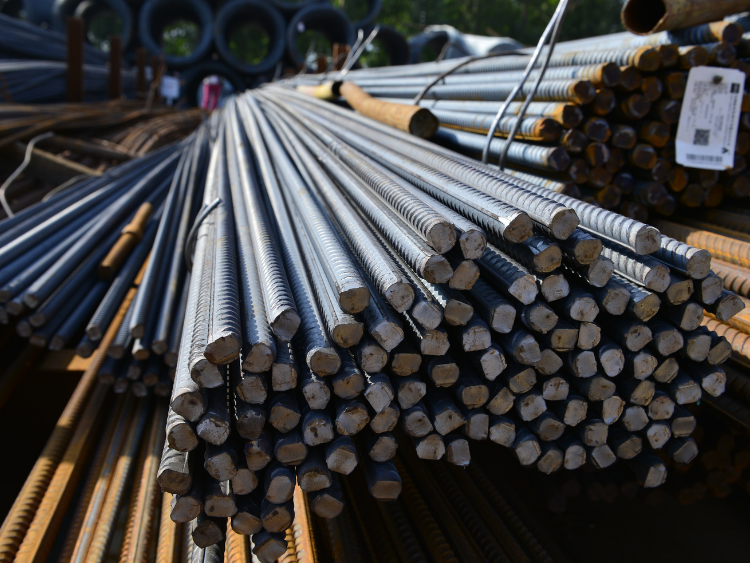
Polish rebar prices inch up on limited availability
Fastmarkets’ weekly price assessment for steel reinforcing bar (rebar), domestic, cpt Poland, was 2,600-2,610 zloty per tonne ($627-630) on Friday, narrowing upward by 20 zloty per tonne from 2,580-2,610 zloty per tonne a week earlier.
Polish mills were heard offering rebar at 2,610-2,650 zloty per tonne CPT, but buyers did not consider the upper end of that price range to be workable, Fastmarkets heard.
According to industry sources, Polish mills were not willing to give significant discounts, with the workable market price estimated at 2,600-2,610 zloty per tonne CPT.
The Polish rebar market has not fully restarted after the winter holiday break, and no major deals were heard in the assessment week.
Some deals for large volumes exceeding 1,000 tonnes were heard at the end of December at 2,550-2,570 zloty per tonne CPT. But these prices were not included in the assessment because they were not in line with Fastmarkets’ methodology.
A trader source told Fastmarkets that such prices could not be considered indicative of the market because, due to the tonnages, individual prices were negotiated.
According to industry sources, the slight price increase for Polish rebar was due to the limited availability of material during the assessment week.
“Demand is not great. The only reason prices have not started to fall is the restricted quantities available from mills,” a distributor source told Fastmarkets.
The source added that one Polish mill was trying to produce less rebar than normal. “They are inventing stoppages and trying to transition from three to two working shifts,” the distributor said.
According to the same source, prices will start to fall again by the end of January, when more competitive imports were expected to begin arriving at the country’s warehouses.
The trader source also confirmed that limited imports recently had supported the domestic rebar prices.
“In December, there were not [many import] offers from Italy and Germany,” the trader source said, adding that the good weather conditions were also favorable for the construction sector – the main consumer of rebar. All these factors supported domestic prices.
In terms of imports, Germany has been heard offering rebar to Poland at €605 ($623) per tonne delivered since the beginning of 2025.
Offers from Ukraine were heard at €530-550 per tonne delivered at the border.
Long steel consumption ‘below historic levels’
Long steel consumption in Europe has been substantially below historic levels, steel manufacturer CMC, which is present in Poland, said in its report for the fiscal first quarter of 2025 (September-November 2024) on January 6.
“The beneficial effects of improving Polish demand in certain end-market applications, and regional supply discipline, have been largely offset by increased import flows from neighboring nations that have sought an outlet for product not consumed within their home markets,” CMC said.
Last year, Germany significantly increased its rebar exports to neighboring countries to compensate for the lack of activity in its domestic construction sector.
Europe Steel Group, representing CMC’s operations in Europe, recorded net sales of $209.4 million during its fiscal first quarter. This was a decrease of 5.7% compared with the previous quarter’s $222.1 million.
Its earnings before interest, taxes, depreciation, and amortization (EBITDA) were $25.8 million for the first fiscal quarter. But the positive financial result was due to an annual CO2 credit associated with a government program, CMC said.
“Excluding this credit,” the company added, “financial results deteriorated modestly compared with the prior two quarters (EBITDA losses of $3.6 million and $4.2 million respectively) due to metal margin compression driven by high import volumes.”

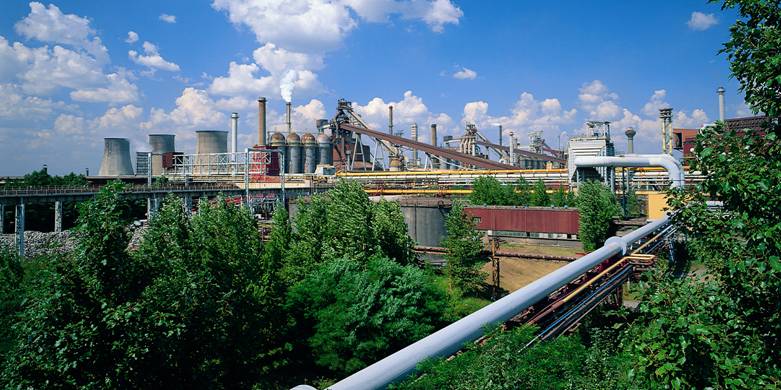
Polish government eyes national steel industry strategy
The Polish industry ministry has formed a working group to formulate a national steel sector strategy, Kallanish notes.
The group will be headed by Polish industry minister Marzena Czarnecka and contain the ministry’s mining and metallurgy department director, Marto Jarno, as well as representatives from the Polish state assets ministry, climate and environment ministry, development and technology ministry, the Polish Transmission System Operator (PSE) and Polish steel association HIPH.
The group will be dissolved upon the presentation to the minister and his or her acceptance of the draft national strategy for the steel sector, a ministry notice reads. Meetings will take place either in person at the ministry building in Katowice or via video conference.
The group’s tasks will include providing support to the minister in activities related to the functioning of the national steel industry, and identifying the main challenges for the steel industry that require intervention at national and European level.
It will also develop proposals for actions and recommendations aimed at improving the functioning of the steel industry, and identify legal acts that will need to be amended in order to improve the functioning of the steel industry.
Polish crude steel output is estimated to have risen over 10% on-year in January-November 2024 to 6.58 million tonnes, according to worldsteel data. However, this is down from the 9-10mt annual production figures achieved prior to Covid.
Largest producer ArcelorMittal Poland shut its Krakow blast furnace in 2020, while Liberty Steel’s management of the Czestochowa plate steelworks brought production there to a standstill. It has just been revived by new lessee, state-owned Weglokoks. Celsa Huta Ostrowiec, meanwhile, a prized long steelworks, is up for sale due to financial problems at its parent company. CMC Poland and Cognor are in better financial shape.
ArcelorMittal Poland will need to soon decide whether to transform to EAF steelmaking or prolong BF-based production at its flagship Dabrowa Gornicza steelworks amid decarbonisation.
Adam Smith Poland


ArcelorMittal Bytom service centre eyes renewables self sufficiency
ArcelorMittal is installing a 1 MW solar power plant at its Bytom service centre in Poland that will power the site’s processing lines, administrative building and other equipment in its entirety.
The firm forecasts that in the summer, around 90% of the solar energy generated will go to captive use. The new plant should be commissioned in mid-2025.
“It must be remembered that renewable energy is necessary for decarbonisation, while steel is an important construction material necessary for the production of renewable energy infrastructure,” ArcelorMittal SSC Poland chief executive Rafal Nawrat says in a note sent to Kallanish. “For example, 80-90% of the mass of a wind turbine material is steel and iron, similarly in the case of photovoltaic [PV] panels and transmission networks.”
In constructing the solar plant, supplier Quanta Energy will use ArcelorMittal “Magnelis” coated sheet, which is ideal for PV installations, Nawrat adds. This will be processed at the Bytom site before use.
“The construction of a photovoltaic farm for the leader of the steel industry is proof that renewable energy sources are not only a response to environmental challenges, but also a key element in building long-term competitiveness,” says Quanta Energy ceo Piotr Grzybczak. “We are proud that our solar and wind solutions … not only reduce the operating costs of our customers, but also strengthen their position as responsible leaders setting directions for sustainable development in their industries.”
Adam Smith Poland

ArcelorMittal Poland appoints Koszuta chairman
ArcelorMittal Poland (AMP) has appointed chief executive Wojciech Koszuta as chairman of the board, replacing long-standing chairman Sanjay Samaddar who becomes supervisory board chairman.
Samaddar will continue in his role as country head Poland and ceo of ArcelorMittal Europe – Long Products.
“I am exceptionally privileged to have been associated with ArcelorMittal Poland for 20 glorious years, in various roles as CEO and chairman of the Board of Directors. The 20 years jubilee, which we celebrated this year was a perfect opportunity for summing up these two decades, during which we have tried to play a leading role in the development of the steel industry in Poland – despite crises and challenging market situations,” Samaddar says.
Koszuta has been with AMP since 2000, for 18 months as ceo.
At the European Economic Congress in Katowice in May, he highlighted the firm’s recent investments in its BF-based production route but conceded that decarbonisation will influence its production process in the medium term (see Kallanish passim).
AMP is building a natural gas-based hydrogen plant at its Krakow re-rolling site to feed the two galvanizing lines at the location. The PLN 100 million ($24.2m) plant, being set up by Linde, will see hydrogen production begin at the end of 2026. Its flagship Dabrowa Gornicza steelworks, which supplies Krakow with slab, will soon need to choose whether to transform to EAF steelmaking or prolong BF-based production.
Adam Smith Poland

The Polish market remains dependent on imports
In 8 months 2024, the share of imports in apparent consumption was 82%
Polish steel industry is going through difficult times: domestic production is decreasing, and demand is mostly met by imports. Polish plants are losing their competitiveness, in particular due to the high cost of electricity. More and more products from Asian countries are appearing on the market – distributors are looking for options to meet domestic demand at the most profitable offers.
Despite the problems of the steel-consuming industries, Poland remains a large enough market in which local producers are able to regain their position, and the upcoming launch of Hut Czestochowa could be the first step in this direction.
More details — in interview with Piotr Sikorski, the Head Manager at Polska Unia Dystrybutorow Stali (PUDS).
What dynamics of steel consumption in Poland do you see this year? What are your feelings about the market?
When we talked about the steel market in Poland last year, it may have seemed that the first half of the year was moderate, but if we repeat it somehow, the market will end the year on a positive note. It turned out that this was only the beginning of problems that unfortunately continue to this day.
It’s a very tricky year we have. Looking at the data alone, it may seem like the market is improving, as we’re seeing an 8% y/y increase in consumption so far this year. It looks quite impressive, but please remember about the low base effect. Moreover, only in August did consumption drop below 1 million tons/monthly for the first time this year – below the stable minimum for the market. However, if we look at the market more broadly, the picture is not so positive. Since mid-2023, prices on the Polish market are practically in a downward trend and inventory levels remain high, which with a rising cost is a vicious combination for business profitability. The August and September macroeconomic data are also disappointing, probably reducing GDP at the end of the year to below 3%. This will also drag down the level of steel consumption growth, which will probably drop at the end of the year from the currently mentioned 8%.
How can you describe activity in different steel consuming industries? For example, we see that according to new residential starts construction market in Poland is revitalizing. Is it really so?
The condition of the construction market is currently causing my greatest concerns. As for the residential market, after several months of solid growth, investor activity stabilized in September. There was an 1% y/y decline in building permits and a 1% increase in the number of construction started. The decline in developers’ sales undermine the upward trend. Among the largest companies, this decline was 12% in three quarters, and in the third quarter alone the sale was 44% down y/y. The market currently offers the highest number of flats since 2016. This might be the biggest cause of stagnation, next to uncertainty regarding government’s future housing programs, reflected in a drastic decline in granted housing loans. Unfortunately, this may result in investors suspending projects, denying a much-needed impulse for the steel industry. In other segments, the situation is only worse. In the three quarters of 2024, non-residential construction recorded a decline of 13% and engineering construction by 8%. If I were to look for positives, I would point out the increasing, although still too slow, pace of contracting EU funds from the 2021-2027 budget and the almost three-fold increase in the NRRP budget to be launched in 2025, compared to the current year.
What is import’s share in steel consumption, considering different segments of the market? Market of flat products traditionally depends on imports in the EU. What is the situation in Poland?
Even though the import of steel products to Poland in 2024 is decreasing, and in the case of flat products – remains at the last year’s level, import penetration is still very high.
In January-August 2024, the share of imports in the apparent consumption of all finished products amounted to 82%. For flat products it was 95%, for pipes and tubes – 94%. Due to dominant position of long products in steel production in Poland, the share of import in this group amounted “only” to 57%.
Do you feel any direct or indirect impact of increasing Asian imports? What are the main sources of steel imports in different segments?
As I said, so far in 2024 imports are falling, but despite this, Asian supplies are increasing. These are not yet significant amounts in terms of tonnage, but the growth dynamics is. I am thinking mainly of flat products, which have the highest import penetration. For example, this year we are seeing an increase of over 140% y/y in deliveries of hot-rolled products from Indonesia and a 160% increase in deliveries of cold-rolled sheets from Japan. In my opinion, in terms of volumes, supplies of coated sheets from South Korea are starting to be noticeable for the market – here the increase has already amounted to 91% and even higher from India – 113%, each almost 100 thousand tons this year.
It is worth emphasizing that in each product category, the European Union is the dominant supplier of steel to Poland (mainly Germany), and among third countries, of course, Ukraine.
Is there a chance for Polish steelmakers to increase their share on the domestic market? What conditions are necessary for this?
A very difficult question. If the answer was simple, the level of import penetration of major product groups would look completely different. Poland was and is heavily dependent on imports of finished steel products. To some extent, it is caused by the structure of production. The Polish market produces mainly long products, but consumes mainly flat ones. Therefore, the import of flat products is indeed very high, accounting for nearly 70% of all imports. So, on the one hand, some systemic changes would have to take place, but above all, the Polish steel industry must be more competitive in relation to foreign, mainly European, supplies. There is still a lot to do here, especially with regard to energy prices for mills. I can’t stress this enough: having strong domestic suppliers pays important function of stabilizing both prices and supply. On the other hand, you can`t blame distributors they seek the best deal possible.
Do you see any competition distortion because of continuing imports of Russian slabs in European countries?
Any market disruptions are currently difficult to see, mainly because the market is weak and can be easily compensated. The real test will be a high market, which will proof how strong the dependence on Russian semi-finished products really is. Supplies of Russian slabs to Poland are marginal, but on the other hand, significant import of products, based on Russian slabs is present on the market and doing quite well. This is something that obviously poses a threat to supplies, especially for strategic purposes.
How do you assess the situation on the domestic plates market? What are the main drivers on it?
Poland has all it takes to make this segment develop dynamically, also based on domestic production, which currently accounts for a negligible percentage of deliveries. End customers from construction, shipbuilding, energy, machinery and mining are strongly present on the market, although of course, in the current market situation, they also have their problems. This is a really large market, approximately 1 million tons per year, i.e. 12-15% of all steel consumption in Poland. Unfortunately, it is not sufficiently powered from the military side. Poland spends a lot of money on armaments, but largely buys it abroad. Plates market would look completely different if greater production for army needs was carried out domestically.
How can you assess prospects of Huta Częstochowa’s relaunch? If this plant resumes production, how can it impact on the market? Can the market absorb additional supplies of plates?
There is definitely a place for Huta Częstochowa on the Polish market, both in terms of profile of production and its characteristics. Unfortunately, the mill has a very turbulent history and lacks a stable period in which it could built its position on both the Polish and European markets. And the domestic market is a really large one, of which domestic production accounts for only a tenth. As in the case of other groups of flat products, the level of import is huge.
A year of shutdown is certainly not conducive to rebuilding the plant’s market position, especially in the context of competition such as Vitkovice Steel, which has normalized its financial and ownership situation and also has a stable source of low-emission semi-finished products.
The steelworks begins, so to speak, once again, the old-new stage, as it returns to the state owned company after 20 years. The four-month lease for Węglokoks is probably the first step to acquisition. The value of the facility is still relatively high, and the starting price will probably be higher than the one it had after the bankruptcy of ISD. I hope that production will start in the new year and this time it will become a permanent part of the Polish steel industry.

Source: gmk.center