

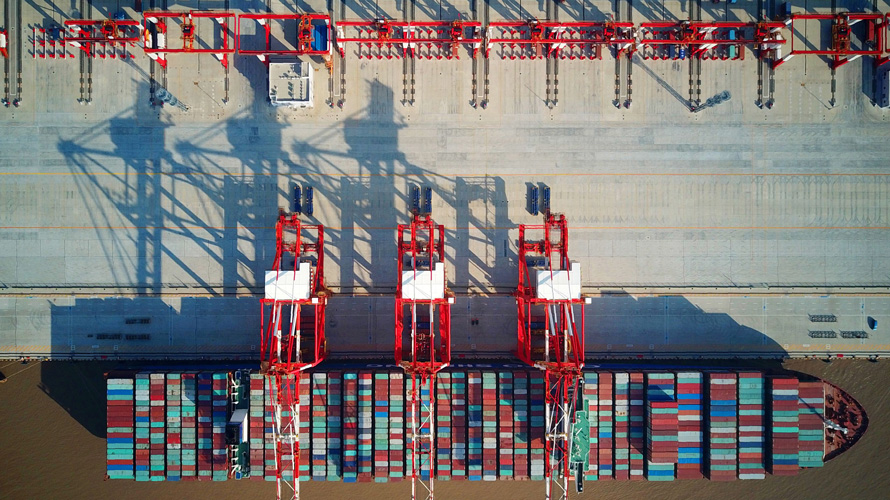
Rotterdam reports lower crude, higher box and dry bulk volumes in H1
Total cargo volume at port of Rotterdam — Europe’s largest port by throughput — were almost flat on the year during the first half of 2024, with lower crude throughput offset by higher container and dry bulk volumes, the port authority said July 18.
The port authority reported a total throughput of 220 million mt in January-June, marginally lower than 220.7 million mt in the same period of last year.
Total crude throughput at the Dutch port fell 5.8% to 48.9 million mt in the six months, with maintenance at some Rotterdam refineries in the first quarter, according to the authority.
Volumes of mineral oil products rose 4.7% to 28.6 million mt, while LNG marginally increased by 0.3% to 6 million mt, port data shows.
Container throughput increased to 67.1 million mt from 64.4 million mt, equivalent to a gain to 6.8 million twenty-foot equivalent units from 6.7 million TEU, due to increasing consumer demand and an early peak season, according to the authority.
Total dry bulk volumes rose 2.1% to 35.5 million mt, mainly driven by higher throughput volumes of iron ore and scrap, according to the authority.
Iron ore and scrap throughput increased by 12.6% to 14.6 million mt, driven by higher steel and iron production in Germany, the authority said.
Throughput of coal decreased by 19.7% to 10 million mt due to low demand for thermal coal for power generation, according to the authority. Agribulk volumes fell by 19.3% to 4.8 million mt amid low demand for soybeans as some food-processing moved to the US, the authority said.
“After a period of economic uncertainty, we see demand for raw materials and consumer products starting to increase,” Boudewijn Siemons, CEO of the port authority, said in a half-year report.
“Whether that trend will continue in other segments will depend partly on the pace of the European industry’s recovery in the coming months.”
Throughput of main goods (mil mt)
| H1 2024 | H1 2023 | Change % | |
| Liquid bulk | 101.6 | 104.8 | -3.1 |
| Crude oil | 48.9 | 51.8 | -5.8 |
| Oil products | 28.6 | 27.3 | 4.7 |
| LNG | 6.0 | 5.9 | 0.3 |
| Agribulk | 4.8 | 6.0 | -19.3 |
| Coal | 10.0 | 12.4 | -19.7 |
| Iron ore, scrap | 14.6 | 13.0 | 12.6 |
| Containers | 67.1 | 54.4 | 4.2 |
Source: Port of Rotterdam


EU HRC buyers look for alternatives to avoid safeguard duties
Buyers in the European hot-rolled coil market were looking at countries not subject to the safeguard measures for imported HRC, even as domestic prices remained under pressure July 18.
“People are looking for alternative imports from other countries, such as Indonesia, Turkey, Egypt, etc,” a Germany-based distributor source said. “They don’t want to risk buying from countries subject to the safeguards. Companies from these alternative countries are trying to enter the European market.”
Platts assessed imported HRC in South Europe stable on the day at Eur590/mt CIF Italy.
A deal for 20,000-50,000mt of imported HRC was reported at Eur580/mt CFR Italy for material originating from Australia. Offers were reported at Eur600/mt CIF Italy for material originating from Asia, and at Eur620/mt CIF Italy for material originating from Turkey.
Meanwhile, Platts assessed imported HRC in Northwest Europe stable on the day at Eur600/mt CIF Antwerp.
Sources said the market remains under pressure as customers seek lower prices or prefer to wait, as restocking activity and end-user demand remains weak.
“Demands is stable, but at low levels,” another distributor source said. “Customers are seeking lower prices and are happy to wait. Service centers are focusing on industrial segment, but there is a lot of downward pressure on prices.”
Platts assessed Northwest European HRC stable on the day at Eur620/mt ex-works Ruhr July 18.
Tradable values were reported at Eur600-640 ex-works Ruhr, but the indications at the lower end of the range were for larger volumes above Platts specifications of 100-1,000mt.
Offers were heard at Eur630-640/mt ex-works Ruhr.
Meanwhile, Platts assessed domestic HRC prices in Southern Europe stable on the day at Eur625/mt ex-works Italy July 18.
Tradable values were reported at Eur620/mt ex-works Italy and offers were reported at Eur640-650/mt ex-works Italy.

UK HRC prices inch down as mills sell at a loss
Domestic prices for UK hot-rolled coil fell slightly in the week ending July 18, with some producers being forced to sell at a loss in order to incentivize demand.
“The hot rolled market is completely shot,” a service center source said. “There is too much of it around. Demand is going to remain as it is now through to the end of summer.”
Market sources remain pessimistic for the rest of the year, expecting minor increases in price closer to September. They do not expect any significant increase in demand until next year.
Some sources said that gaps for price increases may be present, particularly as many believe that prices have reached bottom, but the time frame on this remains unclear.
“People have been very cautious buyers,” a trader source said. “At some stage, there will be gaps appearing, but the question is when.”
Platts assessed UK HRC at GBP580/mt basis DDP West Midlands, down GBP15 on the week.

Cargo volumes at Antwerp-Bruges port complex up 3% in H1
Total cargo throughput at the Belgian port complex of Antwerp-Bruges, one of Europe’s largest, increased 3% on the year to 143.2 million mt in the first half of 2024, the port authority said July 18.
In a half-year report, the Port of Antwerp-Bruges said the gain was driven by more liquid bulk, dry bulk and container volumes, offsetting lower ro-ro and breakbulk throughput.
“Despite the ongoing geopolitical tensions, a still fragile economic climate and farmers’ protests, we are continuing with positive figures once more, showing even stronger growth in the first quarter,” said Jacques Vandermeiren, CEO at the port authority.
“Alongside container throughput, [some] other product groups are also experiencing a positive trend.”
Liquid bulk volume inched up 0.7% to 46.1 million mt, supported by higher gasoline and fuel oil volumes even as diesel fell, the port data showed.
Throughout of naphtha and chemicals also increased in January-June due to recovering demand.
Total dry bulk volumes increased by 0.4% to 7.6 million mt, supported by a 34.8% rise in the throughput of fertilizers, the authority said.
While throughput of iron and steel rose by 0.6%, coal, grains, sand and gravel, and scrap dropped, according to the authority.
Meanwhile, container throughput rose 6.8% to 74.2 million mt in the six months, equivalent to a gain of 4.1% to 6.7 million twenty-foot equivalent units, the authority said.
“In the first quarter, container throughput recovered following a global slowdown due to economic uncertainty and inflation,” the authority said in the report. “This growth continued in the second quarter.”
However, ro-ro volumes dropped 5.7% to 10.3 million mt amid persistent terminal congestion, according to the authority. Breakbulk volumes fell 6.2% to 5 million mt.

Italian first-half crude steel output declines
Italian crude steel production experienced another decline in June, dropping by 3% compared to the previous year to reach 1.8 million tonnes, according to Federacciai.
Production fell by 5.2% on-year in the first half of the year to 10.8mt, the steelmakers’ association says in a note seen by Kallanish.
It observed “a distinct difference in output dynamics between long and flat products”. According to the latest data, there was a decline in flat steel production. In June, it fell by 11.2% to 769,000t, and from January to June, it dropped by 9.5% to 4.5mt. Last month, however, there was a notable, 5.6% increase in longs output, reaching 1.1mt. In the first six months, longs production ticked up by 0.2% to 6.4mt.
During the first six months of 2023, there was a 6.6% decline in crude steel output compared to the previous year, resulting in a total of 11.4 mt. In full-year 2023, Italian crude steel output experienced a 2.5% year-on-year decline to 21mt.
Natalia Capra France

Pittini widens product range
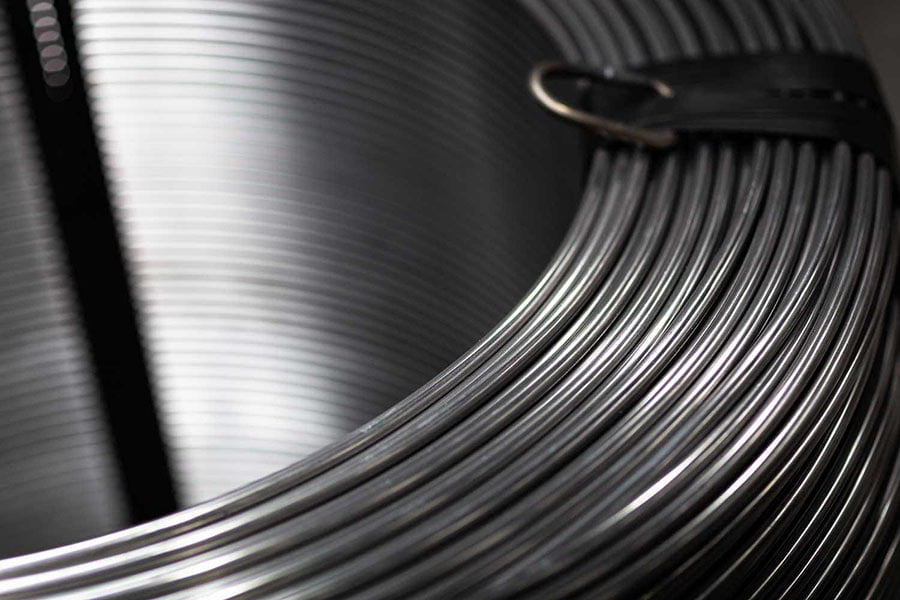
Italian long steel producer Pittini is making a significant investment in its steel production facility in Verona, northern Italy. It is upgrading its two-strand wire rod mill with a new bar finishing facility supplied by equipment maker Danieli. The new line is projected to be completed by the end of 2025.
The investment will enable Verona to broaden its range of products and enhance its flexibility, Kallanish notes. The facility will combine its existing production of wire rod with bars, offering a range of diameters from 5-25mm and lengths from 6-18 metres. The bars will be bundled in weights of up to 5 tonnes, providing a comprehensive selection for various applications.
The current mill will support both the new bar line and the existing wire rod mill, enabling them to operate simultaneously. A new, compact direct “Rolling Bundling” station enables efficient and rapid delivery of bars to the cooling bed within a limited space.
“The Danieli Automation process control, extensive use of servo-drives, time-critical applications and sensors, will ensure high performance in terms of operational speed, product quality, efficiency, and maintainability, also thanks to advanced interconnection and data management, ready for use of artificial intelligence,” a Danieli note explains.
The equipment maker is developing robotics, artificial intelligence and augmented reality technology to achieve the plant of the future, it said at an industry gathering in May (see Kallanish passim).
Natalia Capra France

Spain’s Network Steel upgrades pre-painted coil mill
Spanish coil processing company Network Steel (NS) will replace two gas reheating furnaces at its Coated Solutions plant in Aranda del Duero, Kalllanish learns from the company.
The unit’s equipment upgrade will start in September and will last one month. The investment is valued at €2.5 million ($2.73m).
“The project includes the replacement of the furnaces for the special steel production with new generation technology. The new ones will improve the plant’s efficiency and reduce gas consumption,” the company says.
After the modernisation, the Aranda Coated Solutions (ACS) subsidiary will increase its production capacity by 30,000 tonnes/year to 130,000 t/y of pre-painted coil.
During the upgrade, operations at the plant will be temporarily halted, although the closure will not affect employees and there will be no layoffs, NS confirms.
“Negotiations are underway with workers about the possibility of collective holidays or making up the hours not worked at a later date. There will be no temporary layoff scheme (ERTE),” the company explains.
Todor Kirkov Bulgaria

HRC market seasonally quiet in Europe; post-summer price direction unclear
Offers from an integrated supplier in the Benelux area for August-September delivery were reported at €640-650 ($697-708) per tonne ex-works, while HRC with fourth-quarter lead times was offered higher at €660 per tonne ex-works.
One German mill was quite aggressive, offering coil with a four-week lead time at €625-630 per tonne ex-works.
But sources believed it was still possible to get €620 per tonne ex-works from most suppliers for August-September delivery coil in the case of a firm bid.
Target offers levels for after the summer break were voiced at €670 per tonne ex-works or delivered by leading European suppliers, Fastmarkets heard.
Fastmarkets calculated its daily steel HRC index domestic, exw Northern Europe at €628.13 per tonne on Thursday, up €0.38 per tonne from €627.75 per tonne the previous day.
The index was down by €4.37 per tonne week on week and also by €4.37 per tonne month on month.
But the likelihood of a price rebound after the summer holiday period remained uncertain, according to sources.
Some suggested that lower imports as a result of new safeguard measures and reduced output domestically following longer summer stoppages, could support a rebound in price.
“The imbalance between supply and demand continues. Some mills will prolong the holiday period hoping this will improve the imbalance and create more demand,” one buyer source in the Benelux area told Fastmarkets.
But others remained skeptical, claiming that the new safeguards and slightly lower domestic availability would not be enough to drive an HRC price rise while demand remains low.
“To make the difference in demand and supply, we should see mills taking out blast-furnaces – like they did in [the fourth quarter of 2023]. Longer summer stoppages at some suppliers will not be enough,” a distributor in Germany said.
“As for the new safeguards – the effect will not be immediate. It will take the market half a year or even more to clear [import HRC ] tonnages which are currently in the pipeline,” the distributor added.
In Southern Europe, Fastmarkets calculated its daily steel HRC index domestic, exw Italy at €620.42 per tonne on Thursday, down by €0.21 per tonne from €620.63 per tonne on Wednesday.
The index was down by €5.83 per tonne week on week and by €9.16 per tonne month on month.
August-September delivery HRC from a local mill was heard offered at €640-650 per tonne delivered (€630-640 per tonne ex-works).
Buyer estimates of tradable prices were around €600-620 per tonne ex-works.
In the secondary market, 3-6mm HR sheet was still heard to be trading in the range of €710-730 per tonne CPT, broadly stable over the past seven days.
The market for overseas coil remained quiet, with most buyers holding back due to either looming risks related to new EU import safeguards or uncompetitive prices for import HRC.
Offers from Asia were limited.
Vietnam-origin coil was heard offered at €620 per tonne FCA Antwerp, but lead times were reported to be in Janaury 2025.
Buyer estimations of tradeable values for Asia-origin coils were no higher than €550-570 per tonne CFR, but no such offers were reported.
Offers of HRC from Turkey were available at €610 per tonne CFR to Italy, including the anti-dumping duty.
Published by: Julia Bolotova


Steel hollow sections prices narrow downward in Europe amid summer slowness
“The market slowed down not only because of the [summer] holidays,” a trader told Fastmarkets. “It has been quiet for weeks.”
Fastmarkets’ monthly price assessment for steel sections (medium) domestic, delivered Northern Europe was €750-775 ($819-847) per tonne on Wednesday, narrowing downward by €15 per tonne from €750-790 per tonne on June 19.
Similarly, Fastmarkets’ monthly price assessment for steel sections (medium) domestic, delivered Southern Europe was €750-775 per tonne on Wednesday, narrowing downward by €15 per tonne from €750-790 per tonne on June 19.
But a second trader said demand had increased slightly in the past two weeks due to low stocks and reduced production.
Meanwhile, hot-rolled coil feedstock prices fell over the month, with trade slow due to the summer holiday period. HRC market participants also shared concerns around slow end-user demand and low order intake from key end-user sectors.
Fastmarkets’ daily calculation of its steel hot-rolled coil index domestic, exw Northern Europe was €627.75 per tonne on Wednesday, down by €6 per tonne from €633.75 per tonne a month earlier.
Published by: Holly Chant
Steel beams prices in Europe unchanged; mills make higher offers
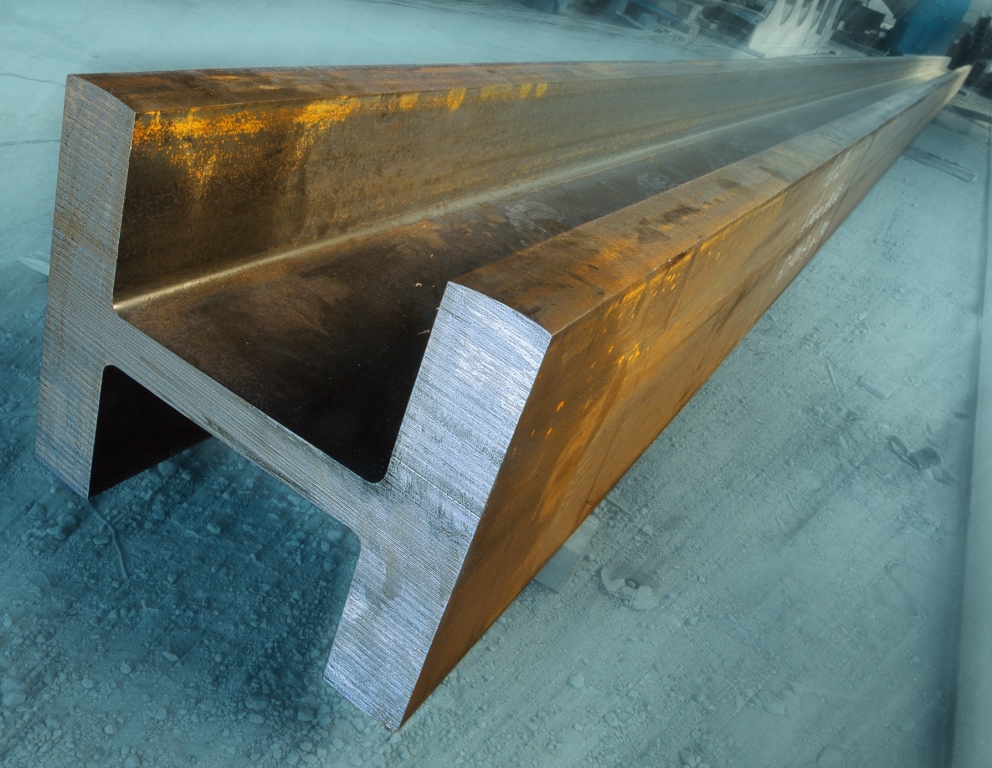
Fastmarkets’ monthly price assessment for steel beams, domestic, delivered Northern Europe was €720-760 ($787- 830) per tonne on Wednesday, stable from the assessment on June 19.
Fastmarkets’ monthly price assessment for steel beams, domestic, delivered Southern Europe was €720-760 per tonne on Wednesday, also flat month on month.
One trader told Fastmarkets that producers had announced higher offers, but prices remained steady due to a lack of orders amid slow demand.
“The summertime, vacations and so on reduce the speed [of trade in the market] as well,“ the trader added.
Traditionally, production and trade slows during the months of July and August due to summer holidays and seasonal mill maintenance, but consumption downstream has weighed on prices and trading for much of the year.
Fastmarkets’ calculation of its daily index for steel scrap HMS 1&2 (80:20 mix) North Europe origin, cfr Turkey was $386.61 per tonne on Wednesday, up $6.30 per tonne month on month from $380.31 per tonne.
Published by: Holly Chant