


EU HRC market remains largely stable as buyers avoid bookings
Domestic prices for European hot-rolled coil remained largely stable on Sept. 20, as buying activity remained limited in the market due to low end-user demand.
“Buyers, such as service centers and distributors, are not in a great position to offload material,” an Italy-based mill source said. “Therefore, they are not in a great rush to buy. End-user demand is just not enough.”
“Pricing is not the problem,” a distributor source said. “Problem is low/no demand.”
Platts assessed Northwest European HRC stable on the day at Eur555/mt ex-works Ruhr on Sept. 20. Tradable values were reported at Eur550/mt EXW Ruhr from a buy-side source.
Platts assessed domestic HRC prices in Southern Europe also stable on the day at Eur555/mt EXW Italy, with tradable values reported at Eur540-580/mt EXW Italy.
Sources said that production overcapacity in Asia has made it difficult for European suppliers to compete with them. However, interest in imports still remained weak due to concerns around safeguard duties and anti-dumping investigations.
“Production overcapacity in Asia is making things difficult for EU suppliers,” a service center source said.
Platts assessed imported HRC in Northwest Europe at Eur540/mt CIF Antwerp, down Eur5 on the day.
Meanwhile, Platts assessed imported HRC in Southern Europe at Eur540/mt CIF Italy, up Eur5 on the day.


Steel customers show green premium willingness: McKinsey
Steel is leading the energy transition metals when it comes to consumer willingness to pay a green premium by 2030, according to a report by McKinsey & Company, seen by Kallanish.
The Global Materials Perspective 2024 reports that 42% of steel customers were ready to pay some extra premium to secure supply if green materials are in deficit by 2030, above that of aluminium (37%) and copper (20%) customers.
While 44% of steel customers were not ready to pay extra and would switch to a grey alternative, this remained a lower percentage than those in the aluminium (59%) and copper (60%) sectors.
Across all materials, less than 15% of customers indicate a willingness to pay premiums of around 10% for low-carbon materials. However, the research notes regulatory measures could change the outlook, such as the EU Emissions Trading System (EU ETS) and Carbon Border Adjustment Mechanism (CBAM), amid higher costs for carbon emissions.
It adds that the energy transition is changing the materials landscape by accelerating demand growth for materials that are utilised in low-carbon technology such as electric vehicles. A long-term shift is taking place in terms of the materials needed, increasing the importance of the metals and mining portfolio, while at the same time driving a reduction in the use of thermal coal in energy.
In response, companies might seek to either switch to sourcing low-carbon footprint materials or invest in innovative solutions to reduce process emissions.
Elsewhere, the report notes that in metals and mining, around 80% of revenues stem from just five materials, steel, thermal coal, copper, gold, and aluminium, accounting for $4 trillion.
Of this, thermal coal and steel account for approximately 60-70% of revenues, with production volumes more than 30 times higher than all other materials combined. Gold, copper, and aluminium make up another 15-20%.
However, despite the long-term shift in material choice, steel was one of the few materials that has a somewhat weaker growth expectation, with demand projections remaining strong until 2035. With the exception of steel and thermal coal, demand is expected to outpace absolute historical growth in the coming decade compared with the previous decade for all the other energy transition materials in the report, including lithium and nickel.
In 2023, total production emissions from the metals and mining industry accounted for approximately 15% of global emissions. Assuming no external shifts, the share is estimated to decrease to approximately 13% by 2035.
This decrease in emissions is driven by the net effect of several factors, according to the report. This includes changes in production of thermal coal, a 50% decarbonisation of the global power grid, as the share of renewable energy increases, improved circularity as more recycled material is collected and utilised, efficiency improvements, and assets transitioning to net zero production.
Steel was also looking at a more “modest” decrease in emissions from in a “business as usual” perspective over the coming years than other materials. However, the research notes for the sector, approximately 40 million tonnes capacity of such transitions have already been announced by 2035, which would lower global emissions by as much as 60mt of CO2.
Elsewhere, the report notes that despite a turbulent environment, finances were healthy until 2023 – yet 2024 has a gloomier outlook. The past two to three years have posed some challenges for the materials industry, with high price volatility driven by increased supply chain disruptions and volatility in energy prices, among other factors. While the industry has experienced previous cycles of boom and bust, these recent fluctuations are unprecedented in scale.
Despite the challenges, the materials industry has shown strong financial results over the past few years when compared with historical averages, with revenue growing by 6% per annum since 2000. Revenues grew by approximately $2.4 trillion (more than 40%) from 2020 to 2023, primarily driven by metals and mining, which grew by $1.7 trillion (an increase of approximately 75%). During the same period, Ebitda in metals and mining nearly doubled, increasing from $500 billion to $900 billion.
Overall, balance sheets are healthy, with net debt over Ebitda ratios of 1.3 times – well below the through-cycle average of 1.8 times – providing companies with more investment capacity.
It notes, however, that 2024 is projected to be a more challenging year for the industry as overall economic growth slows and the shift toward low-carbon technologies unfolds more slowly than expected. These factors are putting downward pressure on price levels, especially for battery materials.
Carrie Bone UK


Voestalpine steel division discontinues fabrication activity
The steel division of voestalpine group will withdraw from the business of cam units and sliding elements, Kallanish hears from the Austrian company.
It will gradually discontinue the business activities of its company voestalpine Camtec GmbH in Linz by the end of the business year through March 2026. In the last business year, the unit’s revenue came to €12 million ($13.4m).
Voestalpine Camtec specialises in the production of cams and maintenance-free sliding elements made of brass, copper, and aluminium. It primarily supplies automotive manufacturers and suppliers, as well as the mechanical engineering industries. Despite market leadership in the German-speaking region and a recent improvement in capacity utilisation, production at the Linz site is no longer economically viable, voestalpine says.
Due to increased costs for energy and labour, along with the simultaneous massive increase in price pressure from non-European competitors, primarily from China and India, the activity is no longer competitive. The unit also suffers from weak demand from the European machinery and toolmaking sectors. The 53 employees affected have the opportunity to transfer to other voestalpine business units in Linz, voestalpine adds.
Christian Koehl Germany

Logistics, lower demand limit AMKR production, exports: ceo
ArcelorMittal Kryvyi Rih (AMKR) can export finished products only to nearby European countries due to high transportation costs, says company chief executive Mauro Longobardo.
“In the middle of this year, the enterprise was able to reach half of the pre-war level of metallurgical production and improve the situation with iron ore concentrate mining,” he said at a conference organised by the European Business Association. “However, in the second half of 2024, AMKR faced significant external and internal challenges that threaten maintaining production at the planned level, its growth and further development, and threaten the loss of competitiveness.”
“Logistics restrictions for Ukrainian industrial producers are just one of the external factors holding back the expansion of production at our plant,” he added.
Longobardo also mentioned the slowdown in iron ore consumption by China as one of these factors, which led to a decrease in world prices for iron ore and limited the sales volumes of the Kryvyi Rih enterprise.
“European and other manufacturers have a number of competitive advantages, in particular due to the lower cost of electricity in the cost price and cheaper logistics,” Longobardo noted. “For example, we are talking about Poland, Romania and the Baltics.”
“In addition, steel markets in Europe are currently stagnating. The reasons for this are geopolitical uncertainty in the region, high inflation, a slowdown at construction companies, and rising prices for energy and raw materials,” the ceo observed. “This creates an excess of ore and steel products, and a number of producers in Europe are mothballing production capacities and suspending production.”
In July, AMKR warned that it will be forced to significantly reduce production and send approximately 1,200 employees on idle time due to new government standards for importing electricity (see Kallanish passim). On 1 June, the Ukrainian government decided the guarantee of unlimited electricity supply will only apply to those enterprises that import at least 80% of their consumption.
AMKR increased production in May due to the restart of blast furnace No.6 and coke oven batteries No.3-4 in April (see Kallanish passim). The steelmaker hiked May crude steel production by 28% on-month and 68% on-year to 208,000 tonnes. Rolled steel production rose 27% on-month and 66% on-year to 193,000t.
In the first quarter, AMKR increased steel production by 93% on-year to 278,000t and pig iron output by 49.8% to 403,000t.
Svetoslav Abrossimov Bulgaria
Polish construction sector anticipates 2025 pickup
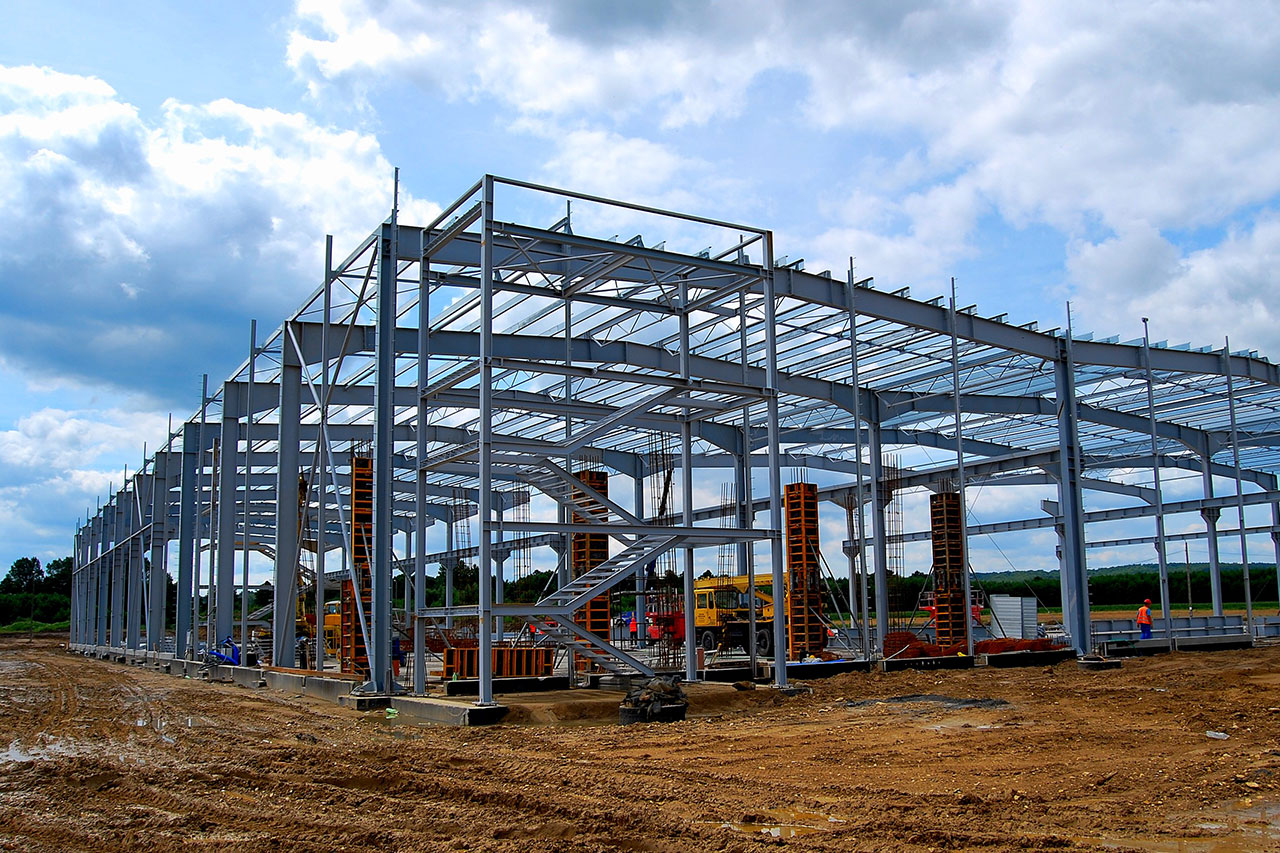
EU-funded National Recovery Fund (KPO) projects are set to spur construction sector investment in Poland from 2025, says one of Poland’s largest construction firms, Erbud. However, the shortage of qualified constriction workers could hamper the progress of these investments.
Besides this public investment, the government has announced the “Housing for a Start” programme that will subsidise people in a certain income bracket when paying rent. It is hoped this will spur private construction of more apartment buildings.
The first quarter saw slowing investment in Poland due to the reduced utilisation of EU infrastructure funds following the completion of the previous, 2014-2020 term, which resulted in lower infrastructure sector output. Q2 however saw on-year investment growth, most likely driven by defence spending, Erbud notes.
Polish construction companies are reporting a lack of new orders. There are three main factors hampering activity. The receipt of EU KPO funds has been delayed, while the new government is reviewing all infrastructure projects, which has led numerous investments to be suspended. Finally, many infrastructure projects have not yet been implemented because they are in the phase of prolonged negotiations, especially in the energy sector.
“Investment growth may be driven in the coming years by the need to increase labour productivity, as well as partial automation of processes in the face of rapidly increasing labour costs and the need to implement the energy transformation, which entails the need for high investment outlays to expand generation capacity,” the firm says in its latest earnings report seen by Kallanish.
The Polish government projects total investment into renewable energy up to 2040 of PLN 726.4 billion ($189.5 billion), of which PLN 261.8 billion will occur in 2023-2030 and PLN 464.5 billion in 2031-2040.
Adam Smith Poland

Acciaierie d’Italia sales process advances, new suitors reported
Acciaierie d’Italia (ADI) is advancing its sales process, as the special administration has commenced the review of letters of interest submitted by the deadline of 20 September. Adolfo Urso, Italy’s Minister of Enterprises and Made in Italy (MIMT), indicated to the local press last week there is significant interest from numerous international and national companies.
During the summer months, representatives from Steel Mont, Metinvest, Oman-based Vulcan Green Steel (VGS), and Canada’s Stelco engaged in discussions regarding the potential acquisition of ADI’s mills located in Genova, Novi Ligure, and Taranto, Kallanish notes.
Marcegaglia has recently expressed interest in joining the race. An informed source indicates the re-roller’s interest may be limited to specific segments of ADI’s assets, particularly the tube mills and the Novi Ligure facility, which is one of the re-rolling plants located in northern Italy.
Various companies are considering potential acquisitions of certain assets from the former Ilva, particularly in northern Italy, including the Italian service centres Eusider and Sideralba. According to people with knowledge of the dossier, Arvedi is also considering this, and Nippon Steel is reportedly also mulling joining the race.
Dividing the business and selling its various assets is a viable alternative. Two knowledgeable sources do not think there is a genuine desire to purchase the entire company and believe Metinvest is more likely to move forward with its plan to construct a flat steel mill in Piombino. Taranto is an outdated facility that requires significant capital investment and has an inflated workforce.
MIMT and ADI’s special commissioners invited expressions of interest in July for the acquisition of the struggling steelmaker’s assets. The aim of the sale is to swiftly and effectively reduce CO2 emissions and enhance steel production in Italy, by bringing about a change in management. The commissioners have asked potential buyers to preserve employment.
ADI’s suitors have now been asked to quote a potential price in their offers, Kallanish understands. The special commissioners intend to pursue the sale “preferably” by transferring the assets as a whole, the say. Alternatively, if the commissioners do not deem the offers concerning the business as a whole to be adequate, the transfer will be achieved through separate sale transactions of specific business units belonging to ADI (see Kallanish 2 August).
Natalia Capra France

From flats to longs: Europe’s ‘green’ steel conversation expands
When it comes to Europe’s nascent “green” steel sector, conversation for the most part has centered on flat products.
After all, flats — including hot-rolled coils and sheets –, account for the bulk of both the continent’s steel production and consumption, and the flats sector was the first to see premiums for material certified with a lower carbon profile than standard steel.
The annual combined European flat product deliveries and imports averaged around 82.96 million metric tons from 2013-2022, according to European steel producers association Eurofer. During the same period, the annual combined European long product deliveries and imports averaged about 49.58 million MMt.
Premiums emerged last year in Europe for carbon-accounted flat steel, and Platts, part of S&P Global Commodity Insights, addressed market demand for price assessments and data to help bring transparency to trade in such products — launching first-of-their-kind daily carbon-accounted HRC assessments in May 2023.
And now that the green conversation in Europe has extended to other markets, including long steel products used in construction, Platts has also expanded its carbon-accounted assessment offerings.
Carbon-accounted longs enter the picture
Effective Sept. 11, Platts launched new weekly spot price assessments for European carbon-accounted rebar and medium sections.
The new assessments — which Platts understands to be the first carbon-accounted assessments for long steel — include a European Rebar Carbon-Accounted Steel Premium (Rebar CASP), a European Medium Sections Carbon-Accounted Steel Premium (Medium Sections CASP), a Northwest Europe Rebar Carbon-Accounted Steel Price and a European Medium Sections Carbon-Accounted Steel Price.
Based on industry feedback, the European rebar and medium sections carbon-accounted steel premiums reflect any differential achieved for the spot sale of rebar and medium sections, with total accounted carbon emissions of 0.6 metric tons of CO2-equivalent, or less, for every metric ton of steel produced.
The assessments include emissions from direct, indirect and associated upstream and downstream activities, such as processing of steelmaking raw materials, hot metal production, steel rolling and associated transportation and logistics — typically referred to by market participants as scopes 1, 2 and 3.
Carbon emissions must be certified by an internationally accepted independent organization, and market participants will be expected to supply proof of such certification upon request.
Trade in steel products using offsets to reduce overall emissions profiles, such as carbon credits sourced from voluntary carbon markets, will not be considered for inclusion in the assessments. Platts will consider trade where a mass balancing approach has been applied and validated by a certified internationally accepted independent organization.
Platts assessed the Rebar CASP at Eur40/mt, Sept. 18, down from Eur70/mt Sept. 11 and the Medium Sections CASP at Eur65/mt, Sept. 18,down from Eur92.5/mt Sept. 11.

‘Historic, strategic turning point’
It is easy to see why the construction sector has entered the green conversation. Construction — which relies heavily on longs like rebar and medium sections for support — is not only the largest end-use sector for steel, but is also one with high associated carbon emissions.
Steel production generates 7%-9% of global CO2 emissions and about 5% of overall emissions in Europe, according to the Institutional Investors Group on Climate Change.
And regulatory requirements, such as the European Union’s Carbon Border Adjustment Mechanism scheme, as well as accelerated decarbonization efforts around the world, have underscored the need for heavy industries like steelmaking to move quickly to reduce carbon emissions.
In a Sept. 5 paper titled ‘Investor priorities for transitioning the European steel sector,’ the IIGCC said “the steel sector’s decarbonization is essential” and that “creating a supportive policy environment for the transition of high-emitting sectors is critical for achieving Europe’s commitment to climate neutrality by 2050.”
To stimulate low-carbon steel demand, the IIGCC said public steel procurement could be used as a tool to drive decarbonization innovation and incentivize use of low-carbon steel products. Financial incentives could include point-of-sale subsidies, tax exemptions, post-purchase rebates or tax credits, the IIGCC said.
Such investment would mirror investment made by European steelmakers offering carbon-accounted steel — mainly through conversion to electric-arc furnaces or implementing hydrogen and fossil-free fuel production. The steelmakers that have technology upgrades and innovative steelmaking investments will be essential not only for Europe’s own industry, which faces a “historic, strategic turning point,” but in the global steel industry’s decarbonization journey as well, IIGCC said.
“Investors see Europe as well positioned to lead the global transformation of the steel sector,” it said. “The EU is a large, highly developed economy with generally high-end steel production that can seize the opportunities and show what is possible, paving the way for other regions to follow.”
Several factors holding back green market activity
While the release of investment funds by the European Union and individual governments in the region have helped to kick off technical enhancements to reduce producer emissions, there are still several factors that are holding back trading activity of lower carbon emission products.
A hampering factor for the acceleration of carbon-accounted steel is the lack of an internationally adopted industry standard. Associations and trade groups such as the German steel federation and Responsible Steel have started to publish guidelines in the hope that they would become standards, but they’ve yet to gain widespread adoption.
A difficult economic environment seen in 2024 has meant that those who do not necessarily need to buy material with a lower carbon profile have opted for less expensive conventional steel – or have limited their spot market buying activity.
Rising interest rates and a near-recession in Germany hit medium-sized businesses — the so-called Mittelstand in Germany and the backbone of Europe’s biggest economy. German manufacturing remains weak, while the automotive industry also is struggling.
Demand and price development for carbon-accounted steel remains deeply correlated with the conventional steel market, and in times of weak steel demand for the market at large, carbon-accounted steel remains heavily affected.
Analysts at Commodity Insights do expect some near-term upside, with a steel price recovery from December 2025 due to restocking and restricted import supply.
Once restocking activities resume and economic tightness ease, trading activity is likely to resume to previous levels, market participants contend.
It then will be up to steelmakers in Europe and abroad to execute on the vision of Europe as a global leader in the energy transition.
Laura Varriale | Christopher Davis

Polish rebar prices slightly down on slow demand, oversupply
Polish mills were heard offering rebar at 2,600-2,610 zloty ($678-681) per tonne CPT during this assessment period, Fastmarkets heard.
According to Fastmarkets’ sources, this was also the tradeable market level for large tonnages. Buyers’ estimation for the workable market level for small volumes was 2,620-2,630 zloty per tonne CPT.
Fastmarkets’ weekly assessment for steel reinforcing bar (rebar), domestic, cpt Poland reached 2,600-2,630 zloty per tonne on Friday, narrowing downward by 10 zloty per tonne from 2,600-2,640 zloty per tonne on September 13. This price has been on a downtrend since July 19.
In the secondary market, prices for rebar from stock were heard at 2,680-2,700 zloty per tonne CPT, depending on the region.
“The demand from the cut-and-bend companies is big, but it still cannot match the oversupply,” a distributor source told Fastmarkets.
The downward trend for the Polish rebar prices will continue, this source said, and larger tonnages could be traded at 2,550 zloty per tonne CPT by the end of the month.
Sources told Fastmarkets that one rebar producer in Poland was planning production cuts by the end of September to try to balance the market.
Commenting on the possibility of output cuts, a producer source told Fastmarkets that it would be better to limit supply, instead of decreasing prices further.
“These price levels are not sustainable. No one [among Polish producers] is making money selling at this level,” they said.
Strong competition from imports, as well as lower scrap prices on the Polish market pushed rebar prices down. Scrap prices in September contracts decreased by 90-110 zloty per tonne.
Published by: Darina Kahramanova


HRC prices slide further in Northern Europe amid persistently weak demand
In Northern Europe, integrated mills maintained their offers at €560-580 ($624-646) per tonne ex-works or delivered.
But sources told Fastmarkets that, for tonnages of 1,000 tonnes or more, it was possible to get €530-550 per tonne ex-works.
“Mills desperately need volumes to fulfill their order books,” one buyer source told Fastmarkets.
At the same time, buyers in Europe were mainly booking small lots of HRC to fill gaps in their stocks.
“Demand [from end-user sectors] is low and [HRC] prices are declining, so why book big tonnages if tomorrow you can buy cheaper?” a distributor in Germany said. “And mills can offer really short lead times [for HRC], so there is no rush.”
Sources told Fastmarkets that steel service centers and distributors were tending to destock, and there was tough competition downstream, which was also putting pressure on HRC prices.
And despite producer sources claiming that HRC prices are already at cost line for them, there are no signs of the downtrend stopping.
“Raw materials prices are declining, and that immediately opens room for [finished steel prices] to drop more. Order books at the producers are thin, and everyone is hunting for volumes,” a mill source in Northern Europe told Fastmarkets.
Fastmarkets calculated its daily steel HRC index domestic, exw Northern Europe at €556.46 per tonne on Friday, down by €3.15 per tonne from €559.61 per tonne on Thursday.
The index was down by €9.79 per tonne week on week and by €55.62 per tonne month on month.
In Southern Europe, Fastmarkets calculated its corresponding daily steel HRC index domestic, exw Italy at €557.50 per tonne on Friday, stable day on day.
But the Italian index was down by €12.50 per tonne week on week and by €50.00 per tonne month on month.
One Italian supplier was heard offering HRC at €580 per tonne delivered, which nets back to €570 per tonne ex-works.
Estimates of the tradable value were heard at €550-560 per tonne ex-works, but bookings were limited, and sources said that, just like in Northern Europe, it was possible to negotiate lower prices for larger tonnages.
“European mills really negotiate prices case by case,” a buyer in Italy said.
One European supplier was heard selling HRC to Italy at €560 per tonne delivered in the week to Friday.
And HRC from Asia and Turkey was on offer to Italy for late-October-November shipment at €540-550 per tonne CFR, sources told Fastmarkets.
But overseas suppliers have not been very active in the European market recently due to the small gap to local prices, EU trade restrictions and the fact that European buyers are not willing to build up large volumes of stock.
“In principle, [non-EU] mills are reluctant to spread around [HRC] offers that could be quickly undermined by EU mills, which are constantly lowering their prices,” a second buyer said.
Published by: Julia Bolotova