


Sidenor tests new electric combustion technology
Spanish special steelmaker Sidenor says it is testing innovative technologies, such as the application of electric resistance heating in the preheating process of tundishes, to lower carbon footprint, Kallanish learns from the company.
This is part of the Citadel project, financed by the EU’s Horizon 2020 research and innovation programme, which promotes transformation towards a more sustainable and carbon-free steel industry.
Several of Sidenor’s gas-fired heating processes are currently the focus of the testing. The initiative is centred on the electrification of processes which traditionally depend on natural gas, such as tundish and ladle heating, which are critical in the production of liquid steel and have a great impact on the final quality of the product.
“We are working to optimise these processes by developing two key industrial tests, tundish heating using electric resistances and ladle heating using oxy-fuel combustion,” Sidenor comments. “These tests aim to evaluate the feasibility of substituting natural gas with cleaner energy sources, thus reducing carbon emissions and improving energy efficiency at crucial production phases.”
The use of O2, as a by-product of H2, is expected to increase production efficiency and reduce CO2 emissions by around 30%. The technology will enable the transition to hydrogen combustion in the near future.
Todor Kirkov Bulgaria


GMH Gruppe acquires speciality steelmaker Kind & Co
Germany’s GMH Gruppe says it has acquired 100% of shares in another, smaller German steelmaker, Kind & Co. Edelstahlwerk.
Kind & Co specialises in the production and refinement of high-alloy steels and offers a wide range of tool steels and special alloys. It is based in Wiehl, North Rhine-Westphalia, and generated sales of around €125 million ($138m) in 2023, Kallanish notes.
The acquisition will strengthen GMH’s position in the tool steel industry, particularly in the segment of hot-work tool steels, in which Kind & Co holds an outstanding international position, according to GMH.
Kind & Co’s expertise in research and development will also support GMH Gruppe’s ongoing innovation efforts, the group adds.
“Since its foundation in 1888, Kind & Co has been family-owned, with the fourth generation in control since 2000,” says Susanne Wildner, managing director and, until the acquisition by GMH, shareholder of Kind & Co. “GMH Gruppe and Kind & Co share the same values and an owner-managed, entrepreneurial thinking and behaviour.”
Christian Koehl Germany

China, investment reluctance restrain European manufacturing recovery: ING
Easing inventories and interest rates, as well as strengthening consumer purchasing power in Europe present an opportunity for some manufacturing sector recovery in 2025, but multiple longer-lasting concerns will restrain growth, says ING Bank.
Consumer goods demand in Europe remains sluggish due to the inflation-induced income shock, while the economy is stuck in a low-growth environment and eurozone investment is well below its pre-pandemic level. Policy uncertainty plays a major role too, the bank points out.
Structurally, the energy shock is still keeping energy-intensive production muted, while weak demand outside of the eurozone is impacting new orders in the manufacturing sector. Local producers have, moreover, been hit by competition from Chinese export growth to the eurozone.
Although there was a sharp inventory reduction in the first and second quarters, this comes on the back of far greater increases in the years before. Before the summer, the destocking seemed to coincide with an increase in new orders but since then, overall order books have been deteriorating, ING observes.
There are nevertheless questions over whether inventories need to decline before production picks up like in previous years. Due to supply chain disruption and geopolitical turmoil in recent years, the “just in time” model may be replaced by the “just in case” model, where companies hold onto larger inventories to be less vulnerable to supply chain shocks. The typical inventory cycle may not apply in the current uncertain climate of globalised production.
The green shoots of recovery in Europe are complicated by the expected soft landing in the US economy and continued growth problems in China, which should keep foreign demand suppressed. “Add to this the ongoing structural worries with investment reluctance and policy uncertainty, and it is almost impossible to see a vigorous rebound of eurozone industry,” ING says in a note sent to Kallanish.
The changing growth model in China is adding to European industry structural decline concerns, with soaring Chinese exports putting pressure on certain industrial sectors such as automotive. Higher energy price volatility, meanwhile, could limit the recovery in energy-intensive sectors, while skilled labour shortages remain a concern as the workforce ages.
“There is light at the end of the tunnel, but it is very faint right now,” ING concludes.
Adam Smith Poland

Italian rebar activity stagnates with low prices
Italian rebar prices are mostly stable on-week although the low point of the range has decreased €10/t ($11) compared to the end of September, buyers tell Kallanish.
Last month, producers’ efforts to implement a price increase have not produced the desired effect, and activity is considered too slow to achieve the hikes.
Buyers and distributors anticipate a further price decline in the upcoming weeks, in line with scrap prices, also seen decreasing this month.
Current transaction values in the domestic market are at approximately €280-300/t base ex-works. Two buyers report purchasing limited volumes.
Including additional size extras at an average cost of €260/t, current values in Italy hover this week at €540-560/t ex-works.
The current price for domestic mesh stands at approximately €390-400/t, not accounting for transport costs. An extra fee of €300/t applies for size extras, sources suggest.
Natalia Capra France
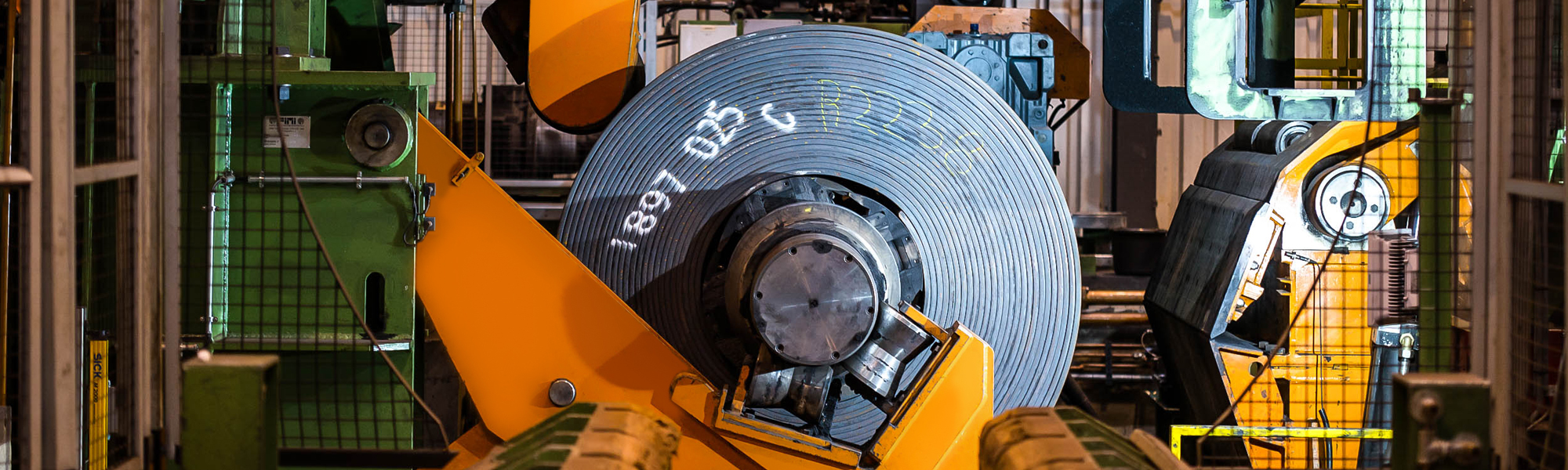
European HRC prices remain largely flat despite bullish sentiment at producers
Fastmarkets calculated its daily steel HRC index, domestic, exw Northern Europe at €540.83 ($596.68) per tonne on Friday, down by €1.67 per tonne from €542.50 per tonne the previous day.
The index was down by €4.38 per tonne week on week and by €49.17 per tonne month on month.
Trading remained quiet in the region. Buyers questioned the recent price increase announced by a leading European producer earlier in the week.
“The market cannot accept [€590 per tonne as a base price for HRC]. Demand is not strong enough to support that rise,” one buyer source told Fastmarkets. “But it was clear that prices [for HRC] have fallen below costs for European mills.”
Buyers estimated tradeable values at €520-540 per tonne ex-works on Friday.
One buyer estimated achievable prices in the range of €510-520 per tonne ex-works, but market sources said that mills were unlikely to accept such low prices.
One integrated steelmaker in the Benelux area was offering HRC at €540 per tonne ex-works, but trade sources said that the mill was also considering a price rise, following the move by a market leader.
Market sentiment would become clearer in the week starting October 7, industry sources said, when public holidays in Germany and in Asian countries were at an end.
“I think, price-wise, we are currently at rock bottom in Europe,” a second buyer said.
“It is clear that [EU mills] will still accept lower prices for fourth-quarter-delivery HRC,” a third buyer said. “The price increase from [the leading European producer] helps to stabilize the market, but [I am] not so sure about actual price rises when demand is so low.”
In Southern Europe, Fastmarkets’ daily steel HRC index, domestic, exw Italy was €535.00 per tonne on Friday, unchanged from the previous day.
The Italian index was down by €6.67 per tonne week on week and by €55.00 per tonne month on month.
Buyer estimates for the workable market price were €520-540 per tonne ex-works, while the majority of sources estimated the market at €530-540 per tonne ex-works on Friday.
One integrated Italian supplier withdrew its offers from the market earlier this week and was expected to come back with new prices.
“After [the European producer’s] price rise this week, other producers also withdrew offers and [were now planning] price rises. We will see how the market reacts,” a buyer in Italy said.
As for imports, the markets have remained quiet due to public holidays in Asia. But market sources suggested that imports would remain uncompetitive in Europe because of trade restrictions, long lead times and the small gap to European prices.
“We do not have new offers from Asia, but China has become more bullish after a stimulus package was announced so we expect higher offers,” a second buyer said.


Polish steel rebar, wire rod prices decrease further on poor demand
Wire rod
Polish mills announced lower offers for October-delivery low-carbon drawing quality wire rod, at 2,700-2,750 zloty ($692-705) per tonne CPT, sources told Fastmarkets.
In comparison, at the beginning of September, similar material was on offer at 2,800-2,850 zloty per tonne CPT.
But persistently low demand has made producers revise their offers downward, Fastmarkets understands.
Fastmarkets’ sources estimated the tradeable market level at 2,650-2,700 zloty per tonne CPT.
As a result, Fastmarkets’ price assessment for steel wire rod (drawing quality), domestic, delivered Poland, was 2,650-2,750 zloty per tonne on Friday, decreasing by 50 zloty per tonne from 2,700-2,800 zloty per tonne on September 27.
“Demand is still very weak, and there is no restocking,” a distributor source told Fastmarkets. The source added that the situation remained unpredictable due to the conflicts in Ukraine and the Middle East.
Import offers of low-carbon drawing quality wire rod from Italy to Poland were heard at €630-650 ($695-717) per tonne CPT, depending on the destination.
From Ukraine, offers of mesh-quality material were heard at €600-610 per tonne CPT.
Moldava-origin mesh-quality wire rod was on offer at €620 per tonne CPT.
Rebar
Prices for Polish rebar also decreased during the assessment week, and were heard at 2,530 zloty per tonne CPT.
In comparison, at the beginning of the previous month, Polish rebar was on offer at 2,610-2,660 zloty per tonne CPT.
Market participants estimated the tradeable market level for the assessment week to be 2,500 zloty per tonne CPT.
Fastmarkets’ weekly price assessment for steel reinforcing bar (rebar), domestic, cpt Poland, was 2,500-2,530 zloty per tonne on Friday, down by 70-75 zloty per tonne from 2,570-2,605 zloty per tonne on September 27.
In the secondary market, prices for rebar from stock were heard at 2,620-2,650 zloty per tonne CPT, depending on the region.
Demand for rebar in Poland also remained weak, according to Fastmarkets’ sources.
The completion of some significant construction projects will be postponed until next year, Fastmarkets understands.
“Some infrastructure projects, which are supposed to be funded by the EU, will start no sooner than the first half of 2025,” a second distributor source told Fastmarkets.
Besides, it was not clear yet whether the government’s program to grant low-interest-rate loans to first-time home buyers would continue. The program was expected to support the residential construction sub-sector.
“The government does not even know what form the program would take. I doubt it will come into force in the first half of next year,” the second distributor said.
Polish domestic rebar prices were still under pressure from imports, Fastmarkets understands. Import offers of rebar from European suppliers to Poland were heard at €600-620 per tonne CPT.
European Union votes to impose tariffs on China-made electric vehicles
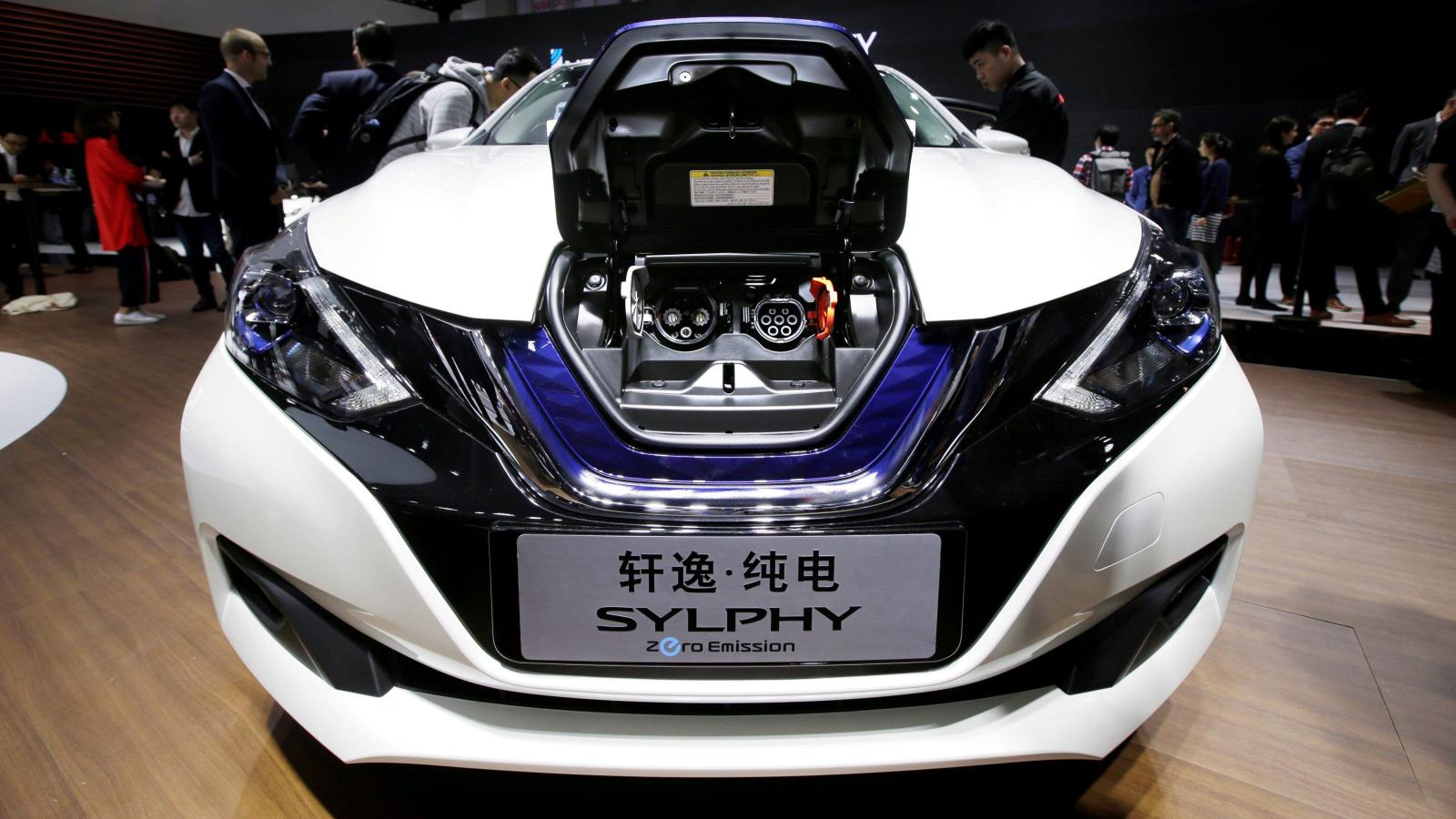
The European Union member states on Friday voted to impose extra tariffs on electric vehicles made in China, in a move that is likely to draw a reaction from Beijing.
“Today, the European Commission’s proposal to impose definitive countervailing duties on imports of battery electric vehicles (BEVs) from China has obtained the necessary support from EU Member States for the adoption of tariffs,” the EC says in a statement.
However, the commission adds it would continue negotiations with China, Kallanish notes.
“In parallel, the EU and China continue to work hard to explore an alternative solution that would have to be fully WTO-compatible, adequate in addressing the injurious subsidisation established by the commission’s investigation, monitorable and enforceable,” the statement continues.
The vote came after the EC launched an anti-subsidy investigation on China-made battery electric cars last year, saying the cheaper BEVs were “distorting” the EU market with their “artificially low prices.” As such, provisional duties were put in place from July this year. The countervailing tariffs will be up to 35.3%, on top of the existing 10% car import duty.
While it’s unclear how the member states voted, France, Greece, Italy and Poland were reportedly set to vote in favour.
The tariffs were passed a day after German labour union IG Metall and the works councils of major automakers called on Germany to vote against the tariff, calling the move “the wrong approach.”
“EU tariffs on EVs from China have had a mixed impact so far, according to T&E analysis of the EV-Volumes database,” says campaign group Transport & Environment.
“MG had its largest ever drop in BEV market share in Europe, falling from 4.1% share in August 2023 to 2.4% in August 2024, the research shows. BYD continued to expand its EU share though at a slower pace than before, growing from 1.6% in August 2023 to 2.9% BEV market share in the same month this year. Geely increased its market share from 1.3% in August last year to 2% in August 2024,” T&E adds.
Reethu Ravi | UK
