


ArcelorMittal increases flat steel prices in Europe
Notably, HRC offer prices from ArcelorMittal with lead times in February-March were heard at €630 ($661) per tonne ex-works or delivered in Northern Europe, according to sources.
This is up from the producer’s most recent offer for HRC heard at €600 per tonne ex-works in November-December.
Sources familiar with the matter told Fastmarkets that the mills had seen some pick-up in orders in recent weeks due to restocking, reaching levels of €580-590 per tonne ex-works or delivered in deal for January delivery coil.
Besides, the recent news about safeguards review, announced by the European Commission on Tuesday December 17, also sparked some cautious optimism among sellers.
“The appetite for import [HRC] has already been lower in recent months due to the anti-dumping probe against HRC from [Egypt, India, Japan and Vietnam] and the changes to safeguards made in July; it takes some time to clear up what’s in the pipeline, what’s sitting imports, but by the end of the first quarter [of 2025], the lack of imports will start to be visible [in Europe],” a buyer source said.
Another source suggested that the move was made due to some progress with long-term contracts negotiations with end users, notably in the automotive sector.
Notably, several industry sources reported some closures of half-year contracts for the first half of 2025 with a discount of €70-80 per tonne versus the second half of 2024, sources told Fastmarkets.
Initially, automakers were seeking for a triple-digit discounts of €100-150 per tonne, Fastmarkets reported.
Some contracts were heard done at €650-670 per tonne compared with €730-750 per tonne from the second half of 2024, sources told Fastmarkets.
For the full-year contracts, one source reported a discount of €80-90 per tonne versus full-year 2024 contracts.
Buyer sources told Fastmarkets that it remains to be seen whether the new levels would be sealed in deals, considering still-weak end-user demand.
“That’s a traditional move [from ArcelorMittal] to increase prices ahead of the year end. Will see how the market evolves in January,” one buyer in Europe said.
“It’s difficult to increase steel prices against the very low consumption,” a distributor said. “And we don’t see consumption increasing in the next couple of months, so it will be difficult for the EU mills to increase [steel] prices on a long-term basis just based on lower imports,” they added.
Fastmarkets calculated its daily steel hot-rolled coil index domestic, exw Northern Europe at €561.13 per tonne on Tuesday, down by €0.75 per tonne from €561.88 per tonne on Monday.
The index was down by €0.30 per tonne week on week and by €1.37 per tonne month on month.


EU starts reviewing safeguard measures on certain steel product imports
The European Commission has started a functioning review of safeguard measures on imports of 26 steel product categories after receiving a request from 13 member states, according to a Dec. 17 notice in the Official Journal of the EU.
A definitive safeguard measure on certain steel products was imposed on Jan. 31, 2019, for an initial three-year period and was then prolonged until June 30, 2024, after a prolongation review investigation
The EC then undertook a second prolongation review on June 24, 2024, resulting in its further extension until June 30, 2026.
The current safeguard measure is based on historical trade flows and consists of a tariff-rate quota. Once the relevant TRQ is exhausted, a duty of 25% is levied.
The EC said the November request from the 13 member states included evidence of changed circumstances since the last review of the measure.
“In particular, the request contains information regarding the contraction in EU demand for steel, resulting in widening gaps with the current level of duty-free quota volumes,” it said, adding that it showed that China’s higher steel export to major regions had pushed exports from other markets to the EU.
It said this called for a reassessment of the allocation and management of the TRQs.
The product categories included non-alloy and other alloy steel products — hot-rolled and cold-rolled sheets and strips, quarto plates, merchant bars and light sections, wire rods and cold-finished bars — and stainless products — HR and CR sheets and strips, HR quarto plates, bars and light sections and wire rod.
It also included electrical sheets, metallic-coated sheets, organic-coated sheets, tin mill products, rebars, angles, shapes, and sections of iron or non-alloy steel, sheet piling, railway material, gas pipes, hollow sections, seamless stainless tubes and pipes, other seamless tubes, large welded tubes, other welded pipes, and non-alloy wire.
The EC review would assess, based on evidence from interested parties, whether any adjustment to the measure was warranted to adapt to market evolution and align with stakeholder interests.
As part of the review, the EC made questionnaires for EU producers and users available and called for written submissions from interested parties by Jan. 10, 2025. It also said it would allow interested parties to comment on other parties’ submissions.
The EC planned to conclude the review by March 31, 2025, adding that any resulting decision could become applicable from April 1, 2025, including a new TRQ volume.
Platts, part of S&P Global Commodity Insights, assessed domestic HRC prices in Northern Europe at Eur560/mt ex-works Ruhr Dec.16, down 19% since the start of 2024.


Moselle river closure blocks steel, metal trade in Germany
Around 70 ships remain affected by the closure of a section of the Moselle river in western Germany, disrupting shipments of steel, aluminum and other commodities, according to the federal Waterways and Shipping Administration.
A ship loaded with around 1,500 mt of scrap cargo crashed into Muden lock on Dec. 8 while on its way to Luxembourg, damaging the lock on the Moselle, which is one of the busiest tributaries of the Rhine, said Eric Oehlmann, head of the directorate-general for the administration, known as WSV, in a Dec. 13 statement.
S&P Global Commodity Insights contacted the WSV for an update Dec. 16, but had not yet received a response by the time of publication.
Oehlmann said the WSA Mosel-Saar-Lahn was working to repair the lock damage and find solutions so that the affected ships could leave the Moselle as quickly as possible.
“The collision of a ship with the Muden Moselle lock is a serious incident with significant consequences,” he said. “The collision with the gate shows the great importance of our waterways for the economy and the supply of our society.”
He said the WSV had responded quickly to try keep the consequences for all system partners as low as possible and would be working over the upcoming holidays.
“Intensive work is currently being carried out to find solutions to enable the ships to continue their journey,” Oehlmann said, adding that the gate wings were recovered Dec. 12 and the second inspection lock was installed, with preparations being made to drain the lock chamber with pumps to examine the damage in the lower gate area.
‘Logistical worse-case scenario’
The Saarland arm of WV Stahl, Stahl-Verband-Saar, posted on LinkedIn Dec. 12 that repair work on the damaged lock was expected to take until March 2025, which would disrupt steel and other metal trade flows across Europe.
“The forecast that the Moselle locks in Muden would not be repaired until March 2025 shocked us. In order to limit the economic damage to companies in the Saarland steel industry as much as possible, the repair work must be pushed forward with all its might,” Stahl-Verband-Saar said in the post.
“The failure of the lock leads to a total failure and complete paralysis of the waterways, thus making the delivery of raw materials and the shipment of products on this important transport route impossible. Now we have the logistical worst-case scenario,” it added.
Stahl-Verband-Saar said it had been campaigning for the expansion of Moselle locks for years, as the bottleneck problem was well known.
There had not yet been much impact on the market, with one Benelux scrap recycler telling Commodity Insights there was not much being affected at the moment.
A German scrap recycler also said he had yet had to divert any shipments from the Moselle.
EU HRC prices inch down on lower offers
European hot-rolled coil prices inched down Dec. 17 as some mills lowered their offers for January-February delivery in order to fill production.
“Mills reduced domestic offers to fill January-February production,” a Germany-based distributor said.
Offer levels for March delivery remained at Eur600/mt ex-works Ruhr, sources said.
“Yes, mills have raised offers for January-February delivery,” another Germany based distributor source said. “However, for March they ask 600 plus. For the first half year 650, which they have achieved in some cases.”
Market activity has been limited, as most participants are heading into the holidays, sources said. “Prices are stable with no movement in market activity,” a Germany-based service center source said.
“The market has been very weak,” an Italy-based distributor said. “Everybody is waiting for the last day of activity, which is Friday, Dec. 20.”
Platts assessed Northwest European HRC at Eur555/mt ex-works Ruhr, down Eur5 day over day.
Meanwhile, Platts assessed Southern European HRC at Eur555/mt ex-works Italy, stable day over day.
The interest in imported HRC remained low due to comparable domestic prices, as well as concerns around safeguard duties and longer lead times.
“Import prices are not that interesting,” the Germany-based source said. “Quota, safeguard duties and tariffs are all concerns, making imports unattractive to buyers.”
Platts assessed imported HRC in Northwest Europe at Eur540/mt CIF Antwerp, stable day over day.
Meanwhile, Platts assessed imported HRC in South Europe at Eur535/mt CIF Italy, down Eur5 day over day.

NASS: UK importers fight HMRC retroactive safeguard duty billing
Hundreds of UK steel companies are urgently seeking to resolve an ongoing dispute with tax authority HMRC after being retroactively billed millions of pounds for safeguard duties, Kallanish learns.
The issue has been highlighted by steel service centre industry association NASS in its end of year statement, written by its director general, Ian Darby.
“As you may or may not be aware, NASS/[International Steel Trade Association] ISTA/[British Stainless Steel Association] BSSA and [Confederation of British Metalforming] CBM have all been supporting many of their members in a £41 million two-year later, late claim for duty payable on such safeguards. The fight is still going on and we are still hopeful that something can be done,” Darby says.
Various instances occurred where companies imported product for clearance in a quarter that had allocation remaining, but these tonnes were transferred into the following quarter before the material was cleared. This resulted in importers being charged a duty even though the allocation had not been fully exhausted for that quarter, only transferred forward.
Darby tells Kallanish that some of the quotas had indeed been extinguished, and that the industry fully supports the need for the safeguards. But these claims were received some two years after the paperwork was seen and cleared by HMRC using its Customs Handling of Import and Export Freight (CHIEF) system. The companies being asked to pay the duty will have already traded the product on at the original price on the customs paperwork, assuming that the duty was not payable.
HMRC is only allowing claims back into the final open quarter even though there is still plenty of quota available, he adds.
Darby has been working to highlight and resolve the issue for more than a year.
The four industry groups recently met with steel importers and Weightmans Solicitors to tackle HMRC’s demands regarding the DTY override code due to difficulties with the CHIEF system.
The CHIEF system was replaced by the Customs Declaration Service (CDS) in late 2022 and into 2023.
Darby and Weightmans are now calling for others to come forward to join the group action, with an email sent out to members. A group action against HMRC’s claims will provide a stronger amount of collective evidence, enable those involved to share legal costs, and highlight the widespread issue, he adds.
“At various times since mid-2022 HMRC have contacted individual companies and made demands for safeguarding duty and import VAT. In some instances, this has been almost three years after the imports were cleared for circulation,” Darby wrote in the email seen by Kallanish.
The issue was also recently raised during a debate on business confidence held in parliament on 12 December.
Member of Parliament Sarah Coombes said: “Steel manufacturing is a vital West Midlands industry, but business confidence is being dented by retrospective charging of steel safeguarding duties by HMRC. Companies affected in her West Bromwich constituency and elsewhere feel these were unfairly and wrongly imposed on them during the chaotic Brexit transition period.”
“They tried to work with the last government but got nowhere on it. Given the importance of the steel sector to British industry, would the minister work with the treasury to resolve this issue and make sure these vital businesses are protected from hefty bills which should never have been charged in the first place?” she asked.
Jonathan Reynolds, MP and Secretary of State for Business and Trade, said he could “understand, in terms of the sums of money involved, why that is such a substantial issue for businesses in her constituency. The issue does relate to the duties that were charged at a time of significant political uncertainty; while it’s a treasury issue and relates to taxation, I can promise her we’ll get her the meeting she needs and work with her to ensure she’s getting the answers she is requesting for her constituents.”
Darby adds in his end of year statement that a new round of hot rolled coil safeguards came into place on 1 October. It took 40 days for the processes to come into place to register the imports. This highlights the problems being faced since Brexit, he says.
He adds that some steel processors are still waiting for HMRC to give them access to the new quota, while Tata Steel has allegedly already imported over 1.3 million tonnes of HRC.
Carrie Bone UK


ArcelorMittal to close two more French distribution centres
ArcelorMittal’s Distributions Solutions France confirms to Kallanish the permanent closure of two additional distribution hubs located in Strasbourg and Valence, eastern France.
The steelmaker has communicated to its employees and labour unions a strategy to restructure and reorganise its operations in light of the ongoing crisis.
“The difficult economic climate in the steel markets is weighing on its customers’ sectors of activity, particularly in local distribution for building, mechanical engineering, and general industry. This translates into a significant and lasting drop in volumes, of around 19% between 2019 and 2024, which is affecting the company’s results,” an ArcelorMittal Distributions Solutions France note explains.
The firm plans to redeploy the Valence and Strasbourg sites’ activities to neighbouring branches. The move could cut up to 28 jobs on the one hand, and create 15 on the other. Management is continuing the information-consultation process with employee representatives, with the next meeting scheduled for Wednesday.
ArcelorMittal’s French service centre division – CSE – announced last month the closure of the Reims and Denain flat products service centres in northern France. Reims and Denain will lay off a total of 135 workers, including 113 in Reims, 21 in Denain and one in Ottmarsheim. However, the steelmaker reports the creation of 19 jobs at other sites as the closures of the two facilities will sustain activity at other production sites.
Meanwhile, the steelmaker is pausing decarbonisation investments at its Dunkirk facility in northern France due to the downturn in the global steel industry “We are operating in a difficult market, and there are a number of policy uncertainties that are impacting the industry. We need an effective Carbon Border Adjustment Mechanism, as well as more robust trade defence measures, to strengthen the business case,” a company spokesperson said last month.
Natalia Capra France
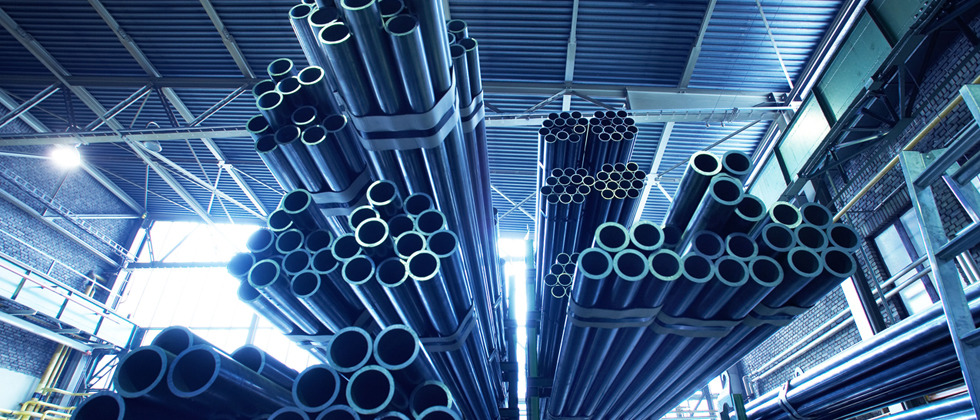
EU launches Chinese high-pressure steel cylinder anti-dumping probe
The EU has initiated an anti-dumping proceeding concerning imports of high-pressure seamless steel cylinders from China, Kallanish notes.
The complaint was lodged on 24 October by five companies representing the EU high-pressure seamless steel cylinders industry, including Cylinders Holding, Dalmine, Eurocylinder Systems (ECS), Faber Industrie, and Worthington Cylinders.
The product subject to the investigation is high-pressure seamless cylinders for compressed or liquefied gas, made of steel, of all diameters and volume capacities, whether or not threaded, regardless of internal coating or plating, external finishing, or shape. This includes cylinders with or without a gas bladder inserted and those fitted with a valve, neck ring, foot ring, or piping, whether or not fastened together to form a bundle.
Non-refillable cylinders with capacities up to and including 120 ml, covered by European standard EN 16509:2014 and/or assigned UN-number 2037 by the United Nations Committee of Experts on the Transport of Dangerous Goods, are excluded from the product scope.
The product is currently classified under CN codes ex 7311 00 11, ex 7311 00 13, ex 7311 00 19, and ex 7311 00 30 (TARIC codes 7311 00 11 15, 7311 00 11 80, 7311 00 13 15, 7311 00 13 80, 7311 00 19 15, 7311 00 19 80, 7311 00 30 15, and 7311 00 30 80).
According to evidence cited in the complaint, steel billet (accounting for 32% of the product’s production cost), plate (33%), and seamless tubes (34%) are subject to the removal of VAT rebates on exports, potentially leading to prices significantly below those in international markets.
The investigation of dumping and injury will cover the period from 1 October 2023 to 30 September 2024. The examination of trends relevant for assessing injury will span the period from 1 January 2021 to the end of the investigation period.
Elina Virchenko UAE

US finalises AD dumping order on Belgian plate
The US Department of Commerce finds that Industeel Belgium sold carbon and alloy cut-to-length (CTL) plate in the US at less than normal market value, Kallanish learns from the Federal Register.
Commerce sets the weighted average dumping margin for Industeel sales at 2.52% for the CTL plate it sold under market value during the period of review, May 2022 through April 2023.
The subject goods are usually classified under the Harmonized Tariff Schedule of the US (HTSUS) classification numbers 7208.40.3030, 7208.40.3060, 7208.51.0030, 7208.51.0045, 7208.51.0060, 7208.52.0000, 7211.13.0000, 7211.14.0030, 7211.14.0045, 7225.40.1110, 7225.40.1180, 7225.40.3005, 7225.40.3050, 7226.20.0000, 7226.91.5000, 7208.40.6060, 7208.53.0000, 7208.90.0000, 7210.70.3000, 7210.90.9000, 7211.19.1500, 7211.19.2000, 7211.19.4500, 7211.19.6000, 7211.19.7590, 7211.90.0000, 7212.40.1000, 7212.40.5000, 7212.50.0000, 7214.10.0000, 7214.30.0010, 7214.30.0080, 7214.91.0015, 7214.91.0060, 7214.91.0090, 7225.11.0000, 7225.19.0000, 7225.40.5110, 7225.40.5130, 7225.40.5160, 7225.40.7000, 7225.99.0010, 7225.99.0090, 7226.11.1000, 7226.11.9060, 7226.19.1000, 7226.19.9000, 7226.91.0500, 7226.91.1530, 7226.91.1560, 7226.91.2530, 7226.91.2560, 7226.91.7000, 7226.91.8000 and 7226.99.0180.
Kristen DiLandro USA

HRC prices stabilize in Europe ahead of festive period; market digests news about safeguards review
Although, news about safeguards review sparked hopes for price recovery in longer run.
On Tuesday, the European Commission have started another review of existing steel safeguards measures, only a few months after the previous review came into force.
Market participants in Europe suggested that the review might involve a reduction in quarterly HRC quota allowances and the introduction of new individual quotas for certain origins.
Sources suggested that, in the mid-run, it might support a rebound in European prices.
“We are heading into [an] era of global trader wars and growing protectionism. Looks like reliance on domestic mills will only increase in 2025,” a buyer in Italy said.
“The first quarter of 2025 might be a bit early for flat steel prices rebound, but later in the year we will see better prices, in view of the reduced imports and reduced availability,” a buyer in the Benelux region said.
In Northern Europe, suppliers closed January order books, but deal prices have been lagging sometimes way behind target offer prices, sources told Fastmarkets.
Notably, in the middle of December, trading has picked up slightly on limited restocking. This was not a result of improved demand or an economic upturn, but rather due to expectations of longer lead times at some suppliers, sources said.
“Some suppliers [are] undertaking longer-than-usual holiday stoppages because of the poor market conditions,” a German buyer said.
Transactions for HRC with lead times in January-February were reported at €550-570 ($578-599) per tonne ex-works in Northern Europe, depending on the supplier and lead times.
This was in contracts with official offers voiced at €580-600 per tonne ex-works.
“The market sentiment is downbeat, especially in Germany, where many companies are shrinking down ops and announcing staff lay-offs,” a second source in Germany said. “On top of that, there was the vote of no confidence in ‘Bundestag’ on December 16, leaving Germany without [an] effective government. A new elected government can’t be in power until around April 2025, at best. Such long waiting time is poison for any investor who needs security for his planned projects,” they added.
Fastmarkets calculated its daily steel hot-rolled coil index domestic, exw Northern Europe at €561.13 per tonne on Tuesday, down by €0.75 per tonne from €561.88 per tonne on Monday December 16.
The index was down by €0.30 per tonne week on week and by €1.37 per tonne month on month.
Several sources reported some closures of half-year contracts for the first half of 2025 with a discount of €80 per tonne versus the second half of 2024, sources told Fastmarkets.
Some contracts were heard done at €650-670 per tonne compared with €730-750 per tonne from the second half of 2024, sources told Fastmarkets.
“Mills can be satisfied with such results. Initially, automakers were asking for more substantial discount of €100-150 per tonne,” a second buyer said.
For the full-year contracts, one source reported a discount of €80-90 per tonne versus full year 20024 contracts.
“We achieved €80-90 per tonne discounts on full-year 2025 contracts,” an original equipment manufacturer in automotive industry told Fastmarkets.
In Southern Europe, Fastmarkets calculated its daily steel hot-rolled coil index domestic, exw Italy at €560.00 per tonne on Tuesday, down by €1.25 per tonne from €561.25 per tonne a day earlier.
However, the Italian index was up by €1.00 per tonne week on week and by €4.00 per tonne month on month.
Italian mills have also closed January order books, with deals reported at €550-560 per tonne ex-works, depending on the supplier.
Local integrated mills were offering HRC for delivery in the first quarter of 2025 at €580-620 per tonne delivered, which would net back to €570-610 per tonne ex-works.
The Italian market was also slowing down for the holidays, with most participants taking leave from December 23 and returning after January 6.
The market for import coil was quiet in the recent months due to numerous trade restrictions in place, long lead times and uncompetitive prices.
Offers of imported coil were limited on Tuesday
Turkey was heard offering HRC to Italy at $590 per tonne CFR, including the anti-dumping duty.
South Korea-origin coil was on offer to Italy at €580 per tonne CFR, industry sources told Fastmarkets.
Earlier this week, a transaction for Ukrainian HRC to Italy was heard at €530 per tonne CFR.
Buyers estimated workable levels for imports at no higher than €520-540 per tonne CFR, sources told Fastmarkets.

European Commission bows to industry pressure, starts steel safeguards review; tougher restrictions likely
A request to initiate the review was submitted by 13 EU member states on November 29.
“The request contains evidence of a change of circumstances since the last review of the measures. In particular, the request contains information regarding the contraction in European Union demand for steel, resulting in widening gaps with the current level of duty-free quota volumes,” the notice said. “Moreover, [the surge in] China’s steel exports to major regions has pushed exports from other markets to the EU. According to the request, this calls for a reassessment of the allocation and management of the tariff-rate quotas.”
The review process will be accelerated, the Commission said, and is expected conclude by March 31, 2025, with any adjustments to the current measures expected to come into force the following month.
Industry concerns include the allocation and management of tariff-rate quotas; the crowding out of traditional trade flows; getting an updated list of developing WTO member countries excluded from the scope of the measures based on their most recent level of imports for 2024; the level of annual liberalisation of the quotas; and any other changing circumstances that could require an adjustment to the level or allocation of tariff-rate quotas.
“In any case, with all the trade measures in place we can expect increased reliance on domestically produced steel in the EU,” a distributor in the Benelux region told Fastmarkets.
Wider market
European steel safeguard measures have been in place since July 2018.
The latest review of the safeguard measures only came into force on July 1, 2024, but has already had a substantial effect on the market due to a proposed 15% cap per country over the tariff rate quota (TRQ) volume initially available in each quarter for HRC and wire rod in particular.
In addition, in August 2024 the Commission launched an anti-dumping probe into HRC imports from Egypt, India, Japan and Vietnam.

Since then, market participants have noticed that Asian suppliers have become less active and said that “importing steel has become like a gambling” now.
“These trade barriers create additional uncertainty which is not encouraging demand [for imported steel], so we can expect more demand for EU-made steel and it’s safer [to book European steel],” a trading source said.
“It’s an issue for import steel buyers in Europe that they don’t know the potential extra costs they might be facing by the time [any steel arrives],” a second trader said.
In January-September 2024, carbon steel imports to the EU amounted to 20 million tonnes. For the whole of 2023, steel imports were 24.8 million tonnes.

Sources said that imports account for up to 30% of EU steel consumption.
Global steel overcapacity, particularly in regions such as China and the US – which benefit from more favorable production conditions- was undermining the viability of the EU steel sector, producer source told Fastmarkets.
“China is massively exporting steel globally at dumped prices, which is, in turn, severely depressing prices worldwide. On top of this, these excessive exports result in trade flow diversions to the EU market,” a producer in northern Europe said.
World crude steelmaking capacity in 2023 was estimated at 2.439 billion tonnes per year, exceeding production by 552 million tpy, according to the Organisation for Economic Co-operation and Development (OECD).
In 2023, steel output among the EU’s 27 member states fell to 126.30 million tonnes, down from 136.30 million tonnes in 2022 and down from 152.60 million tonnes in 2021, according to data from the World Steel Association.