


European heavy plate prices slip further amid slow spot activity, mill pressure
European heavy plate prices edged down again in the week to June 13, as mills grew increasingly flexible to fill July and early August production slots amid subdued spot demand.
The downtrend persisted despite a lack of meaningful competition from imports, which largely remained unworkable at current levels.
Domestic tradable values in Italy were widely reported at Eur600-620/mt ex-works, with distributors seeing Eur620-650/mt delivered depending on location and specification. Market participants pointed to weak demand and buyer hesitation, as most waited for clearer signs of a price floor before committing to new volumes.
“We are in the lowest phase of the market now — buyers use import prices as a reference but hesitate to act domestically, waiting for the bottom,” a mill source said.
Import offers into Italy were heard around Eur590-600/mt CIF from Asia for S275 material, but these levels failed to generate fresh interest as local prices were already close.
“Imports aren’t attractive enough to disrupt, and with freight and quota uncertainties, people prefer to stick with domestic options when price gaps are minimal,” a trader noted.
On the slab side, plate-quality slab offers into Italy were seen at $490-$500/mt CIF, mainly from China, India, and Russia. Slabs for coil production were reportedly available as low as $470/mt CIF ex-Indonesia, though buyers highlighted that price differences reflected variations in slab dimensions and end use.
Market participants said the psychological support level for plate pricing was now around Eur600/mt, with mills focused on sustaining throughput rather than holding firm on prices.
Platts assessed heavy plate in South Europe at Eur615/mt ex-works Italy, down Eur5 on the week, and in Northern Europe at Eur680/mt ex-works Ruhr, stable on the week.
Platts assessed slab at $495/mt CIF Italy, stable on the week. Platts is part of S&P Global Commodity Insights.


Voestalpine operates new pickling line from Andritz
Andritz has completed the supply of a continuous pickling line, acid regeneration plant, acid purification plant, and silicon removal systems to voestalpine’s site in Linz, Austria.
These plants have been integrated into voestalpine’s cold rolling mill #3 in Linz, Kallanish learns from Andritz. The plant supplier’s equipment enables voestalpine to perform pickling and cold rolling in a combined plant. Andritz supplied what it says is the world’s most modern acid regeneration plant, complying with the highest environmental standards and enabling flexible production of high-purity iron oxide.
The continuous pickling line is designed to process advanced steel grades and special materials for e-mobility. It has a capacity of about 1.8 million tonnes/year and operates with hydrochloric acid, which is recycled in the acid regeneration plant. Andritz underlines a recovery rate of almost 100%, thus making a substantial contribution to environmental protection.
“The new installation enables us to increase the production quality of high strength and ultra-high strength steel strip,” says Walter Schickmaier, business unit manager at voestalpine. The products will target the automotive, household appliance and construction industries, as well as electrical steel for e-mobility.
Christian Koehl Germany

Low Italian, Spanish pricing concerns European longs mills
Italian merchant bar and beam prices remain largely stable, despite a broader market downturn affecting wire rod, rebar, mesh, and all flat products. The recent upward momentum in scrap prices within the country also appears to be waning, with indications of a potential decline ahead.
The current trend, coupled with the weakness observed in Turkish scrap and steel markets, is raising concerns among European long steel producers, who are closely monitoring developments in southern Europe.
Several mill and buy-side sources tell Kallanish that Spain is experiencing a comparable downturn, with uncertainty prevailing in the market. In northern Europe, three sources indicate customers are firmly rejecting the elevated prices currently enforced in France, Germany, Austria and other countries for long products, and are pushing for discounts in upcoming contracts.
A significant buyer in France says he will refrain from acquiring any material unless he secures a price reduction that aligns with the current downturn in downstream demand. Two buyers in France and Austria note they are adopting a wait-and-see approach, while German mills are striving to maintain their elevated pricing levels, beginning to lose orders.
Merchant bar demand in Italy continues to exhibit significant weakness, with a pessimistic forecast provided for the coming weeks. Producers are contemplating an increase in quotes to mitigate the ongoing decline; however, there is a palpable concern regarding the potential loss of orders.
Domestic merchant bar prices are currently under pressure due to import offers from Turkey and Spain at considerably lower rates than those from Italy. Domestic merchant bar is at approximately €650-670/tonne ($742-765) ex-works, inclusive of size extras.
The first category of beams is stable within the range of €780-790/t, inclusive of delivery costs. Lower values are available as Spanish material is being offered at a €40/t discount, and there is a significant rise in competition and supply within the country, with more producers focusing on selling beams.
Meanwhile, Italian rebar is also on a downward trend, with prices descending every week. Values have now reached €250/t base ex-works. Producers are selling at €510-520/t ex-works including €260-270/t size extras.
Natalia Capra France
EU reintroduces country-specific sections safeguard quotas
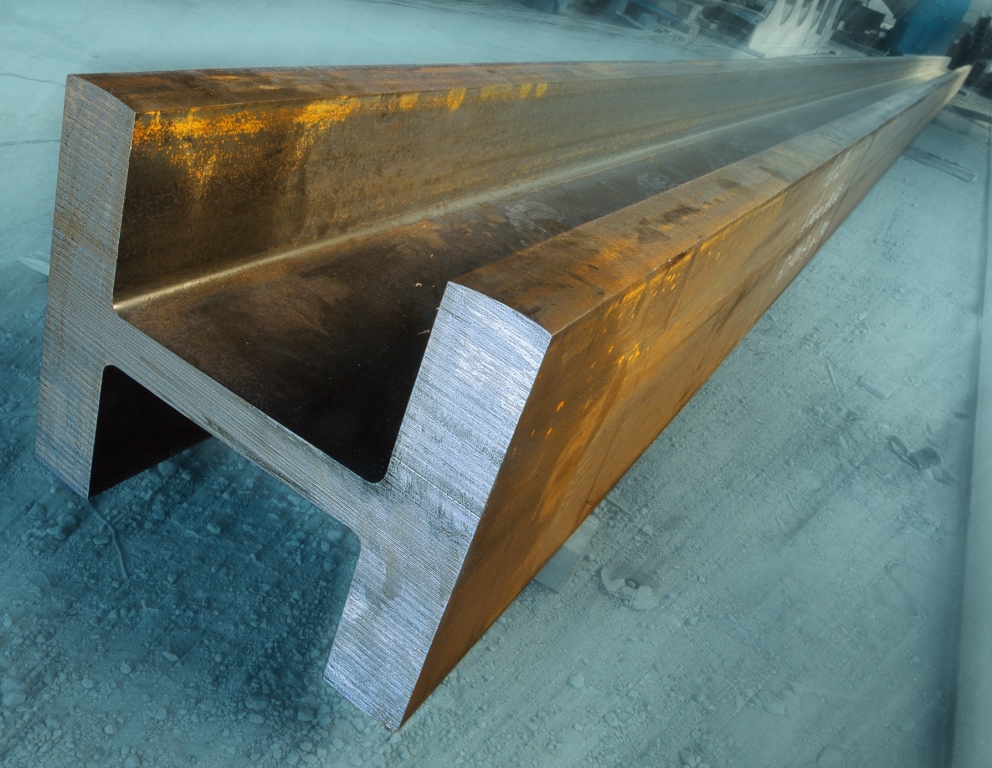
The European Commission has removed, effective 1 July, the 15% cap on the category 17 angles, shapes and sections EU safeguard quota. It will also re-introduce country-specific quotas for the UK, Türkiye and Korea, and reinstate the residual quota without a cap, Kallanish notes.
The 15% cap was introduced recently because of undue crowding out of certain traditional suppliers. However, that country-cap is affecting the traditional trade flows of certain trading partners, restricting their access to duty-free volumes to levels below their historical trade levels, the Commission notes.
As part of the upcoming change, the country-specific quota holders will not have access to the residual quota during the last quarter of a safeguard year.
The measure applies to HS codes 7216 31 10, 7216 31 90, 7216 32 11, 7216 32 19, 7216 32 91, 7216 32 99, 7216 33 10 and 7216 33 90. Ukraine will have a quarterly quota exceeding 31,600t, the UK 27,500t, Türkiye 22,800t and Korea 5,000t, with the residual quota at 12,555t.
The duration of the measure remains until 30 June 2026 and the rate of liberalisation remains 0.1% yearly.
Consultations on the change will take place, either in person in Brussels or in a virtual setting, from 12 June until 19 June.
Adam Smith Poland

Uncertainty, low margins downstream compromise French steel prices
French steel prices are experiencing a slight decline, particularly for coil derivatives and certain long products. This decrease is primarily attributed to weak downstream consumption and market uncertainty, which is raising concerns, especially for some coil derivatives like sheets and tubes, buyers tell Kallanish.
Market participants anticipate prices will remain weak, particularly for longs, due to competitive pressure from Italian and Spanish producers who are offering at lower prices than domestic products. Profitability continues to be a critical concern and the primary factor driving buyers to seek discounts.
A major buyer indicates that while volumes are meeting expectations, low profitability is compelling numerous firms to put pressure on producers to secure price reductions.
The downstream sector, encompassing construction firms and distributors, is focusing simply on achieving breakeven each quarter, with little expectation for a more positive outcome in the near term.
A distributor remarks: “Companies with strong financial foundations will endure, while others are likely to face big challenges.” He notes that if the downstream sector experiences financial difficulties, it will create a ripple effect upstream.
May saw a downturn in sales and June appears to be subdued, with numerous buyers adopting a wait-and-see approach. A source from a distribution network indicates there is significant pressure to cut costs due to low margins. “We will continue to put pressure on producers to reduce prices,” he comments.
Domestic sections are stable, whereas rebar, mesh, and merchant bar are experiencing a slight decline of approximately €10-20/tonne ($11-22) on average, compared to the peak observed in early May. This trend is influenced by competitive import offers from within Europe.
First category beams are now at €770/t delivered, while domestic merchant bar prices in France are observed at €230-240/t base delivered, with effective prices, inclusive of size extras, at €650-660/t delivered. Domestic rebar is hovering at €630-640/t delivered on average, sources suggest.
Natalia Capra France

SSAB, Danieli sign contract for new Luleå mini-mill
Swedish steelmaker SSAB and Italian equipment supplier Danieli have signed a contract for the supply of equipment for SSAB’s new mini-mill in Luleå, the companies said on 10 June.
This contract followed an Early Service Agreement (ESA) signed in July 2024.
The new Luleå mill will consist of two electric arc furnaces (EAFs) with a total capacity of 2.5 mt per year, secondary metallurgy, a caster and direct strip rolling mill, and a cold rolling complex.
The mini-mill will produce hot-rolled strip in thicknesses ranging from 1.3 mm to 25.4 mm.
When completed, SSAB will decommission the existing blast furnace-based production system in Luleå. This will reduce Sweden’s CO2 emissions by 7% in addition to the 3% from the Oxelösund mill conversion, SSAB said.
In the second quarter, enquiries for green steel flat products have increased, but actual transactions remained limited. Buyers are apparently also less interested in mass-balanced material, preferring embedded carbon reductions.
McCloskey’s reduced carbon marker, calculated in reference to all green HRC premium indications reported in the week to publication, stood at €60.46/t on 6 June.
Maria Tanatar

Thyssenkrupp launches new continuous casting line
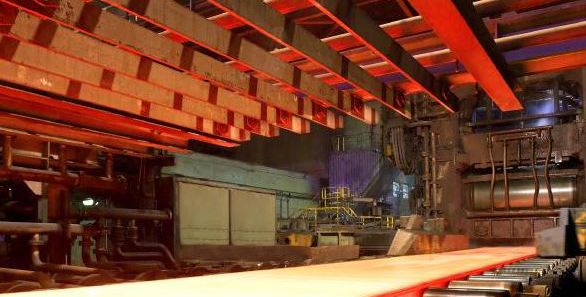
Germany’s Thyssenkrupp said it has started trial production of steel slabs at its new continuous casting line No. 4 at its Bruckhausen plant in Duisburg.
Further trial production runs will take place in the coming weeks, the steelmaker said.
The modernization also includes a new fully automated slab storage yard and completely modernized hot strip mill 4 with a new preliminary line and two new walking beam furnaces.
“The aim is to further expand production of high-quality steel grades with the highest standards of strength, dimensional accuracy, and surface quality – particularly for applications in electric mobility, lightweight construction, and the energy sector,” Thyssenkrupp said.
The Bruckhausen upgrade is one of the largest modernization projects in Thyssenkrupp’s history and the central investment package in its 20-30 Strategy. The aim of the project is to make the Duisburg production site more efficient and flexible, and focus on products with higher added value.
Maria Tanatar
Piombino steel plant relaunch plans unveiled
Steel company Metinvest Adria presented plans for the relaunch of steel production at Piombino, Italy, at a meeting on 10 June attended by Italian authorities including the Ministry of Enterprises and Made in Italy (MIMIT) and Italian trade unions.
An agreement will be formalized after approval by the trade unions.
Following the meeting, the unions called off a strike that had been planned for 12 June, Italian trade unions FIUM-CGL and UILM said.
In February this year, Ukrainian steelmaker Metinvest and equipment manufacturer and engineering firm Danieli signed a shareholder agreement governing their partnership in a new steel plant in Piombino, Italy. The project is governed through a joint partnership Metinvest Adria.
The Piombino steel plant, which is owned by JSW Steel, produces long steel products, including rails and operates at low capacity. Last year, Metinvest Adria finalised an agreement with JSW Steel Italia to secure access to industrial areas.
In 2024, Metinvest and MIMIT signed a declaration to promote the industrial revitalisation of Piombino through a large green steel production plant.
The new project of Metinvest Adria Piombino is anticipated to have capacity of 2.7 mt/y via electric-arc furnace production, with recycled feedstock including scrap, pig iron and direct reduced iron. The plant will partially source these raw materials from Metinvest’s operations in Ukraine. Production at the new plant is expected to start in 2027, according to McCloskey’s European Green Steel Profile.
Maria Tanatar

ArcelorMittal Poland calls for decarbonisation support
ArcelorMittal Poland has called for support in its decarbonisation efforts as it says mills cannot bear the additional costs in challenging market conditions, the company told McCloskey on 13 June.
Decarbonisation requires installation of new equipment and implementation of new technologies to meet the EU’s CO2 emission targets. And the transition needs to be done under strain of a challenging market, which already has some additional costs that non-EU steelmakers do not face, including the EU Emission Trading System (ETS). In addition, energy costs in Europe are the highest in the world, ArcelorMittal said.
The EU aims to achieve a 55% reduction in emissions by 2030, and to become carbon-neutral by 2050.
The EU market has been under pressure from the rapid rise of competitive steel imports: “Imports from outside the EU, where production costs are significantly lower, already satisfy almost 30% of apparent steel consumption in Europe,” the company said.
The statement has been confirmed by market participants who cited low import offers for hot-rolled coil as one of the driving forces behind the domestic price drop.
“Against this backdrop, no steel producer can bear the costs of the transition to low carbon-emissions steelmaking alone,” ArcelorMittal Poland said.
The steelmaker also calls for a reduction of energy costs and effective mechanism to prevent carbon leakage.
“We are glad that the European Commission has taken into account the majority of the steel industry’s requests in the Steel and Metals Action Plan. Now, it will be crucial to implement these measures quickly,” the producer said.
The European Commission unveiled its official European Steel and Metals Action Plan on 19 March.
ArcelorMittal Poland has spent over 1 billion zlotys (around $270 million) on projects aimed at reducing its environmental impact and increasing energy efficiency, including blast furnace overhaul. For additional details on steel decarbonisation initiatives in Europe, please see McCloskey’s European Green Steel Profile.
ArcelorMittal’s Dąbrowa Górnicza plant is one of several producers of 120-metre long rail used in high-speed rail.
Maria Tanatar

Tata UK operations risk full 50% US tariff rate
Tata Steel UK has warned that US President Trump’s 50% tariff on steel and aluminium could threaten its operations if a melt-and-poured condition is included under a UK-US trade agreement.
CEO Rajesh Nair urged the UK government to “secure a deal as soon as possible” in a statement 6 June, due to Tata’s continued reliance on imports to feed its supply chain.
“Tata Steel UK will need to import steel substrate until Electric Arc Furnace steelmaking is operational in Port Talbot from late 2027 onwards,” Nair said.
Blast furnace operations were terminated at the Port Talbot site in October last year, to facilitate a transition to less-carbon intensive electric-arc furnace production (EAF). The renovation was partly financed with £500m of public funding, scheduled for completion in late-2027.
In the meantime, Tata has predominantly resorted to importing steel melted in its associated operations in India and the Netherlands. US President Trump’s latest tariff offensives – namely the now-50% tariff rate on steel imports – threatens to undermine the competitiveness of Tata’s exports to the US if the company is not granted specific consideration in UK negotiations with Trump’s administration.
The UK government is looking to ensure the tariff rate falls to zero in finalizing details of the US-UK Economic Prosperity Deal (EPD), the general terms of which were signed 8 May.
The EPD states that “[t]he United Kingdom will work to promptly meet U.S. requirements on the security of the supply chains of steel and aluminum products intended for export to the United States and on the nature of ownership of relevant production facilities.”
If satisfied, the US will create a quota for UK steel exports at most favoured nation rates.
This indirectly refers to the UK government’s passing of emergency legislation to seize control of Chinese-owned British Steel earlier this year, motivated by fears of long-term damage to the UK’s sole active steelmaking assets in Scunthorpe if the furnaces were allowed to run out of raw materials and cease production.
Influenced by the deal, the UK was temporarily spared from the 50% rate – instead facing a reduced US steel tariff of 25% – but possible imposition of a melt-and-poured condition for future tariff-exemptions have raised concerns for Tata and their US export portfolio.
“[O]ur mills continue to transform imported steel coil and slab into high-value, specialist products which are not available from US producers and are therefore essential to our US customers,” said Nair. “It is therefore critical for our business that melted and poured in the UK is not a requirement to access the steel quotas in any future trade deal.”
Tata already has a carve-out from the UK’s own safeguard measures under product category 1B, structured to ensure Tata and other importers can continue to competitively service the UK’s downstream markets with imported hot-rolled coil.
Trump has stated that the tariff on the UK may be increased “on or after July 9,” contingent on whether the US “determines that the United Kingdom has complied with relevant aspects of EPD”.
Nair says that Tata “would be happy to provide the US Government with any needed assurances on the provenance and processing of the steel we supply.”