


Approval has been granted for SSAB’s new electric arc furnace facility in Luleå
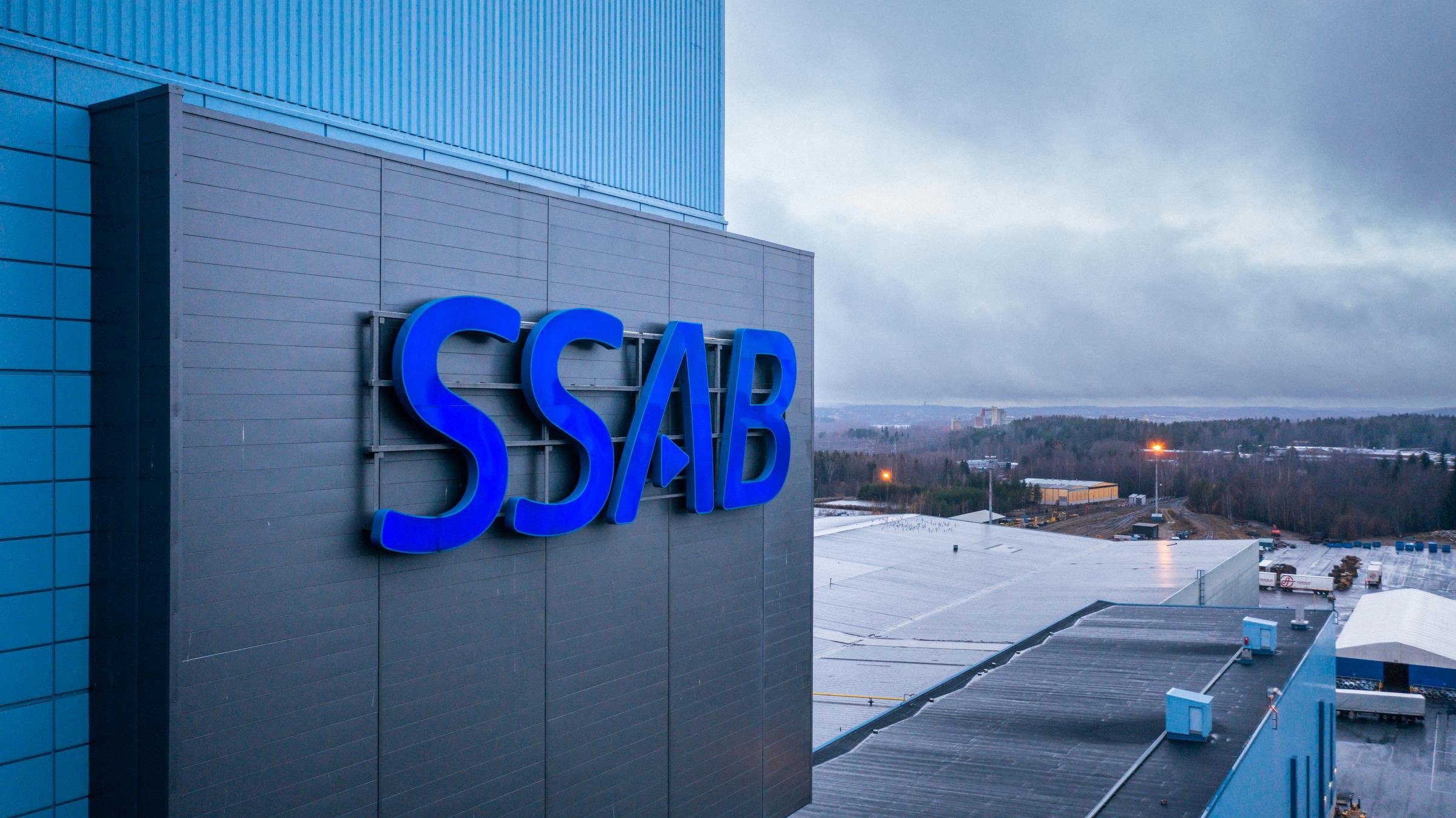
The Swedish Land and Environment Court of Appeal has issued its decision approving SSAB’s permit to build and operate a new steel plant in Luled. With this ruling, the legal uncertainties surrounding the construction of the electric arc furnace (EAF) facility-set to replace the company’s existing blast-furnace-based production site-have now been resolved.
In December 2024, SSAB received approval for the new facility from the Land and Environment Court at the Umeå District Court. The permit allowed the company to secure its long-term competitiveness and reduce carbon dioxide emissions from production by up to 90%. However, the decision was appealed, and the case was brought before the Land and Environment Court of Appeal.
The Court of Appeal reviewed the parties’ written submissions, issued its ruling, and upheld the original decision. This has cleared the way for SSAB to continue its work on the new facility without interruption, following the activation of part A of the permit in June. A formal groundbreaking ceremony was held in Luleå on 17 September, with Swedish Minister for Energy, Business and Industry Ebba Busch in attendance.
Carl Orrling, SSAB’s President, Chief Technology Officer and Head of the Transformation Office, welcomed the court’s decision, stating: “We are pleased that the Court of Appeal has addressed the unresolved issues relating to the permit for our new steel plant in Luleå. Eliminating this uncertainty provides clarity and stability for our transformation process. The new facility will offer a stronger cost position, a more attractive product range of premium steels, and greater flexibility to manage fluctuations in demand. Once we shut down the existing production, we will virtually eliminate carbon emissions from Luleå.”
In its ruling, the court also emphasized that the site is appropriate for the facility and that electric arc furnaces meet the criteria for “best available technology.” It further noted that emissions monitoring will not be left solely to the supervisory authority but will instead be regulated in detail under the permit. This framework defines not the method of monitoring, but the scope under which it is included in the permit.
Sara Arvidson, SSAB’s Head of Environment and Energy, said the decision gives the project additional momentum: “We are very pleased that the Court of Appeal has approved our permit and that the transformation project can proceed as planned. After commissioning, certain reviews will be carried out during a trial period. We will now continue our work to meet the specified conditions and ensure that the project is implemented responsibly.”

SSAB postpones Luleå mill amid power delays
SSAB has announced a 12-month delay to the start-up of its new steel mill in Luleå, Sweden. The facility, originally planned to go online by the end of 2028, is now expected to be operational by the end of 2029, Kallanish understands.
The postponement stems from delays in upgrading Sweden’s power transmission infrastructure. Vattenfall Eldistribution, which is tasked with connecting the new mill to the grid, reported that necessary grid reinforcements will not be completed on schedule. The main holdup is linked to modernisation work at the existing Svartbyn grid station, which needs to be completed before the new Hällmyran station—key to SSAB’s connection—can go live, according to SSAB.
According to Vattenfall, Svenska kraftnät, the national grid operator, is facing technical challenges and outage scheduling constraints that have extended the construction timeline for Svartbyn. As a result, the broader grid expansion plan has been pushed back, directly impacting the mill’s timeline.
Despite the delay, SSAB confirmed that the total planned investment of €4.5 billion ($5.17 billion) for the project remains unchanged. The company has begun discussions with Vattenfall Eldistribution and Svenska kraftnät to develop a revised, sustainable timeline for the project moving forward, the company underlines.
Once completed, the Luleå mill will replace SSAB’s existing blast furnace-based production with a cleaner, more energy-efficient steelmaking process, aligning with the company’s transition toward fossil-free steel.
Almost ten days ago, SSAB and Danieli signed a contract under which Danieli will supply a highly automated technology solution for the steelmaker’s new mini mill in Luleå. The new Luleå mini mill will have a capacity of 2.5 million tonnes/year of SSAB’s specialty products, and a cold rolling complex to serve the mobility segment with a broader offering of premium products. It will produce hot-rolled strip in thicknesses ranging from 1.3mm to 25.4mm, in widths of up to 2,100mm and coils of up to 40 tonnes (see Kallanish passim).
Burak Odabasi Turkey

SSAB, Danieli sign contract for new Luleå mini-mill
Swedish steelmaker SSAB and Italian equipment supplier Danieli have signed a contract for the supply of equipment for SSAB’s new mini-mill in Luleå, the companies said on 10 June.
This contract followed an Early Service Agreement (ESA) signed in July 2024.
The new Luleå mill will consist of two electric arc furnaces (EAFs) with a total capacity of 2.5 mt per year, secondary metallurgy, a caster and direct strip rolling mill, and a cold rolling complex.
The mini-mill will produce hot-rolled strip in thicknesses ranging from 1.3 mm to 25.4 mm.
When completed, SSAB will decommission the existing blast furnace-based production system in Luleå. This will reduce Sweden’s CO2 emissions by 7% in addition to the 3% from the Oxelösund mill conversion, SSAB said.
In the second quarter, enquiries for green steel flat products have increased, but actual transactions remained limited. Buyers are apparently also less interested in mass-balanced material, preferring embedded carbon reductions.
McCloskey’s reduced carbon marker, calculated in reference to all green HRC premium indications reported in the week to publication, stood at €60.46/t on 6 June.
Maria Tanatar

SSAB secures environmental permit for Lulea steelworks transformation
Nordic steelmaker SSAB received the necessary permit from the Land and Environmental Court in Umea, northern Sweden’s Vasterbotten County, to build and operate a mini-mill in Lulea, Norrbotten County, to replace the current blast furnace-based steel plant, it said in a Dec. 19 statement.
It said the permit enables a technology shift that would have positive effects on the environment and the climate and allow SSAB to meet the high demand for its steel products.
It further said construction preparations would now continue with detailed engineering and the building permit process. It added that once the new plant with electric arc furnaces, rolling mills, and further processing was running at full capacity, SSAB would decommission Lulea’s current blast furnace-based production system.
“This is a big day for SSAB and for the transformation to fossil-free steel production in Sweden. Now we can proceed with an investment that will result in reduced climate impact of national significance,” SSAB president and CEO Johnny Sjostrom said.
He added that the mill’s transformation would also create a more flexible and cost-effective production with a wider range of premium and special steel products with close to zero emissions and safeguard jobs in Lulea.
SSAB said the investment would result in a better cost position, higher efficiency, shorter lead times, and elimination of CO2 costs. The new mill would run on fossil-free electricity and be supplied with a mix of fossil-free sponge iron produced with its HYBRIT technology and recycled steel scrap.
Unlike traditional steelmaking, which relies on coking coal, SSAB’s HYBRIT process uses hydrogen, produced with renewable electricity, to produce sponge iron, which is then processed into steel. According to SSAB, the process emits water vapor instead of CO2 and largely eliminates CO2 emissions from the steelmaking process.
SSAB said the Lulea mill’s transformation would significantly reduce emissions to air and water, increase resource efficiency, and remove about 2.8 million mt/year of carbon dioxide emissions.
In total, SSAB’s transformation will enable a reduction of 10% in Sweden’s total CO2 emissions, of which 7% comes from Lulea and 3% from the transformation in Oxelosund, according to SSAB.
Platts, part of S&P Global Commodity Insights, assessed the daily Northwest Europe HRC carbon-accounted steel price at Eur615/mt ex-works Ruhr on Dec. 18, down 22% since the start of 2024.
Swedish SSAB chooses Danieli to build new Lulea mill
Swedish steelmaker SSAB has awarded Italian steel plant maker Danieli to build a new mill in Lulea, northern Sweden, the two companies said July 15.
The plant will have a capacity of 2.5 million mt/year and consist of two electric arc furnaces, a secondary metallurgy facility and a direct strip-rolling mill to produce SSAB’s specialty products, along with a cold rolling complex.
The new mill will be supplied with a mix of fossil-free sponge iron from the Hybrit demonstration plant in Gallivare and recycled scrap.
The overall selected configuration of Danieli technology will allow SSAB to produce a wide range of hot-rolled strip in coil-to-coil and semi-endless modes, resulting in a product portfolio expansion incorporating a fully electric tunnel furnace to ensure a minimum carbon footprint, the press release said.
The startup of the new mill is planned for the end of 2028, with full operating capacity one year later with environmental permits that are expected at the end of 2024.
When completed, SSAB will decommission the existing blast furnace-based production system in Lulea and this will reduce Sweden’s CO2 emissions by 7% in addition to the 3% from the other company’s mill conversion in Oxelosund.
Platts, part of S&P Global Commodity Insights, assessed Northwest European hot-rolled carbon-accounted coil stable on the day at Eur750/mt ($818/mt) ex-works Ruhr July 12.
Annalisa Villa