


EU to slash flat-rolled import volumes
The EU will slash quotas for imported flat-rolled products by 8.5mn t in its new post-safeguard mechanism, it said today.
Hot-rolled coil (HRC) imports will be capped at 5.2mn t, down by 3.6mn t from 2024 imports. All countries, including Ukraine, will be in scope of the new measure, meaning any volume above this level will incur a 50pc tariff, although this will still be calculated on a pro-rata basis at the start of a new quota period.
The quota for cold-rolled coil will be 1.5mn t/yr, down by 1.7mn t, while the hot-dip galvanised quota will be 2.85mn t, down by 1.8 mn t from 2024 imports. Quotas will be quarterly and there will be no rollover of unused volume.
The European Commission will detail country allocations in later implementing acts, it said. Commission sources told Argus those quotas would partly be negotiated with fellow WTO members.
“Interests of a candidate country facing an exceptional and immediate security situation, such as Ukraine, should also be reflected upon when deciding on the quota allocations, without undermining the effectiveness of the measure”, the commission said.
Eurofer said the measure is a “long-awaited proposal to forcefully defend the European steel sector”, hailing it as a “major leap forward”. The measure also includes a melt-and-pour clause, although initially it seems this will be an information exercise, and not prevent material melted in China being processed elsewhere and sold into the EU.
The commission said it wants to bring EU utilisation rates up to 80pc, from just 67pc at present.
UK Steel said the UK government must negotiate “preferential treatment” for its own mills, and tighten its own import quotas.
Futures prices on the CME Group’s north EU HRC contract rallied on the back of the news. February traded up to €640/t after the news of the quota cut filtered down, with January trading at €630/t.
The commission did not explicitly state when the measure will be imposed, but at present it is just a proposal for regulation that has to pass through the EU parliament and usual legal process.

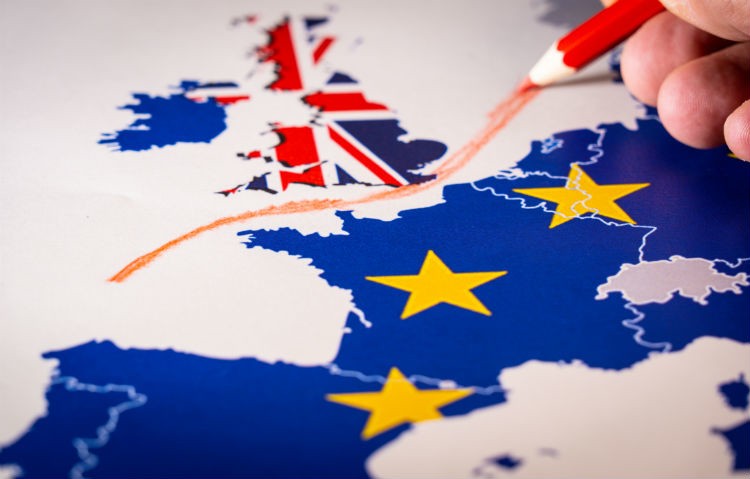
EU and UK prepare temporary CBAM exemption deal to protect cross-channel trade
The European Union and the United Kingdom are preparing to finalize a temporary Carbon Border Adjustment Mechanism (CBAM) exemption deal that would spare British exporters from paying the EU’s carbon border tax during 2026, according to the Guardian newspaper. Officials are targeting late spring of that year, the planned date for the next EU-UK summit, for formal signature of the agreement.
The EU’s CBAM is set to enter into force on January 1, 2026, covering carbon-intensive imports such as steel, glass and fertilizers. Its objective is to curb carbon leakage and ensure fair competition for EU producers.
The UK, meanwhile, plans to introduce its own carbon border tax in 2027, leaving a one-year regulatory gap that has raised concerns among businesses about unequal treatment and potential market distortions.
The planned exemption aims to temporarily shield British exporters from additional costs during the interim period until both carbon pricing systems are fully aligned. For sectors such as steel and manufacturing, which are deeply integrated with EU supply chains, the deal is expected to provide regulatory certainty and cost relief.
Industry representatives had warned that, without such an exemption, UK consumers could face higher prices, and the British market might see an influx of cheaper, carbon-intensive steel, particularly from China, redirected away from the EU.
The temporary CBAM deal is emerging in the context of a broader political rapprochement between London and Brussels. At the May 2025 EU-UK summit, Prime Minister Keir Starmer and European Commission President Ursula von der Leyen agreed to link the UK and EU emissions trading systems and signed a formal defense and security pact.
Business groups have broadly welcomed the CBAM exemption talks. Naomi Smith, CEO of Best for Britain, emphasized that divergence between EU and UK carbon pricing regimes could cost jobs and investment, making alignment a priority for both sides.


Assofermet calls for transitional measures under CBAM to protect manufacturing and steel sector
Following a recent meeting held with the Italian Ministry of Enterprises and Made in Italy (MIMIT), Assofermet, the association representing Italian companies in the trade, distribution and processing of steel and non-ferrous metals, has submitted to the relevant Italian ministries its latest proposals regarding the Carbon Border Adjustment Mechanism (CBAM), ahead of the upcoming amendments to EU Regulation 2023/956 scheduled by the European Commission for the fourth quarter of 2025.
As previously reported by SteelOrbis, the association had expressed concern over the potential impact of the CBAM on the steel and aluminum supply chain, particularly for small and medium-sized enterprises active in trade and processing. In its new document sent to the government, Assofermet calls for the introduction of transitional measures to safeguard importers and the downstream manufacturing industry, specifically with regard to the mandatory purchase of CBAM certificates, which will take effect on February 1, 2027.
Among its main requests, the association proposes a temporary exemption from the obligation for:
- imports of steel and aluminum cleared from January 1, 2026, before the publication of the definitive reference parameters (benchmarks and/or default values);
- imports cleared within five months following the publication of these parameters.
According to Assofermet, the current uncertainty caused by the absence of definitive benchmarks – expected to be published only in the course of 2026 – “forces importers to place orders blindly to prevent supply shortages and ensure continuity for their customers, with serious risks for the entire EU manufacturing sector.”
The association underlined that the proposed corrective measures do not affect the CBAM’s entry into force, but aim to ensure “a fair and sustainable implementation of the mechanism during its initial phase.” Assofermet also expressed its hope that the Italian government, through the involvement of the relevant ministries, “will act as a promoter in Europe of a realistic and pragmatic approach capable of protecting the environment, industry, and employment alike.”

WTO recommends EU bring measures on Indonesian stainless CR flats into conformity
The World Trade Organization (WTO) has released an addendum to its report in the dispute panel concerning the EU’s antidumping and countervailing duties on imports of stainless steel cold rolled flat products from Indonesia.
The WTO stated that the EU had acted inconsistently with some WTO rules in a dispute over its duties on the given products from Indonesia and recommended that the EU bring its measures into conformity with the Agreement on Subsidies and Countervailing Measures, General Agreement on Tariffs and Trade (GATT) 1994 and the Antidumping Agreement.
Indonesia requested dispute consultations in 2023, challenging the EU’s imposition of both countervailing and antidumping duties on stainless steel cold rolled flat products, arguing that the EU’s investigations and resulting measures violate WTO rules, including GATT 1994 and the Antidumping Agreement, as SteelOrbis previously reported.
The EU’s definitive antidumping duties on imports of stainless steel cold rolled flat products from Indonesia are at the range of 9.3-20.2 percent and its countervailing duties range at 0-21.4 percent.
The case is among a number of trade disputes between the EU and Indonesia, even as they finalized a free trade deal in September.
The addendum does not deliver final rulings on substantive issues. If the panel sides with Indonesia on key points, the EU may be required to adjust or withdraw parts of its duties.

Global steel trade measures tracker – October
September was a busy month for Trade Tracker, with wide-ranging developments to the trade protection frameworks of the world’s steel trading nations, as detailed in McCloskey’s October database.
The European Union (EU) was this month’s biggest mover, not only imposing definitive anti-dumping (AD) duties on hot-rolled steel, and initiating an AD investigation into cold-rolled coils/sheets, but also giving first signals on its intentions for the long-term replacement to its existing safeguard mechanism, as reported and detailed exclusively by McCloskey.
Egypt is extending its safeguard protections both up and downstream to new steel products, seeing current defenses on hot-rolled coil as insufficient in scope to shield its domestic industry.
The Americas also saw extensive developments, and Asia was well-represented in this month’s updates, though primarily as a target rather than an instigator of steel trade protection measures.
Europe – a new steel trade landscape
McCloskey had early sight of the European Commission’s draft proposals for its long-awaited replacement to the EU’s steel protection framework last week, exclusively detailing the unprecedented changes the Commission’s proposals would bring for Europe’s steel trade landscape.
The EU’s current protections take the form of a safeguard, imposed unilaterally in response to US President Trump’s original section 232 steel tariffs during his first term in 2018. Safeguard measures impose additional tariffs to a country’s base tariff rate on steel products, where emergency criteria defining injury or a threat of injury to domestic industries from an increase in international imports, are met.
Under World Trade Organization (WTO) rules, safeguard measures have a maximum term of eight years – the deadline for which falls at the end of June next year – meaning the EU has two options if it wishes to continue to shield its steel industry: either allow the safeguard to lapse, and leave its steel market unprotected beyond existing AD or countervailing duty (CVD) protections, or work within the WTO framework to permanently increase its base steel tariff rate from duty-free or minimal levels (unless imported in excess of the current safeguard quotas, at which point a 25% additional duty currently applies), to the Commission’s proposed 50%.
To increase the EU’s base steel tariff – its tariff concessions – in this way, the Commission’s draft proposals indicate that the EU intends to seek acceptance of a higher steel duty from affected WTO members through formal negotiations, the process for which is dictated by the WTO’s General Agreement on Tariffs and Trade (GATT) Article XXVIII.
The Commission’s draft proposal seeks authority from the European Council to open negotiations and consultations with “those WTO Members that have negotiating rights” – defined by the GATT as countries with a principal supplying interest; a substantial interest; or those members who were party to negotiations setting the EU’s original steel tariff rates. This group is obviously extensive due to the wide jurisdiction of the global steel markets, and includes basically any country that is exporting, or has exported steel to the EU.
To increase steel tariff concessions, compensation would generally be required to affected WTO members, and the Commission has signaled a willingness in its draft document to reduce tariff concessions in other markets in order to secure agreement to higher steel duties. This means that the EU’s replacement steel protection framework could affect all markets and commodity trade flows, not just those in the steel or wider metals sector. It also suggests that speculation within the European market that replacement steel protections could come as early as January, are now pretty unrealistic given the amount of legwork required in assessing, conducting, settling, and implementing the results of these WTO negotiations.
The details of the draft proposals are laid out extensively in McCloskey’s primer, but would generally reduce steel import quota volumes by around 45% and see out-of-quota duties doubled to 50%, and introduce a ‘melted and poured’ mechanism to dictate how import volumes are allocated to the as-of-yet undetailed country-specific quotas. The total quota volume to be available – with divisions by product category and country-specific quotas as yet unavailable – was calculated on the basis of a 2013 import share of 13%, cited by the Commission to be 18,345,922 tons.
The Commission has indicated that the formal proposal will be released 7 October, and as with previous draft proposals like the Steel and Metals Action Plan, it could differ significantly from the draft.
While taking care not to speculate too widely, the draft proposal also shares common language – particularly surrounding steel overcapacity agreements – with the US-EU framework trade agreement from June, and August’s associated joint statement, which suggests these WTO negotiations could be the EU’s intended route to secure duty-free steel quotas vis-a-vis the US. China has also announced its intentions to renounce its developing country status as relates to the WTO – very relevant to potential article XXVIII negotiations – and has signaled commitments to reducing and modernising its steel capacities as per its September steel work plan.
Beyond the Commission’s draft proposals, the EU also imposed definitive anti-dumping duties on hot-rolled coil/sheets from Egypt, Japan, Thailand and Vietnam in September at rates of 6.9-30%; and initiated an investigation into cold-rolled coils and sheets from India, Japan, Turkey, Vietnam and Taiwan, China.
Trade restrictions were also introduced against Iran’s nuclear and petrochemical supply chains, but contrary to some media reports, this appears to be limited to export and brokering/financing restrictions on Iranian consumption of relevant goods, and does not appear to entail a ban on imports of Iranian semi-finished products into the EU.
Egypt – new safeguards
Egypt looked to the safeguard route in protecting its steel industry in early-to-mid September, investigating semi-finished and downstream coil imports – namely steel billet, cold-rolled and hot-dipped galvanized coil, as well as pre-painted flat steels. This means that all major coil imports into Egypt are restricted by safeguards, with an earlier case into hot-rolled coil opened in late-April.
Egyptian authorities received evidence that a sharp rise in relevant imports was negatively impacting its domestic industry, linked to a decline in sales volumes, reduced rates of capacity utilization, and a decline in market share amongst domestic producers.
Targeted coil imports were hit with duties from 4.94-12.16%, with duties of 16.20% suggested on billet imports at a minimum effective duty of EGP4,613/t (around $97/t). The provisional safeguard measure will be effective for 200 days from 14 September.
Americas – additional AD restrictions
September also saw extensive developments in AD protections across Brazil, Canada, Mexico, and the US.
Brazil imposed static AD duties targeting flat rolled carbon steel from Asian exporters, as well as Chinese-origin stainless cold-rolled steel and seamless pipes and tubes from Ukraine. Brazil also introduced provisional tariff-quotas for beam products as defined by the Mercosur framework.
Canada introduced a range of provisional AD measures against European and Asian countries on carbon and alloy steel wire, and definitive duties on Turkish and Vietnamese corrosion-resistant steel. An administrative review was also opened into welded tubes and pipes from Pakistan, the Philippines, Turkey, and Vietnam.
Mexico eliminated its AD duties on Chinese wind towers, as no domestic producers registered interest in preserving the protections; and engaged a review of its AD measures on Ukrainian bars and rods, Romanian, Russian, and Ukrainian carbon steel plate products; and Chinese screws, nuts and bolts. Investigations were also started into seamless pipes and tubes from China, and Taiwan, China; and wire ropes from Malaysia and Vietnam. Definitive duties were also brought in to protect Brazil’s stainless hot-rolled steel from dumping ex-China.
In the US, AD measures came into force on carbon steel plate exports from Belgium, Italy and South Korea, with a CVD also brought in against Posco’s South Korean plate exports in lieu of AD duty. Imports of hot-rolled coils/sheets were also hit by definitive AD and CVD duties, targeting China, India, Indonesia, the Netherlands, Thailand, Ukraine, and Taiwan, China. AD/CVD measures were also brought in on oil country tubular goods (OCTG); seamless pipes and tubes; stainless steel welded pipe; rebar; and welded tubes and pipes from a variety of exporters, predominantly focused across Europe and Asia, as detailed in McCloskey’s accompanying October steel protection database.
Asia and Oceania – primarily a target, though some AD developments
Asian countries were primarily a target, rather than an instigator of trade protection measures in September, though India did launch an investigation into the alleged dumping of stainless cold-rolled products from China, Indonesia, and Vietnam.
South Korea also introduced provisional AD measures on hot-rolled coils/sheets against China and Japan.
Thailand proceeded an investigation into Chinese H-beam products, and introduced definitive AD duties on cold-rolled coils/sheets targeting China, Vietnam, and Taiwan, China.
Vietnam is also said to be mulling a circumvention probe into wide-width hot-rolled coil (HRC) imports from China, as China’s largest steel export destination.
Database Updates October, summary table
| Product | Total Actions | Key Complainants | Key Origins |
|---|---|---|---|
| Hot Rolled Coils/Sheets | 18 | EU, Egypt, Indonesia, Taiwan, China, US | China, Egypt, India, Indonesia, Japan, Thailand, Ukraine, Vietnam, All countries |
| Carbon Steel Plate | 13 | Brazil, Canada, Mexico, Turkey, US | China, Italy, Romania, Russia, South Korea, Ukraine |
| Welded Tubes & Pipes | 12 | Canada, US | Mexico, Pakistan, Philippines, South Korea, Turkey, Vietnam |
| Carbon and Alloy Steel Wire | 10 | Canada | China, India, Italy, Malaysia, Portugal, Spain, Thailand, Turkey, Vietnam, Taiwan, China |
| Cold Rolled Coils/Sheets | 9 | EU, Egypt, Thailand | China, India, Japan, Turkey, Vietnam, Taiwan, China, all countries |
| Steel Reinforcing Bar | 8 | Australia, US | Indonesia, Malaysia, Mexico, Thailand, Turkey, Vietnam |
| Stainless Steel Cold-Rolled Products |
Benjamin Steven Journalist, Steel
Maria Tanatar Associate Director, Steel and Green Steel


Steel Mont proposes Liberty Galati revival
A European consortium led by trading company Steel Mont has proposed a toll processing agreement and potential acquisition of Romania’s currently idled Liberty Galati plant, Steel Mont said on 3 October.
The proposal, submitted to the company’s administrators on 23 September, outlines plans for a plate operation restart. Steel Mont stressed that the restart of the steelworks is critical for Romania’s steel supply independence, particularly for such sectors as defence, shipbuilding, energy and infrastructure.
The EU’s access to imports is expected to decrease significantly next year due to stricter quotas and higher duties proposed in replacement of existing safeguard measures as well as due to the introduction of the carbon border adjustment mechanism (CBAM) from 2026, market sources said.
The proposal includes raw material supply, tolling operations, and offtake of finished products, as well as the option for a potential future acquisition of the Galați steel plant.
“The consortium brings together international expertise, raw material security, and financial strength, with SteelMont at its core,” the company’s statement said.
Romanian authorities decided in mid-September to establish an inter-ministerial committee to preserve state interests in the Liberty Galati steelworks and to prevent bankruptcy.
Liberty Galati has remained idled since a failed restart attempt in June this year.
The steelworks’ capacity is 3 mt of steel per year.
Maria Tanatar Associate Director, Steel and Green Steel
European stainless steel prices steady amid uncertainty over safeguard review, CBAM
Market participants reported limited activity, with mills struggling to push through price increases.
“At the moment, we’re not seeing any notable changes, neither in pricing nor in demand,” a distributor in Italy said. “While the mills continue to push for increases, their efforts haven’t gained traction so far.
“Prices remain under pressure and, in some cases, reflect the urgency of sellers needing liquidity, particularly those without their own financial stock,” the distributor added.
Fastmarkets’ monthly price assessment for stainless steel cold-rolled sheet, 2mm, grade 304, transaction domestic, delivered North Europe, was €2,300-2,400 ($2,699-2,816) per tonne on Friday October 3, unchanged month-on-month.
The corresponding price for grade 316 was slightly higher month on month, restoring the industry-standard premium over grade 304 at €1,300 per tonne, in line with higher alloy surcharge costs.
Fastmarkets’ monthly price assessment for stainless steel cold-rolled sheet, 2mm, grade 316, transaction domestic, delivered North Europe, was €3,600-3,700 ($4,225-4,342) per tonne on Friday, widening upwards from €3,600-3,650 per tonne a month earlier.
Fastmarkets’ monthly assessment for stainless steel cold-rolled sheet 316 2mm alloy surcharge domestic, Europe was €3,187-3,283 per tonne on October 3, up by €60-70 per tonne from €3,127-3,213 per tonne on September 5.
Stainless steel producers reported lead times of four to five weeks.
Inventory levels remain high in Italy and Poland, according to a producer in the south of Europe, while levels in the central and western regions are closer to normal.
“[Offer] prices for November delivery [are] increasing [by] about €20 per tonne,” the producer said.
But other market participants said that the willingness of some mills to raise their prices had not translated into actual transactions, with concluded business continuing to reflect current market levels.
“We hear every month that mills want to increase prices by €20 per tonne, but it never happens. Everyone is stocking up imported material ahead of 2026 due to CBAM and new safeguard [measures],” a distributor in Spain said.
The distributor added that some buyers were avoiding imports scheduled to arrive after January 2026, when CBAM is due to take effect.
The European Commission is expected to publish a legal proposal on new trade measures to replace existing safeguards on Tuesday October 7. According to sources, the proposal could include halving duty-free import allowances and raising out-of-quota tariffs to as much as 50%.


EUROMETAL flags growing threat from hidden steel derivative imports bypassing CBAM, EU safeguards
On October 2, European steel distributors’ association EUROMETAL sent two letters to the European Commission, addressing steel derivatives imports issues for the already struggling European steel industry.
The first letter, an executive summary sent to Commission President Ursula von der Leyen, called for urgent intervention to stop steel-intensive imported goods from bypassing EU safeguards and undermining strategic policies including the Green Deal, CBAM, circularity and reindustrialization goals.
The second letter, a detailed follow-up to Maroš Šefčovič, European Commissioner for Trade and Economic Security and for Interinstitutional Relations and Transparency, and Commissioner Stéphane Séjourné, reiterated these concerns and proposed specific countermeasures.
EUROMETAL highlighted that imports of steel-intensive manufactured goods — including electric machinery and railway equipment, prefabricated metal structures, automotive parts, etc. — have more than doubled since 2010, rising by 213% to over 8 million tonnes in 2024.
“These are finished products that escape EU steel classifications but carry high embedded carbon and steel content,” EUROMETAL said. “They bypass
trade defense instruments and CBAM entirely, creating a new circumvention path that penalizes compliant EU producers.”
The federation estimates that over 3 million industrial jobs are now at risk as imports of unregulated derivatives continue to increase. It warned that Europe’s manufacturing core — particularly in automotive, mechanical engineering and metal products — faces structural deindustrialization if policymakers fail to act.
Between 2022 and 2025, the EU’s steel-weighted industrial production index fell from 100 to 96.9, while imports of steel derivatives increased sharply. The largest import growth was recorded in the automotive sector, which accounts for around 40% of all derivative inflows, followed by electrical machinery, railway equipment and prefabricated structures.
The automotive sector is the second-largest steel consumer in the EU and accounts for around 20% of total steel consumption in the bloc, according to regional steel industry association Eurofer.
“Foreign finished goods are replacing EU semi-finished products,” an EU service center source said. “Without carbon pricing or traceability, these imports gain an unfair cost advantage of up to €50-80 [$58-94] per tonne.”
Shift from the US market
According to EUROMETAL, the surge in European-bound shipments is partly a result of the US Section 232 measures, which extended tariffs and “melt and pour” origin rules to over 400 derivative products.
“Exporters from overcapacity countries have redirected these goods to Europe, where no equivalent origin-tracking or carbon rules exist,” the report noted.
Industry sources said that up to 15% of global steel derivative flows have been diverted to the EU market since the US tightened its origin rules.
Call for EU action
EUROMETAL urged the Commission to extend CBAM and trade defense instruments to cover high-risk steel-containing goods, and to implement mandatory origin tracking for all imports.
Key recommendations include:
- Extending CBAM and Trade Defense Instruments (TDIs) to mechanical assemblies and metal components with proven steel intensity;
- Introducing a “melt and pour” origin declaration for all steel-containing imports;
- Strengthening customs surveillance and data-sharing among Member States;
- Defining high-risk categories for enhanced scrutiny — products showing >30% import growth or >100,000 tonnes in annual volume;
- Reinforcing EU scrap retention and onshore fabrication as part of Green Deal industrial policy.
“This is not a technical issue — it is a matter of political will and industrial survival,” the federation said. “Europe must not allow the backdoor entry of carbon-intensive steel through derivative products.”
Market impact
Traders said the issue is increasingly influencing purchasing strategies.
“There’s a clear two-tier market now,” a steel mill in Northern Europe told Fastmarkets. “On one side, EU-made steel under CBAM rules; on the other, imported assemblies that use the same steel but avoid the costs.”
Market participants warned that unless the Commission closes these gaps, price distortions between regulated and unregulated goods could deepen — weakening domestic fabrication margins and discouraging investment.
And while steel imported into the EU to produce finished goods is subject to CBAM regulations, those same products — such as cars and white goods and other steel-intensive products — can be imported directly without falling under the scope of CBAM.
Steel market participants are therefore worried about the leakage of high-value-added production outside the over-regulated European market, thus echoing EUROMETAL’s concerns.
“Instead of bringing the steel coil from Asia and processing it in the EU, we buy the ready tailor-made steel structure without quota, without the anti-dumping and CBAM. That means that all this added value for Europe is gone,” a source in the EU steel market said.
“The situation is very unclear right now,” a mill source in Northern Europe said. “If derivatives and finished steel goods remain outside CBAM, the competitive gap will only widen, but if the scope expands suddenly, importers could face major unplanned costs.”
Uncertainty surrounding the final CBAM framework and its rollout has continued to weigh on trading in the European flat steel market in recent weeks.
Market participants said demand for imported hot-rolled coil has been subdued, with buyers largely pausing new bookings while they assess regulatory and cost exposure linked to CBAM.
“Import deals are practically off the table right now,” a Northern European buyer source said. “Even if offers look competitive, the risk of the cargo being cleared after January 1, 2026 — once CBAM becomes fully operational — is too high.”
A trader in Italy also reported minimal appetite for overseas coil, citing uncertainty over how future customs declarations will treat embedded carbon.
Some Asian mills were heard offering to absorb part of the potential CBAM cost to encourage orders, sources said, though only within limited thresholds — typically up to around €35-40 per tonne, Fastmarkets reported.
“At this point, no one can say what the true landed cost will be once all the carbon charges are factored in,” a Southern European buyer commented.
Several industry participants suggested that reduced import availability could eventually bolster reliance on domestic coil, potentially lending modest support to local prices in the coming weeks, but the effect “would only be short-lived, since [steel] consumption remains muted with no signs of recovery,” a German soruce said.
Fastmarkets’ calculation of the daily steel hot-rolled coil index domestic, exw Northern Europe was €575 per tonne on Friday October 3, stable day on day, reflecting continued muted demand from downstream fabrication sectors.
The Northern European index dropped by €2.71 week on week, but was stable month on month.

Unionstahl invests in sorting, picking system
German plate distribution group Unionstahl has commissioned a fully automated sorting and picking system that is directly connected to one of its high-performance fibre lasers, Kallanish learns.
The fibre laser has been ensuring precise cutting processes in its production for years, and the system now commissioned brings a notable enhancement by automated sorting and picking of the cut parts, Unionstahl says.
This eliminates a large part of the manual rework that was previously time-consuming and resource-intensive, it adds.
The new facility offers automation that reduces manual handling steps and minimises sources of error, the company explains. The overall handling will benefit from increased efficiency thanks to shorter throughput times and optimised material flows.
Headquartered in Duisburg, Unionstahl has 17 agencies in Germany, several European countries, and overseas in South America and Asia.
Christian Koehl Germany


Spain’s Network Steel secures renewable energy supply
Spanish coil processing company Network Steel (NS) has signed a long-term power purchase agreement (PPA) with Statkraft and Fortia Energía to power its production facilities in the Iberian Peninsula.
Statkraft, one of Europe’s largest renewable producers, will design the wind and solar technology from its portfolio in Spain, to Fortia, which will act as a purchaser of the energy, Kallanish learns. In turn, the largest independent supplier in the Iberian electricity market will make this energy available to NS, covering about half of its annual consumption in Spain.
“This agreement guarantees our electricity supply at stable prices, enabling us to reduce the risk of energy costs and increase our competitiveness,” the coil processing company says. “Having Statkraft and Fortia strengthens the development of our sustainability plan, which is key to being able to move forward and offer our customers increasingly competitive and environmentally friendly products.”
Todor Kirkov Bulgaria