


Italian steel federation urges EU for industrial policy for sector’s survival
Italy’s steel federation, Federacciai, has called for the urgency of a true European industrial policy where important tools as the proposed import measures, together with the CBAM and affordable energy costs, are key for the survival of the Italian and European steel industry.
“In Bruxelles is where the major decisions must be made to avoid Europe’s geopolitical, economic, and industrial irrelevance in a world that is changing at very high speed,” Antonio Gozzi, President of Federacciai said opening the 2025 Public Assembly of the Association, which took place Nov. 10 in Bergamo, North Italy, in the presence of the European Commission Executive Vice-President for Cohesion and Reforms, Raffaele Fitto, the European Commission Executive Vice-President for Prosperity and Industrial Strategy, Stephane Sejourne, and the President of Confindustria, Emanuele Orsini.
Gozzi said that while US tariffs would have limited direct impact on Italy — whose US shipments represent less than 1% of national output — the indirect consequences could prove devastating.
“We are heading straight into a trade-diversion shock,” Gozzi said, warning that China’s structural overcapacity and export dependence would redirect volumes toward Europe.
Policy challenges
Gozzi cautiously backed CBAM as “indispensable” but warned it risked accelerating European blast furnace closures without adequate safeguards. The phase-out of free emissions allowances could push carbon prices to $200 per metric ton, making primary steel production uneconomic, he said.
“Without a realistic glidepath, we are heading toward the shutdown of Europe’s last blast furnaces — and with them, our strategic capacity to produce key grades of steel,” Gozzi told the assembly.
He criticized the EU’s focus on hydrogen-based steelmaking projects as “absurd” failures, advocating instead for carbon capture technologies at existing blast furnaces.
Energy costs remained his primary concern, with Europe’s marginal pricing system — which sets power prices based on gas-fired generation burdened by ETS costs — undermining competitiveness.
Gozzi praised Italy’s upcoming Energy Release scheme offering renewable electricity at Eur60-65/MWh to energy-intensive industries, but said Europe lacked coherent long-term, affordable energy planning. He called for cross-border agreements allowing direct power purchase agreements with producers, including France’s nuclear operator EDF.
The Federacciai chairman urged the adoption of “Buy European” obligations requiring 60% EU sourcing in public procurement, echoing recent comments by German Chancellor Friedrich Merz.
Sejourne indicated EU procurement rule revisions could boost European steel demand.
A regulatory dispute over “green steel” definitions is adding uncertainty. Draft EU proposals would label blast-furnace steel achieving 20% emissions reductions as green, despite absolute emissions remaining seven to eight times higher than electric-furnace steel. Italian producers, generating nearly 90% of output via electric arc furnaces, condemned this as “greenwashing.”
Italy’s steel production fell 5% to 20 million mt in 2024, with sector turnover of Eur40-60 billion annually and over 70,000 direct jobs. Gozzi expects 2025 output to match 2024 levels, with recovery dependent on new safeguard measures expected to be put in April 2026.
Platts, part of S&P Global Commodity Insights, assessed domestic hot rolled coils in Southern Europe at Eur595/mt ex-works Italy Nov. 10, stable day over day, while Southern Europe HRC was unchanged at Eur490/mt CIF.


European Commission expects ‘difficult’ FTA partner safeguard negotiations
The European Commission expects tough negotiations with free trade agreement partners over tariff-rate quota allocations in the proposed new steel safeguard measure, but may provide those partners, as well as those countries agreeing measures to tackle overcapacity, with favourable treatment. There is meanwhile no deadline for these negotiations to conclude.
So explained Léon Delvaux, director of Directorate E at the European Commission’s Directorate-
Some 67% of EU steel imports come from FTA partners, he pointed out. “So it’s clear that, given the objective we have in terms of [import] volume reduction, this will be a very difficult discussion with third countries, and in particular, of course, FTA partners,” Delvaux noted during the session monitored by Kallanish.
The negotiations, carried out according to WTO process, have no deadline and will begin once the Commission receives a mandate from the European Council. Most third countries have already informally contacted the Commission for an explanation of the new measure, he added.
The enforcement of the new safeguard measure will nevertheless not depend on the conclusion of these talks. “I think we believe it’s important that we keep our autonomy and autonomous ability to take measures in this field,” Delvaux noted.
The Commission will also continue discussions with partners in the Global Forum on Steel Excess Capacity, in the hope of a better outcome than has hitherto been the case. The forum’s attempts since its founding in 2018 “to collectively cope with overcapacity have not been fruitful”, he added.
The Parliament’s newly elected rapporteur on the new safeguard measure proposal, Karin Karlsbro, also INTA Committee vice chair, is scheduled to present her report on the matter on 2 December. It will then be open for amendments and a vote by the ITRE Committee by mid-January, after which Parliament will vote on Karlsbro’s final report most likely in February, said INTA Committee chair Bernd Lange.
During the hearing, Karlsbro said the new measure is needed more urgently than by July 2026, when the current safeguard expires.
“Importers are stockpiling cheap steel with lower environmental standards, and our producers are getting further and further away from re-establishing their capacity in production every day that we do not have better measures in place,” she noted.
“We obviously do not want to make things impossible for our industries dependent on availability of steel. But it is certainly also not of European interest to create a new sector dependency on China. On the contrary, it is most certainly of common European interest to secure crucial investments in decarbonising the steel production, as well as to create legal certainty for both those industries in dire need of steel as well as the steel sector itself,” she continued.
She added that the new measure is likely to give a push to collaboration with “like-minded” partner countries on how to tackle overcapacity.
Adam Smith Austria

Klöckner’s Q3 shipments increase, high-margin focus continues
Klöckner & Co lifted shipments in the third quarter but revenue dropped due to depressed pricing. Focus continued on expanding higher-margin steel sales share.
Q3 shipments were at 1.1 million tonnes, a slight increase of 1.9% on-year, Kallanish notes.
Revenue however decreased by 2.2% on-year to €1.6 billion ($1.83 billion) due to price factors. Ebitda adjusted before special effects was €43 million, marking a considerable increase than the previous year’s €21m and thus continuing the positive trend from the first two quarters of 2025, the enterprise claims.
In the first nine months, Klöckner & Co raised shipments by 1.5% on-year to almost 3.5mt, mainly thanks to a continued positive trend in the Kloeckner Metals Americas segment.
Revenue decreased to €4.9 billion compared to €5.1 billion. Ebitda before special effects amounted to €150m compared to €104m in January-September 2024.
“In a challenging market environment, we have once again shown that our strategy is working by doubling our operating income in the third quarter,” says Klöckner & Co chief executive Guido Kerkhoff. “We have continued the positive trend in the Kloeckner Metals Americas segment, and our sharpened focus on higher value-added and service centre business will continue to permanently strengthen our earnings profile. The sale of eight US distribution sites is another key step in the targeted reallocation of capital to higher-margin areas.”
Additionally, the company has further expanded its capabilities as a technology partner in the defence and infrastructure sector in Germany. At the beginning of the year, Klöckner & Co’s German subsidiary acquired and successfully integrated Ambo-Stahl, a provider of high-quality processing services for the defence and infrastructure sector.
Building on this acquisition, Klöckner & Co has expanded its service portfolio and obtained official certification in Kassel for processing armour steel in accordance with German Federal Armed Forces (Bundeswehr) specifications. The expansion of capabilities is a further step towards profiting more from increased defence expenditure across Europe, the steelmaker concludes.
For fiscal year 2025, Klöckner & Co continues to expect Ebitda of €170m to €240m before special effects. Furthermore, the company continues to expect a significantly positive cash flow from operating activities.
Svetoslav Abrossimov Bulgaria
CBAM, safeguard to impact EU longs
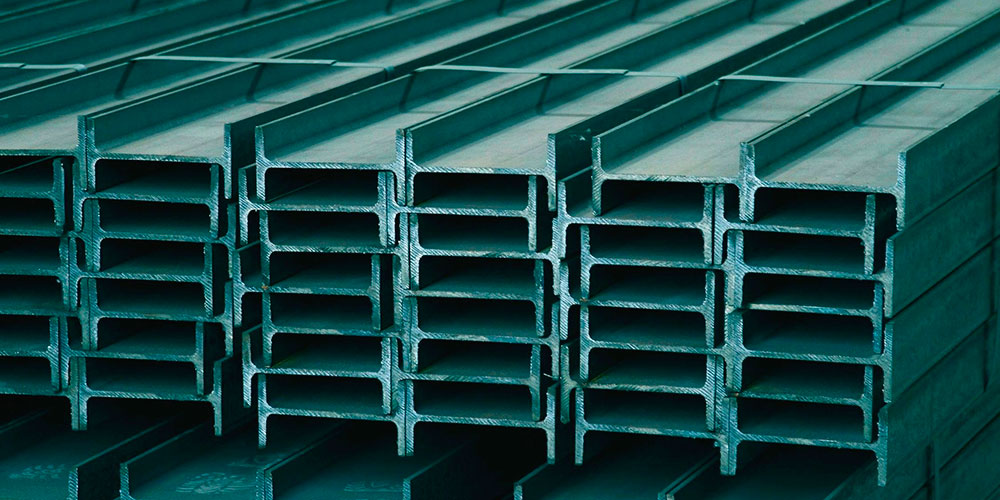
The implementation of the new safeguard measure and Carbon Border Adjustment Mechanism (CBAM) will have a positive impact on the European long steel market. Certain product imports, particularly wire rod and rebar, are projected to decline sharply in the new year, supporting prices, two European long steelmaking sources tell Kallanish.
In 2026, the market will continue to be boosted by several infrastructure projects funded by the post-pandemic European recovery fund. However, a French buyer notes that import patterns vary significantly between countries. While some nations rely more heavily on imports due to their geographical positions, such as Poland and the Baltic countries, others import limited volumes of rebar but higher quantities of wire rod, where quotas are already in effect. In France and Italy, market competition remains primarily among European producers.
Overall, long steel prices this month remain largely stable compared to October, though persistently frequent but small order volumes continue to weigh on sentiment. In France, prices have declined by approximately €10/tonne ($11.52/t), with similar adjustments observed in other countries depending on product.
Demand for merchant bar shows no signs of recovery, while activity for sections, rebar, and wire rod remains limited. Italian and German domestic merchant bar prices remain high, at around €650-660/t ex-works, including size extras.
Sources report that Spanish material in Italy is priced roughly €20/t lower, and in southern regions, lower-priced Turkish merchant bar is rumoured to have a base price close to €200/t. In France, merchant bar prices have fallen under pressure from cheaper Spanish material and are now at €20-30/t below Italian domestic levels.
Sections demand remains mostly stable, steelmaking sources and agents confirm. After a slow October, a modest increase in consumption is expected by mid- or late November ahead of the year-end period. In Italy and France, first-category sections are averaging at €710-730/t ex-works, while in Germany prices are hovering around €740-750/t delivered for grade S235 sections. One source notes that Germany is currently absorbing significantly lower import volumes from other European producers, including Italy.
Delivered rebar prices from western European domestic mills, including an average size extra of €265/t, range between €590-615/t in Germany. In Italy, values are lower, at approximately €520-530/t ex-works; however, Italian producers are now seeking price increases, aiming to lift rebar base levels to around €300/t ex-works.
The European wire rod market is described as “disastrous”, marked by a structural decline in consumption and falling prices across both northern and southern Europe. Prices for drawing-quality wire rod currently average at around €570/t delivered. A steelmaking source expresses a negative outlook on overall market conditions. Another tells Kallanish longs price hikes are being considered across Europe due to the current high costs of production.
Natalia Capra France

European coil derivative prices rise, consumption remains slow
Coil derivatives such as tubes and sheets are finally registering price increases in southern and western Europe, driven by the recent rise in coil prices. However, consumption remains stagnant and trading volumes are still limited.
The market is divided. Upstream producers are optimistic about price increases and trade measures, while downstream demand from end-users and steel processors remains weak, showing no signs of recovery in the coming months.
Despite the uptick in tube and sheet prices, margins remain tight and in some cases negative. The sharp coil price increases announced by producers are a source of concern. One northern European producer has set a target of €700/tonne ($806/t) base delivered for hot rolled coil in the first quarter of 2026, a level widely considered as excessive. Other producers are taking a more moderate stance, quoting around €620-630/t base ex-works for January.
These proposed increases could further discourage buyers. Service centres tell Kallanish they are already delaying coil purchasing decisions. This is particularly true for end-users such as crane manufacturers and steel processors supplying the agricultural sector, who are currently facing a downturn, cutting production, and implementing temporary layoffs.
Some steel processors believe steelmakers lack a clear understanding of the extent of the consumption slowdown in Europe. Key sectors such as agriculture, heavy machinery, and automotive continue to struggle and do not anticipate any improvement in the first half of 2026.
Demand for white goods, however, appears to have stabilised. One company source reports steady sales in 2025 and, for the first time, does not expect further consumption decline in 2026. That does not however mean they foresee any meaningful increases in the first half of next year.
While coil prices are rising, some traders are reported willing to absorb the additional cost of CBAM. A German trader, however, states he cannot do so.
Service centres and re-rollers are receiving large volumes of material previously ordered from Asia, and ports in Italy are reportedly full. Italian sources note a shortage of cold rolled coil, while importing hot-dipped galvanized coil has become too costly. As a result, CRC and HDG prices are rising sharply, with demand now exceeding supply. One buyer reports receiving a quote of over €800/t base delivered in Europe for HDG.
A seller of sheets and strips reports the market is currently oversupplied, as many steel processors expanded capacity following the strong performance of 2021 and 2022 and are now facing reduced consumption levels. An agent adds that he is managing to maintain the same sales volumes as last year.
Natalia Capra France

The times of open markets ‘are over’: Friedrich Merz
The times of open markets and fair competition “are over”, with domestic manufacturers now needing to be given preference, German Chancellor Friedrich Merz proclaimed emphatically last week.
A key discussion topic in recent weeks has been the idea of introducing a “Buy European” mandate for steel procurement in the EU.
Speaking after the “steel dialogue” attended by multiple industry stakeholders at the German Chancellery in Berlin on Thursday, Merz said: “We have been asked to ensure that European and German steel are given preference in procurement. Yes, I agree.”
“This is somewhat different from what we always considered right in the past, when we had open markets, fair competition, and certainly not these tariffs like the ones now being levied in America. Those times are unfortunately over, and that’s why we must protect our markets, why we must protect our manufacturers, and why we must also grant our manufacturers a corresponding preference when it comes to the use of steel in Germany and Europe,” he continued.
Merz went on to thank Deutsche Bahn for agreeing to procure low-emission rail. The rail network operator has entered a pilot project to procure the rail from Saarstahl’s France-based Rail unit, with the first 1,000 tonnes delivered.
“This is the path we want to take together,” Merz commented.
The Chancellor also highlighted the “human and emotional perspective” of the steel dialogue. “We are not talking about abstract economic figures here, but about the fate of a key industry. We are talking about the fate of entrepreneurs, employees, and their families who are counting on and hoping that politicians will commit to preserving these jobs and that German steel will be protected,” he concluded.
The dialogue emphasised the importance of competitive energy prices (see Kallanish passim). The German government said it plans electricity price compensation to provide additional relief for the steel industry through an increase in aid intensity. It also wants to end exemptions from sanctions for semi-finished steel imports from Russia. It supports efforts to negotiate a quota arrangement with the US, advocates CBAM’s extension to downstream steel products and calls for a WTO-compliant export compensation.
Adam Smith Austria
German stockholders’ sales rise slightly in Q3
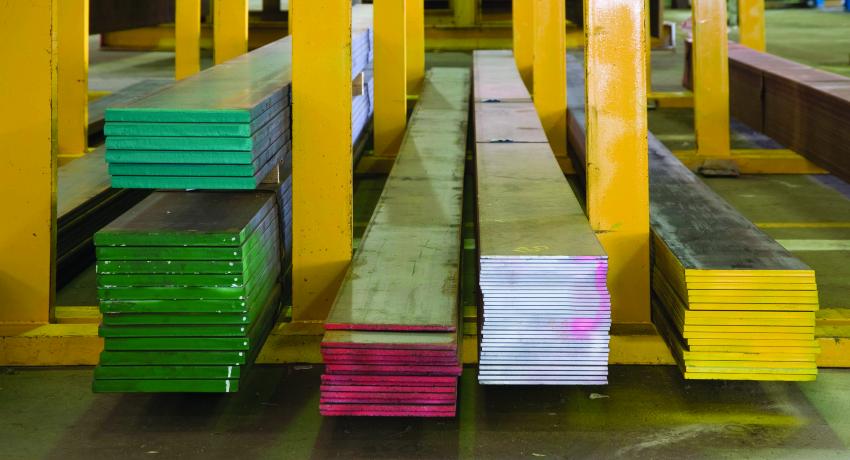
Germany’s stockholding distributors sold a combined 7.297 million tonnes of steel products in the first nine months of 2025, slightly less than in the corresponding 2024 period.
The average monthly tonnage value in the first quarter was 820,000t, marking an apparent increase from the corresponding 2024 value of 813,000t, Kallanish learns from German distributors’ association Bundesverband Deutscher Stahlhandel (BDS).
However, 2024 was also characterised by relatively strong average sales in the second quarter – 816,000t – while customers were more reserved in Q2 this year, with monthly sales at 784,000t.
Split by product group, the average monthly sales of flat products in Q3, 481,000t, marked an increase from Q2, at 456,000t, after Q1 reached 512,000t. This is a somewhat different dynamic from 2024, when average sales of flat products sank throughout the first three quarters. In the nine months of 2025, 4.347mt of flat products were sold by German stockholders.
For long products, 2.26mt were sold in the first nine months. Sales of “other products”, which include wire rod, totalled 680,000t in the first nine months.
In terms of inventory tonnage, the monthly average in Q3 was 1.865mt, down from Q3 2024 with 1.927mt, which itself was slightly down y-on-y from 1.961mt in 2023.
Christian Koehl Germany

Polish domestic long steel prices unchanged; weak demand
“Current price levels are unsustainable,” a producer source said.
“With energy prices increasing during the winter season we can only see prices going up,” they added.
In the week to Friday, estimations of workable levels for wire rod were heard around 2,580-2,650 zloty ($703-722) per tonne CPT, the same as in the previous assessment period.
Therefore, Fastmarkets’ weekly price assessment for steel wire rod (drawing quality), domestic, delivered Poland was also 2,580-2,650 zloty per tonne, unchanged week on week.
Polish rebar prices were also stable in the week to November 7.
Estimations of workable levels were heard hovering 2,420-2,450 zloty per tonne CPT, like in the previous week.
As a result, Fastmarkets’ weekly price assessment for steel reinforcing bar (rebar) domestic, cpt Poland was 2,420-2,450 zloty per tonne on Friday, also unchanged week on week.

European steel HRC market remains quiet, awaiting January revival
A buyer source, however, said that mills could deliberately keep some December volumes in stock until January because of an expected price increase connected with the introduction of the EU’s Carbon Border Adjustment Mechanism (CBAM) in January 2026.
Import regulatory measures were now considered the only driver for growth of local prices, with actual demand leaving much to be desired.
In Northern Europe, January delivery offers varied within the range of €620-650 ($716-751) per tonne ex-works, with the exception of a re-roller in the Benelux area, which offered January-rolling coil at €600 per tonne ex-works.
Estimates of workable prices were heard at €600-620 per tonne ex-works, but there have been few bookings so far, with market sources saying that the active phase will come in several weeks’ time. This price compared with €590 per tonne in the most recent sales of December-delivery cargoes.
Fastmarkets’ daily steel hot-rolled coil index, domestic, exw Northern Europe, was €610.00 ($704.23) per tonne on November 10, up from €606.67 per tonne on November 7.
The index was up by €8.75 per tonne week on week, and up by €32.50 per tonne month on month.
In Italy, the situation was similar with few volumes left for December.
Coil for January delivery was offered at €615-620 per tonne ex-works with estimates of workable prices being closer to €600 per tonne ex-works. No January bookings were heard on November 10, however.
Most recent sales of December-delivery coil were heard within the range of €580-590 per tonne ex-works.
Fastmarkets’ daily steel hot-rolled coil index, domestic, exw Italy, was calculated at €596.25 per tonne on Monday, up by €0.25 per tonne from €596.00 per tonne on Friday.
The index was up by €1.25 per tonne week on week, and up by €51.25 per tonne month on month.


German engineering manufacturers face sharp order decline amid global trade crisis
Germany’s mechanical engineering sector recorded a steep 19 percent year-on-year drop in new orders in September 2025, reflecting ongoing strain from the global trade crisis and weakening industrial demand, according to the German Engineering Federation (VDMA).
The decline also contributed to a slight contraction in total orders for the first nine months of the year.
Base effects mask deeper structural weakness
VDMA chief economist Dr. Johannes Gernandt said that part of the year-on-year decline stemmed from base effects, as September 2024 had benefited from large-scale plant orders that did not recur this year. “That should not obscure the fact that the machinery and equipment manufacturing industry continues to experience a noticeable slump in demand and underutilization,” Gernandt warned.
He stressed that a sustainable recovery depends on resolving global trade disputes, including US punitive tariffs, and on structural reforms in Germany and Europe to reduce cost burdens and stimulate investment.
The federation reaffirmed its forecast of a five percent contraction in real production for 2025.
Foreign demand collapses, euro zone more resilient
The September 2025 figures show a five percent drop in domestic orders and a 24 percent drop in foreign orders. Orders from euro zone countries fell by 13 percent, while those from non-euro zone countries decreased by 27 percent.
In the third quarter of 2025, overall orders were six percent lower than a year earlier, with domestic orders down by three percent and foreign orders down by seven percent, while orders from euro zone countries and non-euro zone countries fell by two percent and by nine percent, respectively, all on year-on-year basis.
In the January-September period of this year, total orders edged down by one percent compared with the same period last year, while euro zone orders increased by 10 percent and non-euro zone demand fell five percent, both on year-on-year basis.
