


German steel market participants reaffirm bullish outlook for February: Platts survey
German steel market participants reaffirmed their outlooks and expected an increase in prices, inventories and production levels in February, data from the latest Platts German Steel Sentiment Survey showed.
Price index
With expectations of a stronger safeguard mechanism from H2, along with the active Carbon Border Adjustment Mechanism, both sides of the market expected domestic prices to increase in February as imports became less desirable.
The overall index for the month stood at 76.88 points, up from 70.83 points in January. Participants continued to share bullish expectations since the start of Q4 2025.
Trader, stockholder and service center sentiment on price was measured at 68.75 points, while producer sentiment stood at 85 points – the highest both have been measured since the survey began.
Despite these expectations, sources continued to highlight that low end-user demand and relatively high stock levels in Europe would weigh on the extent of any price increases.
Platts, part of S&P Global Energy, last assessed domestic HRC in Northern Europe Jan. 30 at Eur640/mt ex-works Ruhr, up Eur20 month over month, and the highest level assessed since May 2025.
Platts last assessed domestic rebar in Northwest Europe Jan. 28 at Eur585/mt ex-works, up Eur5 across the same period.
| Month: | September 2025 | October 2025 | November 2025 | December 2025 | Janaury 2026 | February 2026 |
| Index: | 54.17 | 65.63 | 66.67 | 70.83 | 70.83 | 76.88 |
Production index
The overall index for production stood at 68.75 points, a large jump up from the 37.50 points measured in January.
Trader, stockholder, and service center sentiment increased over the month from around 33 points to 62.5 in February. Producer sentiment was recorded at 75 points, up from around 42 in the month prior.
After some time of producers undergoing seasonal maintenance combined with steady buying activity, both sides of the market expected production levels to finally ramp up as import regulations pushed buyers to purchase locally.
| Month: | September 2025 | October 2025 | November 2025 | December 2025 | January 2026 | February 2026 |
| Index: | 66.67 | 53.13 | 41.67 | 37.50 | 37.50 | 68.75 |
Inventory index
The index showed that market participants expected inventory levels to rise slightly in February as material ordered in Q4 2025 arrived, with some service centers and stockholders holding material in expectation of higher prices later in the year.
Overall, the index was measured at 53.75 points, up from just 25 in January. This was made up of 62.5 points from traders, service centers and stockholders, and 45 points from producers.
Even with expectations of higher inventories, sources noted that uncertainty surrounding pending regulation and costs was making some buyers hesitant over ordering material.
| Month: | September 2025 | October 2025 | November 2025 | December 2025 | January 2026 | February 2026 |
| Index: | 43.75 | 40.63 | 47.92 | 25 | 25 | 53.75 |
Demand picture
Surveyed participants agreed that demand for domestic materials was likely to improve in the coming year due to reduced imports.
According to EUROFER, imports had a share of 27% in relation to European apparent steel consumption in Q2 2025, a historically high level.
With a new safeguard system expected in H2 and CBAM cost uncertainty, the share imports make up in the European steel market was expected to fall, but this was yet to be seen.
Downstream goods
The majority of surveyed participants also added that more downstream products, like cold-rolled coils and hot-dipped galvanized steel, were likely to increase in price faster than HRC in 2026 because they are markets that traditionally rely on cheaper imported material.

Northern European steel heavy plate prices rise; Italy market stable amid bullish offers
Northern European steel heavy plate prices increased further during the week to Thursday January 29 on higher offers, but trading remained subdued.
Meanwhile, Italian domestic plate prices were flat for the second consecutive week, despite bullish offers and fresh bookings.
Northern Europe
Prices in Northern Europe moved up in the past seven days amid rising offers and muted import demand because of Carbon Border Adjustment Mechanism (CBAM) uncertainty and cost considerations.
Higher offers for April and even May shipments were made between €750 ($898) and €820 per tonne ex-works during the pricing session.
Fastmarkets’ weekly price assessment for steel domestic plate, 8-40mm, exw Northern Europe was €750-780 per tonne on Thursday, up by €30 per tonne from €720-750 per tonne a week earlier.
But trading was still subdued, with one distributor source saying that competitive prices for plate cut from coil — being a cheaper option for limited end-use applications — were encouraging some buyer reluctance to accept higher market levels.
Concerns continued to swirl around CBAM, the EU’s newly implemented carbon levy on imports based on embedded emissions, with a trader source describing uncertainty around “not finally defined costs” for CBAM and future tighter safeguard measures.
“[The uncertainty] makes it very difficult on the import side to develop definitive business plans on how to proceed for all types of steel consumers and fabricators with the required certification procedures to handle these regulations,” the trader source told Fastmarkets.
Italy
Italy plate prices in Southern Europe’s domestic market remained stable following fresh deals at €700-720 per tonne ex-works.
Fastmarkets’ weekly price assessment for steel domestic plate, 8-40mm, exw Southern Europe was €700-720 per tonne on Thursday, unchanged week on week.
But Italian re-rollers continued to push for higher market levels, with offers made at €680-750 per tonne ex-works during the week.
One producer source said there were “plenty of sales” in the region, with shipments now rolling into March delivery.
In addition, steel slab import prices to Italy have also moved higher in the past two weeks, largely because of CBAM cost uncertainty.
“The biggest problem for Southern Europe is from where to obtain slab at reasonable prices and quantities as CBAM requires [verified emissions data] and compliance with EU verification requirements,” the trader source said. “This drives up slab import prices.”

Polish long steel prices keep climbing amid higher costs, less pressure from import
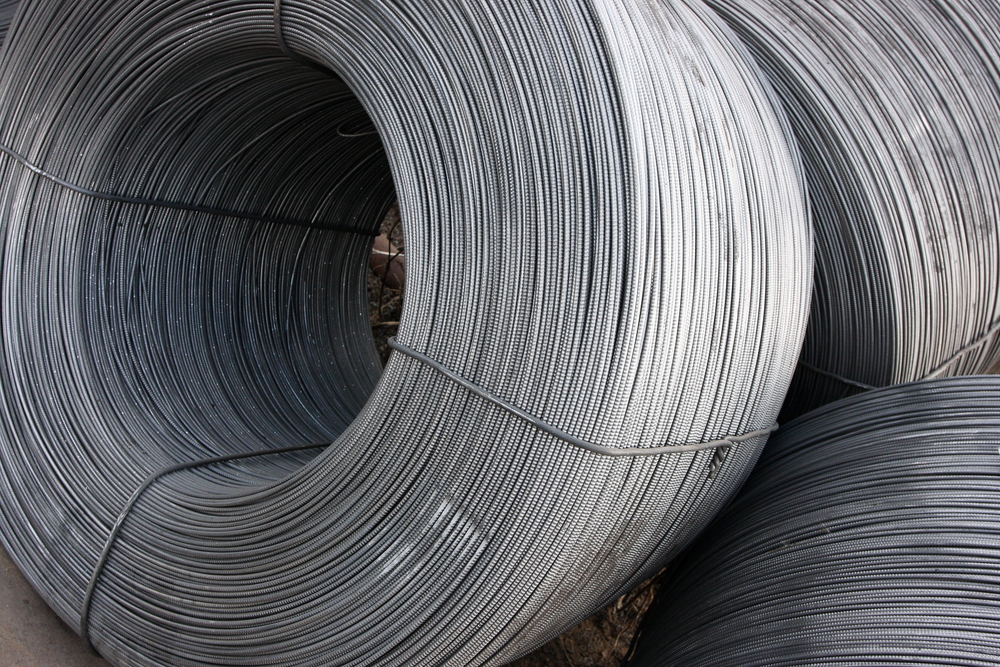
Rebar and wire rod prices continued to climb in the Polish domestic market during the week to Friday January 30, supported by continuing growth in feedstock costs and a lack of pressure from the import side.
The introduction of the Carbon Border Adjustment Mechanism (CBAM) in January 2026 resulted in a slowdown in import activity across the steel sector due to uncertainty over the cost of CBAM certificates and the long steel sector was not an exception.
Last week, Ukraine’s ArcelorMittal Kryvyi Rih (AMKR) announced plans to halt the blooming line at its steel mill in central Ukraine during the second quarter of 2026, citing CBAM as a key reason.
At the same time, scrap and energy costs continued climbing in the EU, pushing finished long steel prices higher.
In Poland, rebar offers narrowed upward to 2,650-2,700 zloty ($716.43-758.57) per tonne CPT in the week to January 30, compared with 2,550-2,700 zloty per tonne CPT the previous week.
Workable levels were estimated within the range of 2,600-2,650 zloty per tonne.
Fastmarkets’ weekly price assessment for steel reinforcing bar (rebar), domestic, cpt Poland was 2,600-2,650 zloty per tonne on Friday, up 50 zloty from 2,550-2,600 zloty per tonne tonne one week prior.
Wire rod offers came within the wide range of 2,750-2,950 zloty per tonne depending on supplier, with the highest bids from customers not exceeding 2,750 zloty per tonne.
Fastmarkets’ weekly price assessment for steel wire rod (drawing quality), domestic, delivered Poland was 2,750-2,800 zloty per tonne, up 150 zloty from 2,600-2,650 zloty per tonne one week prior.
European domestic HRC prices rise as pressure from import reduces
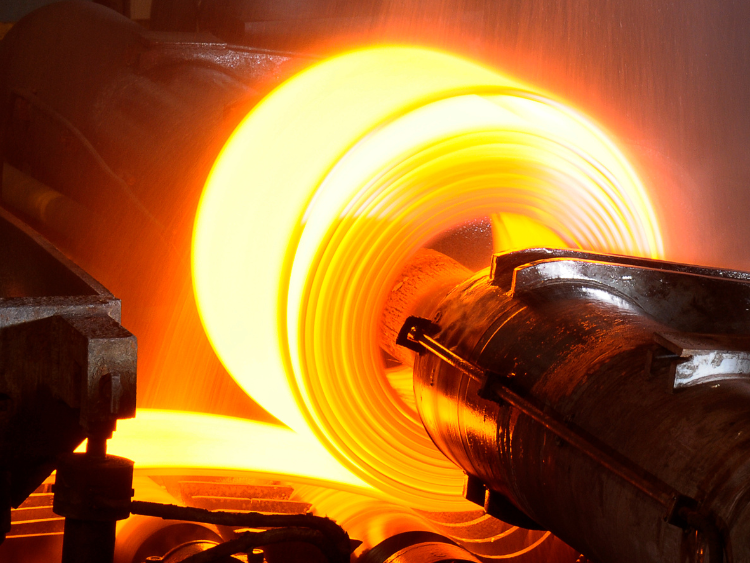
European domestic hot-rolled coil prices rose on Monday February 2 as customers accepted higher prices amid limited import activity.
The introduction of the EU’s Carbon Border Adjustment Mechanism (CBAM) in January 2026 resulted in the slowdown of imports overall in the steel segment, due to the uncertainty over the cost of CBAM certificates.
The effect on the HRC market was evident, since the imported volume in 2025 totaled 9.5 million tonnes, according to Global Trade Tracker statistics.
As a result, the demand for locally-produced coils increased, which allowed domestic producers to raise prices, although sales levels are still below mills’ bullish targets.
Notable strengthening was reported in Italy, where mills increased offers to €660-685 ($779-808) per tonne ex-works for April shipment, depending on supplier, with some sales heard done at €645-655 per tonne ex-works versus €630-635 per tonne ex-works heard last week.
Estimates of workable prices varied within the wide range of €640-665 per tonne ex-works.
Fastmarkets’ daily steel hot-rolled coil index domestic, exw Italy was €651.67 per tonne on Monday, up by €13.67 per tonne from €638 per tonne on Friday January 30.
The index was up by €14.17 per tonne week on week and by €28.55 per tonne month on month.
Most recent offers from integrated mills in Northern Europe came at €670-685 per tonne ex-works for April delivery coil, with sporadic bookings heard done within the range of €650-660 per tonne ex-works.
Fastmarkets’ daily steel hot-rolled coil index domestic, exw Northern Europe was €650.83 per tonne on February 2, up by €0.83 per tonne from €650 per tonne on January 30.
The index was up by €4.58 per tonne week on week and by €23.63 per tonne month on month.
In the import segment, some minor tonnage of HRC from India was heard booked in Italy at €600 per tonne DDP last week, CBAM costs included.
Turkish HRC was on offer to Italy at €630-640 per tonne DDP, CBAM costs included.

European coil and green steel round-up: European coil prices rise on CBAM, new quotas
European coil prices congregated higher in the week to 30 January, as the extension of mill lead times gave further strength to the firmness of offers for April delivery.
Only a few steelmakers were said to have allocation remaining for the first quarter, settling deals for March delivery hot-rolled coil (HRC) at prices of around EUR650/t ex-works. Strong stock levels limited the tractability of price increases for Q1 delivery, especially given end-consumer reluctance to absorb steel price inflation.
Downstream cold-rolled and hot-dip galvanized coils (CRC/HDG) were said to be fully booked out under Q2, trading at a substantial premium to HRC, between EUR750-760/t ex-works.
Mills were said to be targeting a minimum of EUR700/t ex-works or delivered for HRC, depending on location, and EUR800/t ex-works or delivered for CRC/HDG on indicative offers for second-quarter delivery.
Italian HRC prices similarly incremented higher on week, at parity or a slight discount to Northwestern price levels.
“Prices are slowly moving up, but the pace isn’t really increasing as buyers have enough in stock,” said a Benelux distributor. “That’ll all change however once imports face new quotas.”
The European Commission’s proposal to replace the EU’s existing steel safeguard was approved with amendments by Parliamentary committee earlier this week, and must now be reviewed by the European Council. This would authorise the Commission to proceed in negotiating with WTO trading partners to secure its desired increase to a 50% base steel tariff rate, necessary before July when current protections lapse.
Market participants are thus fairly unanimous in holding bullish expectations for steel prices in the latter half of this year, as lead times extend past the presumed entry into force of the proposed 47% cut to steel import quota levels in July.
“Demand remains weak, but the sentiment is bullish,” said a German distributor. “Lead times are getting longer and when the mills close their March orderbooks they’ll be on stronger grounds to increase prices further.”
Distributors were generally of a more positive mood over the week – though still lamenting depressed steel consumption – with one German distributor explaining that the return of mill lead times to traditional levels better facilitated stockholding as an enterprise, reducing opportunities for end-consumers to secure material from mills directly. That said, allegedly not all are following the market to higher price levels, and prefer to take profit where possible.
“Some distributors are acting stupidly and not increasing prices in line with the mills,” said a German distributor. “End-users are slowly catching up with the price trend – as they were less familiar with CBAM and upcoming quota effects – so realising higher levels isn’t impossible.”
The import market remains largely unattractive to European buyers due to regulatory costs from the Carbon Border Adjustment Mechanism (CBAM), and quota pressures later in the year, though one German distributor did suggest that HRC offers around EUR600-610/t DDP (including CBAM costs) were more competitive due to relative gains in the euro.
Offers into the Italian market were reported at EUR600-630/t DDP ex-Turkey, Algeria, and Taiwan, China.
Green steel
Following the recent leak of the Industrial Accelerator Act (IAA), the market is largely in wait-and-see mode and holding back from low-carbon sourcing in the domestic market.
Abroad however, traders are actively visiting suppliers to assess their emissions monitoring and CBAM readiness, optimistic that CBAM declarations will be successfully verified in reference to ‘actual’ (rather than ‘default’) emissions values, and beginning to look more granularly at exporters’ specific production processes to minimise CBAM liabilities.
As the IAA allows for the certification of international steel under its proposed “voluntary low-carbon label” for access to the EU’s public procurement markets; and indicates the EU’s intentions to align relevant emissions accounting processes under Emissions Trading System (ETS) and CBAM data for domestic and imported steel, respectively – traders actively anticipating the importance of transparency could see significant advantages as a result.
| Weekly European steel coil | |||||
| EUR/t | Term | 30-Jan-26 | Change | ||
| Weekly Northwest Europe steel coil | |||||
| Northwest Europe ex-works HRC | EX-WORKS | 650.00 | 10.00 | ||
| Northwest Europe ex-works CRC | EX-WORKS | 755.00 | 25.00 | ||
| Northwest Europe ex-works HDG | EX-WORKS | 760.00 | 15.00 | ||
| Weekly South Europe steel coil | |||||
| Italy ex-works HRC | EX-WORKS | 640.00 | 10.00 | ||
| South Europe CIF HRC | CIF | 530.00 | 0.00 | ||
| Source: McCloskey by OPIS. | © 2026 Dow Jones Energy Limited. | ||||
| Weekly green steel | |||
| EUR/t | Term | 30-Jan-26 | Change |
| Green Northwest Europe HRC premium (scopes 1-3 CO2 under 0.8t) | 70.00 | 0.00 | |
| Green Northwest Europe ex-works HRC (scopes 1-3) | EX-WORKS | 720.00 | 10.00 |
| Green HRC premium (scopes 1-2 CO2 under 0.5t) | 70.00 | 0.00 | |
| Green Northwest Europe ex-works HRC (scopes 1-2) | EX-WORKS | 720.00 | 10.00 |
| Green HRC reduced carbon price (scopes 1-3) | 49.08 | 7.41 | |
Author: Benjamin Steven & Maria Tanatar


Green steel projects update: The momentum builds
Recent months have been packed with developments in the green steel market. Alongside regulatory changes such as the start of the definitive stage of the Carbon Border Adjustment Mechanism in the EU, companies worldwide have reported progress on existing projects or announced new installations.
This article summarises key green steel market news from late 2025 to January 2026, tracked in the latest update of the Green Steel Projects Database. Further analysis of over 200 publicly announced plans and ongoing projects can be found in the Global Green Steel Profile.
Asia and Oceania
- In December 2025, Calix, an Australian environmental technology company, announced that Rio Tinto completed due diligence for a proposed 30,000 tpa hydrogen-based direct reduced iron/hot briquetted iron (DRI/HBI) pilot plant, paving the way for Rio Tinto’s $3 million financial contribution. This plant will utilize Calix’s ZESTY technology, which uses renewable electricity (for heating) and hydrogen (as a reducing agent) to process low-grade iron ore without the need for granulation or a fluidized bed.
- Green Steel and Iron (GISA) and Tempest Minerals (TEM) signed a binding agreement granting GISA the right to acquire the Remorse magnetite iron ore deposit project. GISA is considering an initial public offering to fund a 2.5 mtpa export-oriented HBI plant in Western Australia. A final investment decision is expected in 2027, with operations slated to begin in 2030. The plant is expected to run on natural gas, transitioning to green hydrogen when it becomes available and economically viable.
- In December 2025, Fortescue signed an agreement with Taiyuan Iron and Steel (TISCO), a subsidiary of China Baowu, to launch an industrial trial of hydrogen-based plasma iron and steel production. This technology is expected to be compatible with Pilbara ores and will require no sintering, pelletising, or coking, with a pilot plant capable of producing up to 5,000 tonnes of iron per year.
- The same month, China’s HBIS commissioned two industrial CCUS pilot projects at its new Tangsteel plant. According to HBIS, the first project captures blast furnace gases to produce bacterial proteins, while the second uses low-concentration CO2 fumes, dust and steel slag to produce construction materials.
- In October 2025, Baosteel’s Zhanjiang Dongshan completed a test of a new 220-tonne EAF designed to use DRI, hot metal and scrap to produce automotive-grade steel. In 2023, Zhanjiang steelworks launched a 1 mtpa DRI demonstration plant running on natural gas, coke oven gas and hydrogen.
- In December 2025, India launched its national CCUS roadmap, allocating over $11 billion for research and development, although no specific timeline was reported. Meanwhile, the Associated Chambers of Commerce and Industry of India urged the government to implement incentives for hydrogen-based DRI production, waste heat recovery systems, captive renewable energy power plants, and scrap collection and recycling.
- In December 2025, ArcelorMittal announced three new renewable energy projects in India, representing a total nominal capacity of 1 GW (solar and wind). Electricity will be supplied to AM/NS India (Hazira steelworks), ArcelorMittal’s joint venture with Nippon Steel, and combined with the 975 MW of solar and wind capacity already installed in Andhra Pradesh will cover 35% of Hazira’s increased electricity consumption in 2028.
- In December 2025, Steel Authority of India Limited (SAIL), one of India’s largest integrated steel producers, partnered with Primetals Technologies to integrate hydrogen gas injection technology at its Bokaro blast furnace (BF). The company developing technology to use green hydrogen and carbon monoxide to produce DRI, with financing for a demonstration plant coming from the Ministry of Steel.
- The board of Tata Steel approved the start of engineering and regulatory process to set up a 1 mtpa HIsarna plant in Jamshedpur, to produce hot metal from iron ore using coal powder.
- Also in December, Xuan Thien (Vietnam) and Primetals Technologies signed an agreement for two EAF production lines of the future 9.5 mtpa Xuan Thien Nam Dinh green steel complex (7.5 mtpa + 2 mtpa phases), producing heavy plate and hot-rolled coil (HRC). According to initial schedule, Xuan Thien plans to begin production in June 2028 and complete the entire project by June 2030.
Europe
- In January 2026, Kurum International awarded Danieli the contract to build a new MIDA (Micromill Danieli) plant in Elbasan, Albania. This plant will produce 0.7 mtpa of bars and will include a 75-tonne scrap-fed EAF.
- In January 2026, Czech integrated steelworks Nová Hut (former Liberty Ostrava) announced an CZK 150 million ($7.3 million) investment in 2026, which includes preparation for the construction of a 1.5 mtpa EAF. The site’s BFs, steelmaking and coke plants are no longer in operation, while rolling units operate under tolling agreements.
- In January 2026, Iberdrola Germany completed a new solar plant with a capacity of 65 MW in Saxony-Anhalt, Germany. The project is part of a 15-year power purchase agreement signed between Iberdrola and Salzgitter to supply 900 GWh of power over the period.
- The same month, ArcelorMittal signed a nuclear power production allocation contract with EDF. EDF will supply ArcelorMittal’s production sites in France with low-carbon electricity for 18 years, effective January 1, 2026.
- In November 2025, state-controlled Azerbaijan Metal Company signed a contract Sinosteel Equipment & Engineering Co. for a feasibility study for a 2 mtpa HBI plant in the Shamkir district of Azerbaijan. The HBI plant is expected to be commissioned by mid-2029, with an estimated cost of $700 million.
Middle East and North Africa
- In December 2025, Meranti Green Steel, signed an MoU with the Amnah Energy consortium for green hydrogen supplies for its 2.5 mtpa DRI/HBI project in Al Duqm, Oman. The consortium was awarded a land block in Al Duqm to develop 200,000 tpa production of green hydrogen. The final investment decision for the Duqm project is scheduled for mid-2026, with construction to follow immediately. The plant is scheduled to be commissioned by mid-2029.
- In January 2026, Meranti Green Steel announced that it had secured full offtake agreements for the first phase of its HBI plant in Oman. 1 mtpa will go to Thyssenkrupp Materials Trading, 0.25 mtpa to Interfer Edelstahl & Interfer Austria, with the balance going to Glencore and to Meranti’s steel plant in Rayong, Thailand for green HRC production.
- Also in January, reports indicated that Vale and its partners expect to invest around $5 billion in the first phase of a mega-hub in Al Duqm, Oman. The hub would produce iron ore concentrate and HBI with low embedded CO2 emissions. The land lease agreement with the Port of Duqm has been signed and the final investment decision is planned for 2026, with construction scheduled to begin in 2027.
North and South America
- Hyundai Steel plans to launch a pilot DRI plant at its Dangjin works, South Korea, in 2027 to test hydrogen technology before implementing it at a planned 2.7 mtpa natural gas/EAF facility in Louisiana, USA. The Dangjin plant has been producing hydrogen since 2016.
- In January 2026, it was reported that ArcelorMittal Dofasco postponed transition from BF/BOF to DRI/EAF steelmaking from 2028 to later years and that iron for the future EAF would be produced at the existing natural gas-based DRI plant in Contrecœur, Quebec, instead of building a new 2.5 mtpa hydrogen-ready DRI plant in Dofasco.

Switzerland seeks EU exemption from new steel tariffs
Switzerland has stepped up its diplomatic efforts in Brussels to secure an exemption from the European Union’s planned new steel trade regulations.
Despite the European Parliament’s Trade Committee having formally rejected such a request in recent weeks, Swiss authorities revived their bid for an exemption by holding an urgent meeting with EU representatives on Thursday.
Switzerland’s State Secretariat for Economic Affairs (SECO) announced that an extraordinary meeting of the Joint Committee of the EU–Switzerland Free Trade Agreement was convened at Bern’s request. During the meeting, the Swiss side stressed the need to preserve established regional supply chains that are critical to European industry and called for special treatment in steel trade.
Switzerland’s renewed push comes at a time of rising tensions in EU trade policy. On Tuesday, the European Parliament’s International Trade Committee (INTA) approved a new steel trade framework to replace the current safeguard measures set to expire in June 2026, with 36 votes in favour, two against and five abstentions. The committee explicitly rejected a proposal to exempt Switzerland from out-of-quota tariffs.
Under the newly adopted framework, duty-free steel imports into the EU will be capped at 18.3 million tonnes per year, representing a 47% reduction compared with 2024 quota levels. Tariffs on out-of-quota imports will be increased from 25% to 50%. Exemptions will be limited to members of the European Economic Area—Norway, Iceland and Liechtenstein.
However, the committee’s strict stance toward Switzerland appears at odds with messages the EU has conveyed to other trading partners. EU Trade Commissioner Maroš Šefčovič said earlier this week, following the EU–India free trade agreement, that India would enjoy a “privileged position” in negotiations on access to the EU steel market. India is reportedly seeking a duty-free quota of around 1.6 million tonnes per year.
Despite Switzerland’s intensified diplomatic efforts, experts believe it will be difficult for the EU to reverse course on its new steel policy in the short term. The new measures are expected to establish a tighter trade regime aimed at protecting the European steel industry, while triggering new rounds of negotiations with third countries.


European Commission Vice-President Séjourné: “Made in Europe” priority should be strengthened in public procurement
European Commission Vice-President Stéphane Séjourné stated that the “Made in Europe” approach, which envisages giving priority to European companies in public procurement across EU member states, should be strengthened.
European Commission Vice-President Stéphane Séjourné, who is responsible for the EU’s industrial policy, published an opinion piece supporting the “Made in Europe” initiative, signed by more than 1,000 executives from EU-based companies. The article was published simultaneously in France’s Les Echos, Germany’s Handelsblatt, Spain’s El Mundo, and Italy’s Corriere della Sera.
In his column, Séjourné stressed that European countries should prioritize European companies in public procurement in order to protect their industries. “In our most strategic sectors, we must make a genuine European preference permanent. Without an ambitious, effective, and pragmatic industrial policy, the European economy will become nothing more than a playground for its competitors,” he said.
Pointing to the growing prevalence of tariffs, subsidies, export restrictions, and intellectual property violations in global trade, Séjourné warned that international competition is becoming increasingly unfair and argued that the EU must adopt a more proactive stance.
Recalling that major economies—particularly the United States and China—have similar programs supporting their strategic sectors, Séjourné noted that it is inevitable for the EU to adopt a comparable approach.
Emphasizing that the core principle of the “Made in Europe” strategy is clear, Séjourné stated: “Wherever public money is spent in Europe, it must contribute to European production and employment.”
The European Commission is expected to unveil its proposed “Industrial Accelerator Act” by the end of February, aimed at supporting European industry. The proposal is expected to include provisions introducing a “Made in Europe” requirement in public procurement.
While France is leading the initiative, several EU member states argue that local-content requirements could deter investment, increase costs in public tenders, and weaken the bloc’s global competitiveness.
Meanwhile, Türkiye maintains that factors such as the Customs Union, the existing level of economic integration, and regulatory alignment should be taken into account, and that Türkiye should be considered within the scope of the “Made in Europe” concept.
Source: AA

NLMK DanSteel achieves Silver Medal in sustainability performance
NLMK DanSteel received a Silver Medal from the international sustainability rating agency EcoVadis. With this achievement, the company ranked among the top 15% globally in terms of sustainability performance.
According to the company’s statement, NLMK DanSteel’s overall score increased to 77/100 from 74/100 compared to the previous year. The improvement was mainly driven by progress in the areas of environment, labour and human rights, and sustainable procurement.
It was noted that the transition to the Silver Medal level reflects a period in which sustainability standards across the industry have generally risen. Company management described this development as both a positive indicator and a source of motivation to further advance its sustainability goals.
The statement emphasized that the achievement was the result of strong teamwork, and expressed appreciation to all employees who contributed to the company’s sustainability efforts. NLMK DanSteel also stated that it aims to continue its activities with a focus on continuous improvement and measurable progress in the period ahead.