

Klöckner & Co’s operating income increased in 2025


EU examines short-term measures to reduce industrial energy costs
The European Commission is examining potential short-term measures aimed at reducing energy costs for industry, according to an internal document seen by Reuters.
The analysis focuses on several cost components of industrial electricity prices, including energy taxes, network charges and carbon-related costs, as policymakers seek ways to improve the competitiveness of European manufacturers.
High energy prices weigh on industrial competitiveness
European manufacturers have repeatedly warned that elevated energy prices are undermining their ability to compete with producers in major industrial economies such as China and the US.
The issue has become more pressing following a recent increase in oil and gas prices linked to the conflict involving the US, Israel and Iran, which has added further pressure to global energy markets.
Policy proposals expected before March EU summit
European Commission President Ursula von der Leyen has pledged to present potential policy options ahead of a European Council summit scheduled for March 19.
Discussions among EU leaders are expected to focus on balancing immediate industrial support measures with the bloc’s long-term climate objectives.
Network charges and carbon costs under review
According to the briefing prepared for EU commissioners, Brussels is evaluating various components of industrial electricity bills. Network charges account for approximately 18 percent of industrial electricity costs, while national taxes, levies and carbon costs together represent roughly 11 percent of power expenses. Officials believe targeted adjustments in these areas could help ease cost pressures on energy-intensive industries in the short term.
The Commission also noted that EU member states are not fully utilizing existing mechanisms that could reduce energy costs for companies. These include state aid schemes designed to compensate firms for indirect carbon costs under the EU Emissions Trading System, as well as long-term electricity supply arrangements such as contracts for difference that can provide price stability for industrial consumers.
Demand reduction measures remain a possible option
In addition, policymakers may consider demand-reduction measures if energy supply disruptions intensify. Similar policies were introduced in 2022 when Russian gas deliveries to Europe declined sharply, encouraging both industry and households to reduce energy consumption in response to the supply crisis.

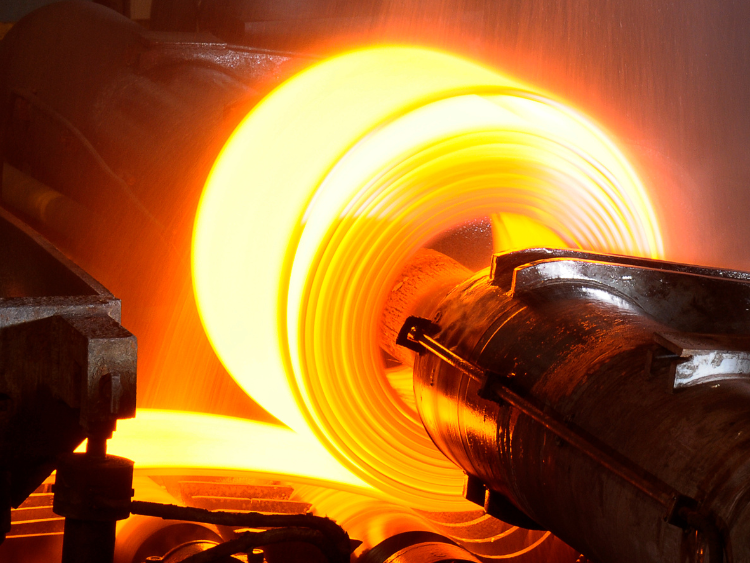
European HRC prices edge higher, with import constraints continuing to drive sentiment
European hot-rolled coil steel prices were slightly higher on Tuesday, with import constraints seen as a major driver behind the uptrend, sources told Fastmarkets on March 10.
Integrated HRC producers in Northern Europe have mainly been offering May delivery coil, Fastmarkets understands. And, amid rising HRC prices, suppliers have started to be more cautious about volume allocations, aiming to avoid over-committing to tonnages and potentially missing out on further price increases, Fastmarkets understands.
In Germany, offers were reported at a base price of €730 ($844) per tonne delivered (equivalent to about €715 per tonne ex-works) from one supplier and at €720 per tonne delivered (around €705 per tonne ex-works) from another.
A third mill was heard offering HRC at €700 per tonne ex-works, in line with recent sales. However, one source told Fastmarkets that the producer had withdrawn the offers on Monday.
In the Benelux region, one local mill was also offering HRC at €700 per tonne ex-works, Fastmarkets understands.
Indications of achievable prices from buyers in the region were heard at €700-710 per tonne ex-works, however, steel-service centers (SSCs) indicated that there were issues with passing on their higher costs to downstream users.
“Our customers need [the HRC price to be] €650-660 [per tonne ex-works]. That’s based on offers for [HR] sheet from people who have cheap material [in stock that] they are now selling, a service center source in the region told Fastmarkets.
“The problem now is that my clients tell me they cannot buy new coil at the current market prices,” the source added.
And a trader source in the region said: “Uncertainty regarding energy has paralyzed everyone. The moves are so sharp; all you can do is watch and see where the dust settles.”
A second trader source said the situation in the Middle East – following the US/Israel attacks on Iran and its wide-ranging response – meant that “trading seems presently to be more dominated by speculation and not driven by demand.”
In the secondary market, meanwhile, 4 mm HR sheet was heard changing hands at €740-750 per tonne CPT in Germany, with new offers heard at €800 per tonne CPT – reflecting the higher feedstock costs. The newer have not been accepted by the market so far, however.
Fastmarkets’ daily steel hot-rolled coil index domestic, exw Northern Europe was calculated at €704.38 per tonne on March 10, up by €2.92 per tonne from €701.46 on Monday.
The index was up by €10.07 per tonne week on week and by €50.21 per tonne month on month.
In Southern Europe, meanwhile, Fastmarkets’ daily steel hot-rolled coil index domestic, exw Italy was calculated at €687.50 per tonne ex-works on March 10, up by €2.50 per tonne from €685.00 per tonne on March 9.
The index was also up by €7.50 per tonne week on week and by €42.50 per tonne month on month.
Italian steelmakers were maintaining target offers for May delivery HRC at around €700 per tonne ex-works, Fastmarkets understands. One source, however reported an offer at a base price of €700 per tonne delivered, which nets back to around €685 per tonne ex-works.
“We are offering HRC at around €700 per tonne ex-works [because] there are currently no strong grounds to push for higher prices,” a supplier source told Fastmarkets.
Market participants estimated achievable price was around €680-690 per tonne ex-works on Tuesday.
Import activity remained subdued, with market participants reporting only limited fresh offers.
The slowdown was largely attributed to uncertainty surrounding the EU’s revised safeguard measures and the allocation of country-specific quotas. In addition, the unclear cost implications of the Carbon Border Adjustment Mechanism (CBAM) have encouraged buyers to adopt a more cautious approach.
Logistics have also complicated the situation. Due to security risks in the Middle East, many vessels transporting material from Asia to Europe have been forced to reroute via the Cape of Good Hope in South Africa, extending transit times by around two weeks and tightening prompt supplies.
“This week has been very quiet so far in terms on new [HRC] offers,” a trader source in Italy said.
On Tuesday, HRC from Algeria was on offer to Italy at €620 per tonne CFR, sources said.


European Commission confirms CBAM certificate price publishing schedule
The European Commission plans to publish on 7 April the price of Carbon Border Adjustment Mechanism (CBAM) certificates for the first quarter of 2026, Kallanish notes.
Importers of CBAM goods will have to buy CBAM certificates from February 2027 to cover their 2026 imports. For imports from 2027, the Commission will calculate a weekly price for certificates. For imports made in 2026, CBAM certificates will be calculated as the quarterly average of the EU ETS auction clearing prices of allowances.
The price of a quarter will be calculated during the first calendar week of the following quarter, and published on the first working day of the calendar week following the calculation week. Publication will take place both on the European Commission’s CBAM webpage and in the CBAM Registry.
Certificate prices for Q2, Q3 and Q4 2026 will be published on 6 July 2026, 5 October 2026 and 4 January 2027 respectively.
Meanwhile, the call for tenders for the Common Central Platform, which will manage the sale and repurchase of CBAM certificates, is currently open. Interested parties have until 20 March at 12pm to submit their offers.


German steel groups criticise IAA proposals
Germany’s steel association Wirtschaftsvereinigung (WV) Stahl and workers union IG Metall have criticised the Industrial Accelerator Act (IAA) proposal presented by the European Commission last week for failing to implement a general “Buy European” rule.
In contrast to other materials, namely aluminium and concrete, the Commission’s 25%-quota for carbon-reduced materials in public tenders stops short of seeking mandatory European origin for steel as well.
“War and protectionist moves have made Europe’s dependency in strategic regards painfully visible,” says managing director of WV Stahl, Kerstin-Maria Rippel, and IG Metall’s deputy chairman Jurgen Kerner. “Resilience of Europe’s economy is becoming a necessity for security,” they are reported as saying in a guest article in Welt.
The failure of linking the green steel quota to domestic sourcing “means a surrendering of Europe as a producer region,” which ultimately is “a political error of historic dimensions,” they conclude. They clarify that their claim “is not about raising walls, it’s about self-assertion.”
Pointing at the policies of the USA and India, they note that “only a naïve continent refrains voluntarily from linking demand to domestic production, to support its own strength.”
The country’s largest steelmaker, thyssenkrupp Steel, finds that the IAA helps imports more than it helps domestic steel. In its current draft, the proposal greenlights procurement from any overseas region. “That way, we support investment outside of Europe, rather than within,” the company’s ceo, Ilse Jaroni, says in a statement sent to Kallanish.
Meanwhile, the economy minister of state Saarland, Jürgen Brake, has called on the federal government to push the Commission for amendments of the proposal. Federal economy minister Katharina Reiche, too, has expressed criticism of the IAA, but mainly about the bureaucracy it causes. “This is the 50th proposal on domestic content, that comes on top of 49 others, which nobody can oversee anymore,” she is quoted as saying in Welt. She is reserved about requirement of buying European over concerns that it could drive away trusted international trade partners.
The additional bureaucracy that could come with European measures such as the IAA is also of concern to some steel using industries like the German mechanical engineering industry. Its association VDMA also questions local content requirements and warns that these could be an additional burden for its mostly medium-sized machinery builders (see Kallanish 5 March).

Italy scrap weakens amid uncertainty: Assofermet
March is expected to be a weak month for scrap purchasing in Italy. However, the new war scenario in the Middle East, continued weakness in finished steel sales and limited availability of quality scrap are preventing any clear forecast for March, according to a recent note by Italian trade association Assofermet.
The association notes that it will be necessary to closely monitor developments in finished product sales and, above all, production levels amid the prospect of rising energy costs linked to the new US-Iran conflict, for which repercussions remain highly uncertain.
In February, the market started off strong before stabilising later in the month. The first part of the month saw average price increases of around €15/tonne ($17.60/t), confirming the upward trend already observed in January. This pushed domestic scrap sales to high levels, allowing steel mills to cover their raw material requirements.
“Towards the end of the month, limited production schedules, the stagnation of the Turkish market and the further deterioration of the situation in the Middle East partly cooled the market and triggered the risk of further price reductions, which for now have not materialised,” the note states.
In the pig iron segment, there is increasing concern about the lack of alternative supply sources to Russia and Ukraine, which also face very high CBAM costs. At the same time, Brazilian producers are seeking higher prices in the first days of March.
These increases reflect a rapidly evolving geopolitical situation that is inevitably pushing up both energy and insurance costs, Kallanish notes.
“The entry into force of the CBAM regulation, difficulties in understanding the cost calculation mechanism, which varies depending on the origin of the material, and the fact that most steelmakers are already well stocked have weighed on new negotiations. This comes despite some signs of buying interest, particularly for Brazilian pig iron, for which CBAM cost is expected to be lower than that of other sources,” Assofermet concludes.
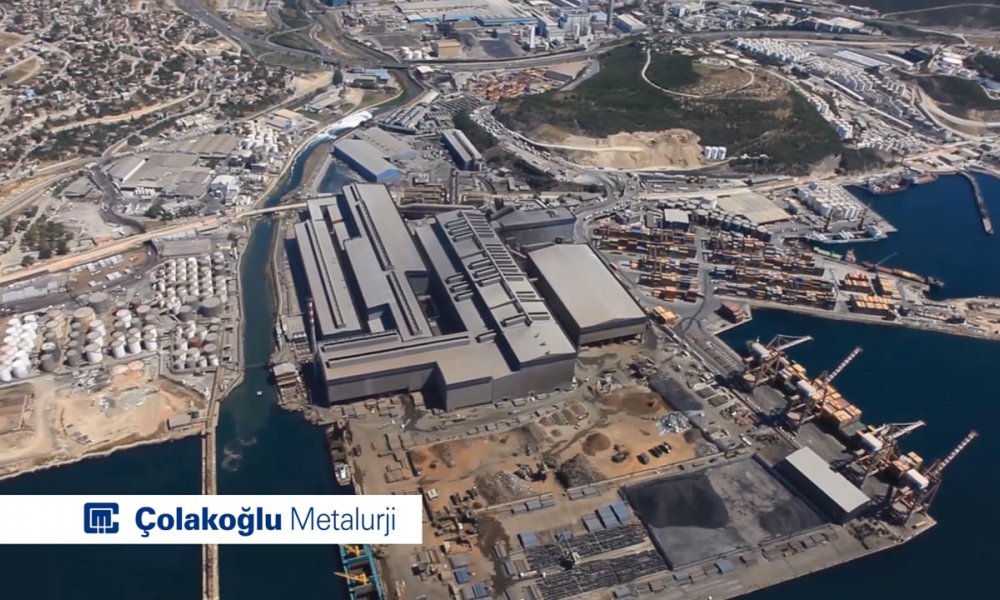
Primetals Technologies modernized Çolakoğlu Metalurji’s electric arc furnace

Turkish Koç Group has partnered with the Swedish green steel producer Stegra

Türkiye’s ‘Made-in-EU’ recognition bodes well for steel: Uğur Dalbeler
The European Commission’s proposal to grant Türkiye, among other partners, trusted partner status as part of the “Made in EU” mandate for various items, including electric vehicles, bodes well for Türkiye’s position in future EU steel trade negotiations. So says worldsteel chair and Turkish Steel Exporters’ Association vice president Uğur Dalbeler.
As announced by the Commission during its presentation of the Industrial Accelerator Act last week, the local content mandate will apply to aluminium, cement, electric vehicles and their components, batteries, battery energy storage systems (BESS), solar PV, heat pumps, wind, electrolysers, and nuclear technologies. It will not apply to steel, with the forthcoming steel trade regime, due to come into force from July, considered sufficient to restrict imports.
For the time being, Türkiye remains subject to EU safeguard quotas, with the long-term future of these measures uncertain, Dalbeler, also chief executive of Colakoglu Metalurji, tells Kallanish.
He argues that Türkiye should be assessed differently within the EU framework due to its deep economic integration with the bloc through the EU-Türkiye Customs Union and earlier arrangements linked to European coal and steel cooperation structures. Industry representatives are currently working with national authorities and seeking further engagement with the European Commission to advance discussions on a differentiated approach.
Dalbeler also raises concerns regarding how emerging EU carbon mechanisms evaluate Turkish steel production. Default emission values assigned to Türkiye appear significantly higher than those applied to countries such as Japan or South Korea. This is despite the fact that roughly 75% of Türkiye’s steel production is based on scrap-fed electric arc furnace technology, which is widely recognised as a lower-emission production route.
Closer cooperation between the EU and Türkiye could support Europe’s decarbonisation goals. While the EU has limited scrap-based flat steel capacity, Türkiye hosts several facilities capable of producing flat products using EAF technology. Producers such as Colakoglu, Tosyalı, and Habaş operate such facilities, although trade barriers and policy uncertainty often limit their ability to fully utilise capacities.
Dalbeler notes that expectations surrounding hydrogen-based steelmaking are gradually becoming more cautious. While hydrogen was initially presented as a key solution for decarbonising steel production, many policymakers now acknowledge it may not be scalable in the near term.
Renewable-energy-based solutions also face infrastructure constraints. As a result, iron ore-based production will continue to play an essential role in global steelmaking for the foreseeable future.
Rather than attempting to rapidly replace existing technologies, Dalbeler suggests the industry should prioritise reducing emissions within current production systems. Several Asian steelmakers are already pursuing this strategy by investing in technologies designed to lower emissions from blast furnace operations.
Another structural challenge is the limited global availability of high-quality scrap. Although EAF production is widely regarded as the most environmentally efficient steelmaking route, scrap supply remains insufficient to fully replace iron ore-based production.
Most scrap is already consumed in long steel production, both in Europe and globally. Flat steel production, particularly for manufacturing industries, therefore continues to rely heavily on iron ore.
Dalbeler also warns against the growing trend towards protectionist trade policies in the steel sector. Safeguard measures and tariffs have become increasingly common, even though such instruments were originally intended to be temporary under WTO rules.
Nevertheless, the current wave of protectionism may eventually normalise, as the economic consequences become clearer. Excessive protectionism can raise costs for downstream industries and contribute to inflation, which governments are simultaneously trying to control.
Industrial production has historically been based on specialisation and economies of scale, making full localisation of supply chains unrealistic.
Despite the challenges, discussions between Turkish industry representatives and European institutions are continuing. The aim is to ensure that Türkiye’s role as a major supplier of relatively low-emission steel to Europe is properly recognised within evolving EU industrial and climate policies.
“Türkiye and Europe are already deeply integrated. Recognising that reality would benefit both sides as the steel industry moves towards a lower-carbon future,” Dalbeler concludes.

Digitalisation enables transition, data transparency needed: Primetals’ Herzog
The big hype seen around digitalisation last decade has gone, but digital processes will be critical in supporting the steel industry’s transition to electric arc furnace-based steelmaking, as well as ensuring scrap quality and closed loop systems. Transparency in the sharing of data will be crucial. Artificial intelligence will meanwhile play an increasing role in process automation, but the human component will remain indispensable.
So said Primetals Technologies head of industrial digitalisation Kurt Herzog during an exclusive interview with Kallanish at the technology supplier’s flagship location in Linz.
Europe an old hand at digitalisation
There was a time when people believed big data would solve many problems in manufacturing, but how to utilise this data is the critical next step to ensuring improved industry performance.
European steelmakers have been integrating digital processes in production for decades, but their often tailor made software is ageing and the people who developed it are retiring. “So, maintenance of the software is a huge issue,” Herzog said.
Compared to China, whose approach is build huge data infrastructure, collect data and then “start thinking about what to do with the data”, Europe says: “There is already a lot [of data available]. How can we expand that, and how can we generate the quick benefit of everything we are doing?” he asked.
Digital processes support competitiveness but software investment hesitant
In the current low-margin steel industry climate, digitalisation can support steelmaker competitiveness and reduce cost per tonne.
“How often is a slab produced with a defect which is not detected or considered, but it’s still going through the rest of the production process, and at the end, the final product needs to be scrapped? There is a huge amount of energy and other costs to finalise this product, although I know the slab is not good,” Herzog noted.
Digital tools can be used to implement counter actions, to, for example, repair the product, reassign the slab to another customer, or scrap the slab if it is deemed unusable.
Intralogistics are another important digitalisation lever. This may “sound rather boring” but digital processes can help navigate the “trade off” between mills wanting to offer short delivery times but therefore needing to have sizeable material in stock, “which comes with a lot of money, bound capital”, he continued.
However, while mills are spending big sums on the equipment, they hesitate to spend relatively smaller sums, amounting to a low one digit percentage of the asset cost, on the right software solution to ensure the best use of the hardware and return on investment, he noted. “There is a KPI when equipment is bought, which is, what’s the cost per tonne of equipment? It’s a KPI that’s hardly applicable to software, and that’s the traditional thinking in the steel industry,” Herzog said.
Production route transition neutralises human knowhow
Digitalisation will also support the process of steelmaking decarbonisation in two ways, directly and indirectly, as an enabler. Directly, it can optimise the production process to, for example, reduce fuel consumption, or increase the yield by better steering the product quality along the production chain – these result in a reduction in carbon footprint.
“If I have to cut off pieces, because the quality is bad, the CO2 footprint of these cut off pieces is projected to the sellable [steel] pieces,” he noted. Quality control can ensure the amount of sellable products “stays high or gets higher by early identification of quality issues and recommending counter actions”.
These measures provide a quick return on investment but their scope for emissions reduction is limited. The indirect support provided by digital processes enables production route transition, which yields the biggest emissions reductions.
“Is an operator of a blast furnace capable to operate the direct reduction plant? No. Is a BOF operator capable to operate an electric arc furnace? No. So all the experience collected in the past, the value is zero. I mean, they are still operating those aggregates in the transition phase. But for the electric arc furnace, the value is not there. So what digitalisation can do is support operations in operating these new plants by providing a high degree of automation, digital assistant systems, that the high level of skills to operate these aggregates is not that necessary,” Herzog noted.
Moreover, it can provide training simulators to prepare teams to operate new plants, he added.
Hybrid BF-EAF operation presents a challenge
The combined operation of BOFs and EAFs on the same steelmaking site, a scenario envisaged at some European mills, including voestalpine, in the coming years, will require heavy support from digitalisation due to the challenges of planning and scheduling in this hybrid model.
“You cannot produce – if it’s a scrap based electric arc furnace – all the steel grades you can produce on the BOF … What is produced on the electric arc furnace, what is produced on the BOF? How not to break casting sequences, how to manage transitions, product transitions … If a steel grade can be produced on a BOF and the electric arc furnace, where is the lowest price of production? Is it on the arc furnace or on the BOF?” Herzog pointed out.
“Scheduling this hybrid production, managing this hybrid production from a timing point of view and the quality point of view is something where, I think, if you want to have a certain flexibility, it is not manageable by humans. This cannot be done by Excel. You need some very elaborate digital tools to manage this production,” he added.
AI will drive automation but human element remains
Artificial intelligence will not have complete autonomy over the production process because it cannot be trusted to avoid making a critical mistake. “Generative AI is something that will be implemented or used in support functions. When it comes to production, I still believe that data analytics will be the major lever to better understand the processes, and based on this analysed data, consistent decision making will support, or will happen in the production,” Herzog said.
Individual decisions made today by operators or process engineers every 30 minutes regarding, for example, needing to increase or decrease the coke rate in the blast furnace, can be defined by humans and then automated.
“If you digitise the knowhow of your best operator, in this way, your best operator defines how decisions are made. And this is automated. This means your best operator is on duty, 24/7, and by analysing the results of these decisions with AI tools, you can even improve this decision-making, and that’s where I see that the benefit will be generated in the next decade,” he noted.
“But when it comes to really steering, controlling the production, I think that there will always be this, call it intermediate step, which is still understandable by humans. Otherwise, I think it will not be acceptable,” he continued.
Scrap treatment, closed loop systems gain importance
A lot of research & development is already being done in Europe into solutions that ensure the removal of residuals from scrap so that the material is the right quality, but that costs are kept down. This involves metallurgical models on EAFs that make pre-calculations. “So I need to … simulate before I start to charge the furnace. Okay, what does this input material mean for the quality of the final product and optimise them? This is definitely something that will be necessary,” Herzog suggested.
One way to support this is ensuring data travels with the steel product all along its life cycle, from producer to end user. If 50 metres of a 200-metre coil have quality issues, the provision of the data to the buyer means he can cut off the defective section, not pay for it, and use the rest.
“The scrap would be sent back, which has the beauty that the scrap is well defined – if data travels back with the scrap. So if the steel producer knows exactly what the composition of the scrap is, it’s good to be used in the electric arc furnace,” he said.
Supplying transparent data does have its challenges, however. “Steel producer and car producer could jointly optimise the production process or the product specification. There would be huge potential, but sharing too much data risks intellectual property. So there are challenges; if these can be solved in an elegant way, in a feasible way, in the sense that both parties can live with it, I think that there will be huge potential,” Herzog concluded.