


EC proposes extending free ETS allowances for CBAM sectors until 2038, EUROFER raises concerns
The European Commission has announced that it has presented a proposal to revise the EU Emissions Trading System (ETS) alongside a new Electrification Action Plan aimed at accelerating industrial decarbonization, strengthening Europe’s competitiveness and making the EU the world’s first “electro-powered continent.”
The Commission stated that although around 70 percent of the EU’s electricity is now generated from domestic clean energy sources, the electrification rate of final energy demand has remained at 23 percent over the past decade. It will therefore assess an indicative electrification target of 46 percent by 2040 as part of the post-2030 Energy Union package. Achieving this target could reduce the EU’s annual fossil fuel import bill by €260 billion by 2040 while improving energy security, lowering energy costs and enhancing industrial competitiveness.
Commission President Ursula von der Leyen stated that reducing Europe’s dependence on imported fossil fuels requires accelerating the use of electricity generated from domestic clean energy sources. She added that the proposed measures are intended to lower electricity prices, adapt the EU carbon market to changing global conditions, support industrial decarbonization and strengthen Europe’s energy independence.
Commission proposes changes to ETS framework
As part of the ETS review, the Commission proposed updating the Linear Reduction Factor (LRF) to 3.7 percent for the 2031-35 period and 1.7 percent for 2036-40, creating a more gradual emissions reduction pathway while maintaining alignment with the EU Climate Law. The proposal would also allow the use of up to two percent high-quality international carbon credits during the 2036-40 period to support decarbonization projects abroad and provide additional flexibility as domestic emissions reductions become more difficult.
The Commission also proposed expanding financial support for industrial decarbonization. The Industrial Decarbonisation Bank would receive €100 billion to finance large-scale industrial decarbonization projects across Europe, while an ETS Investment Booster would become available before 2030 as the bank’s first implementation phase. The ETS Innovation Fund would continue supporting the commercialization of innovative low-carbon technologies, and member states would be required to allocate 50 percent of their national ETS revenues to decarbonizing ETS-covered sectors, representing more than €100 billion in investments before 2030.
The proposal would maintain free ETS allowances beyond 2030 while linking them more closely to investments in decarbonization within Europe. It also introduces permanent carbon removals into the ETS to provide additional flexibility for hard-to-abate sectors and support the deployment of carbon removal technologies.
In a separate proposal on ETS benchmarks, the Commission plans to increase free allocation to industry by approximately €6 billion during the 2026-30 period. For sectors covered by the Carbon Border Adjustment Mechanism (CBAM), the phase-out of free allowances would be slowed, with free allocation extended until 2038.
The Commission also proposed reforming the Market Stability Reserve (MSR) to improve market stability, maintain liquidity and reduce excessive carbon price volatility. The proposal complements the Commission’s earlier initiative to stop the automatic cancellation of allowances held in the reserve.
In addition, the revised ETS would strengthen provisions covering the aviation and maritime sectors and extend the system to waste incineration in an effort to create new business opportunities, reduce circumvention risks and align the EU framework with international developments.
Electrification Action Plan targets lower energy costs
Alongside the ETS review, the Commission unveiled its Electrification Action Plan, which seeks to accelerate the adoption of electricity-based technologies across transport, buildings and industry. According to the Commission, battery electric vehicles can reduce operating costs by up to 78 percent compared with conventional vehicles, while replacing gas boilers with heat pumps can lower household heating costs by up to 60 percent on average across the EU.
To accelerate electrification, the Commission proposed measures to narrow the price gap between electricity and fossil fuels by allowing member states to reduce network charges for certain consumer groups and lower taxes for energy-intensive industries. The proposal also aims to ensure electricity is not taxed more heavily than natural gas while promoting the deployment of smart meters to help consumers better manage energy consumption. The Electrification Action Plan also proposes measures to reduce the upfront costs of technologies such as heat pumps, electric vehicles and batteries through instruments including social leasing schemes, ETS financial instruments, the Social Climate Fund, the Industrial Decarbonisation Bank and a Clean Heat Market mechanism.
The Commission further emphasized the need to accelerate electricity grid deployment, noting that although Europe’s grids are among the world’s most reliable, lengthy connection waiting times and insufficient grid utilization continue to hinder electrification. It called for the rapid adoption of the Grids Package proposed last year, while also promoting investment in manufacturing capacity, workforce skills and clean energy technologies to support the broader electrification of the European economy.
EUROFER warns key decarbonization challenges remain unresolved
Following the Commission’s announcement, the European Steel Association (EUROFER) stated that the proposal to revise the EU ETS fails to address several key issues that continue to undermine the business case for industrial decarbonization, despite adjustments to the phase-out of free emission allowances. Axel Eggert, director general of EUROFER, said the central question remains how European steelmakers will gain access to affordable electricity and renewable hydrogen. He stated that companies are still expected to invest billions of euros in low-carbon production technologies without certainty that the necessary electricity and hydrogen infrastructure will be available, that sufficient clean electricity will be supplied, or that energy prices will remain competitive enough to support European steel production and its downstream value chains.
Eggert also argued that the proposed changes to the phase-out of free ETS allowances do not significantly reduce investment uncertainty. He noted that the reduction in free allocation for the steel sector around 2029-30 remains largely unchanged, while the existing benchmark methodology could still result in a substantial reduction in the main steel benchmark in 2031, weakening both carbon leakage protection and incentives for companies investing early in decarbonization. He emphasized that the proposal also fails to introduce the long-awaited structural solution for exports from sectors covered by the CBAM.
In addition, the association warned that the new conditions attached to free allocation would increase administrative requirements and legal uncertainty, particularly where investment decisions depend on factors outside companies’ direct control. Eggert stated that although the EU has set ambitious climate targets, it has yet to deliver the enabling conditions that it has repeatedly promised across all member states. Without those conditions, he argued, the ETS establishes a deadline for decarbonization without providing a credible pathway to achieve it.
He added that the European steel industry has already committed to replacing around 35 percent of its conventional steelmaking capacity with hydrogen-ready facilities by the 2030-32 period. However, expecting the sector to complete the transition by the end of 2033 without the necessary supporting conditions is unrealistic, warning that failure to provide those conditions could result in the loss of a significant share of Europe’s steel industry rather than its successful decarbonization.


Italian longs suffer weak activity, restocking limited
Italian long product prices are holding stable amid very weak activity, with extremely limited restocking ahead of the August shutdowns and high enough stock levels to cover current demand, Kallanish notes.
Some longs prices have started to decline while others are holding as sales remain limited to very small volumes for which customers do not negotiate prices, not because demand is strong,
Mills remain under pressure from high production costs and have implemented stoppages in June and July, which have also contributed to the fall in Italian scrap prices alongside lower international levels. Producers have been cutting output to rebalance supply and demand following months of weak sales. Some are currently idled and plan to resume production in August to take advantage of the lower energy costs typical of that month.
Agents and distributors report some pickup in demand for sheets tubes following the new EU quotas, with activity ticking up slightly since last week. Long product sales, particularly merchant bar, remain particularly weak.
Downstream sources do not expect any demand recovery for long products before August and say the seasonal slowdown is already well underway. Two downstream sources describe the second quarter as one of the worst in a very long time.
That said, two large distributors say they have managed to navigate the difficult conditions by offering value-added services such as combining multiple dimensions and grades in a single truckload and supplying the small volumes that customers currently require.
Merchant bar prices are holding firm week-on-week at €340-350/tonne ($388.5-400/t) delivered or €760-770/t including size extras. This is, however, a decline of some €20/t compared to June. Spanish material is available at around €330/t.
First-category sections are also stable hovering at €800-810/t delivered, sources suggest.


European Commission proposes 2038 ETS free allocation phaseout
The European Commission has published its long-awaited Emissions Trading System (ETS) review, proposing the free emissions allocations reduction be slowed and the phase-out extended beyond 2034 until 2038. Moreover, Members States will be required to spend 50% of their national ETS revenues on investments to decarbonise ETS sectors, Kallanish notes.
Free allocation distribution will be extended beyond 2030, but will from 2031 become conditional upon operators developing Invest in EU Decarbonisation Plans and investing an amount equivalent to 100% of the value of their free allocation into decarbonisation in the EU.
The total number of EU ETS emissions allowances, otherwise known as the cap, will meanwhile see an adjustment in the reduction trajectory from 2031, meaning allowances will continue to be issued into the 2040s. The Linear Reduction Factor (LRF) has been updated to 3.7% for 2031-2035 and 1.7% for 2036-2040.
The current LRF of 4.3% (4.4% from 2028-2030) was agreed as part of the 2023 ETS reform to deliver the EU’s 2030 climate target. “Simply maintaining that rate beyond 2030 would not provide a realistic trajectory for the period up to 2040. It would reduce the ETS cap to zero around 2040, going beyond what is required under the European Climate Law,” the European Commission says.
“The proposal maintains the environmental integrity of the EU ETS while providing a more predictable and manageable investment framework for industry over the longer term,” it adds.
The Industrial Decarbonisation Bank (IDB) will provide €100 billion in decarbonisation project funding. In the first phase, the Investment Booster will provide an estimated €30 billion of support for 2028-2030, financed through 400 million ETS allowances. It will accelerate investment before 2030. Projects will be supported on a first-come, first-served basis, while ensuring dedicated access for lower-income Member States.
Moreover, the use of high-integrity international credits will be permitted from 2036, as set out under the European Climate Law. A facility will be established to purchase these credits to create additional emissions space in the EU ETS of up to 2%.
The Market Stability Reserve will be made more dynamic, with its parameters adjusted to the shrinking market after 2030. The rate at which it absorbs allowances will drop to 12% from the current 24%, a change that will mean more permits can stay in the market for longer.
The ETS is nevertheless “not the main driver of electricity prices”, the Commission points out. “Electricity bills are determined primarily by the cost of supplying electricity, network charges, and national taxes and levies. The biggest structural driver of high and volatile electricity prices remains Europe’s dependence on imported fossil fuels, particularly gas.”
Announced alongside the ETS review, the Commission’s Electrification Action Plan targets better use of electricity grids, better design network charges, deployment of smart meters and flexibility solutions, and aligning electricity taxation with the EU’s electrification objectives.
The EU Council and Parliament must finalise their positions on the ETS proposal by the end of this year so that the trilogue can begin in January, according to Peter Liese MEP, the European Parliament’s lead negotiator on the ETS reform.
Italy’s crude steel production increased by 6.1% in June
Italy’s crude steel production reached 1.9 million tons in June 2026, up 6.1% compared to the same month of the previous year.
According to data from the Italian steel producers’ association Federacciai, total crude steel production reached 11.5 million tons in the January-June period, supported by an acceleration in output growth during the second quarter of the year.
Federacciai’s monthly production data showed that crude steel production in the first six months of the year increased by 3.5% compared to the same period of last year. After recording a growth rate of 1.5% in the first quarter, production growth accelerated to 5.4% in the second quarter, indicating a stronger pace of expansion in the sector.
First increase in flat steel production this year
In June, hot-rolled flat steel production increased by 7.7% year on year to 780,000 tons. This marked the first annual increase in the flat steel segment in 2026.
However, hot-rolled flat steel production totaled 4.6 million tons in the January-June period, down 5.4% compared to the same period of the previous year.
Meanwhile, hot-rolled long steel production increased by 5.4% year on year in June to 1.1 million tons. In the first half of the year, long steel production reached 6.9 million tons, posting a 7.8% increase compared to the January-June period of 2025.


EUROFER: Steel sector cannot fully decarbonise by 2033 without affordable electricity and hydrogen
European Steel Association (EUROFER) Director General Axel Eggert stated in a comment on the European Commission’s proposal to revise the European Union Emissions Trading System (ETS) that fully decarbonising the European steel sector by 2033 is not realistic without access to affordable clean electricity and hydrogen.
Eggert stated that the European Commission expects the European steel sector to decarbonise by this date under the regulation, which foresees the phase-out of free emission allowances by the end of 2033. However, he stressed that the sector’s most critical question remains unanswered, as it is still unclear where affordable electricity and hydrogen will come from.
Noting that companies are expected to make multi-billion-euro investments, Eggert said it remains uncertain whether electricity and hydrogen infrastructure will be ready on time, whether sufficient volumes of clean electricity will be available, and whether these resources will be supplied at prices that allow the EU steel industry to maintain its global competitiveness.
According to EUROFER, the proposed regulation on the phase-out of free emission allowances does not eliminate investment uncertainty facing the sector. In particular, maintaining the planned reduction in free allowances for the steel sector during 2029-2030 and the risk of a sharp decline in the main steel benchmark under the benchmarking rules in 2031 could weaken both carbon leakage protection and incentives for companies that invest early.
Eggert also noted that the proposal once again does not include the long-awaited structural solution for exports under the Carbon Border Adjustment Mechanism (CBAM). He added that the new conditions for free allowances create additional administrative burdens and legal uncertainty, particularly in cases where investment decisions depend on factors outside companies’ direct control.
Eggert stated that the European Union has set ambitious climate targets, but the necessary infrastructure and supporting conditions repeatedly promised by member states have not yet been established to achieve these goals. He commented, “Unless these conditions are provided, the ETS only sets a deadline but does not offer a credible roadmap to achieve this target.”
Reminding that the European steel sector is already investing to replace around 35% of its conventional steel production capacity with hydrogen-ready facilities between 2030 and 2032, Eggert stressed that expecting the sector to achieve 100% decarbonisation by 2033 without the right conditions is not realistic.
Eggert concluded that if the European Commission fails to deliver on its commitments regarding clean energy, hydrogen infrastructure and competitive energy costs, Europe risks losing a significant part of its steel industry rather than successfully decarbonising it.

UNESID: Spanish steel industry holds up despite rising trade uncertainty, but calls for stronger safeguards
The Spanish Steelmakers Association (UNESID) stated during its 2026 General Assembly that the Spanish and European steel industries are going through a critical period due to rising geopolitical tensions, global trade wars, a global steel overcapacity exceeding 640 million metric tons, and the weakening competitiveness of European industry.
UNESID calls for stronger protection of the strategic steel industry
The Spanish Steelmakers Association (UNESID) called on Spain and the European Union to take stronger and more coordinated measures to protect the strategically important steel industry.
Speaking at a press conference, UNESID President Bernardo Velázquez and Director General Carola Hermoso stressed that Europe’s energy, industrial and technological independence depends on a strong steel sector. They noted that although Spain was the fastest-growing economy in the European Union in 2025, energy-intensive industries continued to operate under difficult conditions due to high energy costs, mounting import pressure and growing international uncertainty.
UNESID also emphasized that steel is a fundamental input for strategic sectors such as energy, infrastructure, transportation, construction, defense and clean technologies, adding that Europe cannot achieve its decarbonization and strategic autonomy goals without a strong and competitive steel industry.
Production declined in 2025, exports increased thanks to the EU market
According to UNESID data, Spain’s crude steel production fell by 0.4% year on year to 11.8 million mt in 2025, while apparent steel consumption declined by 0.5% to 13.4 million mt. Industry activity weakened during the second half of the year amid rising uncertainty in international markets.
Combined domestic and export deliveries decreased by 1.1% to around 12 million mt, including 6.4 million mt supplied to the domestic market and 3.9 million mt delivered to the European market. However, total steel exports rose by 3.3% to approximately 8 million mt. The increase was driven by a 6.6% rise in shipments to EU countries, while exports to third countries declined by 5.1%.
Imports remained at historically high levels, reaching approximately 10.4 million mt. Of this total, 5.5 million mt originated from EU member states, while the remainder came from third countries. As a result, one out of every three tons of steel consumed in Spain was imported from non-EU countries.
Producers continued to lose market share in the first quarter of 2026
UNESID stated that risks facing the sector persisted during the first months of 2026. Apparent steel consumption declined by only 0.1% in the first quarter, supported by the construction sector, but domestic producers continued to lose market share.
During the period, crude steel production dropped by 21.1%, while total deliveries fell by approximately 10%. Meanwhile, imports from third countries increased by 2.3%, further intensifying pressure on Spanish and European steelmakers.
According to the association, these figures indicate that European producers continue to lose market share to suppliers from third countries despite relatively stable demand across Europe.
“Trade defense measures must be strengthened”
UNESID warned that global overcapacity and increasingly restrictive international trade policies are raising the risk of trade diversion toward the European market. The association argued that the European Union should undertake a comprehensive reform of its trade defense instruments.
Among UNESID’s priorities are strengthening trade protection measures and extending them to downstream products in the steel value chain, implementing the Melt & Pour criterion, expanding the Carbon Border Adjustment Mechanism (CBAM) to cover the entire steel value chain, and reinforcing customs control mechanisms.
The association also called for public procurement policies that prioritize steel products manufactured in Europe in strategic sectors such as energy, infrastructure, transportation and defense.
“Europe needs a genuine industrial policy that ensures a level playing field. Decarbonization and strategic autonomy are impossible without a strong and competitive steel industry,” UNESID President Bernardo Velázquez said.
Energy costs continue to undermine competitiveness
UNESID stated that energy costs remain one of the main factors limiting the competitiveness of the Spanish steel industry. While welcoming government measures aimed at reducing energy costs, the association called for the extension of reductions in the electricity generation tax and the special electricity tax, which are set to expire on June 30, for as long as the current extraordinary market conditions persist.
The association also urged policymakers to make these support measures permanent, strengthen the status of energy-intensive consumers, ensure continued access to competitive electricity prices, and increase compensation for indirect CO₂ costs to the highest level permitted by the European Union.
“Europe’s steel industry is simultaneously facing high energy costs, import pressure and increasing international uncertainty. The sector urgently needs effective tools to maintain its competitiveness and continue investing,” Director General Carola Hermoso said.
Absenteeism resulted in the loss of three million working hours
UNESID highlighted growing absenteeism rates as another factor negatively affecting labor productivity. In 2025, non-work-related sick leave resulted in the loss of three million working hours, accounting for more than 60% of all non-worked hours during the year.
The association stressed the need for stronger cooperation between public institutions and social partners, describing absenteeism as an issue that directly affects industrial competitiveness.
Employment remained stable while female representation increased
Despite challenging economic conditions, Spain’s steel sector maintained direct employment for 21,720 people in 2025.
UNESID reported continued progress in diversity and talent development, with the share of female employees rising to 11.9%, women accounting for 39% of technical positions and 30% of management positions.
SteelChallenge España 2025 winners announced
As part of the UNESID General Assembly, awards were presented to the winners of the SteelChallenge España 2025 competition, which aims to attract young talent to the steel industry.
In the company category, Álvaro Ariznavarreta of Acerinox, along with David Melón and Ander Etxebarría of Roldán (Acerinox Group), received awards. In the student category, Joseph Manuel Bustillos and Javier Torres from the Polytechnic University of Madrid were honored.
The competition was sponsored by ArcelorMittal, Acerinox, Celsa and Simeprovi, in cooperation with PLATEA and with support from the European Skills4EII project.
Closing the event, Miguel Gómez-Pavón, Director General for Industrial Strategy and SMEs of Spain, stated, “Industry is at the heart of Europe. We are aware of the challenges facing the value chain and will continue to support initiatives that strengthen industry.”
UNESID also thanked ABB, the official sponsor of its 2026 General Assembly, for its contributions to innovation and digital transformation.
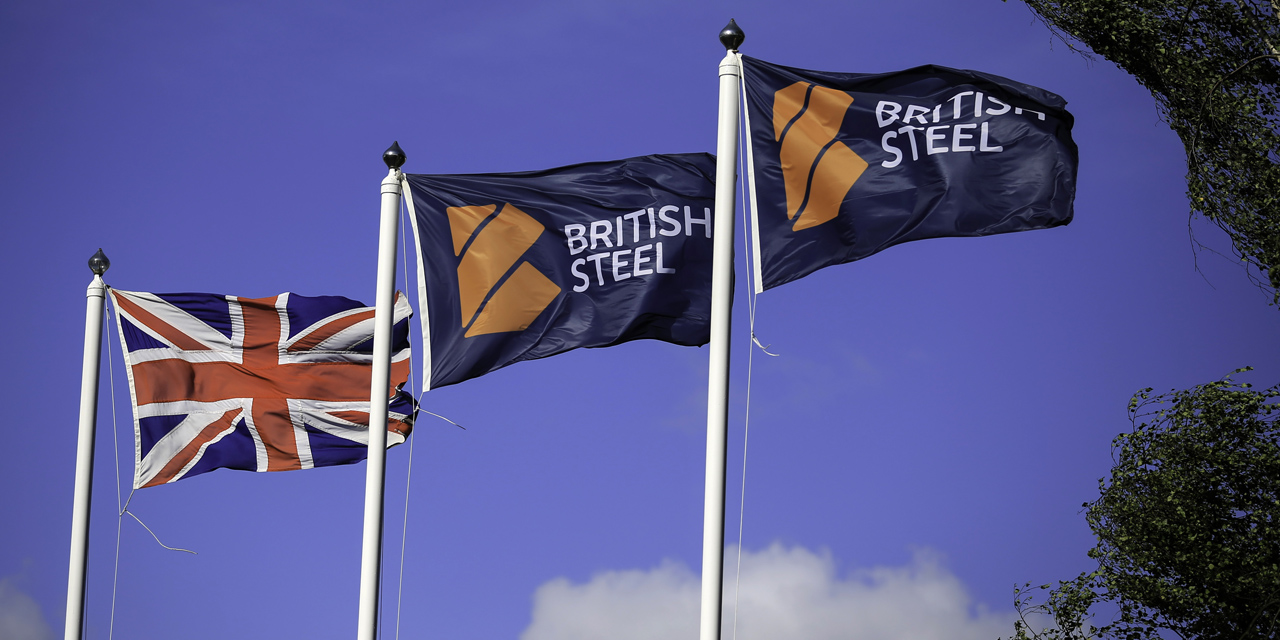
Jingye vows legal action, seeks “full recovery” after UK nationalizes British Steel
China’s Hebei Jingye Group has formally condemned the UK government’s nationalization of British Steel, calling the move an “unlawful expropriation” of its assets and warning that it will pursue full compensation through international arbitration.
In a statement released on Sunday July 19 that circulated widely on Chinese social media and was picked up by major domestic media outlets, Chinese firm Hebei Jingye said the UK government had reneged on earlier commitments to jointly invest in the steelmaker before moving to a compulsory takeover and, ultimately, full nationalization.
The statement follows the UK government’s completion of British Steel’s nationalization on July 16, after legislation proposed in May 2026 came into force. It also follows China’s Ministry of Commerce publicly criticizing the move on July 17, when it accused the UK government of harming the legitimate rights and interests of Jingye as the plant’s Chinese owner.
“Not a single missed wage payment,” Jingye says
In the statement, Jingye laid out its version of its five-year ownership of British Steel, saying it had rescued the company from the brink of insolvency when it acquired the business in 2020, returned it to profitability within a year, and continued to invest in upgrading equipment and technology through the pandemic, Brexit, the Russia-Ukraine war and a period of high inflation. The company said it paid taxes in full, supported thousands of local jobs, and did not miss a single wage payment or make a compulsory redundancy over that period.
Jingye said the UK government’s compensation offer for the seized assets was close to negligible relative to its investment and cited UK National Audit Office figures showing government spending on British Steel’s operations had already reached £377 million ($508 million) by the end of January 2026, with costs projected to exceed £600 million by the end of June and potentially surpass £1.5 billion by 2028.
The company said it had launched consultation procedures under the applicable China-UK bilateral investment treaty and reserved the right to pursue international arbitration, adding that it would also seek to hold UK officials and British Steel’s management accountable for what it called a hastily executed takeover carried out “without adequate preparation or a viable operating plan.”
Trader reaction
Market sources contacted by Fastmarkets pointed to the scale of Jingye’s investment in the business, including plans that were never realized.
“Jingye put in a lot of money and technology and was even planning to build sintering plants overseas to supply raw materials to British Steel. It’s disappointing to see things end this way after that level of commitment,” one China-based source said.
Another trader source noted that British Steel’s financial performance had remained weak for much of Jingye’s ownership. British Steel had continued to post annual losses through much of the period Jingye controlled it, the source said, even as the company invested in the plant.
“It feels like Jingye ended up holding the bag for a business that was always going to be a tough turnaround,” the source added.
Jingye’s statement has not yet specified a timeline for initiating arbitration proceedings or the scale of compensation it intends to seek.


Polish long steel market quiet amid summer lull
Poland’s domestic long steel prices showed mixed trends in the week to Friday July 17, with wire rod prices narrowing downward while rebar prices widened slightly amid weak demand, subdued trading activity and a prevailing wait-and-see attitude among market participants.
Sources reported thin liquidity and limited transactions throughout the week, with the summer slowdown continuing to dampen market activity.
“Demand for long steel in Poland is very weak,” a trader source told Fastmarkets.
In the rebar market, tradable levels were reported at 2,680-2,750 zloty ($709-728) per tonne CPT.
Offers were heard at 2,800-2,850 zloty per tonne CPT, but no transactions were reported at the upper end of the range.
Fastmarkets’ weekly price assessment for steel reinforcing bar (rebar), domestic, cpt Poland widened to 2,680-2,800 zloty per tonne on Friday from 2,700-2,790 zloty per tonne the previous week.
In the wire rod segment, market participants reported tradable levels at 3,000-3,100 zloty per tonne delivered.
Offers were heard at 3,010-3,100 zloty per tonne delivered.
Fastmarkets’ weekly price assessment for steel wire rod (drawing quality), domestic, delivered Poland narrowed downward to 3,000-3,100 zloty per tonne on Friday from 3,000-3,200 zloty per tonne the previous week.

European domestic HRC prices rise in Italy on September-delivery levels; Northern Europe steady in quiet market
Domestic prices for steel hot-rolled coil edged up in Italy on Friday July 17 amid higher levels for material for delivery in September, but remained stable in Northern Europe with market participants largely inactive, source told Fastmarkets.
In Italy, one producer said they had sold HRC at €700 ($802) per tonne ex-works for shipment in September, adding that “this seems to be the market level now, especially considering the confusion with the Turkish HRC quota and high risk of final prices for Turkish material.”
Meanwhile, a buyer said offers for September-delivery material were at €740 per tonne delivered (€725 per tonne ex-works), while indicating that workable prices were at least €720-730 per tonne delivered (€705-715 per tonne ex-works) for the same period.
The offer price was not included in the index calculation due to limited trading at that level.
When asked whether any material was still available for earlier delivery, the buyer said that none of the new rolling was being offered for shipment before September.
“Mills are not in a rush to sell; they are in a very safe position,” the buyer source said, adding that the market was very close to the summer vacation time, so new negotiations would take place from September, when there would be a “significant rebound in the activity.“
Fastmarkets’ daily steel HRC index domestic, exw Italy was €705 per tonne on Friday, up by €4 per tonne day on day from €701 per tonne.
The index was up by €12.19 per tonne week on week and up by €21.25 per tonne month on month.
On the import side, the latest HRC activity included a deal from Vietnam to Southern Europe heard at $730-735 per tonne CFR during the week, which was not widely confirmed by market sources.
Egypt sold material to Southern Europe at $700 per tonne CFR, with costs related to the Carbon Border Adjustment Mechanism (CBAM) split between the buyer and the seller, according to sources.
In the Northern European local HRC market, a buyer reported offers for material scheduled for delivery in September at €740 per tonne ex-works, adding that the “last round of booking was at €710 [per tonne ex-works], but nothing more [was] available at this level.”
Other market participants were mostly quiet on Friday, so the higher offer price was not considered in the index due to a lack of corroboration.
Additionally, due to a lack of input on Friday, prices collected in previous days were carried over to Friday’s index, in line with Fastmarkets’ methodology.
The latest deals were heard at €685-725 per tonne ex-works for September delivery on Wednesday July 15, when a buyer also reported an indication for workable levels at €705-725 per tonne ex-works.
Fastmarkets’ daily steel HRC index domestic, exw Northern Europe was calculated at €710.00 per tonne on Friday, unchanged day on day.
The index was up by €5 per tonne week on week and up by €22 per tonne month on month.
Meanwhile, on Thursday, Germany-based steel producer Thyssenkrupp Steel told Fastmarkets that it had reduced hot metal production at its Duisburg site due to raw materials supply disruptions, caused by the low water levels on the Rhine River.
The steelmaker’s hot strip mill in the Bruckhausen area has installed capacity for HRC of around 3 million tonnes per year but said on Thursday that deliveries to its customers were not affected as a result of this situation.

European local steel heavy plate prices edge down in Italy; rise slightly in Northern Europe
Local prices for steel heavy plate increased slightly in Northern Europe in the week to Thursday July 16, but edged down in Italy as mills rushed to secure orders ahead of the summer holiday period, market sources told Fastmarkets on Thursday.
Italy
Recent transactions for steel plate in Italy were heard at €700-730 ($803-837) per tonne ex-works, down from €710-735 per tonne ex-works a week earlier.
The lowest level, €700 per tonne ex-works, was linked to higher-tonnage orders. One trader argued that this was below current market levels, saying that “after hard negotiations and for normal order volumes, with relatively prompt payment terms, it is still possible to agree a final price of about €710-712 per tonne ex-works with an Italian mill.”
But an Italian producer said that, given lower slab offers, some competitors had already “confirmed plate at minimum levels close to €700 base [per tonne] ex-works.”
The same source said their company was offering base plate at €720-730 per tonne ex-works, but that workable levels for larger tonnages were “definitely closer to €700 per tonne ex-works.” September delivery was said to be the prevailing lead time.
Offers for plate were heard at €715-750 per tonne ex-works during the week, widening from €720-740 per tonne ex-works on July 9. The highest offer, at €750 per tonne ex-works, came from a producer who claimed prices were increasing, though other market participants did not support that view.
A second trader said August buying was effectively finished and that “appetite for orders is not as strong as it was a few days ago.”
Fastmarkets’ weekly price assessment for steel domestic plate 8-40mm, exw Southern Europe was €700-730 per tonne on Thursday, down from €710-735 per tonne a week earlier.
Meanwhile, offers for imported steel slab into Italy remained broadly stable, with Asia-origin material quoted at $570-590 per tonne CIF during the week, unchanged from July 9.
A buyer source said workable levels were around $570 per tonne CIF, citing offers from various suppliers in Asia and potentially Turkey.
Fastmarkets’ weekly price assessment for steel slab, import, cif Italy, was $570-590 per tonne on July 16, unchanged week on week.
Northern Europe
In Germany, plate producers were heard offering material at €800-830 per tonne ex-works during the week.
Sources said mills had little incentive to offer below €800 per tonne ex-works because they had secured some sizeable project orders, though spot-market activity remained limited.
Fastmarkets’ weekly price assessment for steel domestic plate 8-40mm, exw Northern Europe, was €800-830 per tonne on Thursday, narrowing upward from €780-830 per tonne a week earlier.