

ArcelorMittal supplies XCarb to Daimler’s reEconic truck initiative
ArcelorMittal is contributing to Daimler Truck’s reEconic initiative by supplying its XCarb recycled and renewably produced steel grades for key structural components of the vehicle, Kallanish hears from the group.
The project brings together 33 partners across the automotive value chain and explores how circular-economy principles can be integrated into trucks by using materials with high recycled content. ArcelorMittal’s contribution includes S500MC chassis rails and S355MC body components.
The truck aims to maximise the use of recycled materials while targeting to meet the demanding requirements for performance, durability and safety expected in heavy-duty vehicles.
An accompanying TÜV-certified study indicates that up to 80% of key materials including steel, aluminium, glass and plastics could potentially be of circular origin, based on the components already implemented and additional projections.

Wuppermann opens new Austrian tubes plant
Wuppermann Metalltechnik (WMT) has officially opened the new tube plant at its Altmünster site with a ceremonial event.
The new production line enables the manufacture of a significantly wider range of dimensions at the site. It can produce sophisticated and customised geometries with enlarged cross-sections up to 130 mm and all thicknesses ranging from 1.0 to 4.0mm. This enables the manufacture of special profiles with complex cross-sections capable of withstanding structural loads, Kallanish learns.
All tubes and profiles are available with pickled, galvanized or zinc-magnesium-coated surfaces. For applications with particularly high requirements for bending stiffness and torsional strength, high-strength steels such as DP800, DP980 and 22MnB5 are used.
This flexibility opens up numerous new applications, including for shopfitting, conveyor technology, in demanding structures in steel and plant engineering, and in the photovoltaic industry, Wuppermann says.
In July 2023, the Wuppermann Group, headquartered in Leverkusen, Germany, announced an investment of €40 million ($47m) in the construction of the new tube plant.
For the 8,860 m² hall area, 100 precast concrete columns were installed. To enable climate-neutral heating in the future, WMT had geothermal probes with a total length of around 5,000 metres installed. The first tube was produced as early as July 2025 while the commissioning of the inline rolling stand and the tube internal scraping was completed the set-up in autumn.

WTO reviews safeguard measures with focus on steel products
The World Trade Organization (WTO) Committee on Safeguards has announced that it reviewed a total of 38 safeguard actions during its meeting on April 27, with steel and metal products accounting for a significant share of the discussions. Out of the total, 12 measures were related to steel and metal products, highlighting ongoing global trade tensions in the sector.
EU and UK steel measures attract strong attention
Several WTO members raised concerns and exchanged views on safeguard measures implemented by the EU and the UK.
In particular, discussions focused on:
- The EU’s investigation into grain-oriented electrical steel
- The EU’s measure on ferro-alloying elements
- The UK’s adjustment of tariff-rate quotas (TRQs) on certain steel products
These measures drew multiple interventions from member countries, reflecting their broader impact on global steel trade.
Among the most debated cases were Egypt’s three investigations on iron and steel products, and EU measures and investigations related to steel inputs and specialized steel products These cases generated concerns among multiple WTO members regarding market access and trade distortions.
Dispute over US tariffs intensifies
The meeting also addressed ongoing disagreements over US tariffs. The US stated that its measures are not safeguard actions but are justified under the exception of national security. However, India disagreed with the US characterization of its measures and asserted that based on their characteristics they appeared to be within the scope of the Agreement on Safeguards, while Brazil and China expressed concern about the broader implications of the US measures for the multilateral trading system and global supply chains. Brazil and India said that they would continue to closely monitor developments concerning these measures.
Steel remains at center of global trade tensions
The discussions at the WTO underline the central role of steel in current trade disputes, with safeguard measures increasingly used to address import pressures and protect domestic industries.
At the same time, differing interpretations of trade rules and rising protectionism continue to challenge the multilateral trading system.
Author: SteelOrbis Editorial Team


thyssenkrupp AG and Jindal Steel International suspend share talks


Trump threatens higher tariffs on European cars, trucks
US President Donald Trump on May 1 threatened to increase tariffs on EU car and truck imports to 25% for what he claims is a failure to comply with the US-EU trade agreement.
The US and the EU reached a deal in Turnberry, Scotland, in July 2025 to lower tariffs to 15% on most EU imports, including cars and car parts. Trump, in a May 1 Truth Social post, accused the EU of failing to comply with the trade deal.
“It is fully understood and agreed that, if they produce Cars and Trucks in U.S.A. Plants, there will be NO TARIFF,” Trump wrote.
The increased tariff will be implemented under Section 232 of the Trade Act of 1974, a White House official told Platts, part of S&P Global Energy. This is the same trade law that Trump has used to impose 50% tariffs on steel, aluminum and some copper imports.
“While the Trump administration has kept our end of the bargain, the EU has failed to make substantial progress on their agreed-upon commitments, including on auto trade barriers, digital services, carbon taxes, and other provisions of the agreement,” the White House official said.
Section 232 differs from the legal justification Trump used to implement country-specific tariffs on dozens of US trading partners, which the Supreme Court in February determined was unconstitutional.
Trump’s move shows “clear unreliability,” Bernd Lange, chair of the European Parliament’s International Trade Committee, said in a post on X, formerly known as Twitter.
“Trump’s plan to impose 25% tariffs on EU cars is unacceptable,” Lange said. “[The European Parliament] is still honouring the Scotland deal, working to finalise legislation. While the EU delivers, the US side keeps breaking its commitments.”
The EU briefly suspended work on the trade deal in February, accusing Trump of departing from the terms of the trade agreement after he implemented a 10% global tariff following the Supreme Court’s tariffs decision.
The US and EU recently signed a memorandum of understanding setting a framework for a strategic strategic critical minerals agreement.
Author: Rachel Looker


Irepas: CBAM to favour verified mills by 2027
Mills with verified emissions data are expected to gain a competitive advantage as buyers prioritise suppliers with reliable carbon data by 2027, Kallanish learns from the producers committee at the recent Irepas meeting in Amsterdam.
However, only a limited number of suppliers, particularly in Japan and South Korea, are currently prepared.
Trade policy remains a central concern for producers, with the EU’s Carbon Border Adjustment Mechanism (CBAM) not expected to trigger immediate price changes, while producers anticipate medium-term disruption.
Overall, despite relatively stable demand and pricing conditions, the outlook remains uncertain, with energy costs, geopolitical developments and regulatory pressures posing ongoing risks to the global steel sector.
Meanwhile, the global steel industry is under pressure from rising costs, weak economic growth and regulatory complexity. Raw material prices have increased significantly, while limited ability to pass costs to customers continues to squeeze margins (see separate story).
Demand remains fragile, with subdued growth across regions limiting recovery, while energy markets are highly volatile due to tensions in the Middle East, with no clear timeline for resolution.
Logistical constraints are adding to cost pressures. Port congestion in the Middle East, limited truck availability and rising freight costs, driven by higher bunker fuel prices and fuel shortages, are increasing delivery costs.
Production disruptions in Iran have also impacted the global semis supply, with around 10 million tonnes of capacity reportedly damaged and recovery expected to take six to 12 months, contributing to higher Chinese semi-finished exports.
On the raw materials side, availability remains a structural constraint. European producers reliant on scrap have limited flexibility to switch to alternative inputs such as HBI due to high energy requirements, suggesting little change in production routes in the near term.
Author: Elina Virchenko


European HRC prices flat amid holiday lull, with buyers convinced ceiling has been reached
Labor Day holiday are being celebrated in most European states, excluding the UK, Ireland and the Netherlands, leaving the steel sector very quiet.
Market participants broadly agree that the price gains seen in the first quarter of 2026 were driven by the region’s evolving regulations – notably the new trade measures set to take effect in July and the implementation of Carbon Border Adjustment Mechanism (CBAM) – but domestic HRC prices now appear to be stabilizing, with limited further upside expected in the near term.
“No changes, no market and no bookings, apart from back-to-back [deals],” a source in the Netherlands said.
Market participants also acknowledged that some June-delivery tonnes remain to be placed, but few expect to see much of a pick-up in demand helping to clear it, with underlying buying activity subdued and showing no signs of turning.
But some European steelmakers sitting on unsold June-delivery tonnages have been forced to let go of those volumes at below the €700 ($819) per tonne ex-works threshold, sources said.
And a buyer in Northern Europe told Fastmarkets that mills with remaining second-quarter HRC still on their books were now moving it on at around €680–700 per tonne ex-works.
Looking ahead to July, initial offers for HRC deliveries into Germany and the Benelux region came in at €730-750 per tonne delivered – equivalent to €715-735 per tonne ex-works – earlier this week.
But buyer appetites are limited, sources said.
“Mills are trying to hold the line on pricing, but there’s virtually no traction,” a distributor source said, adding that steel service centers were refusing to absorb prices at the current levels, largely because they have no room to push those costs further down the supply chain.
Fastmarkets’ daily steel hot-rolled coil index domestic, exw Northern Europe was calculated at €702.50 per tonne on Friday May 1, down by €1.50 per tonne from €704.00 per tonne on Thursday April 30.
The index was down by €7.50 per tonne week on week and by €10.58 per tonne month on month.
Prices have recovered by over €100 per tonne over the past seven months and the index averaged €712.67 per tonne at the midpoint in March 2026, compared with a monthly average of €589.40 in October 2025.
Despite the recent decline, however, most industry stakeholders said the current downturn was likely to be only temporary and expect domestics prices to rise later in the year, supported by the trade regulations.
However, slow real demand was seen as a major stumbling block for any substantial rebound, sources said.
“Real demand is [likely to be] quite dull for the rest of the year; but CBAM and the new trade regime will probably help to secure some uptick in [HRC] prices – due to the shift away from imports,” a buyer source said.
In Southern Europe, Fastmarkets’ daily steel hot-rolled coil index domestic, exw Italy was calculated at €695 per tonne ex-works on Friday, unchanged from Thursday.
The index was down by €5.00 per tonne week on week but stable month on month.
The Italian market was totally quiet on Friday due to the Labor Day public holiday.
Earlier this week, local Italian mill offers for June delivery were heard at around €720 per tonne delivered (€705 per tonne ex-works). But most sources, including sellers, put the realistic transaction level in Italy at €680-700 per tonne ex-works
Some went further, suggesting that €700 per tonne delivered (€685 ex-works) represented the ceiling of what the market will actually bear – with deals also possible closer to €690 per tonne delivered, or €675 per tonne ex-works. These lower levels are not showing up on formal mill price lists, but they reflect the level at which actual trades are happening.
Turkish coil was booked at €590-600 per tonne CFR to Italy earlier in the week, including the anti-dumping duty, and a medium-sized cargo of Algerian HRC was sold to the Iberian market at around $765 per tonne CFR.
A large tonnage of Egyptian HRC was sold into Spain at around €618 per tonne CFR, including the anti-dumping duty. The definitive dumping duty for Egyptian flat products was set at 11.7% in September 2025.

Polish steel rebar prices up on improved demand, but growth limited
Some rebar offers from mills were heard at 3,050 zloty ($843) per tonne CPT, but no trading activity was reported at such prices during the assessment period.
Buyers were heard to be resisting higher prices, with market sources saying that although there were some requests for materials from key sectors such as infrastructure, it still was “not enough” to say that demand was good.
“Buyers are buying just to replenish their stocks. Demand from real estate is fine but there are no big infrastructure projects,” one sector source said.
Over the week, market participants reported rebar transactions around 2,800-2,900 zloty per tonne CPT, noting signs of upward market pressure.
Fastmarkets’ weekly price assessment for steel reinforcing bar (rebar), domestic, cpt Poland, was 2,800-2,900 zloty per tonne on Thursday, widening upward from 2,800-2,850 zloty per tonne the previous week.
The recent growth in Polish domestic rebar prices matched similar trends across Europe, where prices have also been following an upward trajectory amid higher production costs.
Fastmarkets’ weekly price assessment for steel reinforcing bar (rebar), domestic, delivered Northern Europe, was €700-735 ($821-862) per tonne on April 29, widening upward from €700-710 per tonne on April 22.
Meanwhile, the weekly price assessment for steel reinforcing bar (rebar), domestic, exw Italy, was €700-730 per tonne, also widening upward, from €700-725 per tonne the previous week.
On the other hand, prices for drawing quality wire rod in Poland were unchanged, with market sources citing low buyer appetite for material, but with some expectation that the market will improve during the summer.
Estimates of tradable prices were heard at 3,000-3,050 zloty per tonne, delivered.
Fastmarkets’ weekly price assessment for steel wire rod (drawing quality), domestic, delivered Poland, was 3,000-3,050 zloty per tonne on Thursday, unchanged week on week.
Author: Melissa VanDervort


EU quota uncertainty to hit steel trade
Protectionist policies and regulatory uncertainty are creating significant challenges for global steel trade, particularly for exporters to Europe, Stemcor managing director Europe Julian Verden told delegates at Kallanish Asia Steel Markets in Kuala Lumpur last week.
Verden said the implementation of the EU’s Carbon Border Adjustment Mechanism and evolving tariff-rate quota system are creating uncertainty for steel exporters. Asian producers in particular remain unclear about their country-specific quota allocations, while delays in verification procedures are complicating compliance efforts. Although companies have begun engaging verifiers, EU importers will likely remain uncertain about the final cost implications until next year.
The uncertainty is already affecting trade flows, with EU steel imports expected to weaken in the third and fourth quarters, potentially placing financial strain on trading companies exposed to the market.
Verden also highlighted widening regional price disparities driven by protectionism. Steel prices in the US remain significantly higher than in Europe, with US hot-rolled coil trading above $1,200/tonne compared with around $800/t in Europe.
While tariffs may support domestic prices, European steelmakers risk losing global competitiveness due to higher costs and restrictions on exports. Value-added products could face a smaller impact from tariffs, though developing such markets requires additional investment, product adaptation and new customer relationships.
“TRQs, which are the quotas for Europe, are going to be 18 million tonnes starting on the 1st of July. The problem for countries all over the world, particularly in Asia, who have traditionally been significant importers into the EU, is that they don’t know what their individual country quotas are going to be,” Verden added.
Looking ahead, Verden warned the third quarter could prove particularly volatile for traders. Shipment delays linked to geopolitical tensions and disruptions in Gulf trade routes, combined with buying strategies aimed at securing larger quotas before new restrictions take effect, may result in severe financial pressures. Some trading companies could face unexpectedly high costs and losses during the period, potentially leading to “casualties” among market participants.
XSteel trading director Virgilio Lozano meanwhile told delegates that US protectionist policies continue to shape steel trade flows across the Americas. Section 232 tariffs have been raised from 25% to 50%, with the possibility of further increases, reinforcing barriers to imports; consequently, US mills have achieved 80% capacity utilisation.
At the same time, trade tensions persist with Latin America and Asia, while tariffs imposed by Mexico on non-FTA countries are redirecting Asian steel shipments towards other markets in the region. Lozano noted that Latin America remains a major destination for imported steel, with annual imports of around 80 million tonnes, creating opportunities for exporters as trade flows continue to shift.
Author: Burak Odabasi
EU reaffirms Russian slab imports phaseout by 2028
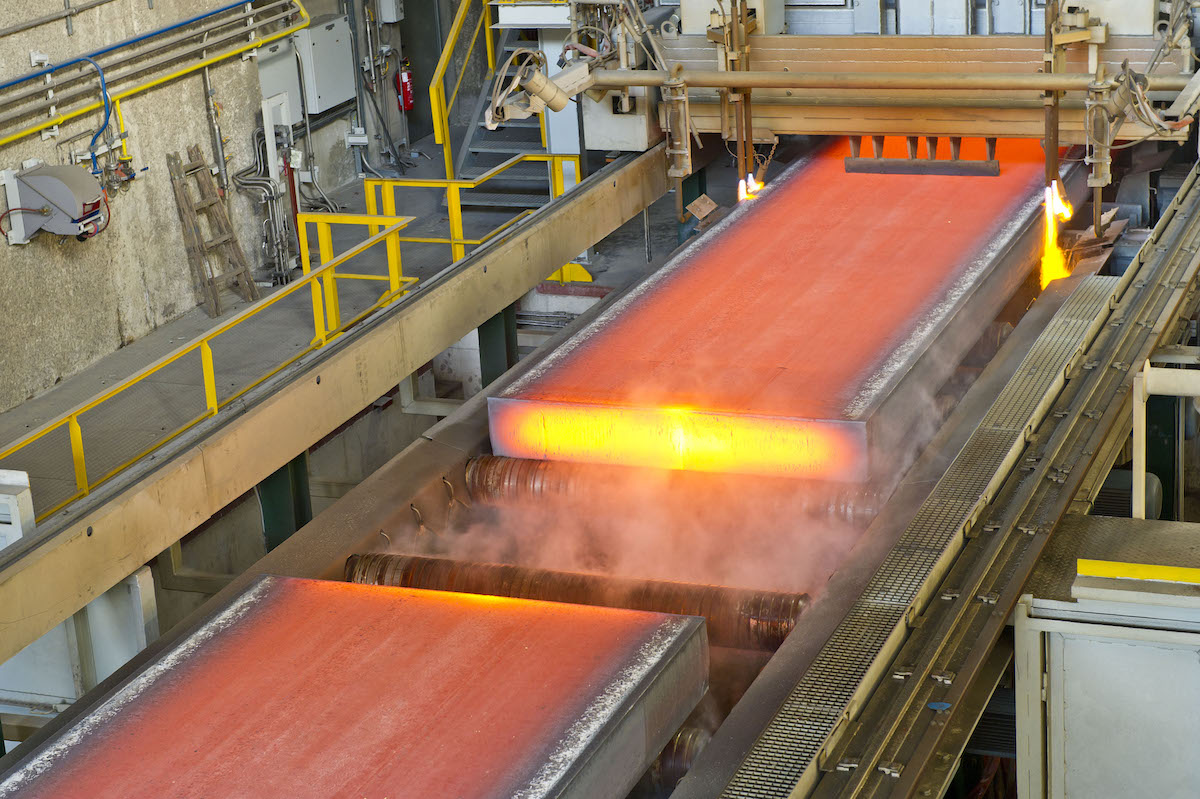
Some limited imports of Russian-origin steel products, notably slab, will continue until 30 September 2028 under transitional arrangements laid down in existing EU restrictive measures, Kallanish notes from a joint statement issued on 17 April by the European Parliament, Council and Commission.
To ensure progressive and steady diversification, these imports are capped by quotas with volumes decreasing annually. The institutions add that the relevant measures underpin a trajectory towards a complete phase-out of the remaining Russian steel imports by 30 September 2028.
Author: Elina Virchenko