


Highlights from the EUROMETAL & ASSOFERMET Southern Europe Meeting in Milano
Following the successful EUROMETAL & ASSOFERMET Southern Europe Meeting in Milan, we are pleased to share a series of interview videos produced by Siderweb featuring key voices from across the European steel value chain.
The conference brought together distributors, service centres, traders, manufacturers, and industry experts to discuss one of the most pressing challenges facing Europe today: “Europe: Last Call – Deindustrialisation and the Green Deal: an increasingly irreversible scenario?”
The discussions focused on:
▪ European industrial competitiveness
▪ CBAM and safeguard measures
▪ Rising energy and regulatory costs
▪ Global trade flows and industrial resilience
▪ The future of downstream steel industries in Europe
Watch the interviews by Siderweb:

Alarm bells ringing across Europe: industry comes to a standstill
On 28 April 2026, the heart of European manufacturing stopped beating for an hour. ESN organised a coordinated walkout at 19 plants: a wake-up call from those who build Europe with steel and hard work.
From France to Slovakia, via Germany, Spain and Italy, they switched off the machines:
R.Bourgeois
ESTAMODE
Gebr. Waasner Elektrotechnische Fabrik Gmbh.
LAGOR Srl
Malvestiti Group
Oiki Acciai Inossidabili Spa
ORANGE1 HOLDING
STEMA TECH SRL
thyssenkrupp
TRANCERIE EMILIANE S.p.A.
VALTARO MOTORI SRL
VMF
Many other companies joined in symbolically. The message to politicians is clear: competitiveness is at risk. We need concrete strategies, support for the transition and protection of production.
The machines stopped for an hour so that they would not have to stop forever. Industry needs answers. Now.
Read more: esnnetwork.eu
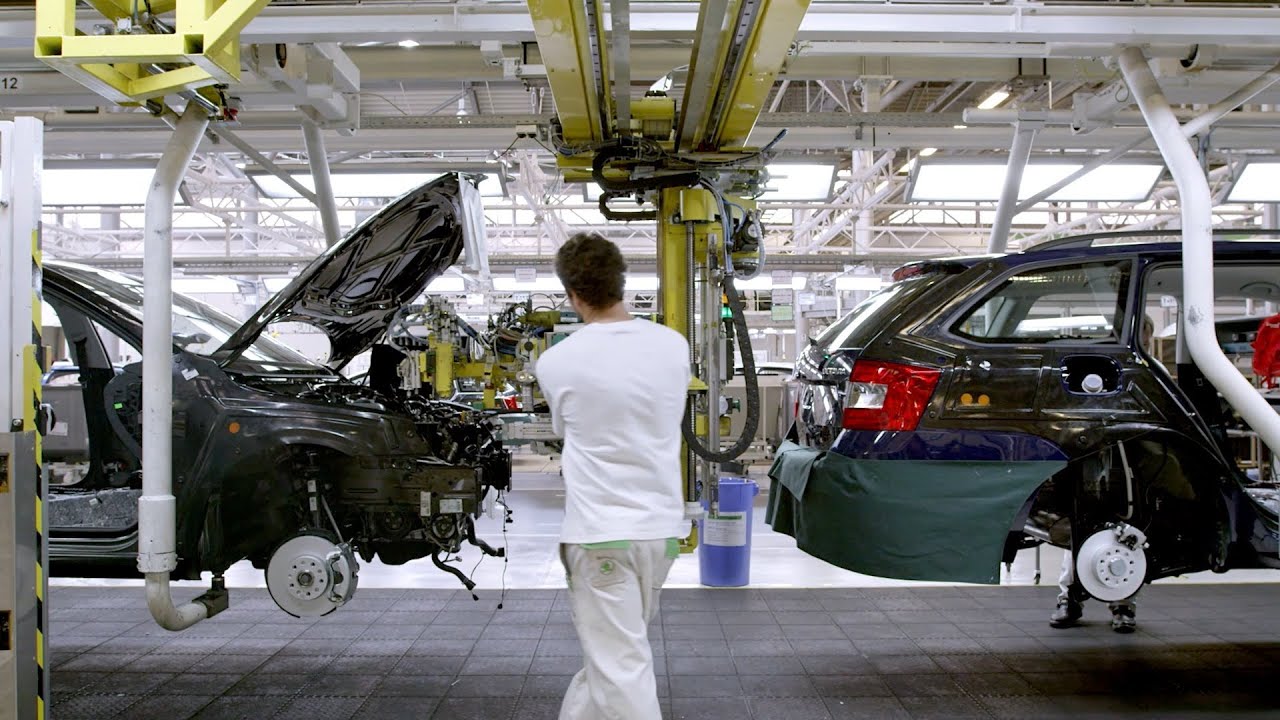
EU carmakers struggle for solutions amid challenges: conference
EU carmakers are in a challenging squeeze between reduced consumer demand for new cars and increased competition from technologically advanced Chinese suppliers, with little prospect for improvement. While large carmakers have financial cushions, smaller car parts manufacturers are feeling the brunt of this trend.
So said automotive session panellists during last week’s European Economic Congress in Katowice attended by Kallanish.
Compared to the pre-pandemic high in 2019, the EU has seen annual new car registrations fall by some 2 million tonnes. “I don’t see anything on the horizon that indicates we can recover those 2 million registrations,” said Polish Automotive Industry Association president Jakub Farys. Poland is however an outlier, posting an all-time record combined passenger and light commercial vehicle registrations in 2025.
Chinese carmakers have meanwhile grown their EU market share from 2% in 2024 to 8% in 2025, and to 11% in the first quarter of 2026. “Competition is a normal part of our market, but it’s going very fast,” he noted. Chinese carmakers’ chief executives have said they are aiming for 15% in the short term. “This means that 1.5m cars … will not be produced in Europe.”
“The condition of the overall automotive industry in Europe is facing many questions, dilemmas and points for which it does not have an answer,” said Janusz Puzon, plant director at Stellantis Tychy vehicle plant. The automotive industry has expanded rapidly since the 1950s/60s, led largely by European technological solutions, but this is changing, necessitating a fight to maintain market share.
Customer attitudes are also changing. Owning a car used to be “like a dream,” he continued. “For many of us, many years ago, it was the only form of communication, it was something very fundamental; but today, I have the impression, it has become an extension of the mobile phone or laptop.”
From the perspective of car parts suppliers, who have seen over 100,000 job losses in recent years, “there is no special idea [solution] at the moment,” said Tomasz Beben, president of Poland’s Association of Automotive Parts Distributors and Producers. The industry is in dialogue with the automotive industry and the European Commission, resulting in the “first signs of change”.
He added: “We’re talking about some form of local content in order to support the core of the automotive industry in Europe.” Otherwise, there will be further car parts market share loss because “these parts factories will simply be relocated to cheap labour countries”.
The industry is under pressure amid Chinese competition and restricted US market access, as well as unfulfilled expectations for European vehicle electrification after carmakers had invested considerable sums into electric vehicle production, said Mateusz Starczyk, chief executive of automotive leasing firm mLeasing.
Carmakers have nevertheless accumulated capital over the years to provide a cushion for restructuring. “What awaits the European automotive industry is most certainly a large restructuring,” he noted. The toughest component will be the cost of labour, which is much higher than among Asian competitors.
Ford Polska ceo Attila Szabo pointed out that 2025 saw a reduction in EU20 commercial vehicle sales volume, which is usually a bad sign for the economy. Overall automotive sales surged in March, with various foreign suppliers pushing for higher numbers to close the quarter. “I don’t think we’ll have the same numbers in April,” he noted.
Competition with China is difficult. “The EU must do more. The Made in EU agenda is a fantastic thing; it’s the right approach to save ourselves from the full Asian attack,” he continued. But due to the highly integrated nature of the European industry, it would be wrong to exclude Turkey and the UK from the measure as this would raise production costs.
Jacek Puzuk, ceo of diesel engine parts manufacturer Wuzutem, suggested EU carmakers should focus on what they have done well the last 70 years. “Striving for zero emissions, I think, it not necessary for us. Striving for minimising emissions, yes,” he noted. Unlike the polluting engines of 20-30 years ago, petrol and diesel engines built today in Europe can compete with Chinese engines. “The Chinese are not able to produce low-emission petrol or diesel engines,” he added.
Challenged by the moderator about whether consumers want to remain dependent on costly imported fuel, he suggested biofuels could be used to reduce costs. Farys added the cost of petrol is one thing, but the cost of electricity can also be prohibitive in the case of electric cars. The infrastructure in Europe is not ready yet for full electrification, which is something carmakers have no control over, he added.
Shifting to producing electric vehicles just shifts the dependence to imported batteries, which creates potential problems with China, Beben warned.
Panellists also touched on the growing trend of carmakers looking to diversify into production for agriculture or for defence purposes, otherwise known as dual use. “We’re looking at sectors where diesel engines will still be needed for many years, such as heavy industry, diggers, heavy trucks, locomotives, especially in the US market,” said Puzuk. “The talk of diesel heading for its death, maybe one day, yes, but that will not happen for a very long time.”
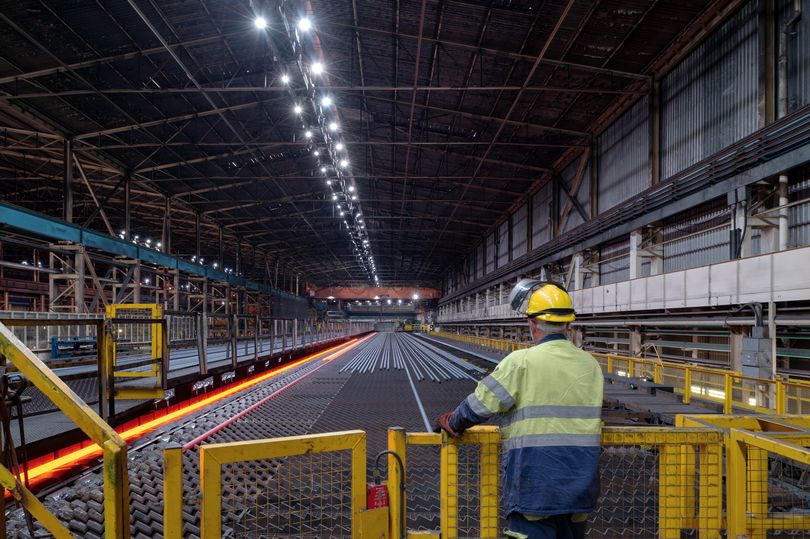
NW European rebar prices seen picking up
An increasing number of benders in northwestern Europe are preparing for higher rebar prices going forward. These expectations vary within a base price range of €450-€480/tonne ($526-$562).
The upper end value was reportedly heard at the Wire trade fair by one producer, Kallanish hears from a manager of a German purchasing group. “They were pretty pronounced about it, and I was pretty baffled by the sheer degree of it,” he says.
Another manager of a larger distribution group is sceptical and finds that “€480 might be wishful thinking.” Both managers see the base price currently moving from €440 towards €450.
Others say that €450/t has been reached already and buyers should be prepared for paying more going forward. “You won’t get any [material] for €440 anymore,” says one buyer. “€450 to €480” is the word now.”
His view is echoed by others, including a manager of another large distributor, with the expectations of higher prices not limited to buyers of small volumes.
One factor that matters is the distance to the mills, which could account for €10-20 in the base prices, which include transport costs.
In May, one mill is reportedly taking a three-week production break at its steelwork for the installation of new transformers. The interruption will not affect market supply, because inventories at the mill have already been filled for that period.
The revamp and the stoppage have been communicated only informally, in conversation, according to one observer. “Mills do not like to announce such things too openly because of concerns that some customers will get nervous and go elsewhere with their orders,” he says.

Strong participation and clear call to action at Steel Net Forum Iberia in Santander
On 27–28 April 2026, the Steel Net Forum Iberia brought together around 200 steel industry leaders in Santander, confirming the growing relevance of this joint initiative organised by UAHE and EUROMETAL.
The event gathered a broad cross-section of the steel value chain, including producers, distributors, traders and processors, for two days of high-level discussions on the key challenges shaping the sector in Europe and beyond.
In his closing remarks, Manuel Nobre, President of Açomefer, highlighted the continued growth of the Steel Net Forum as a clear reflection of the need for stronger collaboration across the industry. He emphasised that such initiatives are essential to foster dialogue, share insights and collectively address the increasing complexity of the steel market.
Throughout the forum, participants engaged in an intensive and diverse programme that provided a comprehensive overview of current market dynamics. While the discussions offered valuable insights, they also confirmed the high level of concern across the sector, driven by rapid economic, regulatory and geopolitical changes.
A key focus of the event was the ongoing EUROMETAL Call to Action, which continues to gain strong momentum across Europe. Participants were encouraged to actively support and promote the initiative, reflecting the urgent need to safeguard the entire European steel value chain.
The evolving implementation of CBAM and new safeguard measures were also at the centre of discussions. These instruments represent major challenges for the industry, requiring companies to remain vigilant, adaptable and increasingly agile in a fast-changing regulatory environment.
More broadly, the forum addressed the outlook for the European economy, with particular attention to the importance of strengthening industrial competitiveness through initiatives such as “Made in Europe” and future investments in infrastructure, energy, defence and the automotive sector.
Participants also benefited from a keynote intervention by Juan Rodríguez Garat, who provided a compelling analysis of the current geopolitical landscape. His perspective highlighted the increasing unpredictability of global affairs and the growing polarisation shaping international trade and industrial policy.
Market data presentations offered further insight into global and Iberian steel trends, particularly the evolution of imports and the impact of CBAM. A central concern remains the growing share of steel-containing downstream products entering the European market, raising questions about the effectiveness of current trade defence instruments if such products remain outside their scope.
The forum concluded with a roundtable discussion bringing together representatives from across the steel value chain. The debate underscored the importance of fostering complementarity between producers and distributors, rather than rivalry, and highlighted the need for clearer roles, greater differentiation and stronger value-added strategies in an increasingly competitive market.
Looking ahead, participants confirmed their commitment to continuing this dialogue, with the next Steel Net Forum Iberia already announced for 2027 in Cascais.
The strong engagement in Santander sends a clear message: in a period of profound transformation, cooperation across the entire steel value chain is more essential than ever to ensure the resilience and competitiveness of the European steel industry.


European HRC market loses momentum amid sluggish demand
Upward momentum in the European hot-rolled coil market has faded amid weak demand and elevated inventories, with prices largely holding steady, Fastmarkets heard on Tuesday April 28.
For July delivery, some mills were indicating higher offers, but overall, the market was quiet, with both buyers and sellers holding back.
In Germany, offers were heard around €730-750 ($856-879) per tonne base delivered (€715-735 per tonne ex-works) for July-delivery coil.
One source said that one European mill was aiming for a higher price of €770 per tonne delivered for July, which would net back to €755 per tonne ex-works, but claimed that such an offer was “far away from the market reality.”
Buyers, however, were mainly indicating achievable prices at no higher than €700-710 per tonne ex-works on Tuesday. Some sources suggested prices below €700 per tonne ex-works could still be achieved for bigger tonnages.
“Demand situation is very dramatic at the moment; the level of stocks is high and it is going down very slowly, so there is no need to restock,” a steel service center in Europe said.
“Mills hope to consolidate offers of €750 per tonne delivered and higher for July, but it’s going to be difficult. Demand is not supporting any increase, stocks are high, there is still plenty of imports in the market, there is no shortage of coil,” a buyer in Germany said.
Fastmarkets’ daily steel hot-rolled coil index domestic, exw Northern Europe was assessed at €705.63 per tonne on Tuesday, down by €2.70 per tonne from €708.33 per tonne on Monday April 27.
The index was down by €2.37 per tonne week on week and down by €11.87 per tonne month on month.
Prices have recovered by over €100 euro per tonne over the past six months. Notably, Fastmarkets’ Northern Europe HRC index averaged €708.05 per tonne at the midpoint in March 2026, compared with a monthly average of €589.40 in October 2025.
Overall, sources agree that the shifting regulatory framework — particularly the new trade policy coming into force in July, as well as the Carbon Border Adjustment Mechanism (CBAM) — has been fueling the recent uptrend. But for the time being, domestic HRC prices appear to have reached a ceiling.
Meanwhile, in Southern Europe, Fastmarkets’ daily steel hot-rolled coil index domestic, exw Italy was calculated at €700 per tonne ex-works on April 28, unchanged from the previous day.
The index was stable week on week but up by €2.50 per tonne month on month.
In Italy, local seller still had June-delivery coil available, with offers heard at €720 per tonne delivered (around €705 per tonne ex-works).
Buyers reported lower tradeable values around €690-700 per tonne ex-works.
Trading in the spot market remained slow, with local sources also reporting holding sufficient stocks and also waiting for quotas information for a new trade regime.
Meanwhile, new import HRC offers to Europe remained limited. Buyers are holding back ahead of revised safeguard quotas from the European Commission, effective July 1, with uncertainty over the regime and potential costs from CBAM weighing on demand, while Middle East-related disruptions and higher freight rates continue to restrict Asian import offers.
Sources reported Indian HRC available at €600-605 per tonne CFR, CBAM not paid, in Italy. Shipment was May-June.
The most recent offers for Turkish HRC were heard at €620-630 per tonne CFR Italy, including the anti-dumping duty but excluding CBAM costs. Latest reported sales were heard in the second half of April at €590 per tonne CFR from one seller for a big tonnage with lead times in July. Another cargo was booked around €620-625 per tonne CFR from another seller.


Traders at IREPAS: Geopolitical tensions and higher costs disrupt steel trade flows
Speaking during the panel session on the last day of the SteelOrbis 2026 spring Conference & 94th IREPAS Meeting held in Amsterdam on April 26-28, Wilhelm Alff, director at Duferco and chairman of the traders committee, shared the committee’s assessment of current market conditions, highlighting weakening demand, regulatory pressures and rising geopolitical risks.
According to the committee, crude steel production in China reached around 960 million mt in 2025, while data from the first quarter of 2026 indicate that output may decline further or at best remain stable, with no clear signs of growth. In China, the sharpest drop was observed in the rebar segment, in which production fell by 12 percent, reflecting the ongoing downturn in the construction sector. The only improvement in China was the growth of more than 10 percent in iron ore inventories, mainly due to strategic stock building, highlighting the disconnect between raw material positioning and weak end-user demand.
This weakness in demand is particularly evident in Europe, where the overall economic outlook remains poor. Public spending is increasingly being redirected toward defense and social support rather than infrastructure, especially in Germany, limiting the recovery potential for steel consumption. The committee also pointed out that existing production capacity in the EU continues to exceed demand, noting that even prolonged production stoppages by major producers have had little visible impact on the market.
CBAM and safeguard measures increase pressure on trade
A key concern for traders remains the implementation of the EU’s Carbon Border Adjustment Mechanism (CBAM). The committee chairman emphasized that, in the current environment, traders are advised to use default emission values when calculating CBAM costs in order to avoid risks, although this approach increases cost exposure. Uncertainty surrounding calculation methods and verification procedures continues to complicate transactions, making it essential to involve producers and clearly define contract terms.
In addition, recent changes to the EU safeguard system have added further pressure. Quotas have been reduced by nearly 50 percent, while out-of-quota duties may rise to as high as 50 percent. Market participants criticized the lack of adjustment in country-specific quotas, even where suppliers have not delivered material for extended periods. As a result, portions of the quota system remain effectively unusable, further tightening supply and negatively affecting buyers and end-users in the region.
Geopolitical tensions disrupt supply chains and raise costs
Against this backdrop, traders also highlighted the growing impact of geopolitical tensions, particularly in the Middle East. According to Mr. Alff, escalating tensions have tightened raw material supply chains and pushed costs higher, significantly slowing trading activity. Mills are increasingly relying on short-term sourcing strategies and opportunistic cargoes, while additional costs for transporting billets overland from Omani ports are estimated at around $40/mt. Severe port congestion is further complicating trade flows, making execution increasingly difficult.
Despite these disruptions, the committee believes that the current situation is still being treated as temporary rather than structural. However, logistical constraints, especially in key maritime routes, continue to limit cargo movements and add uncertainty to global trade.
Shifting trade flows and uncertain outlook
Commenting on global trade flows, Mr. Alff noted that exporters are likely to face growing challenges in accessing traditional markets. Tightening EU quotas and rising protectionism are forcing suppliers to seek alternative destinations, though options are becoming increasingly limited as more countries introduce similar trade barriers. Africa is expected to remain a key growth market in the medium term, supported by rising imports from Asia, particularly China, although the expansion of local production capacity and potential protectionist measures could gradually slow this trend.
Regarding China, the committee expects semi-finished steel exports to remain at elevated levels but under tighter control, as the Chinese authorities are likely to manage trade flows more actively to avoid another sharp surge. While the ongoing crisis in the Gulf region could support demand for Chinese material, its impact will largely depend on logistical conditions and the ability to move cargoes efficiently.
Looking at other regions, market conditions in the US and Latin America were described as relatively stable, with the US benefiting from solid demand driven by public infrastructure projects.
Overall, the traders committee underlined that the global steel market is entering a period of heightened uncertainty, shaped by weak demand in key regions, regulatory changes and geopolitical risks. In such an environment, Alff concluded that it is extremely difficult to predict price trends, emphasizing that market participants will need to continuously monitor developments and adjust their strategies accordingly.
Author: SteelOrbis Editorial Team


Iberian distributors remain cautious over CBAM, trade regime
Iberian steel distributor representatives have expressed optimism regarding the implementation of CBAM and the forthcoming introduction of the EU’s new trade defence measure. They, however, remain cautious in the face of the uncertainties posed by the complexity of the legal framework, Kallanish heard during the EUROMETAL Iberia Steel Net Forum in Santander.
“We need to work on strategies to simplify the accreditation procedures for verifiers within the CBAM mechanism,” said Juan Ibañez Siles from law firm Bln Palao Abogados. “We see that international accreditation will be carried out in close cooperation with national bodies and producers. This will significantly speed up the process.”
According to participants, it is difficult to maintain two separate verification processes – one for manufacturers and another for importers – so the aim is to simplify the system.
“Both parties have a vested interest in having a verification process in place. The best solution would be for each manufacturer to carry out on-site verification. We also consider it necessary for the producer to provide the importer with bank guarantees to ensure compliance with the regulations,” the layer observes. “CBAM is here to stay. It cannot be suspended. This is only possible in the fertiliser sector, due to a lack of competitiveness.”
Lars Hillmann of the Cattwyk law firm said the EU’s safeguard replacement measure aims to protect the industry in the long term and restore its competitiveness. The legislative framework is very broad and may raise concerns in the short term, although it is a very good solution as it has no expiry date, unlike the current safeguards, which must end on 1 July.
Steel distributors are anticipating a problem with orders that have already been placed but are due to arrive after this date.
“There can be no legal implications when the goods are in transit, for example, for delivery in the second quarter and, therefore, under the new trade rules, the law is clear, and protection measures cannot be applied retrospectively,” clarified Hillman.
Another problem stems from varying customs treatment between EU countries, he continued. “In Spain, Portugal and Italy, importers can submit a customs declaration and then, depending on the outcome, withdraw part of it and, more importantly, the volume of goods cleared. This does not happen in other countries that have found themselves in different circumstances,” he said.
“I see no way of harmonising customs treatment. It is an issue that needs to be addressed because all EU importers must have the same market conditions. But I am not very sure that we could find a good common proposal to solve differences,” he added.
Alfonso Hidalgo de Calcerrada, head of the economic department at Spanish steel industry association Unesid and chairman of the economic committee at worldsteel, noted CBAM continues to create uncertainty within the sector and that its scope should be extended.
“This uncertainty is reflected in the latest transactions in Q4 2025, where importers increased their purchases before this complex mechanism came into force. Neither the verification of emissions nor the allocation of quotas to different countries seems to be very clear to the industry, even more so ahead of implementing the new trade rules in June,” Hidalgo observed.
The process within the EU is highly complex, with the industry also demanding that steel derivatives be covered. “This is an issue that we expected to be resolved within a year, although we would like to do so sooner,” he concluded.
Author: Todor Kirkov


IREPAS: Global steel market steadies amid weaker growth, shifting demand, rising focus on access
Slower than anticipated GDP growth, persistent oversupply and geopolitical disruption — particularly linked to the Middle East — are reshaping steel markets, shifting competitive advantages away from pure cost efficiency toward security of supply, domestic capacity and market accessibility, Alexander Gordienko, export director of Celsa Group said during his presentation.
Global steel output and long steel demand: uneven recovery across regions
The global economic backdrop remains fragile. According to the April 2026 update from the International Monetary Fund, global GDP growth expectations for 2026 were revised down to 3.1% from 3.3% projected in January and this is assuming that the military conflict in the Middle East ends by mid year.
This growth is, however, insufficient to drive a strong recovery in steel consumption.
The World Steel Association expects global steel demand to rise by just 0.3% in 2026 — a mild recovery from a low base rather than a rebound.
Steel demand is uneven across regions. The strongest growth momentum continues to come from India, where it is expected to grow 7.4% in 2026. Africa is projected to add 3.8% to its demand; The US, Canada and Mexico, 2.1%; and Europe, combined with the United Kingdom and ASEAM countries, are to add 1.3%.
Meanwhile, in the Middle East steel consumption is expected to drop by 7.4% in 2026 amid unfavorable geopolitical situation.
Construction trends largely explain these patterns
In Europe, residential construction remains weak, while infrastructure and public spending provide limited support.
According to Gordienko, housing remains the key upside potential, with the European Commission estimating that around 2 million homes per year are needed to meet demand — although it remains unclear whether governments can unlock these projects, and bureaucracy is the major bottleneck for their realization.
The US construction market shows a similar picture, with residential activity subdued and steel demand supported mainly by selective infrastructure, power and data center projects rather than broad based construction growth.
China remains the central drag on global steel demand. There has been no meaningful recovery in real estate: in the first quarter of 2026, residential floor space sold fell by 13.1% year on year, while commercial floor space dropped by 10.4%. Domestic demand remains insufficient to absorb production, keeping export pressures elevated.
India stands out as the strongest demand market, with continued infrastructure investment and spending for 2026 2027 raised by 11.4%.
In such conditions, the Celsa Group predicts global long steel demand to remain resilient but stagnant in 2026.
According to the estimates provided by Gordienko, Europe will remain steady at 31 million tonnes and North America will improve to 12 million tonnes from 11 million tonnes. Asian rebar consumption is to decline to 268 million tonnes from 272 million tonnes, largely because of China, while the Commonwealth of Independent States is to fall to 12 million tonnes from 13 million tonnes.
On the supply side, global steel production reached around 1.85 billion tonnes in 2025, which is equal to pre-pandemic level, with production geography continuing to shift in early 2026.
India remains the clear production leader, with output up 10.8% year on year to 44.7% in the first quarter of 2026. Germany rebounded by around 9% to 9.3 million tonnes from a low base of 2025, whereas the US and Turkey recorded gains of 5.7% to 21 million tonnes and 5.3% to 9.7 million tonnes, respectively.
By contrast, Chinese output fell 4.6% in the same period to 247.6 million tonnes. Brazil declined by 3.1% to 8.1 million tonnes and Russia dropped by 10% to 15.8 million tonnes. Iran also exited the list of the world’s top ten producers, while Vietnam entered it for the first time having increased production by 10% to 6.4 million tonnes, which is a notable structural shift, Gordienko stressed.
Security, national capacity and social stability reshape steel priorities
Beyond short term demand trends, a more structural shift is underway. Governments are increasingly prioritizing security, defense, energy independence and social stability over pure cost optimization — a change accelerated by geopolitical tensions such as the US Iran conflict.
“For many years, the global economy rewarded efficiency above everything else. The logic was simple. Buy the cheapest, keep supply chains lean. The US-Iran conflict and what happened after the conflict will change the logic. Governments stop behaving like cost optimizers. They start thinking in terms of national security and national capacity. That changed the vision,” Gordienko said.
“If a country wants strong defense capability, it needs factories, logistics, ports, rail, storage, shipbuilding, and industrial depths. All of that is steel intensive. If a country wants social stability, housing becomes part of the story. Energy independence needs not only fuel, but also power generation, transmission, drilling, substations, storage, interconnections, and backup capacity. All of that, again, is very steel dependence,” he explained.
As a result, steel is becoming less of a purely global commodity and more of a locally strategic material, Gordienko added.
Market access emerges as the decisive competitive factor
In the current evolving environment, market accessibility has become one of the key determinants of competitiveness in steel — alongside, and sometimes ahead of, production cost, according to Gordienko.
“For many years, the market mostly compared means by cost of production at that is no longer enough. A mill may have cheap power, cheap labor and raw materials, but if it tries to sell to the market with quota, carbon tax, certification requirements, then the theoretical cost advantage suddenly becomes less relevant,” he said.
This shift marks a fundamental change in the market. Buyers are less willing to optimize purely for price when supply chains are fragile and delivery risks are elevated. As a result, reliable access to markets — physical, regulatory and financial — is becoming as important as cost efficiency itself.
Over the coming years, this trend is likely to define the global steel market, reinforcing regionalization and elevating the strategic importance of steelmaking capacity within national and regional boundaries, according to Gordienko.

Every day is a battle, Feralpi Steel says
The company was achieving this despite a challenging environment marked by volatile energy prices, transport bottlenecks, tightening scrap supply and limited backing from governments and customers, he said during the Wire and Tube trade fair in Düsseldorf on April 13-17.
“Every day is a strong test. Every day is a battle,” Reinecke said of the challenges facing the company daily.
Energy-driven cost pressure
Of all the challenges, cost pressures have intensified most sharply in recent months, with energy emerging as one of the most critical issues. The escalation of geopolitical tensions in the Middle East has fuelled volatility in global gas, fuel and electricity markets. This was pushing up energy prices across Europe and putting further strain on steelmakers such as Feralpi which use electric-arc furnace (EAF) processes.
“We have three main costs,” Reinecke said. “The cost of scrap, the cost of energy, and then comes the personnel cost. Personnel costs are in third place.”
According to Reinecke, before the current US-Iran conflict began, gas prices in Germany were around €32 ($38) per MWh, but jumped to €45 ($53) per MWh the day after hostilities began.
“We are seeing a rise in natural gas prices of more than 30% while electricity prices increased significantly because, in Germany, power prices are still mostly defined by margin prices of fossil fuel power production,” he added.
Feralpi and other member companies of Germany’s national steel industry association asked government to fix a target power price at €50 per MWh, which would be equivalent to €0.05 per kWh.
“But when I look at my calculation, it depends on the daily prices,” Reinecke said. “With all the additions under German regulations, I come to €0.08-0.09 per kWh. The difference to the target price is €0.03-0.04 per kWh, and it varies daily, depending on the actual day-ahead prices.”
Even when avoiding peak-hours energy prices, which is the benefit of EAF-based production, in reality, German producers have only one option, which is to pass higher costs to customers.
“With an EAF, we are able to react very quickly – to stop the furnace or to switch it on,” Reinecke said.
Logistics as a bottleneck
Transportation was another bottleneck issue for German producers, with the availability of trucks being low and fuel costs rising.
“We have a lot of transport companies, with trucks, which have gone out of business in the past few years. A lot of company owners [in the haulage sector] have grown older and cannot find young people to continue the business,” Reinecke said.
In such difficult conditions, steelmakers need to think for themselves. Currently, Feralpi has 21 trucks and intends to expand its fleet to 35 trucks, according to Reinecke.
Meanwhile, the war in the Middle East has made fuel costs rise, resulting in increased transportation costs.
Scrap supply risks increase
Germany’s ferrous scrap market has come under increasing pressure in recent months, with prices rising sharply since the end of 2025.
According Reinecke, scrap prices have risen by around €40-50 per tonne since December, adding to the cost pressures already created by higher energy prices.
Despite the price increase, Feralpi believed that scrap availability in Germany has not yet become a critical issue. The bulk of supply continues to be sourced domestically, with around 70% of scrap used by German mills coming from the local market. The remaining volumes were imported mainly from neighbouring countries such as Poland, the Czech Republic and Slovakia.
Nevertheless, securing enough material at workable prices was described as a regular monthly challenge, particularly while Feralpi looks to ramp-up production.
“We produce 1 million tonnes [per year] of steel and you need 1.1 million tonnes [per year] of scrap for that,” Reinecke said. “We want to increase our steel production over the next two years to 1.3 million tpy because we have a second rolling mill. So it’s a big job to get enough scrap at fair prices. It’s always a fight for our director in the scrap purchasing team every month to get the right prices and the quantity we need.”
Looking ahead, concerns were growing about medium- to long-term scrap availability while Germany’s steel industry accelerates its transition away from blast furnace operations. Major flat steel producers were investing in direct reduced iron (DRI) plants and EAFs, a shift that will substantially increase demand for both scrap and electricity.
“We have four large steel producers in Germany,” Reinecke said. “Thyssen[krupp], Salzgitter, Saarstahl and ArcelorMittal. They work with blast furnaces [at the moment] but they are moving in our direction – building EAFs and DRI modules, with plans to use hydrogen. So they will need more electricity and scrap in the future, which will be a challenge to existing EAF based producers.”
The subject of scrap exports was also unresolved. Feralpi argues that more scrap should stay within Europe, to support decarbonization efforts, but there were currently no binding regulations to restrict exports.
While the topic was being debated at both national and EU level, Feralpi acknowledged that any regulatory changes were likely to take time due to the complexity of the legislative process.
“The discussion started in Berlin with the economy ministry, as well as in Brussels [at the EU], but there’s a long way [to go to reach] an agreement… because it’s very bureaucratic,” Reinecke said.
At the same time, external factors could indirectly ease European scrap tightness. Potential lower steel production in Turkey, driven by issues related to the EU’s Carbon Border Adjustment Mechanism (CBAM) and safeguard measures, could reduce Turkish scrap demand, potentially leaving more material available for European buyers.
But Feralpi believed that this alone was unlikely to fully offset the rising structural demand for scrap within the EU.
Demand outlook improves, but green steel premiums remain elusive
According to Reinecke, construction steel demand in Germany was expected to be favorable over the next few years owing to housing infrastructure and development projects.
“There are not many investments in industrial buildings construction in Germany,” he said. “But in the area of Dresden, we have an exception because there is some construction going on. And we are only 30km from Dresden.”
In addition, Dresden was set to become a local hub for semi-conductor production, with TSMC, Infineon and Global Foundries building new capacities in that area.
“My colleagues from the sales department are cautiously optimistic for the next few months, and for the summer,” Reinecke said.
Feralpi expected demand in 2026 to recover compared with 2022-25, when Germany’s steel industry capacity utilization rate dropped by 10-20% after the war in Ukraine began.
At the same time, Reinecke noted that even though demand for steel with low CO2 emissions was rising in Germany, customers were not ready to pay any premiums for it.
“I think, in the construction steel sector, we have one of the lowest emissions [rates], with less than 0.4 tonnes of CO2 per tonne of steel under Scope 1, 2 and 3. And our new spooler product in Riesa has 0.3 tCO2e per tonne of steel, as we seek to purchase green energy to use more electricity, not gas, and to optimize production. But our customers will not pay even a €10 per [tonne] premium for this,” Reinecke said.
“It is important for our customers to buy more green steel because the target for CO2 reduction will go up next year [in Europe],” he added. “But it’s impossible to improve production without financial support from the state. There must be a push from the government.”
Unlike the giant companies in flat steel production, he said, Feralpi “does not have massive financial support from the state.”
“For our transition to steel production with a lower carbon footprint,” Reinecke said, “we invested more than €220 million [$258 million] in our rolling mill in Riesa.”