


Energy security, not cost EU’s main concern: European Economic Congress
On account of both geology and choice, Europe will never have low-cost energy supply; rather than price, the issue at stake is to ensure security of energy supply. The EU’s energy-intensive industries (EII) should nevertheless receive policy support that ensures they compete on an equal basis with imports.
This was the conclusion of a panel on industry during crises as part of the European Economic Congress in Katowice this week attended by Kallanish.
“A good energy price is not a high or low price, it’s a price that our competitors have. Without that, we have to say it honestly, investments involving a large use of energy, whether it’s electricity or gas, will be difficult,” said Weglokoks chief executive Tomasz Slezak.
“Fundamentally, we are in a losing position. All of the European Commission’s efforts, they amount to guesswork, because there are no remedies for this. The market works on the basis of marginal cost … set by gas sources or coal after accounting for CO2 costs. This means that we will always have expensive energy, whether we invest a lot into renewables or not, because the stabilisation of the system will always need marginal sources,” he added.
The lack of prospects for low-cost energy means the EU needs to consider establishing new industries to drive economic growth that do not consume energy so intensively, warned Adam Sikorski, chief executive of Polish fuel importer Unimot.
“It is fundamentally not possible” for Europe to have energy prices as low as the US, which is a net exporter of gas, he noted. The import of LNG into Europe requires the gas to be liquefied, transported, then regasified. This all involves costs. On account of geological conditions and the choice made to not mine hydrocarbons, Europe will not be competitive, he added.
“A [European] data centre will, as a result of the energy it uses, never be competitive against the US,” he said. Nuclear energy has to be built out, “but we’re not saying this in the context that energy prices will drastically come down because … we know how much nuclear energy will cost per MWh … We’re talking here about energy being available and not being cheap.”
In the case of EII, “we can either subsidise it and decide as taxpayers that we need this industry strategically … or we look for advantages in other areas,” he suggested. However, in competition with China, it will not be an easy task for Europe to find unique new economic drivers.
ArcelorMittal Poland chief executive Wojciech Koszuta countered: “I can’t agree that we have to subsidise energy-intensive industries. We will manage; we just want to have an equal chance with importers.” CBAM is the first step towards equalising conditions with importers who are not subject to ETS costs, he added.
Ignacy Niemczycki, secretary of state at Poland’s foreign affairs ministry, said renewables will in fact be able to provide low-cost energy with the use of instruments such as contracts for difference. However, “the model does not work in Europe the way it should at the moment,” he conceded.
Asked what needs to happen in the coming year to support industry, Slezak concluded: “Without a doubt, the entire ETS system needs reforming … We’re all concerned about the climate, but the system is wrongly configured. It puts huge costs on the economy and that has to change. Europe should adapt the Chinese model. That’s what you call real sustainable development. Not punishing but rewarding [industry]. Penalising amounts to nothing.”
Without energy market reform, meanwhile, “especially for those traditional industries, Europe really will not produce any value,” he said.
Author: Adam Smith


European steel HRC market stalls as buyers await clarity on import quotas
European for steel hot-rolled coil (HRC) were largely unchanged on Thursday April 23 amid a standstill in trading. Buyers were postponing purchases, awaiting more clarity on the new EU trade regime and especially the country-specific import-quota allowances, trade sources told Fastmarkets.
Steelmakers in the region had very little availability of second-quarter delivery coil, but higher prices for July lead times, indicated earlier in April, have failed to be seen in firm offers so far.
“Mills are keeping quiet. Apparently, they are waiting for a safeguards update as well. There are rumors and indications, but practically no firm offers for July,” a buyer in Germany said.
“We saw some low-priced deals for HRC by some sellers in mid April. Mills were filling gaps in order books, but now it seems to be over,” a second buyer said.
Two German mills were reported as not active in the spot market because they had a aignificant backlog of orders.
Fastmarkets reported earlier this week that one of them offered material at €730 ($853) per tonne base delivered (€715 per tonne ex-works) to some customers in Germany for July delivery.
Italy-origin coil with June lead times was offered to Germany at €730-750 per tonne delivered.
Asupplier in the Benelux area, who had to shut down its direct sheet plant (DSP) and casting roller plant due to environmental issues earlier in April, was expected to resume operations next week, several sources said.
A leading European steelmaker was yet to give firm offers for July-delivery HRC. Market sources said that the supplier managed to close gaps in its order books for second-quarter delivery coil recently.
Estimates of workable prices for HRC in Northern Europe were reported by buyers and sellers at €700-720 per tonne on Thursday.
Fastmarkets’ daily steel hot-rolled coil index, domestic, exw Northern Europe, was assessed at €708.75 per tonne on April 23, up by €0.75 per tonne from €708.00 per tonne on April 22.
The index was down by €0.73 per tonne week on week and by €8.75 per tonne month on month.
At the same time, market sources agreed that, despite the current standstill, a reversal of the price trend was unlikely.
“The new trade regime and 50% imports cut are not temporary or short term – starting in July, they will have real, long-lasting effects on the market. There is no room for sharp [HRC] price jumps, yes, but now there is room for a decline,” a distributor in the Benelux area said.
Meanwhile, in Southern Europe, Fastmarkets’ daily steel hot-rolled coil index, domestic, exw Italy, was calculated at €700.00 per tonne ex-works on April 23, down from €701.24 per tonne ex-works on April 22.
The index was, however, up by €1.25 per tonne week on week and up by €4.37 per tonne month on month.
Market ources in Italy estimated achievable prices for HRC to be around €700 per tonne ex-works, while local sellers maintained offers no lower than €700 per tonne ex-works.
In the secondary market, sources reported transactions for 4mm S235 grade hot-rolled (HR) sheet consolidating at €800 per tonne CPT in Italy.
“Sometimes it’s €10-20 per tonne lower, sometimes a bit higher – but on average €800 [per tonne CPT] is a consensus,” a steel-service center in Italy said.
Trading in the nation was also very quiet, with both buyers and sellers waiting for safeguard updates.
“Knowing the country-specific quota distribution is crucial for understanding the future import structure,” a buyer source said. “Apart from quotas, real demand is the key concern – there is no improvement in that.”
Meanwhile, because of the lack of clarity on country-specific quotas and on the Carbon Border Adjustment Mechanism (CBAM) costs for imports, buyers were showing little interest in overseas material, at least for HRC.
From Turkey, offers were reported at €625-635 per tonne CFR, including anti-dumping duty, but excluding CBAM costs.
Offers from India were heard at €585 per tonne CFR. Market sources said that Indian mills were able to offer shipment in mid-May and guaranteed arrival before July.


Lufthansa jet fuel crisis forces cancellation of 20,000 flights


Jörg Feger: Türkiye–EU steel trade is an indispensable economic partnership

Tata Steel and Google Cloud collaborate to deploy agentic AI to scale up autonomous capabilities
Indian steelmaker Tata Steel Limited has entered into a partnership with Google Cloud to scale up autonomous capabilities across its global operations, using agentic artificial intelligence (AI) technology, a joint statement of the two companies said on Wednesday, April 22.
Already more than 300 specialized AI agents have been deployed in just nine months, which is driving efficiency and precision in Tata Steel’s operations, the statement said.
“Working with Google Cloud has allowed us to turn AI from a technical experiment into a specialized partner for every employee,” said Tata Steel’s chief information officer (CIO) Jayanta Banerjee said in the statement.
This collaboration not only introduces new tools but also fosters an execution engine, empowering employees to act promptly on insights, he said.
The digital transformation is steered by two platforms: ‘Zen AI’, facilitating low-code AI agent development by non-expert employees, and the Tata Steel Digital Assistant (TDA), which centralizes diverse data streams.
“By creating a new blueprint for autonomous business processes at scale, Tata Steel has demonstrated that the synergy between a unified data cloud and generative AI is the key to turning industrial complexity into a distinct, data-driven competitive edge,” Sashi Sreedharan, managing director of Google Cloud India, said.
Author: SteelOrbis Editorial Team


Ukraine and Sweden to simplify CBAM verification procedures
Ukraine and Sweden have agreed on a framework to simplify accreditation procedures for emissions verifiers under the EU’s Carbon Border Adjustment Mechanism (CBAM).
The initiative is designed to support Ukrainian exporters in maintaining access to the EU market under tightening environmental regulations. Under the plan, the Swedish Board for Accreditation and Conformity Assessment will assist in accrediting Ukrainian verification bodies, drawing on the National Accreditation Agency of Ukraine’s technical expertise.
Enabling use of actual emissions data
The framework will allow Ukrainian exporters to verify greenhouse gas emissions using actual data rather than default values.
This is critical as default values are typically higher and can significantly increase carbon-related costs under CBAM.
Addressing operational constraints
According to Ukrainian Deputy Minister Oleksandr Krasnolutskyi, the initiative responds to logistical challenges caused by martial law, which has limited the ability of foreign experts to conduct on-site verification. The cooperation is expected to establish a precedent for international accreditation partnerships, accelerating compliance processes.
The move is particularly important for energy-intensive industries such as steel, which are highly exposed to CBAM requirements. By enabling efficient verification and reducing reliance on default emission values, the initiative aims to help Ukrainian exporters remain competitive in the EU market.
Author: SteelOrbis Editorial Team
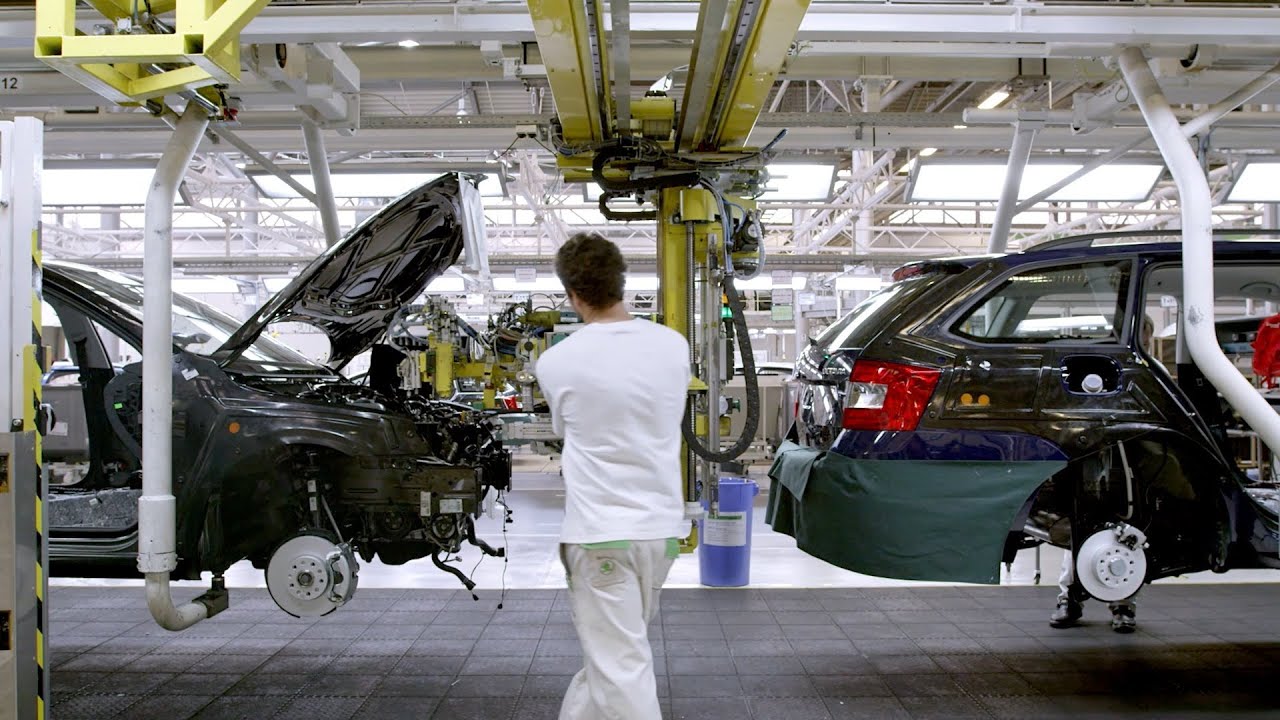
German car production ticks up in March
Domestic passenger car production in Germany reached 400,800 units in March, an increase of 3% year-on-year, Kallanish learns from automotive association VDA.
This figure is positively influenced by an additional working day during the month compared with last year, VDA cautions. In the first quarter, just under 1.1 million passenger cars were assembled on German lines, 2% less than in the corresponding period last year.
Production therefore remains significantly below pre-Covid levels. In the quarter, it was 16% below the first quarter of 2019.
Exports rose by 3% y-o-y in March, reaching 310,700 units. From January to March, 799,500 passenger cars were sold abroad, 2% less than the first quarter of 2019.
A clearer upward trend is reported for the registration of new cars. In March, the number of passenger car registrations rose by 16% y-o-y to 294,200 units. In the first quarter, 699,400 units were newly registered, 5% more than in the corresponding period of the previous year.
In the past month, new registrations of electric vehicles rose by 46% to a volume of 100,700 units. The share of electric vehicles in total registrations thus reached 34%, meaning that roughly one in three new registrations in the past month was an electric car.
According to VDA, the impact of tensions in the Middle East is not yet reflected in the current figures. Later this year, higher energy and fuel costs may provide further support for demand for electric vehicles, it notes.

Italian merchant bar producers push up prices
Italian merchant bar producers are pushing up prices by a further €30/tonne ($35.29/t) this week in an effort to cover elevated costs and high scrap prices. This is the latest in a series of successive increases between March and April, Kallanish hears.
The move is being met with resistance from buyers and agents. Several sources say they are “confused” by the pace of increases, arguing that hikes have come too quickly without giving the market time to absorb them or see whether they can be passed on downstream.
This is happening against a backdrop of weak economic conditions and subdued consumption, with buyers saying they can no longer afford to purchase the same volumes as in previous months at current price levels.
Sources describe a fractured market, with producers displaying an optimism increasingly disconnected from reality while the downstream sector grapples with low demand, financial issues, payment defaults and delays.
Domestic merchant bar prices have risen significantly against pre-conflict levels. Current contracts for merchant bar are heard at €330-355/t base ex-works, equivalent to €750-775/t including size extras. Mills are now asking €370-375/t base ex-works, the same levels as the large distributors.
“Officially prices are increasing but how long can producer continue to sell a few truckloads at higher prices? Downstream we cannot afford high prices; the market is not there to absorb this. Soon we will see the impact of this downstream,” a source argues.
One agent says he has been selling at increased prices sensibly for lower volumes, which is about a third of what he sold before prices started to climb at the beginning of March.
Section prices meanwhile are increasing gradually as the market leader implemented a hike of €30/t before the Tube and Wire trade show with new levels at €830/t. The first category of sections is now at €800-820/t delivered on average. However, some levels of below €800/t from stock are heard.
Rising transport costs are emerging as a further pressure point in the market. Multiple truck drivers are reportedly refusing to load and transport material at current fuel prices, which have risen sharply in the context of the Middle East conflict. Drivers say they are awaiting a government decree expected to provide relief on fuel costs.

EU HRC: Market sees dip as temporary
EU hot-rolled coil (HRC) prices decreased today, but the downtrend is probably temporary as structural undersupply is expected to guide prices in the second half of the year, market participants said.
The extent of the supply deficit will depend on how much idled EU capacity is brought back on line, as well as how restrictive and usable the bloc’s new steel import quotas are.
Buying activity has slowed but supply-side fundamentals are tight, market participants said. Mills have had to discount over the past weeks to account for persistently high inventories across the supply chain.
The Argus daily northwest Europe HRC index slipped by €0.25/t (30¢/t) to €695.75/t ex-works, while the Italian index decreased by the same amount to €692/t ex-works.
A northwest European service centre booked 5,000t of HRC at €705/t base delivered at the end of last week. Traders indicated €700/t ex-works was possible for remaining second-quarter supplies. A transaction was reported at €730/t delivered, but no further details were given.
Mills are currently indicating third-quarter deliveries, tabling offers at €740-760/t base delivered northwest Europe. There is still little to no interest in these prices at the moment, a trader said.
In Italy, €710/t base delivered is achievable, market participants said. Import stock sold at €695/t ddp Italy, a trader said. A different trader offered at €690-695/t ddp across Europe, while another said €670-680/t ddp Italy was possible for stocks. In northwest Europe, a trader offered stock material at €680/t fca, while clients counter-offered at €30-40/t below this level.
“It is difficult to see how steel prices won’t increase further, as imports are almost non-existent,” a trader said. The full impact of the Middle East conflict has not yet been felt in Europe, the trader added. “I think mills are positioning for a price rise,” another trader said. Other market participants echoed this sentiment .
An Indonesian supplier continued to offer at around $595-600/t fob but did not receive any bids. A major Indian mill was off-market for HRC and kept its cold-rolled coil (CRC) offer at €685/t cif Italy. A Turkish deal for HRC concluded at $620/t fob to Italy, which would equate to around €580-590/t cif with dumping included. Deals also concluded for smaller quantities from a Turkish supplier at a slight premium, with some offers coming in at $630-640/t fob for shipment at the end of the second quarter and into the third.
The Argus twice weekly cif Italy assessment held flat at €585/t. Both of Argus‘ CRC assessments fell today, with the daily northwest Europe marker down by €10/t to €800/t ex-works, and the weekly Italian marker decreasing by €7.50/t to €807.50/t ex-works.
Prices in the northwest European market were heard as low as €800-810/t base delivered, while prices in Italy were in a wide range over the past week. Some offers were still pegged at €830-840/t base delivered, but transactable levels stood lower at €820-830/t. A seller reported €790-800/t as attainable. A sale for Chinese CRC took place at just under €800/t ddp Italy, while a South Korean supplier continued to offer at a steep premium, attracting limited interest.

German manufacturers temper expectations at Hannover Messe
Germany’s main industrial organisations drew a picture of caution and insecurity for 2026 during Monday’s first day of the country’s biggest trade fair for manufacturing industries, the Hannover Messe.
The umbrella organisation of manufacturing industries, Bundesverband der Deutschen Industrie (BDI), had at the beginning of the year forecasted a gentle recovery for 2026. Now, given the Iran war and its repercussions, it anticipates stagnation year-on-year, its president, Peter Leibinger, said during a press conference at the beginning of the fair.
He noted that global industrial production went up last year, but Germany’s dropped by 1.5%. The utilisation of plants has remained under the long-term average for 11 quarters, the longest dry spell so far, Kallanish heard him say at the conference. “At least there is a bit of a silver lining, as order intake was slightly up in the fourth quarter 2025,” he added.
BDI shared the conference with the Association of the Electrical and Digital Industry, ZVEI, and the mechanical engineering association, VDMA. They unanimously complained about the burden of excess bureaucracy in Germany and Europe, which discourages companies from making investments in their home country, although they would want to.
“One US senator once told me that we Europeans make regulations for a technology before developing it; Americans develop first, then think about regulation,” said VDMA president Bertram Kawlath. He told of a recent visit to units of German companies located in Mexico, which are on stand-by to release investments at their sites. “So that revenue will be made in Mexico, not Germany,” he said.
He noted that Germany’s mechanical engineering industry has been short of €1 billion ($1.2 billion) per year in investments since Covid. “Any plant capacity without investment now will be missing in ten years from now, and this is a growing process,” he warned.