


Assofermet sees negative trend downstream for April
April is a month of extreme caution, with Italian steel distributors and service centres waiting for clearer signals on the evolution of customs policies before committing to medium-term orders, Italian trade association Assofermet says in its recent market note obtained by Kallanish.
Distribution is operating in a context of “pure commercial survival, with orders cut to the bone and an overall decline in sales volumes. Fabricators and end-users will continue to purchase only the material strictly necessary for orders already secured,” it says.
“There will be no tendency towards restocking. Despite weak consumption, distribution prices could remain relatively high or stable due to upstream pressure from producers, potentially squeezing distributors’ margins as costs rise,” it adds.
The greatest concerns are now coming from outside the region.
The trade barriers and tariff policies introduced by the Trump administration are beginning to show their impact on the real economy. Contracting exports and fears of trade retaliation are pushing major industrial processing and automotive sectors to freeze budgets, scale back projects and slow raw material orders, with a strong impact on distribution.
From a production standpoint, there are attempts to consolidate increases. It will be critical to understand in the coming weeks whether weak downstream consumption will force producers to revise their price lists, or whether the supply chain will manage to absorb these new price levels.
March closed on a note of renewed deceleration due to widespread concerns and a climate of deep uncertainty. Looking at warehouse activity, the vast majority of segments are recording a reduction in volumes. In the flat products sector, distributed volumes are showing partial declines.
The significant sales volumes of black coil sheet have been unable to offset shortfalls recorded in other products such as galvanised sheet and plate.
The long products segment is suffering from the same weakness. There are, however, some exceptions bucking the negative trend such as beams and reinforcing bar, for which Assofermet sees increases in stocked volumes.


EU steel processors question sustainability of price hikes
The sharp rise in coil costs and the prospect of supply shortages in the coming months are expected to weigh heavily on the European manufacturing segment. Several sources warn that the loss of competitiveness flagged by industry associations to the European Commission is now close to materialising.
Coil derivative prices in Italy are rising but continue to lag behind European coil increases, prompting re-rollers to use the Tube and Wire fair last week to implement increases.
One Spanish coil seller tells Kallanish after the trade show that clients are reporting a stagnating market, with demand described as practically at a standstill and activity broadly sluggish this month.
Italian re-rollers and service centres describe an increasingly difficult market. Steelmakers are now clearly benefitting from CBAM and quotas on one side while the downstream sector is struggling to absorb input cost increases on the other.
One large service centre describes the prospect of extremely expensive hot rolled coil as a serious concern. In Dusseldorf, the general understanding among participants was that prices will increase in the coming weeks to around €770/tonne ($905.70/t) base delivered, although no increases were announced at the tradeshow itself.
With the new safeguard measures set to take effect this summer alongside CBAM, importing is expected to become increasingly challenging, leaving European supply as the only realistic alternative for most market participants. Several sources anticipate HRC asking prices to rise by around €100/t compared to current levels as July approaches.
The market is expected to find itself with depleted inventories by then, having used up import purchases made over recent months, with no cheaper alternative to pricey EU coils.
Despite the challenging geopolitical environment, the new safeguard measures will be implemented with its full force, slashing quotas significantly. “It will be a blow to all steel processing companies,” one large service centre source says.
He adds that companies currently importing must record default CBAM values in their financial reporting for the year as emissions certification for suppliers will not be available until September, meaning there will be no way to certify suppliers before the first quarter of 2027.
Large re-rollers continue to source from the import market, though at significant risk. They are also absorbing the majority of available quota allocations, as shown by Indian quotas for the second quarter already being exhausted and Turkish quotas depleting rapidly.
Sheet demand remains generally weak, with activity limited to temporary phases of restocking. Despite service centres’ attempts to push prices to €800/t ($940.99/t), hot rolled sheet contract prices are holding at €770/t base delivered, with some contracts being concluded at €20/t below this.
European steel HRC prices steady; weak demand, high stocks cap bullish sentiment
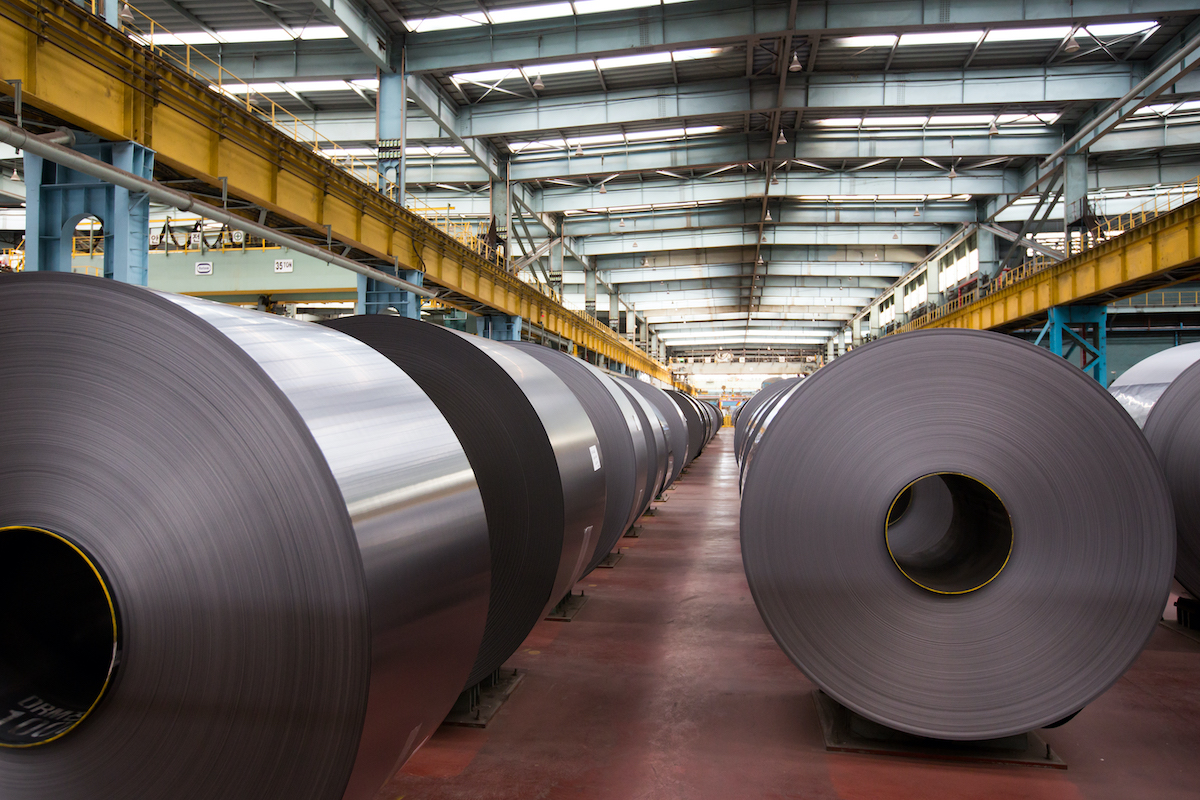
European steel hot-rolled coil prices were largely unchanged on Tuesday April 21. High stocks and slow demand kept trading muted, and buyers have so far refused to accept much higher July offer prices, Fastmarkets heard.
In Northern Europe, integrated steelmakers had very little availability of June-delivery coil remaining, with estimates of workable prices for such material reported by buyers at €700-710 ($823-835) per tonne.
Two German mills were said to have no second-quarter delivery coil available.
One German supplier, which previously indicated offers for July-delivery HRC at €750-760 per tonne base delivered (around €735-745 per tonne ex-works), was heard offering such material at €730 per tonne base delivered (€715 per tonne ex-works) to some customers in Germany.
“Offers [of July-delivery HRC] heard at €750 [per tonne delivered] and higher are unrealistic,” a steel-service center (SSC) in Germany said. “Stock level is high, new imports are still coming, [and] there is no shortage of material. The big change will start after July 1, but even so, we do not have a room for big [HRC] price jumps.”
An integrated mill in the Benelux area had technical problems and therefore no availability of second-quarter delivery coil.
Also, several sources told Fastmarkets that discounted June-delivery coil sales, reported done by one major European mill in mid-April, were no longer taking place and mills were trying to support trade levels above €700 per tonne ex-works.
Trading, however, was limited in the spot market.
Market sources were waiting for more clarity regarding the distribution of import steel quotas between countries starting on July 1, when a new trade regime will come into effect.
Fastmarkets’ daily steel hot-rolled coil index, domestic, exw Northern Europe, was €708.00 per tonne on Tuesday, up by €0.50 per tonne from €707.50 per tonne on April 20.
The index was down by €11.17 per tonne week on week and by €2.00 per tonne month on month.
In Southern Europe, meanwhile, Fastmarkets’ daily steel hot-rolled coil index, domestic, exw Italy, was calculated at €700.00 per tonne ex-works on April 21, stable day-on-day.
The index was up by €1.25 per tonne week on week and up by €4.37 per tonne month on month.
On Tuesday, market sources in Italy estimated achievable prices for HRC to be around €700 per tonne ex-works.
Local sellers maintained offers no lower than €700 per tonne ex-works for June delivery coil.
Trading was limited, with buyer sources reporting sufficient stock levels and no immediate need to purchase new coil.
In the secondary market for 4mm S235 grade hot-rolled (HR) sheet, prices of €800 per tonne CPT were achieved in deals in Italy, but also for limited volumes.
Steel imports into Europe remained limited, with market activity largely restricted due to the uncertainty around the new quotas.
On Tuesday, only offers for Algerian HRC were heard at €725 per tonne DDP, with Carbon Border Adjustment Mechanism (CBAM) costs included.


German SMEs demand immediate government action amid rising energy and transport costs
According to a press release by Federal Association for Secondary Raw Materials and Waste Management (BVSE), a coalition of German trade associations, led by the BVMW (the association for small and medium-sized enterprises) and supported by numerous entities from the metallurgical, logistics and waste management sectors, has issued a statement warning the German federal government that the energy and mobility cost crisis is spiraling out of control, directly threatening the future of industry in Germany.
While the associations acknowledge the government’s interventions, they state, “The temporary reduction in the energy tax on petrol and diesel is an important first step towards providing relief for small and medium-sized enterprises, but it is by no means sufficient. Further targeted relief measures must now be introduced swiftly.”
According to the statement, geopolitical tensions are fueling price volatility that affects the entire industrial and service-oriented value chains. Small and medium-sized enterprises (SMEs) are the more severely affected by this crisis. Unlike large companies, SMEs have fewer tools to protect themselves from price fluctuations and are often unable to pass on cost increases in full to customers.
“Costs are partly politically driven”
According to the associations, the current crisis is not an unavoidable natural disaster. A significant portion of energy and mobility costs are determined by taxes, government levies and regulatory frameworks. “Merely pointing to international market developments falls short,” the statement reads.
The result is a drastic tightening of margins and investment capacity, which risks causing a decline in competitiveness and investments, the relocation of production abroad, and the accelerated deindustrialization of the country.
Five-point action plan
To stabilize the situation, the associations propose five concrete steps:
Cutting state-imposed costs: Permanent reduction of energy, electricity and fuels taxes to the European minimum, a review of additional CO2-related costs and the provision of targeted aid to sectors dependent on affordable mobility.
Safeguard investments: Development of existing support measures for SMEs, implementation of mechanisms that effectively mitigate short-term price increases, creation of a reliable regulatory framework for investments, and reintroduction and extension of price adjustment clauses in public procurement to protect businesses from extreme raw material price volatility.
Securing supply: Strengthening domestic raw material extraction through accelerated approval procedures, use of strategic reserves and consolidating European cooperation on the supply of raw materials.
Implementing moratorium on new burdens and introducing relief measures: Avoiding the introduction of further cost multipliers and unilateral national measures that alter competitiveness.
Adopting a pragmatic approach to transition: Energy policy must be technologically neutral, and the ecological transformation must remain economically sustainable.
Ultimatum to the government
In conclusion, the signatories urge the federal government to act as soon as possible by implementing relief measures in the short term, eliminating competitive disadvantages, and ensuring supply and planning certainty for businesses.
In a context where competitiveness and value creation are at risk, the associations warn that there is no more room for tactics or delays. “The federal government must now take decisive action to safeguard the economic viability of small and medium-sized enterprises,” the associations state.


EU green steel spot-contract premium gap persists
The spread between green steel premiums accepted by spot buyers compared to projects and end-users remains wide, sources told McCloskey during Tube & Wire Trade Fair in Dusseldorf, 13-17 April.
Multiple sources reported increasing demand from the construction industry, as it is easier to find steel with lower CO2 content compared to other construction materials, allowing decarbonization targets to be met. The situation is similar in the automotive segment, which remains at the forefront of green steel consumption, as steel is one of the materials used in car production which can allow easier decarbonization, compared to other components such as plastic.
For both the construction and automotive sectors, the achieved premiums for green hot-rolled coil (HRC) from both greenfield projects, upcoming equipment installations and existing electric-arc furnaces (EAFs) have been reported at EUR160–200/t, or even higher in some cases.
Some sources also said that steel mills which had previously accepted premiums of around EUR100/t from end-users, have now increased them to around EUR200/t.
One steelmaker noted that the premiums also depend on the final buyer and specification of the products, but they confirmed the prices.
In both cases, green steel premiums are easier to absorb in the total costs of production. Distributors, in the meantime, continue to avoid purchases of low-CO2 steel due to higher exposure to additional costs, unless they are trading back-to-back with an end user.
As a result, the premiums spot buyers were willing to accept fluctuated between EUR60/t and EUR100/t.
Green steel demand
Demand for green steel is expected to grow, although at a relatively slow rate in the short to medium term. The European market first needs to adjust to traditional steel market changes, such as the Carbon Border Adjustment Mechanism (CBAM), introduced in January this year and an anticipated reduction in tariff-free import quotas from 1 July. Both policies bear uncertainties as the exporter will be able to account for their emissions in the steel custom cleared in the EU this year only in 2027, exposing buyers to the risks of paying higher duties based on default values. And while the EU authorities have confirmed the new quotas per product, some critical details such as the country-specific volumes and melt-and-pour clause have not yet been disclosed.
But the green steel consumption outlook remains positive in the longer-term, according to multiple market participants.
The recent proposal to adjust carbon-neutral targets for the automotive industry is expected to contribute to a rise in green steel consumption. In late 2025, the European Commission proposed to relax the rule which originally required all cars sold from 2035 to have zero carbon footprint, effectively mandating a shift to electric vehicles. The recent changes allow some combustion-engine vehicle production to continue if their remaining emissions are offset through measures such as green steel use.
Some steelmakers also suggested that geopolitical tensions in the Middle East, which triggered significant fluctuations in energy prices as well as oil and gas supply disruptions, will push the sector towards renewable energy to reduce dependence on fossil fuels. Both wind power plants and solar panels require steel, and those projects usually try to use steel with lower CO2 content.
Demand for renewable energy is also expected to grow due to a large number of decarbonization steelmaking projects in the EU. More information on decarbonization projects in the Europe and global steel sector can be found in McCloskey’s Global Green Steel Profile.
Stegra financing welcomed
Green steel startup Stegra announced a new EUR1.4 billion financing round on 14 April, enabling it complete construction of an integrated steel mill in Boden, Sweden.
The news was positively received by other steelmakers, particularly those building greenfield operations. The Boden plant is the first new steel mill constructed in Europe in 50 years, and the success of this startup directly impacts the willingness of investors to finance other new projects in the EU.
“In round 12-18 months from now, we will see both green steel and green iron coming out of the facility in Boden,” according to a statement from the company’s CEO, Henrik Henriksson, during the Tube & Wire fair.
Stegra plans to start running the mill on 100% ferrous scrap feedstock before adding direct-reduced iron (DRI). The scrap-DRI mix will be roughly 50/50 but will depend on the finished steel specifications and costs. Henriksson said that ferrous scrap prices in Europe will continue to rise as more EAFs are built in the regions to decarbonise and scrap availability could be limited.
Iron ore for DRI production will come from Brazil, Canada and northern Sweden.
Around 40% of Stegra’s contracts are signed with buyers from the automotive segments, but construction and white goods industries have also contributed to the sales.
In order for steel to be approved for use in car making it requires certifications of quality and some production history, which is likely to prevent immediate steel shipments from the new plant to automotive customers. Stegra, however, said it has foreseen those challenges and confirmed that the quality verification could take between 18 and 24 months. Until those are obtained, the steelmaker will provide non-prime steel to the market.
“We have found different ways of coming out to the market, one of them is partnership with Thyssenkrupp Materials,” Henriksson said.
Earlier this year Stegra signed an agreement with Thyssenkrupp’s service centre division, Materials Processing Europe. Under the multi-year agreement Thyssenkrupp Materials Processing Europe will acquire significant amounts of non-prime steel from Stegra to supply its customers in various industries across Europe. The material supplied to Thyssenkrupp will not be recognized as low-CO2 and Stegra will sell the green value as Environmental Attribute Certificates (EACs) to other customers in the prime steel market.
“We expect that there will be cooperation with some of our customers and we will honour other companies’ qualification as well. So if a supplier can qualify a batch of products [for automotive use], and we have similar products then we can exchange volume because we can trust the channel and also, this will allow to cut lead times [for green steel] for the first-tier suppliers in the automotive industry.”
Other market sources confirmed that such approach could facilitate sales to carmakers.
Green steel premiums to recede
According to estimates from multiple market sources, traditional steel prices will exceed those for green steel products in a few years. This will happen due to rising emissions costs as the number of free CO2 emission allowances will gradually decrease and steel mills, particularly those operating more carbon-intensive blast furnaces (BFs) will face higher costs.
“I think green steel premiums is a temporary thing. Traditional steel prices will rise as the number of free emission allowances are decreasing and soon the low-CO2 projects will have a cost advantage,” a steelmaker said.
Author: Maria Tanatar


CBAM extension debate heats up as VDMA rejects policy
Debate surrounding the European Commission’s proposal to extend the scope of the EU’s Carbon Border Adjustment Mechanism (CBAM) to downstream sectors is heating up, as European machining and equipment manufacturing association VDMA calls for the complete abolition of the carbon leakage instrument.
Outlining the “insurmountable bureaucratic challenges” CBAM presents for European industrial SMEs, the VDMA highlights a yearly labour decline of 2.6% in the German plant and engineering industry in evidencing the sectors’ woes, attributing the losses to difficult business conditions as a result of EU overregulation and Chinese import pressure.
As such, across various press releases and a media op-ed, the VDMA calls for the “entire CBAM mechanism to be abolished or at least fundamentally revised,” further arguing that “the plans to extend [CBAM] to additional industrially processed products must be stopped.”
Citing a recent members survey, the association states that “76% of machinery and plant engineering companies receive reliable emissions data from less than 10% of third country suppliers. As a result, companies are forced to use [default values] for over 90% of their CBAM declarations.”
“Collecting verified, product specific emissions data for these inputs has proven extremely difficult in practice and sometimes impossible,” it said. “Suppliers often lack the technical capacity, data infrastructure or regulatory incentives to provide emissions data in line with EU requirements.”
The industry body claims that as a result of anticipated verification frictions and the consequent use of default values, the machinery sector will have to purchase up to 30% more CBAM certificates than other sectors “where access to emissions data is easier,” opening European manufacturing to inflationary cost risk and substitutive import pressures beyond what industry can absorb. According to the VDMA, “the limits of tolerance have been reached” – 40% of its survey respondents are reportedly considering relocating operations out of the EU due to CBAM, with over a third expecting to suffer labour cuts.
CBAM entered its definitive stage in January, imposing carbon costs on in-scope imports in line with what the relevant producer would owe if operating under the EU’s Emissions Trading System (ETS). This is to prevent “carbon leakage” – the relocation of the EU’s domestic industry to foreign jurisdictions with less burdensome climate costs – and as such targets energy-intensive industries, like the steel sector, in balancing operating costs (and market price) between domestic and international producers.
However, the consumers of these energy-intensive goods remain relatively unprotected – be it via trade or climate protections – from substitutive imports of finished components. There is therefore growing concern among industrial players that downstream manufacturing sectors consuming CBAM goods could face potentially existential price inflation in their supply chains, further undermining downstream competitiveness in both their domestic and international markets.
Anticipating this risk of deflecting carbon leakage downstream, the European Commission proposed to extend the scope of CBAM to downstream goods in December, with 180 CN codes selected for extension on the basis of statistical modelling of carbon leakage risks. Contrary to the VDMA’s position, many in the steel supply chain have criticised the proposed scope as insufficient (including representatives from non-included downstream sectors), and seek a broader application, either via modelling adjustments or qualitative CN code inclusions.
But CBAM is not the only factor behind fears of unmanageable upstream price inflation; the EU’s long-term replacement of its steel safeguard system – expected to be implemented for July when current protections lapse – commits to approximately halving duty-free steel import volumes, and introduces a doubling of the tariff rate to 50%, a level most importers are completely unable to accommodate on their books if forced to pay out-of-quota duties.
Upstream steel prices thus look poised to increase further as regulatory restrictions bite international supply to the EU. McCloskey’s research team forecasts higher European steel prices later this year despite a fragile demand outlook, expecting higher costs to impact “both industrial steel end-users and final consumers.”
Sounding the alarm, European steel trade and distribution association EUROMETAL last week spearheaded a campaign – now exceeding 400 signatories across the EU’s steel supply chain – calling on European authorities to immediately extend the scope of tariff-rate quota and CBAM instruments to downstream steel-consuming products (exhaustively, across CN headings 73-95) as an urgent priority, preferring a remedy of “Trumpish” pace to the EU’s traditional bureaucracy.
European steelmakers association EUROFER is also understood to be operating behind the scenes, mapping steel and steel derivative CN codes as a baseline from which to support a swift downstream extension of the EU’s new steel trade protection framework.
Last week, automotive sources told McCloskey that any effective extension of trade or climate protections to downstream goods would have to be “exhaustive” and “intense,” as substitutive component imports can already access the EU at ultra-competitive margins of 30% or higher, rife with circumvention loopholes.
The VDMA’s policy preferences would instead see CBAM “abolished as a failed instrument,” but accepting the unlikelihood of a total withdrawal, the association instead calls for: an “immediate halt” to downstream extensions; a “robust” export solution; “realistic,” non-punitive default values; and “a significant reduction” to administrative burdens on European operators.
The latest Rapporteur draft reports – produced to guide compromises during the EU’s trilogue legislative negotiations between the European Parliament, the EU Council and the European Commission – on both the CBAM downstream extension and Temporary Decarbonisation Fund (TDF) proposals would seem to address at least some of the VDMA’s demands, suggesting to extend TDF grants for access by downstream operators, and to link issued funds more directly to export productions. Downstream CBAM goods would also have punitive mark-ups removed when using default values due to mitigate the complexity of downstream supply chains, but given the scale of some steel default values on a per ton basis, it is unlikely that the removal of a 10-30% mark-up would do much to alleviate the VDMA’s concerns.
Author: Benjamin Steven
Business Finland provides EUR 20 million support to SSAB’s low-carbon steel program

EU reviews Belarus, China, Russia welded pipe duties
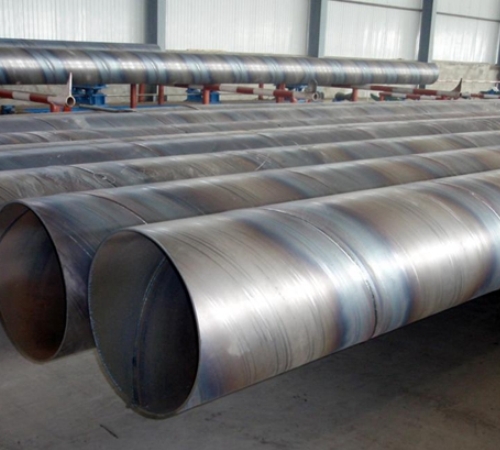
The European Commission has initiated an expiry review of anti-dumping measures on imports of certain welded tubes and pipes from Belarus, China and Russia, Kallanish notes from the Official Journal on 17 April.
The probe follows a complaint lodged by the European Steel Tube Association on 16 January, which argued that allowing the measures to lapse would likely result in a recurrence of dumping and injury to the EU industry.
The product under review covers welded tubes and pipes of iron or non-alloy steel, of circular cross-section and with an external diameter not exceeding 168.3 mm, excluding line pipe for oil or gas pipelines, casing and tubing used in drilling, precision tubes, and tubes and pipes with attached fittings for use in civil aircraft. The products currently fall under CN codes ex 7306 30 41, ex 7306 30 49, ex 7306 30 72 and ex 7306 30 77, with corresponding TARIC codes 7306 30 41 20, 7306 30 49 20, 7306 30 72 80 and 7306 30 77 80.
The investigation will assess whether dumping and injury would continue or recur if the measures expire. The review investigation period covers 2025, while injury trends will be examined from 2022 onwards. The probe is expected to conclude within 12-15 months.

Corinth, ArcelorMittal extend cooperation to include XCarb
Corinth Pipeworks has strengthened its long-standing collaboration with ArcelorMittal in a shared commitment to sustainable steel solutions for the evolving energy sector, Kallanish hears from ArcelorMittal.
Corinth will now also be using XCarb, ArcelorMittal’s low carbon-emissions steel, in its production of energy pipe, the companies announced at the Wire + Tube Fair in Düsseldorf last week.
The collaboration reflects the joint ambition of both companies to contribute to the energy transition by enabling the development of resilient, low-carbon infrastructure.
According to ArcelorMittal, the partnership supports the delivery of pipeline solutions with a significantly reduced environmental footprint, suitable for both conventional and emerging energy applications, including hydrogen transportation.
XCarb is a low carbon-emissions steel made in an electric arc furnace with minimum 75% scrap content and with 100% renewable electricity. The production process reduces CO2 emissions by 65% compared with the traditional steelmaking route in a blast furnace, ArcelorMittal states.
“By integrating low carbon-emissions steel solutions into our production processes, we actively support our customers in building next-generation energy networks,” says Ilias Bekiros, general manager of Corinth Pipeworks.

EU assigns new Chinese tinplate exporter 24.6% duty
The European Commission has amended anti-dumping measures on Chinese tinplate imports, granting new exporting producer status to Linqing Hengtai Metal Materials.
The company will now face a 24.6% duty, in line with cooperating non-sampled exporters, after proving it did not export during the original investigation period, is not linked to existing exporters, and began shipments to the EU only after the probe began.
Existing duties on Chinese tinplate range from 13.1% to 46.8% for sampled firms and 62.3% for non-cooperating exporters, Kallanish notes.