


BENTELER and SMS group modernized the SRM line in Germany with a next-generation automation system


Global steel producers fall short in decarbonization

EU wire rod sees highest quota utilization in the first quarter
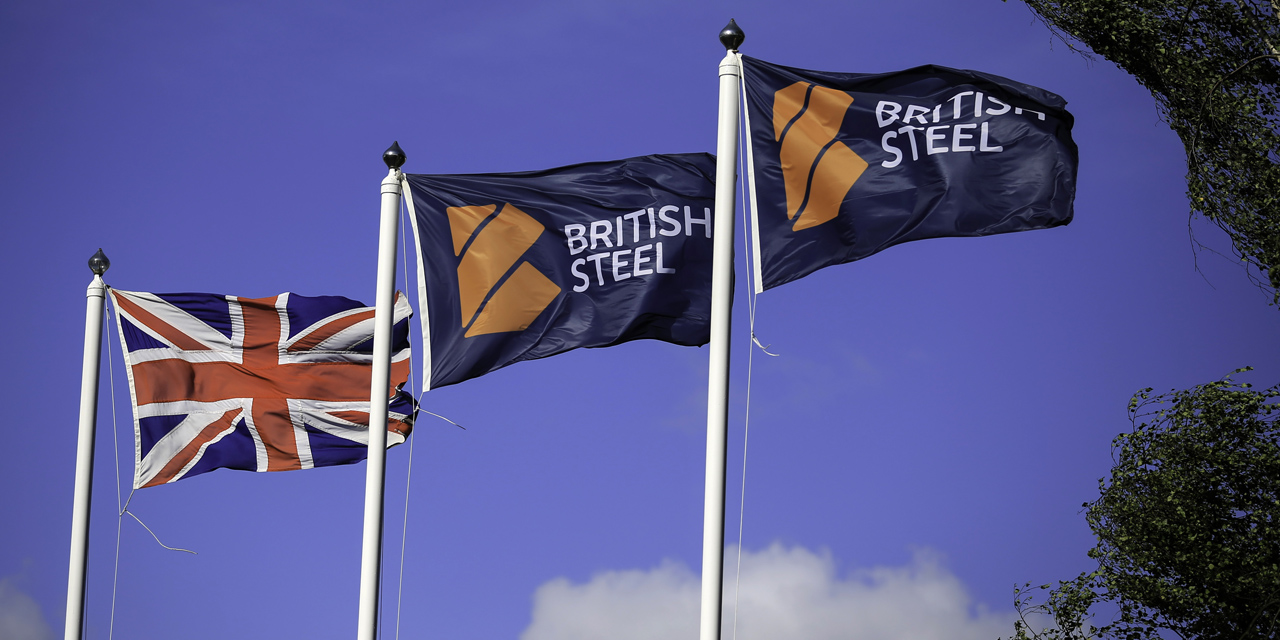
UK prepares to fully nationalize British Steel

European Parliament committee proposes expanding CBAM scope to downstream products
The European Parliament’s Committee on International Trade has published a draft opinion proposing amendments to the Carbon Border Adjustment Mechanism (CBAM), focusing on extending its scope to downstream products and strengthening anti-circumvention measures.
The proposal aims to ensure consistent carbon cost coverage across industrial value chains as the EU phases out free allowances under the Emissions Trading System.
Focus on preventing carbon leakage
According to the draft, the gradual phase-out of free ETS allowances combined with CBAM implementation could shift carbon leakage risks from upstream sectors such as steel to downstream products.
Expanding CBAM coverage to include these goods is therefore seen as necessary to maintain the effectiveness of the mechanism and ensure that carbon costs are applied consistently across the entire value chain.
Recognition of carbon pricing in third countries
The committee also proposed recognizing dual carbon pricing systems in third countries. Under such arrangements, exporters subject to additional carbon-related charges in their home markets could have these costs recognized as a “carbon price effectively paid”, reducing their CBAM obligations.
This approach is intended to incentivize the global adoption of carbon pricing mechanisms and support decarbonization efforts in sectors including steel.
Support measures for developing countries
The draft includes provisions to support developing countries in complying with CBAM requirements. Proposed measures include technical assistance for monitoring, reporting and verification systems, emissions accounting and regulatory capacity building.
In addition, the proposal highlights the importance of technology transfer and industrial partnerships to improve access to low-carbon technologies in developing economies.
Allocation of CBAM revenues for climate finance
A key recommendation is that at least 25 percent of CBAM revenues should be allocated to international climate finance. These funds would support decarbonization projects in developing countries, aiming to improve the fairness and global acceptance of the mechanism.
Special provisions and ongoing monitoring
The committee also proposed special provisions for least developed countries, including potential exemptions from CBAM financial obligations while maintaining reporting requirements. Simplified procedures may also be introduced for small and medium-sized enterprises in lower-income countries to ease compliance burdens.
The European Commission will be tasked with continuously monitoring CBAM’s impact on developing countries, including trade effects, administrative challenges and carbon leakage risks, and may introduce mitigation measures if significant negative impacts are identified.
Author: SteelOrbis Editorial Team


EU sets conditions for lowering tariffs on US products in trade deal
The European Parliament has announced that it has set strict conditions for lowering tariffs on US products under the EU-US trade deal, linking tariff reductions to full compliance by the US.
MEPs adopted their position on the tariff-related aspects of the agreement, which, if approved by member states, would eliminate most tariffs on US industrial goods and expand market access for agricultural and seafood products.
Tariff cuts conditional on US compliance
Lawmakers introduced a “sunrise clause”, meaning tariff reductions will only take effect if the US meets its commitments under the agreement. These conditions include reducing tariffs on EU products with steel and aluminum content to a maximum of 15 percent, ensuring reciprocity in trade relations. For products with higher steel and aluminum content, EU tariff preferences on US exports would be withdrawn within six months if the US does not comply with the agreed tariff levels.
MEPs strengthened the agreement by introducing a suspension clause, allowing the EU to withdraw trade preferences if the US:
imposes additional tariffs above agreed levels,
discriminates against EU companies,
or engages in economic coercion.
The European Commission will also monitor import volumes and may suspend tariff reductions if a surge in US imports threatens EU industries.
Sunset clause sets 2028 deadline
The Parliament also agreed on a “sunset clause”, setting an expiry date of March 31, 2028 for the main regulation. Any extension would require a new legislative proposal and a full impact assessment.
UK plans full nationalization of British Steel amid mounting losses
The UK government is preparing to fully nationalize British Steel, nearly a year after introducing emergency legislation that enabled it to take operational control of the company, according to a report by the Financial Times.
The initial intervention aimed to safeguard jobs amid concerns over reduced activity at the company’s facilities under its Chinese owner Jingye Group, particularly following the suspension of coke imports.
Mounting losses increase pressure
British Steel continues to generate significant financial losses, with government support reaching £377 million between April 2025 and the end of January.
According to estimates by the National Audit Office, this figure could rise to £615 million by June and potentially reach £1.5 billion by 2028 if current support levels are maintained.
Ownership constraints complicate restructuring
Despite government intervention, Jingye retains economic ownership of British Steel, limiting the authorities’ ability to sell assets or implement long-term strategic decisions.
Sources indicate that full nationalization is now seen as a necessary step to secure the company’s future. The government is currently assessing legislative options to obtain full control, with steel recently designated as a “strategic national asset,” potentially enabling action under national security provisions.
Negotiations between the UK government and Jingye remain ongoing within a limited timeframe. Jingye has reportedly rejected a £100 million offer for the business and previously sought more than £1 billion in compensation. While discussions continue, no agreement has yet been reached and British Steel has not commented.
Industry support and strategic importance
Industry representatives have expressed support for nationalization. UK Steel director-general Gareth Stace stated that such a move would provide greater certainty for employees, customers and the supply chain during a critical period.
British Steel’s Scunthorpe plant operates the UK’s last two blast furnaces and produces around 95 percent of the steel used in domestic rail infrastructure, underlining its strategic importance.
At the same time, interest in acquiring British Steel has emerged. Investor Michael Flacks is reportedly exploring options to integrate the company with other European steel assets, though any transaction remains uncertain given current legal constraints.

Northern Europe steel HRC prices edge down on lower spot deals
Steel hot-rolled coil prices have inched down in Northern Europe in new deals that have come to light, but sentiment remained bullish, primarily driven by limited availability of imports, with some suppliers already indicating higher offers for third-quarter deliveries, sources told Fastmarkets on Tuesday March 31.
A leading European supplier was heard selling HRC aggressively in some parts of Germany and in Poland, several market sources said.
“[A European mill] is selling leftover volumes from May-June delivery coil at prices some €20 [$24] per tonne below the market, apparently to fill gaps in order books. At the same time, indications for July lead times are quite high,” a buyer in Germany said. “We heard an indication of €780 [($917) per tonne delivered] for July delivery [HRC].”
No official offers for July-delivery coil have been confirmed by the mill so far, with most industry sources expecting new indications after Easter.
Delas were heard at €690-700 per tonne ex-works in Germany. In Poland, a transaction was reported even lower – around €695 per tonne CPT.
At the same time, deals were heard at €710-720 per tonne ex-works for small lots of HRC in Germany, from other suppliers.
One German mill kept its offers around €720-730 per tonne ex-works for May-June lead times.
Another German supplier had no spot availability for second-quarter delivery of HRC. Offers for July delivery were €750 per tonne ex-works from that supplier, Fastmarkets understands.
“European mills have big hopes of pushing through new price increases for July – when import [volumes] will be cut in half [because of] new safeguards,” a steel-service center source in Germany said.
Italy-origin coil was traded in Germany at €720-730 per tonne delivered, but suppliers were limiting offered export volumes due to rising freight rates because of the surging gas and oil prices created by the continuing Iran-US-Israel conflict.
Freight rates from northern Italy to southern Germany were estimated at €80 per tonne in late March, compared with around €60 per tonne in February.
In the Benelux area, offers for June delivery coil were heard at €725 per tonne ex-works.
Buyers in Germany and the Benelux area estimated tradeable values at €700-730 per tonne ex-works, depending on tonnage and lead times.
As a result, Fastmarkets’ daily steel hot-rolled coil index, domestic, exw Northern Europe, was calculated at €711.50 per tonne on Tuesday, down by €7.25 per tonne from €718.75 per tonne on March 30.
The index was also down by €4.50 per tonne week on week but up by €25.43 per tonne compared with the last day of February.
And Fastmarkets’ steel hot-rolled coil index, domestic, exw Italy, was calculated at €697.50 per tonne on March 31, up by €2.50 per tonne from €695.00 per tonne on March 30.
The index was unchanged week on week but up by €28.67 per tonne compared with the last day of February.
Local sources estimated achievable prices at €690-700 per tonne ex-works on Tuesday.
Offers from local suppliers for May-June delivery HRC were heard around €700-705 per tonne ex-works,.
Trading has been slow so far in the week commenced March 30, sources said.
“It’s La Settimana Santa [the Christian holy week before Easter] so customers are mostly in standby mode,” a buyer in Italy said.
“Activity is weak, but mills are really not in a rush to sell and buyers have sufficient inventories, so it’s a standstill,” a seller source said.
New offers of imported coil have, meanwhile, were limited and pricey due to soaring logistics costs, the Carbon Border Adjustment Mechanism (CBAM) and new uncertainty on the safeguards.
“Basically, only Turkey and Algeria are in the market with HRC offers to Europe,” one trade source said.
Late in the week commenced March 23, Turkish coil was heard booked to Italy around €610-620 per tonne CFR, including anti-dumping duty but excluding CBAM costs.
From Algeria, offers were heard around €680-690 per tonne CFR to Spain, which was deemed unworkable by buyers.


Green transition key driver for global investment: Danieli
Decarbonisation remains central to investment across the steel sector globally, according to Italian equipment maker Danieli.
The full implementation of CBAM in 2026 will favour electric arc furnace (EAF) producers over traditional blast furnace operators. While COP30 commitments, including net-zero targets by 2060 and a threefold increase in climate finance by 2035, are expected to accelerate the adoption of greener steelmaking technologies, including direct reduced iron (DRI) plants using gas and hydrogen, the group says in its financial statement for the six-month period ended 31 December 2025.
Danieli is well positioned to support the green transition, offering technology across the full metals processing range including steel, aluminium and other metals while targeting net-zero emissions validated by SBTi and CDP. The company adds that advances in research and development over the past decade have helped reduce both capital and operating costs in the metal segment bosting investment opportunities in the industry, Kallanish notes.
The group’s revenue stood at €1.6 billion ($1.84 billion) reflecting a 16% decline on-year. Ebitda reached €191 million, increasing 17% compared to the same period the previous year. Ebitda was supported by strong margins in the Danieli plantmaking segment and a better steelmaking performance from ABS (see separate article).
Danieli’s steel market outlook for 2026 is positive, with prices and volumes expected to recover, particularly in Europe, supported by the introduction of CBAM and tighter import quotas.
Last year China retained its dominant position, accounting for around 52% of global output, while continuing to shift towards EAF steelmaking to reduce emissions.
A moderate recovery in Europe is expected to partially offset slowdowns in the US and China. The US is forecast to grow 2.4% in 2026 and 2.0% in 2027, while China’s growth is projected at 4.5% and 4% respectively, weighed down by real estate sector challenges.
India remains a bright spot, with growth estimated at 7.3% in 2025 and 6.4% in both 2026 and 2027. EU growth is forecast at 1.3% in 2026 and 1.4% in 2027, supported by easing inflation and ECB rate cuts, though manufacturing remains weak due to US tariffs and elevated energy costs.
The global economy grew 3.3% in 2025, matching the 2024 figure, with the IMF projecting similar growth of 3.3% in 2026 and 3.2% in 2027.


European Parliament adopts US deal, proposes derivatives clause
The European Parliament has adopted its position on the tariff aspects of the EU-US Turnberry trade deal. This includes a proposal for a “sunrise clause” that would make EU preferential tariffs on US goods effective only if the US lowers its tariffs to a maximum of 15% on EU-origin products with a steel content of below 50%, Kallanish notes.
For EU products with a steel content of above 50%, unless the US reduces its tariffs to a maximum of 15%, EU tariff preferences for US exports of steel and their derivative products would cease to apply six months after the entry into application of the regulation.
The deal, if agreed with EU member states, would eliminate most tariffs on US industrial goods and provide preferential market access for a wide range of US seafood and agricultural goods, in line with the commitments made in summer 2025 between the EU and the US.
MEPs strengthened the proposed suspension clause, which would allow the EU to suspend preferential tariffs under certain conditions, such as if the US were to impose additional tariffs exceeding the agreed 15% ceiling.
Members also agreed on an expiry date for the main regulation on 31 March 2028. This could only be extended via a new legislative proposal.
MEPs will now start negotiations with EU governments on the final shape of the legislation. The so-called “Trilogue” negotiations are set to begin on 13 April, European Parliament INTA Committee chair Bernd Lange said on Friday.
The progress of the trade deal will depend on how the US acts. “For me, it is clear the ball is now in the field of the United States,” he added. The first step of the US should be to reduce tariffs on the so-called steel “derivatives” back to 15%, he concluded.